
Can Maine Coons Go Outside?
Can Maine Coons go outside? It is one of the first questions every new owner of this breed asks — and one of the most debated. These are big, confident, adventure-loving cats, and keeping all of that curiosity indoors can feel unfair. But the outdoor world has real dangers, especially for a cat as valuable and eye-catching as a Maine Coon.
I have lived with Maine Coons for years, and my honest answer is: it depends on how they go outside. A free-roaming Maine Coon and a Maine Coon on a harness in a cat-proofed yard are living very different lives. Here is a clear look at both sides so you can decide what is right for your cat.
The Case for Keeping Maine Coons Indoors
Safety From Wildlife and Other Animals
Size does not make a cat invincible. Stray dogs, territorial tomcats, coyotes, and even birds of prey can injure or kill a cat. Fights also bring the risk of abscesses and diseases like FIV. An indoor cat simply never meets these threats.
Traffic Accidents
Roads are one of the biggest killers of outdoor cats. Maine Coons are bold and curious — exactly the traits that lead a cat to wander too far and not find its way back. A lost Maine Coon in unfamiliar territory is a heartbreaking situation.
Protection From Disease and Parasites
Outdoor cats face far more exposure to parasites, infections, and toxins — from fleas and ticks to antifreeze puddles and poisoned rodents. Indoor cats are easier to keep on a clean vaccination and parasite-prevention schedule, and what they eat is entirely under your control.
Risk of Theft
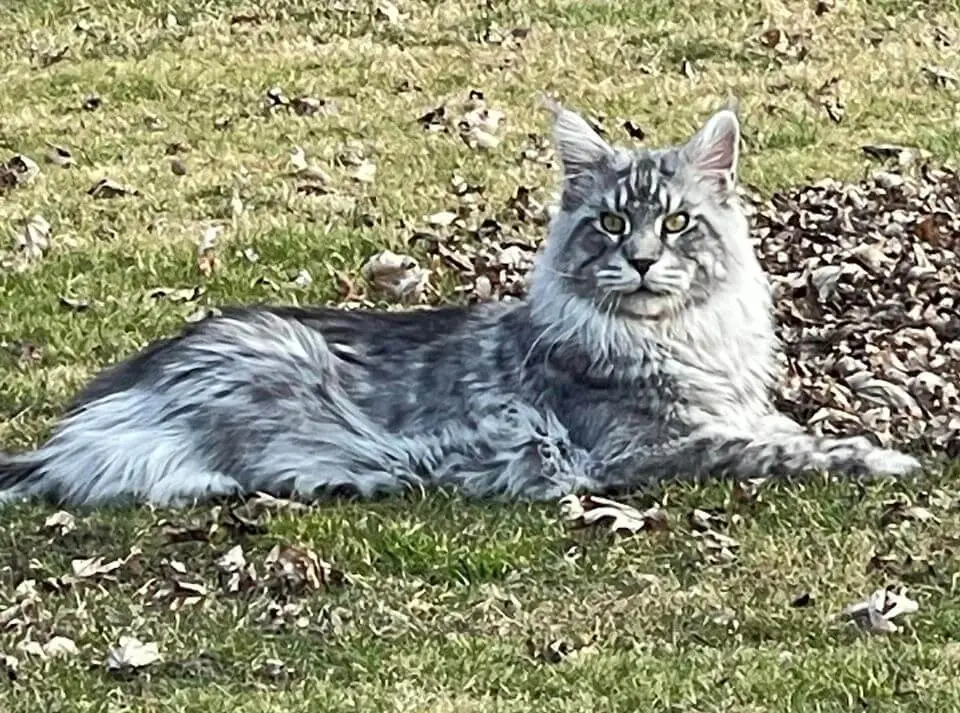
This one is specific to the breed. Maine Coons are expensive, desirable cats, and a stunning giant wandering the neighborhood is a target for theft. I would never let mine roam unsupervised for this reason alone. A microchip helps recovery, but prevention is better.
A Cleaner, Healthier Coat
Anyone who has brushed burrs and mud out of a Maine Coon’s coat knows this one. Indoor cats stay cleaner, mat less, and need fewer emergency grooming sessions. Less dirt in the coat also means fewer hairballs and skin issues.
The Downsides of Keeping Them Indoors 24/7
Indoor life is safer, but it is not automatically better — an under-stimulated Maine Coon will tell you about it.
Boredom
These are intelligent, high-energy cats. A bored Maine Coon invents games: opening cabinets, knocking things off shelves, and redecorating at 3 a.m. Daily interactive play is not optional with this breed.
Weight Gain
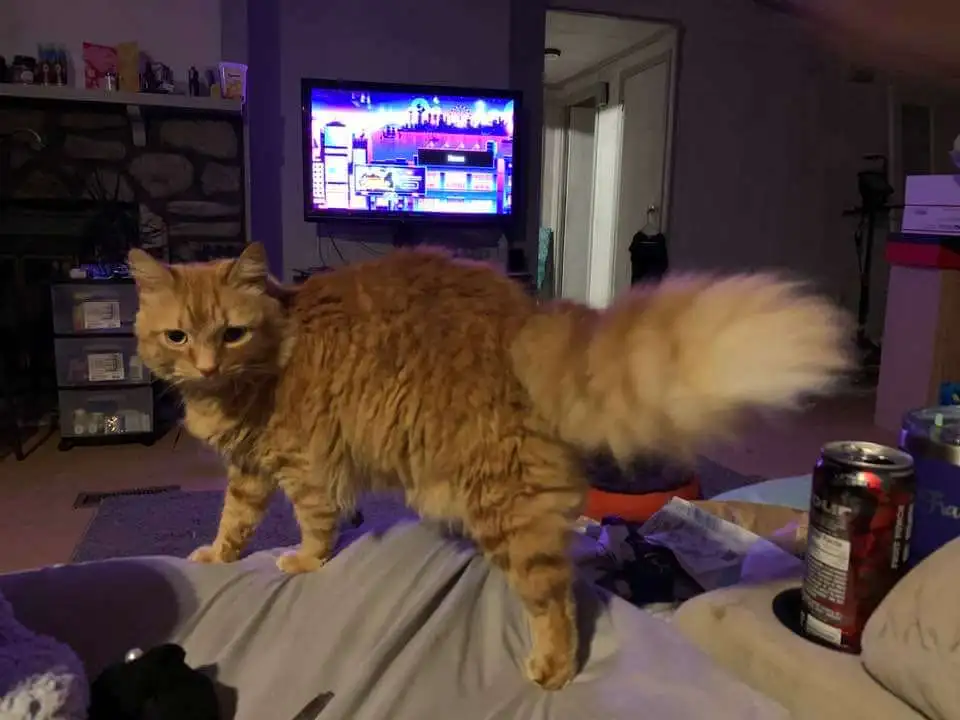
An indoor cat that eats well and moves little will put on weight — and extra weight on an already large frame stresses the joints. Portion control and play sessions keep an indoor Maine Coon lean.
Stress and Frustration
Cats that can see the outdoors but never experience it sometimes develop stress behaviors: over-grooming, restlessness, or aggression. The fix is not necessarily the great outdoors — it is enrichment: window perches, puzzle feeders, cat trees, and real playtime with you.
Scratching the Furniture
Indoor cats need appropriate scratching outlets, full stop. A tall, rock-solid scratching post (Maine Coons are heavy — flimsy posts topple) saves your sofa. Scratching is also exercise and stress relief, so think of the post as furniture insurance.
The Benefits of Supervised Outdoor Time
Here is the middle ground I recommend: the outdoors, on your terms.
They Are Natural Explorers
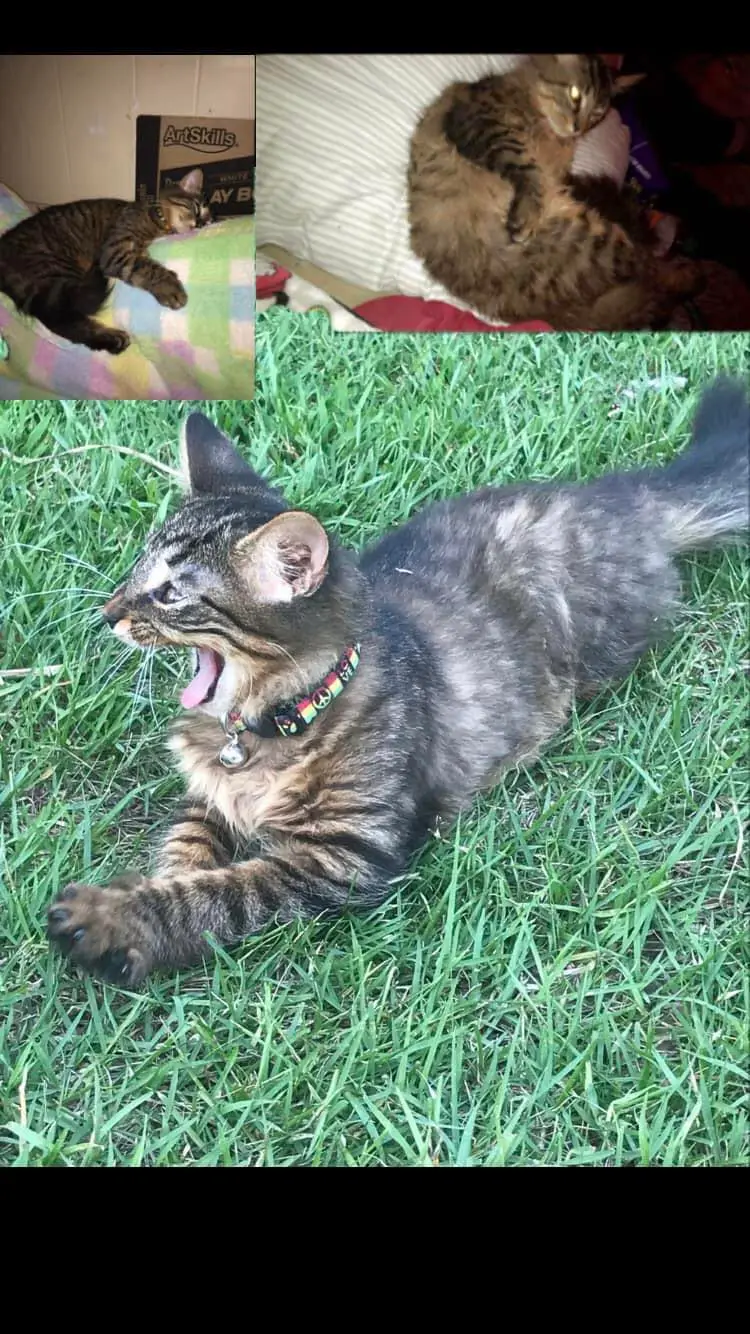
Maine Coons genuinely love the sensory richness of outside — the smells, the moving air, the birds to chirp at. Supervised outdoor time satisfies that curiosity safely.
Real Exercise
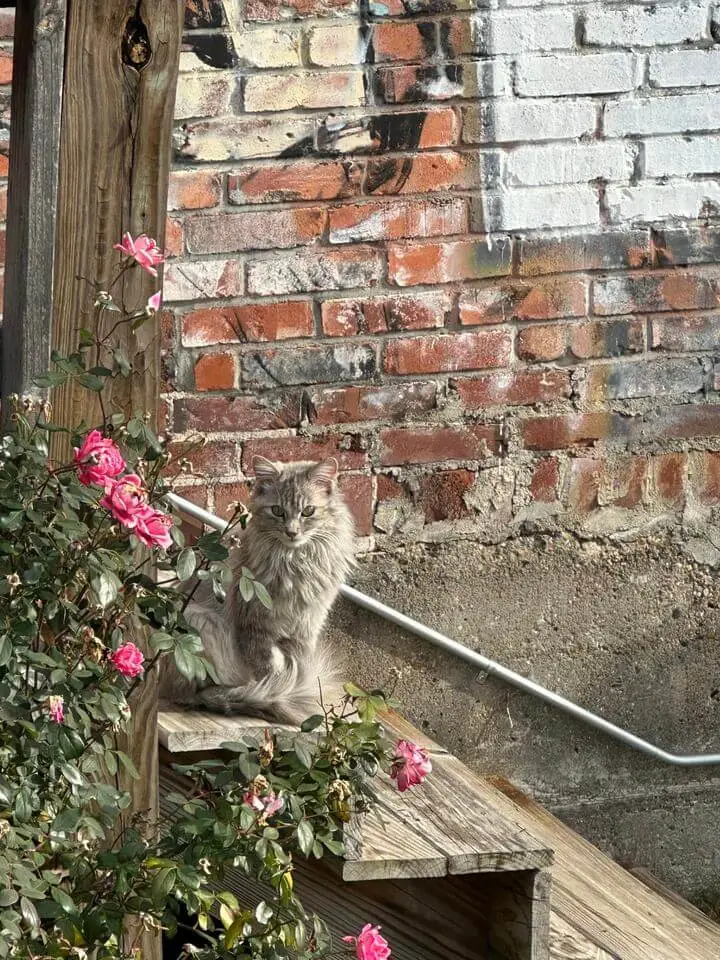
Climbing, stalking, and patrolling a yard is superb exercise — far better than anything indoors. A cat that gets real outdoor play is typically calmer, leaner, and sleeps beautifully.
Mental Stimulation
Nothing tires out a clever cat like novelty. New scents, textures, and sights work their brain in ways indoor toys cannot fully replicate. Many common Maine Coon behavior problems fade once a cat gets enough stimulation.
How to Let Your Maine Coon Outside Safely
If you decide on outdoor access, do it the safe way:
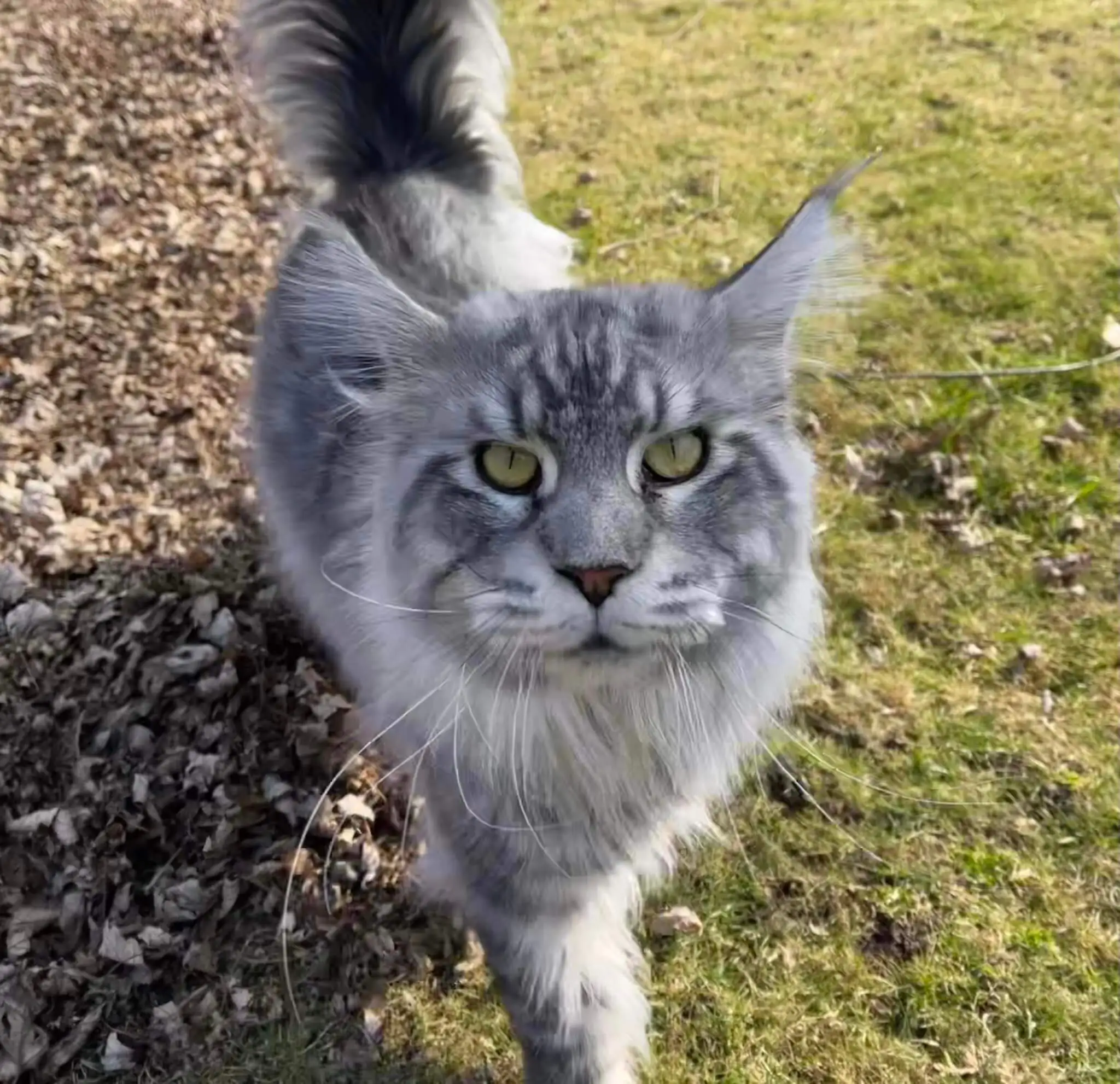
Harness training: start indoors, short sessions, lots of treats. Most Maine Coons take to a well-fitted harness well — they are smart and food-motivated. Never tie a cat out unattended.
Cat-proofed yard or catio: a “catio” (enclosed patio) or cat-proof fencing gives fresh air with zero roaming. This is my top recommendation — all of the enrichment, none of the risk.
Supervision: stay with your cat, especially at first. You are the lookout for dogs, traffic, and escape routes.
Identification: microchip plus a breakaway collar with an ID tag. Consider a GPS tracker for extra peace of mind.
Vaccinations and parasite prevention: any cat going outside needs to be current — talk to your vet about the right protocol. VCA Hospitals has a good overview of outdoor-cat health risks worth reading before you start.
A Note on Seasons
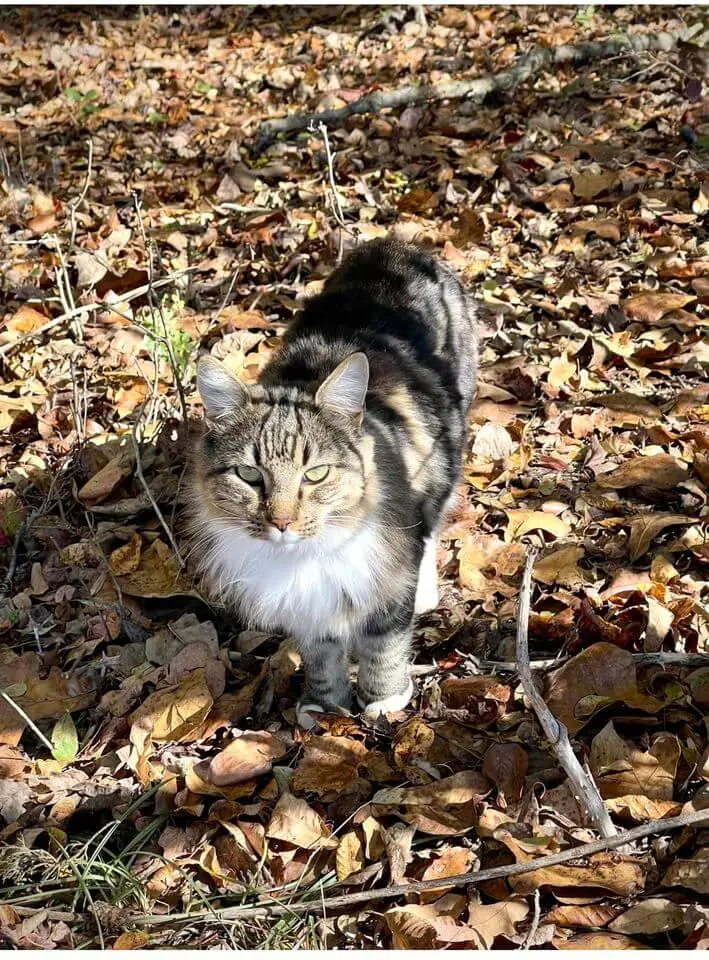
Maine Coons handle cold better than most breeds — that coat evolved for New England winters. But “handles cold” does not mean “lives outside in January.” Extreme heat is actually the bigger danger for a heavy-coated cat: provide shade and water, and keep summer outings short. And after outdoor adventures, check the coat for mats, burrs, and ticks — a quick brush-down beats a grooming crisis later. If bath time follows muddy adventures, here is how to bathe a Maine Coon without the drama.
So What Should You Choose?
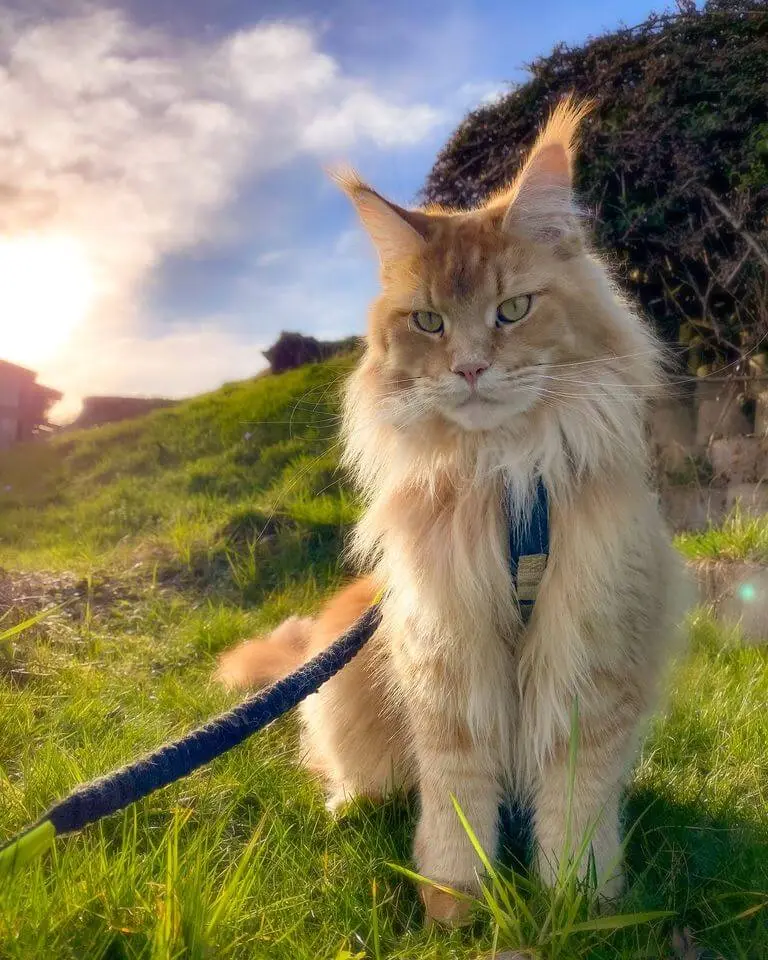
My recommendation: keep your Maine Coon as an indoor cat with supervised outdoor access — harness walks, a catio, or a cat-proofed yard. You get nearly all the benefits of the outdoors with almost none of the risk. Free roaming, in my view, is not worth gambling a cat this special.
Whatever you choose, commit to the enrichment side of the bargain. A Maine Coon with puzzle feeders, tall cat trees, window perches, and daily play with you is a happy cat — indoors, outdoors, or both. For more on the breed’s needs, PetMD has solid, vet-reviewed care guides.
Frequently Asked Questions
Can Maine Coons be outdoor cats?
They can survive outdoors, but free-roaming exposes them to traffic, predators, disease, parasites, and theft. Supervised outdoor time is the safer way to give them fresh air.
Do Maine Coons like being outside?
Most love it — they are curious, confident explorers. That enthusiasm is exactly why supervision matters; they will wander farther than is safe if allowed.
Can you walk a Maine Coon on a leash?
Yes, and many take to it well. Use a secure, well-fitted harness (never a collar alone), start training indoors, and keep early walks short and positive.
What is a catio?
An enclosed outdoor patio for cats — anything from a window box to a full yard enclosure. It gives cats sunshine, fresh air, and bird-watching with complete safety, and it is ideal for Maine Coons.
Do outdoor Maine Coons need extra vet care?
Yes. Keep vaccinations current, use year-round flea, tick, and worm prevention, and check the coat regularly for mats, burrs, and ticks after outdoor time.