Are Maine Coons Good With Children? An Honest Family Guide
If you are asking whether a Maine Coon is good with children, you are asking the right question the right way. So, is a Maine Coon good with children? Not “is this breed perfect?” but “is this breed good for my family, with children at the ages they actually are?” The short answer is yes, for most families — with one honest trade-off. A Maine Coon is patient enough to put up with a surprising amount of family life, and big enough that you still have to manage that life carefully.
I have lived with Maine Coons through noisy mornings and visiting nieces and nephews. The cats who did best were the ones whose families gave them room, routine, and a way out — and taught the children how to be around a cat.
Are Maine Coons Good With Children? The Patience and Size Trade-Off
Maine Coons are often called gentle giants, and in my experience the nickname is earned. They tend to stay calm when a household gets loud, they are slow to startle, and they are far more likely to walk away from a clumsy pat than to lash out. Owners on Reddit say much the same: their Maine Coons tolerate the noise and bustle of family life in a way smaller, sharper-tempered cats sometimes do not. Breeders on YouTube recommend them for families for exactly that steadiness — while always adding that children still have to learn how to behave around the cat.
The other half of the trade-off is size. A grown Maine Coon is a substantial animal, and he carries real weight behind him when he jumps, leans, or barrels through a room at play. So the very thing that makes him forgiving — his size and solidity — is also the thing that can knock a small child off balance or step on small feet. The honest framing: a Maine Coon tolerates clumsy handling better than many cats, but he is not a toy, and he is not childproof.
For the wider picture of this breed’s sociable side, see my guide to Maine Coon personality traits, and for the full case — and commitments — why Maine Coons make good pets.
Why Size Cuts Both Ways in a Family Home
Size helps unexpectedly: a big cat is harder for a small child to pick up. Children who cannot lift the cat learn to play with him on the floor instead — a wand toy, a rolled ball, fetch down the hallway — where the best child-and-cat friendships are built.
Size hurts in a simpler way: physics. A Maine Coon jumping down from a worktop lands with a thump, and one weaving between small legs can trip a child still finding their balance. None of this is aggression. Practical fixes help: feed the cat away from the main walkway, give him a sturdy, heavy cat tree, and keep the rule firm — floor play only, no chasing, never cornering.
Supervision Rules by Age: Toddlers, School-Age Children, and Teens
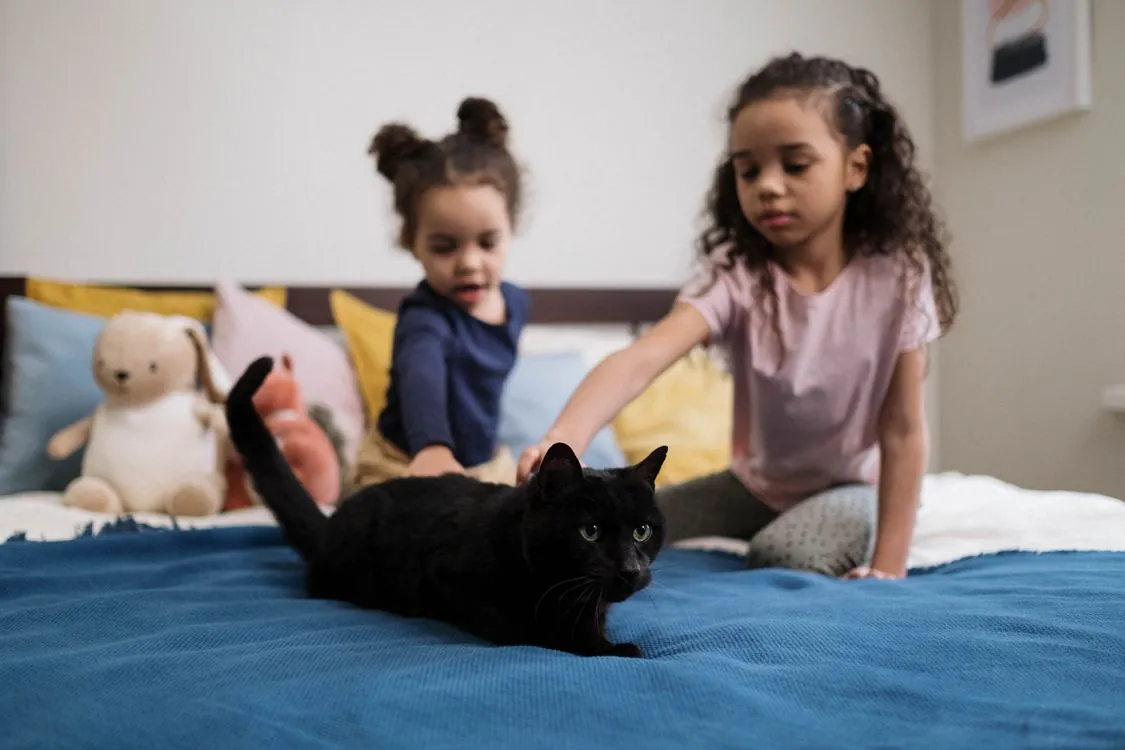
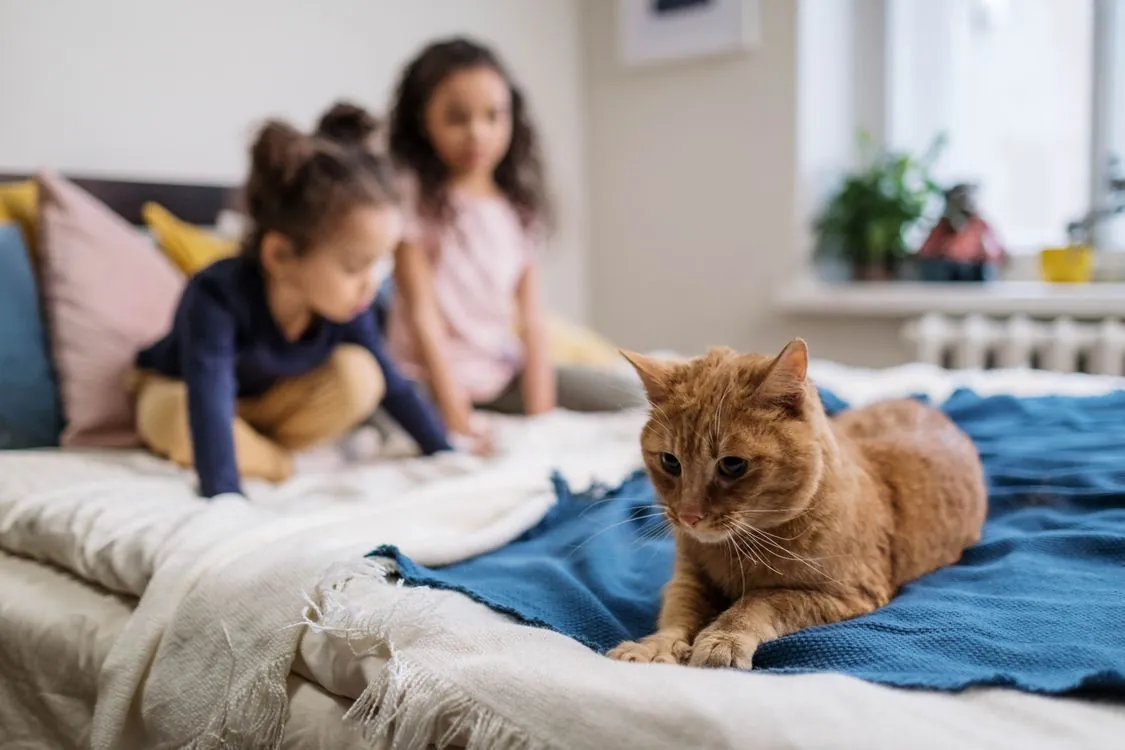
Toddlers and preschoolers: eyes on them, always. Toddlers grab, squeeze, pull tails, and fall over, often all in the same minute, and they do not yet understand that the cat feels what they do. Keep every interaction short, seated, and adult-led: sit on the floor, guide their hand to a slow stroke, and end the session while it is still going well. Never leave a toddler alone with any cat, however gentle. Owners on forums are blunt: families who run into trouble rarely have a “bad” cat — they have a child and a cat left to work it out unsupervised.
School-age children: supervised independence, earned gradually. This is where Maine Coons really shine. A child of seven or eight who can follow instructions can learn to feed the cat, refill the water bowl, and play properly with a wand toy — and those small jobs build a genuine bond. Let the child take on one responsibility at a time, and check it rather than assuming it. Keep an adult in earshot, and keep the carrying rule: a child may sit with the cat if the cat climbs onto their lap, but the cat is never lifted or held against his will.
Teenagers: trust, with real responsibility. A teenager who wants a Maine Coon in their room is usually a wonderful companion for one. Teens can handle the full routine — feeding, brushing, litter, noticing changes — and a Maine Coon will often pick a teenager as a favourite person. The main point at this age: the cat is a family commitment, not a bedroom accessory.
Teaching Children to Greet, Hold, and Leave Alone
Greeting. Teach your child to let the cat come to them: crouch down, stay still, hold out a relaxed hand, and wait. If the cat rubs against the hand, that is an invitation. If he walks past, that is an answer too. Breeders on YouTube recommend this “let them choose” approach: it teaches a child the cat has preferences, not a performance on demand.
Holding. The rule in our house is simple: we do not pick the cat up. If the cat climbs onto a lap by himself, sit still, stroke gently, and let him leave when he wants. If a child wants to hold a kitten, an adult sits with them and stays right there. Never let a child carry a large cat around the house, down stairs, or outside. That is where drops happen, and a dropped cat is a frightened cat — and a frightened cat scratches.
Leaving alone. The cat is left alone when he is eating, sleeping, in the litter box, and when he walks away. No following him to “finish the cuddle.” No waking him for a photo. Children who learn to leave a cat alone are children a cat learns to trust — and a cat who trusts your children will come back to them, again and again, on his own terms.
Safe Zones and Escape Routes: The Non-Negotiable Setup
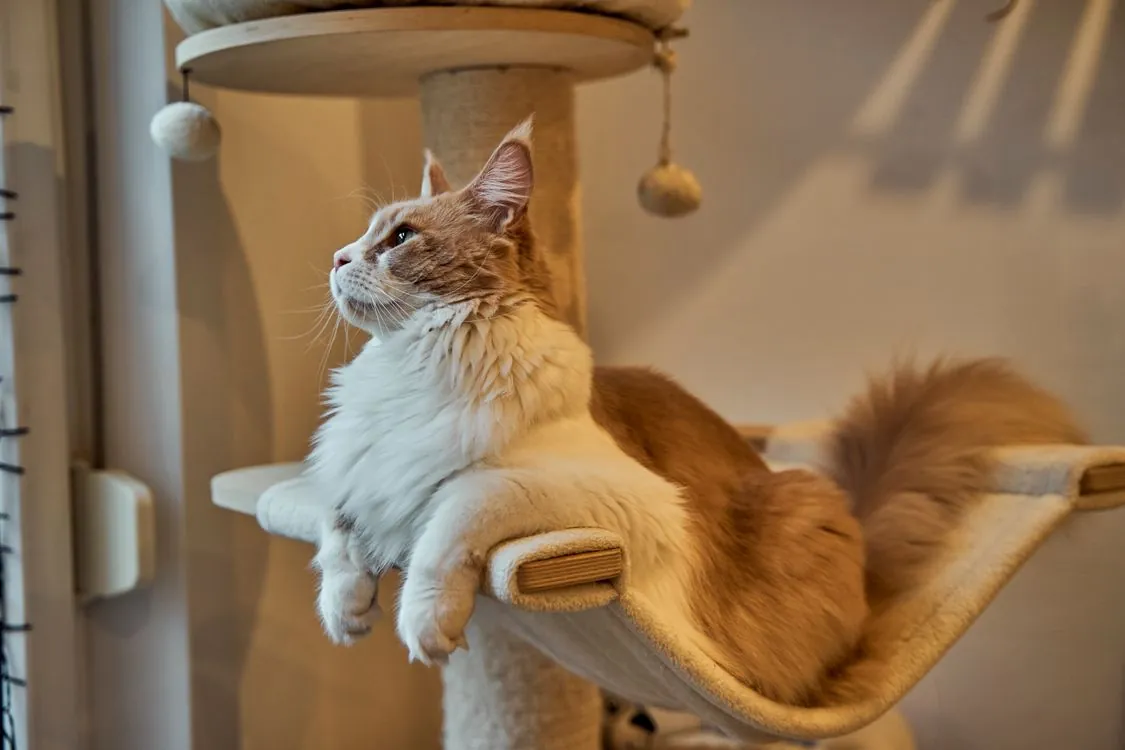
Every family cat needs places where children do not follow, and Maine Coons need them more than most — precisely because they are so tolerant.
Set up at least two safe zones. One should be high: a tall, sturdy cat tree or shelf the cat can reach but small children cannot, because height is how cats decompress. The other should be enclosed and quiet: a covered bed, or a room with a baby gate with a cat-sized gap. Escape routes matter just as much: arrange furniture so the cat always has two ways out of family rooms, and never let play happen in a dead end like a small bathroom. Families who give their Maine Coon a genuine retreat usually find he spends more time with them, not less, because he knows he can leave.
When the Cat Walks Away, That Is the Warning Sign
The single most useful thing you can teach a child about cats: walking away is not rejection. It is communication. A Maine Coon will rarely hiss or scratch first. Long before that, he gives polite signals — ears flattening, tail flicking, body going still, head turning away — and then he gets up and leaves. All of them mean: “I have had enough for now.”
Teach your children to celebrate the walk-away rather than chase it. “He’s telling us he’s done — good listening!” turns a disappointed child into one who feels clever for noticing. You never want a child who learns the cat must escalate — hiss, swat, scratch — before anyone listens. That is how children get scratched. If your cat walks away a lot, ask what changed: play too long, too loud, nowhere quiet to go?
Introducing a Kitten Into a House With Children
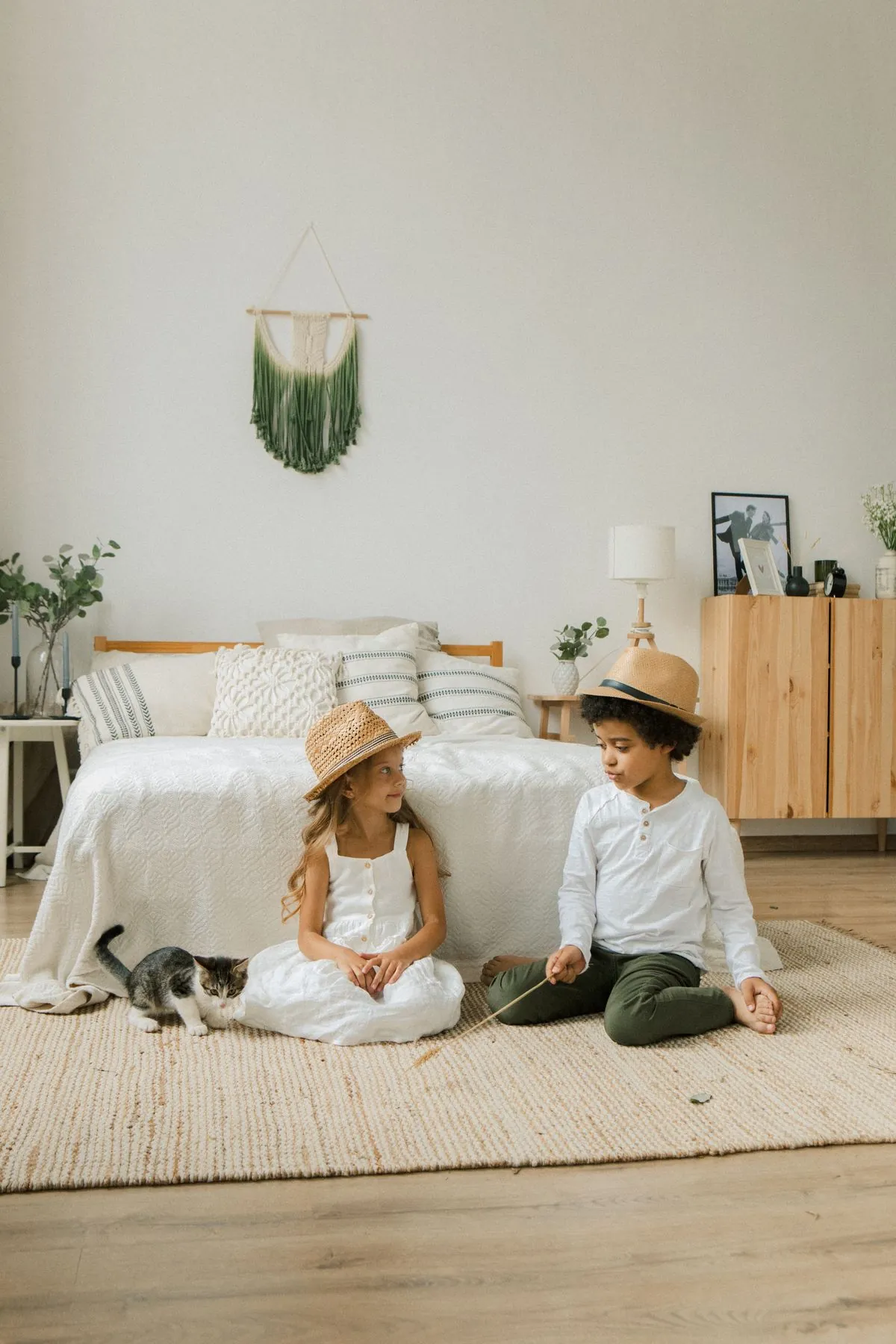
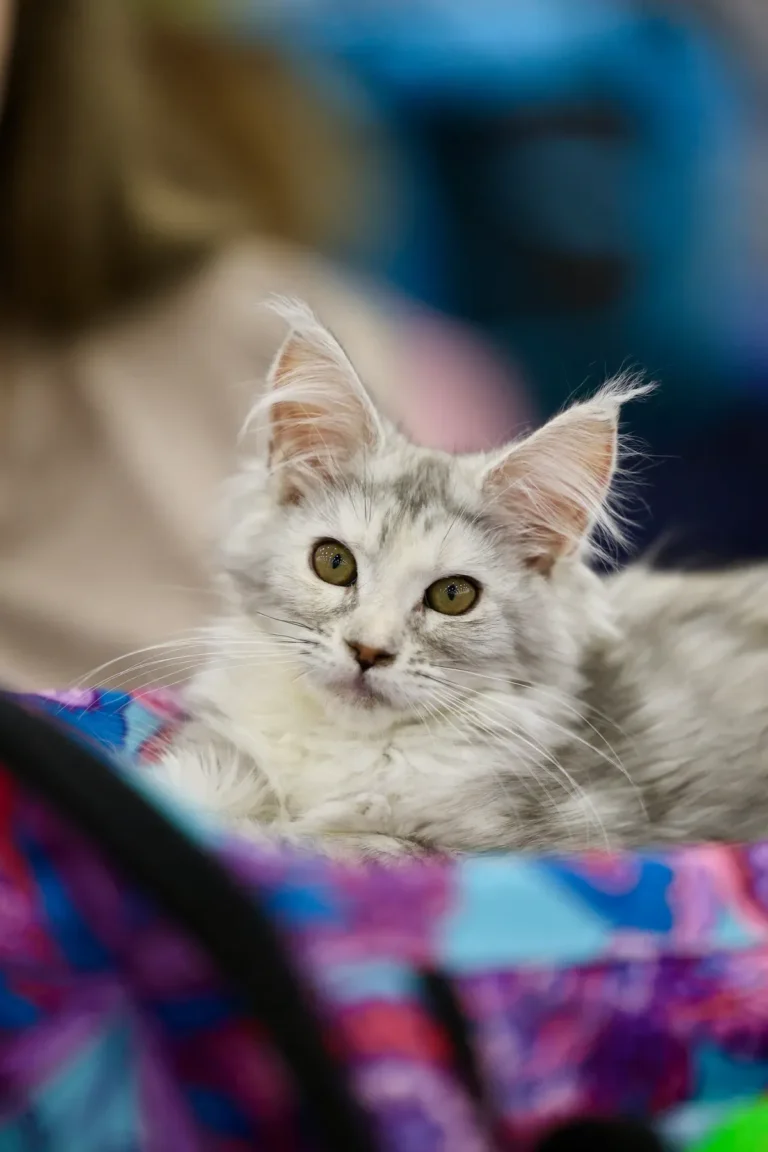
A kitten changes the equation: kittens are smaller, sharper, and far less patient than the adult gentle giant you are picturing. Kitten play includes biting, and a tired kitten will say so with teeth. That is normal, not a sign you picked the wrong kitten — but the first weeks need more structure.
Start with one room, and let the kitten learn it — litter box, food, water, bed, scratching post, hiding place — before he meets the full noise of the house. Introduce the children one at a time, seated on the floor, with a toy rather than hands as first contact. Keep first meetings to ten or fifteen minutes, ending while everyone is still happy. Breeders on YouTube recommend this slow, room-by-room approach; owners on Reddit say families who rush it spend the next month undoing a frightened kitten’s habit of hiding. Give the kitten a rhythm children can learn: play, then food, then rest.
For the full first-days checklist, see my guide to the Maine Coon first night at home, and for a second cat, whether Maine Coons need another cat.
When a Maine Coon Might Not Be the Right Fit
Honesty cuts both ways. A Maine Coon is probably not the right choice if your household cannot offer supervision for a toddler, if nobody has time for daily play and brushing, or if the cat would be expected to tolerate being carried, dressed up, or woken for entertainment. He is also a poor fit where a child’s allergies are severe, or shedding would become constant friction. None of that judges your family — it is a reason to wait a year, or meet an adult rescue whose temperament is already known.
For a balanced view of the breed, the Cat Fanciers’ Association and The International Cat Association both describe the Maine Coon as sociable and easygoing. Cornell’s feline health resources are worth bookmarking for children’s safety around cats. If a scratch or bite breaks the skin, clean it promptly and call your vet or doctor for advice.
Frequently Asked Questions
Are Maine Coons good with toddlers specifically?
They are among the more tolerant breeds with toddlers, but toddlers still need constant adult supervision around any cat. The risk is rarely aggression — it is size, clumsiness, and a toddler’s urge to grab.
Do Maine Coons scratch or bite children?
Any cat can scratch or bite when frightened, hurt, or pushed past its warnings. Maine Coons tend to walk away first — which is why teaching children to respect the walk-away matters. Most scratches happen when a child picks up, corners, or chases a cat who has already signalled he wants space.
At what age can a child be left alone with a Maine Coon?
There is no magic birthday. Unsupervised time should wait until a child can reliably follow the rules without an adult in the room — usually well into school age, and only in short stretches at first.
Is a kitten or an adult better for a family with children?
It depends on your children’s ages. A kitten grows up with your children but needs more supervision through the sharp, bitey kitten months; an adult cat’s temperament is already known, which suits families with toddlers. Meet the individual cat either way.
Should children help look after the Maine Coon?
Yes, in age-appropriate pieces: school-age children can feed, refill water, and play with a wand toy under supervision; teenagers can take on brushing and litter duties. Just check the jobs are done.
The Bottom Line for Families
A Maine Coon is good with children in the way that matters most: patient, sociable, playful, and forgiving of a busy, noisy family home. He is not indestructible, safe to leave unsupervised with a toddler, or happy to be carried around like a toy. The families who love this breed most treat that distinction seriously — they teach the greeting, protect the walk-away, build the safe zones, and let the friendship grow at the cat’s pace. Do that, and you get a giant, chirping cat who chooses your children because he has learned they are safe people to be around.