Maine Coon Lifespan: How Long They Live & Health Issues to Watch
When I brought home my first Maine Coon, I googled “how long do Maine Coons live,” saw “12 to 15 years,” and filed it away. Then I started talking to other owners, lost one of my own far too early, and nursed another well into her teens. The number on the screen turned out to be the least useful part of the answer.
How Long Do Maine Coons Live?
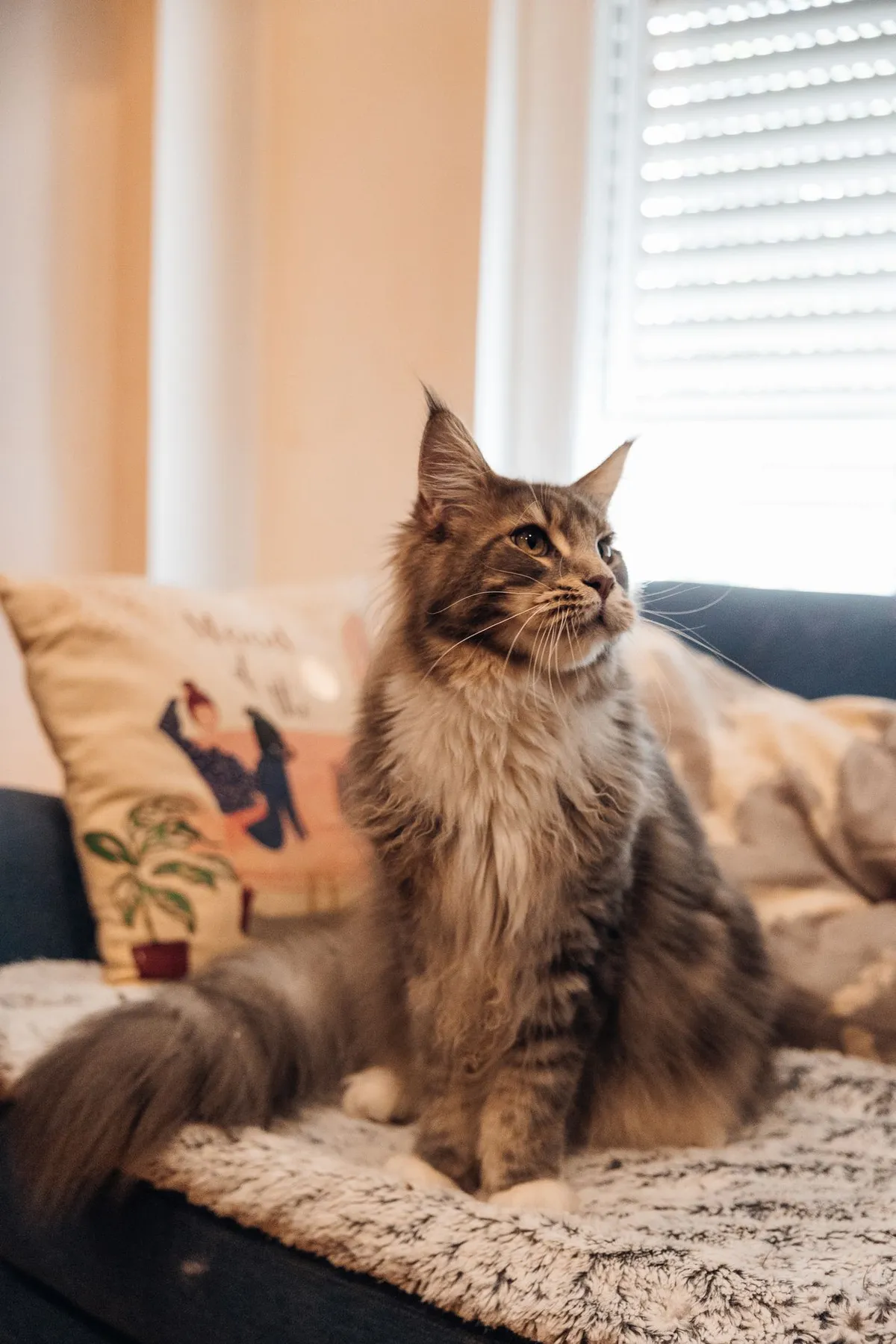
Most sources put the Maine Coon lifespan at 10 to 15 years, and the Governing Council of the Cat Fancy — one of the major cat registries — gives that same 10–15 range for the breed. That is the realistic baseline.
But averages hide the spread. A large Swedish insurance study found that about 90% of Maine Coons were still alive at 5 years, 74% made it to 10, and roughly half were still living at 12.5 years. The middle of the curve really is the early teens.
What convinced me more than any study was a long thread in a Maine Coon owners’ Facebook group. Someone asked for real numbers because their own cat was 16 and her vet said that was unusually old. Owners answered with exact ages: cats who lived 9 years, cats who made it to 21 and 22. Most landed in the mid-teens to early twenties. The longest-lived cats were indoor cats, kept at sensible weight, whose owners took small changes seriously.
Plan for the solid middle — 12 to 14 good years — and treat anything beyond that as a gift you earned through daily care.
What Actually Affects How Long a Maine Coon Lives
Genetics deals the opening hand. After that, three things matter more than most owners realize.
Indoor vs. outdoor life. This is the single biggest lever. Outdoor cats face cars, infections, parasites, fights, and toxins. My Maine Coons are indoor cats with a secured balcony — fresh air without the risks. If you want outdoor time, a catio or harness walks work; I wrote about that decision in my post on whether Maine Coons can go outside.
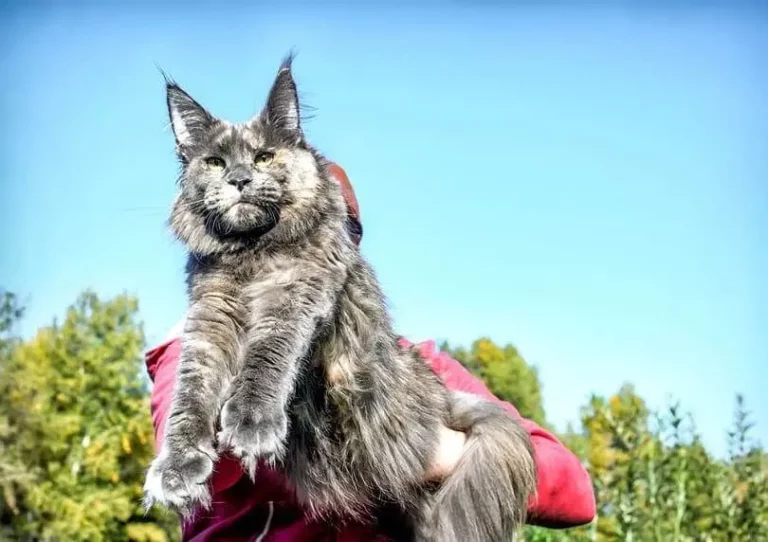
Weight. Maine Coons are large — males can reach 15 to 20 pounds of perfectly normal cat — which makes it genuinely hard to tell when “big” becomes “too big.” Excess weight strains the joints and the heart. Learning to feel for ribs and waistline matters more than the scale; my guide on how to tell if your Maine Coon is overweight walks through the checks I use on my own cats.
Breeder screening. A kitten from health-tested parents starts life with better odds — not a guarantee, but a calculated risk instead of a blind one. More on exactly what to ask below.
The Three Health Issues Every Maine Coon Owner Should Know
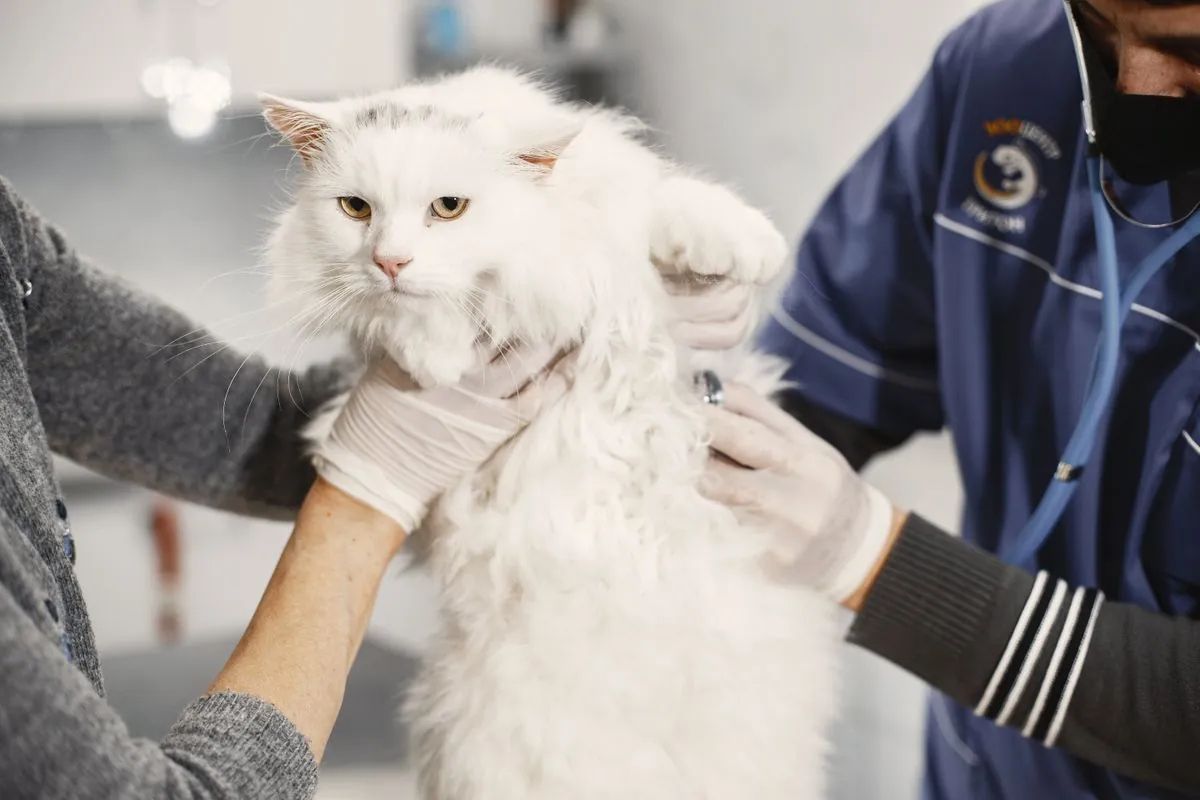
Maine Coons are generally sturdy, but three conditions show up in this breed more than in others. Understanding them plainly — without panic — is part of the job.
1. Hypertrophic Cardiomyopathy (HCM)
HCM is the most common heart disease in cats, full stop. The heart muscle walls thicken, the pumping chambers shrink, and the heart works harder to move blood. Cornell’s veterinary school confirms Maine Coons are among the breeds predisposed to it.
What makes HCM unsettling is how quiet it can be. I read one owner’s account of losing a seemingly healthy 9-year-old Maine Coon suddenly, with the vet suspecting a heart event — the advising vet said sudden death in cats is often heart-related and recommended an early heart ultrasound for any future cat. There is often no warning. HCM is also why cats can develop blood clots that lodge in the hind legs — sudden hind-leg weakness or paralysis is an emergency, not a wait-and-see.
There is a known gene variant associated with HCM in Maine Coons — A31P in the MYBPC3 gene — and a DNA test exists for it — here is our full guide to HCM screening for Maine Coons. But a simple cheek swab is not the whole story. UC Davis research found that HCM occurred in about 5.4% of Maine Coons with the mutation and about 5.4% without it — the known mutation is not the only cause, and a “DNA-clear” result does not mean a clear heart. This is why many breeders and cardiologists say the DNA test and the echocardiogram (heart ultrasound) answer different questions. A breeder who does both, with a board-certified cardiologist reading the echo, is doing it properly.
What you can do at home: count your cat’s sleeping breathing rate. A healthy resting cat breathes fewer than 30 times per minute (Cornell’s cardiologists put normal resting rate at 15–30; consistently above 35 at rest warrants a vet call). Count chest rises for 30 seconds while your cat is deeply asleep, double it, and do it once a month so you know your cat’s normal. It costs nothing and it is the earliest at-home signal you get.
2. Hip Dysplasia
Hip dysplasia sounds like a dog problem, but it shows up in large cat breeds too, including Maine Coons. The hip joint forms loosely or malforms, and over time that can mean pain, arthritis, and reduced mobility. There is no simple DNA test for it — screening is done by X-raying the hips of breeding cats (some breeders have them graded through the OFA system). For living with the day-to-day side, read hip dysplasia signs and care in Maine Coons.
Watch for the subtle signs: reluctance to jump to favorite high spots, a stiff or wobbly hind gait, or a cat who starts sleeping on the floor instead of the cat tree. These changes creep in slowly. Weight control is your biggest tool — every extra pound loads those joints — along with low-impact play and non-slip surfaces where your cat jumps down.
Mild cases are managed with weight control and pain relief under a vet’s guidance; severe cases sometimes need surgery. Many cats with imperfect hips live full, comfortable lives if caught early and kept lean.
3. Spinal Muscular Atrophy (SMA)
SMA is an inherited condition where motor neurons in the spinal cord are lost, causing progressive muscle weakness, mostly in the hind legs. Signs usually appear at 3 to 4 months: a swaying hind gait, standing with the hocks nearly touching, difficulty jumping. It is inherited as a simple recessive trait — a kitten needs two copies of the variant to be affected — and there is a reliable DNA test, so responsible breeders can avoid producing affected kittens entirely.
The part owners rarely hear: SMA is not painful, and affected cats can live comfortably. UC Davis’s veterinary genetics lab states plainly that affected cats can live a comfortable life indoors, and many stabilize. If you are buying a kitten, just confirm the breeder DNA-tests for it. That is the whole story.
What to Ask a Breeder About Health Screening
Owner communities argue about this endlessly: some breeders DNA-test only, others echo every breeding cat yearly and consider DNA-only insufficient. Cut through it with these questions:
- Do you DNA-test breeding cats for the known Maine Coon HCM variant and for SMA? Ask to see the actual results, not just “we test.”
- Do you echocardiogram breeding cats, and how often? A cardiologist’s echo, repeated every year or two, is the gold standard. A one-time echo years ago tells you little about today.
- Are hips X-rayed before breeding? There is no gene test for hip dysplasia; imaging is the screening.
- What does your health guarantee cover, and for how long? Read the terms rather than being comforted by the word “guarantee.”
A breeder who answers these directly and shows paperwork is what you want. One who gets defensive is your answer.
Warning Signs Owners Notice at Home
You know your cat’s normal. These are the changes worth a vet call:
- Breathing: resting rate consistently over 30–35 breaths per minute, panting at rest, open-mouth breathing, or visible effort — call the vet, urgently if open-mouth breathing.
- Mobility: limping, stiffness after rest, reluctance to jump, or a new wobbly hind gait.
- Appetite and weight: not eating for more than a day or two, drinking far more or less water, or weight change of more than about 10%.
- Energy: hiding, sudden lethargy, or a cat who stops grooming.
- Litter box: straining, going outside the box, or very different urine output.
I am not diagnosing anyone’s cat here — a blog post should not try. These are prompts to call your veterinarian, which is always the right move when something shifts.
Senior Maine Coon Care
Maine Coons are generally considered senior around age 10 — earlier than people expect, since they mature slowly and can stay playful for years.
Vet visits go twice yearly after 10. Senior bloodwork catches kidney changes, thyroid shifts, and other age-related issues while they are still manageable. Dental health matters too — dental disease is common and it affects eating, which affects everything.
Diet shifts toward senior needs. Older cats can lose muscle mass, so protein quality matters. I feed wet food as the base — hydration supports kidneys — and keep a running water fountain, a tip from long-time owners in breed groups whose cats lived into their twenties. My full rundown on what I feed is in my post on the best cat foods for Maine Coon cats.
Make the house easier. Senior joints appreciate low-sided litter boxes, ramps or steps to favorite perches, food and water on each floor they use, and warm resting spots. Arthritis is one of the most common reasons owners lose older cats — managing it early with vet guidance and weight control makes a real difference.
Watch the weight both directions. Obesity stresses joints and heart; weight loss in a senior can signal thyroid, kidney, or dental trouble. Monthly weigh-ins catch both.
For a complete walkthrough, see my guide to helping your Maine Coon age gracefully.
What I Do for My Own Cats
I am not a veterinarian, and I do not play one at home. What I do is boring and consistent: my cats live indoors with balcony access, I weigh them monthly and keep them lean, I count sleeping breathing rates every month or two, and vet visits are annual for the young ones and twice yearly for the seniors. I feed mostly wet food, keep water fountains running, and I chose my cats from breeders who DNA-tested and echoed their breeding cats and showed me the results.
The owners in those longevity discussions who had 18-, 20-, 22-year-old Maine Coons were not doing anything dramatic either. They were doing the boring stuff, for years.
Frequently Asked Questions
What is the most common cause of death in Maine Coons?
There is no single registry tracking this for the breed, so be skeptical of anyone who states one confidently. In owner communities, the causes people report most for older Maine Coons are kidney disease, cancer, and heart disease (HCM), with arthritis and hyperthyroidism also coming up. These are owner-reported patterns, not veterinary statistics.
Can HCM be prevented?
Not entirely — and be wary of any breeder who claims otherwise. Responsible breeding reduces the odds: DNA testing for the known MYBPC3 variant plus regular echocardiograms by a cardiologist on breeding cats, and removing affected cats from breeding. Even then, HCM can still appear, which is why at-home monitoring and regular vet checks matter regardless of your cat’s papers.
At what age is a Maine Coon considered a senior?
Around 10 years old. Because Maine Coons mature slowly — they keep growing until 3 to 5 years — many stay playful well past that, so the number surprises people. From 10 on, plan on twice-yearly vet visits and start watching joints, weight, and dental health more closely.
How often should my Maine Coon see the vet?
Once a year for healthy adults, twice a year from around age 10. I know twice-yearly visits sound like a lot, but senior bloodwork is how you catch kidney and thyroid changes while they are still easy to manage. The owners I know with the oldest cats all say the same thing: the vet saw their cat often enough to notice small shifts early.
Should I get pet insurance for a Maine Coon?
This comes up constantly in owner groups, and honestly, for this breed I think it is worth serious thought. Maine Coons are predisposed to HCM, and a single cardiology workup or emergency visit costs far more than a year of premiums. The key rule owners repeat: insure them young, before anything becomes a I worked through the full cost math in my guide on whether pet insurance for Maine Coons is worth it. “pre-existing condition.” I am not recommending any company — just saying the math favors early coverage for a breed with known heart risk.
A note: I write from years of living with these cats, not from a veterinary degree. This is meant to help you ask better questions and notice things earlier — not to diagnose your cat. When something changes, call your vet.