11 Unique Maine Coon Personality Traits Every Owner Should Know
Living with Maine Coons has taught me that they are not really like other cats. They chirp instead of meow, paddle in their water bowls, follow you around like an oversized shadow, and take years to fully grow up. If you are considering the breed, or you already share your home with one and keep wondering “is this normal?”, this list is for you.
These are the eleven personality traits I see most consistently in my own cats, the quirks that make Maine Coons equal parts hilarious and endearing.
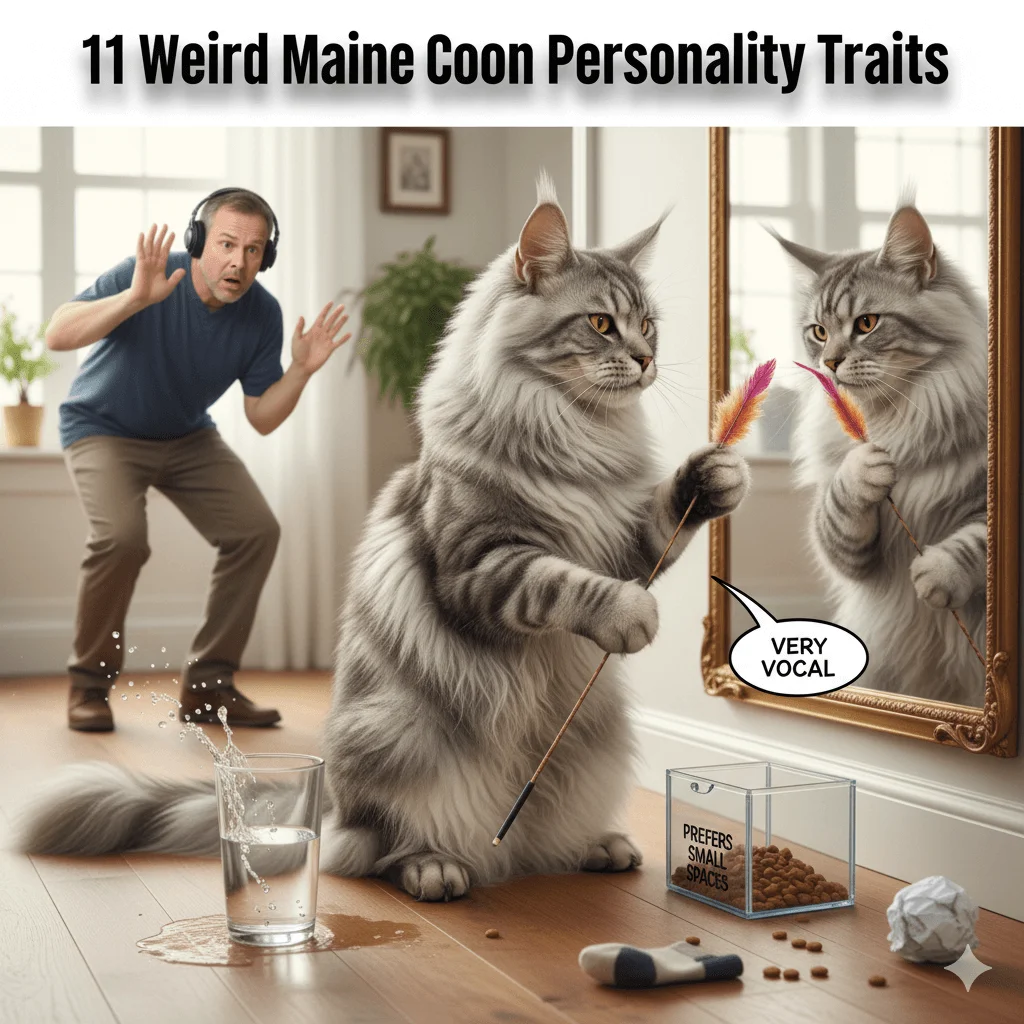
11 Maine Coon personality traits
1. Chirping instead of meowing
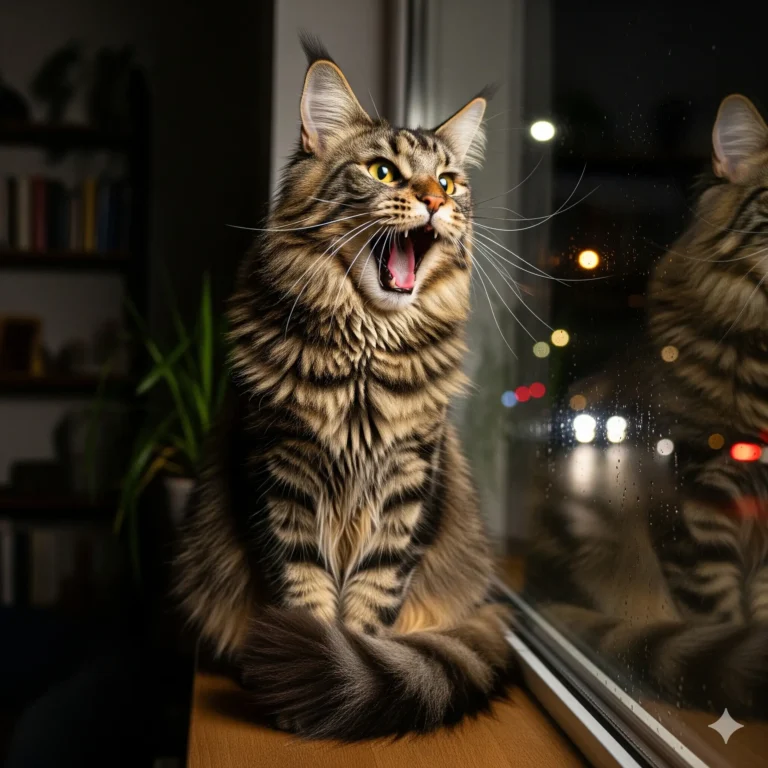
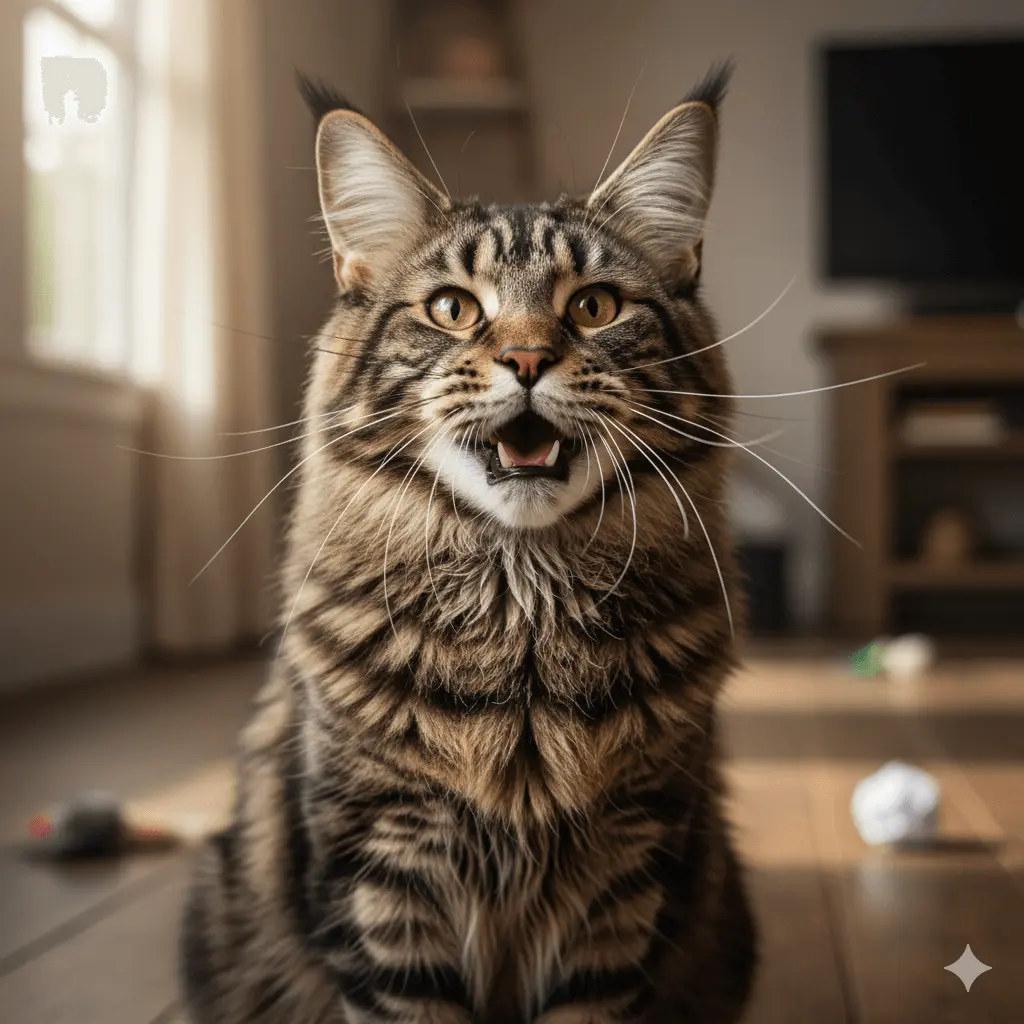
Maine Coons trill and chirp far more than they meow. It is a short, birdlike sound, softer than a meow, and mine use it constantly: when they spot a bird through the window, when dinner is late, when they just want to announce their presence in a room. It genuinely sounds like they are holding a conversation with you, and after a while you will catch yourself chirping back.
2. Love for water
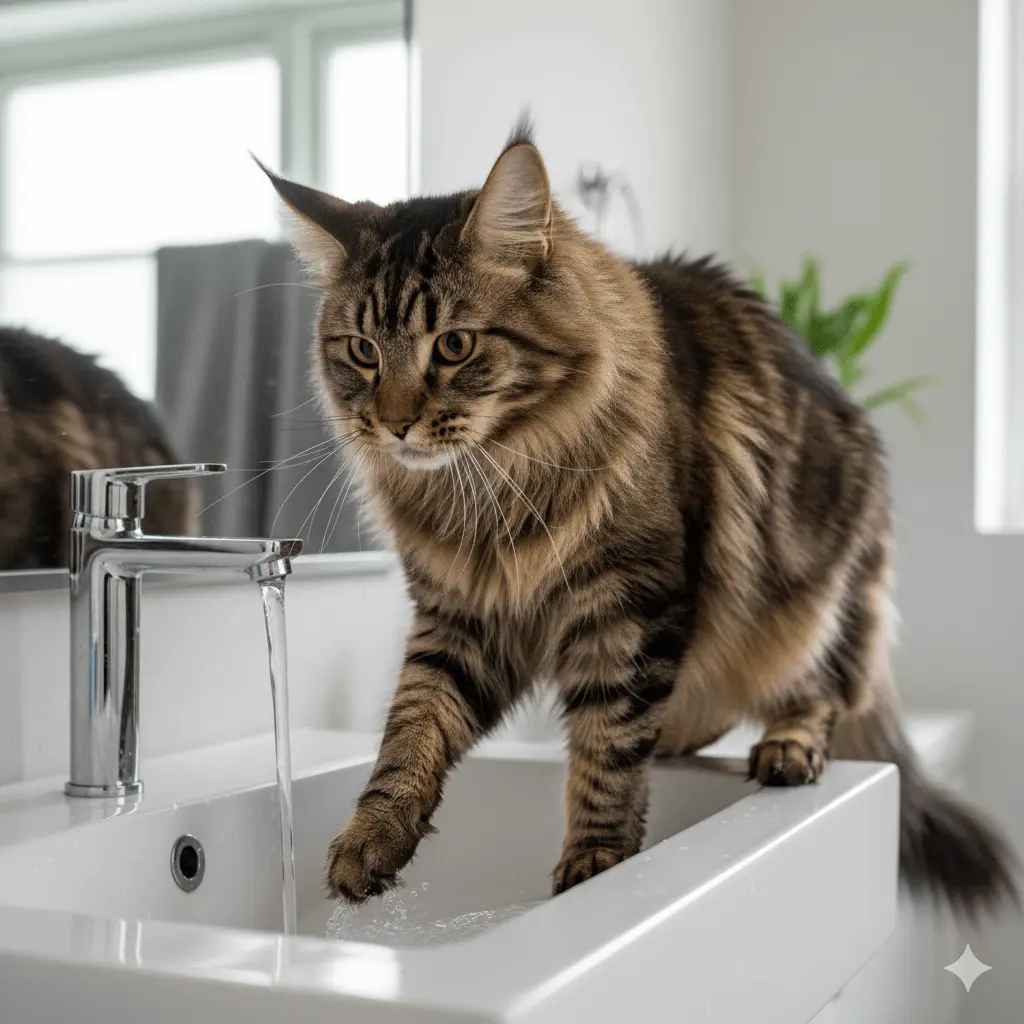
Most cats treat water like a personal insult. Maine Coons treat it like a hobby. Mine dip their paws in the water bowl before drinking, bat at dripping taps, and one of them tries to climb into the shower if the door is left open. Their coats are semi-water-resistant, which may explain the fascination. It is messy, it is funny, and it is one of the breed’s signature quirks.
3. Dog-like loyalty
Maine Coons pick their person and stick to them. They greet you at the door, follow you from room to room, and supervise everything from cooking to working. This is not clinginess so much as companionship; they want to be wherever the action is. If you have ever wished your cat acted a little more like a dog, this breed is the closest you will get. I wrote more about this side of them in my piece on why Maine Coons make good pets.
4. Huge appetite
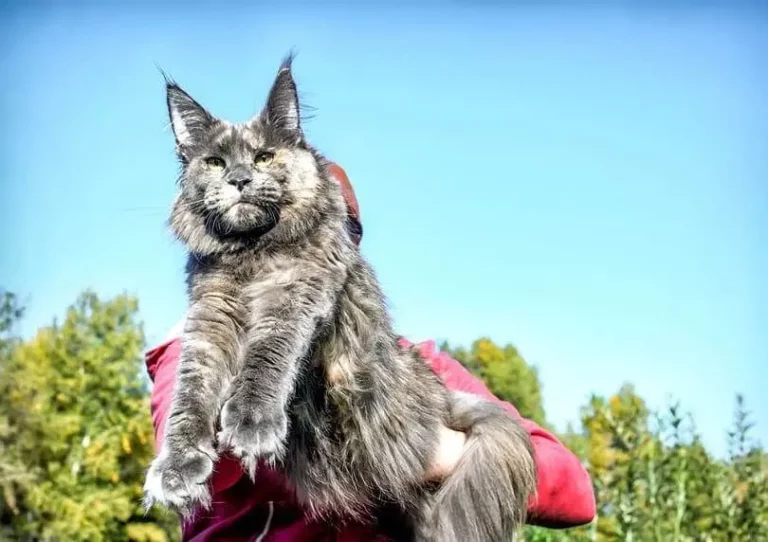
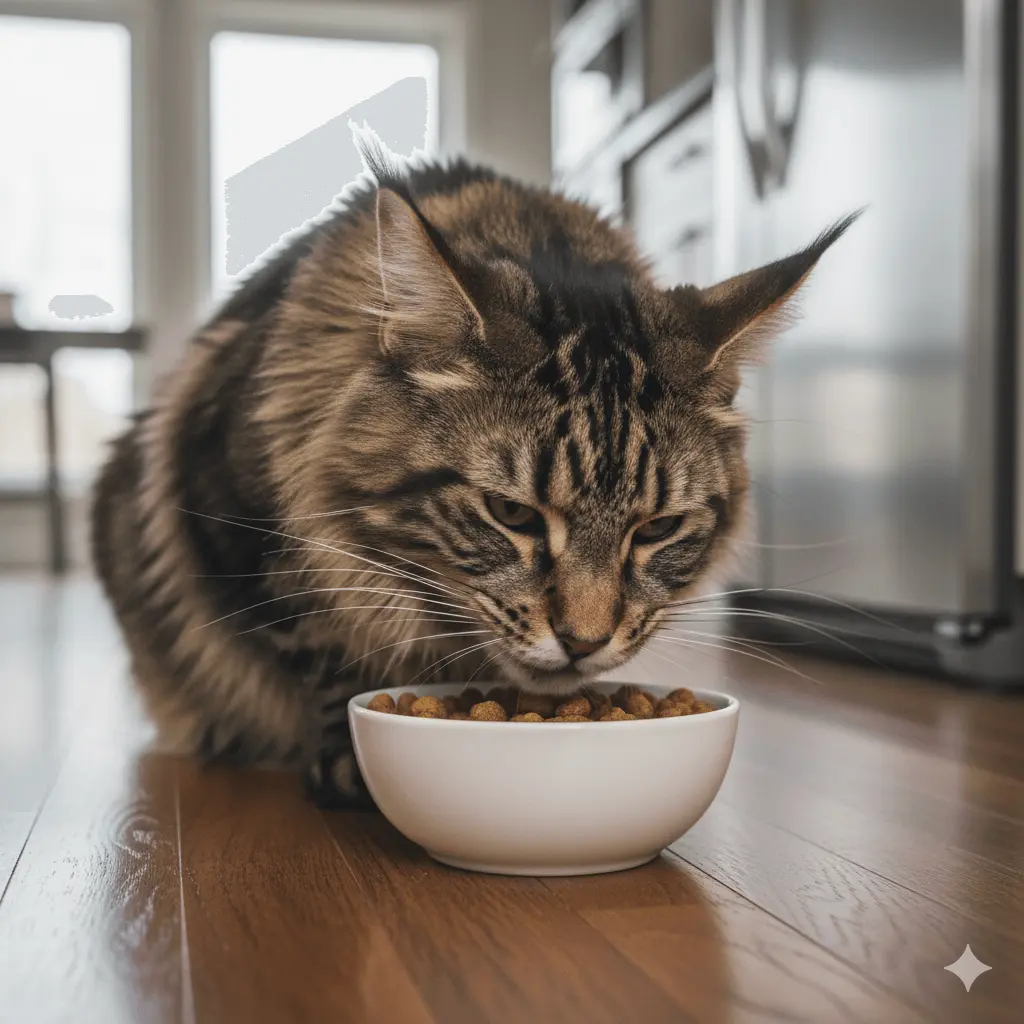
These are big cats with big appetites. An adult male can weigh twice what a typical housecat weighs, and he eats accordingly. Mine are enthusiastic, scheduled eaters who will remind you loudly if a meal is late. The flip side is that you need to watch portions: a food-motivated Maine Coon can drift into overweight territory without you noticing under all that fur. Learn how to tell if your Maine Coon is overweight so you can keep the appetite in check.
5. Obsession with high places
Maine Coons love altitude. The top of the bookshelf, the highest shelf of the cat tree, the refrigerator, if it is high, they want to be on it. A sturdy, tall cat tree is not optional with this breed; it is furniture. Mine survey the entire household from above like small, fluffy monarchs, and honestly the view from up there does look good.
6. Slow maturity
Most cats are fully grown by their first birthday. Maine Coons keep growing, physically and mentally, until they are three to five years old. That means you get an extended kittenhood: years of gangly limbs, oversized paws, and goofy behavior in an increasingly enormous body. It is one of my favorite things about the breed, though it does mean you should not judge an adolescent Maine Coon’s final size or temperament too early.
7. Gentle giants
For all their size, Maine Coons are famously gentle. They are careful with children, tolerant of handling, and slow to scratch or bite. My cats let toddlers drape themselves over them with saintly patience. This gentle streak is why the breed has its “gentle giant” reputation, and in my experience it is thoroughly deserved.
8. Playful into adulthood
Many cats retire from play by middle age. Maine Coons never got the memo. Mine still chase feather wands and wrestle with toy mice at an age when most cats have settled into full-time napping. Daily play sessions are a must, not just for exercise but because a bored Maine Coon will invent entertainment, usually involving your belongings.
9. Curious observers
A Maine Coon does not just live in your home; it studies it. Mine watch everything: the dishwasher being loaded, bags being unpacked, guests arriving. They are not always participating, but they are always monitoring. New object in the house? Expect a full inspection, preferably with a paw dipped in it first.
10. Affection on their terms
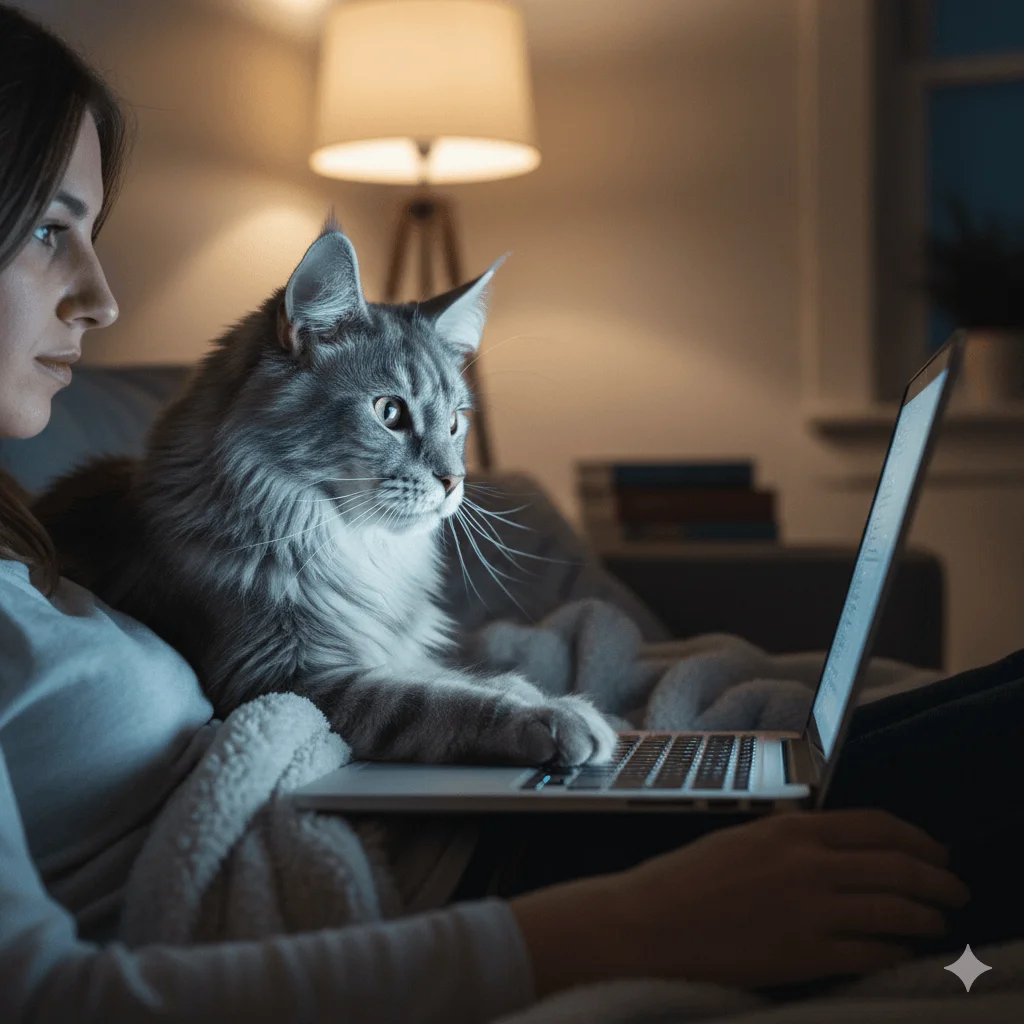
Here is the nuance people miss: Maine Coons are deeply affectionate, but they are not always lap cats. Mine will lean against my leg, rest a paw on my arm, or sleep pressed against my side, but being scooped up and held like a baby is tolerated rather than requested. Learn to read their version of affection, the headbutts, the slow blinks, the decision to be in the same room as you, and you will feel thoroughly loved.
11. Unique sleeping positions
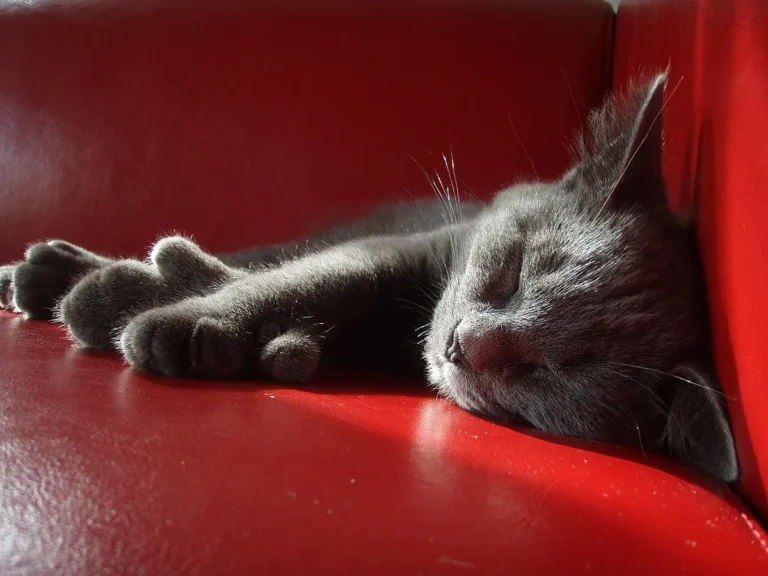
Maine Coons sleep like they have no bones. Sprawled belly-up with paws in the air, draped over the arm of the sofa, wedged into boxes a quarter of their size, I have photographed mine in positions that defy physics. With all that fur, they also run warm and will migrate around the house at night hunting for the perfect cool spot. Do not be surprised to find yours in the bathtub.
Living with the quirks
None of these traits are problems, but a few need managing. The appetite needs portion control, the energy needs daily play, and the intelligence needs stimulation, puzzle feeders and training games work wonders. If a quirk tips into something destructive, my guide to Maine Coon behavior problems covers how to redirect it.
The Cat Fanciers’ Association breed profile describes the Maine Coon as sociable and adaptable, which matches what I see every day. They are big, funny, loyal cats with opinions about everything, and once you have lived with one, ordinary cats seem a little quiet by comparison.
Frequently Asked Questions
Are Maine Coons really chirp instead of meow?
They do both, but chirping and trilling are far more common than in most breeds. Mine chirp when excited, curious, or watching prey, and meow mostly when they want something specific, like dinner served faster.
Do Maine Coons like to cuddle?
Many do, but on their own terms. Expect leaning, headbutts, and sleeping pressed against you rather than long sessions of being held. Each cat is different; some are full lap cats, others show love by simply staying near you.
Are Maine Coons good with children and other pets?
Generally yes. Their gentle, patient temperament and sturdy size make them one of the better breeds for busy family homes. As always, supervise young children and introduce new pets gradually.
Why does my Maine Coon follow me everywhere?
It is the breed’s social nature. Maine Coons are companion cats that want to be part of whatever you are doing. Following you around is affection, not anxiety, in most cases. If it comes with nighttime crying or distress when you leave, though, it is worth looking deeper.
At what age do Maine Coons calm down?
They mature slowly, reaching full size around three to five years. Most stay playful well into adulthood, but the wildest kitten energy usually settles somewhere between two and three years old.