Your Maine Coon Kitten’s First Night Home
Your maine coon kitten first night home is one of those evenings you will remember for years. I still remember mine clearly. The drive home felt ten times longer than it was, and when we finally opened the carrier, this tiny fluffy stranger blinked at us like we had interrupted something important. Then she walked straight under the sofa and refused to come out for three hours.
If you are picking up your kitten today or tomorrow, take a breath. Night one does not have to be perfect. It just has to be calm, safe, and predictable for a baby who has just lost the only world she has ever known. Here is exactly how I handle it, with a few things I learned the hard way.
Set Up the Safe Room Before Pickup Day
The single most useful thing breeders, vets, and owners in cat communities all agree on is this: start the kitten in ONE room. Not the whole house. A Maine Coon kitten on her first night is scared, and a small space she can learn completely is far more comforting than rooms she cannot map.
A spare bedroom is ideal. A bathroom works if that is what you have, as long as it is not freezing or echoey. Set it up before you leave, because once she is home you will not want to be dragging furniture around while she hides.
What goes in the room:
- A litter box with low sides, placed away from food. Ask your breeder which litter they used. Owners on Reddit say matching the breeder’s litter avoids a surprising number of first-night accidents, and my experience backs that up.
- The same food she has been eating, in a shallow bowl, plus fresh water. Switching food on night one is asking for an upset stomach.
- A soft bed or folded blanket, but also a hiding spot. A cardboard box on its side with a blanket inside beats an expensive igloo bed for most new kittens. One of my girls slept inside a shoe box for a week while a beautiful bed sat empty beside it.
- A small scratching post or cardboard scratcher.
- Two or three simple toys: a soft ball, a crinkly toy, a wand toy you only use under supervision.
- No dangling blind cords, no toxic houseplants, no small swallowable objects, no plug sockets near water. PetMD’s guide to bringing a new kitten home recommends clearing anything hazardous from the kitten’s space before arrival, and TICA’s essential supplies checklist makes the same point about preparing a quiet, safe area.
One more thing before you go: keep the rest of the house quiet that evening. No dinner party, no rowdy introductions to the dog.
What to Ask the Breeder Before You Leave

This is the step most new owners skip. Before you walk out of the cattery, make sure you leave with four things:
- Something that smells like home. A blanket or towel from the kitten’s nest, carrying the scent of her mother and littermates. Good breeders usually offer this. If yours does not, ask. Nothing settles a new kitten faster, because a cat’s world runs on smell. Put it in the carrier for the drive, then in her bed in the safe room.
- A sample of the food she eats. Enough for at least a week. Same brand, same recipe.
- The litter she uses. Same brand and type.
- Her health records and the vet’s name. You will want these anyway, and I cover what comes next in my first vet visit checklist.
Breeders on YouTube who film pickup day often show this exact ritual, and owners in Maine Coon groups say the scented blanket was the difference between a kitten that cried for hours and one that curled up and slept. I believe it.
The First Hours: Let Her Lead
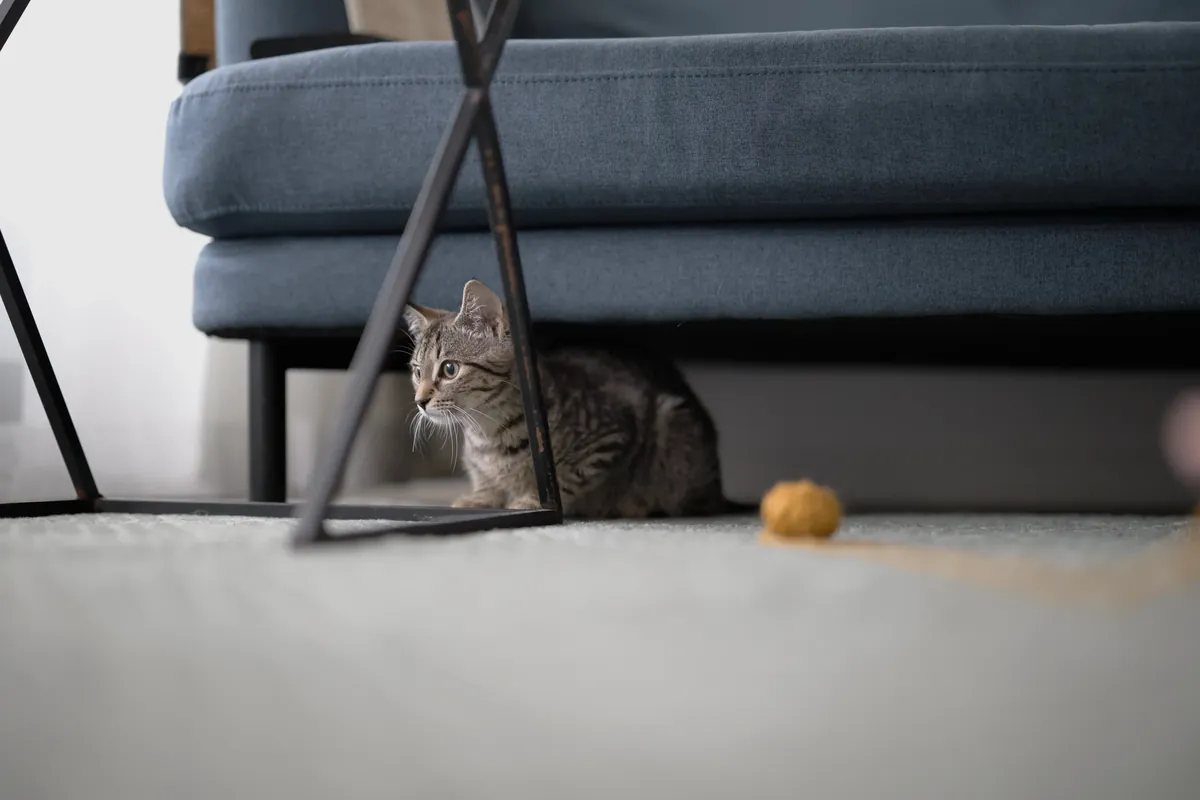
You will be tempted to shower her with attention the second the carrier opens. What actually works: set the carrier down in the safe room, open the door, sit on the floor a little distance away, and wait.
Some Maine Coon kittens march straight out and start investigating. Many owners report their kitten walked out and chose a lap within the hour. Others vanish under the bed and stay there until midnight. Both are completely normal. Maine Coons tend to process new situations before reacting, so do not read a quiet first evening as a problem.
While you sit there, talk softly. The point is that she learns your voice means nothing scary. If she comes to you, let her. If she retreats, let her. Chasing a frightened kitten to cuddle her is how night one goes wrong.
Show her the basics once, gently: set her near the litter box, then near the food and water. Then back off and let the evening unfold at her pace.
Feeding on Night One
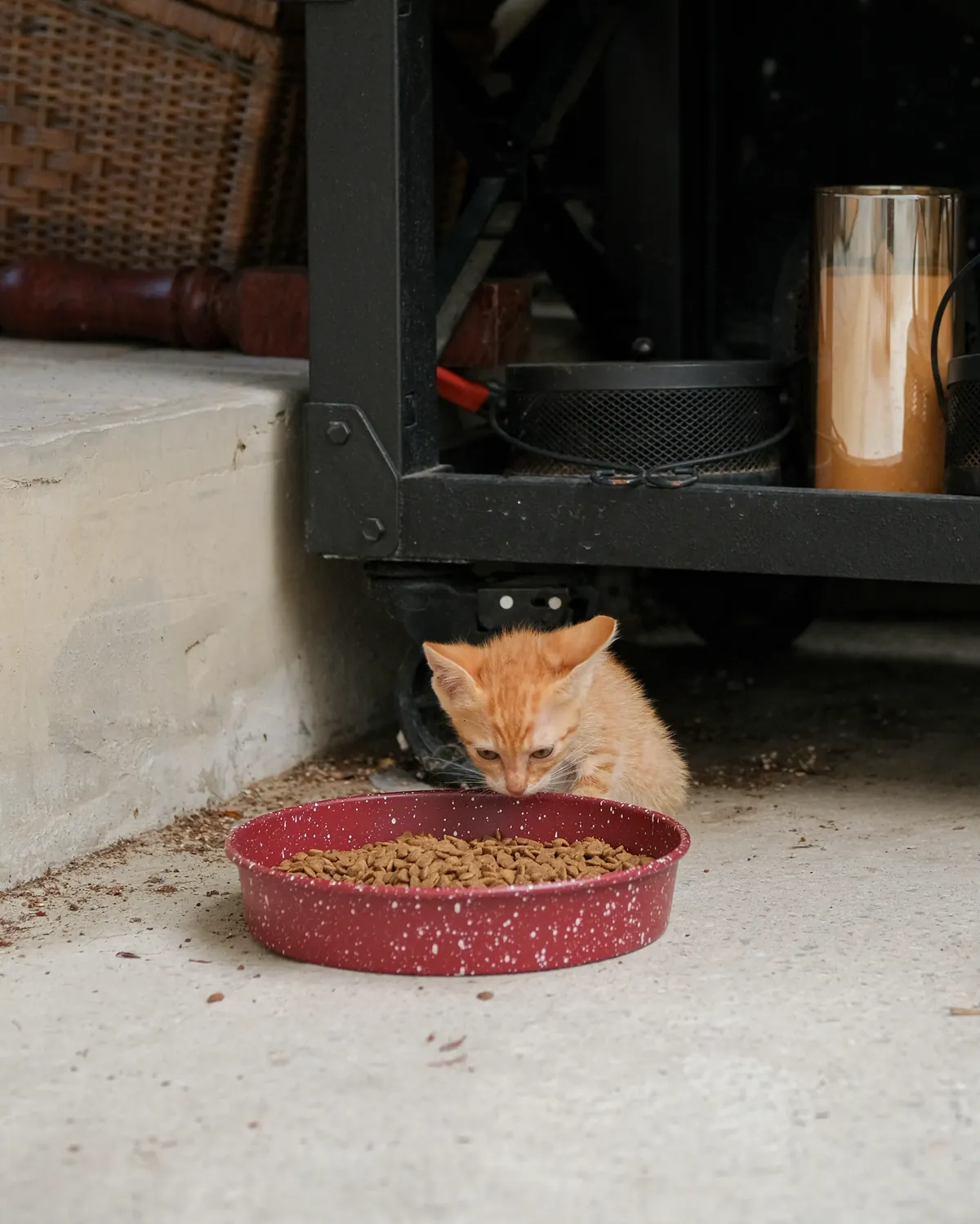
Offer the breeder’s food that evening and do not panic if she ignores it. A kitten who skips dinner on night one is extremely common. Travel stress, new smells, missing siblings, it all suppresses appetite, and it almost always returns within 24 hours.
Keep the food near her hiding spot. A kitten under the bed will not cross open floor to find a bowl. Keep water in a separate shallow bowl away from the food. If she has not eaten or drunk anything by the next evening, call your breeder or vet, but night one fasting alone is not an emergency. No new foods tonight. Her stomach has enough to handle.
When Your Maine Coon Kitten First Night Home Includes Crying
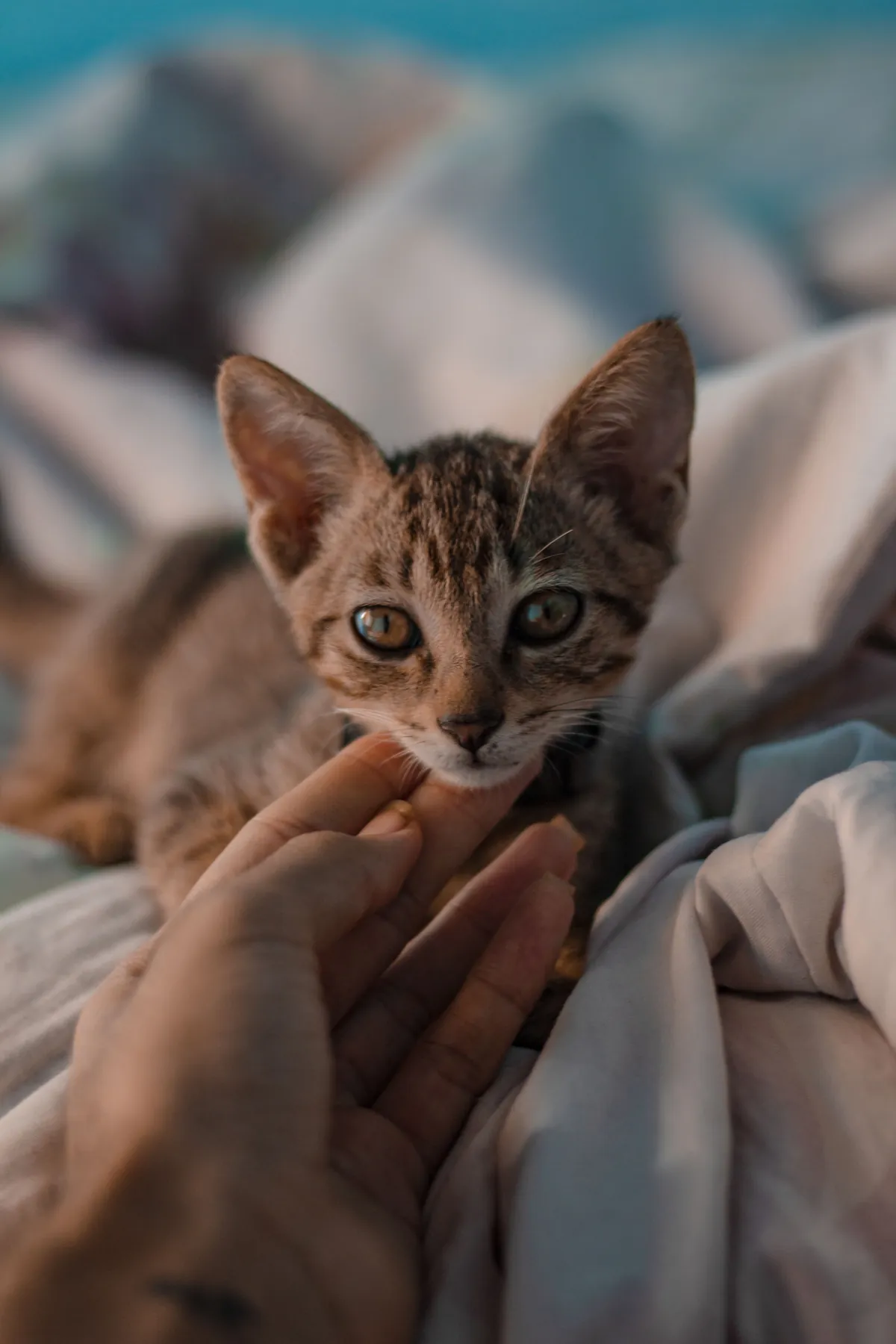
Sooner or later on night one, many kittens cry. It might be soft trilling, which is a Maine Coon specialty, or full little meows at 2 a.m. She has just been separated from her mother and littermates for the first time in her life. She is calling for them. (If crying becomes a nightly pattern rather than a night-one thing, I cover that in why your Maine Coon cries at night.)
Here is what I do when it happens:
- Go to her. Sit with her in the safe room for a few minutes. A calm hand and a soft voice are not spoiling her. They are teaching her that someone answers.
- Warm something up. A warm, not hot, water bottle wrapped in a towel in her bed replaces the warmth she used to get from sleeping in a pile of siblings. Owners in cat forums swear by this for kittens who cry the moment the room goes quiet.
- Put your scent in her bed. An old T-shirt you have worn goes a long way.
- Tire her out before bed. Ten minutes with a wand toy, then a small meal, then lights low. A tired kitten with a full belly sleeps better. Owners on Reddit repeat this routine constantly because it works.
Do not start a game at 3 a.m. to stop the crying. That teaches her that midnight yowling summons the fun human, and you will regret that lesson for months. Comfort her, yes. Start playtime, no.
Where Should the Kitten Sleep?
In the safe room, obviously. Should you sleep in there too? Do what lets everyone rest.
Many owners sleep in the safe room on night one and report the kitten crawled up to them and never cried again. There is no downside to this if you can manage it. Others keep the kitten in the safe room with the door closed and check in when she calls. That works too, especially with the warm bottle and scented blanket.
Do not let a brand-new kitten have the run of the bedroom, let alone the house, on night one. An unsupervised kitten can get wedged behind furniture or chew a charging cable while you sleep. The safe room is not a punishment. It is a nursery.
And yes, if she ends up asleep on your chest on night one, you have lost the battle already, and it is a wonderful way to lose it.
What Not to Do on Night One
A short list, because the mistakes are all tempting:
- Do not introduce other pets. Not even a peek. Resident cats and dogs wait. The kitten needs days of decompression first, and your other animals need to meet her through scent before they ever meet her.
- Do not invite the neighborhood over. One or two calm people, maximum.
- Do not bathe her. She does not need it and the stress is not worth it.
- Do not start training or discipline. If she scratches the sofa on night one, redirect gently and deal with it tomorrow. Tonight she gets grace.
- Do not open the safe room door “just to let her look around.” She will look around tomorrow, the next day, and for the next fifteen years.
The Next Morning
In the morning, check three things: did she eat, did she use the litter box, and is she moving around normally? Most kittens manage all of it overnight once the house goes quiet.
Spend the morning with her in the room: a gentle play session, some quiet company, maybe your first careful brush if she is calm. Keep the door closed for the first full day, then open it a crack and let her choose.
From here, the real settling happens over the first month. I cover all of that in my Maine Coon kitten care guide for the first 30 days.
Frequently Asked Questions
How long will my Maine Coon kitten cry on the first night?
Most kittens cry for part of the first night and settle within a night or two as the new room starts to smell like home. Comfort her when she calls, keep the room warm and quiet, and give her something that smells like her littermates.
Should I keep my kitten in one room the first night?
Yes. Every experienced owner and breeder I have come across recommends a single safe room for the first night, with food, water, a litter box, and a comfortable sleeping spot. TICA’s own kitten guidance says the same.
What if my kitten hides and won’t come out all night?
Let her hide. Hiding is how kittens cope with big changes, not a sign that anything is wrong. Keep food, water, and the litter box near her hiding spot, sit quietly in the room, and resist dragging her out.
What should I bring home from the breeder?
A blanket or towel carrying the scent of her mother and littermates, a week’s supply of her current food, the name of the litter she uses, and her health and vaccination records. The scented blanket is the single most valuable item for the first night.
A Final Thought
Your maine coon kitten first night home will probably not look like the pictures. The bed may stay empty. Dinner may go untouched. You may spend two hours sitting on a bedroom floor talking to the underside of a dresser. That is all normal, and it all passes.
What she needs from you on night one is beautifully simple: a small safe space, familiar smells, food she recognizes, and a human who shows up calmly when she calls. By morning you will likely find her a little braver, a little softer, and already starting to believe this strange new place might be home.