Maine Coons and Dogs: Can a Gentle Giant Live With a Dog?
If you are wondering whether a Maine Coon and dogs can share a home, here is the honest answer I give friends who ask me: yes, more often than almost any other pairing I know — but the yes comes with conditions. A Maine Coon and a dog do not become friends because you put them in the same room and hoped for the best. They become friends because the dog was the right match, the introduction was slow, and the cat always had a way out.
I have lived with Maine Coons in busy, multi-animal households, and the pattern matches what owners on Reddit describe: the cat given time and space usually ends up sleeping near the dog within weeks, while the cat thrown into a face-to-face meeting ends up on top of the wardrobe. The difference is almost never the breed. It is the first two weeks.
Maine Coon and Dogs: Why This Pairing Usually Works
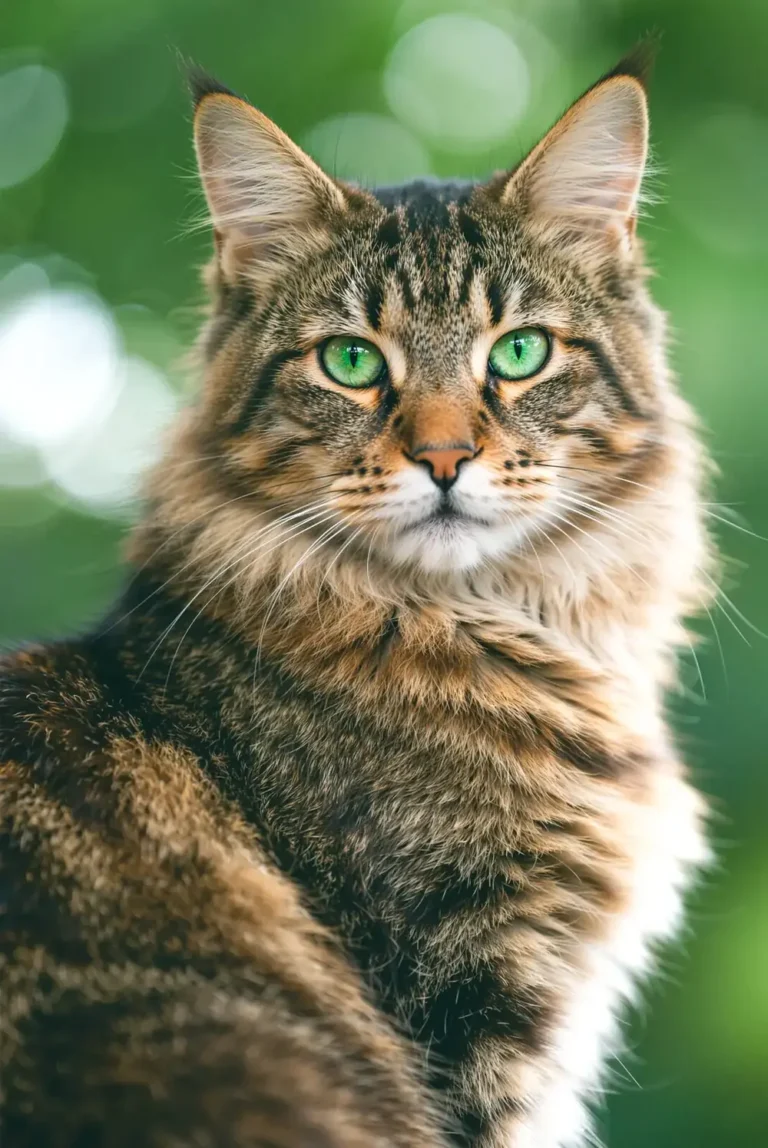
Maine Coons are one of the few cat breeds the registries describe in dog terms. The International Cat Association’s breed introduction calls them social by nature, excellent companions for large, active families that also enjoy having dogs and other animals.
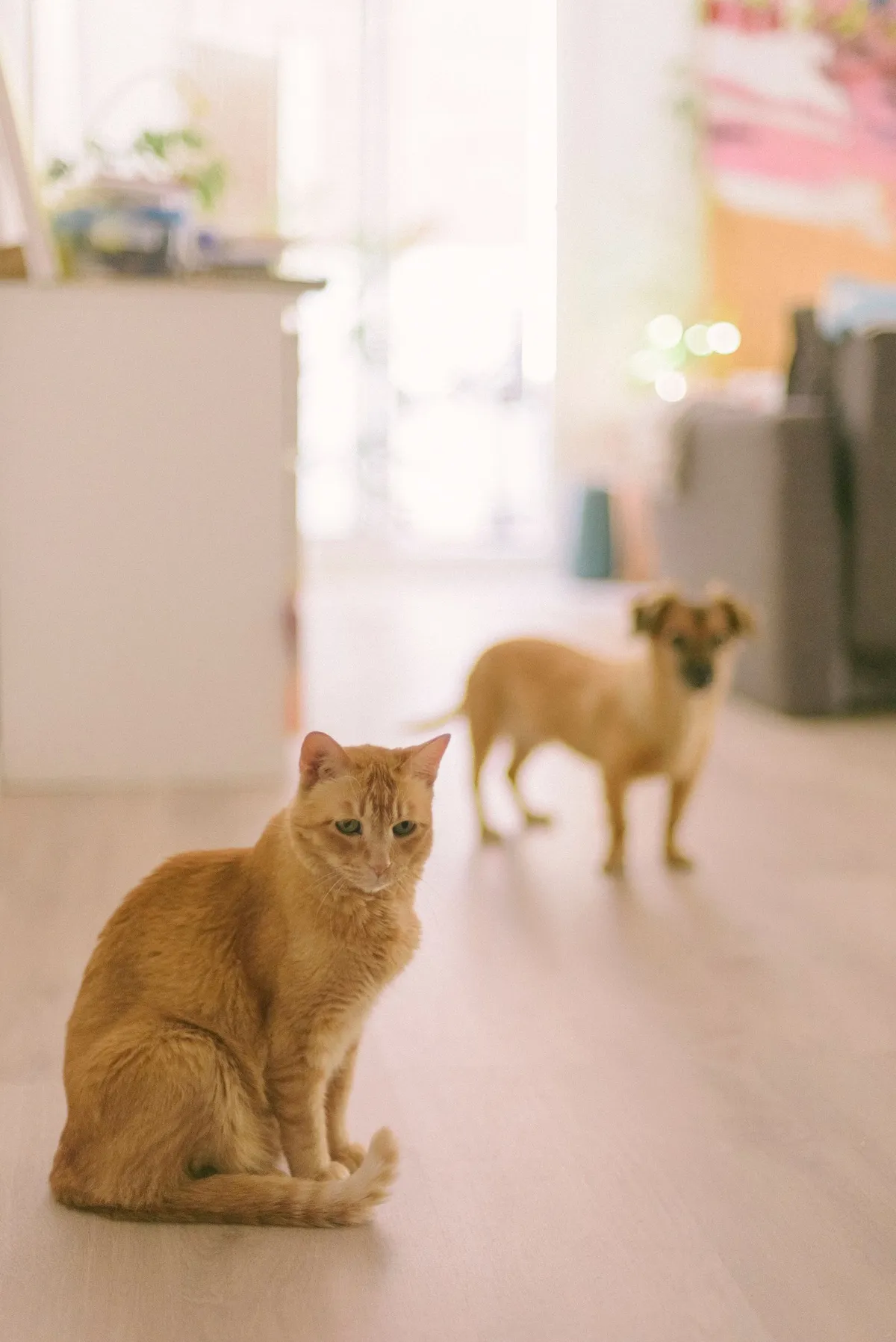
Size helps too. A small, nervous cat triggers a dog’s chase instinct almost by accident, while a Maine Coon tends to stand his ground and walk away at his own pace. Breeders on YouTube recommend the breed for dog households for exactly this reason: confidence keeps an introduction calm. For the wider picture, see my guide to Maine Coon personality traits, and my rundown of cat breeds that are good with dogs.
Matching the Dog: Energy, Size, and Prey Drive
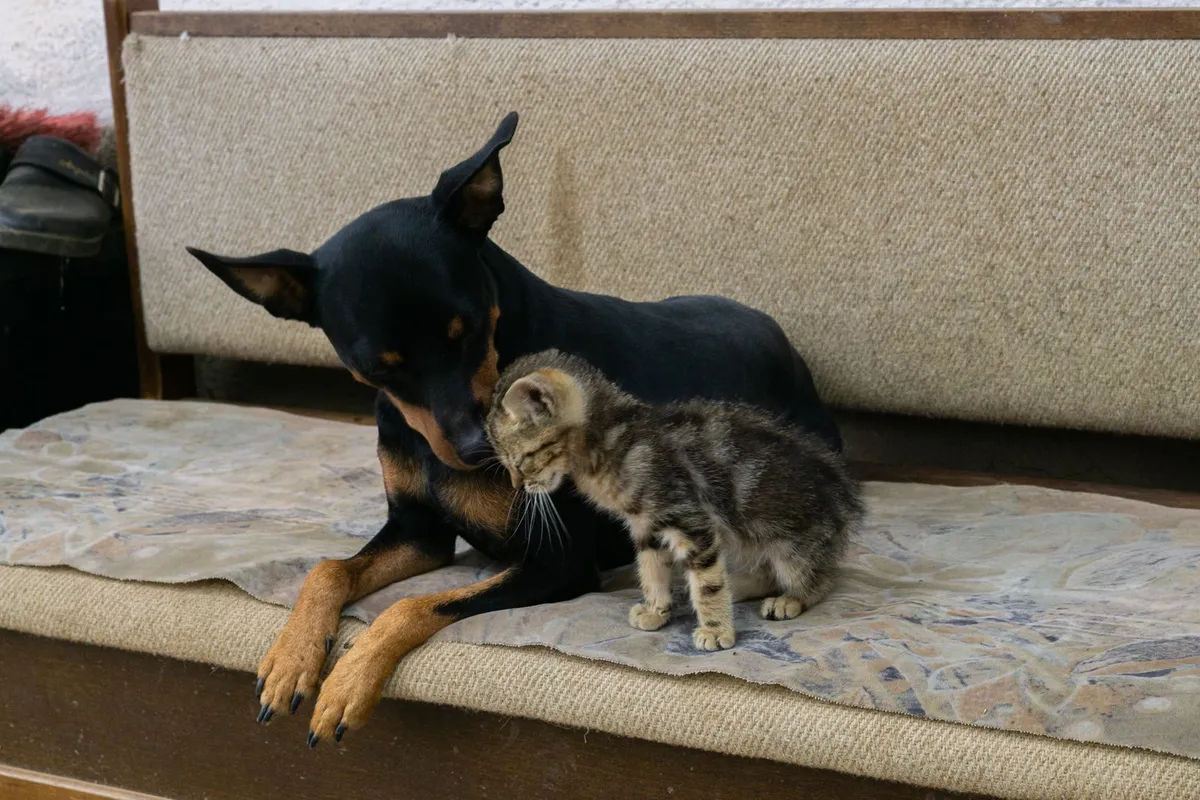
The breed of dog matters less than three traits: energy, prey drive, and training. A calm, older dog who has lived with cats before is the easiest match. A young, bouncy dog with no recall and a habit of chasing anything that moves is the hardest — whatever breed he is.
Calm, cat-experienced dogs are the gold standard. If the dog has lived peacefully with a cat before, or ignores cats on walks, you are most of the way there. Owners on Instagram report the same: German Shepherd households introducing a Maine Coon kitten one dog at a time. The dog’s history with cats tells you more than his breed label ever will. My rundown of cat breeds that are good with dogs puts the Maine Coon in context.
High-energy dogs can work, but only with work first. A herding breed may try to herd the cat, a terrier may fixate, and a big excitable puppy may simply love the cat too hard — and a Maine Coon kitten stays small and fragile for a long time. Before any introduction, the dog needs a reliable “leave it” and a recall that works when he is excited, not just in the kitchen.
Prey drive is the one trait to be genuinely honest about. Some dogs have a strong, hardwired urge to chase small animals, and no amount of goodwill changes that. If your dog has ever caught or injured a small animal, or goes rigid, silent, and staring at the sight of a cat, do not test him on your Maine Coon. That is a mismatch, and the kindest thing is to accept it before anyone gets hurt.
The Slow Introduction: Scent, Barrier, Supervised Meetings
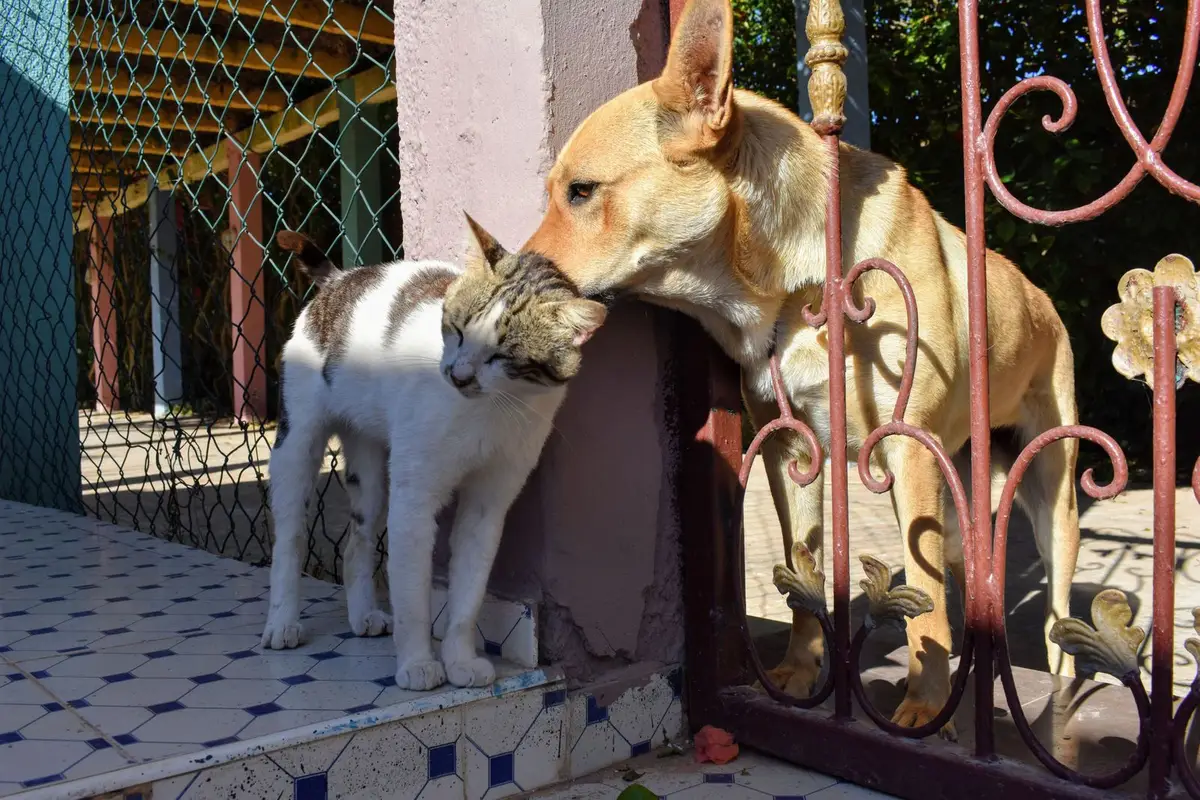
Every good introduction follows the same order, and every bad one skips a step. Plan on days to weeks, not one big first meeting.
Step 1: Separate rooms, no sight, no contact. The newcomer — whichever animal is new — gets one room with food, water, litter box for the cat, bed, and a hiding place. No face-to-face contact, not even a quick peek through a cracked door.
Step 2: Scent before sight. Swap bedding between the rooms. Rub a cloth on the cat’s cheeks and leave it near the dog’s food bowl, and vice versa. Feed both animals on opposite sides of the closed door so the other’s smell starts to predict dinner. If either animal will not eat near the door, the bowls are too close — move them back a foot and try again tomorrow. Breeders on YouTube recommend this step above all others.
Step 3: Sight through a barrier. When both animals are calm about the smell — eating normally, playing near the door — graduate to a baby gate or screen door. Short sessions with treats for calm behaviour. The dog stays on a lead or behind the gate; the cat stays free to walk away. If the dog barks, lunges, or fixates, or the cat flattens and will not eat, you went too fast — go back to scent work for a few more days.
Step 4: Supervised meetings, then freedom. Drop the barrier for short, supervised visits in a room where the cat has escape routes. Keep the dog on a lead at first, keep sessions to ten or fifteen minutes, and end while everyone is still relaxed. Let the cat set the distance — never carry him toward the dog, because a trapped cat panics. Unsupervised time together comes only after many calm supervised sessions.
Safe Zones, Escape Routes, and Separate Everything
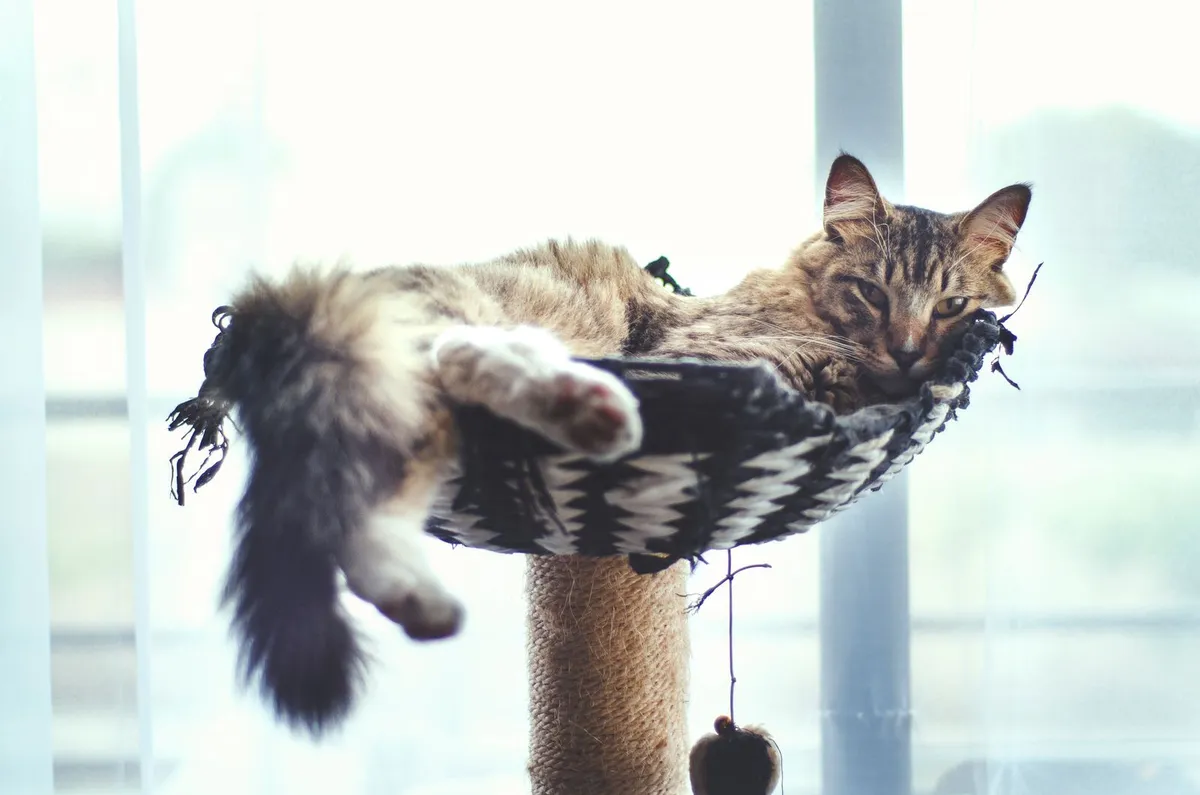
A Maine Coon who can leave will stay; one who cannot will hide.
Give the cat height. A tall, sturdy cat tree or shelf the cat can reach but the dog cannot is the single best investment in a mixed household. Height is how cats decompress, and a Maine Coon needs furniture rated for his weight.
Give the cat a dog-free room. A room with a baby gate the cat can slip through but the dog cannot gives the cat a place to eat, sleep, and use the litter box in peace. This room should stay dog-free permanently, not just during the introduction.
Plan escape routes, not just exits. Arrange furniture so the cat always has two ways out of shared rooms, and never let first meetings happen in a dead end like a small bathroom or a narrow hallway. Owners on Reddit put it bluntly: the households where cat and dog became friends never cornered the cat, not even once.
Separate everything, permanently. Food bowls in different places — dogs will eat cat food given half a chance. The litter box must be somewhere the dog cannot reach, full stop: dogs eating from litter boxes is a common reality of mixed households, and it stresses the cat out of using the box at all. Separate beds and water too, and a feeding spot the cat can reach by jumping, where the dog cannot follow.
Daily Life and Supervision Rules

Once the introduction is done, the rules that keep the peace are mostly boring, which is the point. Supervise play, and learn what play looks like: loose body, ears forward, taking turns is play; a stiff body, flattened ears, or a cat who keeps trying to leave and cannot is not. Step in before it tips over by redirecting the dog — never by grabbing a worked-up animal mid-scuffle.
Exercise the dog and play with the cat, separately, every day. A tired dog is calmer around the cat; families who skip this often mistake wrestling for aggression. Protect the cat’s routine too: keep his feeding schedule and favourite sleeping place unchanged.
Never leave them alone together until you are sure: weeks of calm behaviour, the cat passing the dog without changing pace, the dog glancing away. Keep the separation when you go out; it prevents the one bad incident that undoes weeks of good work. For families with children in the mix, see my guide to Maine Coons and children.
When to Pause and Call a Behaviourist
Most introductions work with patience. Some need professional help, and recognising that early is better than grinding on alone. Pause and go back a step if the cat stops eating, hides most of the day, or avoids the litter box; the dog cannot break focus on the cat even with treats and cues; or either animal has injured the other. A single hiss or swat is communication. Sustained fear, sustained fixation, or any bite that breaks skin is a different matter.
Call your vet first if behaviour changes suddenly — pain or illness can look exactly like a behaviour problem. Then ask your vet to refer you to a qualified animal behaviourist if the pattern holds after weeks of proper slow work. A behaviourist will look at the whole household and find the piece you are missing. And be honest about one more outcome: not every pairing works, and that is not anyone’s fault. If you reach that point, talk to your vet and to the breeder or rescue you got the animal from first.
Frequently Asked Questions
Are Maine Coons good with dogs?
Generally, yes — they are among the most dog-friendly cat breeds. The International Cat Association describes them as social cats who suit families that also enjoy having dogs, and owners consistently report Maine Coons befriending dogs, sometimes sleeping curled up together. The dog’s temperament and a slow introduction matter more than the breed label on either side. If your question is about a second cat instead, see whether Maine Coons need another cat.
How long does it take a Maine Coon to get used to a dog?
Plan on weeks, not days. Scent work takes a few days, barrier work a week or more, and supervised meetings build from there. Some pairings click in a fortnight; others take two or three months. Treat hissing in week one as normal conversation, not a verdict.
Should I get a Maine Coon kitten or an adult if I already have a dog?
A kitten is usually easier, because kittens are less territorial and a calm dog often adopts a gentle attitude toward them. But a kitten is small and fragile for a long time, so the dog must be reliably gentle and trained first. An adult Maine Coon from a home with dogs is the safest bet — his temperament with dogs is already known.
Can a Maine Coon and a dog be left alone together?
Eventually, in many households, yes — but only after many calm supervised sessions and a period where both animals reliably ignore each other or rest near each other. Until you are genuinely sure, keep them separated when you leave the house. If in doubt, keep the separation.
What if my dog chases my Maine Coon?
First, stop the chase from being rehearsed: go back to barrier work and strengthen recall and “leave it” away from the cat. A chase driven by excitement can often be trained down; one driven by fixed, silent staring and prey drive is harder, and that is the point to involve a professional behaviourist.
The Bottom Line on Maine Coon and Dogs

A Maine Coon and a dog is one of the happiest pairings when it is set up right — a confident, social, dog-sized cat and a calm, trained dog will usually share the same sofa. The work is all at the front: match the dog honestly, introduce them slowly through scent, barrier, and supervised meetings, give the cat height and a room of his own, and keep food and litter separate for good.
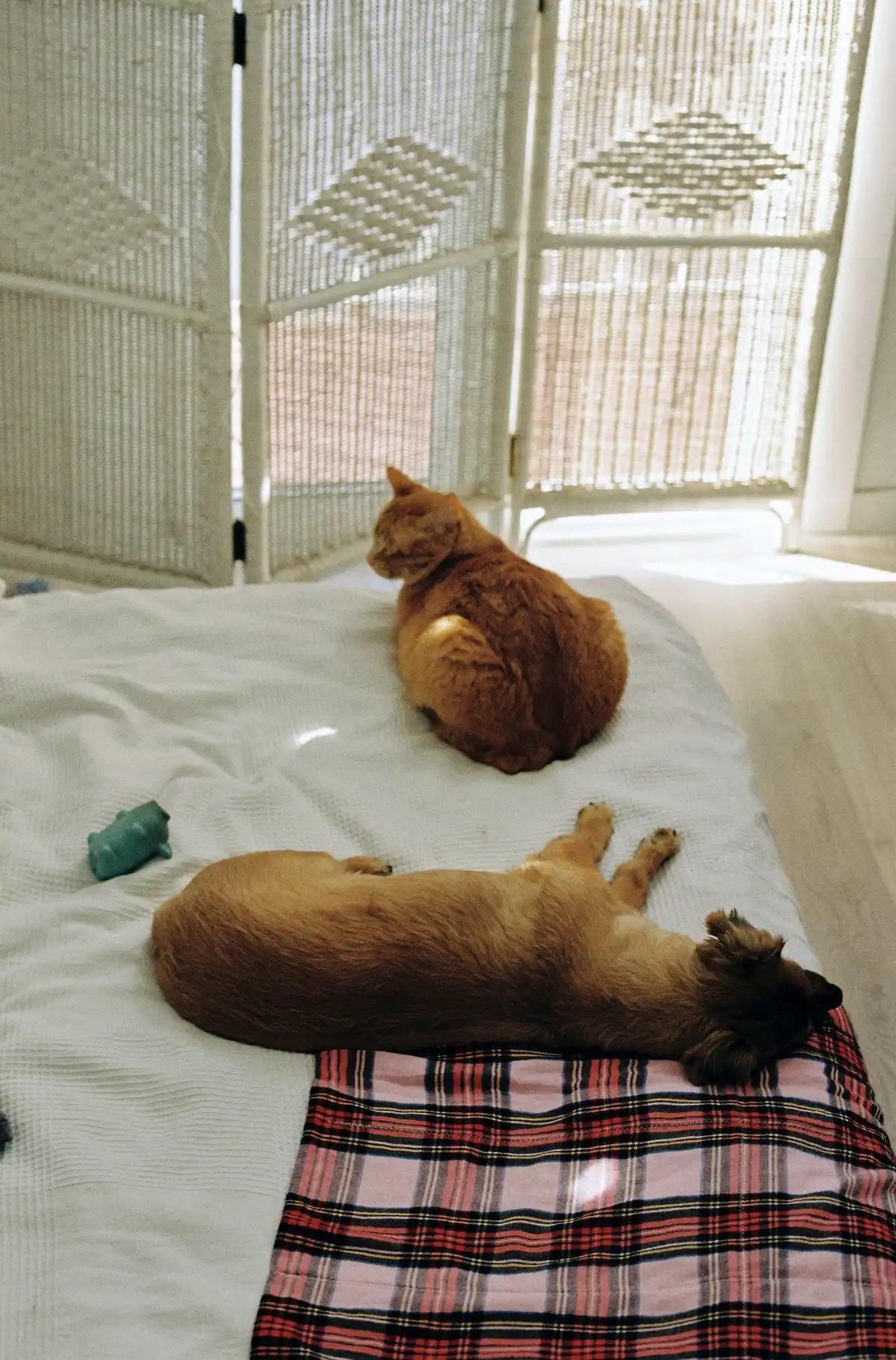
Do that, and the question stops being “can a Maine Coon live with a dog?” and becomes the one owners actually end up asking: how did the dog get so good at sharing his bed with a cat nearly as big as he is?
For the breed background behind all of this, the Cat Fanciers’ Association and The International Cat Association both describe the Maine Coon as sociable and easygoing, and Cornell’s feline health resources are worth bookmarking for general cat health.