Why Does My Maine Coon Knead? Biscuit-Making, Explained
If you have ever settled on the sofa with a Maine Coon, you know the moment. One minute you are reading or watching television, the next minute two enormous paws are pressing into your lap, left, right, left, right, in a slow, steady rhythm. The purr starts up like an engine. The eyes go half-closed. And you are left wondering: why does my Maine Coon knead?
Cat lovers call it making biscuits, and the name fits perfectly. It looks exactly like someone working dough. But your cat is not baking anything. Kneading is one of the oldest, most normal things a cat does, and once you understand where it comes from, it stops feeling quite so mysterious.
What kneading actually looks like
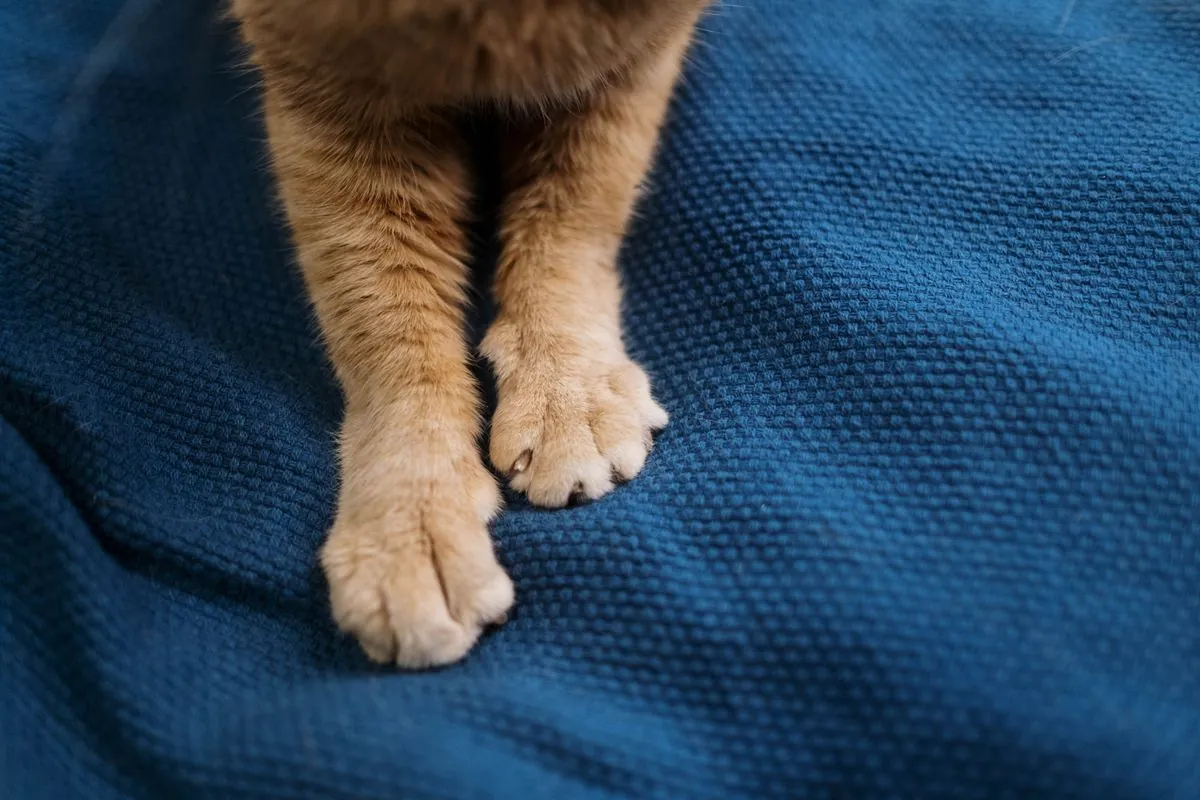
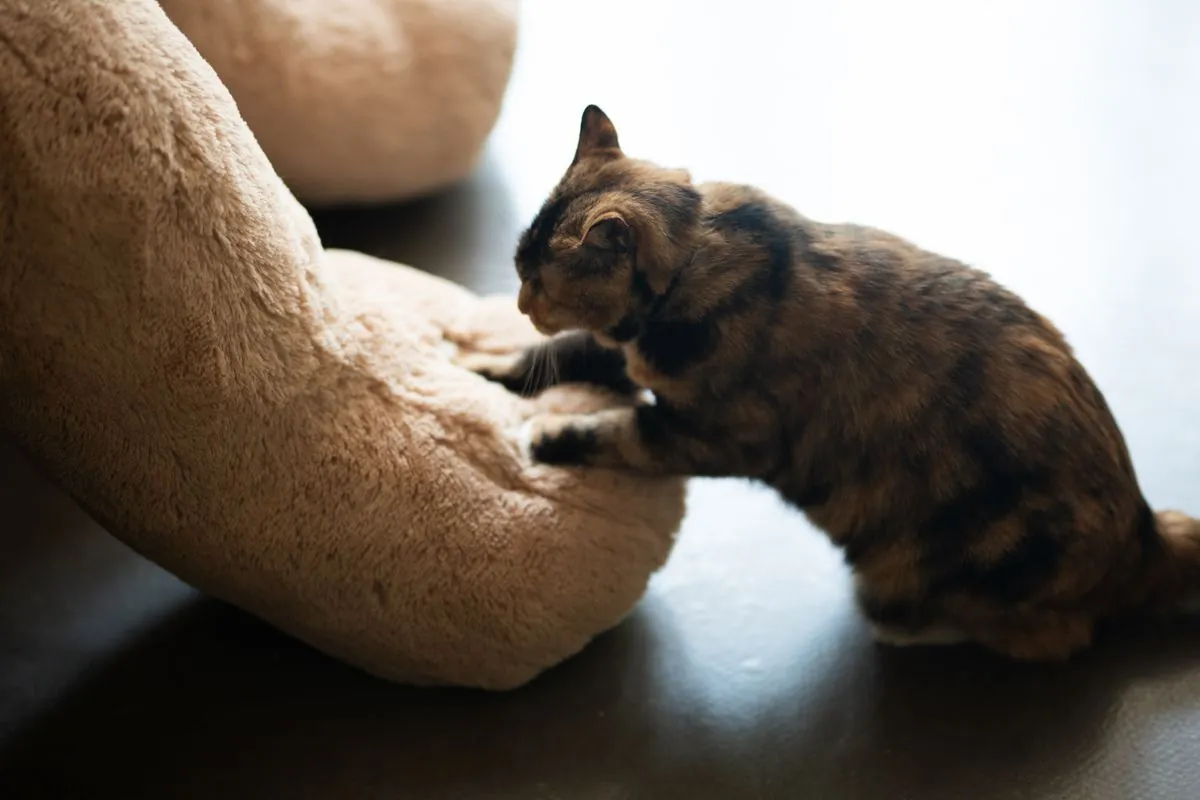
Kneading is a rhythmic push-and-release motion, usually with the front paws, on something soft: a blanket, a pillow, a jumper, your lap, or a favourite sleeping spot. Some cats knead with their claws tucked away. Some knead with their claws out. Some do it for a few seconds before they curl up. Others settle in for a long session, purring all the way through, sometimes drooling a little, sometimes sucking gently on the blanket as they go.
My own Maine Coon circles once, tests the blanket, then gets properly started with a serious, concentrated face, before folding himself down right on top of the spot he has just worked over. Kneading is often the warm-up act, not the main event. Not every cat kneads, and that alone is no cause for worry — cats show comfort in different ways.
Why does my Maine Coon knead? It starts in kittenhood
The most widely accepted explanation starts when a cat is only days old. Newborn kittens press their tiny paws against their mother’s belly while they nurse. That pressing helps stimulate milk flow. It is instinct, not something a kitten has to be taught, and it is tied up with warmth, a full belly, and safety.
Adult cats, experts believe, keep the motion because it still feels familiar and calming. That is why kneading so often shows up at the cosiest moments: on a lap in the evening, on a warm blanket, or just before sleep, often paired with purring and a loose, relaxed body. In most cases, the message is simple: I feel safe here.
It is worth saying plainly that I have not found good evidence that Maine Coons knead more than other breeds. What I can say from living with one is that a big cat makes the whole thing more noticeable. Those paws cover more blanket, the pressing carries more weight, and yes, the claws, when they are out, are harder to ignore. That is a size thing, not a breed superpower, and I would rather be honest about that than turn a normal cat behaviour into a Maine Coon myth.
The other reasons cats knead
Kittenhood explains a lot, but it is probably not the whole story. Behaviour experts point to several overlapping reasons, and your cat may be doing more than one at once.
Making a comfortable resting spot. Wild cats press down grass and leaves before lying down, and domestic cats seem to carry a version of that habit indoors. Kneading a blanket or bed can be a way of testing and shaping a spot before settling into it. If your cat kneads and then immediately curls up and sleeps, that is very likely what is happening.
Marking with scent. Cats have scent glands in their paw pads. When they press those paws into a blanket or into you, they leave a little of their own scent behind. That may be why some cats return to the same blanket or lap again and again: it already smells like them, so it already feels like home. Kneading also stretches the paws and legs, a gentle warm-up before rest.
Affection and trust. When a cat kneads on you rather than on a blanket, it is usually a compliment, even if it does not always feel like one. Cats tend to knead on people they feel relaxed around. It is a behaviour that started with their mother, and in a small way it is now being directed at you. That fits with the broader picture of Maine Coon personality traits — these are famously people-oriented cats, and kneading on a favourite person is part of that closeness, just as following you from room to room is another expression of it, as I wrote about in why your Maine Coon follows you everywhere.
Self-soothing. Sometimes kneading is less about happiness in the moment and more about finding calm. A cat may knead when it is a little unsettled, after a change in the house, or when it wants to settle itself down. The rhythm is comforting because it is familiar. This does not automatically mean something is wrong. It means the cat is using an old, built-in tool to feel better, and most of the time it works.
What owners actually see: the biscuit factory
Scroll through Maine Coon videos on Instagram and Facebook and you will see the same scene over and over: a big, fluffy cat, often with a very serious face, working away at a blanket while the purr rumbles underneath. Owners joke about the morning shift and a lead baker on duty. The joke lands because the cats really do look like they mean business.
Owners on Reddit say much the same thing in plainer language: their cats knead laps, blankets, and sometimes chests, with total concentration, then fall asleep as if the job is done. Some knead for minutes without stopping; others only knead one special blanket.
Owners also often ask whether something is wrong with a cat that never kneads. The general experience shared back is reassuring: it varies enormously, and a cat that does not knead can still be perfectly relaxed. It simply shows comfort differently — through head bumps, slow blinks, or sleeping nearby. Breeders on YouTube make the same point with kittens: it is normal, early behaviour, not something to train out.
Why kneading sometimes hurts: claws, blankets, and laps
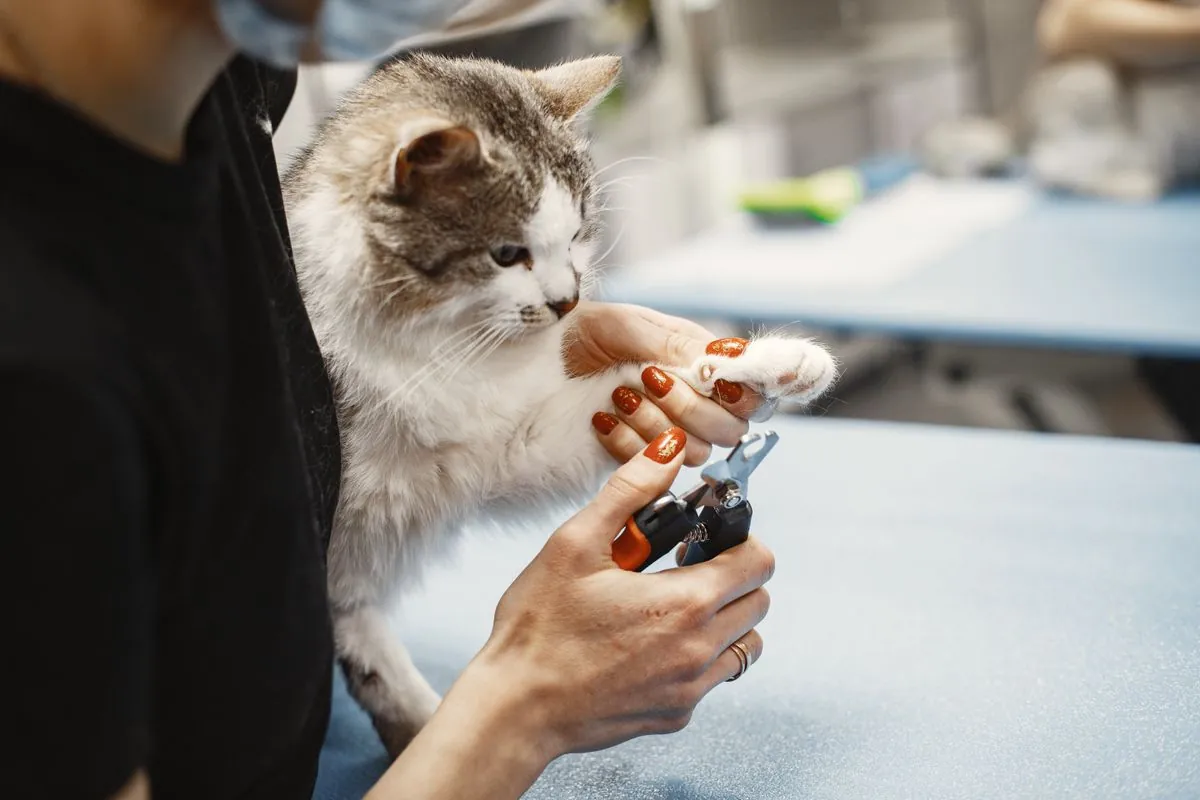
Here is the honest part. Kneading is lovely until the claws come out, and with a Maine Coon, those claws are not small. A cat is not kneading on you to hurt you — claws often extend simply because the pushing motion uses the paws fully. Still, your lap does not have to suffer for it.
The simplest fix is the one owners mention most often: keep a thick blanket on hand. I keep a folded fleece blanket on the arm of the sofa, and when my cat starts circling for a kneading session, that blanket goes on my lap first. It turns a sharp session into a comfortable one, for both of us, and it gives him a consistent surface to work on. Many cats quickly learn that the thick blanket means kneading time, and they will head straight for it.
Regular claw trims help too. Short, blunt claws press far less sharply than long, needle-like ones. Trim only the sharp tip, take it slowly, and if your cat hates nail trims, do a paw or two at a time rather than turning it into a wrestling match. If you are unsure how to trim safely, ask your vet or groomer to show you once in person.
What not to do matters just as much. Do not push your cat off abruptly, shout, or punish kneading. A sudden shove teaches the cat that lap time is unpredictable, and it can damage the trust that made the cat choose your lap. If it gets too sharp, slide a blanket under the paws. The goal is to redirect the paws, not to end the affection. And if your cat has a favourite kneading blanket, let it keep it — part of the appeal is that it already smells familiar.
When kneading might mean something else
Most kneading is normal, and I do not want to turn a happy habit into a worry. But it is worth knowing when a change deserves a second look, because cats are good at hiding discomfort and behaviour changes are often the first clue.
Veterinary sources make a careful distinction here. Kneading itself is normal, but a sudden, big change in kneading can be worth mentioning to your vet. That might mean a cat that never kneaded suddenly kneading a great deal, a cat that kneaded happily suddenly stopping altogether, or kneading that becomes frantic, compulsive, or paired with other changes — hiding away, eating less, or seeming tense and hunched rather than relaxed.
The same caution applies if kneading looks like self-soothing rather than contentment: constant, very long sessions that crowd out playing, grooming, eating, and sleeping normally. That may point to stress, anxiety, or pain, but only a vet who can examine your cat can say which, if any, applies. Purring is not a perfect guide either — cats purr when content and when soothing themselves — so look at the whole cat, not just the sound. If you are unsure, a vet call is never wasted: describe what changed, when, and what else changed with it. If kneading is only one part of a wider worrying pattern, my post on Maine Coon behaviour problems and how to stop them covers that broader picture; this article treats kneading itself as normal, not as a problem to stop.
Enjoy the biscuits
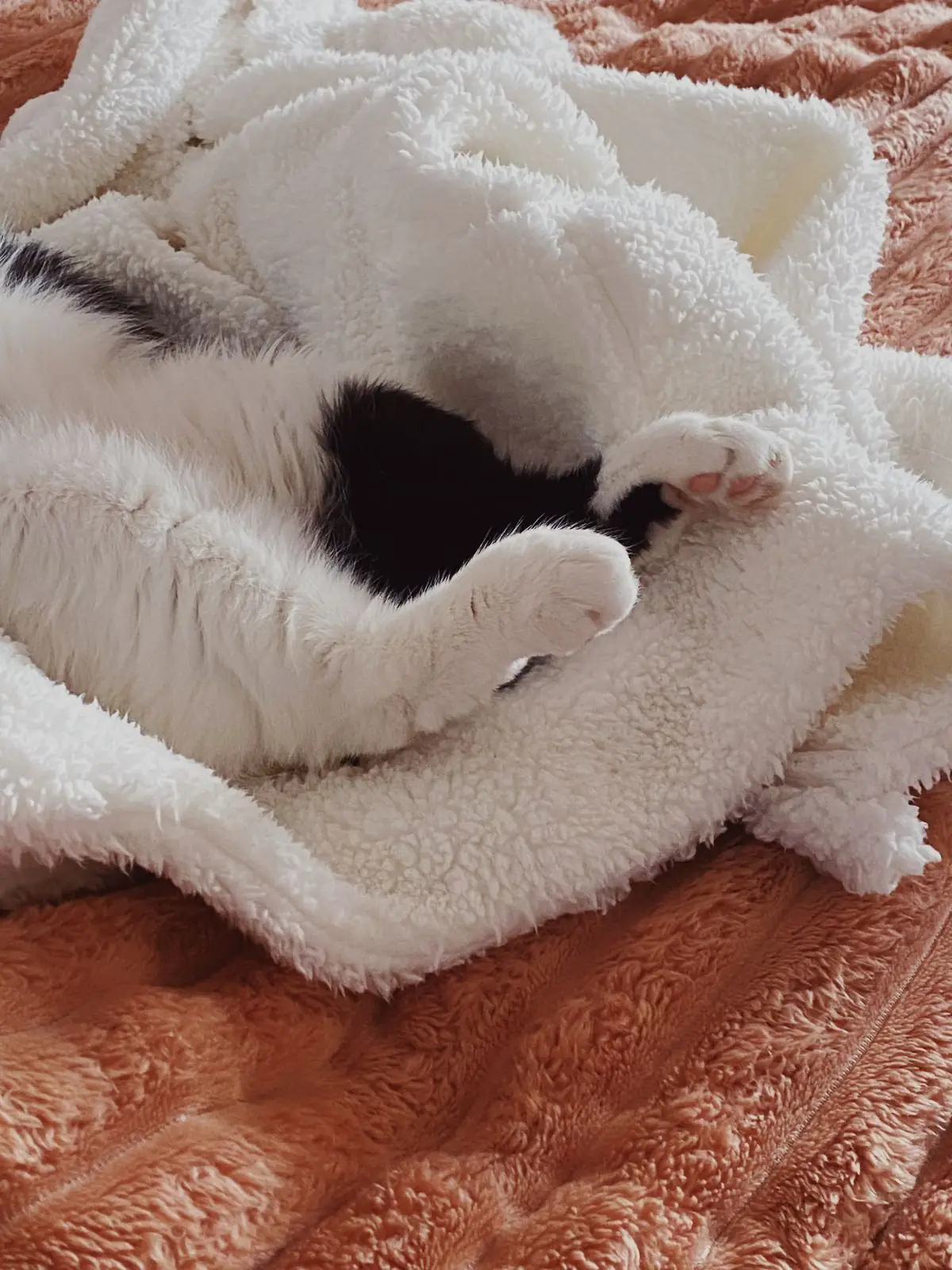
In the end, kneading is one of those small, everyday gifts of living with a cat: a behaviour from the first days of life, directed at the people and places a cat trusts most.
So keep a thick blanket nearby, keep those claws trimmed, and let the bakery stay open. When your Maine Coon climbs up, starts pressing those big paws, and purrs its way into a sleepy heap, that is not a problem to solve. That is a cat telling you, in the oldest language it knows, that it feels safe with you.
Frequently asked questions
Why does my Maine Coon knead on me and not on blankets?
Kneading on you usually means you are the preferred surface: warm, soft, and familiar. If your cat picks you, it is generally a sign of trust and comfort.
Why does my Maine Coon knead with claws out?
Claws often extend naturally as the paws push and flex, especially when a cat is deeply relaxed. It is not usually deliberate scratching. A thick blanket between paws and skin, plus regular claw trims, usually makes lap kneading comfortable again.
Is it normal if my Maine Coon drools while kneading?
Drooling during kneading is fairly common and linked to the same relaxed, kittenhood association. A little drool is usually nothing to worry about; if it is new, heavy, or paired with mouth pain or eating problems, mention it to your vet.
Why does my Maine Coon knead before sleeping?
Kneading before sleep is likely a mix of settling the spot and settling the cat. It echoes the way wild cats press down grass before resting, and it helps the cat relax into sleep. It is a classic pre-nap pattern, similar to the routines behind many Maine Coon sleeping positions.
Should I stop my Maine Coon from kneading?
No, not as a rule. Kneading is normal behaviour, and stopping it outright can confuse a cat that is simply showing comfort. Redirect the paws to a thick blanket if claws are a problem, and seek vet advice only if the kneading changes suddenly, becomes compulsive, or comes with other worrying changes.
For a fuller veterinary explanation, PetMD covers why cats knead, VCA Hospitals explains why cats knead, and Cornell’s Feline Health Center notes how scent glands in the paws play a role in feline marking behaviour in its guide to feline behaviour problems.