Best Scratching Posts for Maine Coons: Tall, Sturdy, Actually Used
My Maine Coon walked straight past a perfectly good scratching post for two weeks and kept going for the arm of my couch. The post was not cheap, either. It just was not built for a cat of her size, and she knew it before I did.
That is the short version of finding the best scratching post for Maine Coon cats: almost every post on the market is designed for a ten-pound cat, and your Coonie treats it the way a grown adult treats a toddler’s chair.
So this is not a review roundup of specific models. What matters are the rules a post has to pass before a big, strong Maine Coon will bother using it. Learn them and you can buy with confidence from any brand, any year.
What Makes the Best Scratching Post for a Maine Coon
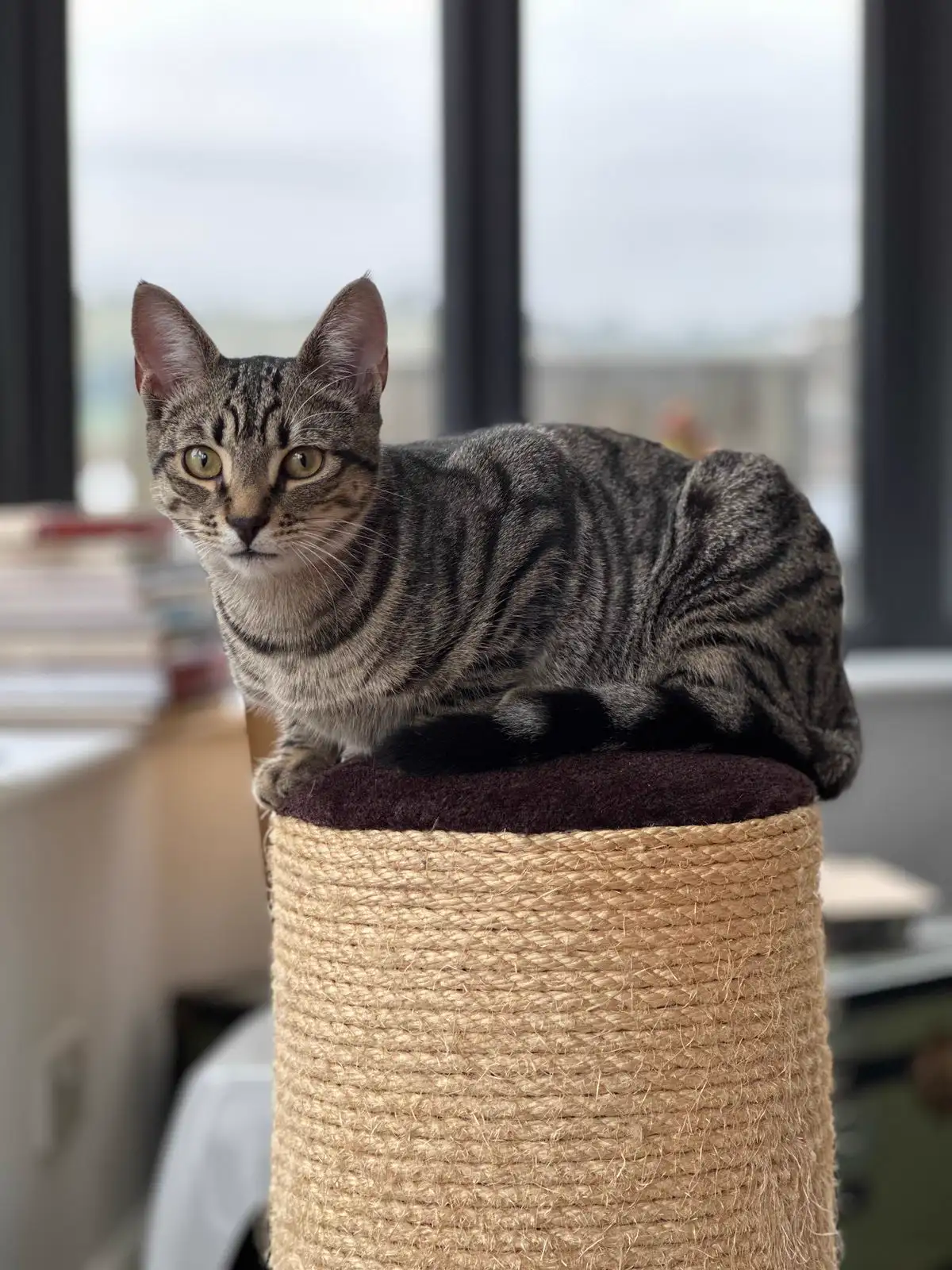
Four things: height, stability, material, and matching your own cat’s scratching style. Get the first three right and you have already beaten ninety percent of the posts on the shelf.
Height: the full-stretch rule
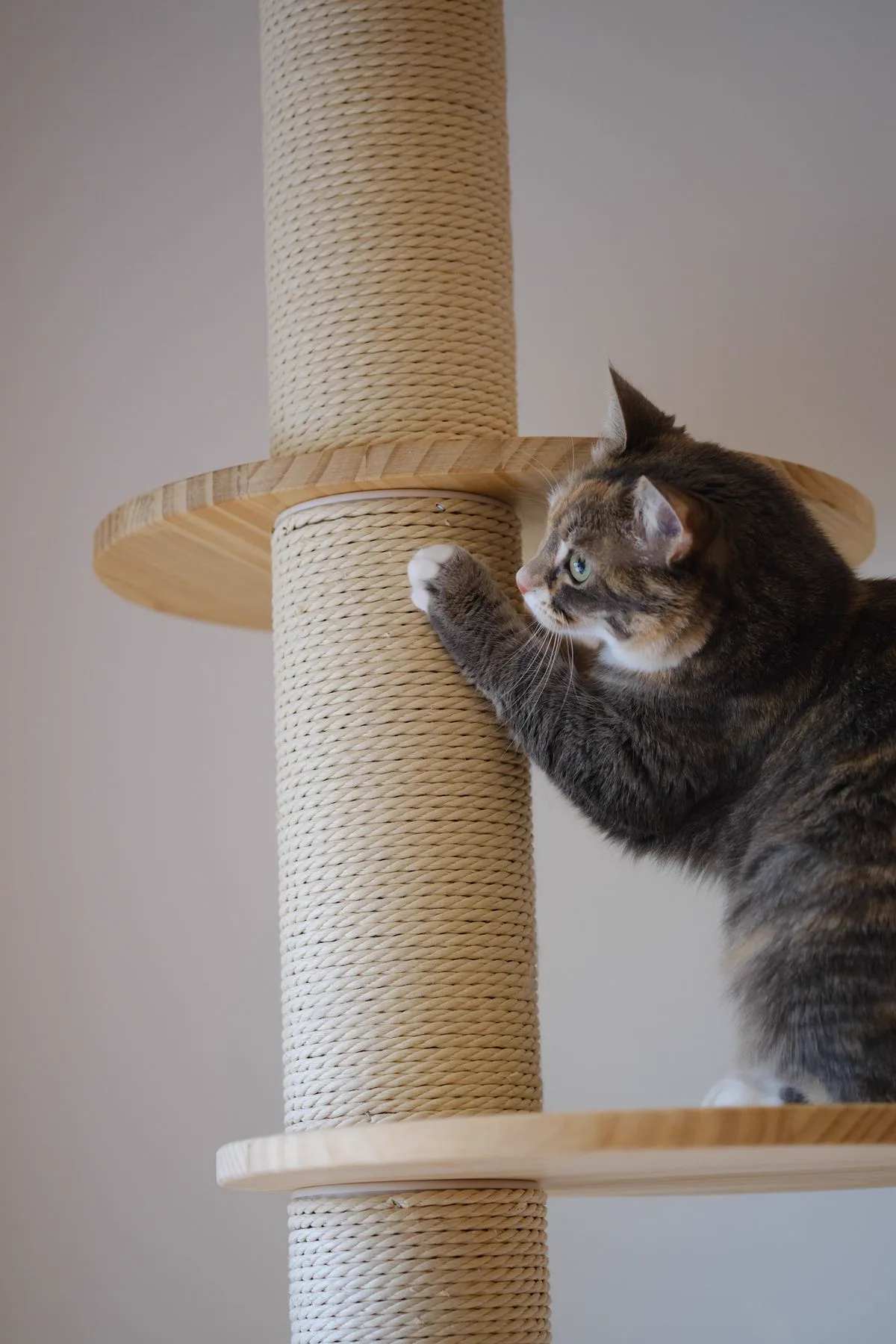
Cornell’s veterinary behaviorists put it plainly: any scratching post should be at least as tall as your cat standing on her hind legs with her front legs outstretched (Cornell’s feline behavior guide). For an average cat that is roughly 28 inches. For a Maine Coon, it is not.
A grown male can stretch well over three feet nose to toe. That is why owners in Maine Coon communities keep saying the same thing: treat 32 inches as the absolute minimum, and expect the biggest males to want 36 inches or taller, with some owners going all the way to floor-to-ceiling poles. When I finally replaced the too-short post with one my girl could fully extend against, she used it within the hour.
Stability: it must never, ever wobble
This is where cheap posts fail. An old rule passed around owner communities for years: the base should be about half as wide as the post is tall, with enough weight that you can tip the post 45 degrees in any direction without it falling. If a tall post rocks when a twenty-pound cat puts her weight on it, she will abandon it — one cat forum put it memorably: if it topples over even once, she will not go back to it.
Check the base before the price tag. Wide, heavy, solid — thick wood or a weighted platform, not a thin board. Shove the assembled post firmly side to side on your floor before the cat ever touches it. For extra insurance, place it in a corner where two walls brace it, or look for posts with wall-mounting straps.
Material: sisal wins, but watch which kind
Here, your own cat’s preference beats any general rule. Cornell’s guidance is to match the post’s surface to whatever your cat already likes to scratch — a couch scratcher wants a rope-like surface; a carpet scratcher wants a carpet-like one. PetMD echoes this: most cats favor sisal for vertical scratching and cardboard for horizontal scratching (PetMD’s scratching guide).
For Maine Coons specifically, woven sisal fabric (the flat, tightly woven kind, not the twisted rope) is the community favorite. Owners consistently report it survives longer under big claws and gives a more satisfying shred than thin rope, which frays fast when a heavy cat goes at it. One owner on Instagram built a custom post for her Maine Coon kitten by wrapping a scrap 4×4 in a patterned rug — the kitten took to it immediately, which tells you texture preference is individual and sturdy DIY builds count.
Carpet-covered posts can backfire if the carpet resembles your flooring or furniture — the cat may not see the difference. Sisal is the safer default for vertical posts; use carpet posts only if your cat clearly prefers carpet scratching.
Column thickness
A spindly two-inch column wobbles, and wobble is death — see above. Thicker columns (three inches and up, the beefier the better) stay rigid and give your cat something she can really dig into. If the column looks like it belongs to a post made for a kitten, it does not belong in a Maine Coon household.
Vertical vs Horizontal: Which Way Does Your Coonie Scratch?
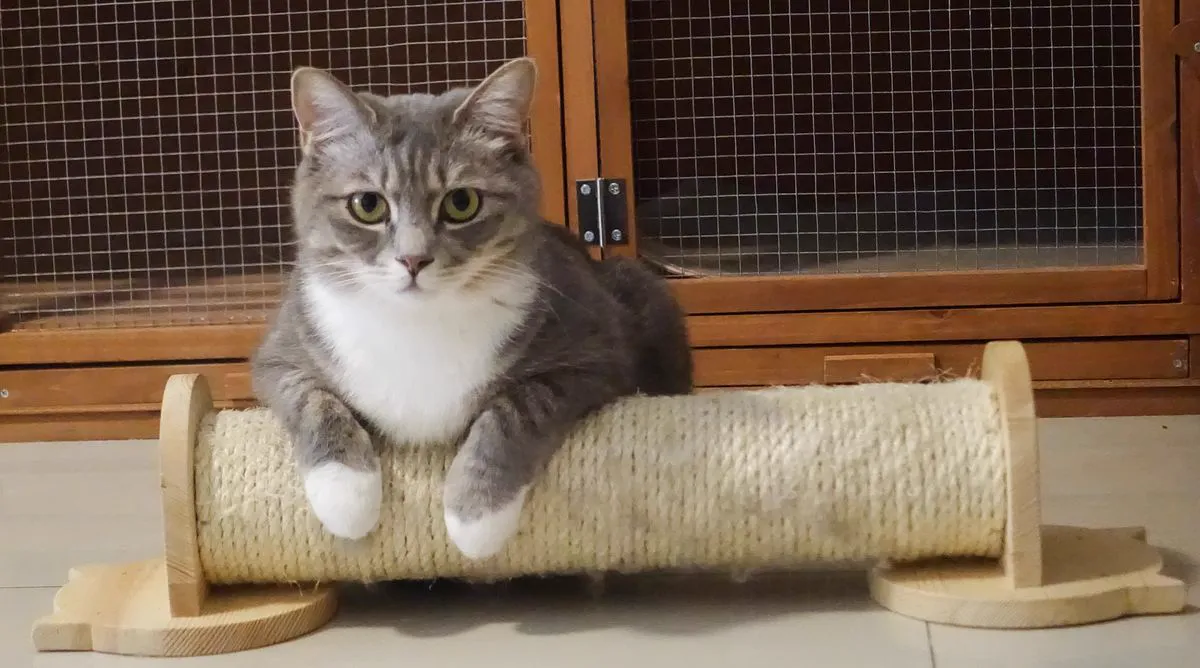
Most Maine Coons are vertical stretchers. The full-body pull-up against a tall post keeps their shoulders and back working, and it is also the territory-marking scratch — claws raking down at eye level, scent from the paw glands deposited on the surface. PetMD notes that territorial scratching in the wild happens on upright tree trunks, which is exactly why couch arms and door frames are the classic indoor targets.
But not every cat. Some Coonies are horizontal scratchers who do their best work on rugs and floor mats. Cornell says to watch your cat before you shop: paws stretched up over the head means she wants vertical; a carpet-shredding sprawl means she wants horizontal. If yours does both — plenty do — get one of each. Corrugated cardboard loungers and horizontal sisal pads are cheap, and a 2026 review roundup of scratching posts for Maine Coons highlighted adjustable cardboard designs that switch between flat and angled positions — a decent way to cover both orientations in one purchase if space is tight.
The Real Reason Your Maine Coon Ignores the Post: Placement
This is the part most people get wrong, and it is free to fix. A scratching post hidden in a back bedroom is a decoration. Scratching is territorial marking, so the post has to live where the territory is — in the social heart of the house, near the furniture your cat already targets, or beside the spot where she naps, because cats love a good stretch-and-scratch right after waking up.
Cornell recommends starting the post right next to the area your cat already likes to scratch, then gradually moving it to the spot you prefer once the habit is set. PetMD is blunter: do not hide a scratching post in a secluded area if you want your cat to use it — cats want their resources near their people. If your cat scratches in several rooms, she needs a post in each of them, not one flagship post she has to walk across the house to find. My own breakthrough was embarrassingly simple: I moved the post from the spare room to two feet from the couch arm she loved, and she switched to it the same evening.
Getting Them to Actually Use It
Once the post is right, a little encouragement closes the deal:
- Reward the win. The moment she uses the post, produce a treat, a stroke, or her favorite praise voice. Both Cornell and PetMD stress positive reinforcement over everything else.
- Catnip helps, sometimes. Sprinkling dried catnip on a sisal post can spark curiosity. It does not work on every cat, but it is worth one try.
- Do not force it. Dragging her paws down the post yourself feels like a shortcut and is a terrible idea. PetMD specifically warns against forcing paws onto a scratcher; the cat reads it as a threat, not a lesson.
- Keep the ugly one. A shredded, frayed, ragged post is a post your cat has properly broken in. Cornell advises not to throw it away when it looks worn — that is when it is serving its purpose best.
If you have been redirecting for a week or two with no progress, the usual culprit is one of the criteria above: usually height or stability.
Scratching Post vs Cat Tree: Do You Need Both?
They solve different problems, which is why we treat them as separate categories on this site. A scratching post is a daily-maintenance tool — claws, stretch, scent marks. A cat tree is a climbing and lounging structure that happens to include scratching columns. If your Maine Coon already has a solid tree, she may do most of her scratching there, and that is fine. But a tree’s columns are rarely as tall or as thick as a dedicated post built for a twenty-pound cat, so a standalone post near her favorite scratching spot still earns its keep. Our guide to cat trees for Maine Coons walks through what makes a tree survive a big cat.
When Scratching Means Something Else
A good post solves normal scratching. It does not solve a cat who suddenly starts shredding the house at midnight or scratching obsessively alongside other behavior changes — that can signal stress, boredom, or a medical issue worth a vet visit. We cover the behavioral side in our guide to 12 Maine Coon behavior problems and how to stop them. Rule of thumb: if the scratching comes with other behavior changes, investigate the cause first and shop for posts second.
The Buying Checklist: Maine Coon Scratching Post Rules
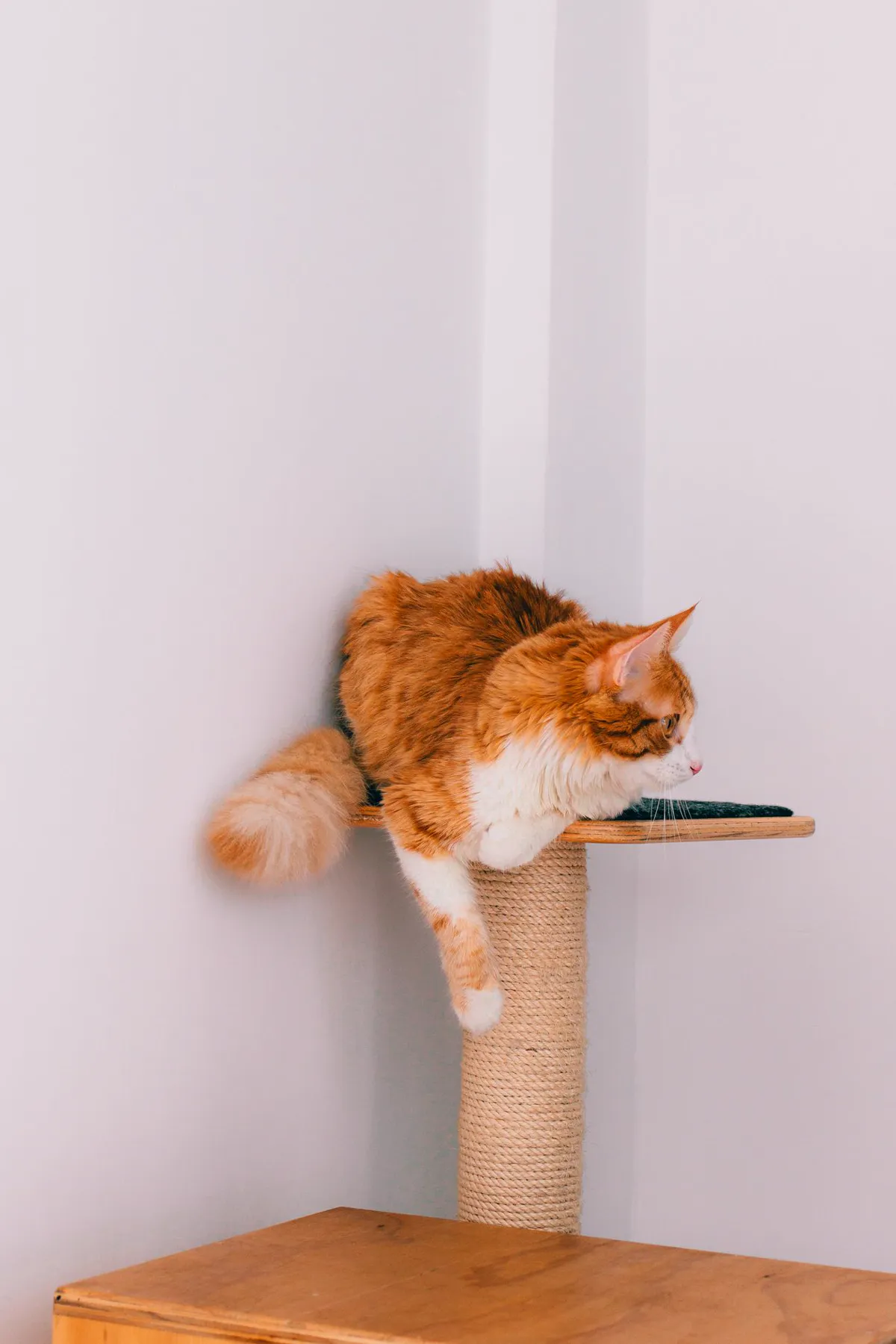
Pin this to your phone before you shop:
- Height: 32 inches absolute minimum; 36 inches or more for big males. Must exceed your cat’s full stretch.
- Base: wide and heavy — about half as wide as the post is tall. Tip it 45 degrees; if it falls, walk away.
- Stability: solid wood or weighted base, zero wobble when you shove it. Corner placement or wall straps for extra insurance.
- Material: woven sisal fabric first choice for vertical scratchers; match the texture to what your cat already scratches; cardboard for horizontal scratchers.
- Column: thick — three inches diameter and up. Thin columns wobble.
- Orientation: vertical for stretchers, horizontal for floor scratchers, both if yours does both.
- Placement: in the social center of the house, next to current scratch targets or nap spots. One per room she scratches in.
- Enrichment backup: a bored Coonie scratches more, so keep her busy — our best toys for Maine Coons guide is a good starting point.
Follow those eight and you will not need to replace the post every year. My current one has survived three years of daily use. The right post is not the prettiest one — it is the one your Maine Coon cannot knock over and cannot outgrow.
Frequently Asked Questions
How tall should a scratching post be for a Maine Coon?
At least 32 inches, and taller is better — many owners find 36 inches or more works best for large males. The veterinary rule is that the post should be at least as tall as your cat standing on her hind legs with front legs fully outstretched.
Why does my Maine Coon scratch the couch instead of the post?
Usually one of three reasons: the post is too short for a full stretch, it wobbles when she uses it, or it is in the wrong room. The couch is tall, rock-solid, and right where the family sits — beat that combination and most cats switch.
Are carpet scratching posts bad for Maine Coons?
Not inherently, but they can backfire if the carpet resembles your flooring or furniture — the cat may not distinguish the post from the carpet she is forbidden to scratch. Sisal is the safer default for vertical posts. Use carpet posts only if your cat clearly prefers carpet scratching.
How many scratching posts does a Maine Coon need?
One for every room where she scratches, plus one near her favorite nap spot. Most multi-room homes end up with two or three — cats will not trek across the house to reach a single post.
My Maine Coon knocked the post over and now won’t touch it. What do I do?
She is not being stubborn; she is being sensible. A post that fell on her once feels unsafe, and cats rarely give unsafe objects a second chance. Replace it with something much heavier, place it in a corner or against a wall, and reward her heavily the first few times she uses it.