Maine Coon Body Language: What Their Ears, Tail and Eyes Are Telling You
My Maine Coon talks to me all day long, and most of it has nothing to do with sound. A tail held high when I walk through the door, a long slow blink from the sofa — that is the real conversation. Learning Maine Coon body language changed how I live with my cats: once you can read the signals, you stop guessing and start responding to what they are actually feeling.
The first rule is to read the whole cat, never a single body part on its own. A swishing tail on a crouched, tense cat means something completely different from the same swish during play, and wide pupils can mean excitement or fear. Look for clusters of signals, and compare them with how your own cat normally behaves.
Maine Coon Body Language: The Tail Tells the Story First
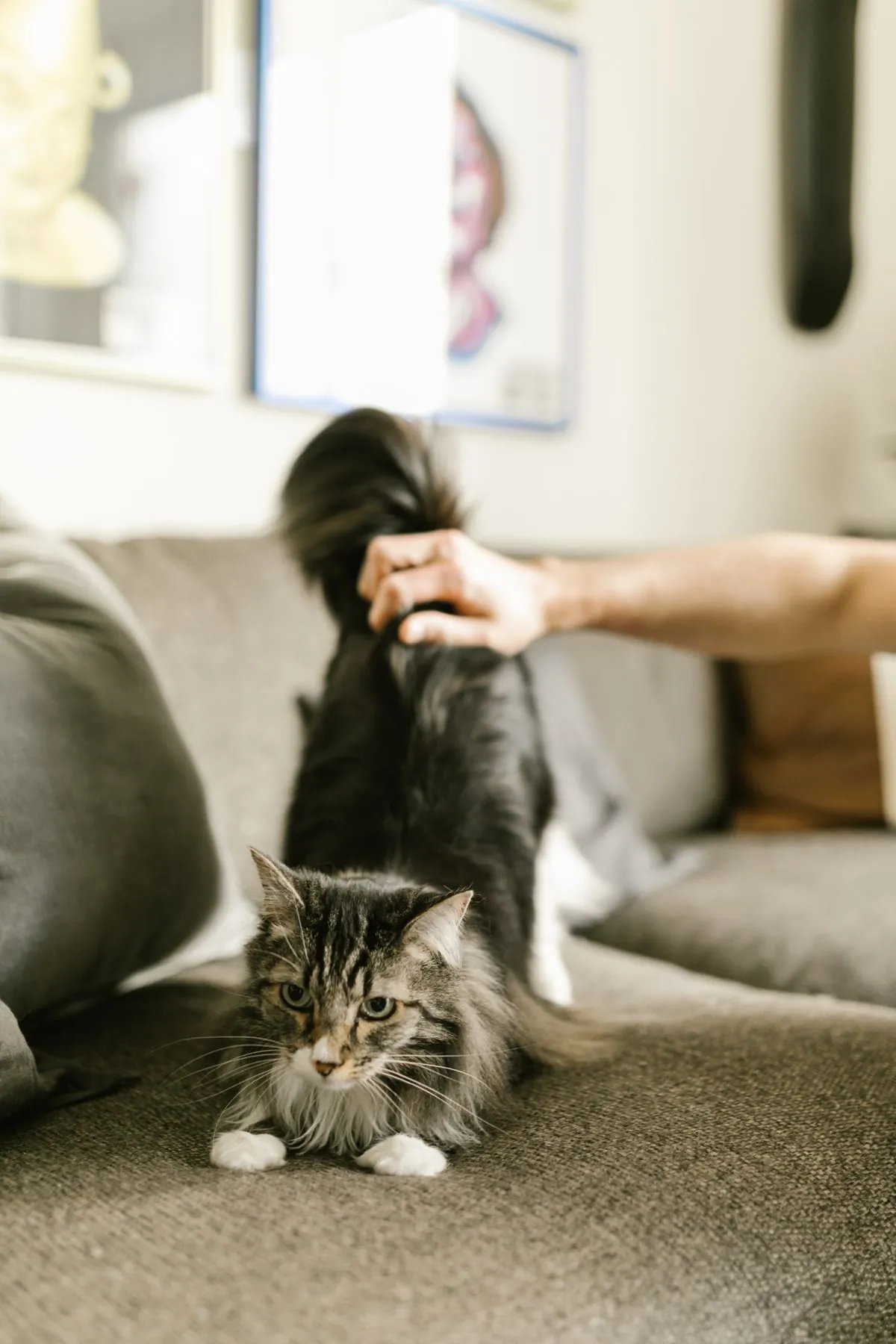
A Maine Coon’s tail is the fastest, most honest read on their mood. Movement in a cat’s tail usually means rising tension, not joy — the single most common misunderstanding I see among new owners.
A tail held straight up, often quivering at the tip, is the classic feline hello. A tail held low, tucked close, or wrapped tightly around the body usually means worry — though a cat curled up this way can simply be cold or cosy, so check the rest of the body first.
Then there is the tail in motion. A slow swish, or just the tip flicking, usually means focus or mild annoyance. A fast lash from side to side, or a tail thumping against the floor, is a clear warning: irritation is rising, and a swat or nip may follow. It is the signal I watch for most carefully during petting, because it arrives before the bite does. A puffed-up tail is different again: when every hair stands on end and the tail looks twice its normal size, often with an arched back, the cat is startled or scared and trying to look bigger. Give that cat room.
Ears: The Satellite Dishes
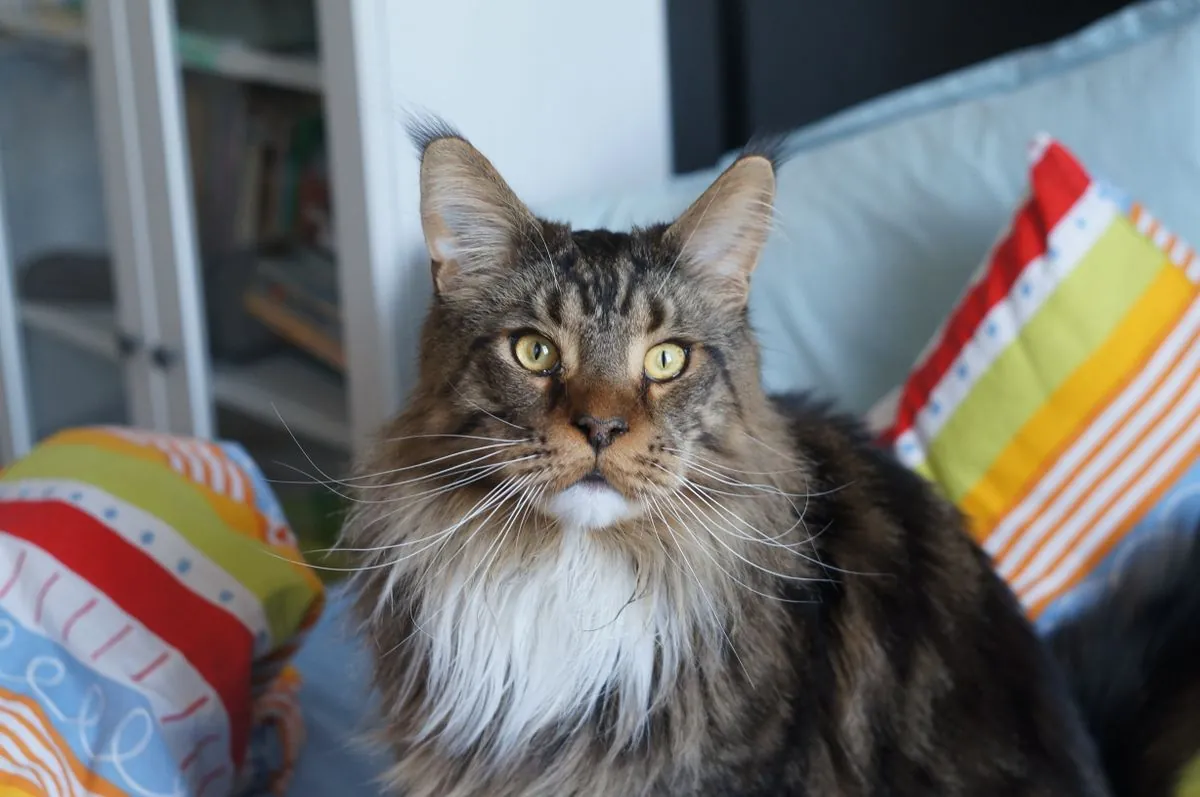
Maine Coon ears are big, tufted, and constantly moving. Ears facing forward and upright mean alert, curious, interested — a cat listening to something, or in the mood to play.
Ears turned sideways — airplane ears — mean discomfort: the cat is uneasy, irritated, or unsure, and this is usually one of the earliest signs that a situation is going wrong. Ears flattened back against the head are a stronger signal: fear, defensiveness, or anger, and a cat in this state may lash out if pushed. When I see flattened ears, I stop whatever I am doing and give the cat an exit.
Maine Coon ear tufts make every position look more dramatic than it is, and a relaxed cat at rest often carries its ears slightly out to the sides — learn your cat’s neutral ear position and judge everything else against it.
Eyes and the Slow Blink
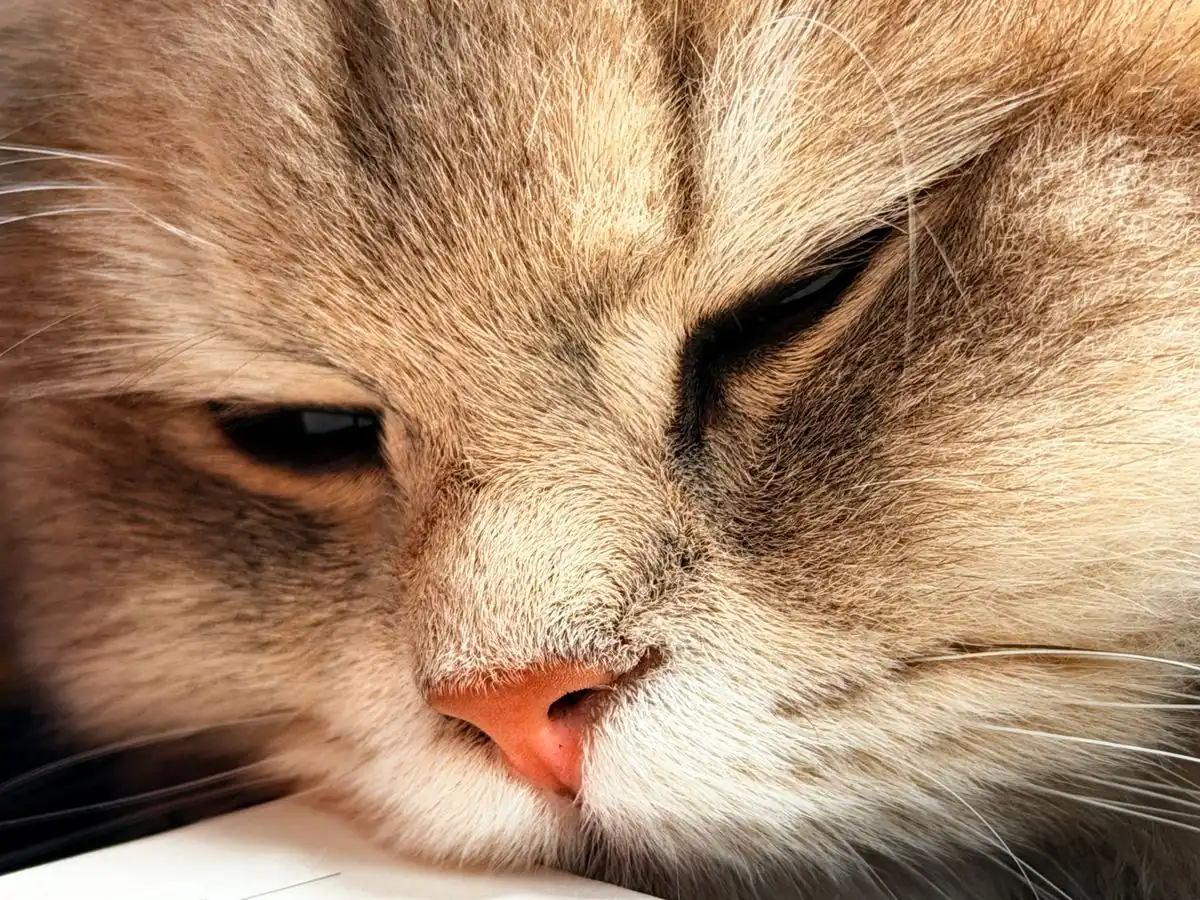
The eyes are where Maine Coon body language gets most rewarding, because this is where trust shows. Soft, half-closed eyes with a slow blink are the clearest sign of a relaxed, contented cat. The slow blink — a long, deliberate closing and opening of the eyes while looking at you — is often called a cat kiss, and owners on Reddit and Instagram talk about it constantly. It is the cat letting its guard down: a cat in the wild would never close its eyes around something it did not trust.
A 2020 study from researchers at the Universities of Sussex and Portsmouth, published in Scientific Reports, found that cats were more likely to slow-blink back at people who slow-blinked at them first. So blink back.
Dilated pupils need more care to read: they can mean excitement and play, or fear. Dilated pupils with a high tail and a forward, bouncy posture are a cat ready to pounce on a toy, while the same pupils with a puffed tail, flat ears and a crouched body are a frightened cat. A hard, fixed stare with narrowed pupils is tension — look away first, and never hold a staring contest, because to a cat a direct unblinking stare is a challenge. Half-closed, sleepy eyes during petting are contentment, and fully closed eyes on your lap are complete trust. Squinted eyes in a cat that is not sleepy, especially with a hunched posture or hiding, can be a sign of pain, which I cover below.
Posture, Whiskers and the Rest of the Body
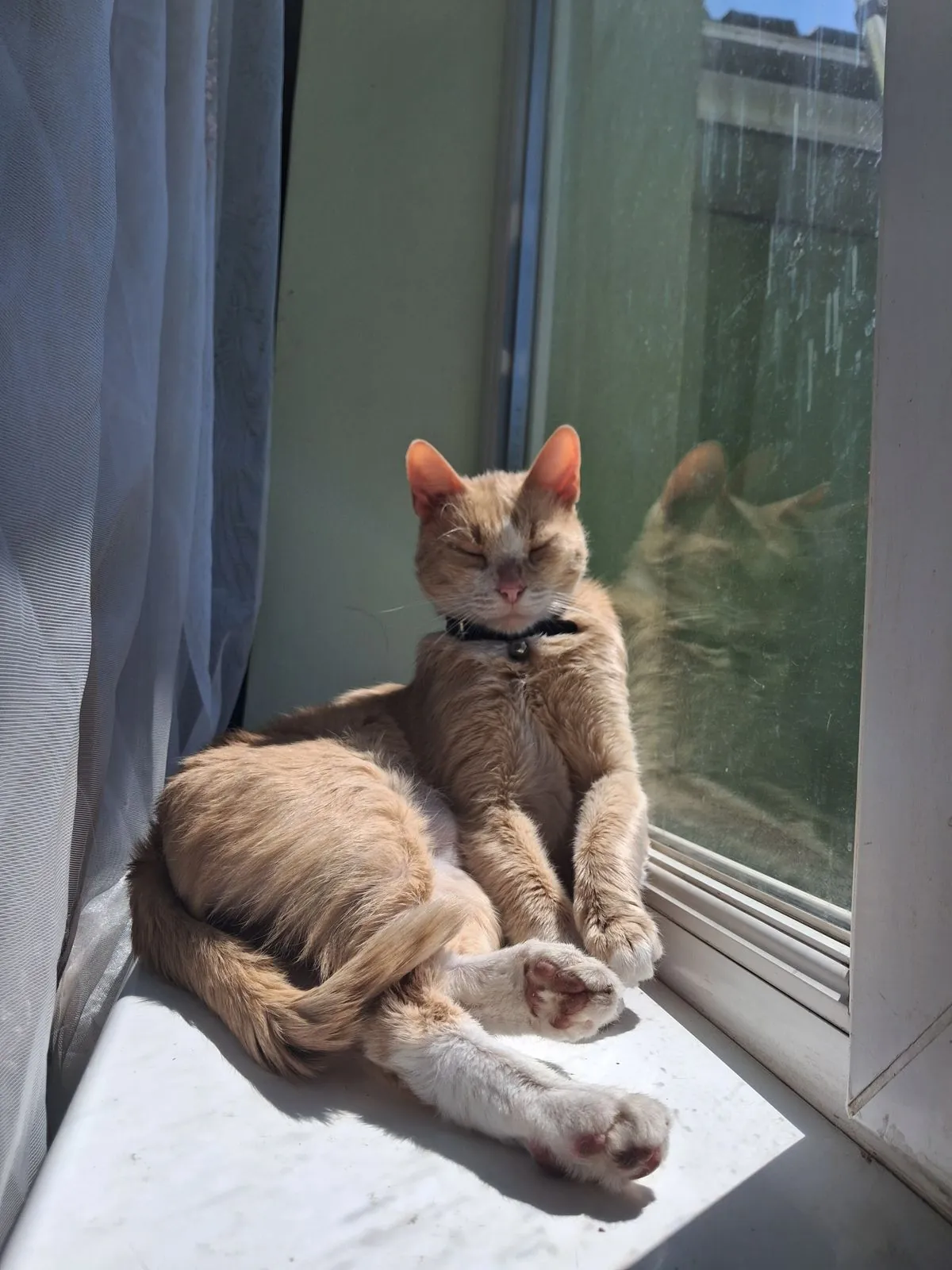
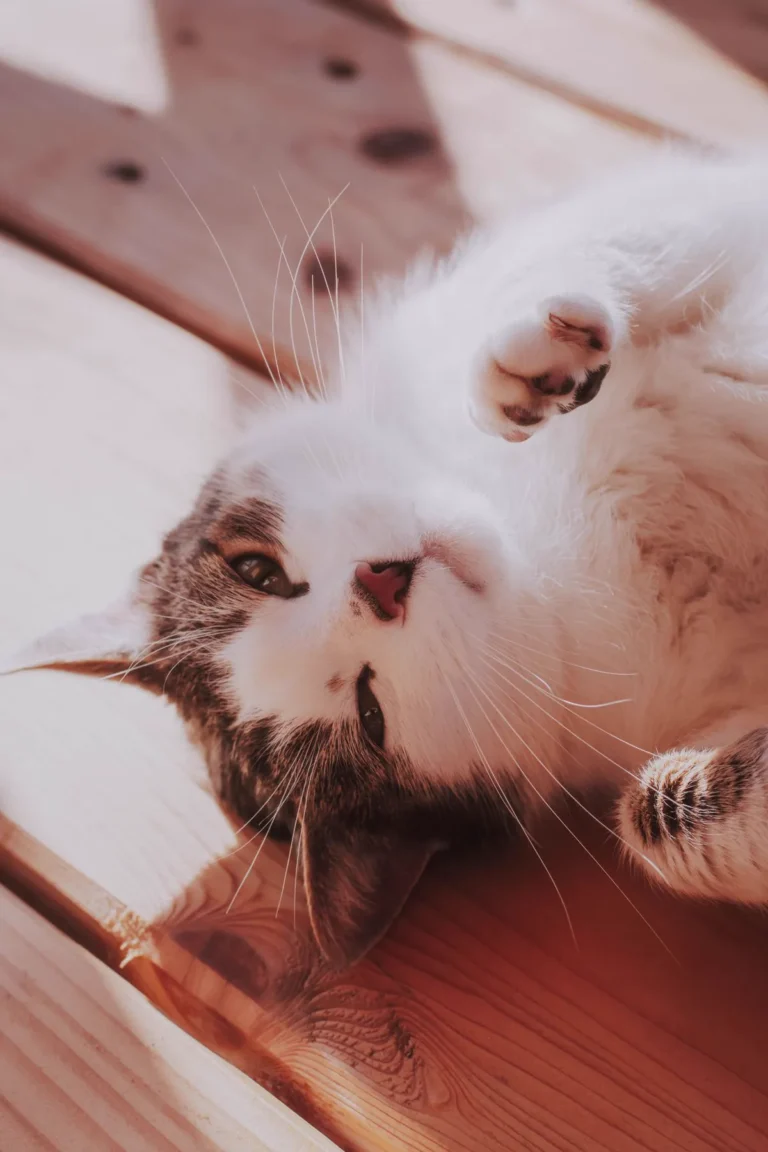
Posture is the frame that holds all the other signals together. A relaxed Maine Coon is loose: body stretched out or curled comfortably, weight even, tail resting quietly. A cat lying on its side or showing its belly is deeply relaxed — but a belly on display is usually an invitation to admire, not to touch. If the belly appears and the tail starts flicking, admire from a distance.
A crouched cat is either hunting or worried. In play the crouch is loose and wiggly before a pounce; in fear it is tight, with the body pressed down, the tail tucked and the ears back. An arched back with fur standing on end is a frightened cat making itself look bigger — back away and let it come down on its own.
Whiskers are easy to overlook: relaxed ones fan out to the sides, pushed-forward ones often mean curiosity, and ones pulled flat back against the face, especially with a tense muzzle, can mean fear or pain.
Then there is kneading, head-butting, and the slow walk toward you with the tail up — affectionate signals in the same language. I have written separately about why Maine Coons knead and about why Maine Coons follow their owners everywhere. And if your cat is chirping while its tail is up and its ears are forward, that is usually excitement — I decode those sounds in my guide to why Maine Coons chirp and trill.
Happy, Stressed or Overstimulated: Putting It Together
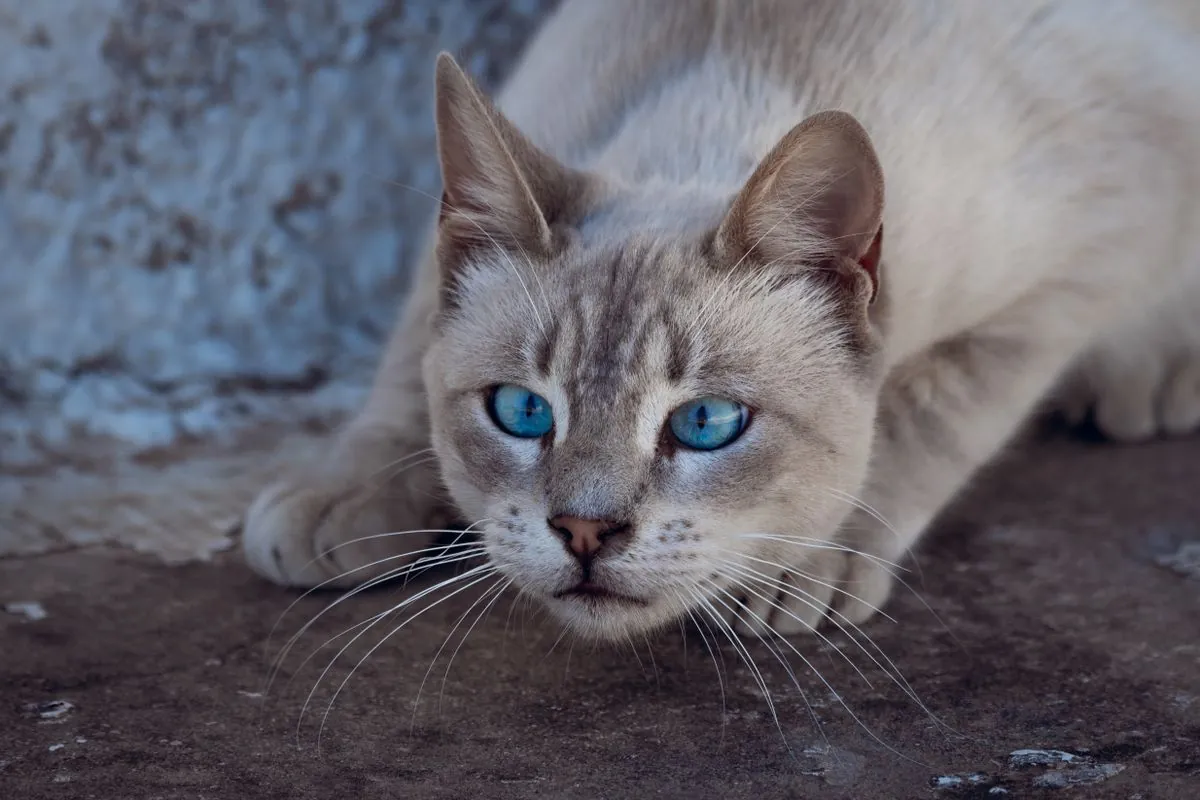
A happy, relaxed Maine Coon shows a loose body, ears forward or neutral, soft half-closed eyes or slow blinks, whiskers fanned out, and a tail held high in greeting or resting quietly. It may knead, head-butt, or flop over beside you — the gentle, social temperament I describe in my guide to Maine Coon personality traits.
A stressed or anxious Maine Coon looks smaller, not bigger: body low, tail tucked, ears sideways or back, pupils wide, whiskers pulled in. It may hide, freeze, or try to leave the room. The right response is boring and kind: give the cat a safe room, a hiding place, and time. Do not pull it out or force cuddles — a stressed cat that cannot escape is a cat that may bite.
Overstimulation catches even experienced owners, because it starts with a cat that looks perfectly happy. You are petting your Maine Coon, it is purring, and then the tail tip starts flicking, the ears rotate sideways, the skin ripples along its back, and the cat turns its head toward your hand. That is the warning sequence — stop now, calmly, before the nip. Owners on forums describe the same sequence again and again: learn your own cat’s limit, keep petting sessions short, and stick to the cheeks, chin and head, which most cats prefer over the belly, tail and back legs.
When Body Language Means a Vet Visit
Cats are famously good at hiding pain. In the wild, showing weakness was dangerous, and that instinct is still there in a cat asleep on your sofa. Pain rarely looks like crying — it looks like small changes in posture and behaviour that only someone who knows the cat will notice.
Call your vet if you see a cluster of these signs, or any one of them persisting for more than a day: a hunched, tense crouch with squinty eyes; a tight loaf with the paws pulled hard underneath; hiding more than usual; hesitating before jumping, or stopping jumping altogether; eating or drinking less; grooming less, or overgrooming one spot; flinching when touched somewhere that never bothered them before. A cat that purrs while hunched, hiding and refusing food is not happy — purring is also self-soothing.
Vets use a tool called the feline grimace scale, scoring the ears, eyes, muzzle, whiskers and head position for signs of pain. In plain terms: ears slightly flattened, eyes squinted, whiskers pulled back or stiff, a tense muzzle, and the head held low. If your cat’s face looks different from its usual relaxed face and stays that way, that is worth a vet visit. Cornell’s Feline Health Center notes that subtle behavioural shifts are often the earliest indicators of pain in cats, and PetMD’s guide to cat body language and the VCA Hospitals cat behaviour resources both make the same point: a change from your cat’s normal behaviour is the signal that matters most. You can find more background at Cornell Feline Health Center.
How to Learn Your Own Cat’s Language
No guide can replace watching your own cat. Spend a week noticing the small things: where the ears sit when your cat is asleep on your lap, how the tail moves when you open the treat cupboard. Film the moments that puzzle you — watching a clip back often shows the ear flick I missed in real time.
Answer the signals the way your cat is asking you to. Slow blink back at a slow blink. Greet a high tail with a chin scratch. Step back from a lashing tail and flat ears without fuss. Keep petting sessions short and stop at the first warning sign, not the second. And when the signals change suddenly and stay changed, trust your gut and call the vet — you are the expert on your cat’s normal.
Maine Coons are famously communicative cats. Learning to read those signals is not about memorising a chart — it is about paying attention to one big, fluffy individual, day after day, until their language becomes second nature.
Frequently Asked Questions
What does it mean when my Maine Coon slow blinks at me?
A slow blink is a sign of trust and relaxation — your cat is closing its eyes because it feels safe with you. You can slow blink back: research from the Universities of Sussex and Portsmouth found cats are more likely to slow-blink back at people who do it first.
Why does my Maine Coon wag its tail when I pet it?
A moving tail in a cat usually signals rising tension, not happiness like in a dog. A tail flicking or lashing during petting often means your cat is overstimulated and wants you to stop. A tail held high and still, or quivering at the tip, is the happy greeting — a sweeping tail is a warning.
What do flattened ears mean on a Maine Coon?
Ears flattened back against the head usually mean fear, defensiveness, or anger — give the cat space and do not reach for it. Ears turned sideways, sometimes called airplane ears, are a milder version of the same message: discomfort or unease.
How can I tell if my Maine Coon is in pain from its body language?
Look for a hunched or tense crouch, squinted eyes, ears slightly flattened, whiskers pulled back, a tight loaf, hiding, reluctance to jump, eating less, or flinching when touched. A change from your cat’s normal behaviour that lasts more than a day is worth a vet visit.
Is my Maine Coon showing its belly because it wants a belly rub?
Usually not. A cat showing its belly is showing trust and relaxation, but for most cats the belly is sensitive and touching it triggers a grab or a nip. Watch the tail: if it starts flicking when you reach for the belly, stop. Some cats do enjoy belly rubs — learn your own cat’s answer.