Why Is My Maine Coon’s Tail So Long? Tail Facts and What the Tail Tells You
The first time my Maine Coon curled up on the sofa next to me, I honestly thought someone had draped a fur stole across his back. That plume of a Maine Coon tail stretched the full length of his body and wrapped once around his paws, with fur to spare — far too grand for an ordinary house cat. It left me with the question every Maine Coon owner asks sooner or later: why is this tail so long?
It is not just for show. Shaped by cold winters in New England, the tail works every day as a balancing aid, a blanket, and a way of talking to you.
How Long Is a Maine Coon Tail, Really?
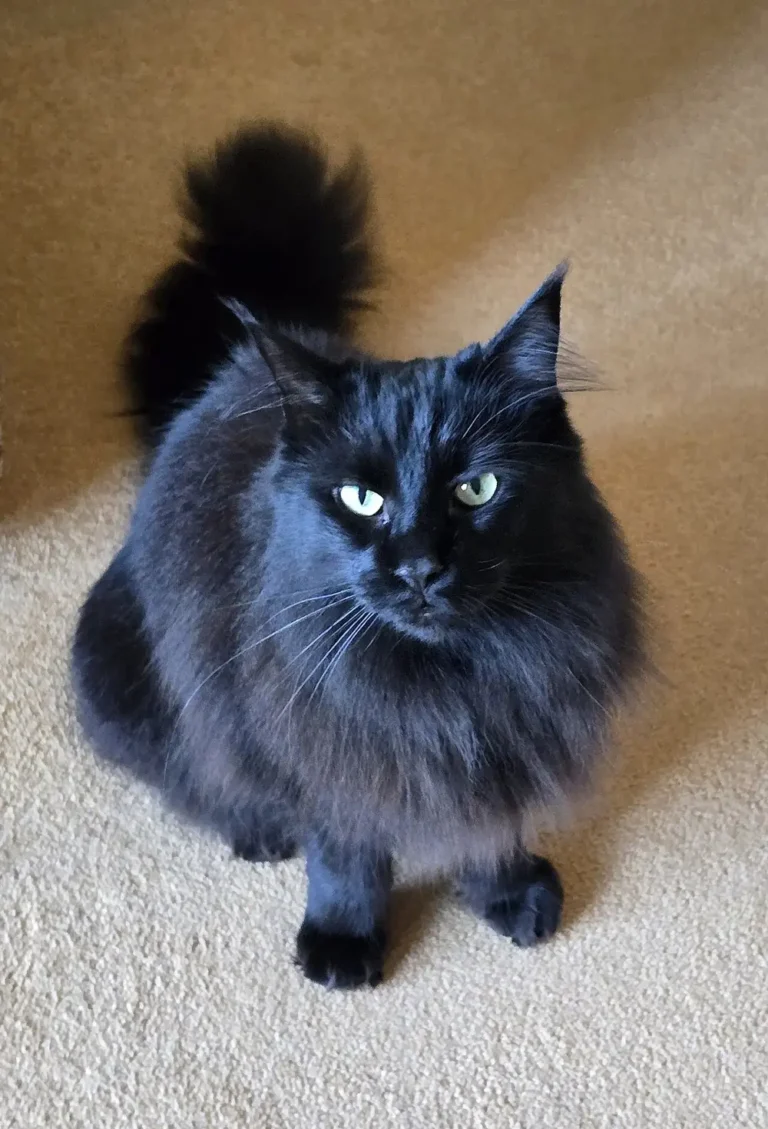
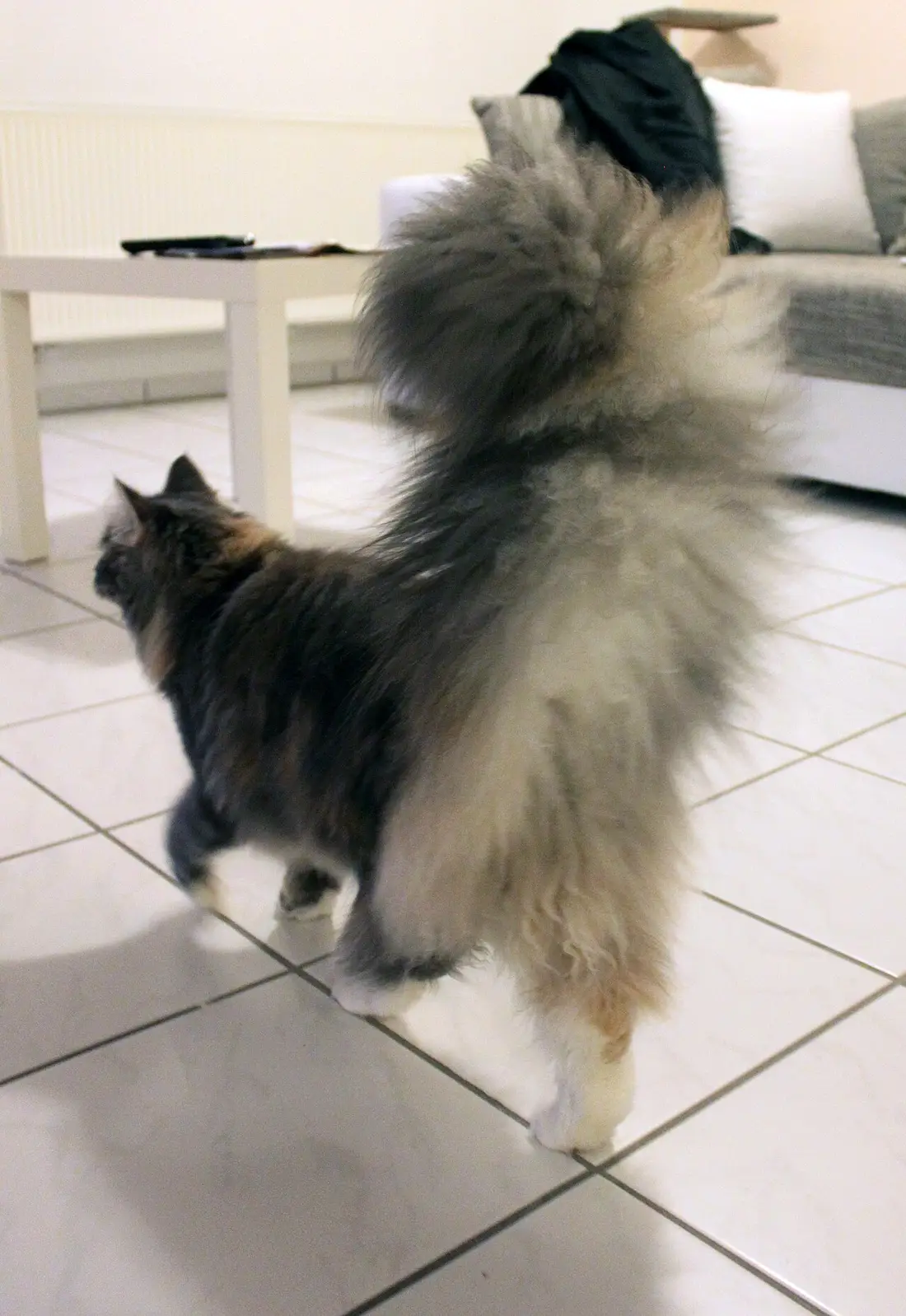
A grown Maine Coon tail is usually 12 to 16 inches from base to tip, about as long as the body itself in many cats — noticeably longer than the tail of an average house cat, and dressed in long, flowing fur, it looks even longer than it measures.
The breed standard agrees: the International Cat Association describes the Maine Coon tail as long and flowing, as long as the body when measured from base to shoulder blades, wide at the base and tapering toward the tip, with full, flowing fur. You can see the exact wording in the TICA Maine Coon breed standard.
Tail length varies from cat to cat. Females tend to be smaller than males, so their tails are usually a little shorter to match, while a big male can carry a tail that seems to go on forever. Kittens grow into their tails gradually — Maine Coons take several years to reach full size, so do not worry if your one-year-old’s tail still looks like a work in progress.
For the record books, the longest tail ever measured on a domestic cat belonged to a Maine Coon named Cygnus, at 17.58 inches — the extreme end, not the norm. If you are curious how the tail fits into the rest of the cat’s proportions, our guide to the Maine Coon size comparison puts the whole cat in perspective.
Why the Tail Grew So Long
Maine Coons did not get their tails from a breeder’s wish list — they got them from Maine winters. The breed developed naturally in the northeastern United States, where only the hardiest cats survived, and every feature that helped a cat stay warm and keep hunting earned its place.
Think of the tail as survival kit with three jobs, and it still does all three in a warm living room today: a blanket, a balancing pole, and a flag the cat waves to tell you how it feels. That raccoon-like plume is also where the Coon half of the name comes from, though the resemblance is only skin deep — Maine Coons are entirely cats, their tails just longer, fuller, and harder working.
What the Maine Coon Tail Is Actually For
Balance and agility
A cat’s tail is an extension of its spine, a chain of small vertebrae wrapped in muscle, and it works as a counterbalance. When a Maine Coon leaps to the top of a bookcase or turns sharply mid-chase, the tail swings the other way and steadies the body — the same principle as a tightrope walker using a long pole. It matters more for this breed than for most: Maine Coons are big, heavy cats asking a lot of their balance.
Watch yours walk along the back of the sofa or a narrow windowsill and you will see it happening in real time, the tail making small, constant adjustments as the cat shifts its weight.
Warmth on demand
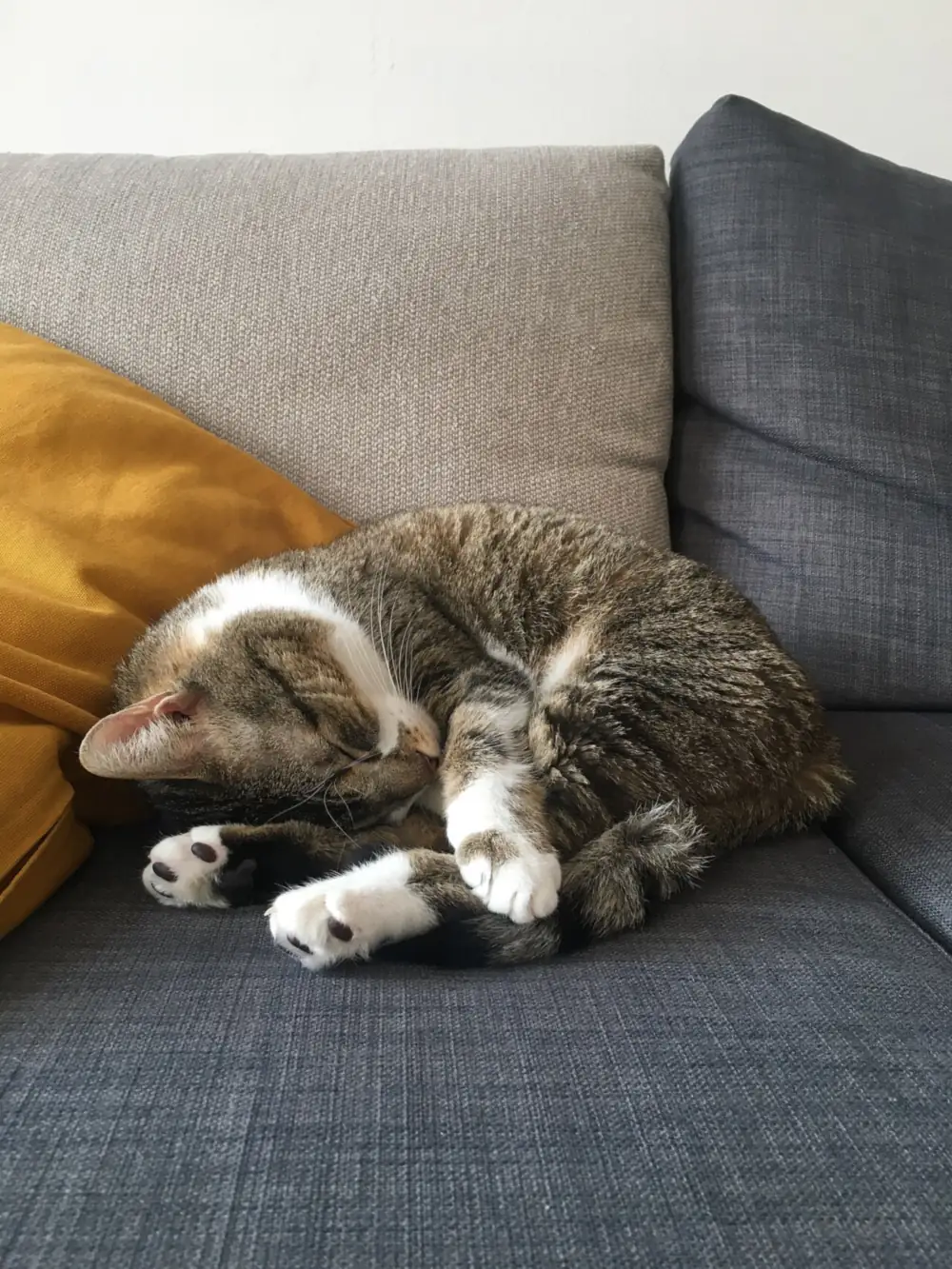
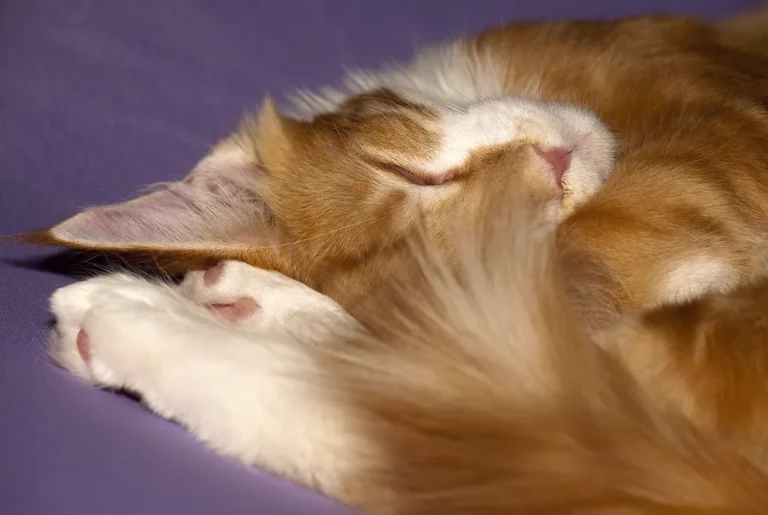
The warmth job is the one I notice most, because I see it every cold night. A Maine Coon settling down to sleep will often wrap its tail around its body before it closes its eyes, and on a cold evening it may pull the tail right over its nose, the thick fur holding a layer of warm air against the body.
Owners on Reddit say the same thing I see in my own house: on a chilly evening, a Maine Coon curls into a tight ball and winds that long tail around its body like a scarf, perfectly content with its tail as a blanket.
A way of talking to you
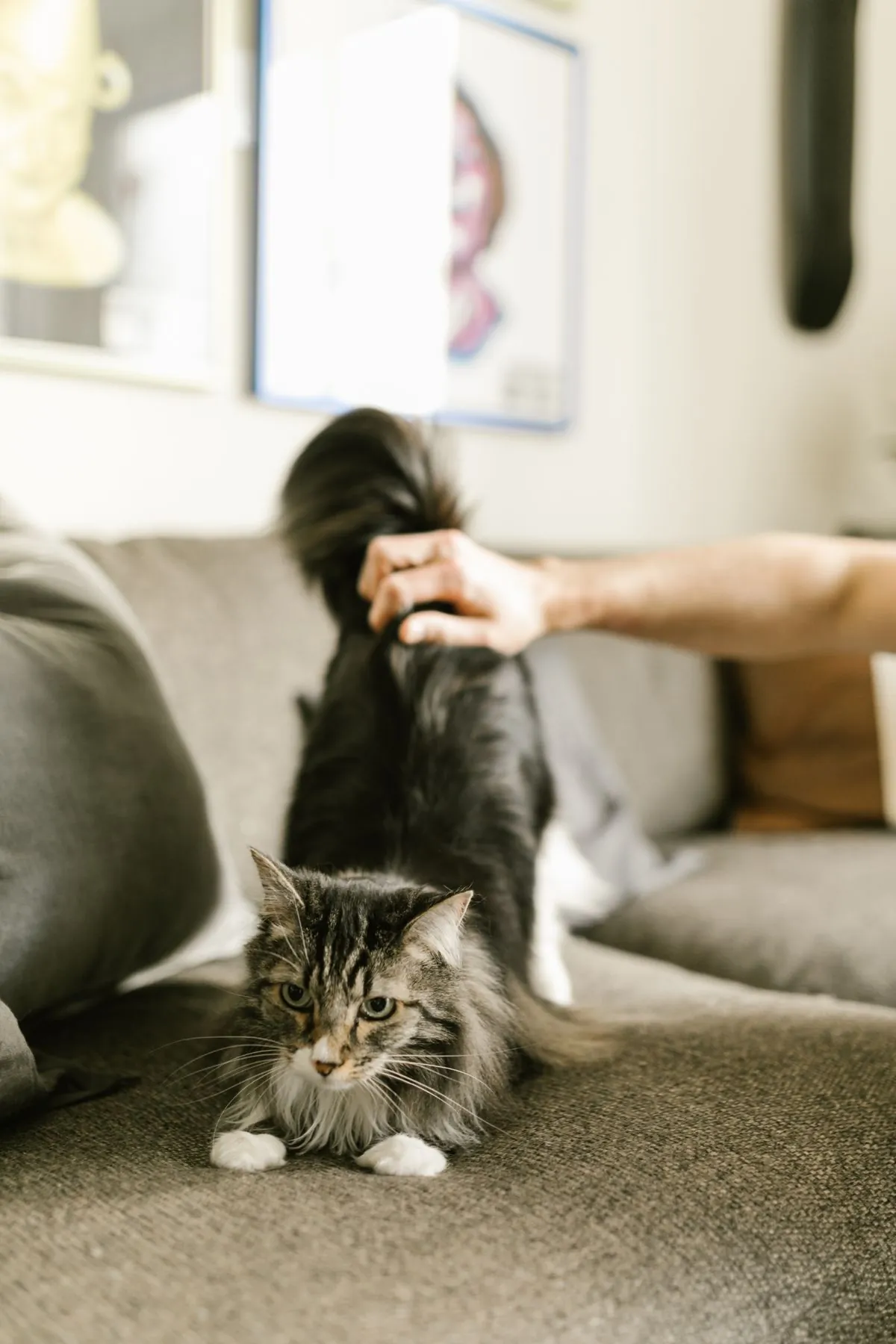
The third job is communication, and the tail is loud about it. Because it is so large and so visible, a Maine Coon tail broadcasts mood the way a smaller cat’s tail can only hint at. A tail carried high with a gentle curve, sometimes with a little question-mark hook at the tip, is the classic happy greeting. A tail held low and still, or tucked close, usually means the cat is unsure or wants space. A tail lashing from side to side is a clear sign of irritation, and a tail that suddenly puffs up to twice its size means the cat is startled or threatened.
That is only a brief sketch. Ears, eyes, posture, and voice all matter too, and our full guide to Maine Coon body language covers the whole picture. Read it before you interpret any single signal on its own — context changes everything: a twitching tail tip during play means something very different from the same twitch when a cat is watching a bird through the window.
On Instagram and Facebook, videos of Maine Coons strutting toward the camera with their tails held high draw exactly the reaction you would expect: viewers call it a fashion show, with the tail the star of it.
Everyday Tail Care
A tail that long and that fluffy needs a little more attention than a shorthaired cat’s tail, but it is not difficult. The main job is brushing: I run a wide-toothed comb through the tail fur once or twice a week, working gently from the base toward the tip, and check for the small tangles that form where the tail rests against the body or drags across bedding. Left alone, those tangles tighten into mats that pull at the skin and hurt.
Never yank a comb through a tangle, and never pull on the tail itself. The tail is an extension of the spine and it is sensitive, so hold the base of the tangle with your fingers while you work it loose. If a mat is too tight to comb out, trim it with blunt-tipped scissors or ask a groomer to deal with it.
While you are brushing, run your fingers lightly along the tail and feel for anything new — a lump, a sore patch, a spot where the fur is thinning, or an area the cat flinches away from — so you learn what normal feels like and a change stands out. Check the base too, where the fur is thickest and skin problems are easiest to miss. Unneutered males can develop an oily, dark patch there, sometimes called stud tail — mention it to your vet rather than treating it yourself.
The tail also collects things, because it is long and low and sweeps across floors and trails through litter. A quick check after outdoor time or a litter tray visit is enough. If the tail is wet or muddy, pat it dry rather than rubbing, and let it dry fully before brushing — wet fur tangles far more easily.
Owners often ask about whiskers in the same breath as the tail, but they are a different subject — our guide to Maine Coon whiskers covers them properly. For the tail, the rule is simple: gentle, regular, and never forced.
When Something Is Wrong With the Tail
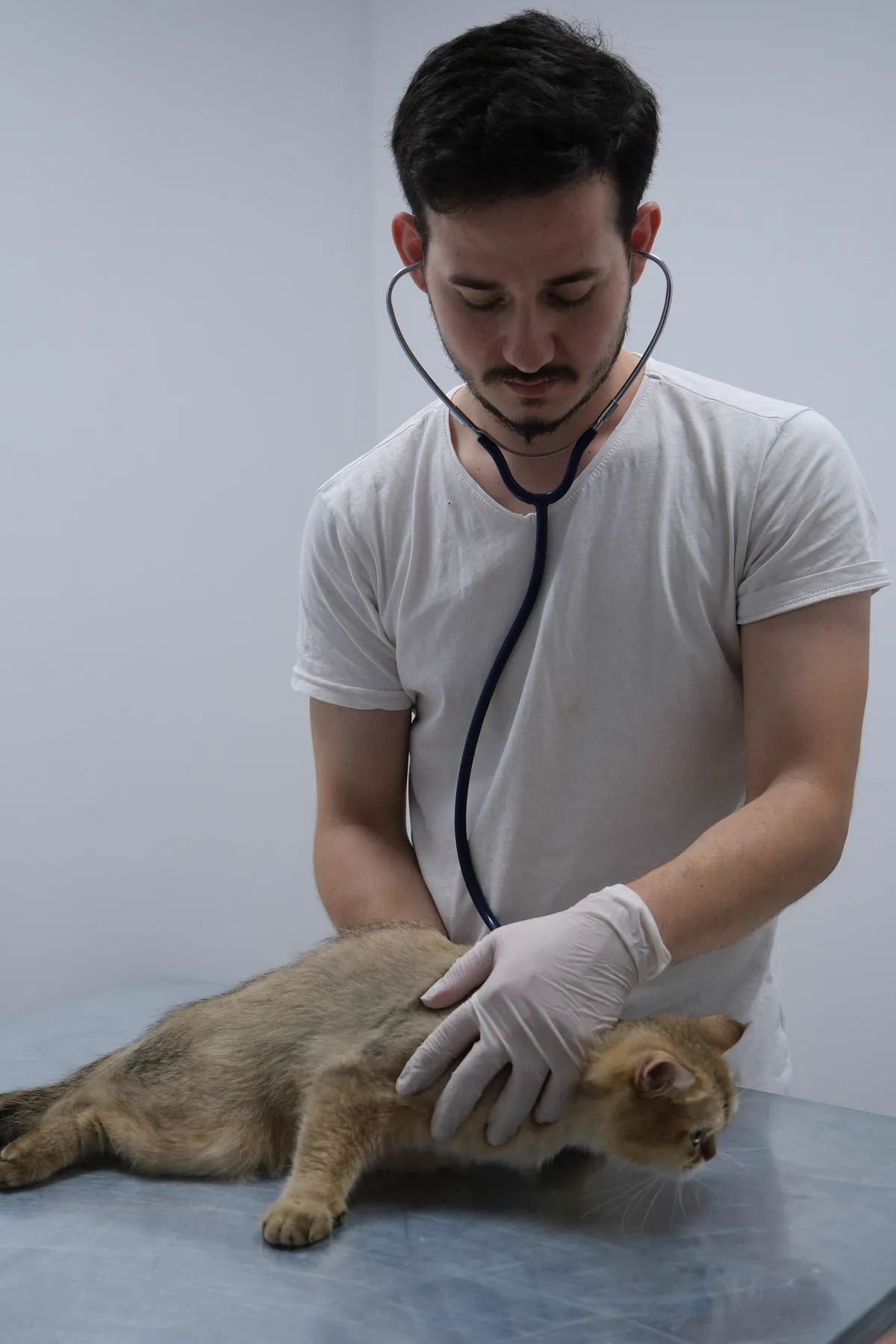
Most tail worries turn out to be nothing, but the tail is connected to nerves that matter, so know the signs that mean a vet visit. The Cat Fanciers’ Association puts it plainly: the tail is an extension of the spine, made up of vertebrae, blood vessels, and muscle, with nerves from the spinal cord running through it. Their guide to tail injuries in cats is a good reference.
Call your vet promptly if you notice any of these:
- A tail that hangs limp, drags, or sits at an odd angle
- A new kink or bend, or swelling along the tail
- Pain when touched, or the cat hissing or flinching away
- An open wound, bite mark, or patch of missing fur
- The cat chewing or licking at its tail obsessively
- Trouble using the litter tray, straining, or losing bladder or bowel control
That last point is the one to take most seriously. Nerves near the base of the tail help control the bladder and bowel, so an injury there can affect toileting as well as the tail itself. If your cat cannot urinate, is straining, or has had an accident after a tail injury, get to the vet the same day.
The usual causes are ordinary household accidents: a tail caught in a closing door, stepped on in the dark, trapped in a recliner, or grabbed during rough play. PetMD’s guide to common cat tail injuries covers fractures, dislocations, bite wounds, and abrasions, and notes that minor fractures often heal on their own with rest and pain relief, while more serious injuries can need surgery and sometimes partial amputation. Most cats adapt remarkably well and can still balance, climb, and live a normal life without part of their tail.
Do not try to splint, straighten, or manipulate an injured tail yourself, and do not pull on it to test whether it still moves. Put the cat in a carrier, keep it calm and still, and let the vet examine it — X-rays are usually how a fracture or dislocation is confirmed. And check where your cat’s tail is before you put a recliner down: a long tail trailing on the floor is exactly what gets caught.
Frequently Asked Questions
How long is a Maine Coon tail supposed to be?
Most adult Maine Coon tails measure roughly 12 to 16 inches from base to tip, and the breed standard calls for a tail as long as the body. There is plenty of normal variation — what matters is that the tail looks in proportion to the cat and moves normally.
Why does my Maine Coon wrap its tail around itself when sleeping?
It is keeping warm. Wrapping the tail around the body covers the nose and paws and traps warm air close to the body, a habit left over from cold winters in Maine.
Is it normal for a Maine Coon tail to be that fluffy?
Yes. The tail is wide at the base and tapers toward the tip, covered in long, flowing fur that gives it the breed’s famous plume shape. The full plume develops as the cat matures, so a kitten’s tail looks slimmer than an adult’s. If the fur suddenly thins or bald patches appear, mention it to your vet.
What does it mean when my Maine Coon holds its tail straight up?
A tail carried high, often with a gentle curve or a question-mark hook at the tip, is usually a happy, confident greeting — one of the friendliest signals a cat gives. One signal alone never tells the whole story, so read it with the ears, eyes, and posture.
When should I worry about my Maine Coon tail?
Worry when something changes suddenly: a tail that goes limp, drags, kinks, swells, or hurts to touch, a wound or bite, or trouble with urination or toileting after a tail incident. Those signs need a vet, and bladder or bowel changes after a tail injury are urgent. If you are ever unsure, a vet visit is the safer choice.
That long, ridiculous, wonderful tail is the first thing most people notice about a Maine Coon, and the last thing I would change about mine. It steadies him on the windowsill, keeps him warm on cold nights, and tells me several times a day exactly how he feels. Once you learn to read it, you realise the tail is not just the most beautiful part of the cat — it is one of the most useful too.