Are Maine Coons Smart? Intelligence, Memory and Trainability
If you have ever watched your Maine Coon work out how to open a door you were sure was shut, you have probably asked the question yourself: are Maine Coons smart? The short answer is yes, in the ways that actually matter in a home. They are not smart the way a person is smart — no test gives a cat an IQ score worth trusting. But they remember, they watch, they learn routines, and they solve the small problems standing between them and what they want. I have lived with Maine Coons long enough to stop being surprised — and I still laugh at them most days.
Are Maine Coons Smart? What Owners Actually See
Ask a room full of Maine Coon owners whether their cats are clever and you will get the same answer in a dozen stories: one learned the sound of the treat cupboard, another waits by the front door five minutes before the school run every day, and owners on Reddit describe cats stealing food straight out of a hand, opening cupboards, and returning to the toy drawer day after day.
Breeders on YouTube say the same in calmer words: this is a breed that pays attention. The Cat Fanciers Association describes the Maine Coon as sociable, loyal and intelligent, and that matches what I see at home. There is no validated list of the smartest cat breeds. PetMD has a useful explainer on how smart cats really are: cats learn, remember and problem-solve far better than they are usually given credit for.
How Good Is a Maine Coon Memory?
This is where the breed earns its reputation: Maine Coons remember people, places, routines and where they hid things they care about.
They remember people. A Maine Coon that has met your mother twice greets her differently from a stranger on the third visit. They remember the vet, too — which is why the carrier coming out of the cupboard can clear a room in seconds. That is long-term memory doing its job.
They remember routines. Feed a Maine Coon at the same time each morning and you will find a large cat sitting in the kitchen, staring at you, several minutes early — and change the routine and they notice straight away.
They remember places and solutions. A cat that once worked out how to push a sliding wardrobe door tries the same move on every sliding door in the house. Owners on Reddit say the same about food: a Maine Coon that once stole chicken from a plate checks that plate every time it appears. That is not spite — just memory plus motivation, and food is a very strong motivator for this breed.
Problem-Solving: Doors, Drawers and the Food Cupboard
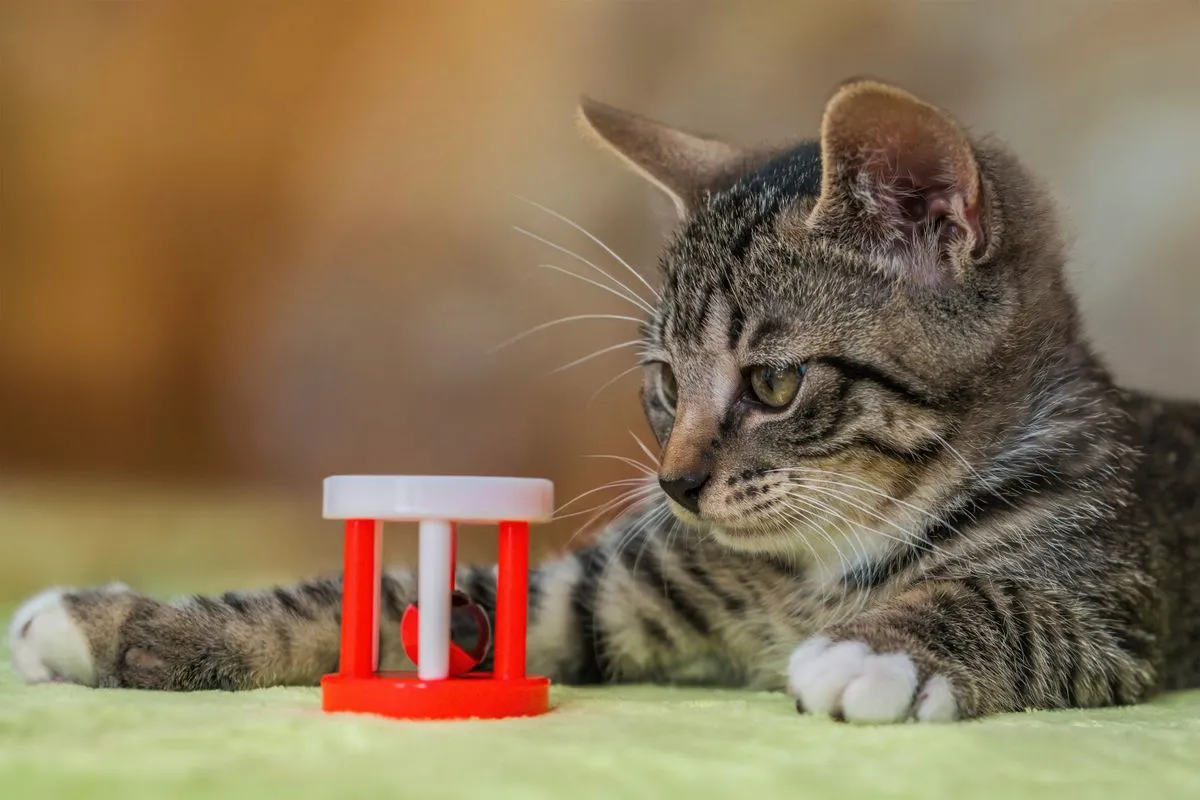
If one skill convinces people their Maine Coon is clever, it is problem-solving — and it usually involves a door. Lever handles are the first thing to go: a Maine Coon is big and heavy enough to pull one down, and once done by accident, most cats do it on purpose the second time. Sliding doors, cupboards, drawers left ajar, the flap on the treat jar — all get investigated.
Then there is the famous bell. A much-shared Facebook video shows a big cream Maine Coon ringing a little service bell on the kitchen counter to ask for food, pressing it again and again until his person responds, while the comments fill with owners saying their cats do the same. The cat learned it with patient, repeated rewarding — the point being that a Maine Coon does not just stumble on these things. It repeats what worked.
Do Maine Coons Learn Words and Routines?
Yes — and this is the part new owners find most surprising. Maine Coons learn words the way dogs do, by hearing a sound paired with the same result often enough. Dinner, outside, bedtime, come here, no — most of mine have learned at least a handful.
They learn routines even faster than words. A Maine Coon knows which bag means the vet and which means the shops, and that a closing laptop means attention is now available. Kittens pick this up especially fast, which is one reason the early weeks matter; if you are bringing a kitten home, our guide to Maine Coon kitten socialization explains how those first routines and introductions shape the adult cat.
They also learn people. A Maine Coon follows its favourite person from room to room and chirps a greeting when that person comes home. Owners joke about having a supervisor, but it is a social skill: the cat has learned that staying near you is where the interesting things happen. I wrote more about the following habit and the breed’s social side in our look at Maine Coon personality traits.
How Trainable Is a Maine Coon?
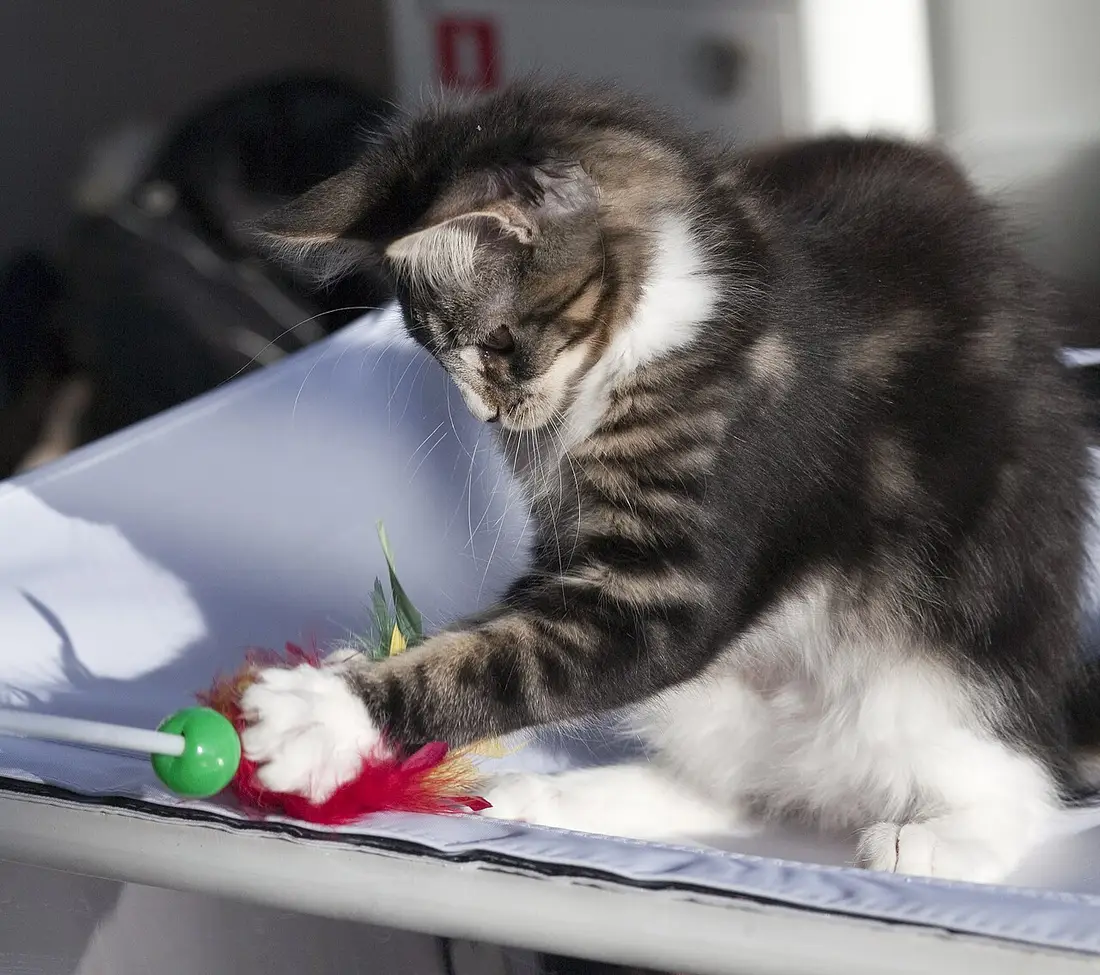
For a cat, very. Maine Coons are often described as the most dog-like of cats when it comes to learning, and in my experience that is fair. Short, calm sessions with a reward they actually want work well — and they keep the lesson. Sit, come when called, fetch, walking on a lead, ringing a bell — all within reach for a patient owner.
But trainability is not the same as obedience. A Maine Coon will learn a cue quickly and then decide whether it is worth doing. That is not stubbornness — it is a cat weighing the reward against the effort. Keep sessions short and stop while the cat is still interested, and never punish a cat for not responding: punishment teaches a cat to avoid you, not to learn.
I am keeping the how-to brief — the step-by-step side belongs in one place. If you want the practical method, the cues that work, and the clicker basics that owners stick with, read our training guide for Maine Coons. What matters here is the underlying point: that guide works at all because the breed is willing to learn.
What Smart Looks Like Day to Day
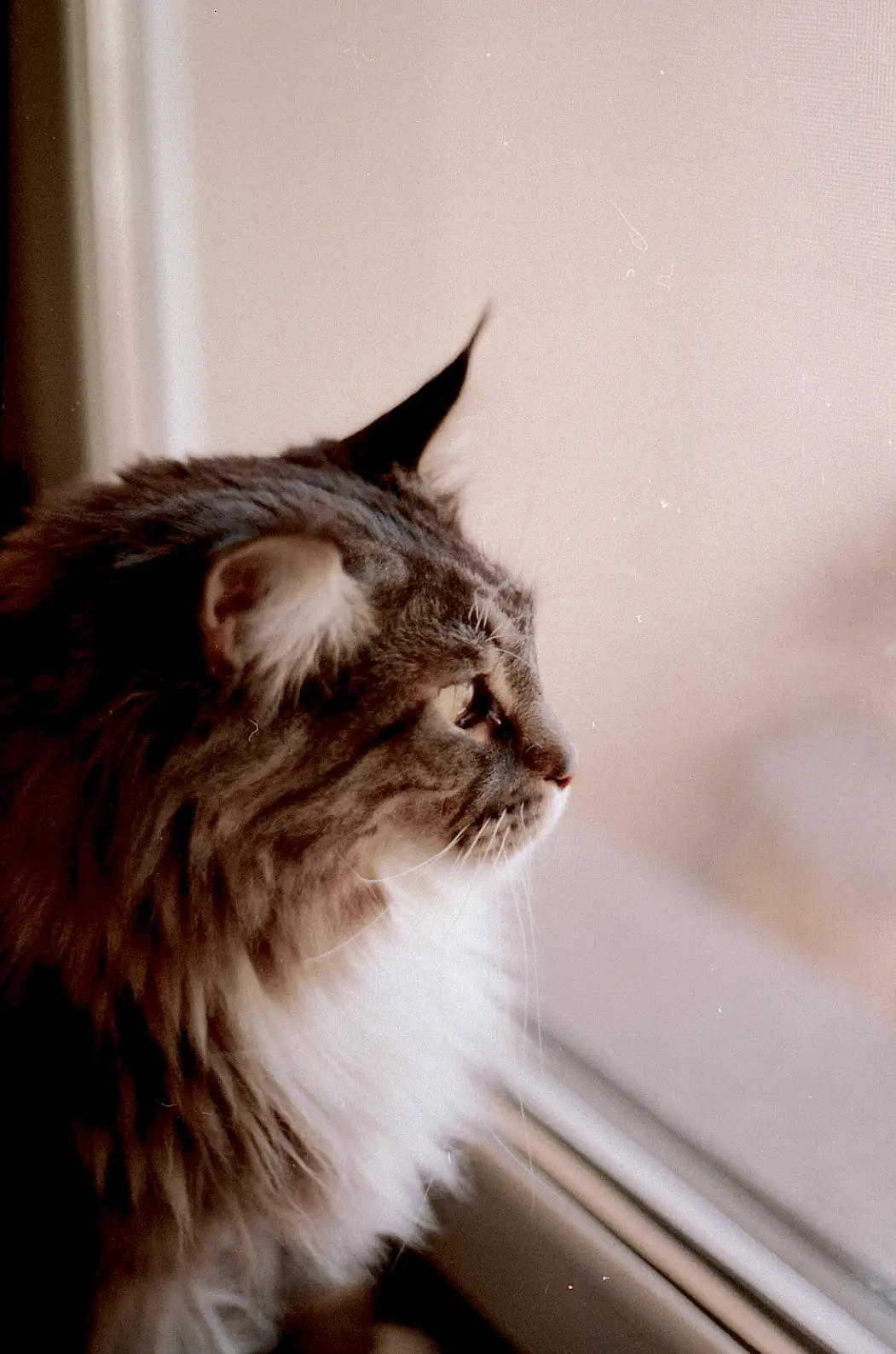
Forget the test scores. Here is what Maine Coon intelligence looks like on an ordinary Tuesday: a cat that brings me a toy mouse, drops it at my feet, then sits and waits, because yesterday that sequence ended in a game; one that chirps at the window when a bird lands, then looks back to check I saw it; one that has worked out the bathroom door opens inward, and that a paw under the gap announces a visitor.
It also looks like a cat that knows when something is wrong: on a bad day mine simply comes and sits beside me, heavy and warm, and stays there. The cat reads tone, posture and routine, and responds when they change — a real social skill.
When Clever Turns Into Mischief
There is a flip side every Maine Coon owner learns. A clever cat with nothing to do will invent a job, and the job is usually something you did not want done: the cat that opens the same cupboard every night, knocks things off shelves just to watch them fall, or wakes you at 4 a.m. scratching the bed frame, then runs away the moment you sit up. Owners on Reddit and in Facebook groups describe the same pattern, and the cause is almost always the same: boredom, not badness.
Saying it plainly matters, because it changes the fix. A bored cat misbehaving does not need scolding; it needs something to think about. Cornell’s veterinary team makes the same point: cats that can stalk, pounce and problem-solve through play are less likely to take their frustration out on the furniture.
Enrichment for a Clever Cat
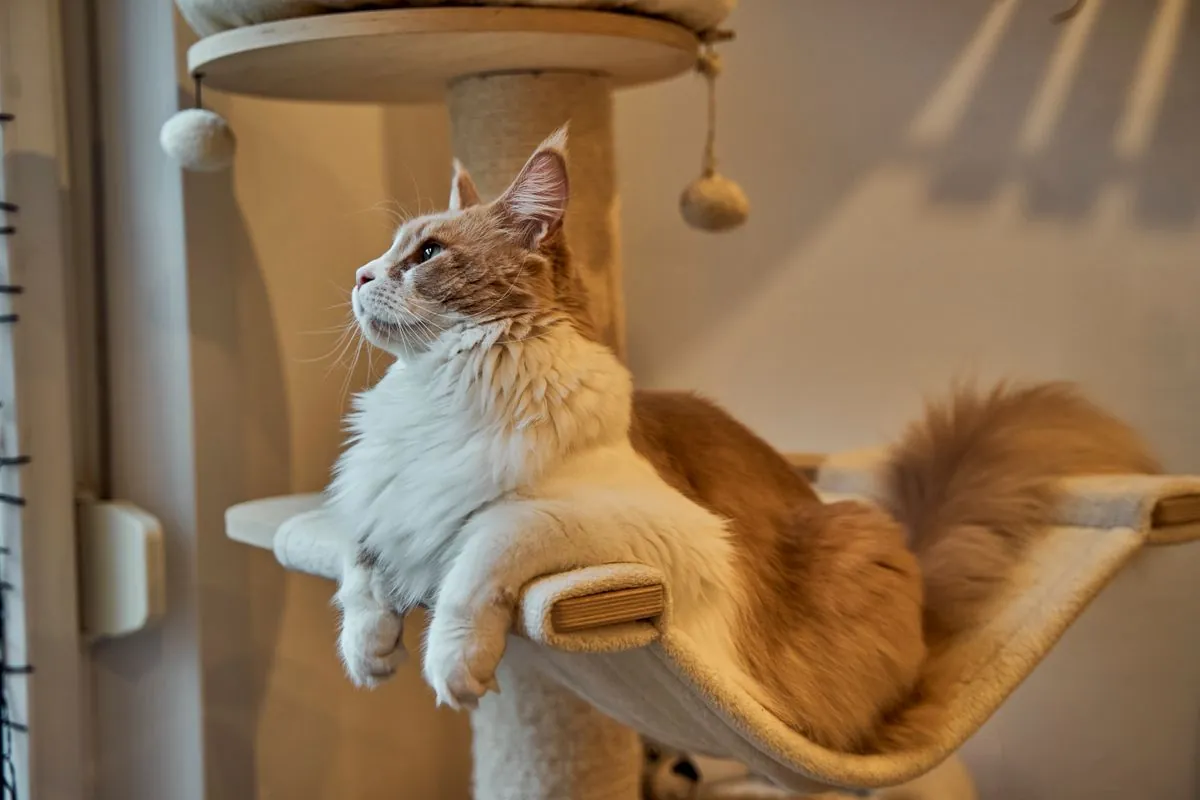
You do not need a shelf of gadgets to keep a Maine Coon thinking — just variety, changed before the cat gets bored. Rotate puzzle feeders and toys rather than leaving the same ones out all week. Hide a few treats around the house so breakfast becomes a hunt. Give the cat height, a tall tree or a clear shelf: a cat that can survey the room is using its brain. Play in short bursts ending with a catch — a hunt that never ends is frustrating, not fun. And keep the sessions social: a Maine Coon would rather solve a puzzle with you there than alone.
Cornell has a practical guide to safe toys and gifts for cats, including the reminder that a cardboard box and a ping pong ball can be as enriching as anything expensive, and that toys with small parts or loose string go away after supervised play. For ideas matched to this breed’s size and play style, our guide to the best toys for Maine Coons covers the types that hold up to a big, strong cat. VCA also has a clear overview of cat behaviour and training worth reading before any new routine. A tired brain is a quiet cat.
Are Maine Coons Smarter Than Other Cats?
This is the question everyone wants a ranking for, and the honest answer is that there is no ranking to give. There is no validated breed IQ test for cats, and no serious study that places the Maine Coon above every other breed. From the breed standard and from owners, Maine Coons are consistently described as intelligent, curious and trainable, and they show it in ways easy to see at home.
Individual cats vary enormously. I have known one Maine Coon that learned to fetch in an afternoon and another, equally loved, that spent years staring at the same puzzle feeder as if it had offended him. Neither cat was broken: a quiet cat is not a slow cat, and a cat that does not fetch is not a cat that cannot learn. If you are choosing a kitten, judge the individual kitten in front of you rather than the breed’s reputation. The CFA’s Maine Coon breed page gives the official picture of the breed before you meet any kittens.
FAQ
Are Maine Coons smart?
Yes. Maine Coons are widely considered one of the more intelligent breeds. They learn household routines, remember people and places, solve simple problems like opening doors and drawers, and respond well to reward-based training.
Can Maine Coons learn their name?
Most do. A Maine Coon usually learns its name within the first weeks in a new home, because the words are paired with food, play or attention. Use the name consistently and reward the cat for responding.
Do Maine Coons remember their owners?
Yes. Maine Coons remember their people, including after a time apart, and usually greet a familiar person differently from a stranger — and they remember the vet, the carrier and the sound of the treat cupboard.
Can you train a Maine Coon like a dog?
Not exactly like a dog, but closer than most cats. Maine Coons can learn cues, recall, fetch and lead walking in short, reward-based sessions. They still decide for themselves whether a cue is worth following, so patience and a good reward matter more than repetition.
Why does my Maine Coon get into everything?
Because it is curious, clever and probably a little bored — a Maine Coon that opens cupboards, knocks things over or wakes you at night is usually looking for something to do. More play, rotating puzzle feeders and a taller climbing spot usually settle it. If the behaviour starts suddenly, check with your vet first.
The Bottom Line
So, are Maine Coons smart? In my house, the evidence is on the kitchen counter, in the open drawer, and in the cat that knows my routine better than I do. They remember, they watch, they work things out, and they keep learning as long as you keep teaching them. That is not a party trick. It is why this breed fits so well into a busy family home — and why a bored Maine Coon is a busy Maine Coon.
Give a clever cat something to think about every day, keep lessons short and kind, and enjoy the moments it outsmarts you. It will happen — mine does it at least once a week, and I have stopped pretending I mind.