Best Food for Maine Coon Cats: What They Love to Eat
Feeding a Maine Coon well is not complicated, but it does matter more than with the average cat. These are big, slow-maturing, muscular animals — many keep growing until age three or four — and what goes in the bowl shows up in the coat, the energy level, and the waistline. After years of feeding my own cats (and making just about every beginner mistake), here is the honest, practical guide I wish I had started with.
Are Maine Coons Carnivores?
Completely. Like all domestic cats, Maine Coons are obligate carnivores: they must get key nutrients — taurine, arachidonic acid, vitamin A, vitamin B12 — from animal tissue, because their bodies cannot make enough from plants. That does not mean every meal must be a steak; it means meat should be the foundation of the diet, not an afterthought behind grains and fillers.
The persistent myth is that big, active cats need lots of carbohydrates for energy. In reality, cats are built to run on protein and fat. Carbs are not poison, but a food where corn or wheat leads the ingredient list is not doing your Maine Coon any favors.
What to Look For in a Good Maine Coon Food
High animal protein
Look for a named meat or meat meal — chicken, turkey, salmon — as the first ingredient, and protein content around 30–40% or higher on a dry-matter basis. Protein builds and maintains the heavy muscle these cats carry; skimp on it and you will see it in a dull coat and lost muscle tone over time.
Moderate, quality fats
Fats supply energy and keep skin and coat healthy — omega-3 and omega-6 fatty acids are the ones to look for, and fish-based foods are naturally rich in them. Around 15–20% fat is a sensible range for most adults. Too little fat means dry skin and a dull coat; too much means an expanding waistline.
Low carbohydrates, minimal fillers
Corn, wheat, and soy are cheap bulk, not nutrition. A food built on meat with modest carbs will suit your cat better than one padded with grain fillers. High-carb diets are also linked to weight gain and blood-sugar issues in cats — and an overweight Maine Coon is harder to spot under all that fur than you would think.
Complete and balanced nutrition
Check the label for an AAFCO statement — the Association of American Feed Control Officials sets the nutrient profiles for “complete and balanced” pet food in the US. That one line on the package is the simplest quality filter there is. (You can read the standards themselves at aafco.org.)
Joint support for big frames
Maine Coons carry a lot of weight on their joints, so foods with added glucosamine and chondroitin are a sensible bonus, especially for adults and seniors. It is not a cure for joint disease, but it is reasonable nutritional support.
Life-stage formulas
Kittens, adults, and seniors have different needs. Because Maine Coons mature slowly, many vets suggest keeping them on kitten food longer than average — often until 12 months or so, sometimes more. Ask your vet rather than switching on a birthday.
Wet vs. Dry Food
This is the debate that never dies, so here is my take after feeding both:
- Wet food wins on hydration. Cats are notoriously reluctant drinkers, and the moisture in wet food supports urinary and kidney health. Most cats also find it more palatable.
- Dry food wins on convenience and cost, and the crunching action provides mild dental benefits — though it will not prevent dental disease on its own (see PetMD’s dental care guides).
I feed a mix: quality dry food available in measured meals, plus wet food daily. Whatever you choose, the non-negotiable is fresh water — a fountain encourages reluctant drinkers far better than a stagnant bowl. For a deeper look at growth and feeding timelines, the Maine Coon size comparison shows how long these cats keep developing.
Safe Human Foods — and Foods to Avoid
Maine Coons are enthusiastic beggars, so it helps to know the rules:
Safe in small amounts
- Cooked meat — plain chicken, turkey, or fish, cooked through with no seasoning.
- Cooked eggs — a good protein boost; always cook them, since raw eggs carry salmonella risk.
- Plain pumpkin — a spoonful of pure canned pumpkin (not pie filling) can help with mild constipation thanks to the fiber.
- A little plain bread — harmless in tiny amounts, but nutritionally empty. Never bread containing garlic, onion, chocolate, nuts, or raisins.
- Spinach — fine for most cats in small amounts, though skip it if your cat has a history of urinary stones.
Keep away
- Garlic, onion, chives — toxic to cats even in small amounts; they damage red blood cells.
- Grapes and raisins — can cause kidney failure.
- Chocolate, caffeine, alcohol — all toxic.
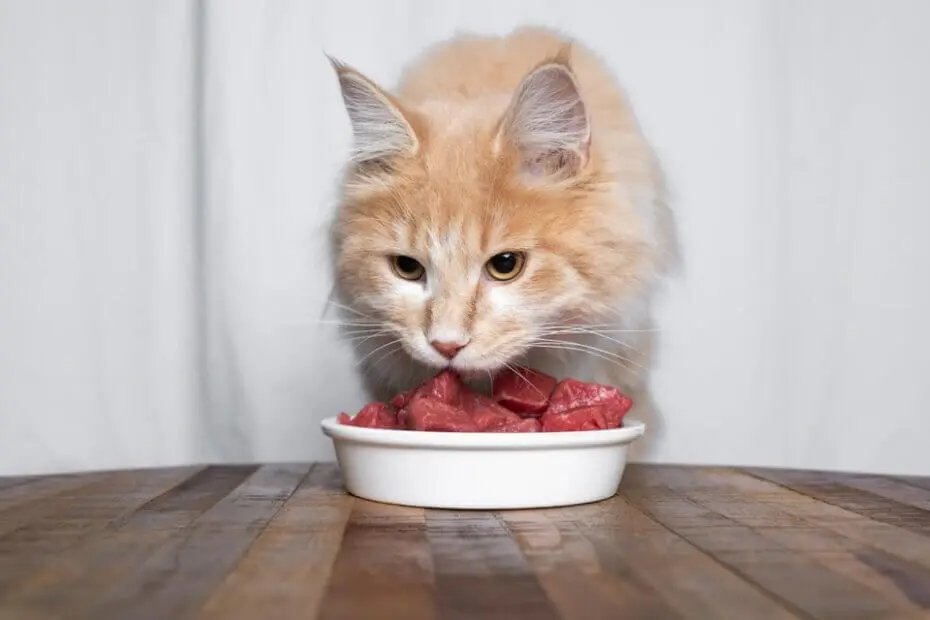
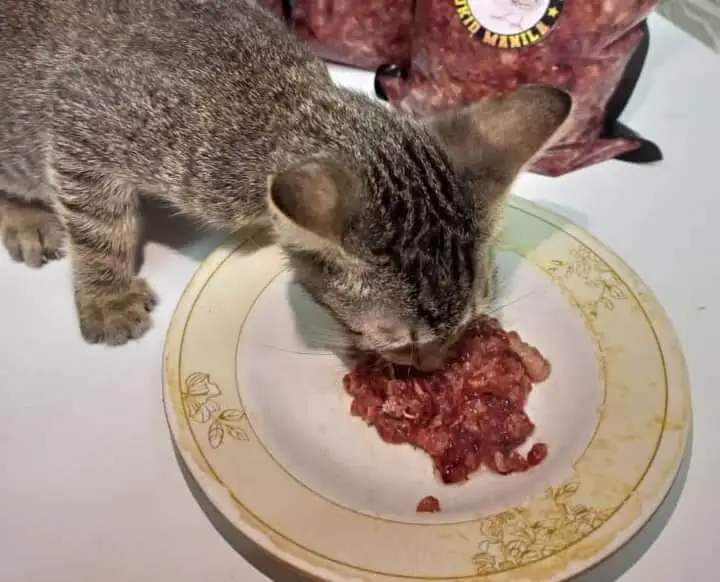
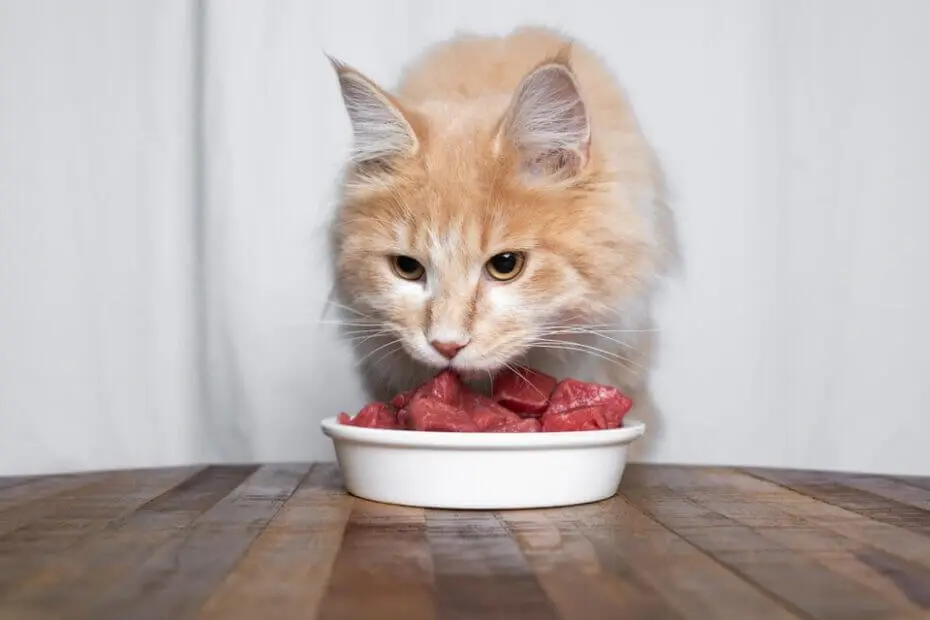
- Raw meat and raw fish from the grocery store — bacterial contamination and parasites are real risks; cook meat thoroughly. Raw fish also contains an enzyme that destroys thiamine (vitamin B1).
- Cooked bones — they splinter.
How Much to Feed
Follow the feeding guide on the package as a starting point, then adjust to the cat in front of you — activity level, age, and neuter status all shift the numbers. Because these cats mature so slowly, “adult” portions do not apply to a lanky 18-month-old that is still filling out. Weigh your cat every few months, watch the waistline, and adjust. When in doubt, your vet can calculate exact calorie needs in about two minutes — Cornell Veterinary also publishes excellent feline nutrition resources.
Frequently Asked Questions
What is the best food for Maine Coon cats?
A high-quality, AAFCO-balanced food built on animal protein, with moderate fat and minimal fillers — in a kitten, adult, or senior formula matched to your cat’s age. Wet, dry, or a mix all work; the label matters more than the format.
Do Maine Coons need a special breed-specific diet?
Not really. They do not need a “Maine Coon” label on the bag — they need what any cat needs, in portions suited to a large, slow-maturing breed: plenty of protein, sensible calories, and life-stage-appropriate formulas.
Can Maine Coons eat raw meat?
Many vets advise against grocery-store raw meat because of bacteria and parasites. If you are interested in raw feeding, discuss a properly formulated plan with your vet rather than improvising — nutritional imbalances are easy to get wrong.
How long should I feed my Maine Coon kitten food?
Longer than average — often until 12 months, since the breed matures slowly. Your vet can tell you when your individual cat is ready to switch based on growth, not just age.