Maine Coon Sleeping Positions: What Your Giant’s Sleep Spots Really Mean
If you live with a Maine Coon, you already know the show. One minute your giant is folded into a neat loaf on the sofa arm, and the next he is flat on his back in the middle of the rug, all four paws in the air. Learning to read maine coon sleeping positions has become one of my favourite quiet pleasures, because the way they sleep tells you a lot about how comfortable, warm, and settled they feel at home.
I want to be clear up front, though. A sleeping position is a clue, not a diagnosis. It can suggest comfort or a wish to stay warm, but it cannot tell you on its own whether your cat is unwell. I read these poses alongside appetite, play, grooming, and how my cat behaves when awake. If something changes suddenly, that change matters far more than any single pose.
Maine Coon Sleeping Positions at a Glance
Maine Coons are big, heavily coated cats, and that changes how they sleep. A thick double coat keeps them warm in winter but can send them seeking a cool floor in summer, and owners on Reddit joke about losing half the sofa to one sprawled cat.
Most cats sleep in short bursts rather than one long block, much of it light rest with ears still twitching. A cat shifting from loaf to sprawl to curl over an afternoon is simply adjusting for warmth and comfort.
The Loaf: Relaxed, But Ready
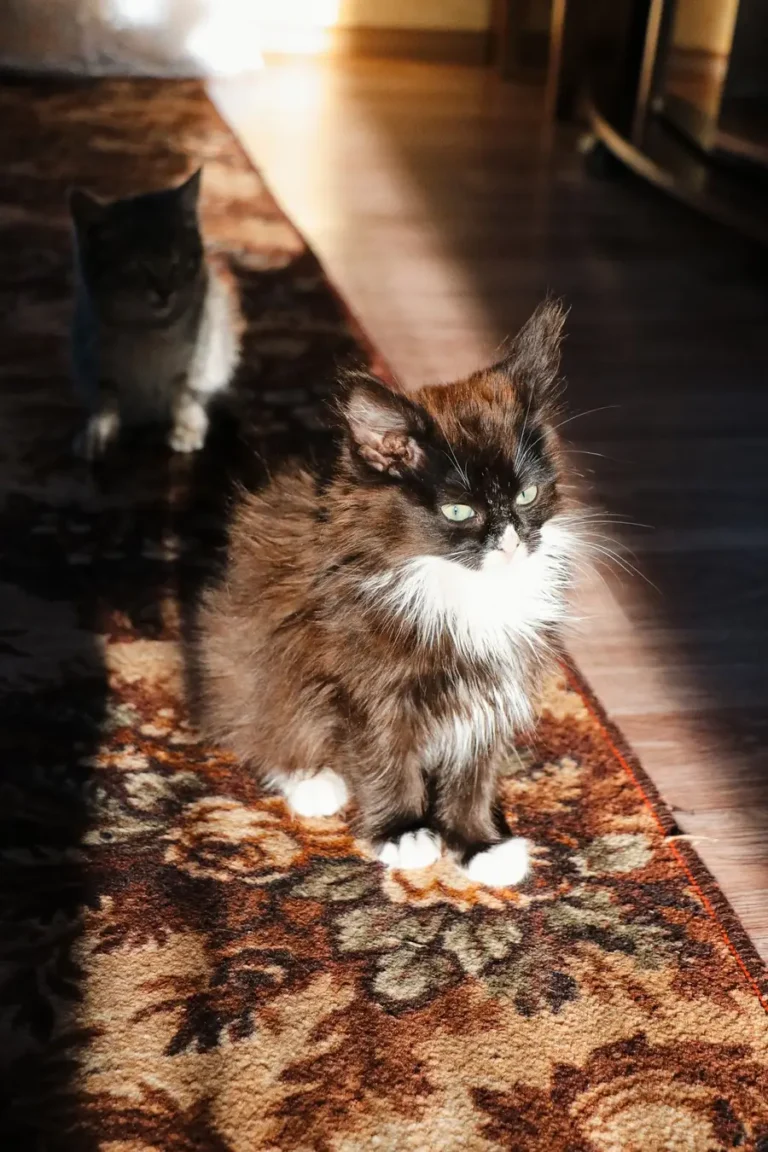
The loaf is the pose every cat owner recognises at once: paws tucked neatly underneath, tail wrapped close, looking like a loaf of bread. My Maine Coon loafs most often in the late afternoon, somewhere with a good view of the room.
A loaf tends to mean a cat who is content but still lightly alert. Unlike a full sprawl, it keeps everything tucked in and ready. PetMD notes that cats may loaf to conserve body heat, since paws and lower legs lose warmth more quickly, and that a cat loafing near you can be a sign of trust. I have found that rings true at home. A loaf across the room is rest. A loaf pressed against my leg is company.
One version is worth watching. A soft, loose loaf with a relaxed face is ordinary rest. A tense loaf — hunched shoulders, squinted eyes, a rigid body that does not soften — is different, and if your cat holds that shape for a long time or pairs it with hiding or skipping meals, it is worth a vet visit rather than a photo.
Belly-Up: The Trust Pose Everyone Photographs
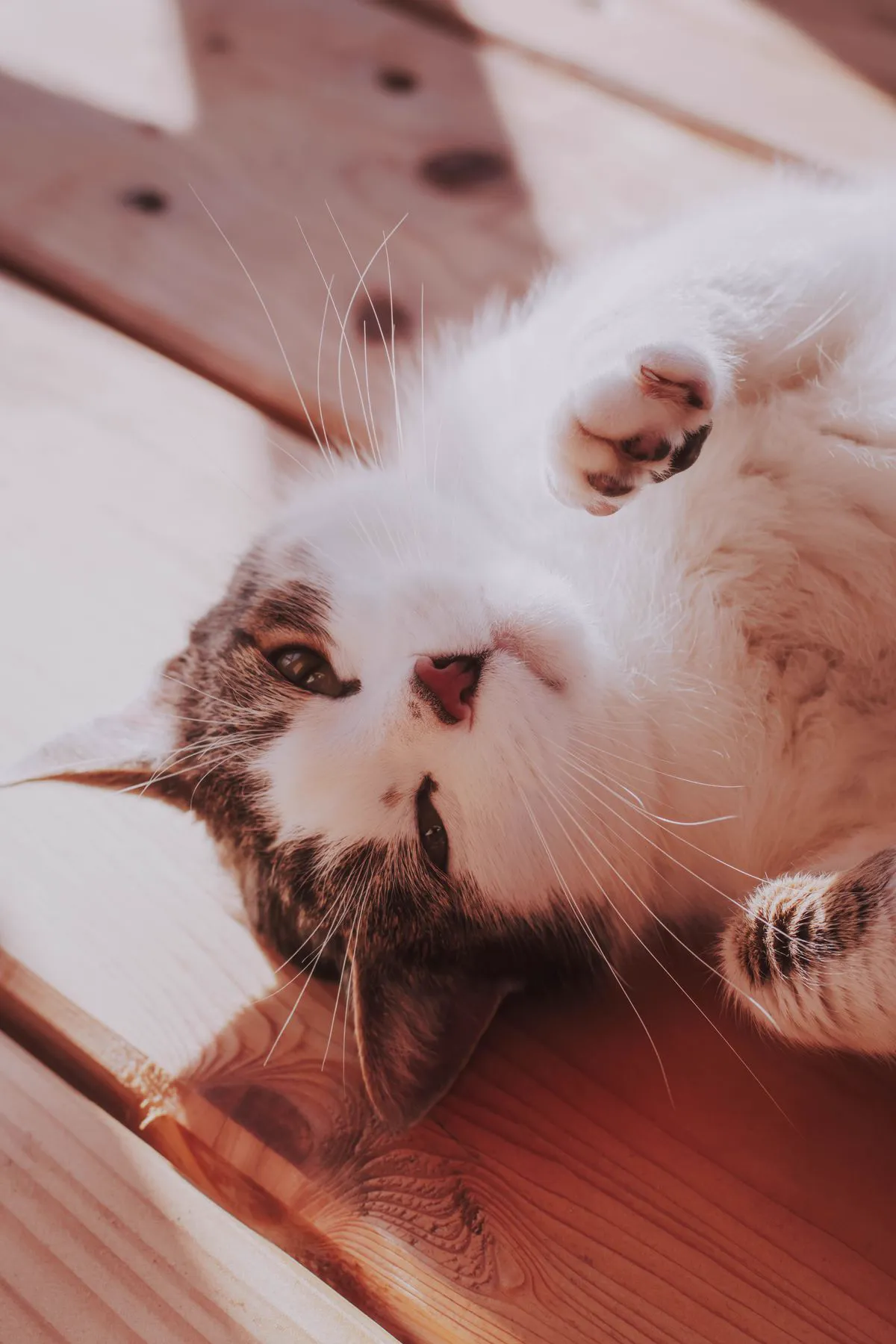
If the loaf is the everyday pose, belly-up is the one that fills phone galleries. Your Maine Coon lies flat on his back, belly exposed, paws flopped in every direction, sometimes with his head tipped back at an angle that looks deeply uncomfortable and clearly is not. Owners on Instagram and Facebook share this pose constantly, with other Maine Coon owners saying theirs does exactly the same thing.
Belly-up tends to signal deep comfort. The belly is vulnerable, so a cat usually only exposes it when he feels safe, and with that heavy coat a Maine Coon on a warm day may flop belly-up simply to cool his underside. Mine does it most often after play or a meal.
One caution: belly-up is not always an invitation to rub that belly. Some Maine Coons love it. Many tolerate about three seconds and then grab your hand with all four paws. Admire the pose, and let him decide.
Curled Up Tight: Warmth and Security
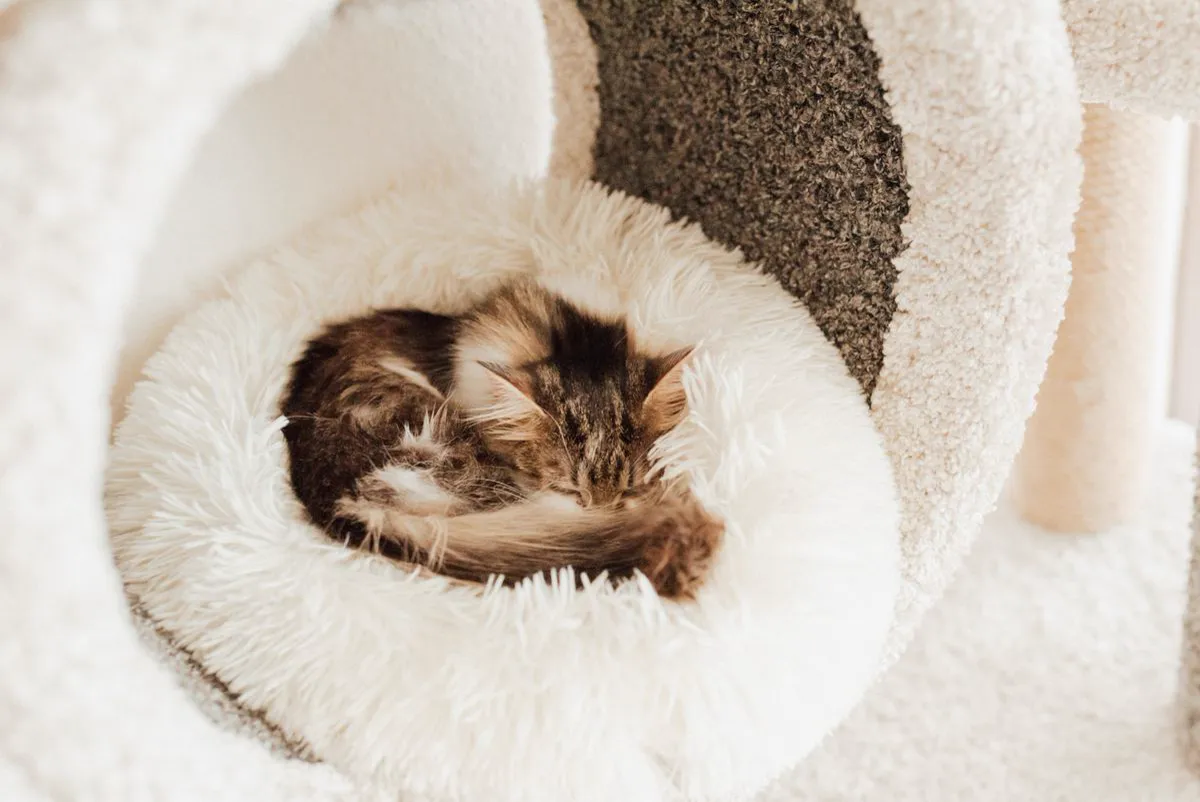
The curled ball — nose tucked toward tail, tail wrapped around the body — is the classic cold-weather pose. Curling reduces the surface area exposed to cool air and traps body heat, which is why you see it more on chilly evenings. It also tucks the belly away, so it doubles as a slightly protective position.
I see this most in winter, often in a round bed or a blanket nest my cat has kneaded into shape. Owners on Reddit say the same: their Maine Coons curl up in the smallest bed they own, or a cardboard box that logic says should not fit them, and look completely content. Given the choice between a generously sized bed and a snug one, many cats pick snug.
A cat who suddenly curls tightly all the time, when he used to sprawl, deserves a second look. On its own, curling is one of the most normal positions there is.
Stretched Out and Side Sleeping: Fully Unwound
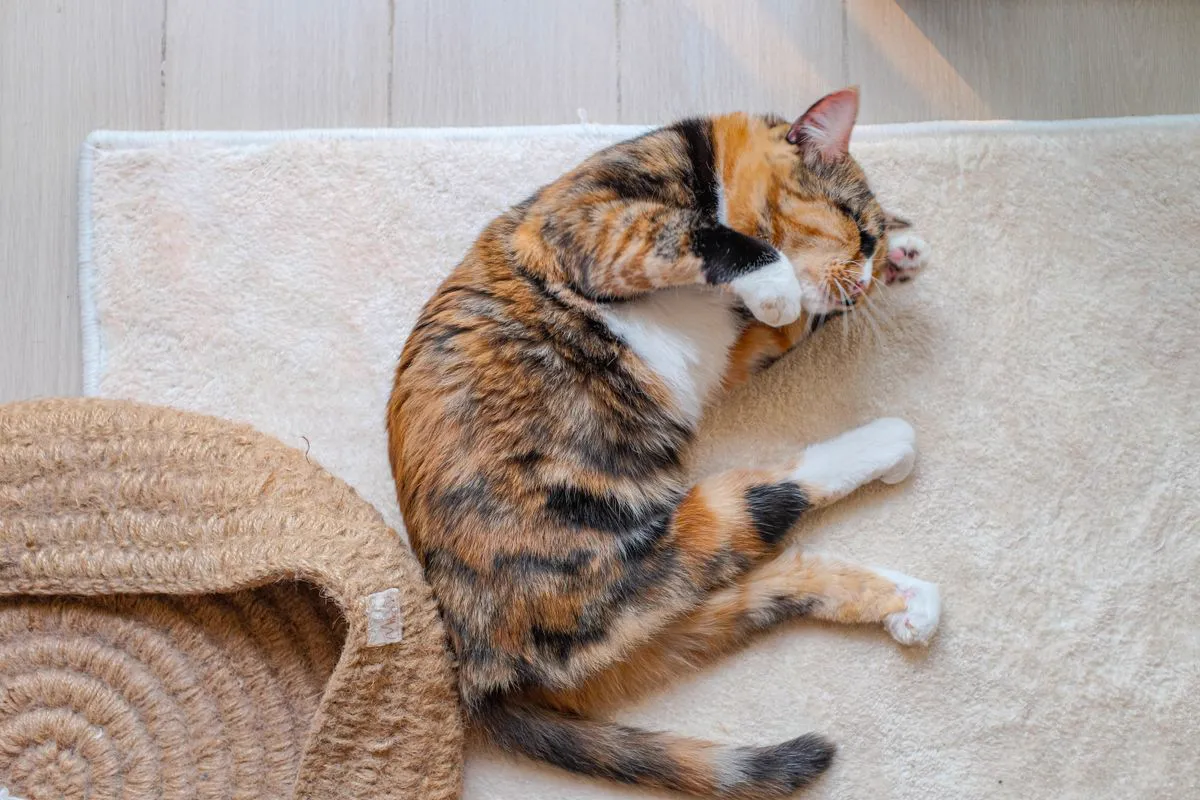
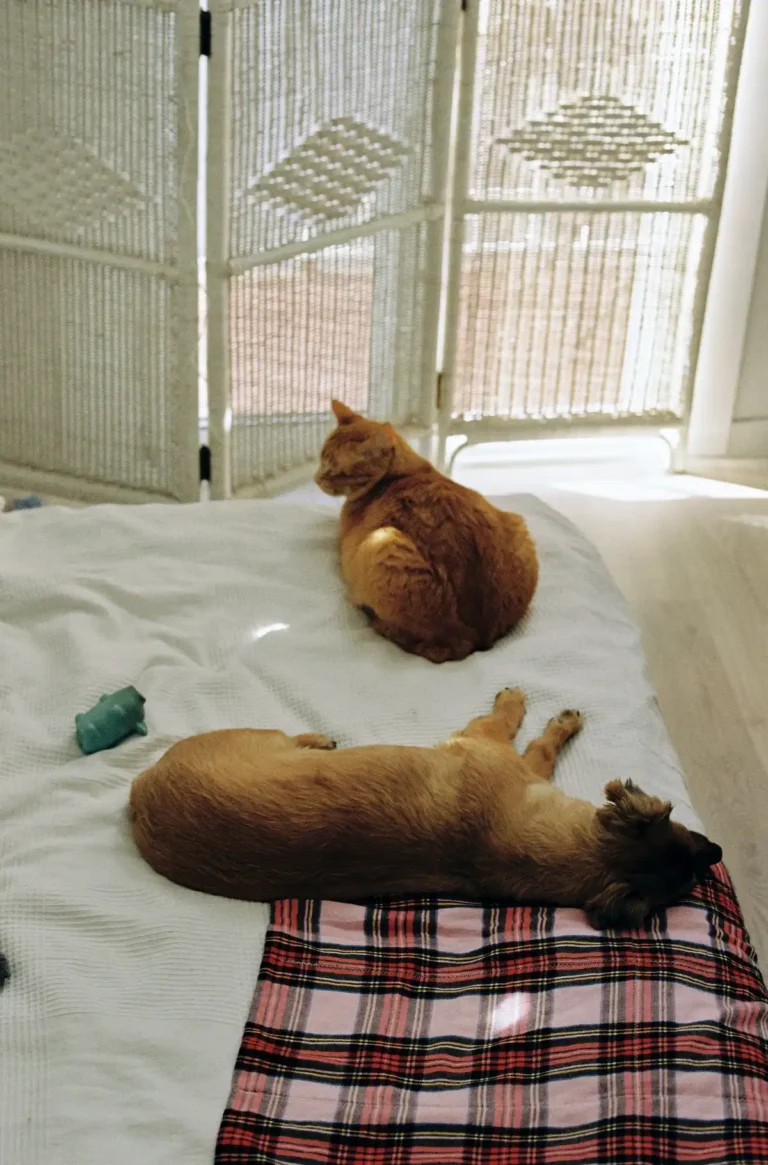
A Maine Coon asleep on his side, legs extended, sometimes so long he seems to have grown another few inches overnight, is a cat in deep relaxation. Side sleeping tends to mean the same thing as belly-up, only slightly less dramatic: he feels secure enough to let his guard down. This is often the pose you find in a sunspot, on a cool tiled floor in summer, or taking up the entire middle of the bed.
Maine Coons do the full stretch theatrically. Owners on social media post videos of kittens not yet six months old already stretching longer than expected, squeezed between body pillows or draped across a quilt, and other owners reply that theirs do the same. Part of it is temperature — stretching out sheds heat — and part of it is simply that a long, flexible cat stretches because it feels good after play and rest alike.
On Your Pillow, Your Laptop, and Other Claimed Territory
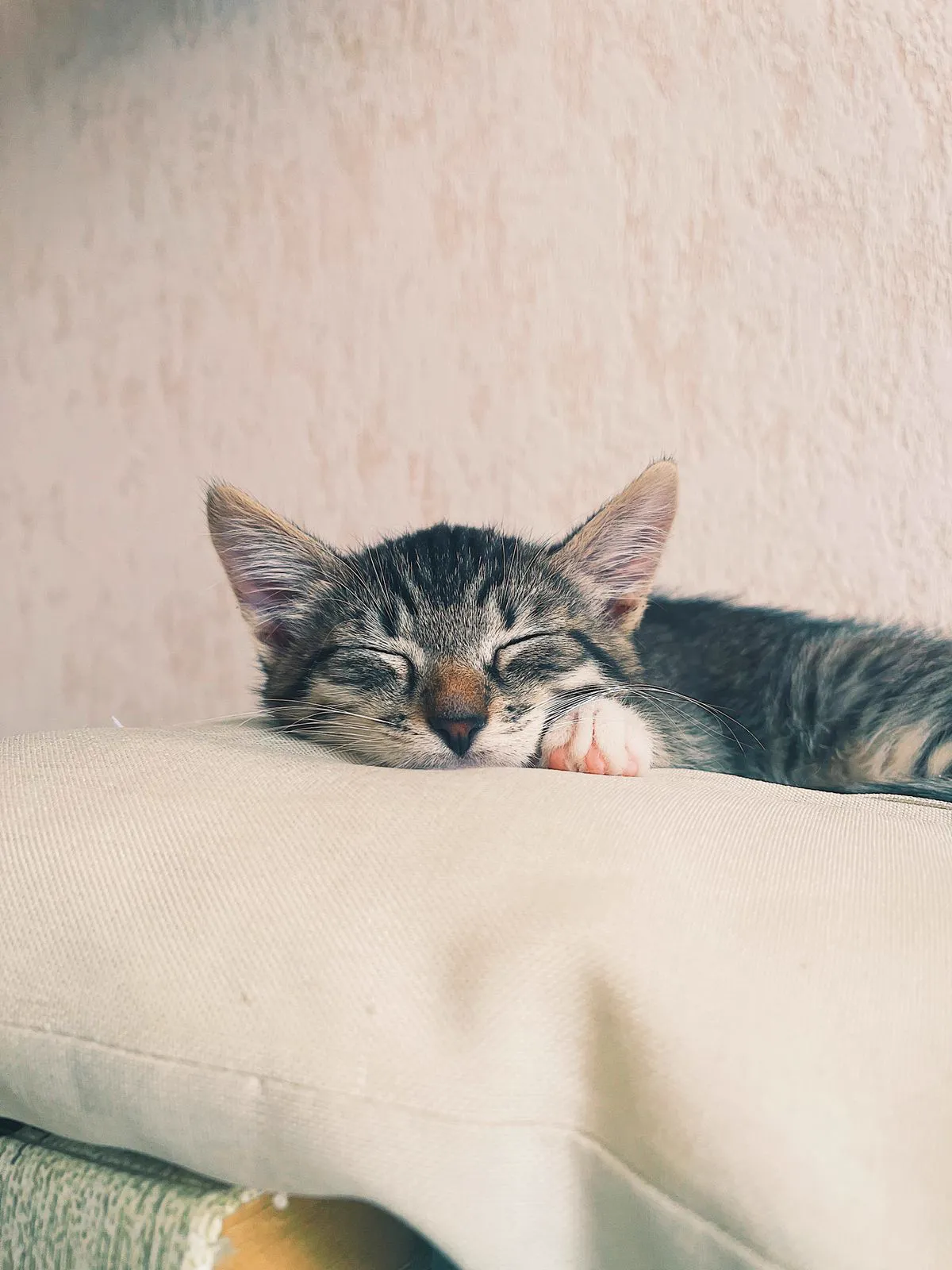
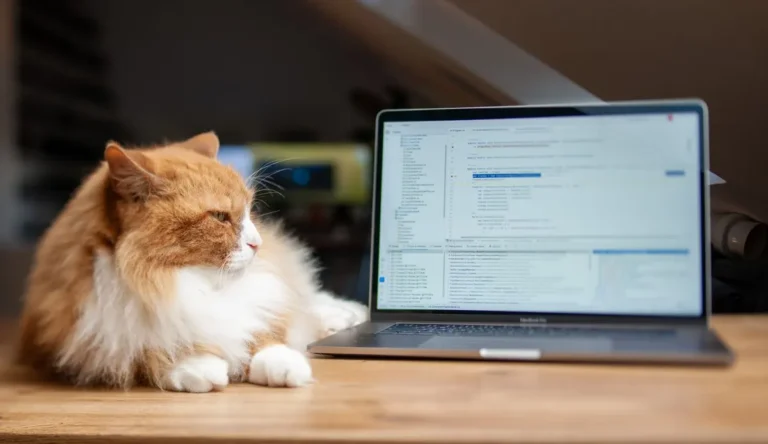
Then there are sleep spots that have less to do with pose and more to do with placement: the Maine Coon asleep on your pillow, on your laptop keyboard mid-email, or on the exact book you were reading. Owners talk about these spots with equal parts affection and exasperation, and the explanations are remarkably consistent: warmth, your scent, and closeness to you.
Your pillow is warm, smells like you, and is high up. Your laptop is warm and holds your full attention, which makes it an excellent place to reclaim that attention. I do not read a pillow-sleeping cat as a medical sign. I read it as a cat who likes being near his person. If you want your pillow back, try a warm, soft bed right beside yours — and accept you may still lose the pillow some nights. For a first-time owner, those first nights of negotiated sleeping arrangements can feel strange, which is why I wrote separately about what to expect on your Maine Coon’s first night home.
The same logic explains sunspot naps. Cats follow the sun around a room, and a Maine Coon is no exception. Owners on social media love photographing giant Maine Coons folded into far-too-small sunny beds on catios, blinking slowly and looking entirely unbothered.
How Much Do Maine Coons Sleep by Age?
Adult cats commonly sleep around 12 to 16 hours a day, according to VCA Animal Hospitals, and Maine Coons sit comfortably in that range. But the number shifts a lot with age, so it helps to know roughly what is typical at each stage.
Kittens sleep the most. Very young kittens may sleep for most of the day, waking mainly to eat and play in short bursts, and Maine Coon kittens are no different — they grow for a long time, and sleep is part of that growth. As they reach adulthood, total sleep usually settles toward that 12-to-16-hour range, broken into many naps rather than one long sleep. An adult who sleeps through the afternoon but wakes bright-eyed for evening play is following a normal cat rhythm, not being lazy.
I track my own cat’s baseline rather than comparing him to a chart: how long he usually naps, where he sleeps, and whether he wakes readily for food and play. If those stay steady, the exact hours matter less.
Senior Sleep Changes: What Shifts as They Age
Senior Maine Coons sleep more again, often toward 16 to 20 hours a day, and their naps tend to become shorter and more frequent. A senior who once slept through the afternoon in one spot may now doze, wander briefly, and settle again nearby. Cornell University’s College of Veterinary Medicine notes that altered sleep and wakefulness cycles and excessive sleeping can be among the signs of cognitive dysfunction in older cats, alongside disorientation and changes in social behaviour — a reminder that senior sleep changes deserve attention, not dismissal.
The practical changes are small. An older Maine Coon may stop jumping to a high favourite perch and choose a lower, softer spot instead. He may curl up more and sprawl less, because stretching stiff joints takes more effort. He may seek your lap more, because warmth and company feel better than they used to. I have written more about caring for an older giant in my guide to senior Maine Coon care.
What I watch for is change paired with other changes: sleeping much more and eating less, or hiding and avoiding interaction. Those combinations are worth a vet conversation. Sleeping more alone, in a cat who still greets you and enjoys gentle play, is usually just age.
Helping Your Maine Coon Sleep Well
You do not need special equipment to support good sleep, but a few things help. Offer more than one sleep spot: a snug bed for curling, a flat surface for stretching, and a warm spot near you for the nights he wants company. A sturdy cat tree with genuinely Maine Coon-sized perches matters here, because a perch built for an average cat will not hold a giant comfortably, and he will abandon it for your pillow.
Keep sleep spots away from noisy appliances and busy doorways if you can, and keep a blanket in his favourite curling spot in winter. Play before bedtime helps too. And if night-time restlessness ever tips into regular crying or pacing, that is a different question, covered separately in my piece on why your Maine Coon cries at night.
Above all, enjoy watching. The loaf on the sofa arm, the belly-up sprawl in the sun, the impossible curl in a too-small bed — learn what each tends to mean, keep an eye on changes, and let the rest make you smile.
Frequently Asked Questions
What is the most common Maine Coon sleeping position?
There is no single winner, and it changes with the season. Loafing is the most frequent daytime rest pose, curling is most common in cold weather, and belly-up or side sprawls show up most when a Maine Coon feels fully relaxed.
Does a Maine Coon sleeping belly-up mean it trusts you?
It tends to suggest deep comfort and safety, since the belly is vulnerable. It is a lovely sign, but it does not always mean your cat wants a belly rub — let his reaction guide you.
Why does my Maine Coon sleep on my pillow?
Most likely warmth, your scent, and closeness to you. Offering a soft bed right beside yours can help, but many owners share the pillow anyway.
How much should a Maine Coon sleep each day?
Healthy adults commonly sleep around 12 to 16 hours a day, kittens considerably more, and seniors often toward 16 to 20 hours. The exact number matters less than whether your cat’s pattern stays steady.
Should I worry if my Maine Coon’s sleeping position suddenly changes?
A single new pose is not a worry on its own. A sudden, lasting change — especially paired with eating less, hiding, or reluctance to move — is worth discussing with your vet.
Sources and Further Reading
- PetMD explains why cats loaf, including warmth, trust, and readiness to move: Why Do Cats Loaf?
- Cornell University College of Veterinary Medicine on cognitive dysfunction and altered sleep cycles in older cats: Cognitive Dysfunction in Cats