10 Surprising Reasons Why Your Maine Coon Cries at Night
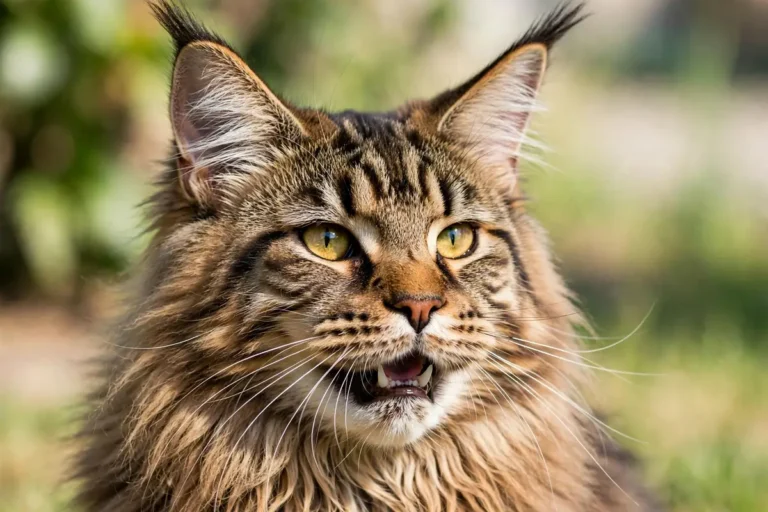
There is a special kind of tired that only a 3 a.m. feline concert can produce. I know it well. Maine Coons are talkative cats by nature, all those chirps and trills, but when the vocalizing shifts to persistent nighttime crying, it is usually your cat trying to tell you something specific.
Over the years I have learned to decode the midnight chorus. Here are the ten most common reasons a Maine Coon cries at night, and what actually helped in my house for each one.
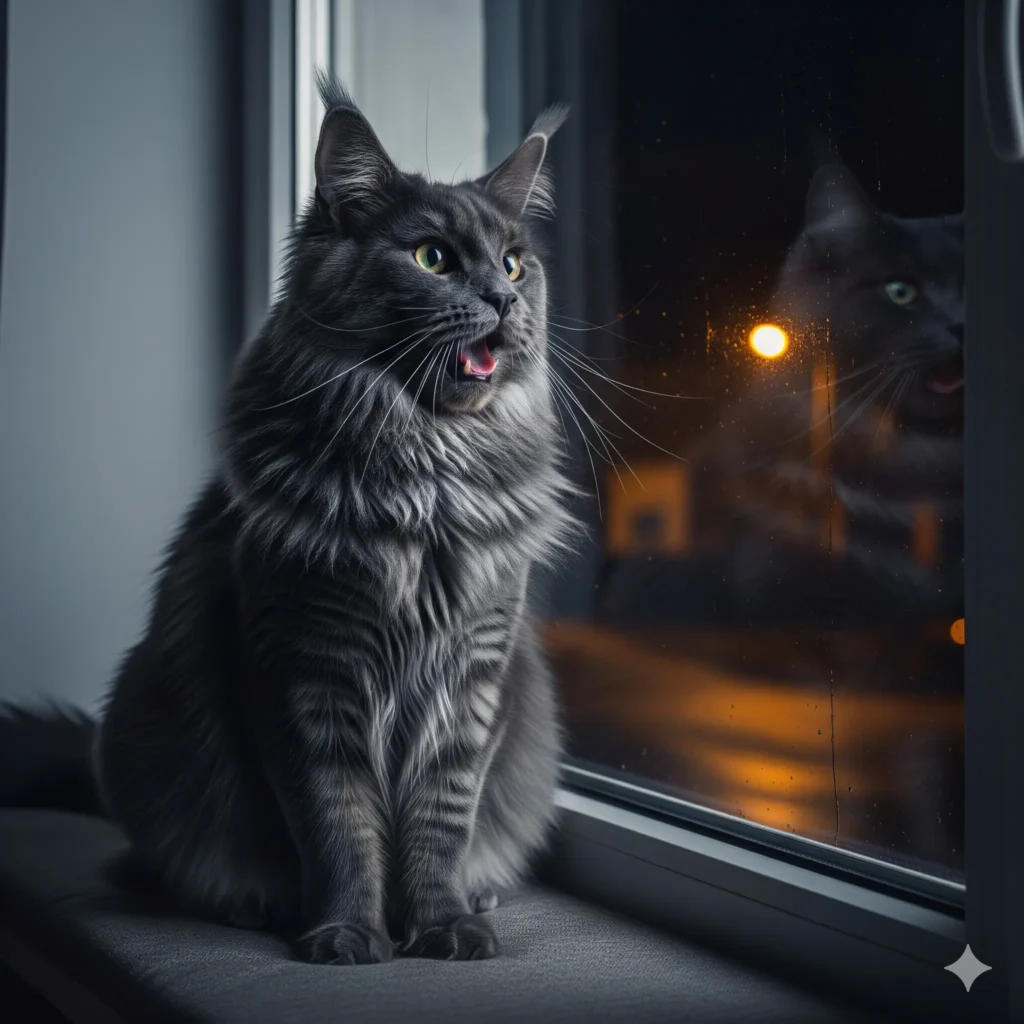
10 reasons your Maine Coon cries at night
1. Seeking attention
Maine Coons are deeply social cats. If yours spent the day alone while you worked, the nighttime crying may simply be a demand for the companionship they missed. Mine do this after particularly busy days: I walk in the door and get a full vocal debrief. A dedicated play session in the evening goes a long way toward preventing the midnight version.
2. Loneliness
These cats bond hard with their families, and a Maine Coon sleeping alone in a quiet house can genuinely feel lonely. If your cat cries near bedroom doors or follows you from room to room at night, consider letting them sleep near you or setting up a cozy sleeping spot close to where the family rests. A warm bed, a worn t-shirt that smells like you, and a few quiet toys can make a solitary room feel much less empty.
3. Hunger or thirst
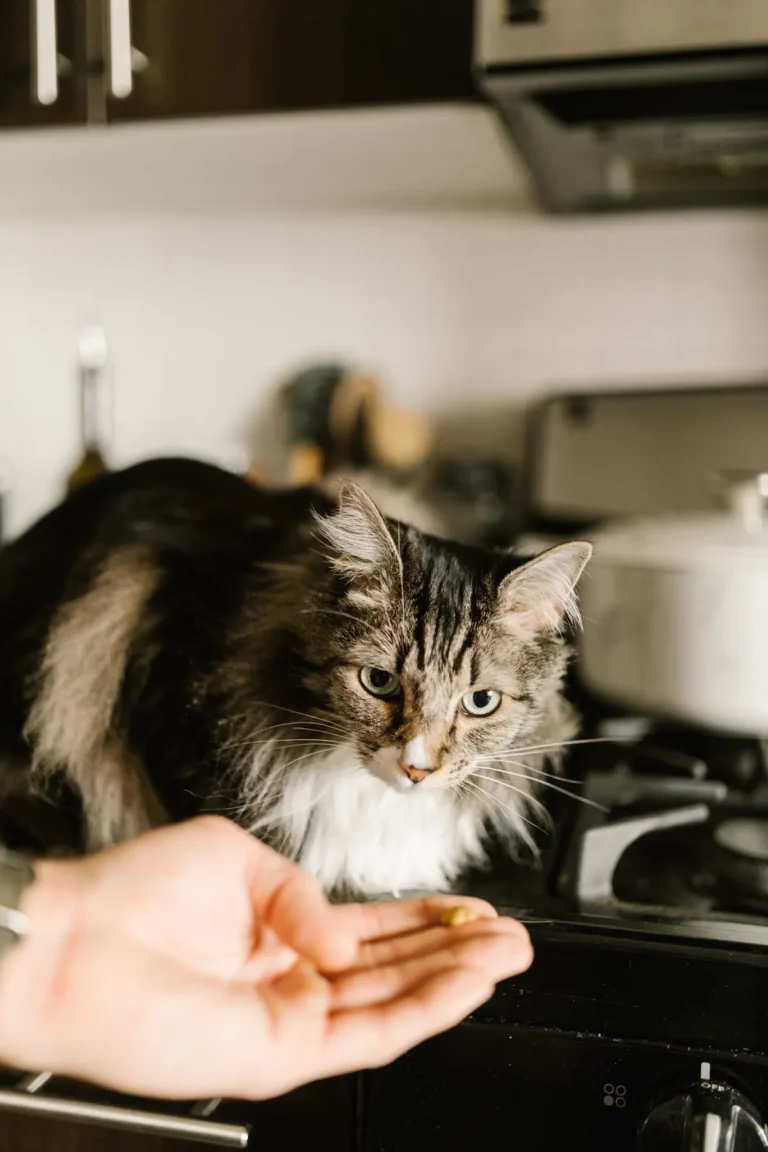
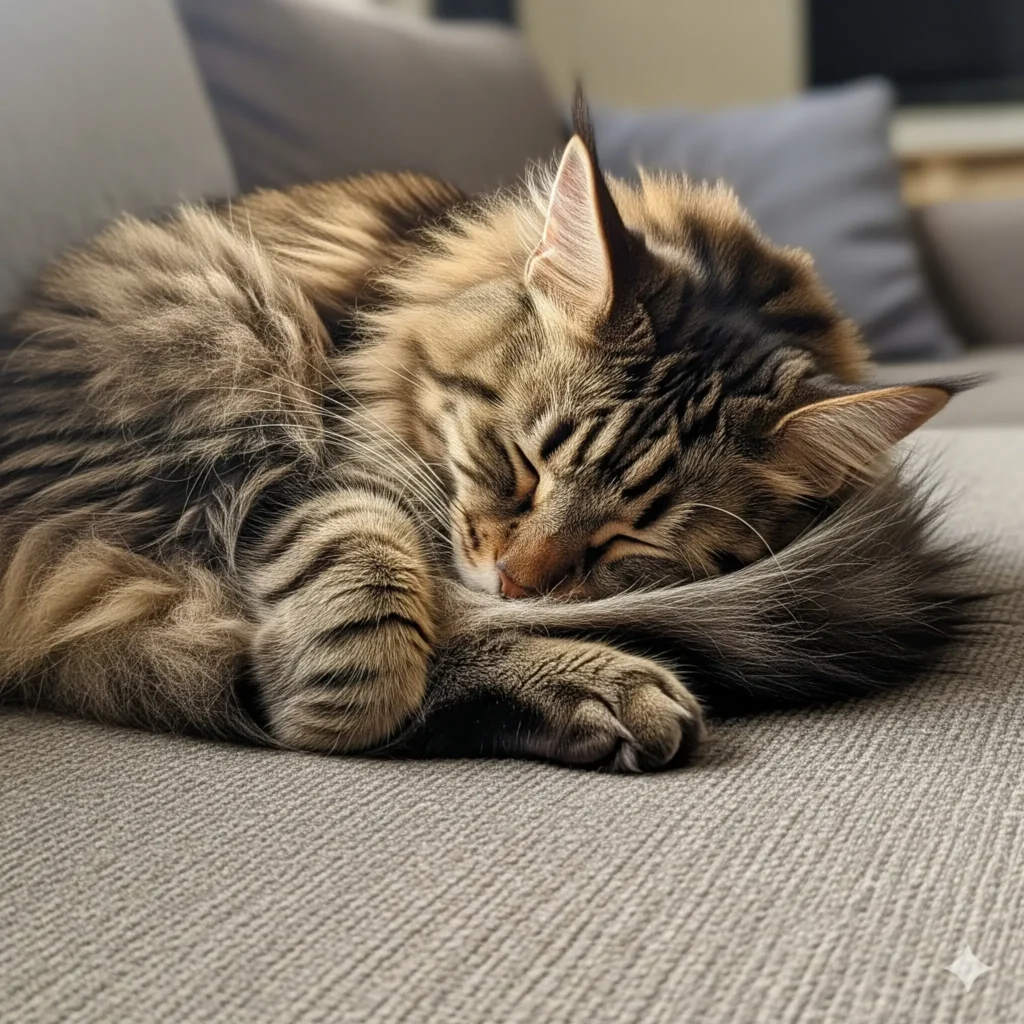
It sounds obvious, but check the bowls first. Maine Coons are large cats with real appetites, and an empty food bowl at midnight is a legitimate grievance. I feed a substantial evening meal and leave fresh water available overnight. If your cat is used to one or two big meals a day, try splitting food into smaller, more frequent portions; a cat with a full, comfortable stomach sleeps better. For more on getting the diet right, see my guide to the best cat foods for Maine Coon cats.
4. Boredom or lack of stimulation
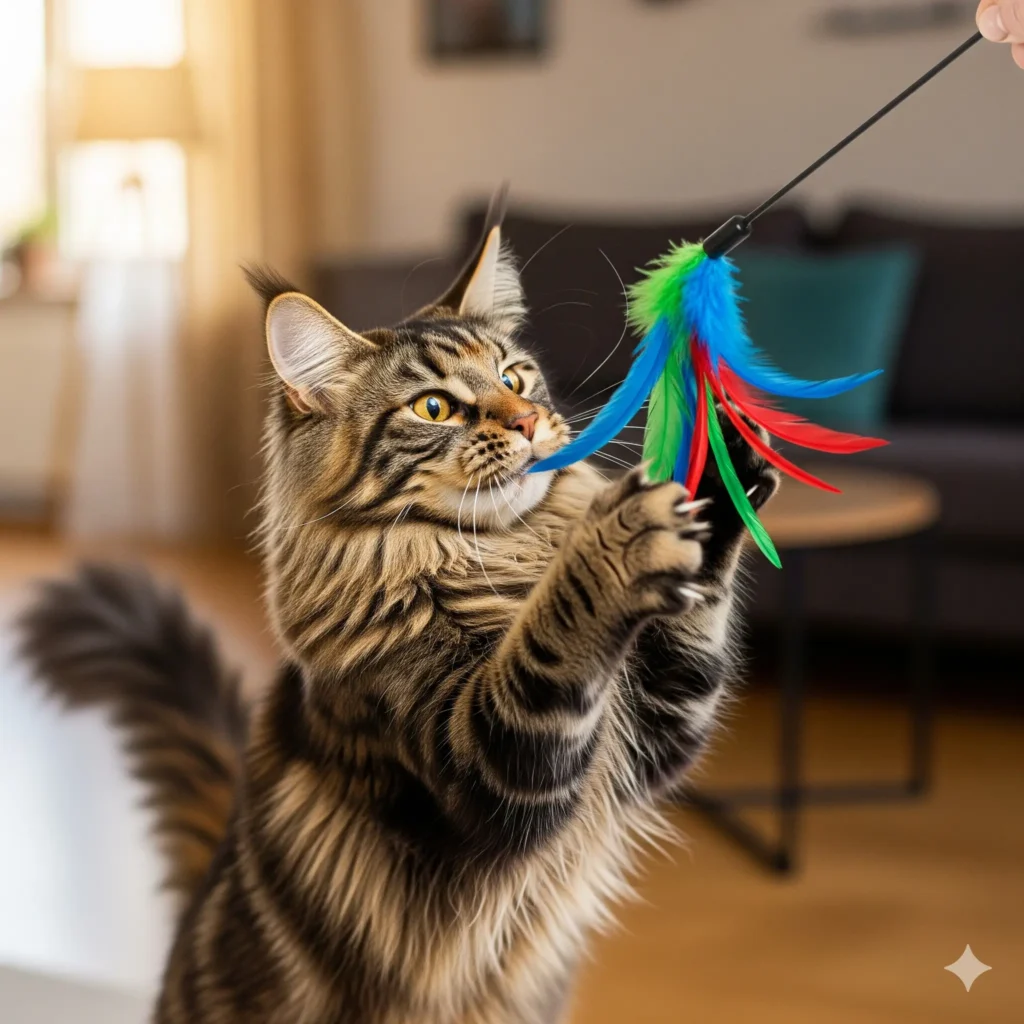
An under-stimulated Maine Coon does not just sleep through the boredom; it announces it. These are intelligent, athletic cats, and a day with no play, no puzzle feeders, and nothing new to investigate often ends in a 2 a.m. wake-up call. I do a vigorous play session an hour before bed, feather wand, crinkle toys, the works, and the difference in nighttime quiet is dramatic.
5. Health issues
This is the one to take seriously. A cat that suddenly starts crying at night, especially an older cat or one whose behavior changed abruptly, may be in pain or discomfort. Urinary issues, arthritis, hyperthyroidism, and cognitive decline in seniors can all show up as nighttime vocalizing. If the crying is new, persistent, or comes with changes in appetite, litter box habits, or mobility, book a vet visit before trying behavioral fixes.
6. Stress or anxiety
Cats are creatures of habit, and Maine Coons are no exception. A move, a new pet, new furniture, houseguests, even a changed work schedule can unsettle them enough to cry at night. When we rearranged our living room, one of my cats yowled for three nights straight until the new layout felt normal. Keep routines steady during changes, offer extra reassurance, and give it time.
7. Mating behavior
Unspayed or unneutered cats are famously vocal, and intact Maine Coons are no exception. Females in heat yowl to attract mates, and males respond in kind. If your cat is intact and the nighttime crying is cyclical or seasonal, this is very likely the cause. Spaying or neutering resolves it and has health benefits too; talk to your vet about timing.
8. Territorial instincts
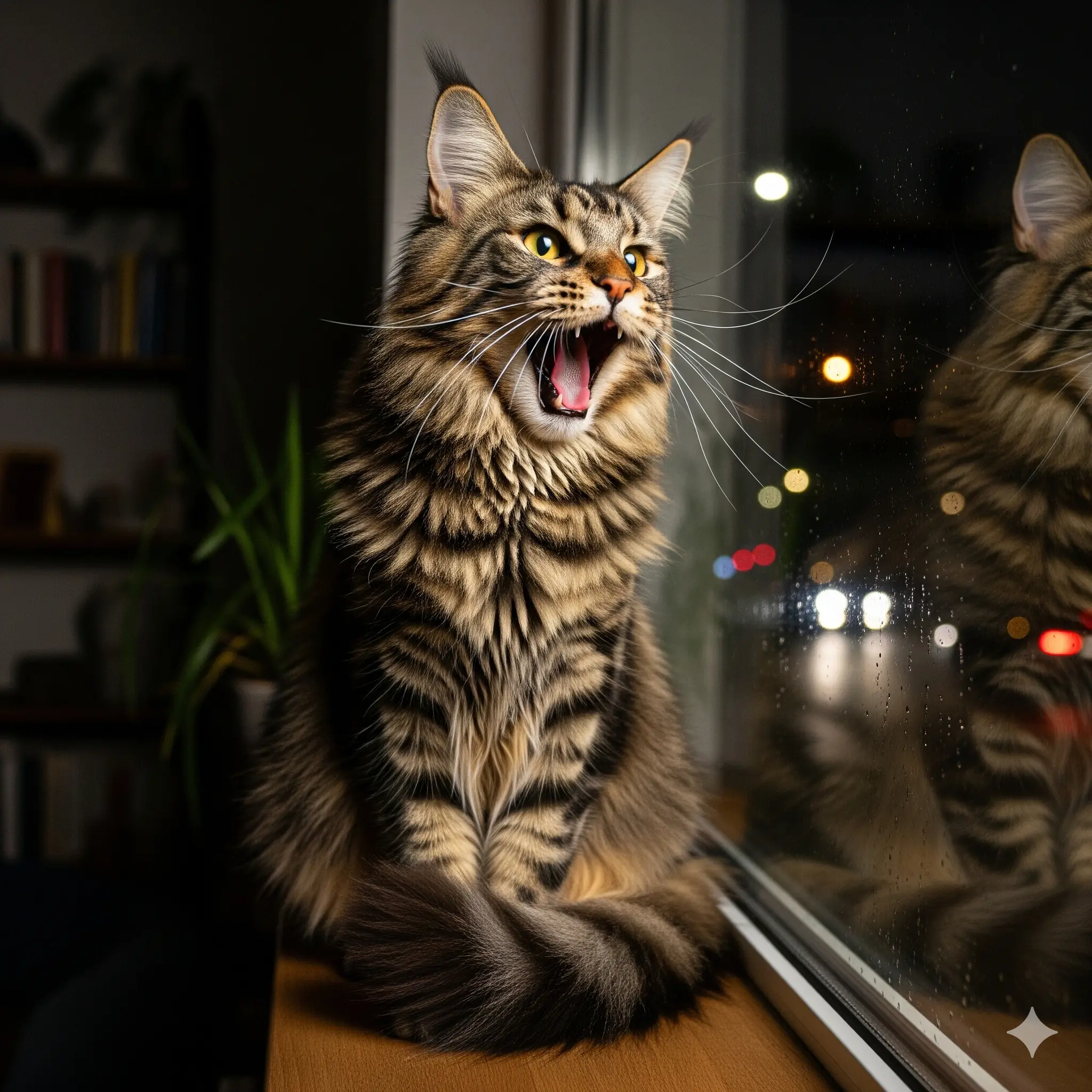
A cat spotted outside the window at night can trigger a full vocal performance. Maine Coons are territorial, and the sight or smell of an unfamiliar cat can set off yowling, pacing, and restlessness. Closing the blinds after dark and using a calming routine before bed usually settles this in my house.
9. Disrupted sleep cycle
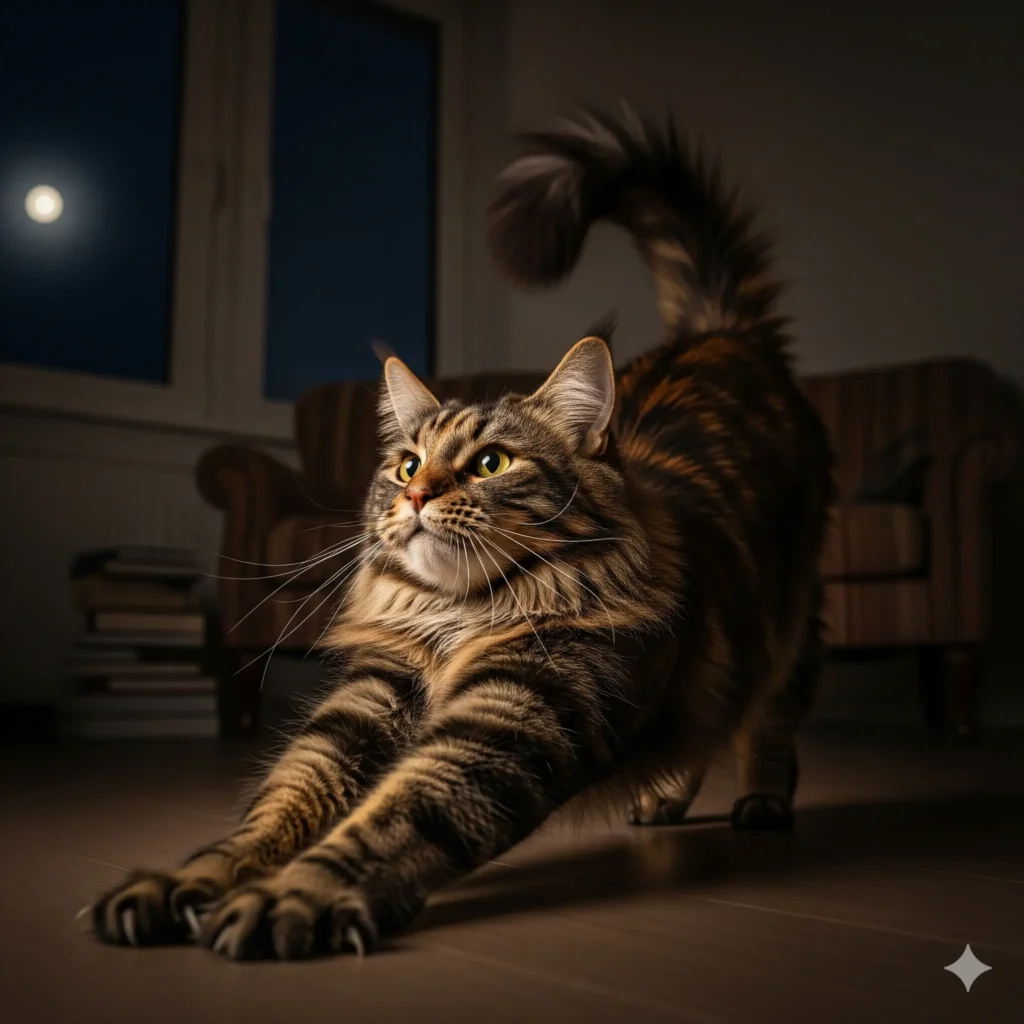
Cats are crepuscular, most active at dawn and dusk. A Maine Coon that sleeps all day while you are at work will naturally be wide awake at midnight. The fix is to shift their active hours: play in the evening, feed the main meal after play, and keep daytime a little more engaging with window perches and puzzle toys so some of that energy burns off before bed.
10. Habit
Here is the uncomfortable truth: if nighttime crying has ever earned your cat food, attention, or a cuddle, you may have trained it. I accidentally taught one of mine that 4 a.m. yowling summons breakfast. Breaking the habit means not rewarding the crying, which is miserable for a few nights, while making sure all genuine needs are met during the day. Consistency is everything; giving in on night four resets the clock.
How to help your Maine Coon sleep peacefully
Once you have ruled out health issues, this is the routine that works in my home:
- Evening play session: 15 to 20 minutes of active play, ending with a “catch” so the cat feels satisfied.
- Dinner after play: A full meal after the hunt taps into the natural hunt-eat-groom-sleep cycle.
- Calm environment: Dim the lights, close blinds if outdoor cats prowl, and keep the house quiet.
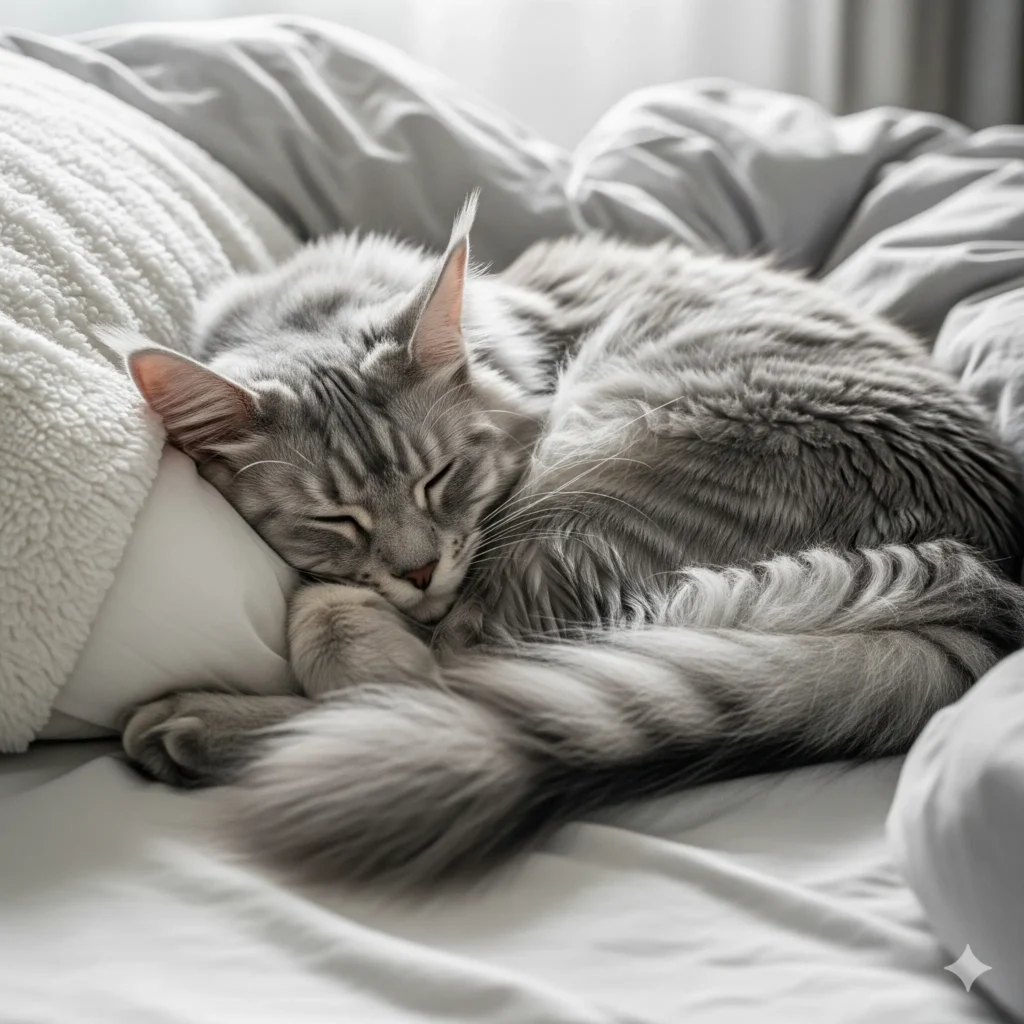
- Cozy sleep setup: A warm bed near you, or at least near family sounds, beats a lonely room.
- Do not reward crying: Meet every genuine need during the day so nighttime attention-seeking has nothing to gain.
If the crying persists despite all of this, or if it started suddenly, loop in your vet. PetMD’s feline behavior resources make the same distinction I always come back to: behavioral causes are common, but medical causes must be ruled out first. For a broader look at problem behaviors and how to redirect them, my guide to Maine Coon behavior problems may help, and understanding their social nature, covered in Maine Coon personality traits, explains why they demand so much company in the first place.
Frequently Asked Questions
Why does my Maine Coon cry at night but not during the day?
Nighttime is when the house goes quiet, you stop interacting, and their crepuscular energy peaks. Daytime distractions mask needs, like hunger, boredom, or loneliness, that become impossible to ignore at 2 a.m.
Should I ignore my cat crying at night?
First rule out medical issues, hunger, and a dirty litter box. Once genuine needs are covered, ignoring attention-seeking crying is the right move, but it takes consistency. Rewarding it even occasionally teaches the cat that persistence pays.
Will getting a second cat stop the nighttime crying?
Sometimes, if loneliness is the cause. A compatible companion can work wonders for a social Maine Coon. But it is not a guaranteed fix, and a bad match can add stress, so introduce any new cat slowly and for the right reasons.
Do Maine Coons cry more than other breeds?
They are more vocal than average, but it is usually chirping and trilling rather than distressed crying. Persistent crying is not a breed trait; it is communication about an unmet need.
When should I take my crying cat to the vet?
Go promptly if the crying started suddenly, is getting worse, or comes with appetite changes, weight loss, litter box issues, or reduced mobility. Nighttime vocalizing in senior cats especially deserves a checkup.
Nighttime crying is exhausting, but it is also information. Once you figure out what your Maine Coon is asking for, and it is almost always one of the ten things above, the quiet nights come back. Mine did, and yours will too.