Maine Coon Breeder Red Flags: Scams and Warning Signs Before You Pay
Shopping for a Maine Coon kitten should be the exciting part — the chirps, the ear tufts, the giant paws already pictured in your head. But owner to future owner, say this plainly: right now, while you are excited and browsing, you are exactly who scammers are waiting for. Learning the Maine Coon breeder red flags before you send a single dollar is the most protective thing you can do for yourself and the kitten you will bring home.
This is not about suspecting everyone. Most breeders are decent people who love their cats. This is about telling them apart from fake cattery pages running on stolen photos. Buyers in Facebook groups post screenshots every week: slick websites, adorable kittens, money sent, silence. One woman saved up on a fixed income, sent $2,000, bought all the supplies, and never received the kitten. A couple lost $1,200 through Zelle to a polished site that vanished days later. The pattern is always the same. Here it is, so you can spot it before it spots you.
Maine Coon Breeder Red Flags: 10 Warning Signs That Should Stop You
1. They only accept gift cards, Zelle, Cash App, crypto, or wire transfers.
This is the loudest alarm bell. Scammed buyers report the same script: Apple gift cards, Cash App sent to several different names, Zelle with no purchase protection. A real breeder gives you a traceable payment tied to a written contract with their real name on it. Anyone steering you toward payments you cannot reverse is telling you what they plan to do.
2. They refuse or endlessly dodge a live video call with the kittens.
In buyer communities this is the test everyone repeats: if they cannot show you the kitten live on camera, find another breeder. The kittens you have been seeing online should actually exist and be in their possession — a video call proves it. Excuse after excuse (“camera broken,” “kittens sleeping,” “we don’t do calls”) means they probably do not exist at all.
3. The kitten photos look like stock photos — or show up on multiple websites.
Scammers steal photos from real breeders and build fake catteries around them. One buyer group documented the same kittens advertised under different seller names with different backdrops in every photo. Run a reverse image search on every photo before you pay. If the same kitten appears elsewhere under another name, walk away.
4. Kittens are always available, with no waitlist and no questions for you.
Real breeders plan litters carefully and almost always have a waitlist — often months long. A page with a constant conveyor belt of kittens of all ages, ready to go home this week, is a mill or a scam. And the flip side: a good breeder interviews YOU. If nobody asks about your home, your hours, or your pets, they do not care where their kittens go. That tells you everything.
5. They advertise “teacup,” “miniature,” or “toy” Maine Coons.
There is no such thing. Maine Coons are a large, slow-maturing breed — that is the point of them. Anyone selling a “teacup Maine Coon” is lying about the breed or the size, and either way you should not send them money.
6. They say “health tested” but show you no proof.
“Health tested” is the easiest phrase in the world to type and one of the most abused in kitten ads. A real breeder names the tests, names the parents tested, and hands you the paperwork: a recent heart echo report and clear DNA certificates. My rule — no actual certificates means treat “health tested” as “not tested.” Here is what health testing and DNA screening must actually mean before you take anyone’s word for it.
7. There is no written contract — or the “contract” says almost nothing.
No contract, no accountability. A one-paragraph “agreement” with no cattery details, no health terms, and no signatures is barely better than nothing. What a legitimate contract contains is covered below — its absence is one of the clearest red flags there is.
8. They pressure you: “the kitten will be gone tonight.”
Urgency is a sales weapon: last-minute deadlines, claims of overwhelming interest, discounts for paying faster, guilt for asking questions. A reputable breeder would rather lose your sale than rush you. If you feel anxious or rushed, that feeling IS the information. Slow down — the right breeder will still be there next week.
9. Their messages read like copy-paste scripts and never answer your actual questions.
Ask about the parents — their names, their health testing, their temperament. A real breeder lights up talking about their cats. A scammer sends generic replies that dodge every specific question, then goes silent the moment you ask for something verifiable.
10. They have no verifiable identity.
No cattery name you can look up. A social page created weeks ago with no history. A website with no address, no phone number, no named humans. No vet they will let you call. Real breeders leave footprints — years of posts, reviews, a vet who knows them. If the entire business exists only inside your chat window, it exists only inside your chat window.
A quick note on price: a price far below market is a red flag, but the red flag is the gap, not the number. A registered, health-testing kitten cannot be raised for a few hundred dollars. My 2026 price breakdown shows what kittens actually cost. Dramatically under that, with no paperwork and instant availability, is not a bargain — it is a trap.
How to Verify a Maine Coon Breeder Before Sending a Deposit

Spotting the Maine Coon breeder red flags keeps you out of trouble. Verification gets you into the right hands. Do these in order, before any money moves:
1. Insist on a live video call with the kitten. Not photos, not a pre-recorded clip — a live call where you see the kitten moving and playing with its mother or littermates. Buyer groups repeat the same line: video chat with them and the kitten together. This one step kills most scams outright.
2. Reverse-image-search every photo they send. Two minutes of work. If the kitten’s photos appear anywhere else under a different name, you have your answer.
3. Look up the cattery with TICA or CFA. A registered cattery name is checkable. TICA and the CFA both maintain breeder listings — look it up yourself rather than trusting a logo on a website. Registration alone does not prove quality, but an unfindable “registered” cattery proves something is wrong.
4. Ask for the parents’ health proof by name. Not “are they tested” — ask to SEE the echo report and the DNA certificates, with the parents’ registered names on them. Know what HCM screening and genetic testing should look like so you read the papers with open eyes.
5. Ask for references — a vet reference and past-buyer references. A breeder with happy kitten families will connect you. Scammers cannot.
6. Contact them through independently found details. Scammers copy real breeders’ photos AND names, then intercept the conversation — one kitten-buyer advocate on Instagram flags exactly this. If you found the breeder through an ad, find their website or page separately and confirm the phone number and email match before you pay.
7. Read the contract before the deposit, not after. Never send money on a promise that “the paperwork comes later.” Paperwork first, or the money does not move.
What a Legitimate Kitten Contract Contains
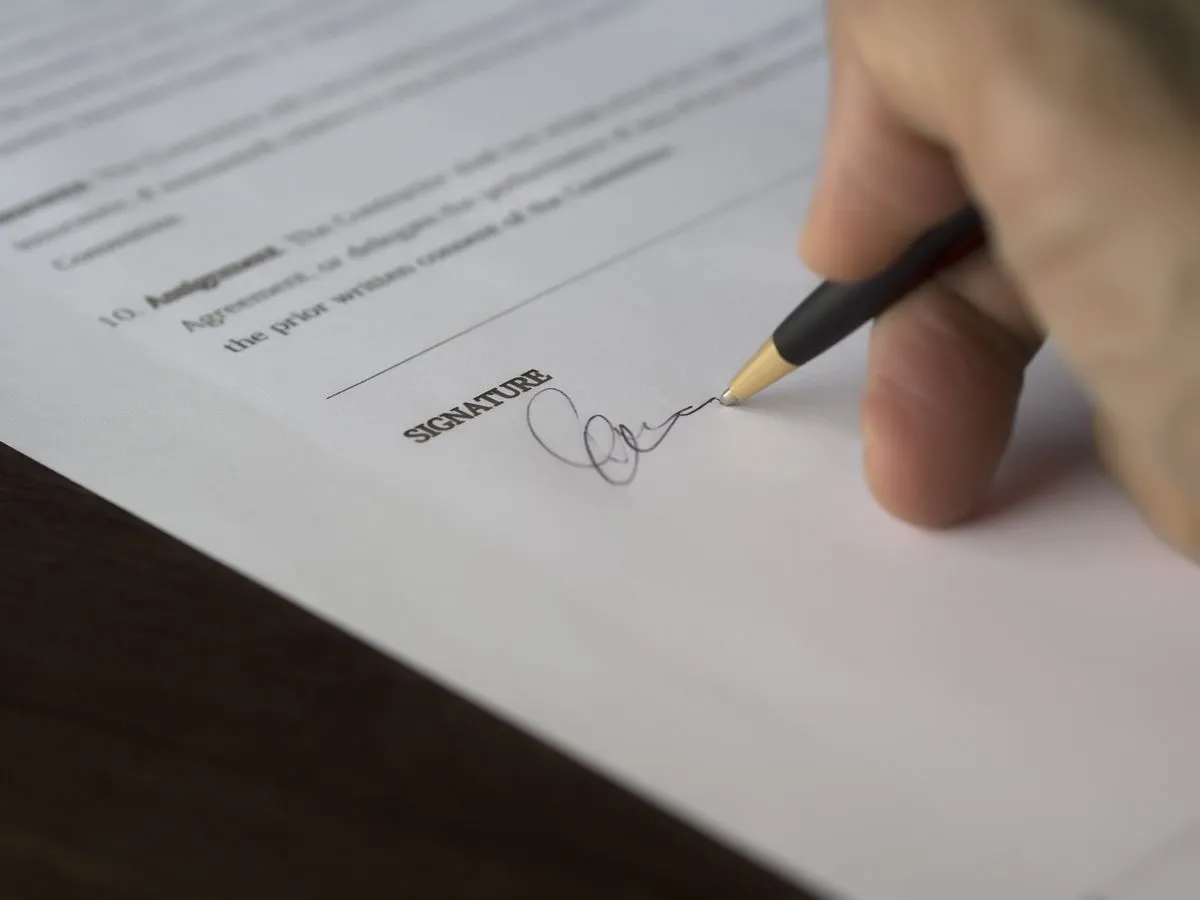
A real contract protects both sides, and a good breeder wants it in writing as much as you do:
- The kitten’s registered name, date of birth, color, sex, and the registered names of both parents
- The health guarantee: how long it lasts, which conditions it covers, and exactly what happens if something goes wrong (refund, replacement, vet cost coverage)
- Spay/neuter terms — by what age, and what proof the breeder requires
- Your responsibilities: indoor-only housing, veterinary care, diet standards
- The take-back clause: a reputable breeder requires the cat to come back to them — never a shelter — if you cannot keep it
- Deposit terms: the amount, whether it is refundable, and under what conditions
- Payment schedule, both signatures, and the breeder’s full legal name and address
Read every line and ask about anything vague. A breeder annoyed by careful questions is answering your question about them.
What to Do If You Already Sent Money
If your stomach dropped reading the Maine Coon breeder red flags above because you already paid someone, do not freeze — act, and act today.
Paid by card? Call your issuer immediately and start a fraud dispute — your best shot, and it is time-sensitive. Paid by Zelle, wire, gift cards, or crypto? Be honest with yourself: recovery is unlikely, since those methods are effectively irreversible. Still report it — your bank, a police report, and the FBI’s Internet Crime Complaint Center. Then report the page or account to the platform so it cannot find the next buyer. And do not blame yourself: these operations are polished and designed to fool careful people.
Frequently Asked Questions
Is a cheap Maine Coon kitten always a scam?
Not always, but a dramatically cheap one usually is. Retired breeding adults and genuine rescues cost far less and are completely legitimate — different situation, real paperwork. The danger sign is a “purebred kitten” at a fraction of the market price with no registration, no health testing, and no waitlist. Far-below-market prices mean no testing and no accountability, and the vet bills later erase the savings.
Are Facebook kitten groups safe for finding a Maine Coon?
Treat large generic groups with names like “Maine Coon Kittens for Adoption” as hunting grounds for scammers. Experienced buyers warn these groups are full of fake pages, stolen photos, and pressure to pay fast. If you use Facebook, find the breeder’s own long-established page with years of history — then still run every verification step above. Open to an adult cat? A breed rescue is safer; here is how I think through the breeder-versus-rescue decision.
Does TICA or CFA registration prove a breeder is honest?
No — and this matters. Registration proves the cats are recorded with the registry; it does not certify health testing, raising conditions, or honesty. It is one check among many: a findable cattery plus health certificates plus a live video call plus a real contract. No single badge does the job alone, which is why the full set of Maine Coon breeder red flags above matters more than any one credential.
Should the breeder be asking me questions too?
Yes, and be wary if they do not. Expect questions about your home, schedule, other pets, and whether the cat lives indoors. Some breeders use a written application. This is not nosiness — it is the mark of someone who feels responsible for every kitten for its whole life. A seller who asks nothing and just wants your deposit is not a breeder. They are a checkout page.
I sent a deposit and now I am worried. What should I do right now?
Stop sending money first — scammers invent new fees after the deposit (shipping crates, insurance, “processing” charges). Then demand verification today: a live video call and the contract. A real breeder complies without drama. If they stall, threaten, or demand more money, treat it as a scam: start a card dispute if you paid by card, and file reports with your bank, local police, and the FBI’s Internet Crime Complaint Center.
Ten minutes on a video call and a registry lookup is the cheapest insurance in this whole process. The right breeder will welcome every one of these Maine Coon breeder red flags checks — the careful questions, the photo searches, the contract reading. Be that buyer. Your future Maine Coon is worth the homework.