Maine Coon Separation Anxiety: Signs and What Actually Helps
Maine Coon separation anxiety is not your cat being naughty, and it is not your cat punishing you for going out. It is distress that starts when you leave and eases when you come home. I learned the difference the hard way, watching my own cat fall apart at the sound of my keys and then trying to fix it with the wrong things first.
If your Maine Coon panics when you leave the house, this guide covers the signs, why this breed feels it so keenly, and the small changes that actually helped — plus when to call your vet.
What Maine Coon Separation Anxiety Actually Is
Maine Coon separation anxiety is distress tied to being left alone, or separated from the person a cat is most attached to. VCA describes separation-related distress as distress triggered by the absence of an attachment figure — not from spite or bad manners. That changes how you respond: you are helping a frightened animal feel safe, not correcting a behaviour.
Maine Coons are famously people-oriented. They pick a person and want to know where that person is. That loyalty is one of the reasons we love them, and it is also why being left alone can hit them harder than it hits a more aloof cat. A cat who sleeps most of the day and greets you calmly is probably fine. A cat who cries from the moment you leave and will not eat until you return is telling you something.
The Signs of Maine Coon Separation Anxiety
No single sign proves it on its own. What matters is the pattern: the behaviour happens when you are gone, or as you are about to go, and it settles when you are home.
Crying or yowling that will not stop. Not a single meow at the door, but a long session starting shortly after you leave. Owners on Reddit and in Maine Coon Facebook groups describe coming home to a cat still calling from the hallway. A phone camera left recording for an hour will tell you more than guessing.
Pacing and waiting at exit points. A distressed cat paces between rooms, circles the front door, or sits staring at it. This is not exploring — it is a cat who cannot settle because the person she is waiting for has not come back.
Toileting outside the litter tray. Urinating or defecating outside the tray, often on your bed or clothes, is a common stress response. Cornell notes that house soiling can have medical causes too, so never treat this as a behaviour problem until a vet has ruled out illness.
Not eating while you are away, overgrooming, and destruction. A Maine Coon who normally empties a bowl will leave food untouched until you walk back in. A cat who licks one spot until the fur thins is often soothing herself — though skin irritation, pain, and allergies can cause this too, so a vet check comes first. Scratching and knocking things over, usually around exit points, is another sign: a bored cat scratches the sofa, an anxious cat scratches the door you just walked out of.
Frantic greetings. Shadowing you as you get ready, blocking the door, then an over-the-top welcome the moment you return. If two or three of these line up, and they only happen around your absences, take it seriously — it will not usually fix itself.
Following You Is Not the Same as Separation Anxiety
This is the distinction I most want you to take away, because getting it wrong leads to the wrong fix. Maine Coons follow their people — mine walks me to the kitchen, the bathroom, the laundry room, like a very fluffy supervisor. That shadowing is normal and affectionate. I wrote about it in my guide to why your Maine Coon follows you: a cat who follows you around the house while you are home is enjoying your company. A cat who panics when you leave it is distressed by your absence. Same loyalty, very different feeling.
Owners on social media capture both sides. One Facebook reel showed a big silver tabby perched on a high ledge, yelling down at his owner like an angry toddler every time she walked away, then going quiet the moment she came back — and commenters filled the thread with the same story. The test is simple: shadowing happens while you are there; separation anxiety happens because you are not.
Why Maine Coons Are Prone to It
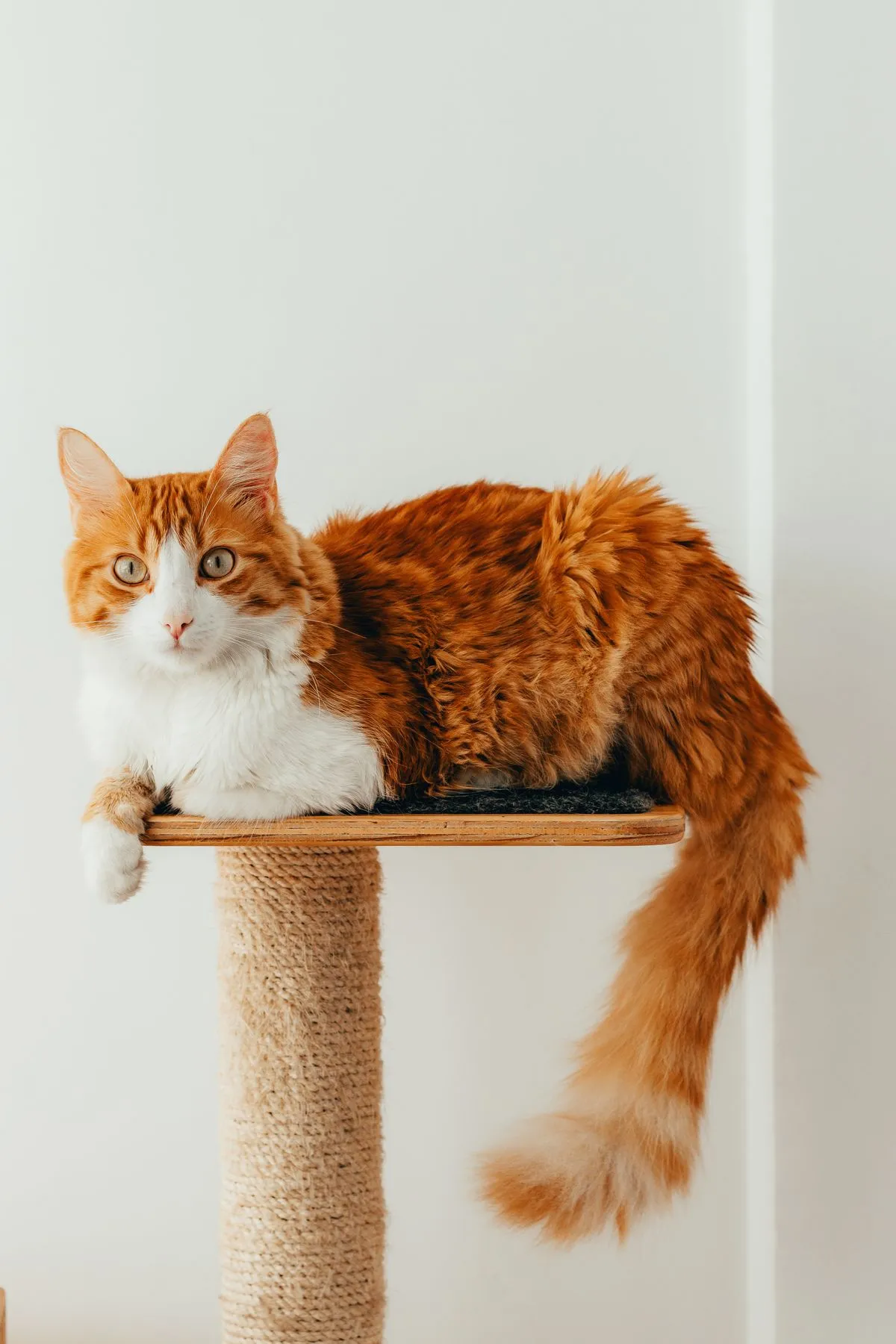
There is no single cause; usually a few things land at once. The breed: Maine Coons were bred to live close to people, and the Cat Fanciers’ Association describes them as loyal cats that form strong bonds and often follow their people around the house. A change in routine: a new job, a return to the office, a house move, or a holiday can tip a settled cat into distress — it often shows up in kittens settling into a new home too, which I cover in my guide to a Maine Coon’s first night home. An unsettled start: kittens taken from their mother too early, or rehomed more than once, can grow into adults who find alone time harder. Too little to do: a big, clever cat left in a quiet house with nothing to hunt, climb, or solve will feel your absence far more sharply — and it is the part you can fix fastest.
A second cat is not a cure. Owners in Maine Coon groups often suggest getting another cat, and sometimes it helps, but it is not a guaranteed fix and can backfire if the two cats do not get along. Read my guide to whether Maine Coons need another cat first.
What Actually Helps: Routine, Enrichment, and Slow Departures
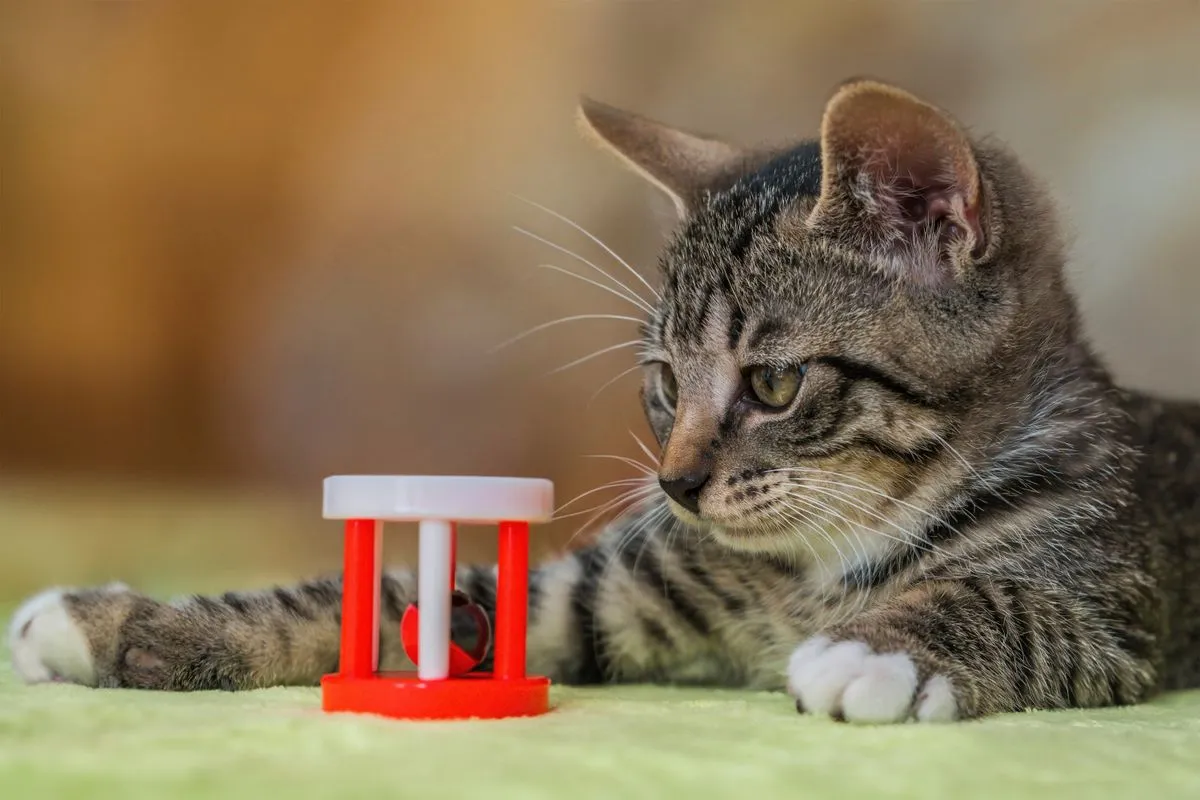
Routine first. If I had to pick one thing that helped my cat most, it would be routine: same feeding times, same play time, same quiet time. Play for ten or fifteen minutes with a wand toy about half an hour before you leave, then follow it with a small meal or a food puzzle. A cat who has hunted and eaten is a cat whose body is telling her to rest.
Keep departures and returns boring. My instinct was to make a fuss — a long cuddle, a sad voice, a promise I would be back soon. All that teaches your cat is that leaving is a big, emotional event. Now I pick up my keys, say nothing dramatic, and go. When I come back, I put my bag down and only then say hello. Practise your leaving cues the same way: pick up the keys, sit back down; put your shoes on, make a cup of tea. Do it often enough and the keys stop meaning panic.
Give her a house worth staying in. A tall, sturdy cat tree by a window gives a cat a place to watch the world and feel safe. Scatter part of her daily food in a puzzle feeder, or hide small portions around the house — hunting for food turns an empty afternoon into a job. Rotate toys instead of just adding more, and leave a worn T-shirt of yours on her bed; your scent is the closest thing to you being there. VCA notes that synthetic pheromones are used as behaviour modifiers for conditions including separation anxiety, and a diffuser where she spends most of her alone time is a low-effort thing to try.
If the behaviour is broader than separation alone, my guide to Maine Coon behaviour problems and how to stop them will help you work out which problem you are actually looking at.
Gradual departures. Start with absences so short your cat barely notices: step outside the front door, count to ten, come back in. No fuss either way. When ten seconds is boring, try thirty, then a minute, then five, then ten — building up only when the step before it is genuinely calm. If she is crying at two minutes, going back to one minute is not failure, it is the work. Never push past the point where she panics: every calm return teaches her that leaving ends with you coming back. Pair each departure with something good — a food puzzle that only appears when you leave. A camera helps too: I thought my cat settled after five minutes, but the camera showed me it was closer to forty.
Holidays and Long Absences
Owners on Facebook and in Maine Coon groups are blunt here, and I agree: a single Maine Coon should not be left alone for days. One owner planning a seven-day holiday asked a Maine Coon group what people actually did, after a single overnight trial left his cat meowing and pacing. The thread was full of the same answer: hire a sitter who visits daily or stays in the house, or use a trusted cattery. A neighbour popping in once a day to top up food is not enough. Book early, do a trial run, and remember that a sitter your cat already knows is worth far more than a stranger with a key.
When to Get Vet Help
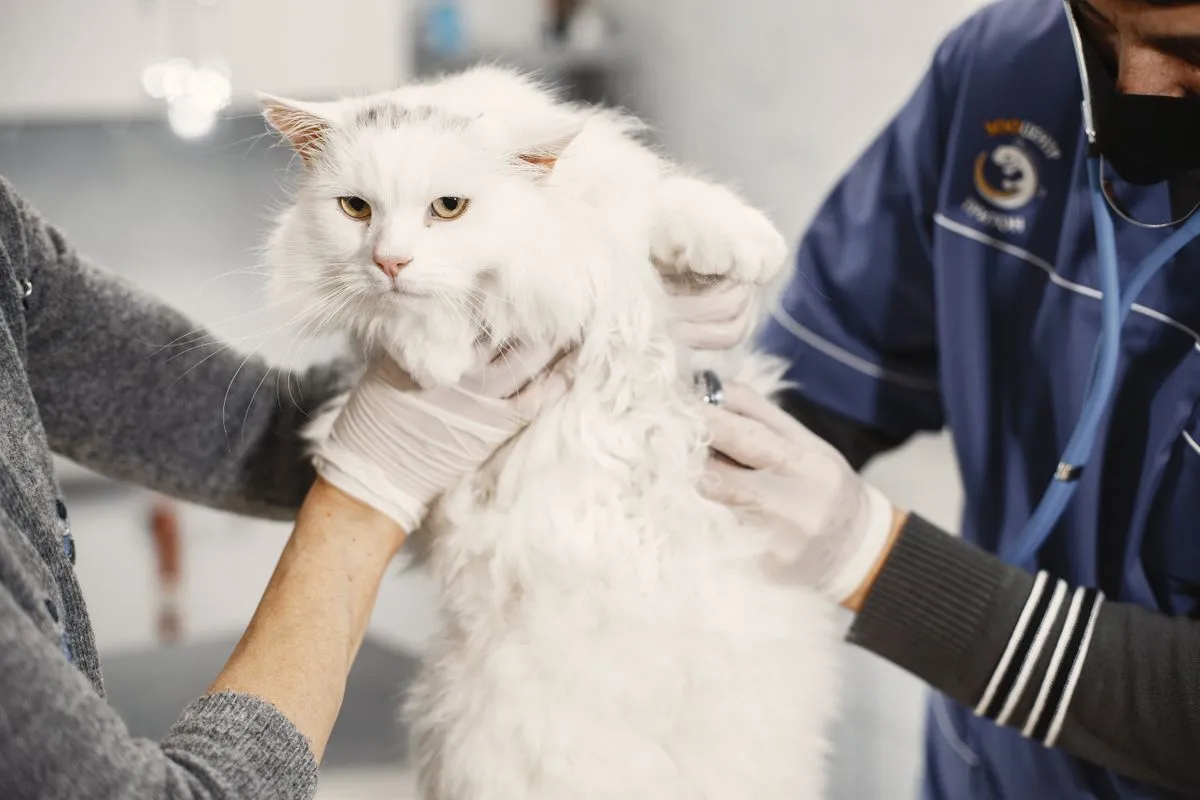
Some cases need more than routine and enrichment. See your vet promptly if your cat stops eating for a day, strains to urinate, vomits repeatedly, or has a sudden behaviour change. These can be signs of illness, not anxiety, and Cornell is clear that medical problems must be ruled out before a behaviour problem is assumed — their guide to feline behaviour problems and house soiling explains why.
See your vet or a veterinary behaviourist if the distress is severe or not improving. VCA’s guidance on separation distress is direct: tell your veterinary team, who may refer you to a veterinary behaviourist for a proper assessment and a treatment plan. In severe cases a vet may prescribe anti-anxiety medication, not as a replacement for the training above, but to lower the anxiety enough that the training can work. That decision belongs to your vet. Get help sooner if your cat is injuring herself: overgrooming that breaks the skin, or escape attempts that risk injury, are not things to watch and wait on.
And if the crying happens mostly at night rather than when you leave, you may be looking at a different problem, covered separately in my guide to why your Maine Coon cries at night.
What Not to Do
Do not punish a cat for toileting outside the tray or scratching the door — she is not being spiteful, and punishment only adds fear to the anxiety already there. Do not get a second cat as a quick fix, do not leave for a whole day as a test, and do not reach for calming supplements or medication without talking to your vet first.
Maine Coon separation anxiety is fixable far more often than owners fear, but rarely in a week. In my house it took a boring routine, a puzzle feeder that only appeared when I left, a cat tree by the window, and about a month of departures that started at ten seconds. The crying stopped first, the pacing took longer, and the frantic greetings were last to soften. Your Maine Coon chose you as her person. Your job is to teach her, gently and steadily, that her person always comes back.
Frequently Asked Questions
Do Maine Coons get separation anxiety?
Yes. Maine Coons bond closely with their people, so being left alone can distress them more than a more independent breed. Not every Maine Coon will develop it.
How long can a Maine Coon be left alone?
A settled adult with food, water, a clean tray, and enrichment can usually manage a normal working day. A cat showing separation anxiety should not be left for long stretches until the distress is under control; for trips of several days, arrange a daily sitter or a trusted cattery.
How can I tell separation anxiety from boredom?
Look at the timing. Separation anxiety happens around your absences — distress as you prepare to leave, crying or pacing while you are gone, frantic greetings when you return. Boredom can happen any time, even while you are home, and usually improves quickly with play. A camera recording while you are out tells them apart.
Will getting a second cat help my Maine Coon’s separation anxiety?
Sometimes, but not always. A compatible companion can ease loneliness, but a second cat is not a treatment for anxiety, and two cats who do not get along can make stress worse. Fix the routine and departure training first.
When should I take my Maine Coon to the vet for separation anxiety?
See your vet first if there are signs of illness — not eating, toileting changes, overgrooming with skin damage, vomiting, or a sudden behaviour change — because medical problems must be ruled out before anxiety is assumed. Also seek help if the distress is severe, getting worse, or not improving after several weeks of home changes.