Training a Maine Coon: Tricks, Recall and Clicker Basics That Work
The first time someone told me their Maine Coon comes when called, I laughed. Then I watched my own big boy trot across the room at the sound of his name and sit down, looking up like a cat who knows exactly what a treat is worth. Training a Maine Coon is real — this breed is smart, food-driven, and endlessly curious.
Maine Coons learn differently from dogs — they will work for a treat, then walk away mid-session because a sunbeam moved. What follows is what worked in my home and what owners across Reddit, YouTube, and Instagram report working in theirs.
Why Training a Maine Coon Works So Well
Maine Coons are often called the dogs of the cat world, and for once the nickname earns its keep. They follow their people from room to room, greet them at the door, and stay playful far longer than most breeds. Owners on Reddit say their Maine Coons learn household routines fast, and that quick learning transfers to tricks. Then there is the paw factor: Maine Coons love using their paws, which is why high-five and shake are such natural first tricks, and many carry toys around without ever being taught fetch.
The Only Rule: Positive Reinforcement
Everything here rests on one rule: reward what you want, ignore or redirect what you do not want, and never punish. No spray bottles, no shouting, no scruffing. VCA Animal Hospitals explains that the best way to train a pet is through positive reinforcement and rewards while avoiding punishment.
Timing is the part most new trainers get wrong: you have only a couple of seconds after the behaviour for your cat to connect the reward to what it just did. That is the whole point of a clicker or a marker word — it stamps the exact moment. Keep treats small, and note that VCA advises treats stay within about 10% of a cat’s total daily calories.
Clicker Basics: Charging the Clicker
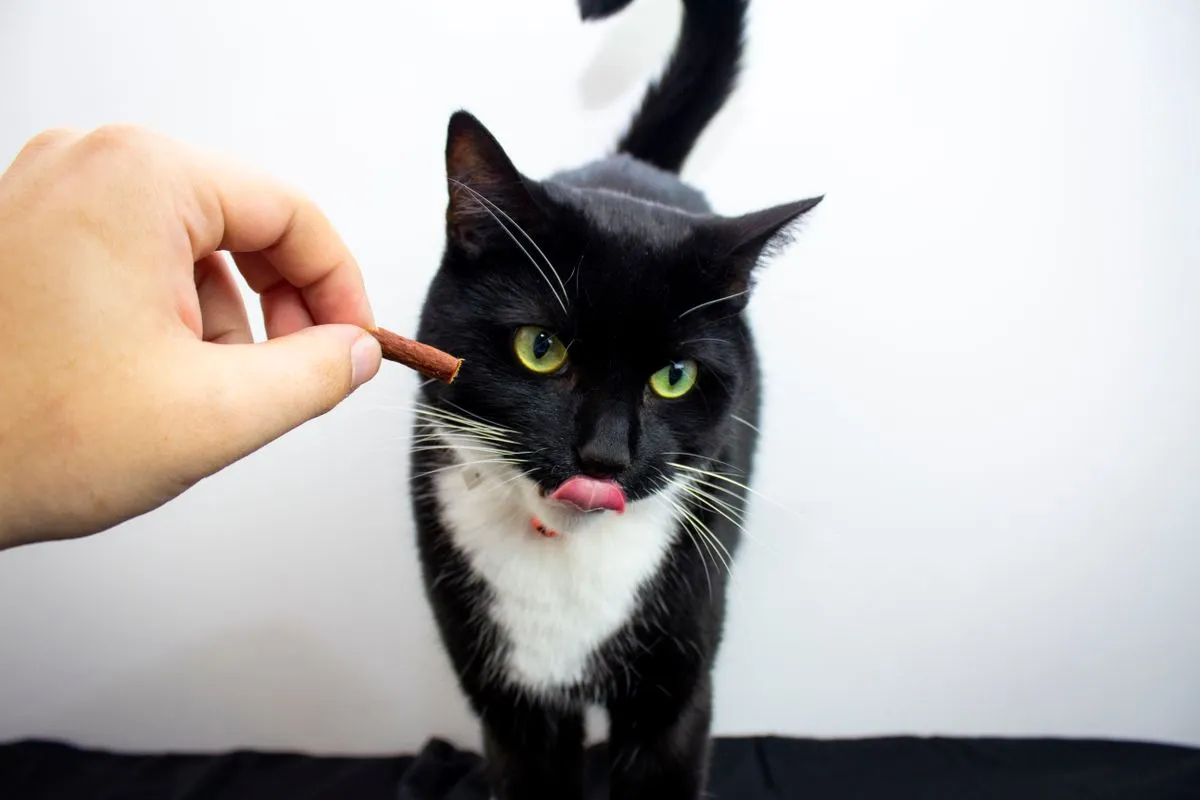
A clicker is a small device that makes a sharp, consistent click — your voice changes with your mood, but a click sounds the same every time. You do not strictly need one; a short marker word like “yes” works too. Step one is charging the clicker: click once, immediately give a treat, and repeat ten to twenty times over a couple of short sessions. You will know it worked when your cat perks up at the sound. If the click startles your cat, muffle it in your pocket. Do not use the clicker to summon your cat — it marks the behaviour happening at that exact instant. Go at your cat’s pace.
Target Training: The Foundation for Everything Else
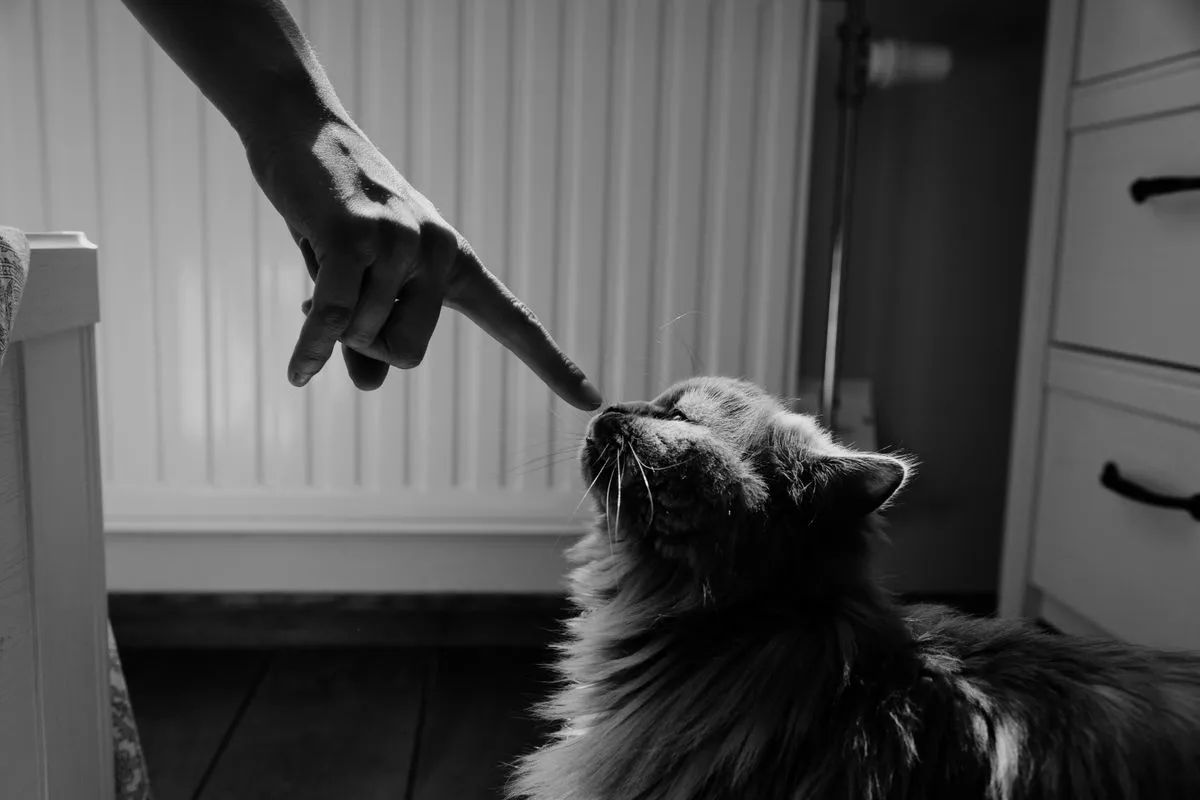
Before sit, before recall, before any trick, teach your cat to touch a target with its nose. Once your cat understands “touch that thing,” you can guide it anywhere — onto a mat, into a carrier, up onto a perch.
Hold out your finger, or a target stick with a ball on the end (a chopstick works fine). The moment your cat’s nose touches it, click and treat, then add the word “touch” just before you present the target. Most Maine Coons get this within a session or two — one owner on Instagram built her cat’s recall exactly this way, stretching the distance until the cat ran across the room at the word “come.”
Teaching Sit: The Easiest First Trick
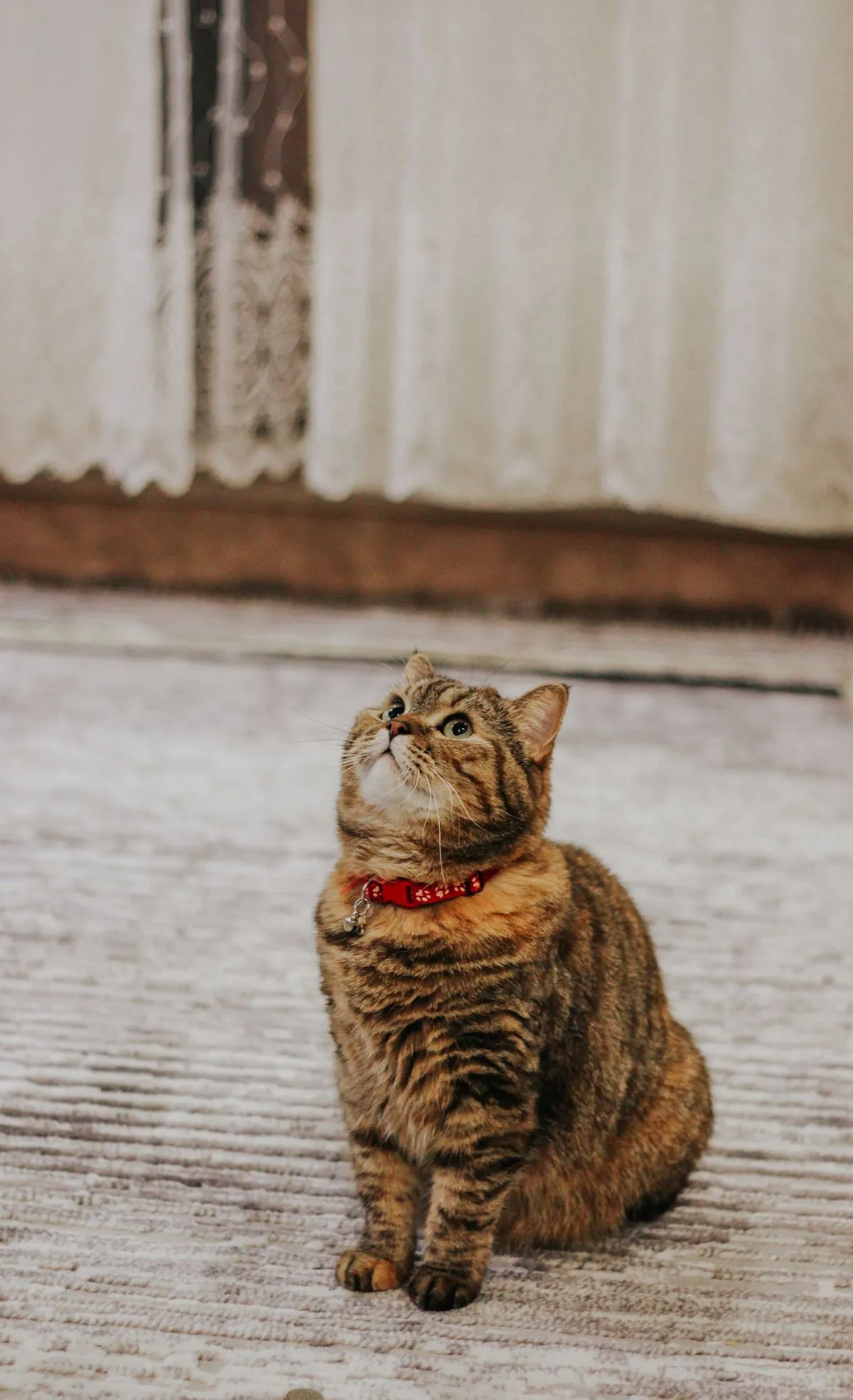
Hold a treat just above your cat’s nose, then move it slowly back over its head. As your cat’s head tilts up, its bottom will naturally drop to the floor. The instant it touches down, click and treat. If your cat jumps for the treat, lower it and move it more slowly.
Say “sit” only once the behaviour is already happening reliably. Five to ten repetitions per session is plenty. A breeder on Facebook shared that her kitten learned sit at twelve weeks and shake by fourteen weeks — a realistic timeline for a food-motivated kitten.
Teaching Recall: Come When Called
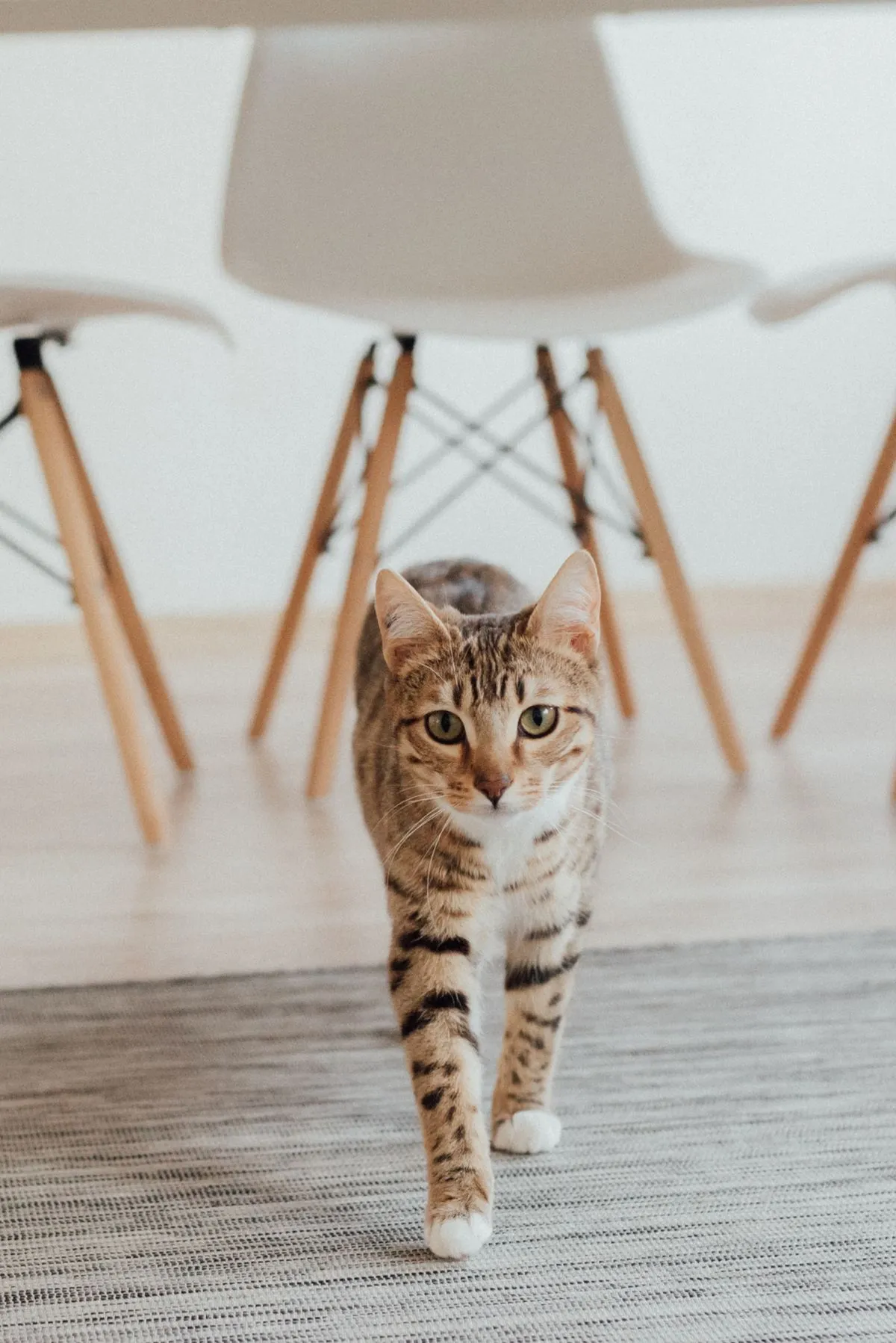
Recall is the most practical thing you can teach a Maine Coon. It gets your cat out from under the bed when visitors arrive and back inside when you need to leave.
Start indoors, close up, when your cat is already moving toward you. Say its name, then “come,” in a bright tone, and click and reward the moment it moves in your direction. Repeat in casual moments throughout the day, then build distance gradually: across the room, from another room, with a mild distraction in the background.
Never call your cat to come for something it dislikes. If “come” reliably predicts a bath or a nail trim, your cat will stop coming — go to the cat for the unpleasant things, and keep recall sacred. Do not expect dog-level recall outdoors: a Maine Coon that comes running in the living room may still ignore you in the garden with a bird in the hedge. For outdoor work, use a harness and leash — see my guide to harness training your Maine Coon. This post is about tricks and recall, not leash work.
High-Five, Shake, and Fetch: The Fun Stuff
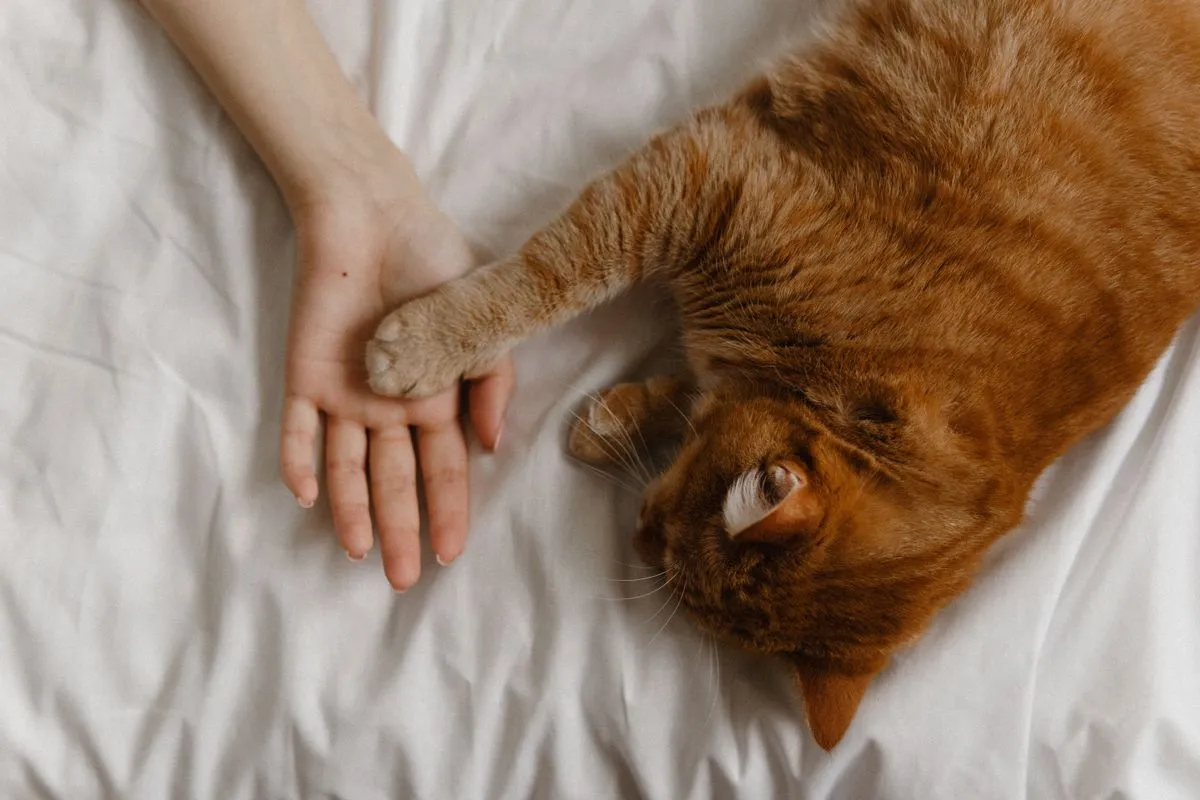
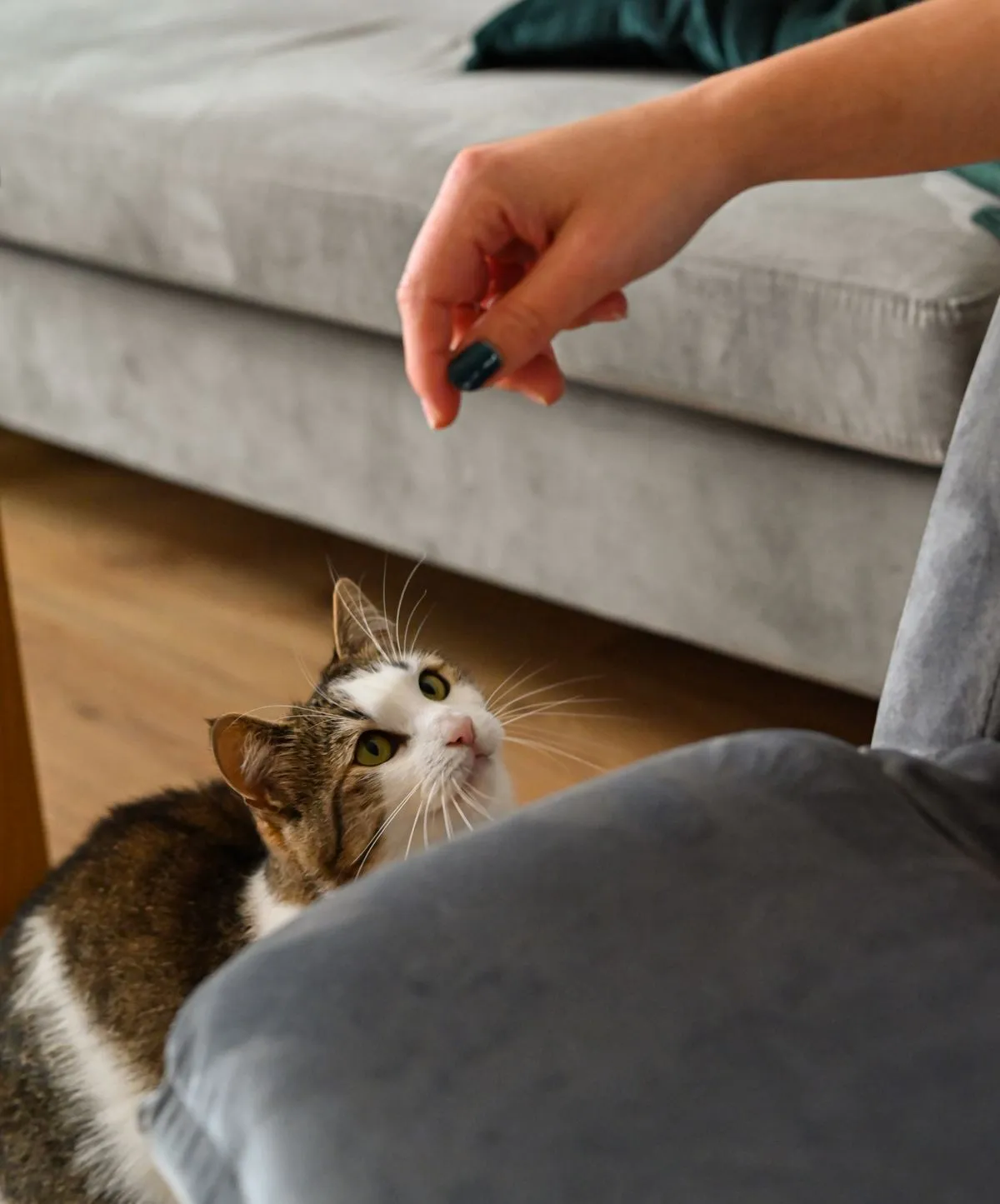
High-five. Hold a treat in your closed hand near your cat’s paw and wait. The moment a paw touches your hand, click and treat. Gradually hold your hand higher, and add the words “high five” once the touch is consistent. Owners on Instagram and Facebook post this trick more than any other — one owner taught three of her big fluffy cats the same paw commands in one household. It often clicks within a few days.
Shake. Hold your hand out low, palm up, and wait for the paw. Say “shake” as the paw lands, click, treat. Some cats offer shake more readily than high-five, so build on whichever your cat offers first.
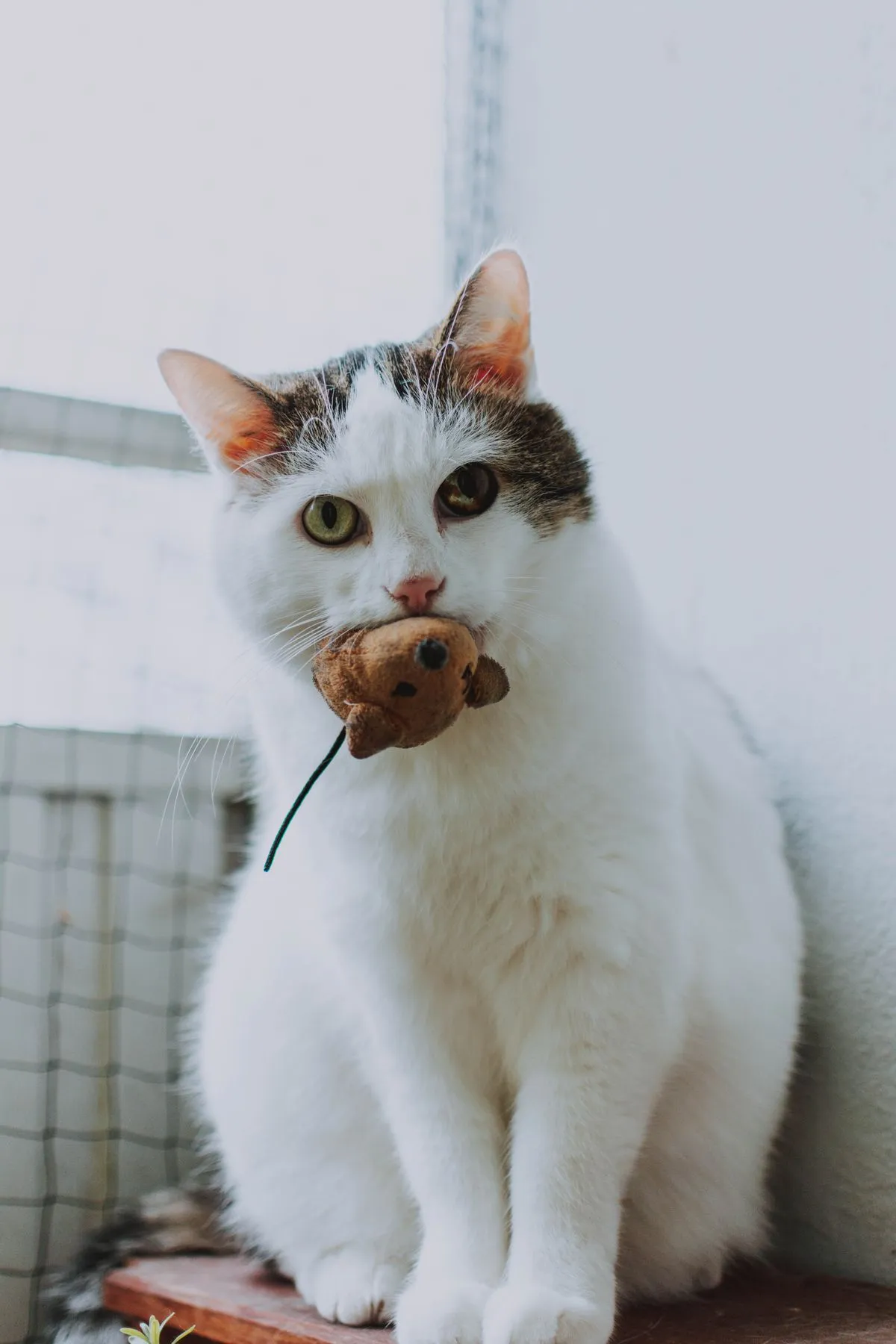
Fetch. Many Maine Coons do half of this on their own — they pick up a toy and bring it to you. Make the loop pay: praise it, treat it, and toss the toy a short distance. If your cat will not drop it, trade for a treat while saying “drop it.” The best toys for Maine Coons are the ones your cat already loves carrying.
Ring a bell. Put a small service bell on the floor, wait for your cat to investigate it with a paw, click and treat the touch. Before long, many Maine Coons ring it deliberately to ask for a treat. Teach one trick at a time — once one is reliable, you can chain them: sit, then high-five, then treat.
What Actually Motivates a Maine Coon
Every cat has a currency, and for most Maine Coons it is food — but not just any food. Find the treat your cat goes slightly wild for: for many cats it is a freeze-dried meat treat or a lickable paste from a tube. Keep that treat for training only, so it stays special.
Some Maine Coons are just as motivated by play, or by attention and praise. Watch what your cat actually values: if it walks away from a treat but lights up for a feather wand, you have your answer. Train before meals, keep sessions to five minutes, two or three times a day, and stop while your cat is still keen.
Kittens, Adults, and Seniors
The best time to start is when your cat is a kitten, and the second-best time is today. Kittens between eight and sixteen weeks are at their most curious, and name recognition and recall take root fastest in that window. If you are bringing a kitten home, my guide to Maine Coon kitten socialisation covers the wider picture.
Adults learn just as well, sometimes better, because they have longer attention spans. Seniors can learn too: VCA notes that you can train a cat — even an older one — with patience and a reward system. Keep sessions shorter and treats softer; for an older cat, training is more about enrichment and connection than new tricks.
Realistic Expectations
Those effortless-looking videos show the tenth take, not the first nine. Realistic training looks like this: sit in a few days to a couple of weeks, recall indoors in a few weeks of casual practice, high-five in days for a paw-happy cat and weeks for a cautious one. Some Maine Coons fetch obsessively; others try it twice and go back to napping. Both are normal.
Training will not make your cat obedient. It will not stop a Maine Coon from knocking things off shelves or chirping at birds at 5 a.m. — those are personality traits, not training failures; my piece on Maine Coon personality traits explains the temperament you are working with. Nor will training alone fix behaviour problems like sofa scratching — see my guide to Maine Coon behaviour problems and how to stop them.
What training reliably gives you is a stronger bond, a mentally stimulated cat, and a practical skill set. A bored Maine Coon is a destructive Maine Coon, and a few short sessions across a day tire a smart cat out more than half an hour of wand play.
Common Mistakes
Sessions that run too long. Ten minutes feels short to you and endless to a cat. Stop at five, while your cat is still engaged. Repeating the cue. Saying “sit, sit, sit, SIT” teaches your cat that the cue is the fourth “sit.” Say it once and wait. Rewarding almost-right. If you reward a half-sit, you have taught a half-sit — only click the real thing. Training when the cat is not in the mood. A cat that is grooming or sleeping has told you its answer. Expecting the same progress every day. Cats have off days; go back a step, reward generously, and move on.
A Simple First-Week Plan
Days 1–2: Charge the clicker — click, treat, repeat ten to twenty times. No tricks yet. Days 3–4: Teach targeting: finger or stick, nose touch, click, treat. Days 5–6: Teach sit with a treat lure. Day 7: Practise recall in casual moments, then take a day off; rest is part of learning.
After that first week, add one new trick at a time and let your cat set the pace. If a trick stalls, drop it and try another. TICA describes the Maine Coon as an intelligent, gentle breed — and once you have trained one, you will see why owners say these cats are smarter than they let on.
Frequently Asked Questions
Can you train a Maine Coon?
Yes. Maine Coons are one of the most trainable cat breeds, thanks to their intelligence, food motivation, and people-focused temperament. With positive reinforcement — treats, a clicker or marker word, and short sessions — most learn sit, recall, high-five, and fetch.
What age should I start training a Maine Coon?
Start as early as you can, ideally in the kitten months when curiosity is highest, but adults and seniors can learn too. Kittens often pick up sit and name recognition within days. It is never too late to start.
How long should training sessions be?
Five minutes, two or three times a day, is ideal — always end on a success.
Do I need a clicker to train my Maine Coon?
No, but it helps. A clicker gives a precise, consistent marker for the exact moment your cat does the right thing; a short marker word like “yes” works as an alternative. Whichever you choose, charge it first — pair the sound or word with a treat ten to twenty times.
Why won’t my Maine Coon do tricks?
Usually one of three reasons: the reward is not motivating enough, the sessions are too long, or the behaviour has not been broken into small enough steps. Try a higher-value treat, train before meals, and reward tiny steps toward the trick.