Harness Training a Maine Coon: Step by Step
Harness training a Maine Coon is not like taking a dog for a walk, and the sooner you drop the dog picture from your head, the better it goes. There is no marching along at heel. There is a lot of standing still while a very large cat inspects one bush as if it holds state secrets. And honestly, that is the joy of it: a safe way for an indoor cat to smell the rain, watch birds from two feet away, and feel grass under those big tufted paws.
I have learned this the slow way, with cats who loved the garden from day one and cats who flattened themselves to the floor when a strap first touched their back. Both kinds got there in the end. The difference was never talent. It was patience, the right harness, and letting the cat set the pace.
Why Maine Coons Often Take to a Harness
Of all the breeds I have lived with, Maine Coons are the ones I would pick first for leash work. They are curious in a calm, methodical way: they follow you from room to room, supervise your chores, and come to see what you are doing when you open a cupboard. That dog-like interest in their people is one of the classic Maine Coon personality traits, and it carries straight over to harness work — a cat who already wants to be where you are is halfway there.
They are also big, confident cats on the whole, and that helps outdoors — a confident cat is less likely to panic at a passing car, and panic is what causes most harness escapes. Still, breed is not a guarantee. Owners on Reddit and in the adventure cat community say the same thing I have found: some take to a harness in days, some need weeks, and a shy cat may always prefer the window seat. All three are fine. The harness is an offer, never an obligation.
Walks also add gentle movement for an indoor cat getting a little round — if that is yours, see my guide to telling whether your Maine Coon is overweight.
Choosing a Harness for a Big, Long-Haired Cat
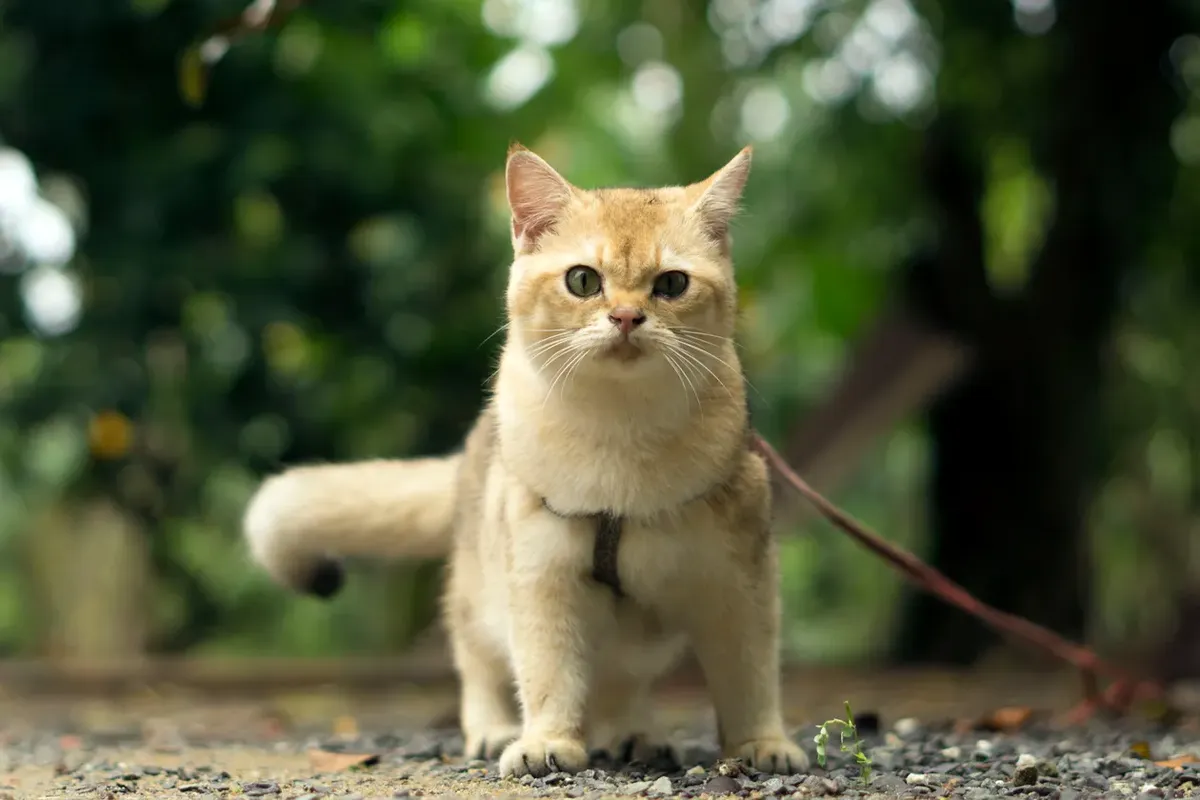
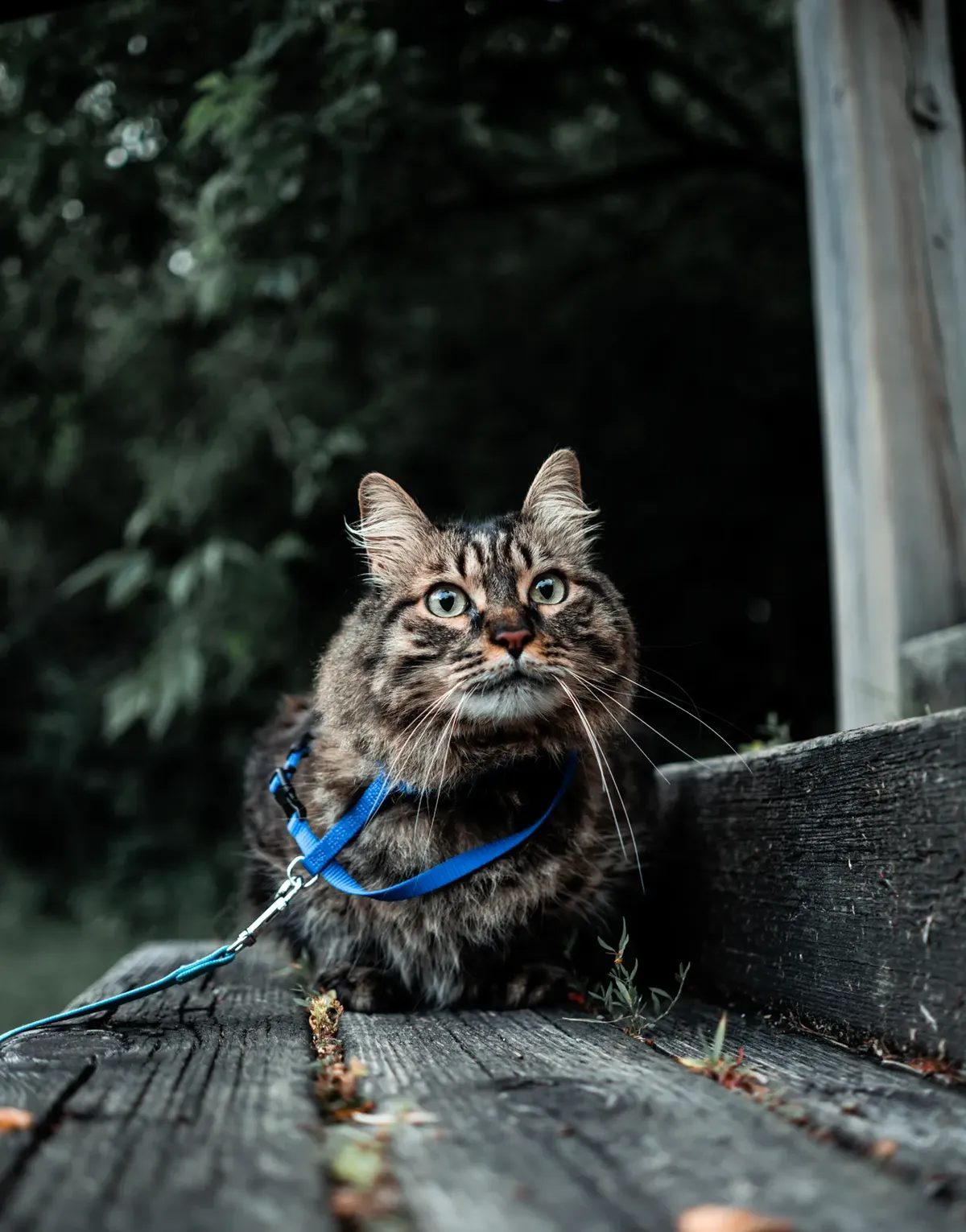
Forget the collar. A leash clipped to one is easy for a cat to slip and puts pressure on a delicate neck. You want a harness that spreads the load across chest and shoulders. The two styles you will see most:
- H-style harnesses are straps — one around the neck, one around the chest, joined along the back. They are light, sit mostly clear of all that fur, and many cats accept them quickly. The catch is fit: a strap harness with any slack is the one cats most often back out of.
- Vest-style harnesses wrap more of the body in soft fabric or mesh. They spread pressure over a wider area and are harder to wriggle out of. Some Maine Coons prefer them. Others hate the covered feeling and overheat on a warm day, so watch your cat rather than the marketing.
Owners on YouTube who walk large cats land where I have: either style can work, but fit matters more than design. Measure around the chest just behind the front legs and use the maker’s size chart. Many adult Maine Coons outgrow harnesses sold for average cats, and owners in breed forums often say they sized up or used a small-dog harness. Big cat, bigger harness.
For fit, the guidance you will hear from vets, rescues, and experienced owners is the two-finger rule: slide two fingers snugly between strap and body — no looser, no tighter. Treat it as general guidance, and add a Maine Coon wrinkle: long fur compresses, so part the fur and check against the body, not the fluff.
One more long-hair note: a strap rubbing one spot — behind the front legs, usually — can work the coat into a small mat, so comb through after walks. If tangles are already a battle, my guide to Maine Coon matted fur covers safe removal. And keep the leash light and fixed-length rather than retractable — a point VCA Hospitals also makes in its guide to training a cat to walk on a leash.
Harness Training a Maine Coon, Step by Step
This is the part people rush, and rushing can set you back weeks. Every stage happens indoors first. Nobody goes outside until the stage before it looks boring.
- Let the harness just exist. Leave it near your cat’s bed for a few days. Let him sniff it, rub his face on it, fall asleep next to it. When he investigates it, a small treat appears. Owners on Instagram who film their adventure cats learning often start exactly here, and it looks like nothing is happening. Plenty is. The strange object is becoming furniture.
- Drape, then fasten, briefly. Lay the harness over your cat’s back without fastening it and reward her. When that earns no reaction, fasten it loosely for a few seconds, treat, and take it off while she is still calm.
- Build up wearing time indoors. Over the following days, leave the harness on a little longer — a few minutes, then ten, then through a play session or a meal. Distraction is your friend: a wand toy or dinner makes a cat forget the odd feeling on his back. Tighten gradually toward that snug two-finger fit as he relaxes.
- Add the leash indoors, and let it drag. Clip on a light leash and let your cat trail it around the room under close supervision, so it cannot snag on furniture. PetMD’s guide to how to leash train a cat recommends exactly this order: harness first, worn calmly indoors, and only then the leash.
- Pick up the leash and follow. Hold the end and trail around the house after your cat, keeping the lead loose. You are not steering. You are luggage. If he stops, you stop. He is learning that the leash never pulls and never makes decisions for him.
- Open the door — and barely go through it. First outdoor session: the doorstep, the patio, or one corner of a quiet garden. Sit with her, let her look and sniff, and go back in after a few minutes, before she has had enough. End on a good note and let her ask for more tomorrow. Most cats do.
How long does the whole sequence take? Owners on Reddit and Quora describe everything from a kitten walking in the garden within the week to an older cat who needed a month of indoor stages first. The cat’s behaviour tells you when to move on, not the calendar.
First Walks: Letting Your Cat Lead
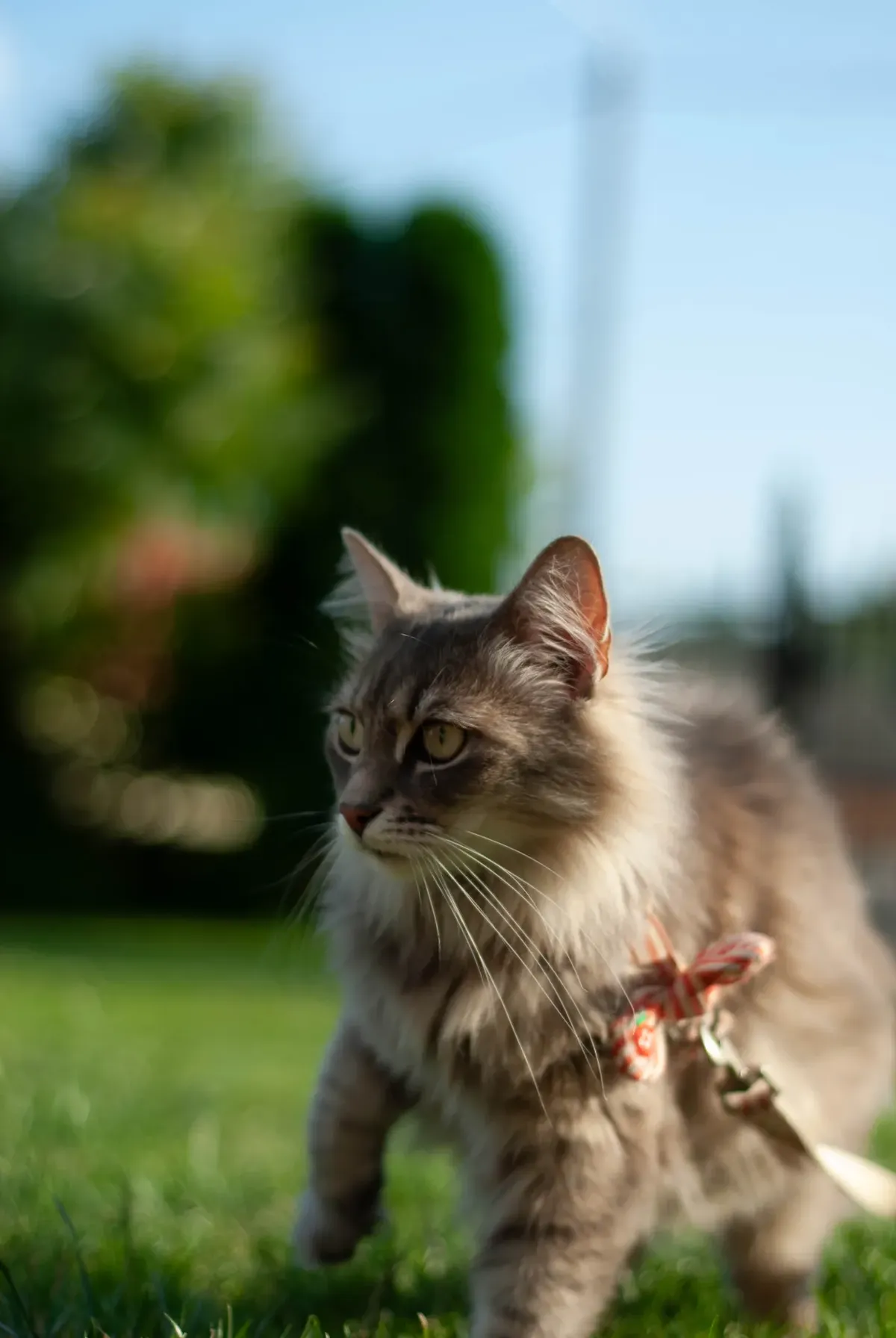
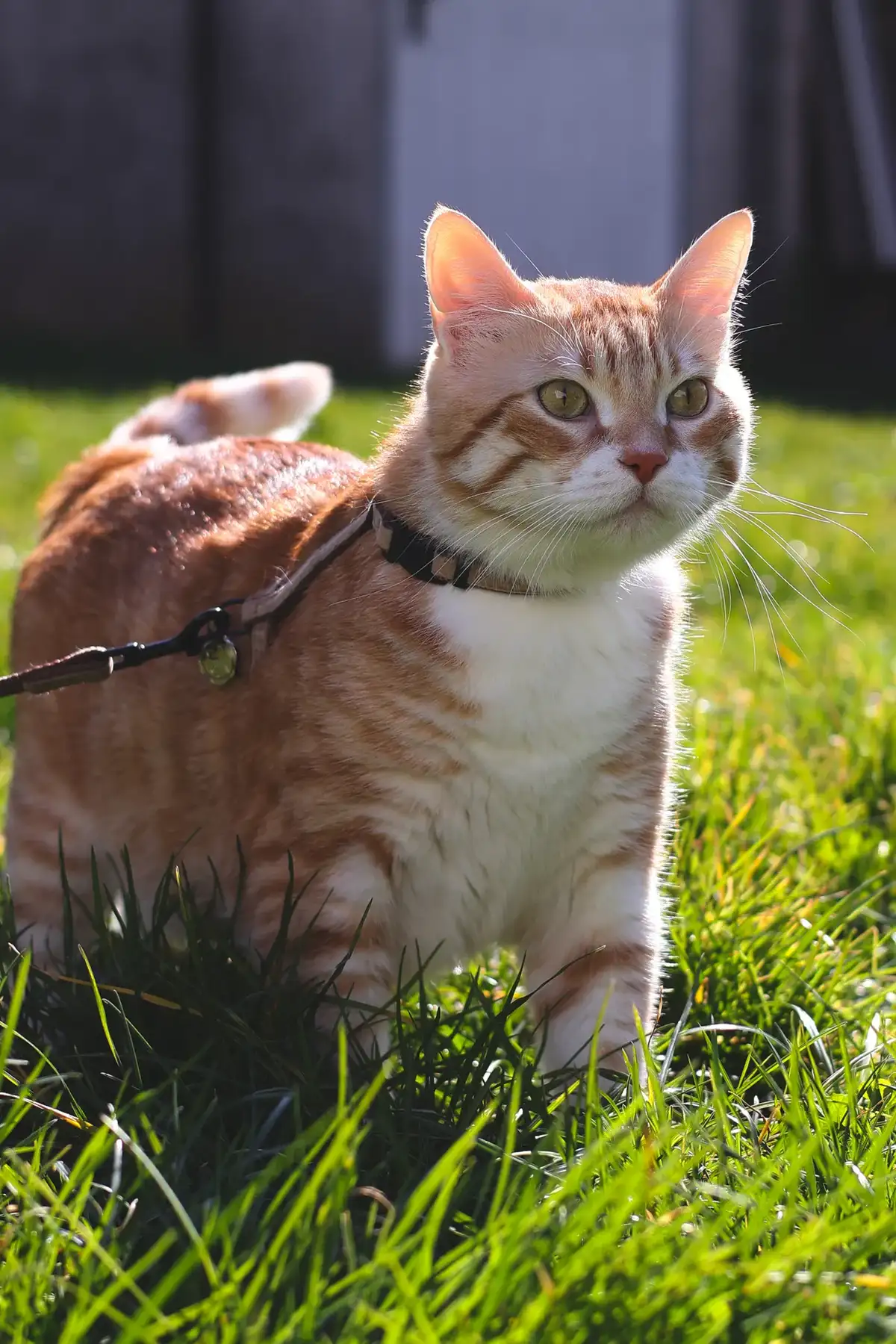
A cat walk is an amble with long pauses, and your job is mostly security and transport. Follow your cat. Keep the leash loose. Never drag a cat toward something, or pull one out from under a bush — crouch, wait, offer a treat, let him decide. Owners on YouTube repeat this constantly: happy walking cats are the ones whose people let them lead and reward confidence instead of forcing movement.
Read the body while you walk. Ears forward, tail up, pausing to sniff: a cat enjoying himself. Flattened ears, a low crouch, dilated pupils, or quick breathing: a cat who has had enough — VCA notes these same stress signs, and the right response is to head home and try a shorter outing another day. Owners in the adventure cat community also swear by routine early on: the same short route, at a quiet time of day, until it is familiar ground.
Safety Rules I Do Not Bend
Before the first trip beyond your own garden, be clear on the ground rules — and on the wider question of whether Maine Coons should go outside at all, covered in full elsewhere:
- Never tie your cat out and leave him. A tethered cat is a trapped cat if a dog appears or the lead tangles. If you are not holding the other end of the leash, your cat should be indoors. This one is absolute.
- Never leave a harness on unsupervised. Indoors or out, it can catch on furniture, fencing, or branches. It goes on for walks and comes off after.
- Choose quiet places and watch for dogs. Avoid dog-heavy parks and busy paths. If an off-lead dog charges, picking your cat up quickly and calmly is usually safest.
- Sort identification before you need it. A collar tag with your number and an up-to-date microchip are the safety net if a harness ever fails. Cornell’s Feline Health Center includes both in its pet preparedness guidance — vets treat them as basic kit, not extras.
- Do a quick once-over after walks. Check paws for grit or thorns, and feel for ticks.
Common Setbacks, and Why They Are Normal
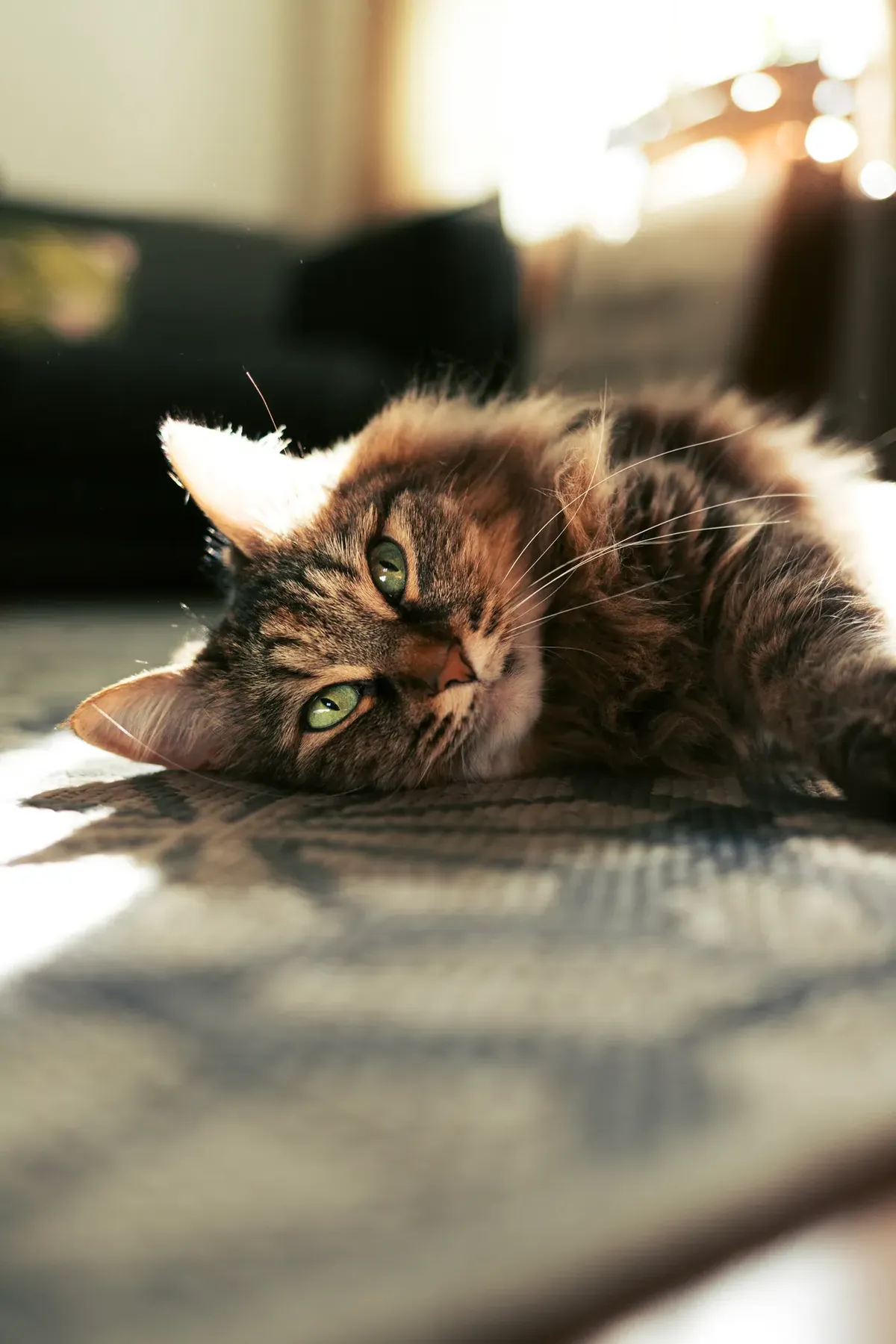
The flop. You fasten the harness and your magnificent cat falls sideways like a felled tree. This is the most talked-about moment in harness training — owners in cat forums describe cats going limp, freezing mid-step, or walking as if the floor were tilted, and VCA calls freezing or lying down a normal first reaction too. It is protest, not injury. Get the wand toy out, keep the session short, end it kindly. Most cats forget the harness within a handful of sessions.
Freezing outdoors. A cat fine in the hallway may turn to stone on the lawn — the outdoors is loud and full of smells. Go back a stage (doorstep sitting counts as training) and let the garden become ordinary at your cat’s speed.
Backing out of the harness. Cats escape backwards. If yours plants his feet and reverses, do not haul on the leash, which only helps him slip the straps. Walk toward him to slacken the lead, scoop him up, and refit the harness more snugly at home. Repeated escapes mean the fit or style is wrong for that cat.
Frequently Asked Questions
Can any Maine Coon be harness trained?
Most can, especially confident, curious cats and kittens who start young. Very shy or anxious cats may never enjoy it, and that is worth respecting — for them, a sunny windowsill or a secure catio may be the better outdoor life.
How long does harness training a Maine Coon take?
There is no honest fixed timeline. Confident cats may be walking in a quiet garden within a couple of weeks, while cautious cats can take a month or more over the indoor stages alone. Judge progress by calm behaviour, not by days.
What is better for a Maine Coon, an H-style or a vest harness?
Both work when they fit well. H-style harnesses are light and sit clear of the coat, which many cats accept quickly. Vest styles feel more secure and are harder to back out of, but some cats dislike the covered feeling. Measure the chest, aim for a snug fit you can slide two fingers under, and let your cat’s reaction settle it.
Can I walk my Maine Coon like a dog, on a route at my pace?
Not really, and expecting that is where most frustration starts. Cat walks are cat-led: lots of sniffing, sitting, and watching. Over time, many cats settle into a familiar route and walk it more purposefully, but the pace stays theirs.
Is it safe to leave my Maine Coon tied outside on a long line?
No. A tethered, unattended cat cannot escape a dog, a tangle, or bad weather, and can be injured panicking against a fixed line. Harness time outdoors should always be supervised, with you holding the leash. For longer outdoor time, a secure enclosure or catio is safer.
Give it a few unhurried weeks and one morning you will pick up the harness and hear that familiar chirp at the door. There is nothing quite like being taken for a walk by your own cat.