Maine Coon Genetic Testing Explained: HCM, SMA and PKDef
The first time a breeder told me her cats were ‘fully DNA tested and clear’, I nodded along like I understood. I did not. I had no idea what maine coon genetic testing actually covered — or what a clear result promised and what it quietly did not.
Years and several Maine Coons later, I have learned to ask better questions. This is the plain-words version I wish someone had handed me back then: what the standard DNA panel checks, how to read the N/N and N/K codes on a lab certificate, and why a clear result is only one part of the health picture.
What a Maine Coon Genetic Testing Panel Actually Covers
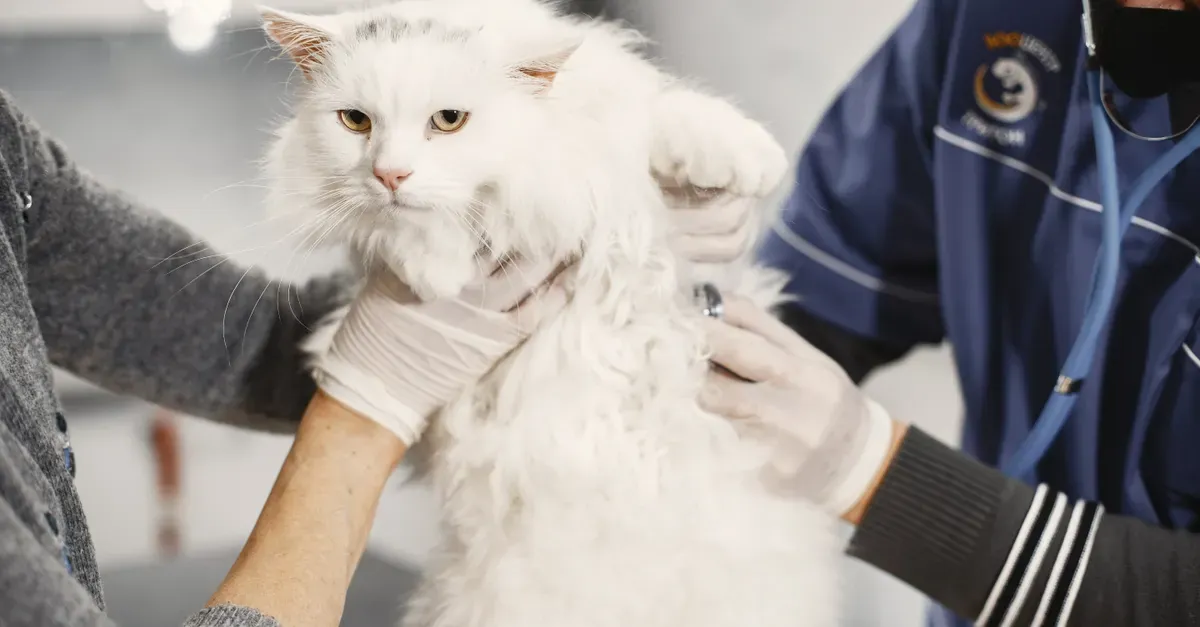
Most panels built for Maine Coons focus on a short list of conditions the breed is known for — the UC Davis Veterinary Genetics Laboratory lists exactly these breed-relevant tests on its Maine Coon page, and commercial labs bundle them the same way. Test the parents once, and the breeder knows which pairings are safe and which could produce sick kittens.
The usual suspects are HCM, SMA and PKDef, sometimes with blood type and a couple of extras thrown in. Let me take them one by one, in plain words rather than lab-speak. Both TICA and CFA encourage this kind of screening, and good catteries now advertise their testing protocols the way they advertise show wins — as a mark of quality.
HCM — the heart item
HCM is hypertrophic cardiomyopathy, a thickening of the heart muscle — the most common heart disease in cats. In 2005, researchers led by Meurs and colleagues identified a specific mutation, A31P in the MYBPC3 gene, linked to HCM in Maine Coons. The DNA test looks for that one mutation. It is the most talked-about item on the panel.
Here is the part that matters: the test only detects the A31P mutation. A cat can carry the mutation and never develop the disease, and a cat can develop HCM without carrying it at all. The lab’s own notes say it plainly — the test detects the A31P variant from that 2005 research, full stop. A risk test for one known mutation, not a heart diagnosis.
That is why a DNA result, clear or not, never replaces a heart ultrasound. Our deep dive on HCM screening walks through the echocardiogram side — the part that actually looks at the heart itself.
SMA — spinal muscular atrophy
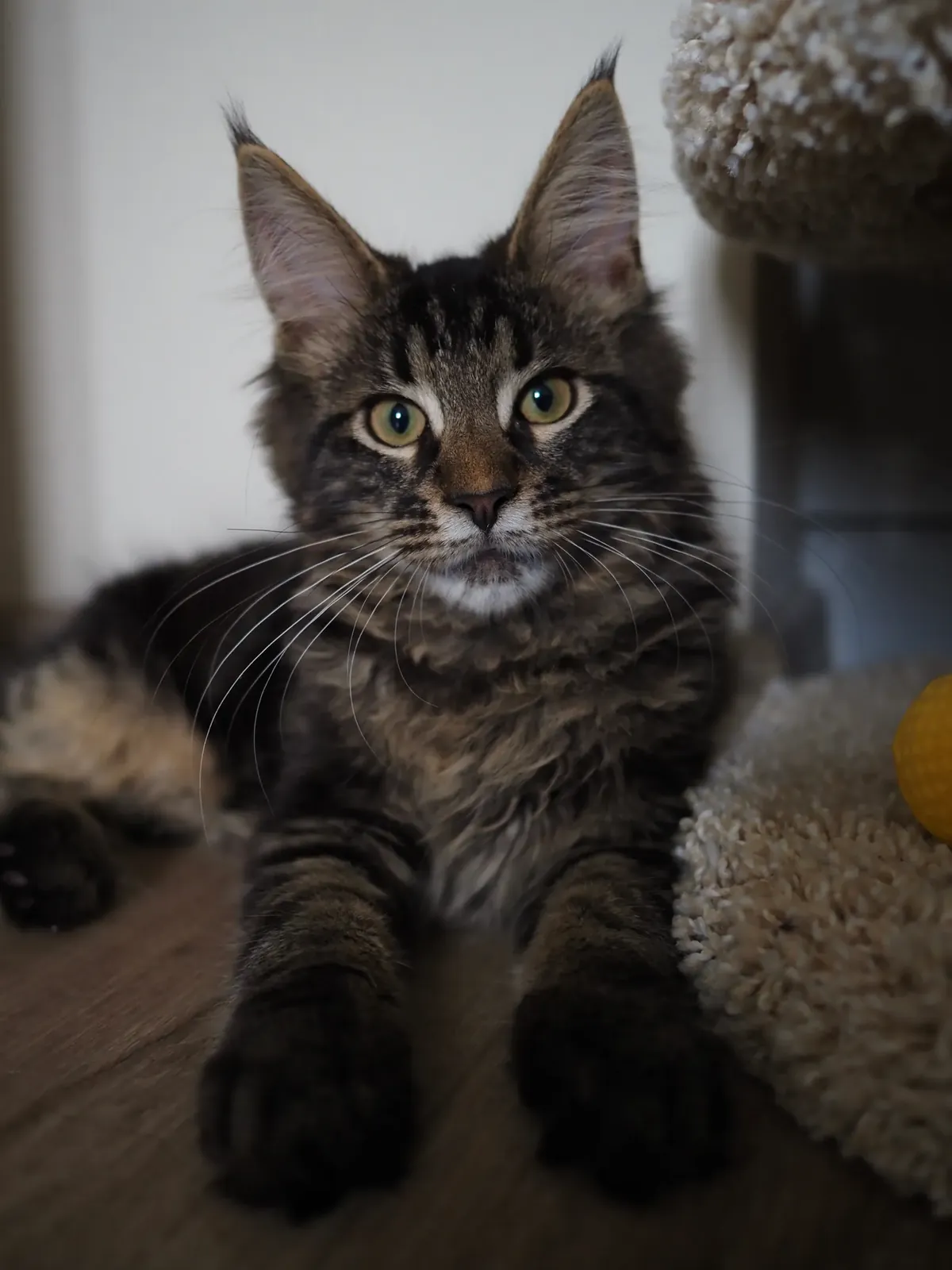
SMA is a disorder of the motor neurons in the lower spinal cord — the nerves that tell the muscles what to do. In affected kittens, signs usually show up around three to four months of age: an unsteady, swaying walk, hind legs held oddly close together at the hocks, toes pointing outward in front, and muscles in the back legs that waste away. By five or six months they can be too weak behind to jump onto the sofa. The breed’s long coat can hide the muscle loss for a while — you feel it before you see it.
It is inherited as a simple recessive trait: a kitten has to inherit the faulty copy from both parents to be affected. Carriers — cats with one copy — never show signs themselves, which is exactly why testing matters; you cannot spot a carrier by looking. Researchers traced it to a deletion involving the LIX1 gene, and the test distinguishes clear cats, carriers and affected cats cleanly.
The reassuring detail, and I mean this honestly: affected cats are not in pain. They eat, they play, and they often live comfortably as indoor cats for many years. It is a disabling condition, not a fatal one — but no breeder should be producing affected kittens when a test exists to prevent it, and the good ones do not.
PKDef — pyruvate kinase deficiency
PKDef boils down to this: the cat’s red blood cells lack an enzyme they need to make energy, so the cells break down too early and the cat becomes anemic. Affected cats can go through bouts of tiredness and weakness, a heart murmur the vet picks up, or an enlarged spleen — and then seem fine again, because the anemia comes and goes. Some live a normal lifespan; others have a rougher time. Severity is genuinely hard to predict.
Like SMA, it is recessive: a kitten needs two copies to be affected. TICA’s science newsletter once reported that testing companies find the PKDef variant in a surprisingly large share of pedigree cats — between 7 and 24 percent carrying one or two copies — while actual clinical disease stays extraordinarily rare. The vets quoted there land where I do: test before breeding, because this is not something you can guess by eye. TICA’s piece on PK-Def has the deeper science if you want it.
The extras panels often bundle in
Blood type is the extra I would pay attention to beyond the big three. A type B queen bred to a type A tom can produce kittens that react badly to her first milk — a dangerous condition called neonatal isoerythrolysis. A DNA blood-type result lets a breeder plan around it by managing those first hours of nursing. Panels sometimes also throw in coat color or polydactyly markers. Fun for curiosity, not health decisions.
How to Read the Results: Clear, Carrier, Affected
Lab reports look intimidating until you learn the shorthand. For the recessive conditions on a maine coon genetic testing panel — SMA and PKDef — you will see one of these:
- N/N (clear/normal): two normal copies. The cat will not develop the condition and cannot pass it to kittens.
- N/S or N/K (carrier): one normal copy, one faulty copy. The cat will not get sick from this condition — but bred to another carrier, roughly a quarter of the kittens could be affected.
- S/S or K/K (affected): two faulty copies. The cat has, or will develop, the condition.
For the HCM A31P test, results read differently because the inheritance is dominant — one copy is enough to raise the risk. Cats with two copies face the highest risk and the earliest, most severe disease; the lab notes sudden death by age four or less in the worst cases. Cats with one copy tend to live longer but may still develop HCM. ‘Clear’ on the HCM item means ‘does not carry this one known mutation’ — nothing more, nothing less.
One more thing worth knowing: DNA does not change. A test done once is valid for life, which is why breeders test their breeding cats — and why you can trust a certificate from years ago, as long as it names the right cat.
The Honest Catch: A Clear DNA Test Is Not the Whole Story
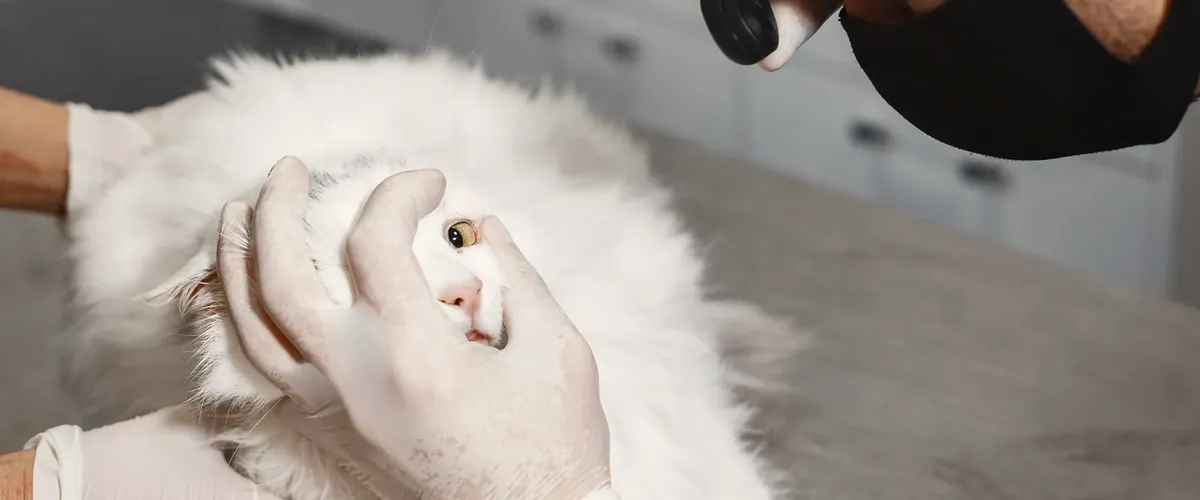
This is the part marketing glosses over. A DNA panel checks for known mutations. Known. The HCM test looks for exactly one mutation out of what may be several. A cat can test clear on every item and still develop heart disease from a cause no panel screens for — which is precisely why responsible breeders pair DNA testing with regular echocardiograms of their breeding cats. The ultrasound looks at the actual heart; the DNA test looks at one page of the instruction manual.
Cornell’s veterinary college overview of HCM in cats notes the condition runs in certain breeds including Maine Coons and that genetics clearly plays a role — but the definitive cause has not been nailed down. That uncertainty is exactly why the echo still matters.
And genes are only part of any cat’s story anyway. Diet, weight, dental care and plain luck all shape how long and how well a Maine Coon lives. Our guide to lifespan and health issues covers the everyday side of keeping them healthy, beyond anything a lab can test for.
The Buyer Audit: What Papers to Ask Your Breeder For
So how do you put maine coon genetic testing to work when you are choosing a kitten? You audit. A good breeder will not be offended — the good ones are proud of this paperwork:
- The actual lab certificates for both parents — not a line on the website saying ‘tested’, the PDFs. Each should show the cat’s registered name, the lab’s name, the date, and the result for HCM, SMA and PKDef.
- Match the names. The certificate should name the queen — and ideally the sire — of your kitten’s litter. A generic ‘our cats are tested’ covers nothing if your litter’s parents are the two untested newcomers.
- Understand what a carrier result means. A carrier (N/S or N/K) on one parent is fine, provided the other parent is clear — that pairing cannot produce affected kittens. What you do not want is two carriers bred together, or an affected cat bred at all.
- Ask about the echo. DNA is half the cardiac story. Ask whether the breeding cats get regular heart ultrasounds and whether you can see the cardiologist’s reports. A blank look tells you something too.
If you are still weighing the breeder route against rescue, our guide on breeder or rescue walks through both paths honestly — rescue cats will not come with DNA paperwork, and that is an equally valid calculation. And once your kitten is home, the first vet visit checklist covers those early weeks, including which questions about the parents’ health records to bring.
Frequently Asked Questions
Should I DNA test my pet Maine Coon, or is this just for breeders?
For a pet kitten from tested parents, it is optional — the parents’ certificates already tell you what you need to know. If your cat came from untested parents, or you adopted without any health history, testing gives you and your vet genuinely useful information about what to watch for. It is a one-time cheek swab; DNA never changes.
My kitten’s parents both tested clear. Does that mean my kitten is guaranteed healthy?
It means your kitten cannot inherit those specific mutations, which is genuinely valuable — real risks taken off the table. It does not guarantee a disease-free life. HCM in particular can arise from mutations no panel covers, so keep up regular vet care and take any heart murmur seriously rather than waving it away because ‘the DNA was clear’.
Is a carrier cat safe to breed?
Yes — bred to a clear cat, a carrier cannot produce affected kittens for that recessive condition. This is how careful breeders keep lines healthy without shrinking the gene pool to nothing. The dangerous pairing is carrier to carrier, which is why testing both parents before every mating matters.
At what age can a kitten be DNA tested?
Any age after weaning — DNA does not change with age. Testing a still-nursing kitten is discouraged because the mother’s DNA in its mouth can contaminate the cheek swab. Once weaned, a swab gives a reliable lifetime result.
Does a clear HCM DNA test mean I can skip heart screening?
No — and this is the single most misunderstood point in maine coon genetic testing. The DNA test checks one known mutation; the echocardiogram checks the heart itself. They answer different questions. A clear DNA result plus regular echoes is the responsible combination, not either one alone.
The Bottom Line
Looking back at that first conversation with the breeder, what I really wanted was not a certificate — it was confidence that someone had done the homework. Now I know what the homework looks like: three conditions on a panel, a code like N/N on a lab report, and the humility to remember that DNA is a risk check, not a promise. Ask for the papers, read them with open eyes, then go enjoy your giant, chirping, dog-like cat. The paperwork matters — but the cat is the point.