Maine Coon Nail Trimming A Calm Scratch-Free Routine
Maine Coon nail trimming was the grooming job I dreaded most when my first giant fluffball came home. I put it off for weeks, until a claw snagged in a blanket and my cat hopped away on three legs. That night I learned trimming is not optional for an indoor Maine Coon, and it does not have to be a wrestling match either.
Here is the routine I use now.
Why Maine Coon Nails Need Regular Trimming
An indoor Maine Coon does not wear their claws down the way an outdoor cat does on rough ground. Left alone, the claws grow long, curve, and catch on carpets, blankets, and furniture. A snagged claw can split or tear, which is painful and messy, and overgrown claws can curl back toward the paw pad, especially in older cats who move less.
Long claws also change how a cat walks and grips. Keeping the tips blunted means less damage to your sofa, your arms, and your cat, and it pairs with giving them somewhere proper to scratch: my guide to the best scratching post for a Maine Coon covers what actually survives a giant cat.
How Often Should You Trim a Maine Coon Nails
Most Maine Coons need a trim every two to three weeks; by week three the tips are sharp again and starting to hook.
Check weekly and trim when the nails tell you to, not when the calendar does. Trim sooner if a claw catches on fabric, clicks on hard floors, has grown into a sharp hook, or is curling toward the pad. Senior cats need the closest watch, since their claws can thicken and grow unevenly, and the dewclaws, which never touch the ground, are the ones most likely to overgrow unnoticed.
Kittens barely need trimming at first, but those early weeks are the perfect time to start the habit: a kitten who learns paw handling ends with a treat grows into an adult who tolerates trims. If you have just brought a kitten home, my notes on a Maine Coon first night at home cover settling them in before you start any grooming routine.
Clippers vs Grinder: What Works for a Maine Coon
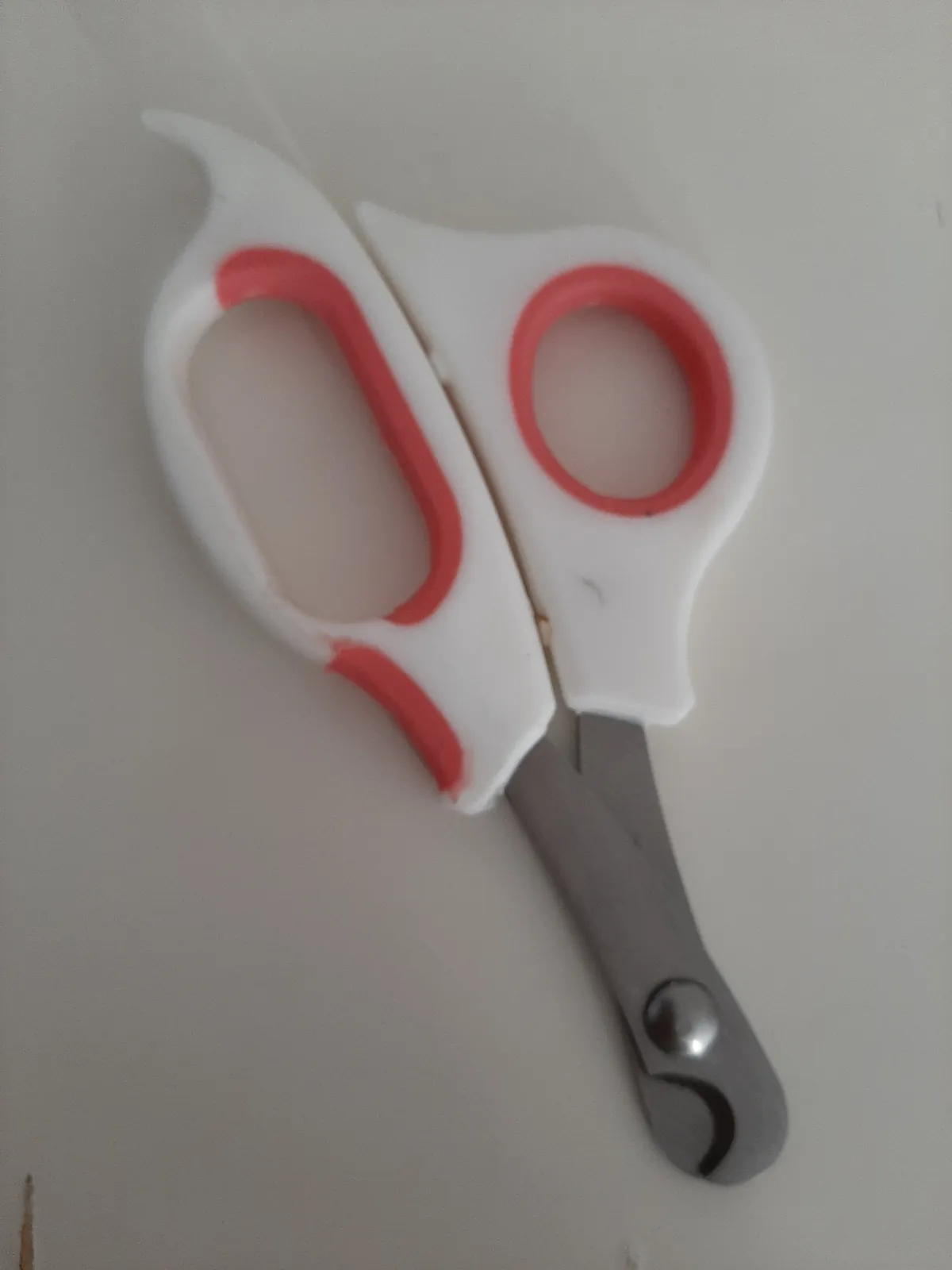
Pet shops stock scissor-style clippers, guillotine-style clippers, and electric grinders. For a Maine Coon, the choice matters more than for a smaller cat, because their claws are thicker and stronger, and the two options below are the ones most owners choose between.
Scissor-style clippers: my pick for most owners
Scissor clippers look like small scissors with a curved notch in the blade. They slice the hollow tip of a cat claw cleanly, they are silent, and you can see exactly where the cut will land. For a first-time trimmer, that visibility is everything. Keep the blades sharp: a dull clipper crushes instead of cutting, and a cat remembers that pain for a long time.
Electric grinders: smooth finish, noisier introduction
A grinder files the nail down gradually instead of cutting it, leaving a smooth edge and removing only a tiny amount at a time. That appeals if you are terrified of cutting the quick. The trade-off is noise and vibration: many cats hate the buzz, grinding takes much longer than clipping, and a grinder can tangle in the long toe fur Maine Coons grow between their pads.
Owners on Reddit and Facebook are split: people whose cats accept the grinder love the smooth result, while people whose cats hate the sound say a two-second clip beats five minutes of buzzing. Breeders on YouTube tend to recommend starting with clippers. My take: start with sharp scissor clippers, and do not buy a grinder as a fix for a cat who already hates trims.
Never use human nail clippers on a cat: they are flat and straight, and they crush and split a cat claw instead of slicing it.
Finding the Quick and Avoiding It
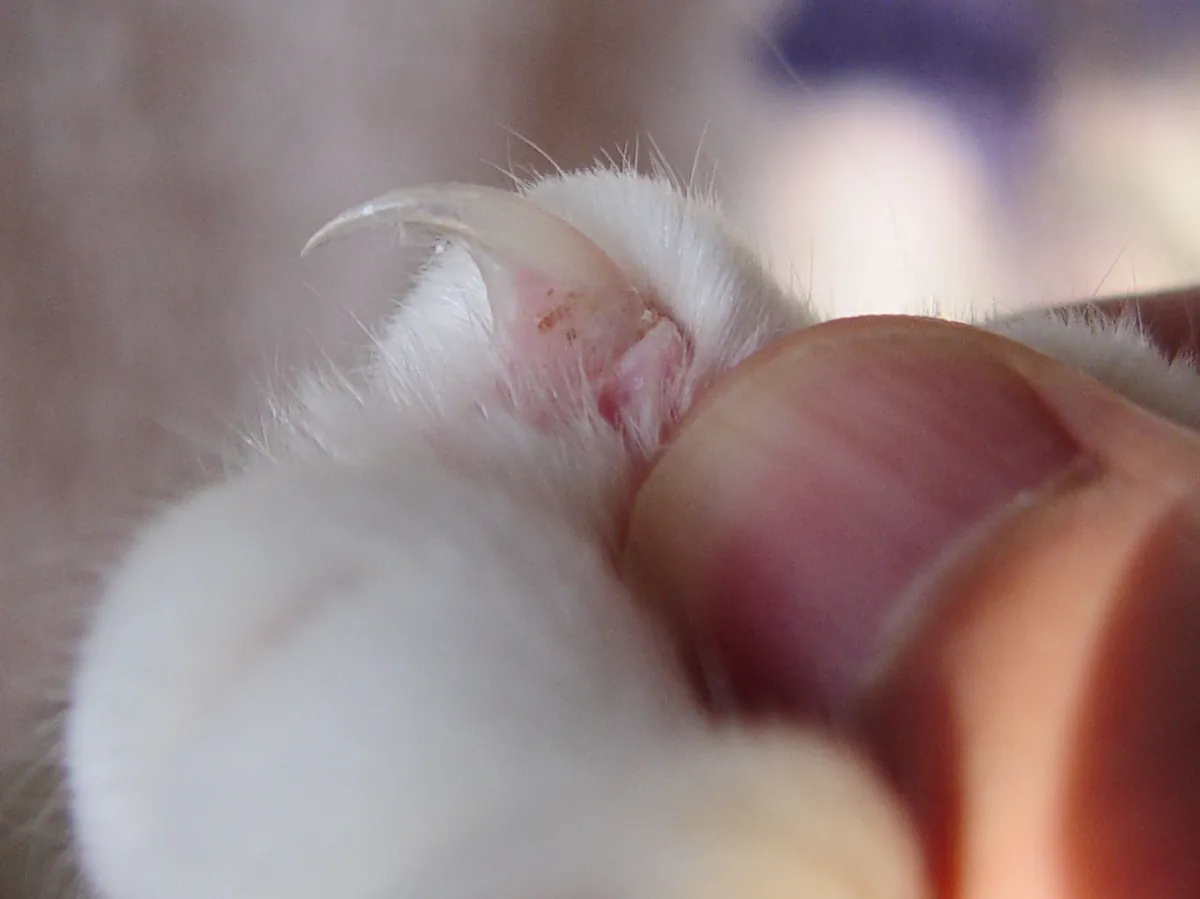
The quick is the pink blood vessel and nerve running inside the nail. Cutting it hurts and bleeds, and one bad experience can set your whole routine back months. On most cats it is easy to see: hold the paw up to the light and the quick shows as a pink triangle near the base, with a clear or pale tip beyond it that is safe to trim.
My rule is simple: only take the sharp tip, and stay a couple of millimetres away from the quick. If you are unsure, take less. You can always trim again in a few days. You cannot un-cut a quick.
Dark claws are trickier, since the quick does not show through. Trim in tiny slices and stop when the cut surface shows a darker spot in the centre. A small flashlight held behind the nail can help.
If you do nick the quick, press styptic powder or plain cornstarch onto the nail and hold gentle pressure for a few minutes. Keep styptic powder in your kit before you ever need it, not after.
The Calm Routine, Step by Step
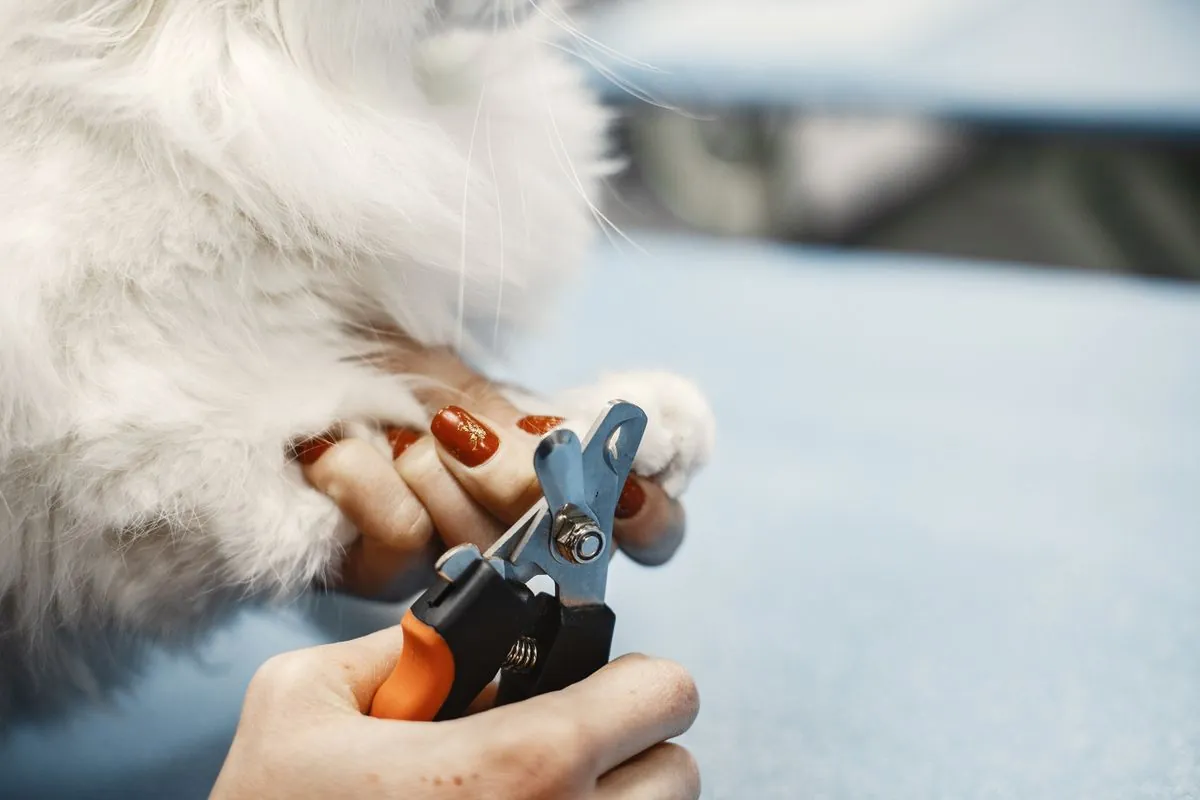
Pick the right moment. Trim when your cat is sleepy, ideally after a meal or a play session, in a quiet room. Never start when your cat is already wound up, or when you are frustrated or in a rush. Owners on Reddit say it constantly: the sleepy cat is a different animal, and waiting for that drowsy window is half the technique.
Get your cat used to paw handling first. Spend a few days touching their paws during cuddles: press a toe pad gently so the claw extends, then release and give a treat, and let them sniff the clippers. Breeders on YouTube repeat this constantly: desensitisation before trimming, not during it.
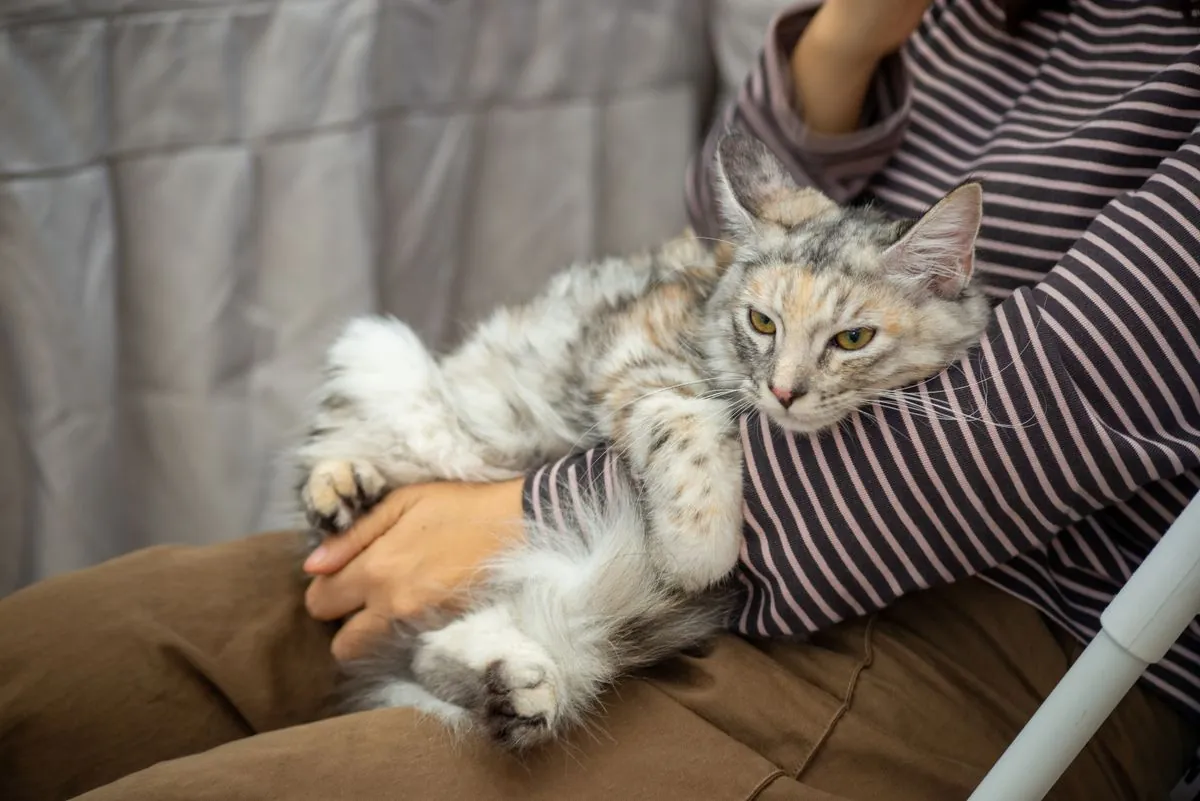
Settle the cat in your lap. Sit with your cat in your lap facing away from you. Hold one paw, press the pad gently to extend one claw, and clip just the tip, with the blade perpendicular to the nail. Work through one paw, give a treat, and move on. If not, stop after one paw; that is still a win.
Trim only what needs trimming. You do not have to do all eighteen claws in one sitting. Owners on Reddit and Facebook swear by one or two nails a day for difficult cats: a couple of nails after dinner, a treat, done.
End on a good note, every time. Finish with a treat, a chin scratch, and release. Even if you only managed three nails, end there with praise. The last thing your cat remembers about a trim should be the treat, not the struggle.
Handling a Squirmy Giant
A full-grown Maine Coon who does not want to be trimmed is a serious opponent. Here is what actually works at home, without turning it into a fight.
The towel wrap. Wrap your cat snugly in a large towel like a burrito, with only one paw out at a time. This is the most recommended trick among owners on Facebook and Reddit for solo trimmers. Keep it snug, not tight, and never cover their face.
A second pair of hands. One person holds and soothes while the other trims; the holder’s job is cuddles and treats, not restraint.
The lick mat trick. Smear a lick mat with a favourite treat and let your cat work on it while you trim the front paws. Many owners on social media say this is the trick that finally made trims peaceful.
Short sessions, no forcing. If your cat growls, hisses, or panics, stop. Forcing a terrified cat teaches them that trims are something to fear, and next time will be worse. Put the clippers away, give a treat, and try again tomorrow with fewer nails. Progress from a forty-five minute wrestling match to a calm three-minute trim happens because the cat slowly learns that nothing bad happens.
Never scruff or pin a cat down: scruffing an adult cat is stressful and can injure them. If you cannot trim safely at home, that is the moment to call in help.
Polydactyl Maine Coons: Count the Toes
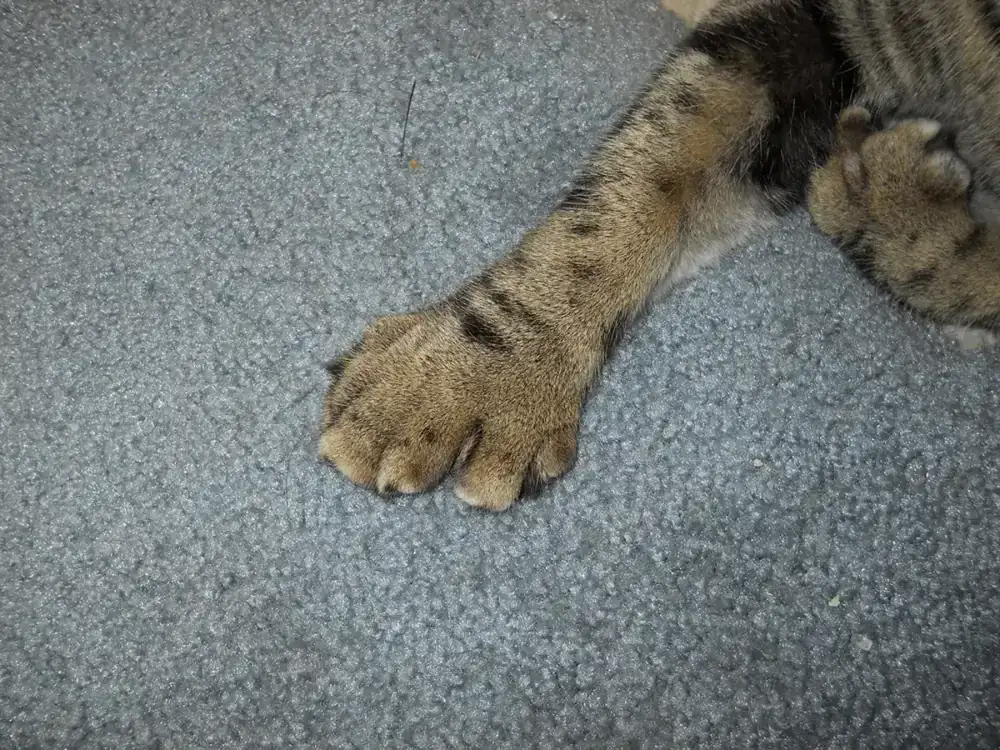
Some Maine Coons are born with extra toes. The usual count is eighteen claws: five on each front paw and four on each back paw. A polydactyl cat may have more, and the extras are easy to miss if they sit high on the paw or tucked between other toes.
Count every toe before you start and check the extra claws each time: they often do not touch the ground, so they do not wear down, and an untrimmed extra claw can curl into the pad unnoticed. If you want the full story behind those marvellous extra toes, my post on polydactyl Maine Coons explains the trait itself. Here, the practical point is simply: count, check, and trim the extras with the same care as the rest.
When to Stop and Call the Vet or Groomer
Home trimming suits most cats, but call a professional if your cat panics every time despite slow introductions, if a claw has grown into the pad or looks infected or swollen, if a nail has torn, or if your cat is elderly or arthritic. The same applies if you cannot do it safely on your own, even with a towel and a helper.
A vet or groomer can trim nails quickly and safely, and can show you their technique if you ask. There is no shame in outsourcing this job.
Trimming is not a substitute for dealing with scratching behaviour itself. If your cat is shredding furniture, the answer is trimming plus proper scratching outlets, not punishment and definitely not declawing, surgery that amputates the last bone of each toe and is opposed by major feline veterinary organisations.
I am deliberately not turning this into a full grooming guide. If you want to know which mistakes trip owners up across the whole grooming routine, my post on Maine Coon grooming mistakes covers them properly.
Frequently Asked Questions
How often should I trim my Maine Coon nails?
Every two to three weeks for most indoor Maine Coons, with a quick check weekly. Trim sooner if a claw hooks, catches on fabric, or curls toward the pad. Older, less active cats usually need trims more often.
Should I use clippers or a grinder on my Maine Coon?
Sharp scissor-style clippers are the best starting point: silent, precise, and fast. A grinder gives a smoother finish but takes longer and many cats dislike the noise and vibration. Try clippers first.
How do I avoid cutting the quick?
Only trim the clear, sharp tip, staying a couple of millimetres from the pink quick in light-coloured claws. On dark claws, trim in tiny slices and stop at a darker centre spot. When in doubt, take less.
My Maine Coon will not sit still. What should I do?
Trim when they are sleepy, try a towel wrap with one paw out, use a lick mat, or trim just one or two nails per session. If your cat panics every time, ask your vet or groomer to demonstrate. Forcing a frightened cat makes the next trim harder.
Do polydactyl Maine Coons need special nail care?
They need the same care, plus a toe count. Extra toes mean extra claws, and those extras often do not wear down naturally, so they can overgrow unnoticed. Count every toe on every paw and check the extra claws at each trim.
The Routine That Sticks
Maine Coon nail trimming gets easier the more boring you make it: same quiet room, same sleepy window, same sharp clippers, same treat at the end. A calm two-minute trim every couple of weeks beats a dramatic wrestling match every couple of months.
If you are just starting out, one paw today is a good result.
For reliable technique guidance, see the PetMD nail guide at PetMD, feline health resources at Cornell Veterinary Medicine, and breed information at the Cat Fanciers Association.