Maine Coon Winter Care: How I Keep My Gentle Giant Warm All Season
My first winter with a Maine Coon taught me fast. I looked at that enormous coat and assumed maine coon winter care would take care of itself — then December arrived, the heating kicked on, and I noticed flaky skin along his back, crackling static when I petted him, and a cat who had relocated his life to the floor in front of the heating vent.
That taught me the real lesson. For an indoor cat, winter is not about the cold outside. It is about the dry, overheated air inside, and what that air does to skin, paws, hydration, and that famous coat. Here is what I actually do, season after season, to keep my big guy comfortable from first frost to spring.
One quick note on scope: if you are wondering whether your Maine Coon should be spending time outdoors in winter at all, I have a separate guide on whether Maine Coons can go outside — this article is about keeping an indoor cat warm, hydrated, and healthy through the cold months.
Maine Coon Winter Care Starts With Understanding the Coat
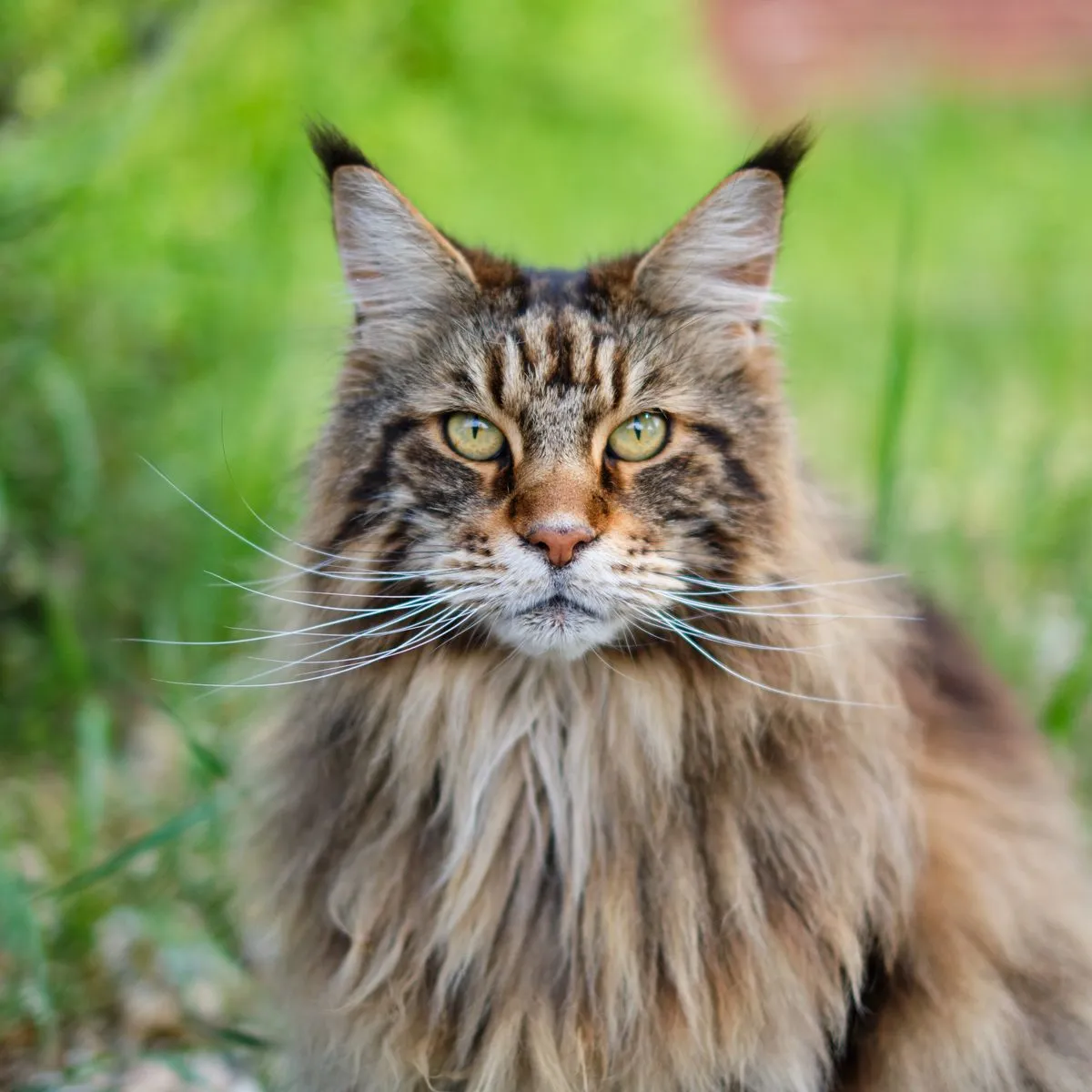
The Maine Coon coat is a triple-layer system: a dense, downy undercoat for insulation, a middle layer of awn hairs, and long, slightly oily guard hairs on top that shed water and snow. TICA describes the breed as hardy cats well equipped to survive harsh New England winters.
The details do the work. Fur grows long around the neck into a ruff, and longer on the belly and britches where cold creeps up from the ground. The tail is a thick plume the cat wraps around its nose and paws like a blanket while sleeping. The ears carry lynx-like tufts. And the paws — owners in a Maine Coon Facebook group I follow are always posting photos of what they call grinch feet — carry long tufts between the toes that work like built-in snowshoes. TICA even notes that the extra toes of polydactyl Maine Coons are believed to have helped the breed move through snowy Maine winters.
The part that surprised me: this winter coat grows because the days get shorter, not because it is cold. As daylight shrinks in autumn, the coat thickens — even for indoor cats under electric light. By December your cat is wearing its heaviest coat of the year, and your job is to help that coat do its job instead of working against it.
The Real Winter Enemy Is Your Heating System
Forced-air heating is brutal on cats. It drops indoor humidity to desert levels: skin dries out and itches, paw pads dry and crack, and the coat turns staticky, which makes grooming genuinely unpleasant. A well-shared comic in a Facebook pet group shows a Maine Coon getting zapped by static near a fireplace, then grooming calmly once a humidifier goes in the room — owners in the comments said it explained why their cats flinched during brush sessions all winter.
My fix has three parts. First, a humidifier in the room where my cat spends most of his time. Many care guides suggest around 40 to 50 percent humidity, and owners on forums say a model with a built-in humidistat holds that range without guessing. Keep the tank clean, and never add essential oils — eucalyptus, tea tree, cinnamon, pine, and clove are toxic to cats when aerosolized. Plain water only.
Second, on very dry days, a steam session: run the shower hot with the bathroom door closed, then sit in the steamy bathroom with him for ten or fifteen minutes. Owners on TheCatSite have recommended this for years as relief for stuffy winter noses.
Third, be careful with direct heat. The air right next to a heat source is the driest, most irritating air in the house, so I moved his favorite bed a few feet away from the vent. Never leave a space heater running unattended where he is — cats press against hot surfaces and can burn themselves before they think to move.
Keep the Water Coming
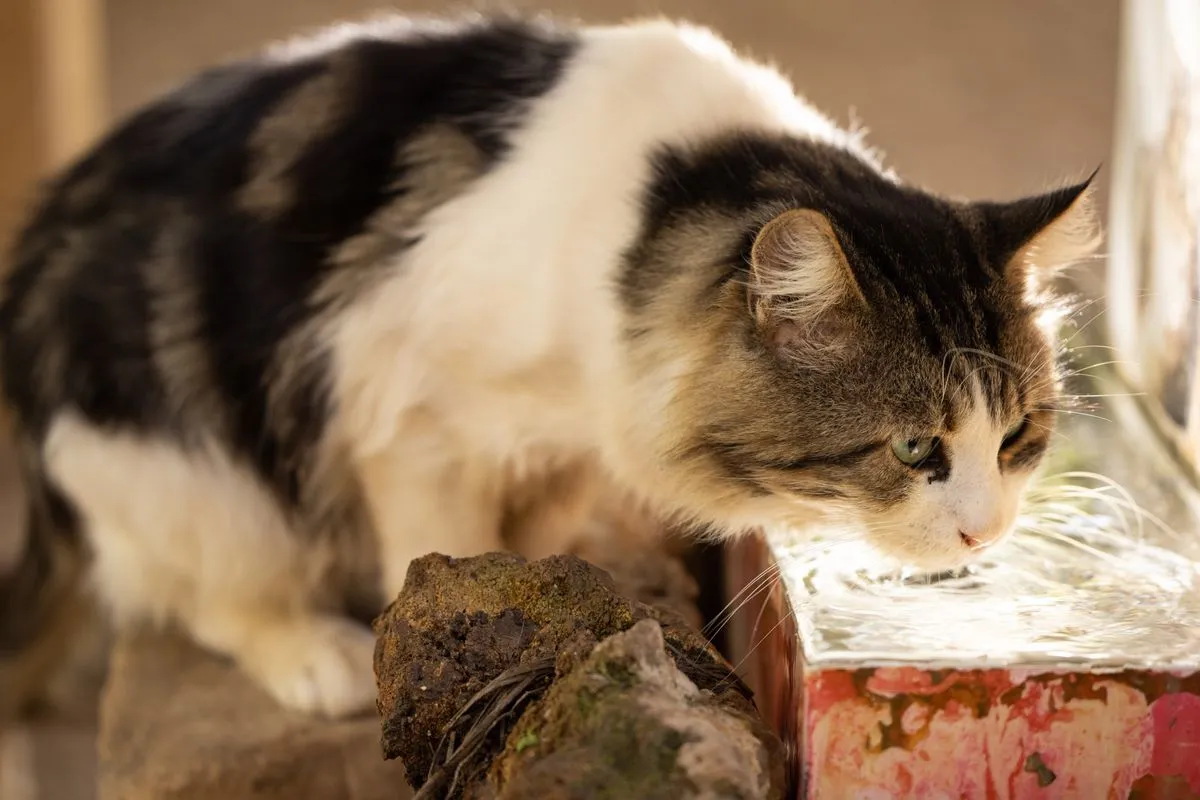
Winter is when people quietly forget about water. A Maine Coon breeder I follow put it well: the house feels cool, so you stop thinking about hydration, but heated air keeps drying your cat out from the inside. I keep his bowl filled with fresh water daily, plus a second bowl in his other favorite room. Many owners swear by water fountains because moving water invites more drinking, and that matches my experience.
I also feed more wet food in winter than in summer. Wet food is mostly water, and for a cat that will not always drink enough on his own, that moisture does real work. On the coldest days I offer slightly warm water, refreshed more often.
Paw Pads Take a Beating in Winter
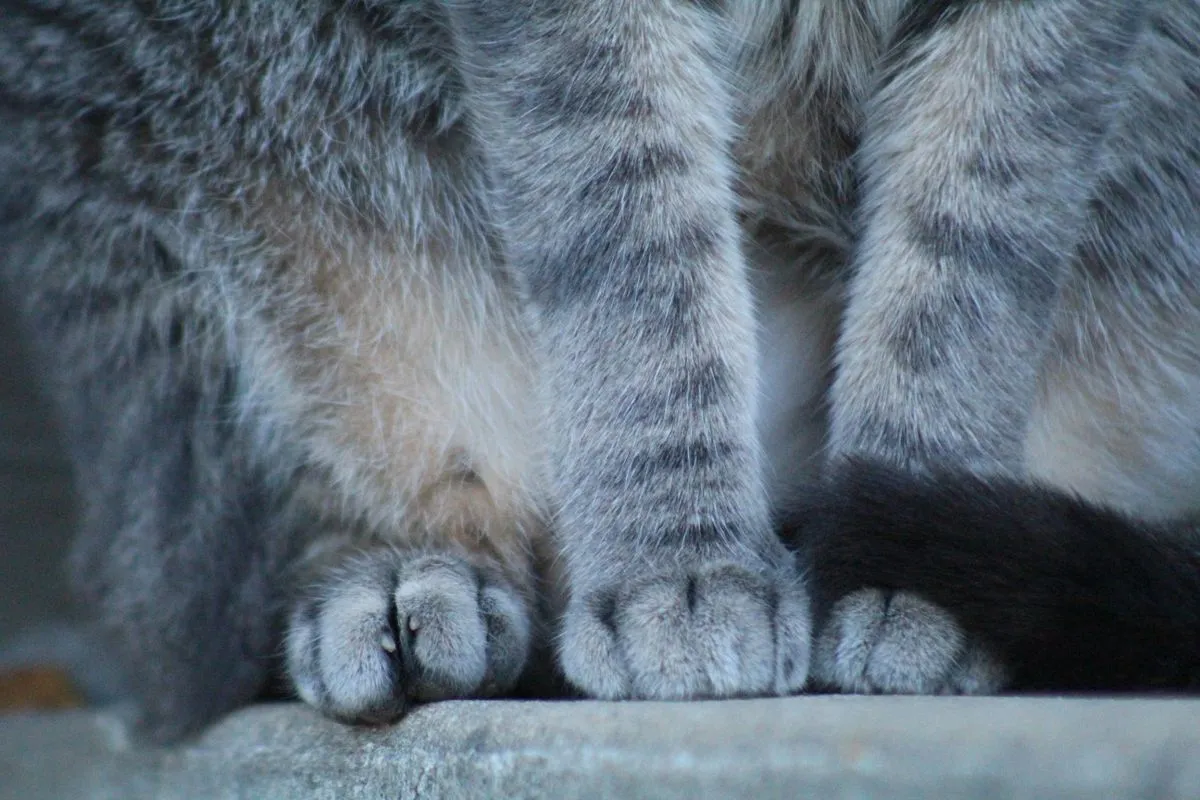
Paws were the winter problem I least expected. My cat is indoors — no road salt, no ice — but by February his pads were visibly dry and rough, and he was licking at them more than usual. Dry heated air plus hours on hard floors will do that, and those long toe tufts collect litter and mat between the toes.
Now paw checks are part of my winter routine. Once a week I look at all four paws: pads, between the toes, nails. If the pads look dry, I rub in a very thin layer of a pet-safe paw balm or a food-grade oil like coconut oil. Thin is the key word — anything on a cat’s paws gets licked, so it must be safe to ingest. Cracked, bleeding, or swollen pads, or any limping, is past home care and into vet territory.
I also trim the toe tufts — just the tips, with blunt-tipped scissors, while he is sleepy. Owners who trim report less tracked litter and more comfortable cats, and it is easier to spot problems between neat toes. If your cat gets any outdoor time in winter, wipe his paws when he comes in: breeders warn that road salt and de-icers irritate pads and are dangerous licked off.
Feeding the Furnace: Winter Appetite Changes
Staying warm costs energy, and mine asks for food more insistently once winter sets in. I feed him a little more — an extra spoonful of wet food at meals — keeping it high-protein, quality food. My guide to the best cat foods for Maine Coon cats covers how I think about their diet year-round.
Two cautions. More food is a tendency, not a rule — adjust to body condition, not the calendar, since a big cat can quietly become overweight in a low-activity season. Kittens and seniors are the ones most likely to genuinely need extra support. If appetite drops instead of rising, or he loses weight, that is a vet conversation, not a feeding adjustment.
Set Up Warm Spots He Will Actually Use
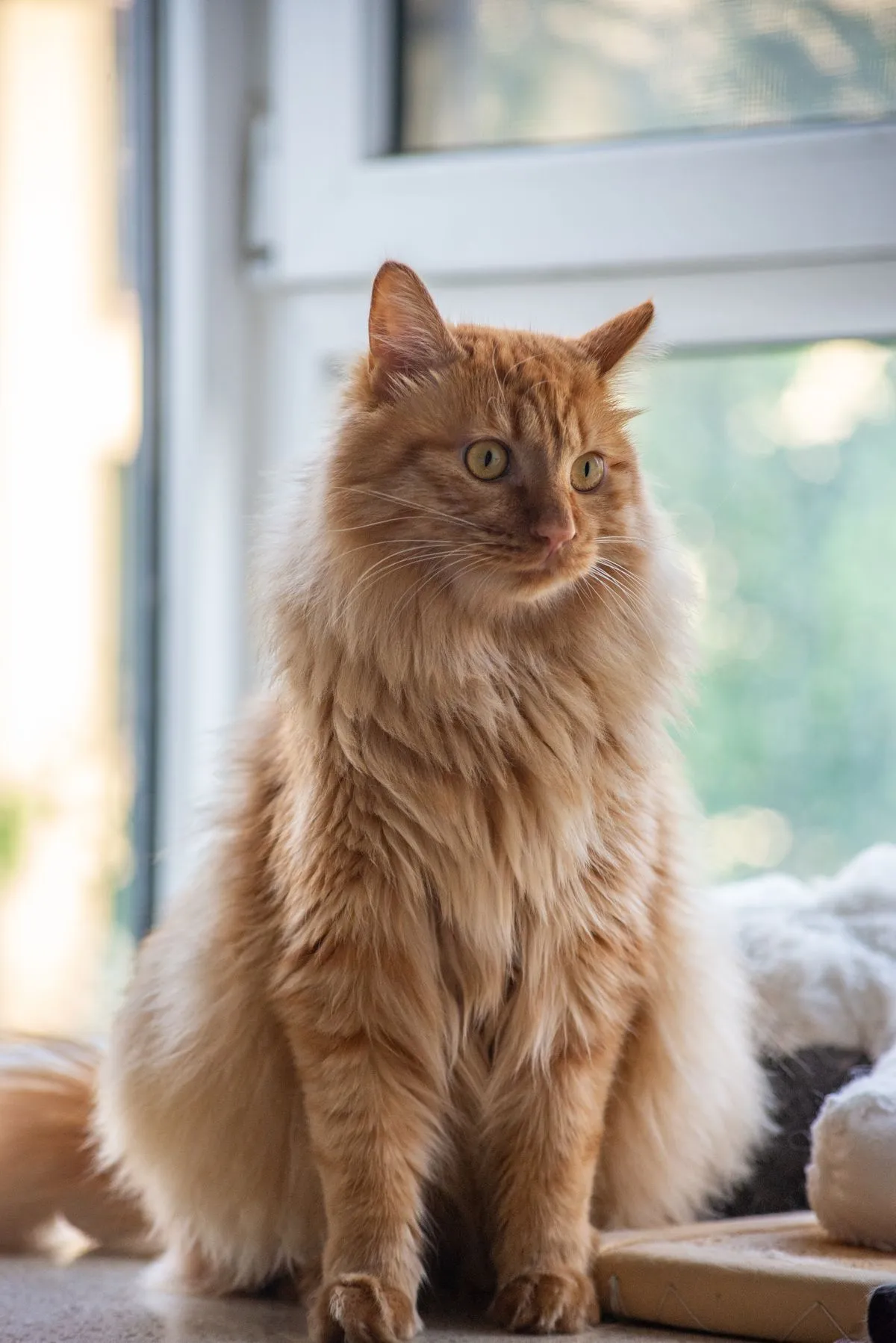
Maine Coons are heat-seeking missiles in winter, so give them good targets. Heat rises, so elevated spots are naturally warmer — a bed on a cat tree, a window perch, a folded blanket on an approved shelf. Mine has claimed a fleece throw on the couch in the afternoon sun; in January it is his full-time address. Open curtains on sunny days so he can bask, close them at night to block drafts from the glass.
Many owners, me included, use heated pet beds or self-warming mats. The self-warming kind, which reflect the cat’s own body heat, are the simplest and safest. Electric heated beds are fine too if made for pets — low-wattage, chew-resistant cord, low setting, blanket over the top. I never leave an electric one plugged in when I am out, and I would not use a human heating pad, which can get far too hot for a sleeping cat.
Senior cats benefit most: older Maine Coons feel the cold more and move less, so put a warm bed wherever he already rests. And skip the sweaters unless your vet says otherwise — as one breeder bluntly puts it, a sweater is not protection, and damp fabric in a draft can chill a cat faster.
Winter Grooming: Adjust, Do Not Abandon
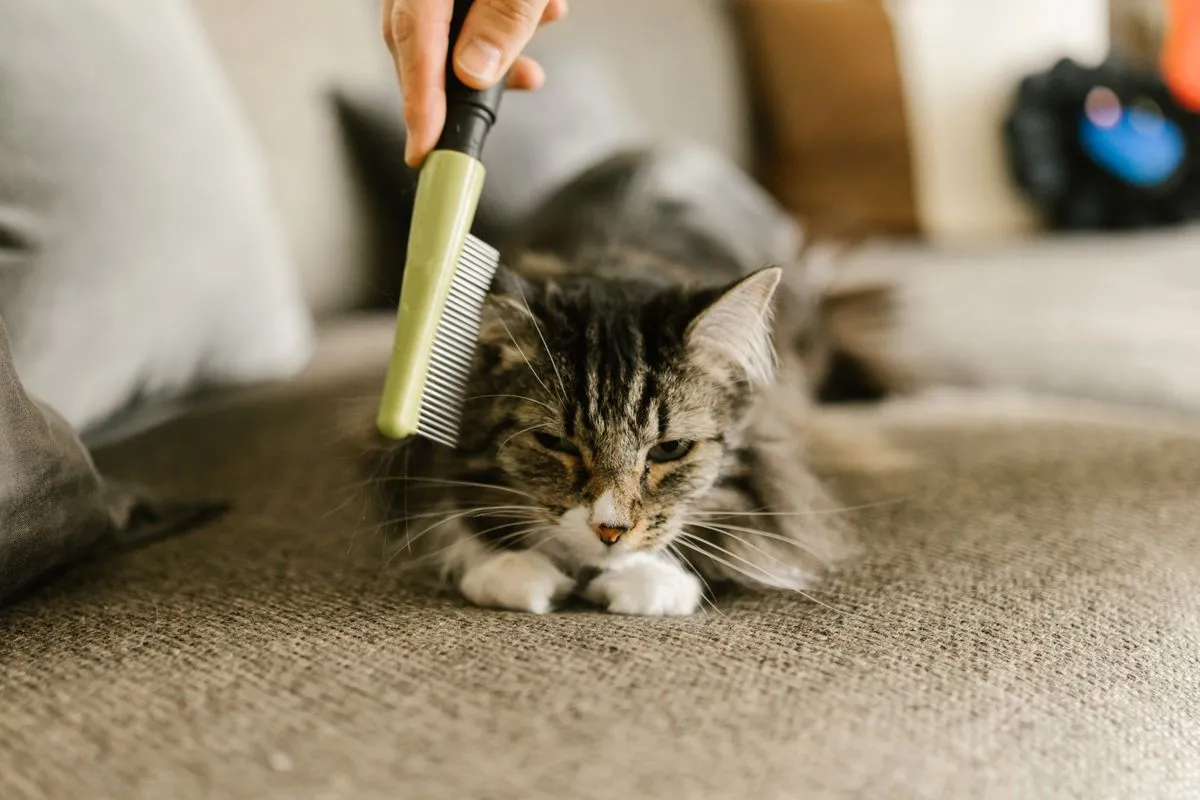
The winter coat is at its thickest and the air at its driest, so matting risk rises exactly when grooming gets annoying. A breeder on Instagram shared a protocol I have adopted: run the humidifier, lightly mist the coat with plain water before brushing to kill static, and use a metal comb instead of plastic. Brushing went from crackling and flinchy back to our relaxed autumn routine.
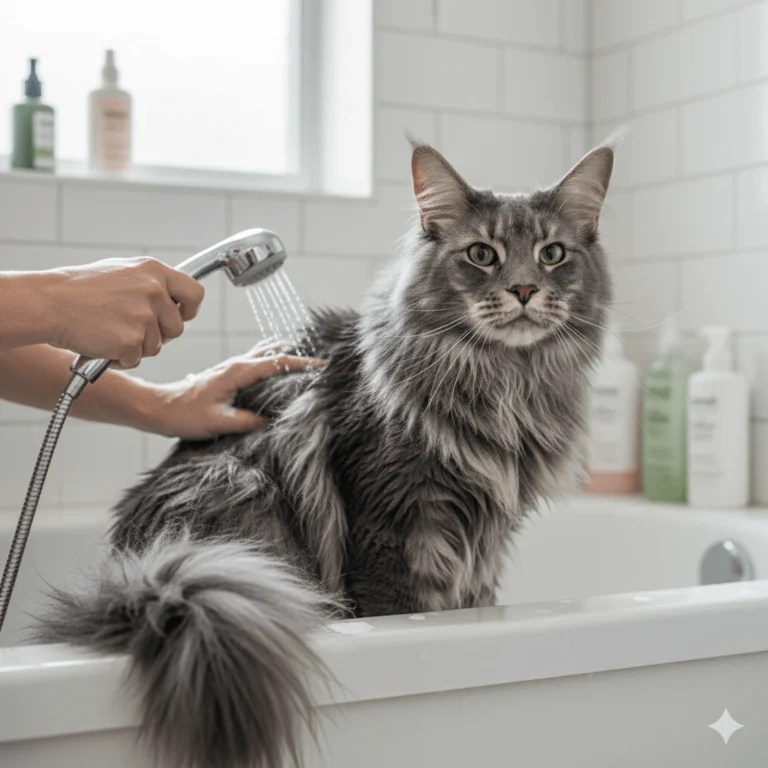
I brush a few times a week, focusing on friction zones: behind the ears, under the collar, the armpits, and the belly and britches where long fur tangles fastest. Deal with mats early — my guide to Maine Coon matted fur walks through safe removal. If you bathe your Maine Coon in winter, dry the coat completely to the root afterward; damp undercoat against skin invites matting and irritation.
Signs Your Maine Coon Is Too Cold
Cold stress is easy to miss in a stoic breed. I watch for shivering, ears and paws that feel cold to the touch, hours spent curled into an unusually tight ball, hunching, reluctance to play, and any drop in appetite. A cat suddenly glued to the heating vent all day is telling you something about the rest of the house.
Frostbite is the one to know by sight, mostly for cats with outdoor access: pale, gray, or discolored skin on ear tips, tail tip, or paw pads. Care guides advise warming gradually — blankets, a warm room, a warm water bottle wrapped in a towel, never direct high heat — and getting to a vet promptly, since tissue damage can run deeper than it looks.
Call your vet without hesitation for lethargy that does not lift with warming, refusal to eat, or rapid, labored, or open-mouth breathing. Mouth breathing is not a wait-and-see symptom in cats. Keep your vet’s number and the emergency clinic’s saved somewhere you can find in a panic.
Frequently Asked Questions
Do Maine Coons need sweaters or coats in winter?
Indoors, no. Their triple-layer coat out-insulates any sweater, and clothing can mat the fur underneath. A damp sweater in a drafty spot can actually make a cat colder.
Should I run a humidifier for my Maine Coon?
With forced-air heating, your winter air is almost certainly dry — so yes. Owners report less static, less flaky skin, and calmer grooming sessions with moderate humidity in the rooms the cat uses most. Keep the unit clean and never add essential oils.
Do Maine Coons eat more in winter?
Many do, since staying warm burns extra energy. A modest increase is normal for a healthy adult, but let body condition guide you rather than the season. Appetite loss in winter is the opposite signal and worth a vet visit.
Are heated cat beds safe?
Pet-specific heated beds and self-warming mats are generally safe used as directed: low setting, covered, cord protected from chewing, not left on unattended for long stretches. Avoid human heating pads, which run too hot. Seniors and thin cats appreciate them most.
What indoor temperature suits a Maine Coon in winter?
Most care guides suggest around 60 to 70°F (15 to 21°C). I watch the cat more than the thermostat — a comfortable Maine Coon sprawls, plays, and naps in its usual spots, while a chilly one seeks heat constantly or goes quiet. Kittens and seniors feel the cold first, so give them the warmest beds.