Maine Coon Kitten Teething Signs Timeline and Safe Chews
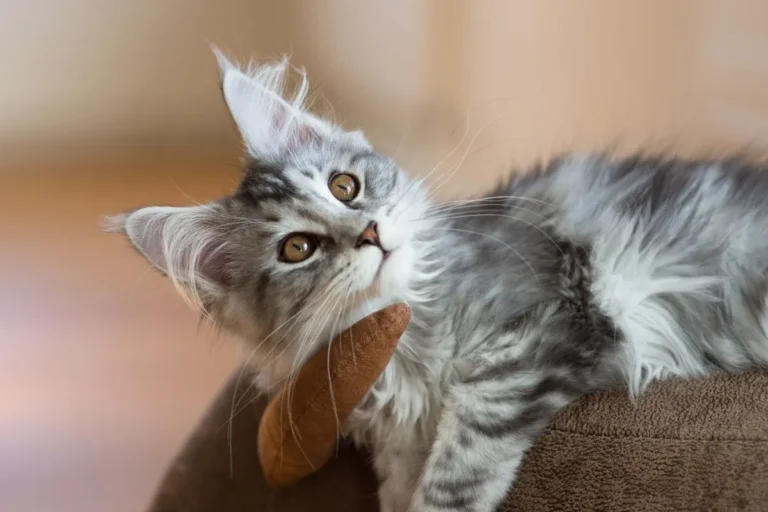
The first time I found a tiny tooth on the living room rug, I stared at it before it clicked. It was smaller than a grain of rice, sharp at one end, and unmistakably a tooth. My Maine Coon kitten had been chewing everything in sight for days. Maine Coon kitten teething had arrived in our house.
If you are living through the same phase, here is the reassuring part first: teething is normal, it passes, and most kittens sail through it with nothing more than sore gums and a sudden passion for chewing. This guide covers the timeline, the normal signs, the chews that help, and the warning signs I would never wait out.
What Is Happening in Your Kittens Mouth
Kittens are born without teeth. Their baby teeth start coming through at around two to four weeks old, and by six to eight weeks most kittens have a full set of 26. From around three to four months, the adult teeth start pushing through underneath, loosening the baby teeth until they fall out. By six to seven months, most kittens have their full adult set of 30 teeth, including molars, which kittens do not have as babies.
Maine Coons grow more slowly than many breeds, and that can make owners wonder whether their kitten is behind. In my experience, the teething clock is not something to rush. One kitten may be done by six months, another may still have a wobbly canine at seven months. A week or two either way is usually just individual variation. What matters is the direction of travel: baby teeth coming out, adult teeth coming in, and a kitten who keeps eating, playing, and being herself in between.
The Teething Timeline, Month by Month
2 to 8 weeks: the baby teeth arrive. This usually happens before a kitten comes home. The 26 baby teeth come through in stages, incisors first, then canines, then premolars. By eight weeks the full baby set is generally in place, which is why those tiny teeth feel so sharp.
3 to 4 months: the swap begins. This is when teething usually becomes noticeable at home. The front incisors loosen first. You might spot a gap, a tiny tooth on the bedding, or simply a kitten who suddenly chews more than she did last week. Mild gum redness is common.
4 to 6 months: peak chewing. The canines and premolars change over now, and chewing is at its most enthusiastic. Cords, chair legs, cardboard corners, and fingers can all become targets. Appetite may dip for a day or two, and some kittens go a little quieter or clingier. This is when I check the mouth once a week, just to make sure no tooth is stuck in place.
6 to 7 months: the adult set settles in. By now most kittens have their 30 adult teeth, the chewing calms down, and the gums look pink and settled again. If a baby tooth is still hanging on beside its adult replacement, that is no longer wait-and-see, as explained below.
Signs Your Maine Coon Kitten Is Teething
The most obvious sign is chewing. A teething kitten chews more than usual, and chews things she previously ignored. In our house that meant a cardboard box corner, a soft toy, and, memorably, a phone charger I had foolishly left dangling. Owners on Reddit say much the same: the chewing arrives almost overnight, is rarely limited to toys, and fades as the adult teeth settle.
Other signs are quieter. Gums may look pinker or slightly red and puffy, and you might see a tiny spot of blood on a toy or in the food bowl when a tooth comes out. A little extra drooling is normal, as is breath that smells slightly different for a few days. Some kittens eat more slowly, drop kibble, or prefer wet food for a day or two. Pawing at the face, rubbing the mouth on furniture, and a touch of crankiness or clinginess all fit the picture too.
Maine Coon Kitten Teething: Safe Chews and Soothing
The goal is simple: give sore gums something safe to press against, so your furniture, cables, and hands stop being the best option in the room.
Soft rubber and fabric chew toys made for kittens. Choose toys that give a little when bitten, not hard plastic or bone, which can hurt thin baby teeth and new adult teeth alike. Rotate two or three toys rather than leaving the same one out all day. A toy that reappears after a day away often feels brand new.
A chilled, damp washcloth, supervised. Wet a clean washcloth, twist it, fold it, and chill it in the fridge, or briefly in the freezer so it is cold rather than rock hard. Offer it for a supervised chew, then take it away. Breeders on YouTube recommend this often. Make sure the cloth is big enough that your kitten cannot swallow it, and never leave her alone with it.
Chilled wet food or a lick mat. A little wet kitten food spread on a lick mat and chilled briefly gives a kitten something cold to work at with her tongue rather than her teeth. It also helps on days when dry kibble feels uncomfortable.
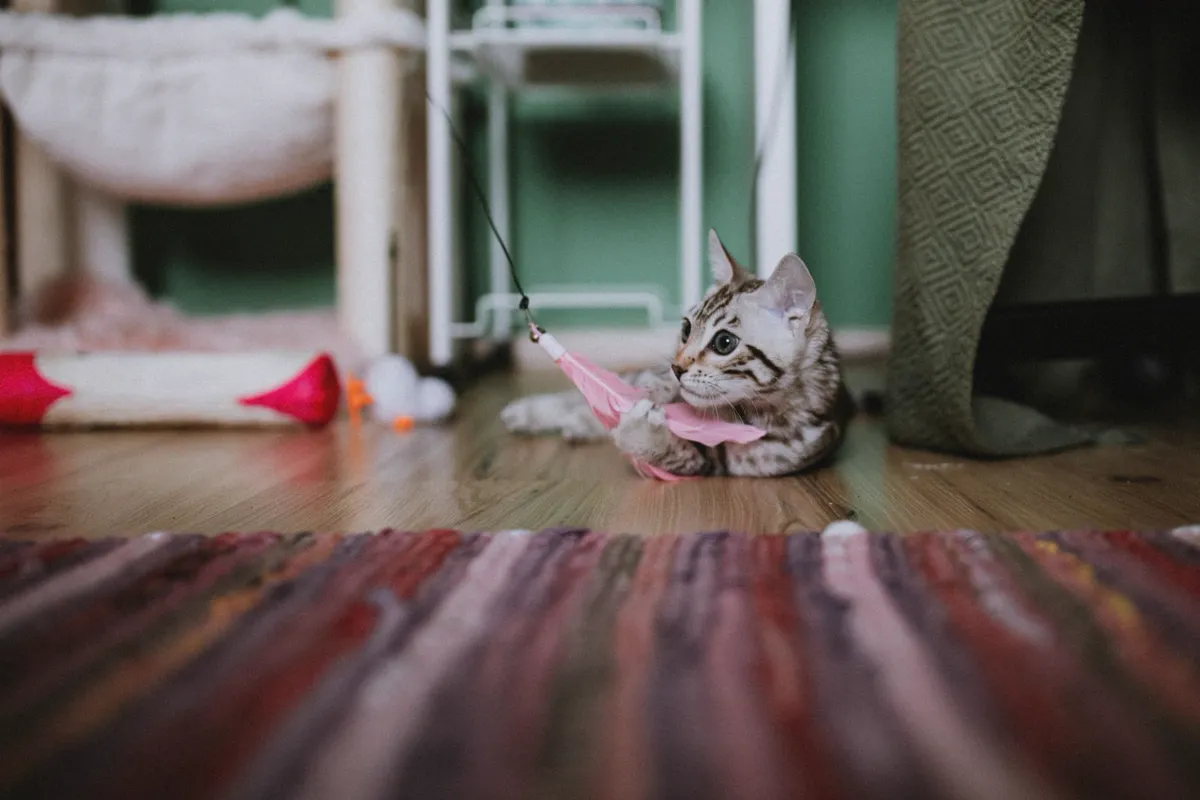
Wand toys for hands-off play. When a kitten is mouthy, hands become the most tempting target in the room. A wand toy keeps your hands out of reach and lets her bite something meant to be bitten. Owners on social media repeat the same rule, sometimes learned the hard way: never let your hand become the toy. If teeth do land on skin, I go still, end the game calmly, and offer a toy instead.
A quick safety sweep at kitten level. Tuck chargers and cables away or cover them, and put string, ribbon, and hair ties out of reach. Owners in cat forums tell story after story of chewed chargers. If you are still setting up, my guide to your Maine Coon kittens first night home covers the basics, and the wider Maine Coon kitten care guide is worth a read alongside this one.
What Never to Give a Teething Kitten
- Human painkillers, ever. Paracetamol, acetaminophen, and ibuprofen are toxic to cats, even in small amounts. Never use a baby teething gel either, unless your vet has specifically told you to. If your kitten seems truly uncomfortable, call the vet and ask what is safe. Do not improvise.
- Hard chews, bones, antlers, and frozen-solid treats. Anything hard enough to crack a tooth is too hard for a teething kitten. Cold is soothing; rock-hard is not.
- Rawhide and anything that splinters or shreds. If a toy starts breaking apart, throw it away, and check chew toys daily for wear during teething.
- String, ribbon, and small swallowable objects. String is a particular worry because a kitten can swallow it and it can cause serious harm inside, even if she seems fine at first.
- Your fingers as a chew toy. It feels harmless when the teeth are tiny, but it teaches a lesson you will regret when the adult fangs arrive.
Also, do not pull a loose baby tooth yourself. Baby teeth fall out on their own, and tugging on a sore mouth hurts and can make a kitten dread having her mouth handled. If a tooth is still there once the adult tooth is in beside it, that is a vet matter, not a home one.
When to Call the Vet
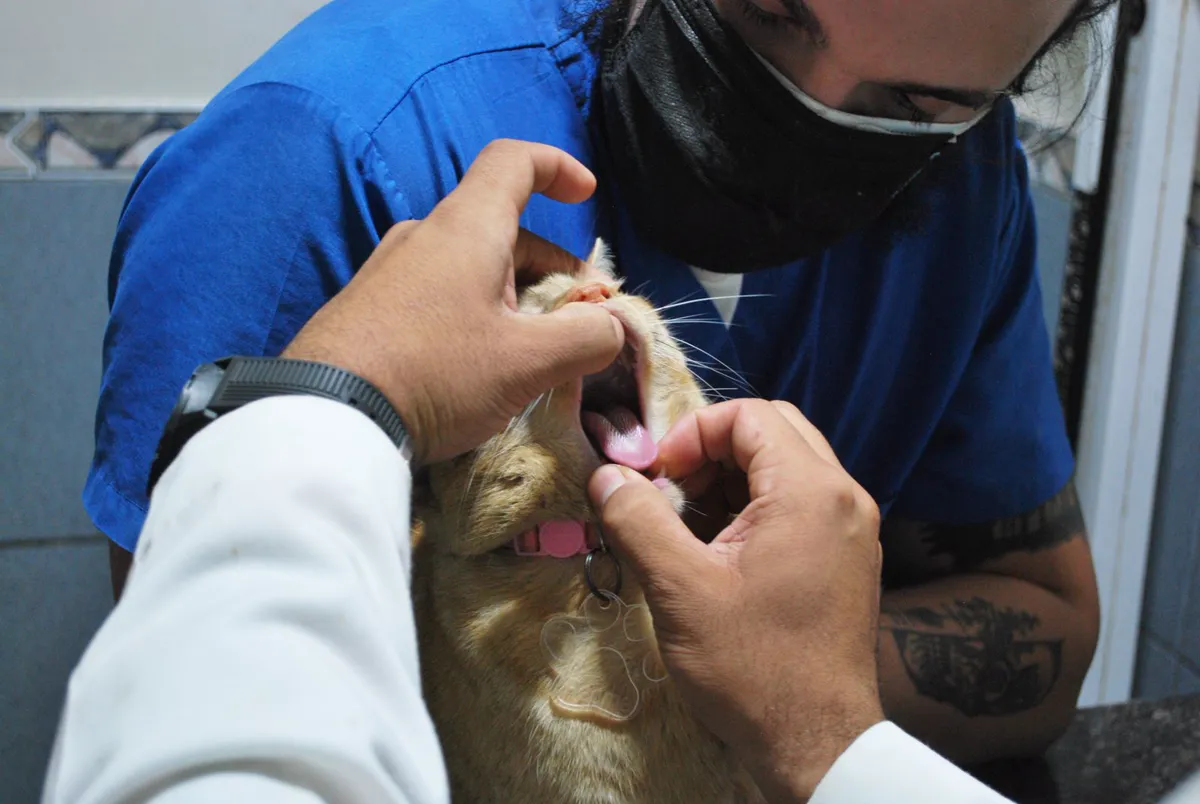
Most teething needs nothing more than patience and safe chews. But I would rather make an unnecessary call than miss something real. Call your vet if you notice any of these:
A retained baby tooth, or double teeth. If a baby tooth is still in place when its adult replacement has come in beside it, so you can see two teeth in one spot, book a vet visit. VCA Animal Hospitals notes that the upper canines are most often retained, and a stuck baby tooth can force the adult tooth into the wrong position, trap food, and set up gum disease. Often the retained tooth needs removing, and earlier removal gives the adult tooth a better chance to settle into place. VCA explains retained baby teeth at https://vcahospitals.com/pediatric/kitten/health-wellness/why-does-kitten-still-have-baby-teeth.
Bleeding that does not stop, or heavy bleeding. A tiny spot of blood when a tooth comes out is normal. Gums that bleed on their own, bleed heavily, or keep bleeding are not.
Refusal to eat for more than a day. A kitten who picks at food for a day while a tooth is coming through is one thing. One who refuses food entirely, stops drinking, or goes quiet and withdrawn for more than a day needs to be seen. One Maine Coon owner described her nearly six-month-old losing two fangs in one day and going quiet, and the advice she got was right: soft food, gentle play, and a vet visit if he stayed unlike himself.
Swelling, especially on one side of the face, grinding teeth, heavy drooling, or repeatedly dropping food. Teething can make gums a little puffy, but noticeable facial swelling is not normal teething. Likewise, mild drooling can be part of teething, but heavy drooling, grinding, or growling at food points to pain that needs checking.
Fever, vomiting, diarrhoea, or a baby tooth still present after seven to eight months. Teething does not cause fever, vomiting, or diarrhoea, so if they appear, something else is going on. And by seven to eight months the adult set should be in, so a lingering baby tooth then is worth a dental check. Cornell University College of Veterinary Medicine explains how a cats two sets of teeth develop at https://www.vet.cornell.edu/departments-centers-and-institutes/cornell-feline-health-center/health-information/feline-health-topics/when-kitty-needs-dentist.
After Teething: The Adult Teeth Are In
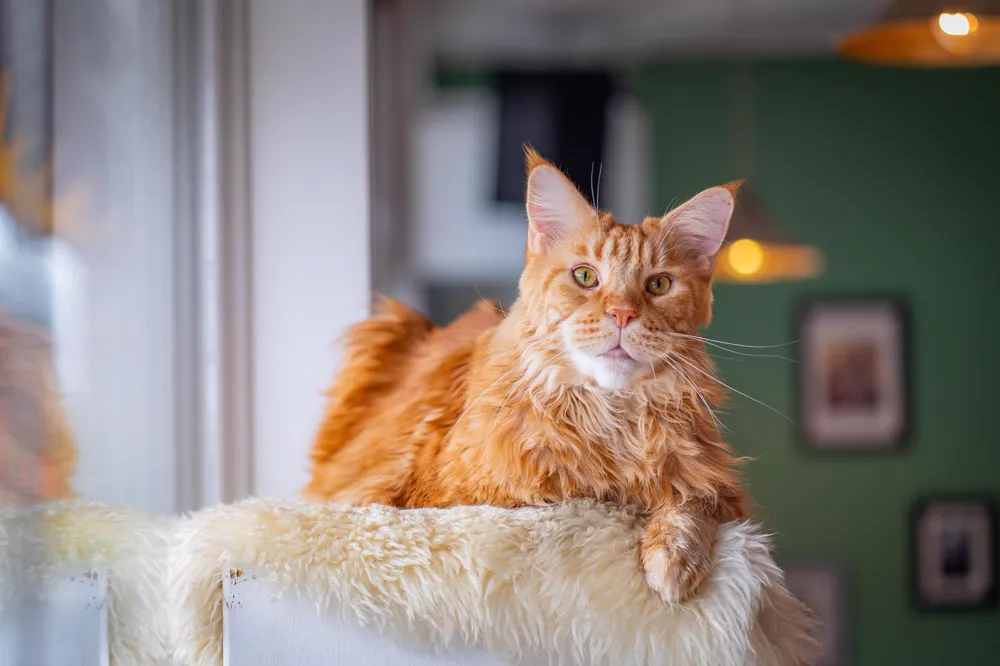
When the last adult tooth is in, the frantic chewing usually fades, but those 30 adult teeth have to last a lifetime. Start tooth brushing gently, using a cat toothpaste and a soft brush, and ask your vet to check the mouth at routine visits. For playthings that suit a large, strong cat, my round-up of toys big enough for a Maine Coon is a good place to look.
Teething feels endless in the middle of it, all chewed cables and sore gums. Then one morning the chewing has stopped, the mouth looks settled, and your Maine Coon is herself again.
Frequently Asked Questions
When do Maine Coon kittens start teething?
Most kittens start losing their baby teeth at around three to four months old, as the adult teeth push through. The full adult set of 30 teeth is usually in place by six to seven months.
Is it normal for a teething kitten to drool and chew everything?
Yes, mild drooling and extra chewing are normal, along with slightly red gums, slower eating, and a preference for softer food for a day or two. Heavy drooling, bleeding that does not stop, or refusal to eat should be checked by a vet.
What can I give my teething kitten to chew on?
Soft rubber or fabric chew toys made for kittens, a chilled damp washcloth offered under supervision, and chilled wet food on a lick mat are all good options. Avoid hard chews, bones, rawhide, and anything frozen solid, and never give human painkillers or baby teething gels.
My kitten has two teeth in one spot. What should I do?
That is most likely a retained baby tooth. Book a vet visit rather than waiting. The retained tooth often needs removing so the adult tooth can settle into the right position and food does not get trapped.
Should I worry if I never find any baby teeth?
No. Most kittens swallow their tiny shed teeth without anyone noticing, and it does them no harm. Finding one on a blanket or near the food bowl is just a lucky bonus.