Maine Coon Kitten Care: The First 30 Days
The night before my first Maine Coon kitten came home, I sat on the floor of the spare bedroom surrounded by shopping bags and felt completely out of my depth. Within a week I was searching “is it normal for a kitten to hide for three days straight” at midnight. The owners in the Maine Coon community had already learned everything I was panicking about, the hard way. This guide collects what they know.
Before the Kitten Arrives: Set Up the Safe Room
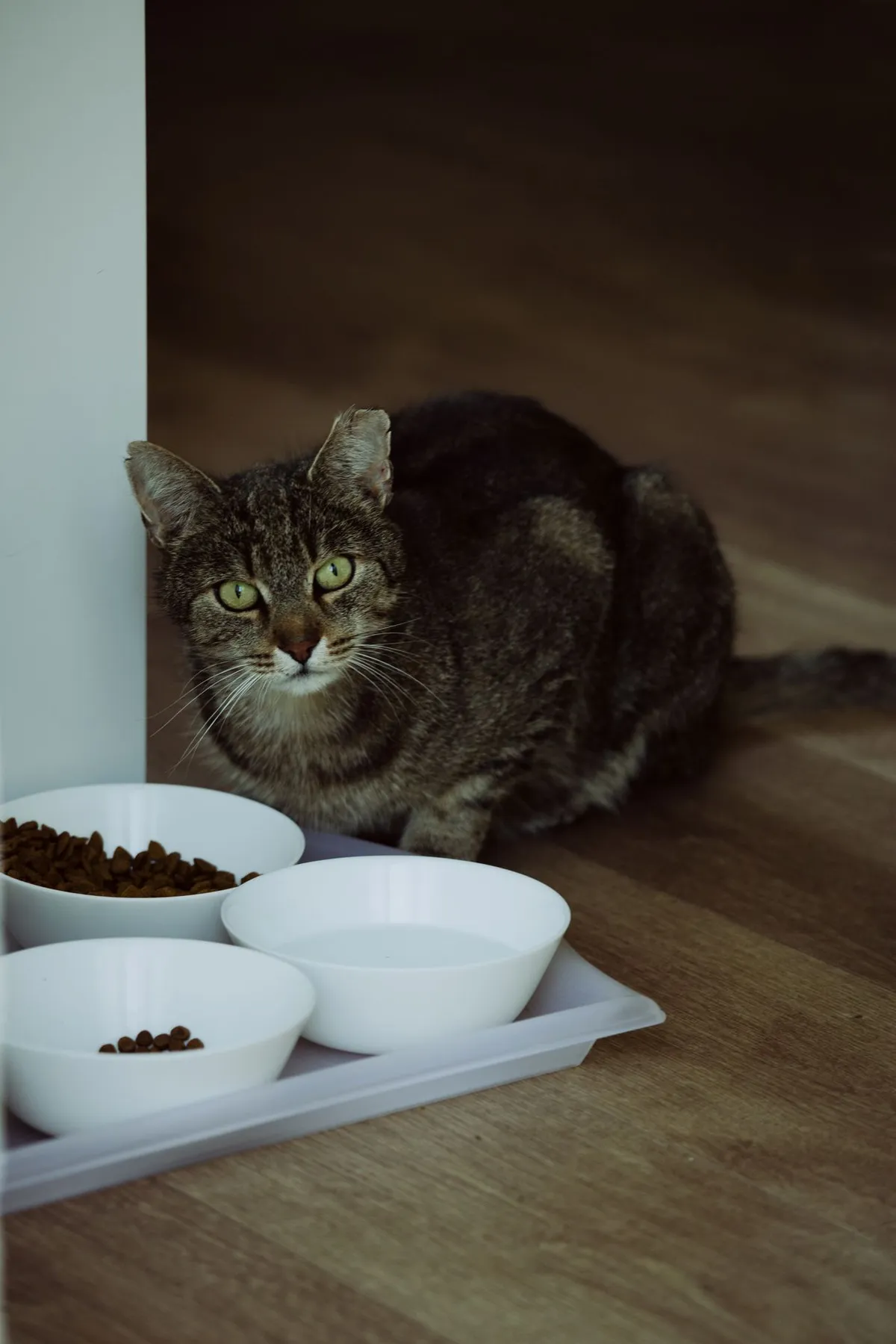
The most important breeder advice new owners get — and ignore most often — is this: do not give your kitten the whole house on day one. A Maine Coon breeder on Facebook put it well in a post about “go home day”: the kitten has left its mother, its littermates, and every smell it has ever known. One small, quiet room is enough to start: food, water, a litter box, a bed, and somewhere to hide.
Stock the room with a low-sided litter box using the same litter the breeder used, plus the exact food the breeder was feeding — breeders stress that changing either during the move invites digestive upset. Add a hiding spot (the carrier with the door open works; owners on Reddit say letting the kitten choose its own hiding place builds trust fastest), a scratcher, and a few toys — spring toys, pom-poms, and feather wands are the favorites owners in one Facebook thread named again and again.
Add a water fountain with a mat underneath. Maine Coons are famously fascinated by running water, and owners say their kittens drank far more once a fountain replaced a still bowl.
Kitten-proof like you’d baby-proof for a toddler. Maine Coons are intelligent, curious, and determined: owners report kittens opening cabinets and stealing straws, zip ties, and pens. Secure cords, remove toxic plants, check windows, and ask your breeder for a blanket or toy that smells like the kitten’s old home — owners say these scented “transition kits” make the first days noticeably easier. One more first-week job: picking a name that will still fit a full-grown gentle giant — the gentle-giant names owners actually love are a good starting point.
Day One: Patience, Quiet, and the Rule of 3
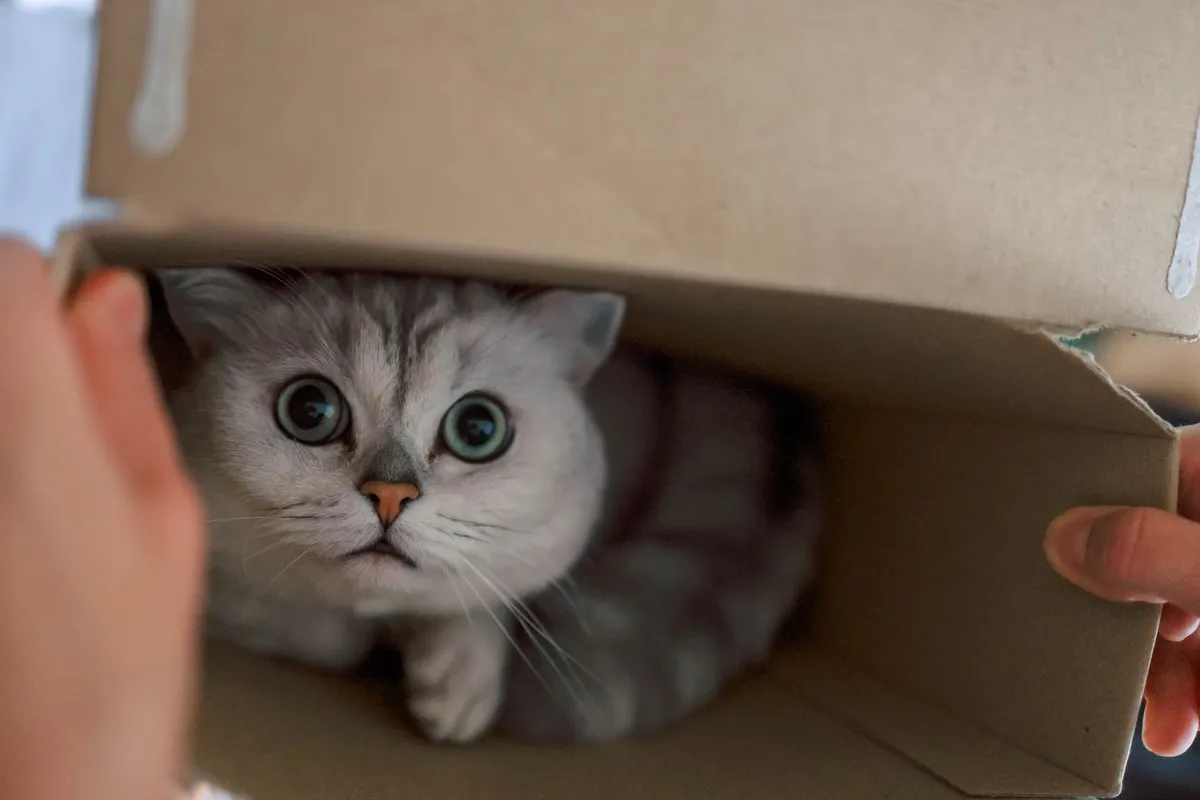
Expect your kitten to hide, sleep more than usual, eat less than expected, and possibly cry. I walked through that very first night in detail here: your Maine Coon kitten’s first night home. A breeder’s guide posted on Facebook calls the first 72 hours the highest-stress period of the kitten’s life, and notes that reduced eating and delayed litter-box use are normal stress responses — not emergencies.
A Tennessee breeder shared the Rule of 3 with her followers, and owners who’d lived through it confirmed it tracks: 3 days to decompress, 3 weeks to settle in, 3 months to truly feel at home.
In the first days: sit on the floor, talk softly, and let the kitten come to you — owners in a large Maine Coon group consistently advise against forced cuddling. Set the kitten in the litter box gently when you arrive so it knows where it is, and hold off on the parade of visitors.
If you have other pets, go slow. Breeders strongly advise against putting the newcomer and resident animals together and hoping they’ll “work it out.” Start with scent swapping — a blanket from each in the other’s space — then short, supervised visual meetings.
Feeding a Slow-Growing Giant
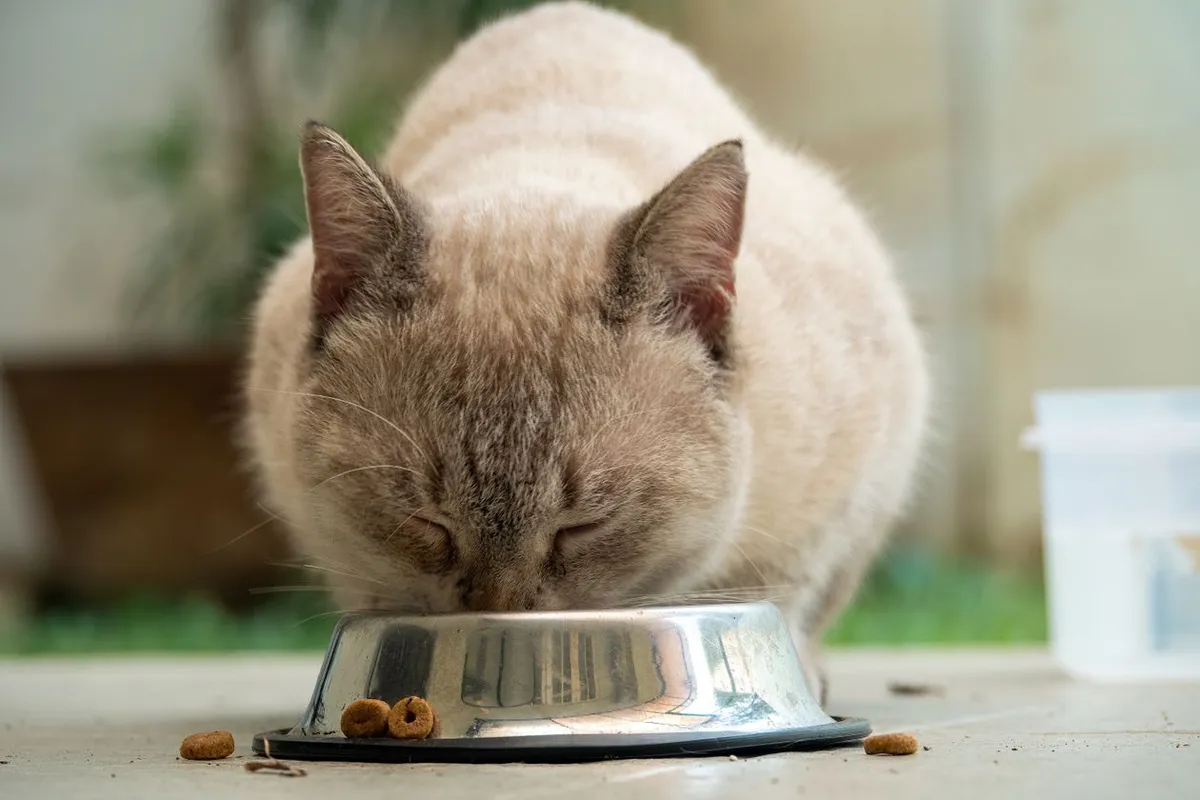
Maine Coons don’t reach full size until 3 to 5 years of age — unusually slow for a domestic cat. That long growth runway means nutrition in the first year genuinely matters: a kitten building a large adult frame needs food formulated for growth, with strong protein content.
Feed what the breeder fed, at first, then transition gradually over a week or more. A sudden switch plus new-home stress is the classic trigger for soft stools — owners call it one of the most common first-week mistakes. Feed kitten food, not adult cat food, and offer wet food about three times a day while the kitten is young, with dry kitten food available. For matching food to the breed, see my guide on what Maine Coons love to eat.
Don’t fall into the tuna trap. In a shared owner Q&A, a new owner reported her kitten would only eat tuna and refused all kitten food. The responding veterinarian advised mixing small amounts of complete wet kitten food into the tuna and increasing it gradually — tuna alone isn’t nutritionally complete. Whatever the kitten prefers, the goal is a balanced, complete diet, reached patiently.
Raw feeding is a debate, not a given. Some breeders feed raw successfully, but a veterinarian who addressed the question on Instagram warned that homemade or poorly formulated raw diets risk being nutritionally incomplete and carrying bacterial contamination. Talk to your vet before trying it.
Don’t stress if the first day’s appetite is small. Stress suppresses appetite; it returns as the kitten settles.
The Litter Box: Buy Bigger Than You Think
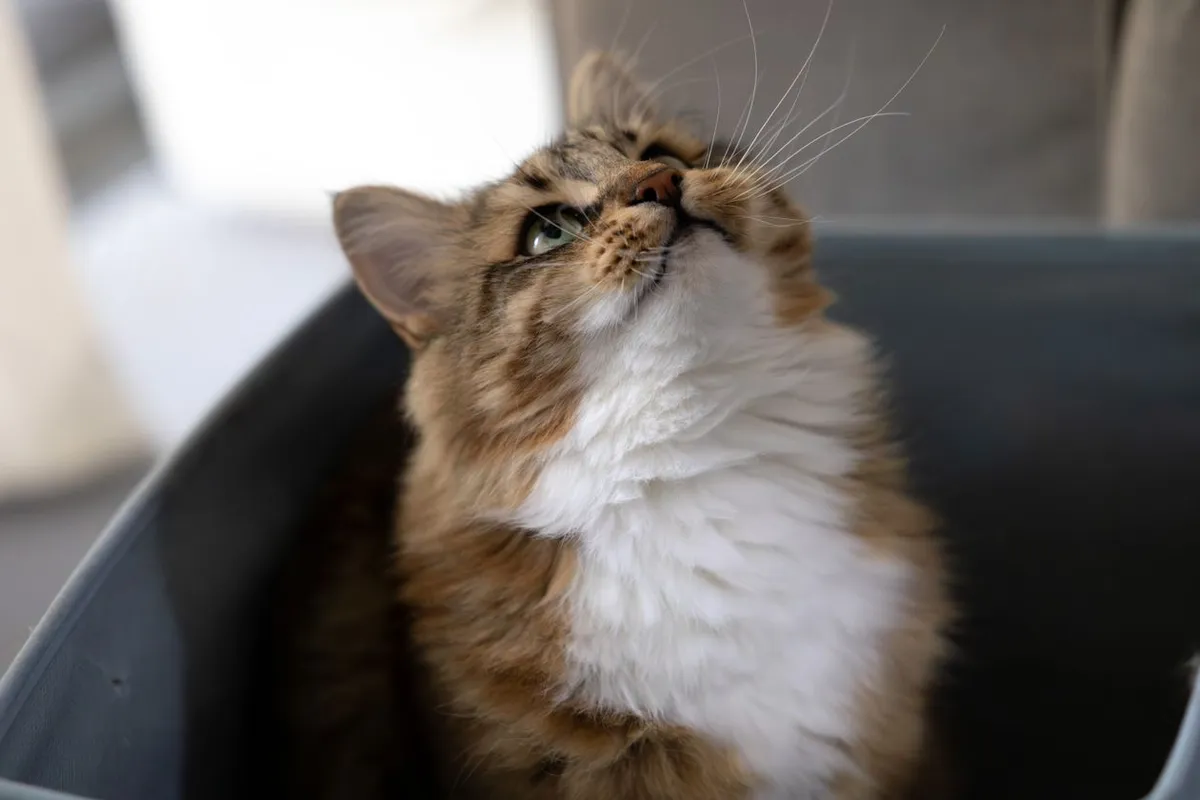
Litter setup for a Maine Coon has one breed-specific wrinkle: “poop shoes.” In a Facebook thread with nearly two hundred comments, owners commiserated over kittens stepping in their own feces. It’s not a behavior problem — it’s physics: big paws, long fur, a kitten still learning its own body. Multiple owners said it lasted until around 9 to 12 months.
The community’s solutions: an oversized litter box — several owners swapped to large storage totes and said the difference was immediate, so buy for the adult cat now; deep, clumping litter scooped daily (the breed is particular about clean boxes), one box per cat plus one extra, placed away from food and water; sanitary trims around the rear and backs of the legs; and a higher-protein diet, which owners found produced firmer stools — and firmer stools mean cleaner paws. Start with the litter type your kitten already knows and change gradually if you want to switch.
Vet Care in the First Month
Book a vet visit within the first week and bring every record the breeder gave you — it establishes a health baseline.
I put together a first vet visit checklist covering exactly what the vet will do and what to ask. I put together a full checklist for that first appointment here: Your Maine Coon Kitten’s First Vet Visit: Checklist.
Vaccinations: FVRCP starts at 6 to 8 weeks, with boosters every 3 to 4 weeks until about 16 weeks. Rabies usually follows at 14 to 16 weeks, and your vet may add feline leukemia (FeLV) depending on lifestyle — see the week-by-week schedule in this kitten vaccination guide. Discuss deworming and flea prevention at the first visit too.
HCM and breed screening is the health topic that matters most for Maine Coons, and the one sparking the most debate in owner communities. Hypertrophic cardiomyopathy — thickening of the heart’s left ventricle — is the most common heart disease in cats, and Cornell’s Feline Health Center lists the Maine Coon among predisposed breeds. A breed-specific genetic mutation has been identified, and DNA testing is routinely used in breeding programs.
Two practical steps: ask your breeder what screening the parents had — responsible breeders test their breeding cats and show results without hesitation. Then talk to your vet about screening your kitten. In that thread, experienced owners split between DNA testing and echocardiogram baselines, many sharing personal stories of heart disease caught early. There’s no consensus on timing — it depends on the kitten’s background — so this is a conversation for your vet.
Hip dysplasia is also associated with the breed because of the large frame. You won’t screen for it in month one, but know the name: if your cat later shows reluctance to jump or hind-leg stiffness, mention it to your vet. Spay/neuter is usually discussed around 5 to 6 months of age, though timing varies — and your breeder’s contract may have terms about it. One health area new owners overlook is teeth — my full guide is Maine Coon Dental Care: A Complete Teeth Cleaning Guide.
Socialization: Use the Kitten Window
Maine Coons are famously dog-like — they follow their people room to room and learn routines. Those personality quirks are partly genetic and partly built in the first weeks with you.
Play daily. Feather wands, crinkle balls, those beloved springs — interactive play gives the kitten exercise and teaches it that humans are the source of good things. Puzzle feeders add the mental stimulation this intelligent breed needs.
Handle the paws from day one. Touch and hold them during calm moments so nail trimming becomes normal instead of traumatic later; trim every couple of weeks.
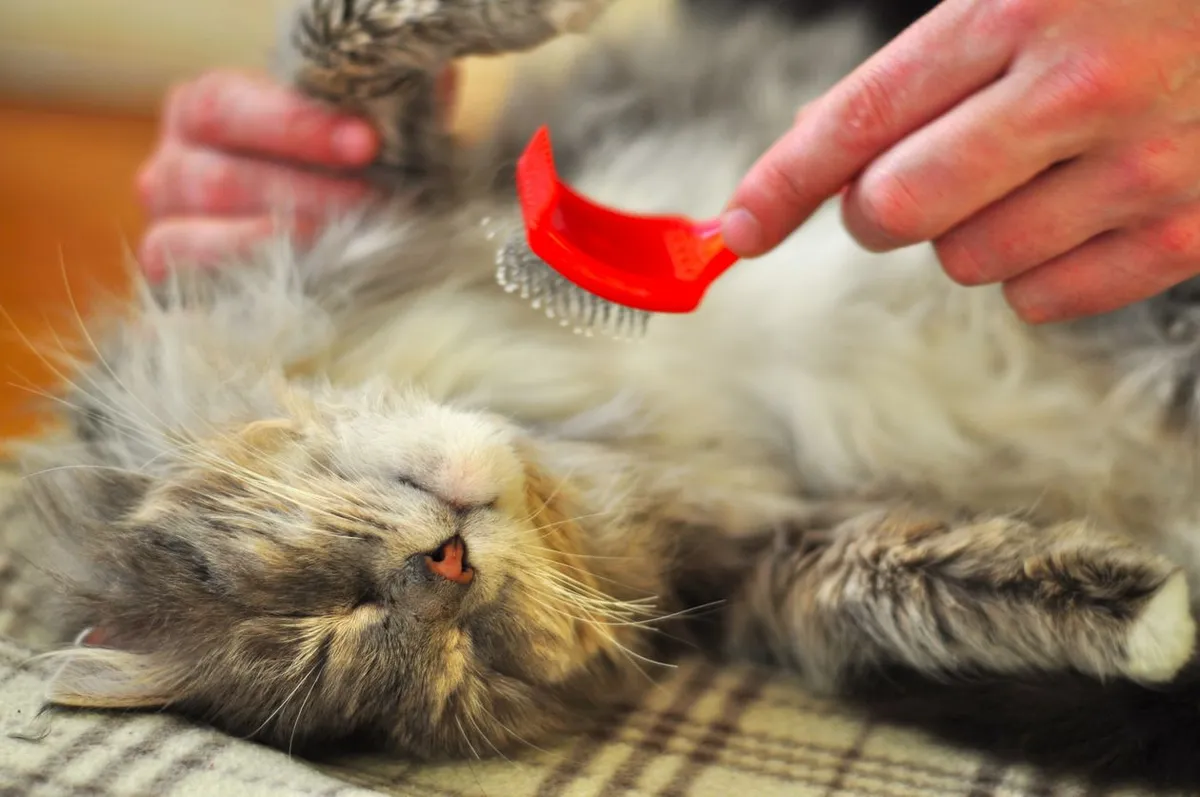
Start grooming early. The Maine Coon coat mats most in the armpits, belly, and behind the ears. Owner groups repeat one word — grooming, grooming, grooming — starting in kittenhood with short sessions and rewards. A slicker brush and a wide-tooth comb cover most of it. A former groomer answering questions on Quora added a practical tip: if you ever want to bathe your cat, introduce the experience young in a sink with warm water and no soap, before the cat is big enough to turn it into a wrestling match.
Talk to your kitten. Maine Coons communicate with chirps and trills more than meows, and regular conversation is part of bonding. With children, teach gentle handling and let the kitten approach on its own terms.
Mistakes New Owners Make
Every one of these came up in owner communities as a real, repeated regret:
- Opening the whole house on day one. Skipping the safe room is the most common reason owners report a kitten that hides for weeks.
- Forcing affection. Dragging a hiding kitten out teaches it that people are scary. Patience teaches the opposite.
- Changing food overnight. Week-one digestive upset is almost always new-home stress plus a sudden food change.
- Ignoring grooming. Mats form quietly in the armpits and belly and are painful to remove. Start brushing in week one.
- Buying adult-size equipment too late. The litter box, the cat tree, the carrier — Maine Coons outgrow “large” faster than you expect.
- Skipping the health questions. Ask what screening the parents had before the kitten comes home, not after.
- Expecting a lap cat immediately. Many Maine Coons prefer to sit beside you while they decide you’re trustworthy. Both are normal.
Growth: What to Expect
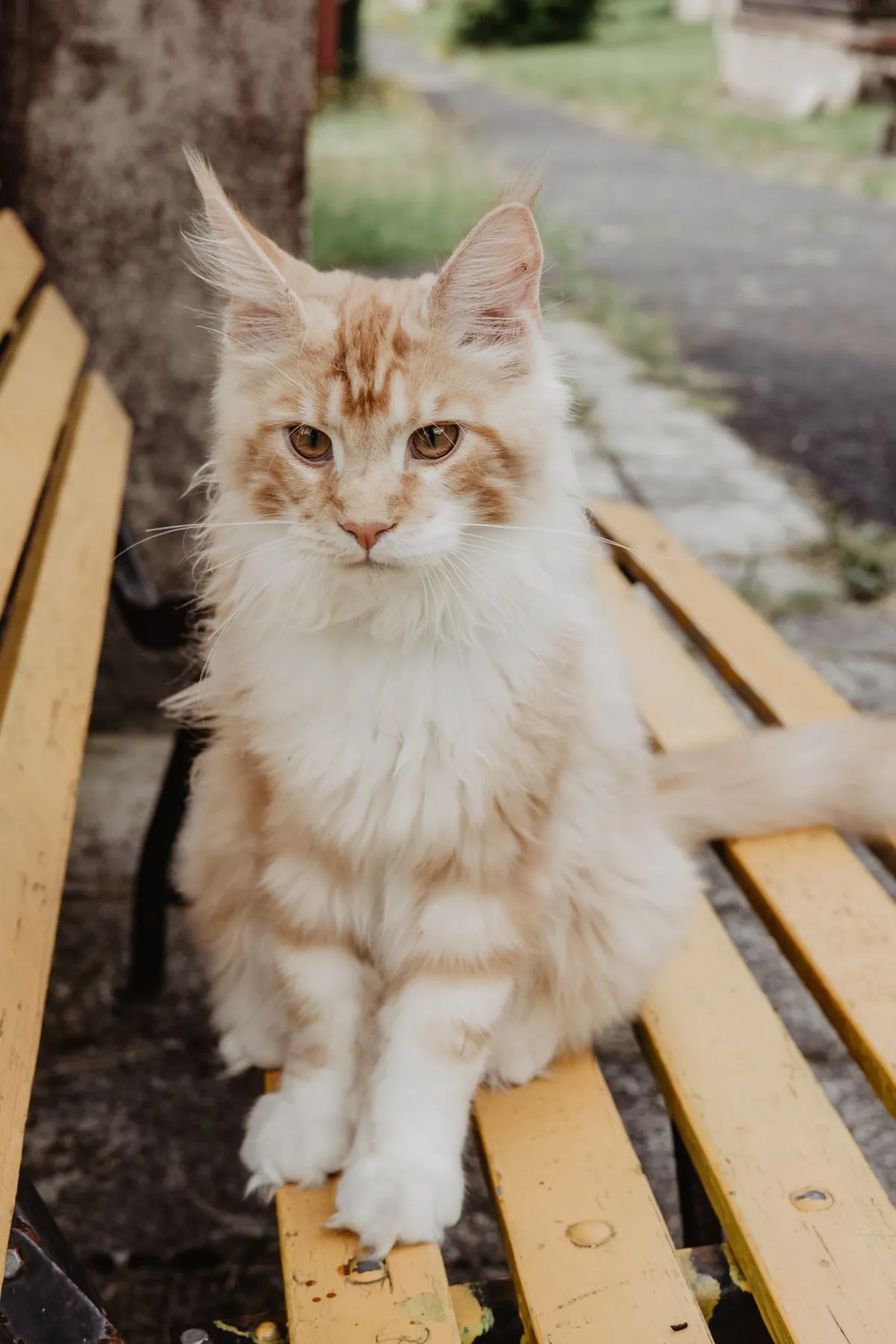
Because the breed matures over 3 to 5 years, a one-year-old Maine Coon is still essentially a teenager — often lanky and goofy-looking. The full mane, heavy bone, and real bulk arrive gradually, mostly between ages two and four.
Don’t compare your kitten to charts for average cats: males commonly reach 13 to 25 pounds and females 8 to 12 pounds, with plenty of individual variation. See my separate guide on how big Maine Coons actually get. The breed has a genuine tendency to go soft around the middle if feeding isn’t monitored, so feed measured portions as your vet advises and keep daily play part of the routine.
Every Maine Coon kitten’s journey begins at birth — learn what to expect during a Maine Coon pregnancy and birth.
FAQ
How long will my Maine Coon kitten hide?
Hiding in the first days is a normal stress response. The Rule of 3 shared by breeders — 3 days to decompress, 3 weeks to settle, 3 months to feel at home — matches what owners report.
What should I feed my Maine Coon kitten?
A complete, balanced kitten food: wet food about three times a day while young, with dry kitten food available. Keep the breeder’s food at first, transition gradually, and avoid feeding only fish like tuna — it isn’t nutritionally complete.
Why does my kitten step in its own poop?
Welcome to “poop shoes,” a breed-wide phenomenon: big paws and long fur mean many kittens track waste out of the box until around 9 to 12 months. Owners’ fixes: an oversized litter box, deeper clumping litter, sanitary trims, and higher-protein food.
When should my Maine Coon kitten see a vet?
Within the first week home, bringing all breeder records. FVRCP starts at 6 to 8 weeks with boosters every 3 to 4 weeks until about 16 weeks; rabies usually follows at 14 to 16 weeks.
Get the safe room right, keep the food consistent, start the grooming habit early, ask the health questions, and give the kitten the time it needs. The reward is a breed many owners describe as the closest thing to a dog in a cat’s body — loyal, chatty, and glued to your side. If you’re still deciding whether the breed fits your home, these reasons Maine Coons make good pets are a good read.