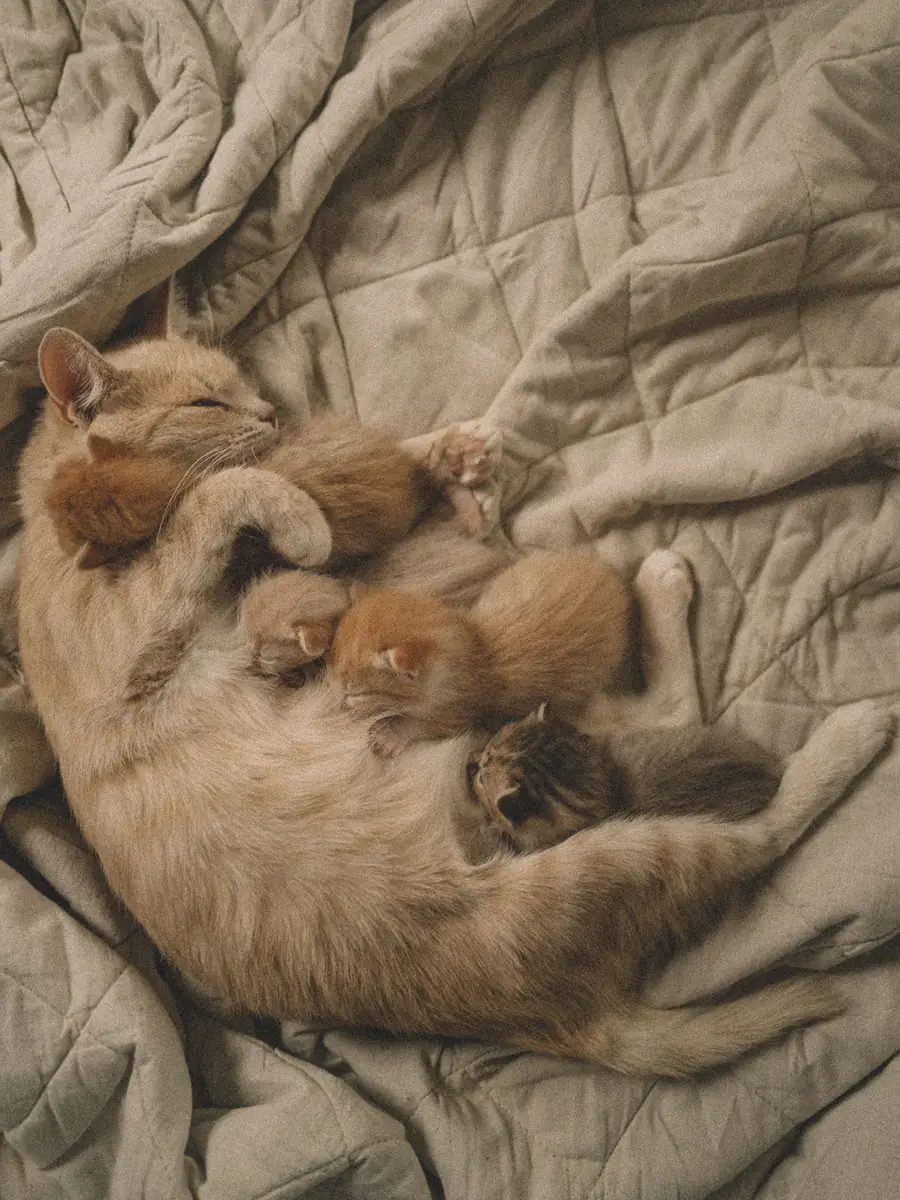
Maine Coon Pregnancy and Birth: What to Expect
Nothing rearranges your house quite like a Maine Coon pregnancy. One day you have a graceful, long-coated girl who owns the sofa; the next she is round, restless, and raiding the pantry like she has never been fed. If you are living through your first Maine Coon pregnancy — or thinking about breeding your queen down the road — here is what the nine weeks ahead actually look like, from the first signs to labor night to the wobbly first days with newborns.
A quick note before we start: I am an experienced Maine Coon owner, not a veterinarian. Everything here lines up with published veterinary guidance, and I will point you to those sources, but your own vet should be part of this journey from day one.
The Maine Coon Pregnancy Timeline, Week by Week
Cats share the same basic timetable regardless of breed. VCA Animal Hospitals puts feline gestation at 60 to 67 days, averaging 63 to 65 — so once you know the mating date, count forward nine weeks and keep that window clear.
The first three weeks are quiet; you will probably notice nothing. Around day 16 to 20 the first visible clue often appears: the nipples become pinker and more prominent, a change vets call pinking up, which PetMD lists as the earliest reliable sign most owners can spot. Some queens go off their food briefly around week three or four — but if she skips meals for more than a day or two, or vomits repeatedly, call your vet.
Weeks four through six are when things show: appetite picks up, belly rounds out, and her personality may swing toward clingy or toward withdrawn. One warning: that magnificent long coat hides a lot — owners on cat forums say they felt kittens moving long before they could see it.
Your vet can confirm things three ways: gentle palpation around two and a half weeks, ultrasound heartbeats at three to four weeks, and an X-ray kitten count once skeletons calcify at about six weeks (VCA suggests around day 45). Never palpate her belly yourself — rough handling can harm the kittens.
By weeks seven through nine she slows down: more rest, frequent belly grooming, swelling mammary glands as milk comes in. Maine Coons are known for generous litters — the four-to-six range breeders mention most often, with first-time mothers frequently starting smaller. That late X-ray count takes the guesswork out of labor night.
Early Signs Your Maine Coon Is Pregnant
In short: pinked-up nipples around week three, a steadily growing appetite, a rounder belly by week five, extra sleep, and a personality shift toward affection or solitude. If the mating was unplanned, do not be embarrassed — just get her to the vet for confirmation and a health check.
While you are there, ask about vaccinations and worming. PetMD advises queens should ideally be vaccinated before pregnancy, and live vaccines should never be given to a pregnant cat. Bring a fecal sample too, since some intestinal worms pass from mother to kittens during pregnancy and nursing, and your vet can choose a safe dewormer.
Feeding and Caring for a Pregnant Queen
A pregnant queen is eating for several. VCA notes her nutrient needs reach about one and a half times her pre-pregnancy level, and PetMD recommends switching to a pregnancy-and-lactation or quality kitten food by the end of the first month, continuing through weaning. Offer frequent smaller meals late in pregnancy, when a belly full of kittens leaves little room for a full dinner, and keep fresh water available always.
Keep her indoors, especially in the final weeks, so she cannot slip off to deliver somewhere you cannot reach. A gentle daily brush-out helps too — Maine Coon coats mat easily, and a heavily pregnant queen cannot twist around to maintain her britches and belly.
Setting Up the Nesting Box
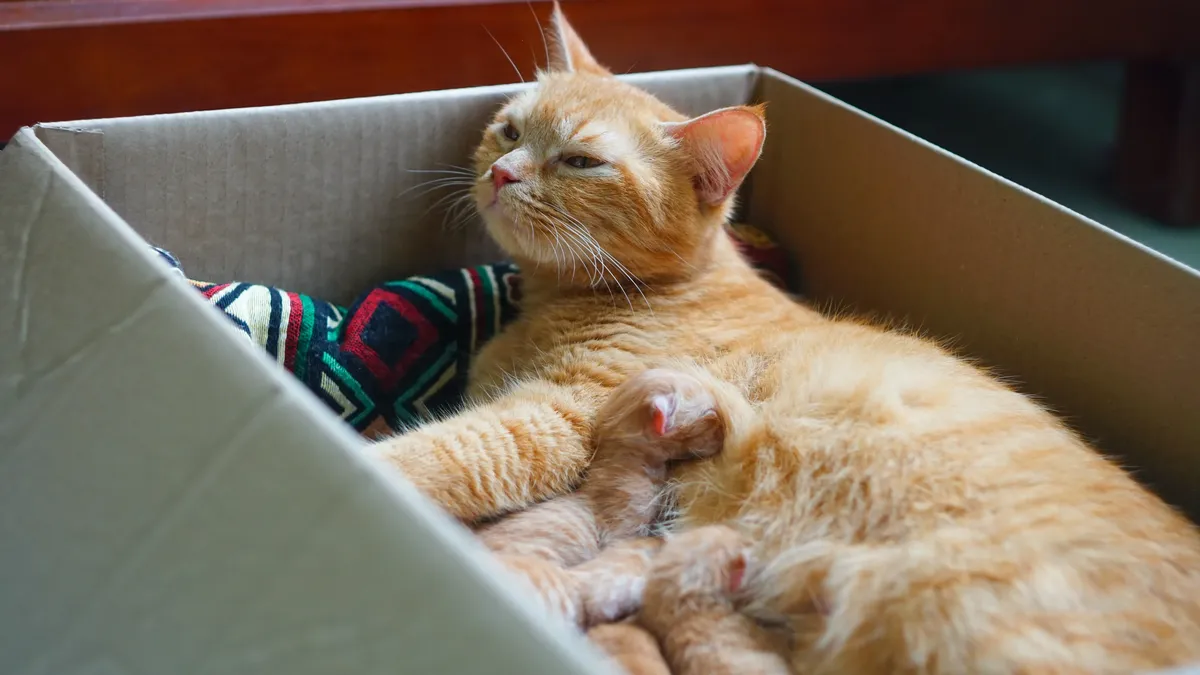
Start on the birthing spot around week seven so she has time to accept — or veto — your choice. PetMD describes the ideal nest as a box or covered bed lined with old pillowcases, towels, or soft blankets: quiet, draft-free, warm, but still observable from a distance.
Breeders on social media have wonderfully practical takes. One breeder on Instagram showed her inexpensive setup: a large plastic storage tote laid on its side, lined with a blanket over a heating pad set in the mid-80s to mid-90s, a second blanket draped over the opening for privacy, and a litter box parked nearby. Two tips I repeat to everyone: use solid plastic rather than mesh-sided pens, which a determined queen can collapse, and plan to strip and disinfect surfaces daily once kittens arrive.
Fair warning: she may ignore your beautiful nest entirely. Offer it, keep it clean and inviting, but if she picks her own spot, make that spot safe — a queen who feels secure labors better, and a stressed or relocated queen can stall her own labor.
Labor Signs: How to Tell Kittens Are on the Way
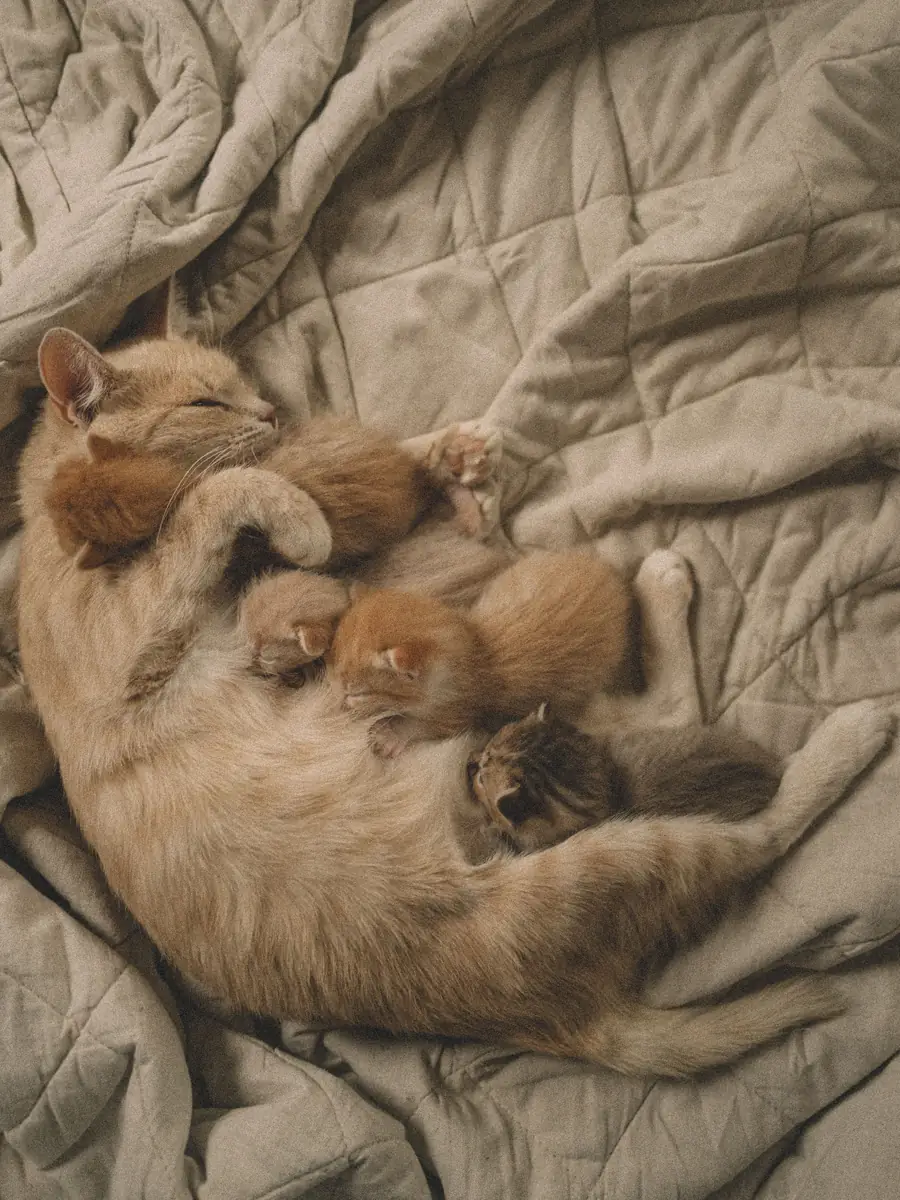
The last day or two brings a cluster of signs. Most queens stop eating about 24 hours before labor, and a rectal temperature dropping below 100°F means birth is likely within the day, per VCA and PetMD. Expect restlessness, pacing, repeated nest visits, scratching at bedding, and vigorous grooming. Some queens pant or vocalize; many become suddenly, intensely clingy.
Maine Coon queens in particular want their person close. A breeder on TikTok described her queen waking her in the early hours, meowing until she got up, then leading her to the birthing box — kittens arrived thirty minutes later. A cattery’s timestamped labor video shows the same pattern: unusual clinginess the day before, corner nesting, repeated belly grooming, then persistent meowing on the morning of birth.
The Three Stages of Labor
Stage one is the quiet work: the cervix relaxes and dilates while contractions begin without visible straining. She may seem restless or secretive, visit the nest repeatedly, scratch at bedding, or pant. VCA notes this stage can last up to 36 hours in a first-time mother — do not panic if nothing seems to happen for a long while.
Stage two is active delivery. Contractions become visible, she strains, and a fluid-filled sac may appear at the vulva before each kitten — each usually arrives within five to thirty minutes of active straining. The queen normally tears the membranes herself, clears the kitten’s nose and mouth, and chews the cord. A tail-first arrival is no cause for alarm; breech presentation is common in cats.
Stage three follows each kitten: the placenta, a greenish-black mass, is passed — one per kitten — and the queen usually eats them. Kittens typically arrive ten minutes to an hour apart, most litters finishing within about six hours.
What surprises first-timers: cats can pause labor. VCA calls it interrupted labor and considers it normal — the queen rests, nurses the kittens already born, and may even eat, with the break lasting up to 24 to 36 hours before straining resumes. This is why the X-ray count matters: five expected and three out means keep watching.
Your job is gloriously boring: stay nearby, keep the room calm, note each arrival time, and do not interfere unless something is clearly wrong.
When to Call the Vet
Most feline labors go smoothly, but know the red flags cold — and keep your vet’s number and the nearest emergency clinic’s within reach. VCA lists the warning signs of difficult birth: twenty minutes of intense straining with no kitten, ten minutes of hard labor with a kitten visible and stuck, fresh blood flowing for more than ten minutes, or a queen who is depressed, lethargic, or feverish over 103°F.
After birth, watch for foul-smelling or brownish discharge, fever, refusal to eat, or a queen ignoring her kittens — possible signs of retained placenta or uterine infection. Weeks later, a nursing queen with a large litter can develop milk fever: restlessness, panting, tremors, and stiffness three to five weeks after birth. VCA flags this as an emergency — stop the kittens nursing and get her to the vet at once.
One reassuring note from owners: a commenter on a popular Maine Coon birth video described her cat purring on her stomach while the first kitten arrived — the queen was calmer than she was.
The First Days With Newborn Kittens
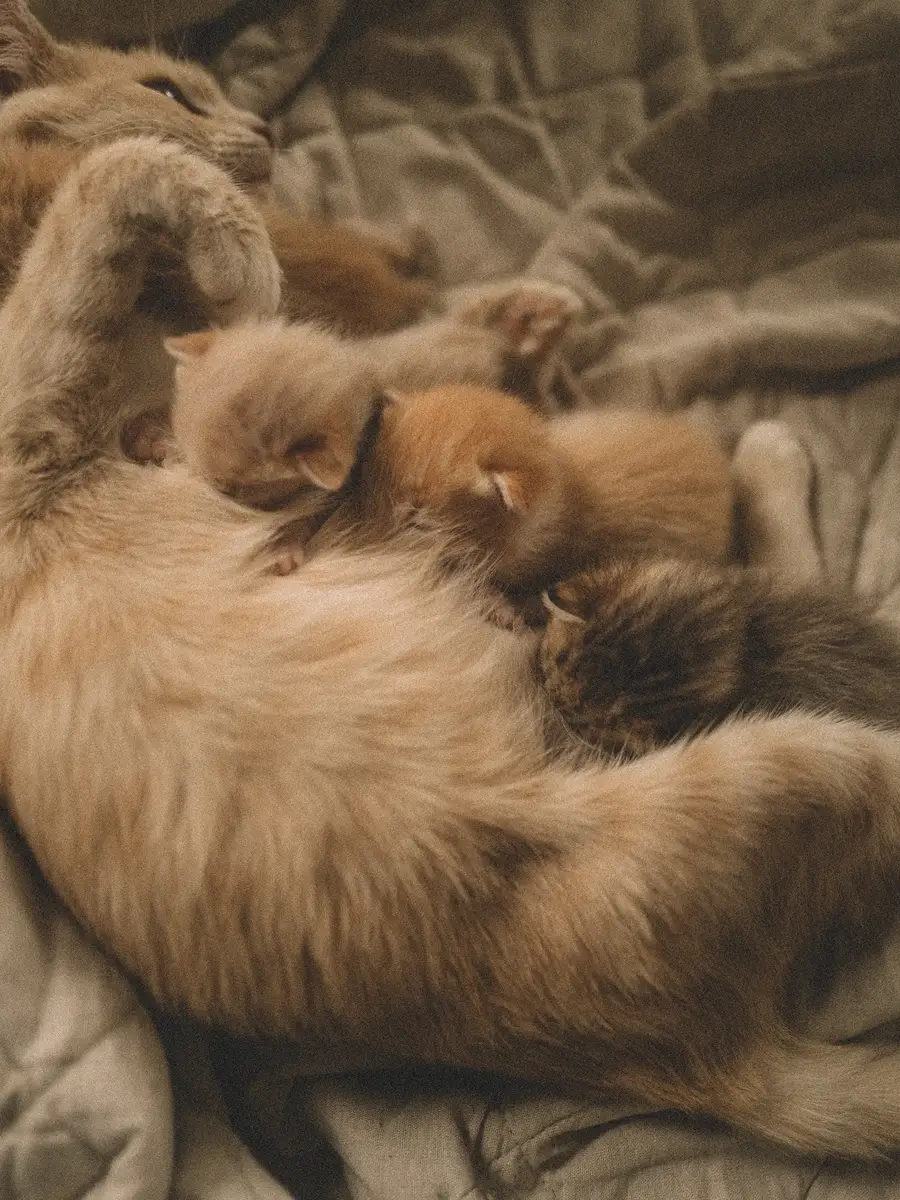
Once the last kitten is out and everyone is nursing, swap soiled bedding for clean, dry linens. Then focus on the two things newborns cannot do for themselves: stay warm and stay fed.
Kittens cannot regulate body temperature for the first couple of weeks. VCA advises keeping the nest at 85 to 90°F for the first four days, and PetMD gives the same range for the first week. A heating pad under half the nest — never the whole thing, so kittens can crawl away — or a towel-wrapped warm water bottle does the job.
Those first feeds matter enormously. Each kitten should nurse soon after birth for the antibody-rich first milk, and breeders guard this carefully. One cattery shared footage of a still-pregnant queen slipping in to nurse another queen’s newborns — they separated them until her own milk came in, to protect the first milk for her own kittens, then let the two mothers co-parent peacefully.
Weigh the kittens daily for the first couple of weeks; a small kitchen scale is a breeder staple. Kittens not gaining steadily need a vet check, and large litters sometimes need supplemental feeding. Keep a dish of kitten milk replacer out for the queen herself — one owner’s Maine Coon mother drank hers down happily while wrapping her arms around her nursing kittens. For what those early checkups involve, see our kitten’s first vet visit checklist.
Keep handling minimal in the first few days, the nest clean and dry, and the queen well fed. Many new mothers want their person within sight; one owner shared that her queen would fetch her if she left the room too long. Sit with them. You have earned it.
Frequently Asked Questions
Q: How long does a Maine Coon pregnancy last?
A: About 63 to 65 days on average, with 60 to 67 days the normal range. Past day 67 with no labor, call your vet.
Q: How many kittens do Maine Coons usually have?
A: Four to six is the range breeders mention most often; first-time mothers frequently have fewer. An X-ray around day 45 gives an accurate count.
Q: Do I need to help my cat give birth?
A: Usually not — watch quietly from nearby without interfering. Call your vet if she strains hard for twenty minutes with no kitten, a visible kitten stays stuck for ten minutes, or you see heavy fresh bleeding.
Q: How warm should the nest be for newborns?
A: 85 to 90°F for the first several days, with the heat source under only part of the nest so kittens can move away if too warm.
Q: When should newborn kittens see the vet?
A: Within the first few days, and sooner if any kitten is not nursing, not gaining weight, or seems weak.
A Maine Coon pregnancy is a lot — the extra food, the midnight pacing, the laundry — but it is one of the great privileges of sharing your life with this breed. A healthy queen, a good vet in your corner, and a quiet warm nest are most of what you need. If you are still weighing whether breeding is the right path, our guide on choosing between a breeder and rescue is worth a read. For what comes next, keep our newborn kitten care guide and the feeding chart for growing kittens close at hand.
For the veterinary detail, VCA’s pregnancy and parturition in cats and PetMD’s cat pregnancy guide are both excellent, and the Cat Fanciers’ Association Maine Coon breed article is good grounding in the breed itself.