Maine Coon Whiskers: Why They’re So Long and What They Tell You
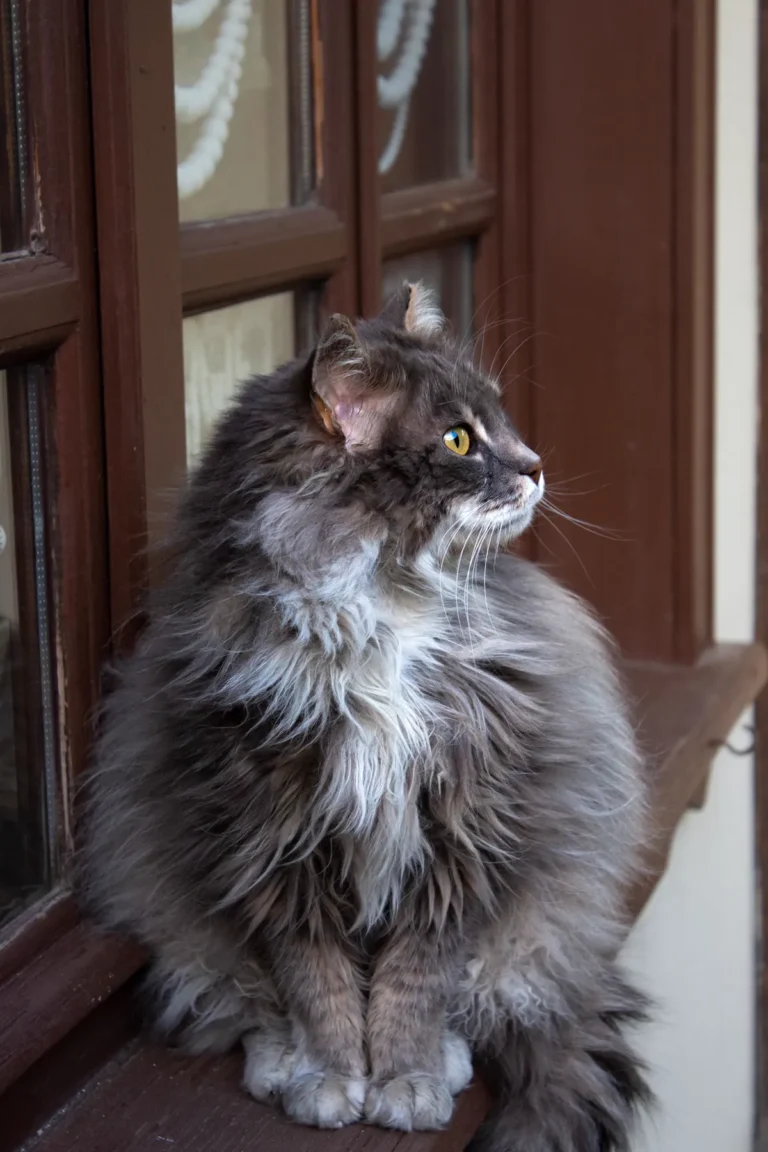
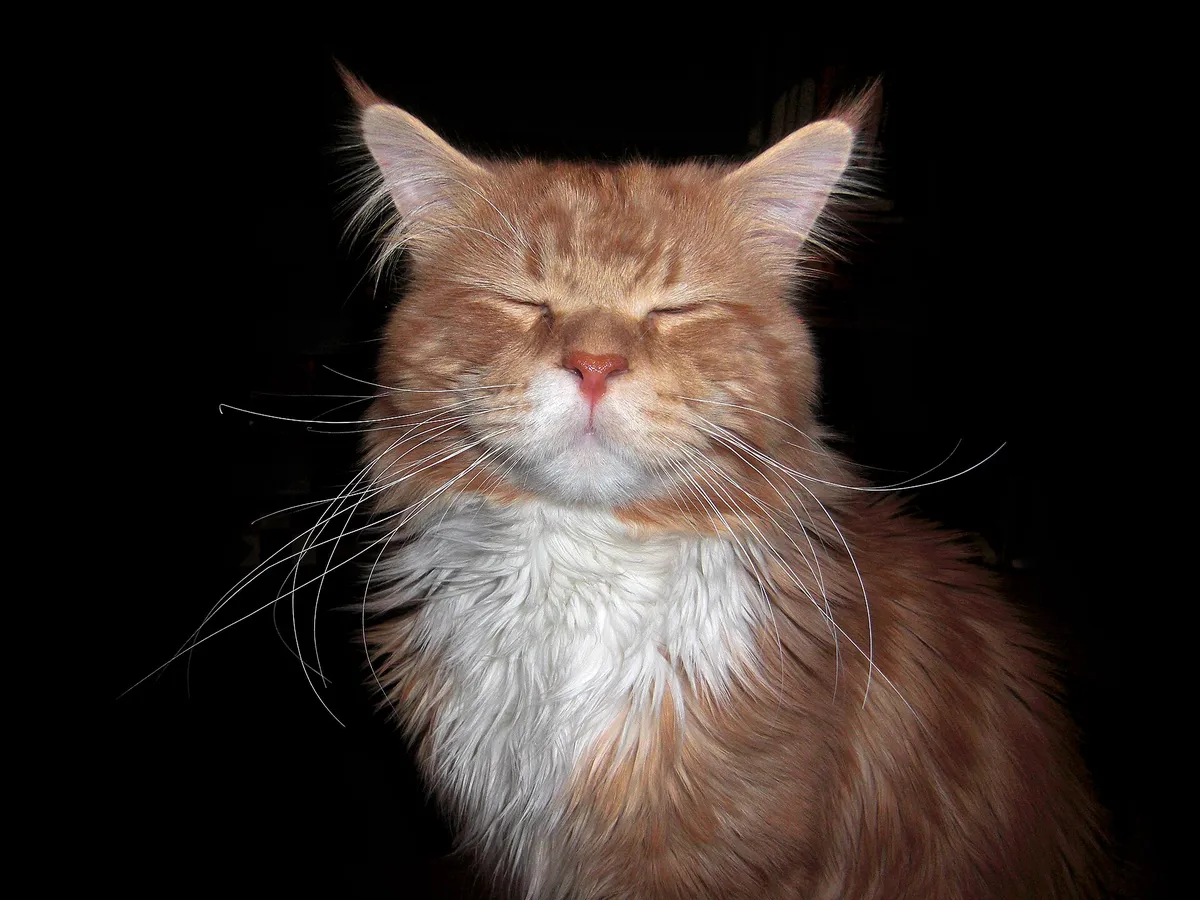
The first time I really looked at my Maine Coon’s face, it wasn’t the ear tufts that stopped me. It was the whiskers — fanning out from his muzzle like white antennae. Maine Coon whiskers are long, thick, and impossible to miss, and once you notice them, you start watching them, because they are always telling you something.
A whisker is not decoration. It is a working tool.
Why Are Maine Coon Whiskers So Long?
Maine Coon whiskers are long because Maine Coons are big. A cat’s whiskers grow roughly as wide as its body. Whiskers work like a measuring tape: when a cat pushes its head toward a gap, the whiskers brush the edges first, and the message that reaches the brain is simple — you fit, or you don’t. A Maine Coon, one of the largest domestic breeds, needs a long one. Most Maine Coons carry whiskers around four to six inches long, and the longest whisker ever recorded belonged to a Maine Coon from Finland named Missi, measured at 7.5 inches — longer than a standard pencil.
If your Maine Coon puts on weight, the whiskers do not grow longer to match — one more quiet reason to keep a big cat at a healthy weight. Some whiskers are noticeably longer than their neighbours, and that unevenness is completely normal.
Owners notice the length most on dark-coated cats, where white whiskers stand out — in Maine Coon videos on Facebook, the comments are full of people calling them antennae.
The ones we all picture grow from the muzzle, in neat rows on each cheek — a typical cat has around a dozen on each side, and Maine Coons often seem to have more. Short ones above the eyes trigger a blink when something brushes too close.
What Maine Coon Whiskers Actually Do
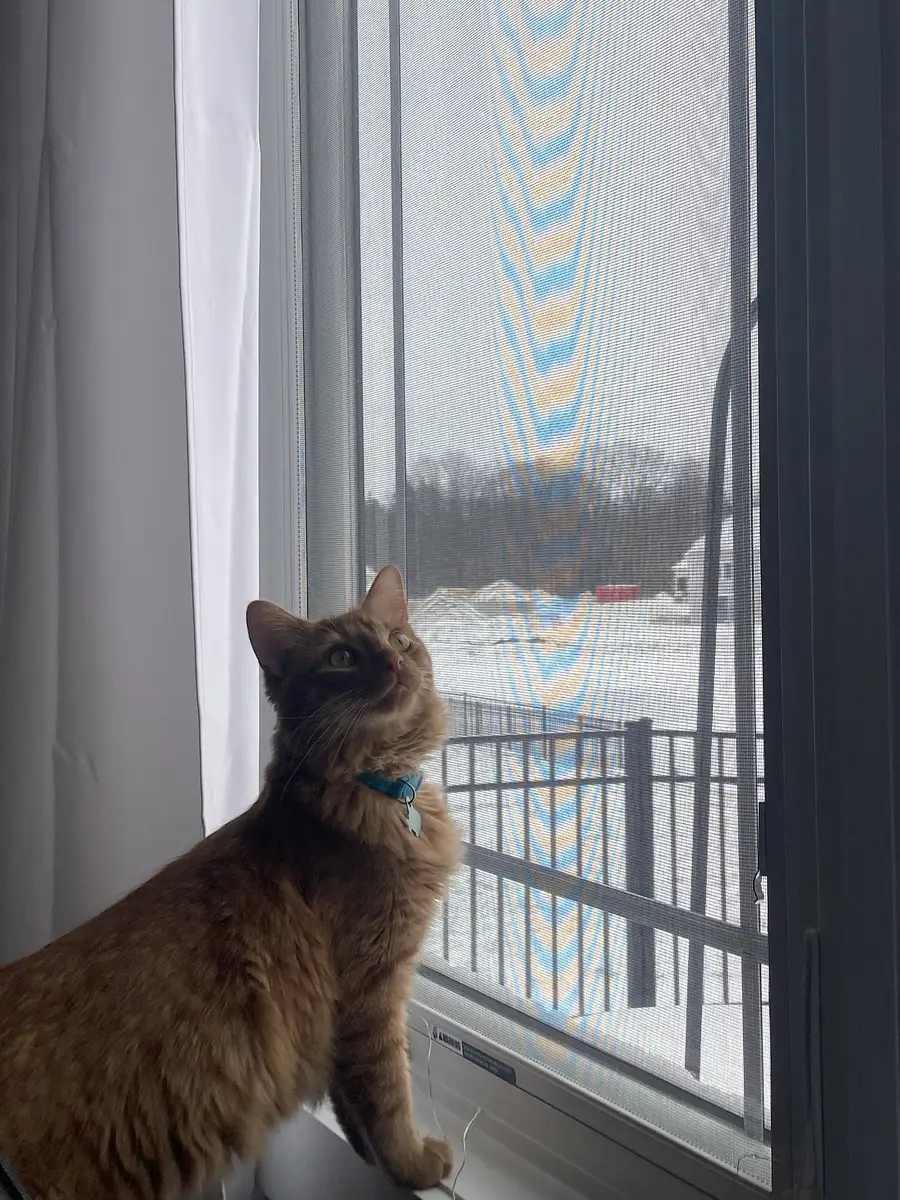
A whisker is a thick, stiff hair, about three times thicker than an ordinary coat hair. The clever part is the root: each whisker sits in a deep follicle packed with nerves and blood vessels, sending every tiny movement as a signal to the brain. That is why the proper name is vibrissae, from a Latin word meaning to vibrate. They are touch sensors — PetMD’s guide to cat whiskers calls them high-tech tools packed with purpose.
They measure gaps. Before a Maine Coon squeezes behind the sofa, the whiskers go first and report back. In the dark, this is how a cat moves through the house without bumping into everything.
They sense air movement. Whiskers pick up the smallest changes in air currents — a person walking past, a toy rolling, prey moving nearby. That is what makes them such good hunters at dawn and dusk.
They fill in the blind spot. Cats are nearsighted up close; anything nearer than about a foot is a blur. Whiskers take over in that zone, telling the cat exactly where a toy or treat is when the eyes cannot focus on it.
They help with balance. The sensors at the base of each whisker tell the brain where the body is in space, which is why a cat with damaged whiskers can seem clumsy on jumps it used to make without thinking. VCA Animal Hospitals explains that a whisker’s roots sit about three times deeper than an ordinary hair’s.
Put together, whiskers are a second sense — one that works in the dark, up close, and around corners.
Reading the Mood in the Whiskers
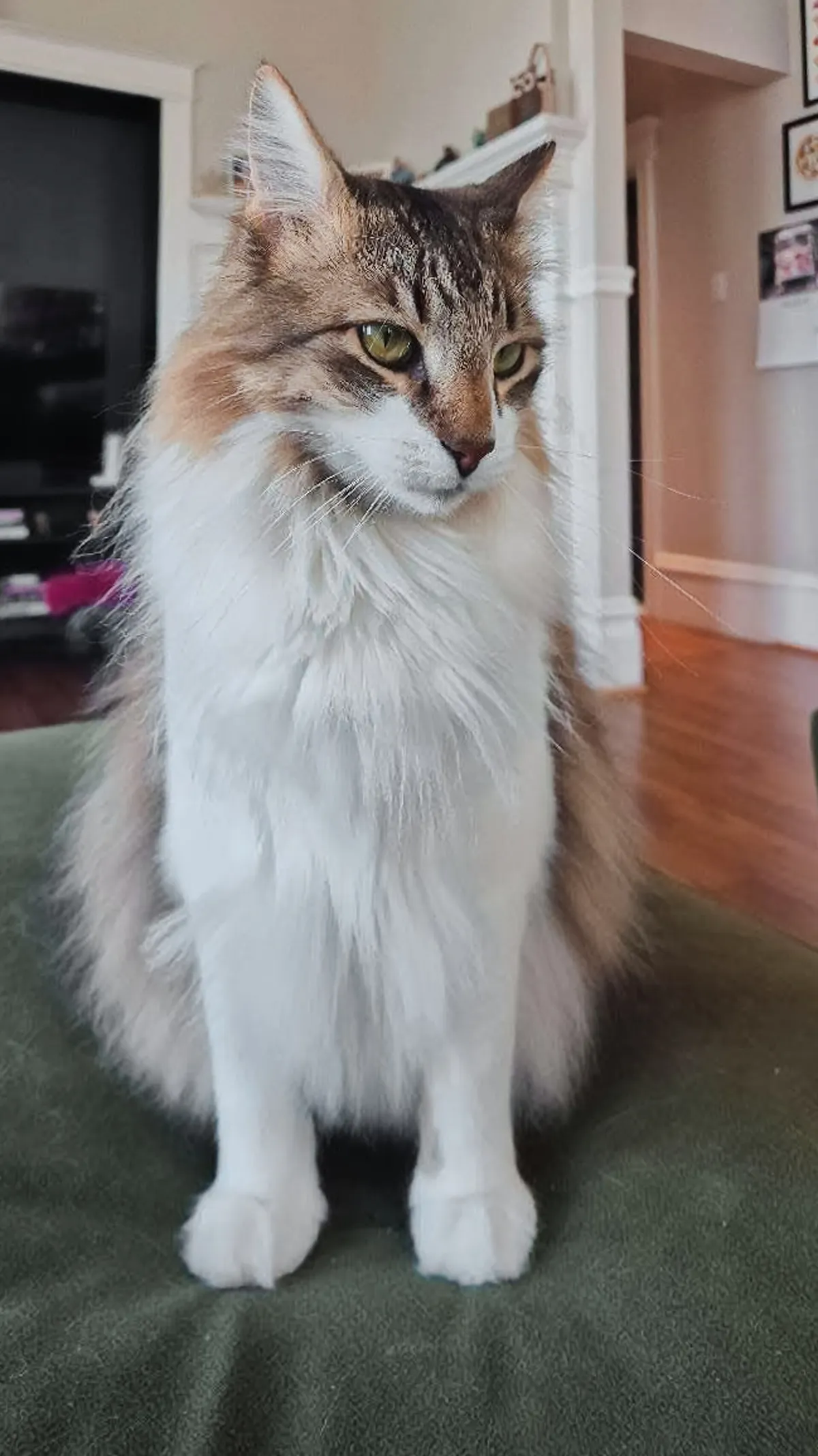
Whiskers do not only sense the world. They also show you what your cat is feeling — the muscles at the base of each whisker can move it, so the whole fan shifts with the cat’s mood.
When my cat is relaxed — stretched out in a sunbeam, half asleep — his whiskers sit loose and out to the sides. When something catches his interest, a bird at the window or a rattled toy, the whiskers sweep forward, fanned out and alert. Forward whiskers mean curiosity, excitement, or hunting focus.
Whiskers pulled flat back against the cheeks are the one to watch for — usually fear, stress, or anger, often with flattened ears and a low body. If you see it during play, the game has stopped being fun. If you see it when a stranger reaches out, your cat is asking for space. Give it.
Whiskers read best alongside the rest of the face and body, and I have written about the full set of signals in my guide to Maine Coon body language. The eyes tell a story too — my guide to Maine Coon eye colors covers what the different colours mean.
Whisker Fatigue: Real, Overblown, or Somewhere in Between?
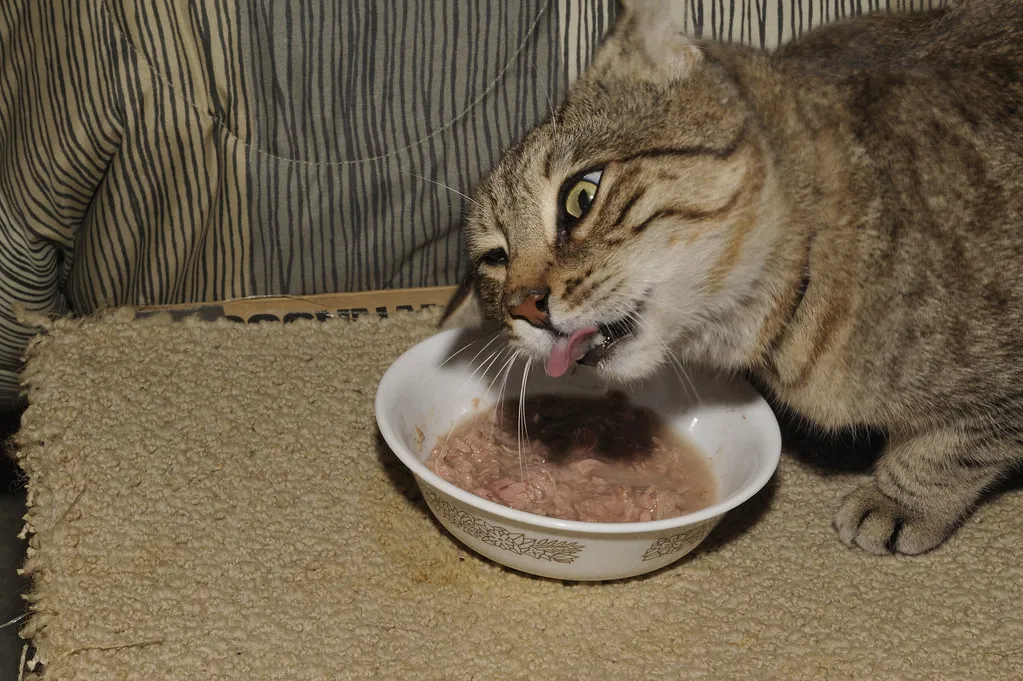
If you have spent any time in cat groups online, you have met whisker fatigue — the idea that a cat’s whiskers get overstimulated when they brush against the sides of a narrow, deep food bowl. Owners on Reddit describe the classic signs: the cat paws food out of the bowl and eats it off the floor, eats only from the middle, or hovers by a full bowl looking hungry but barely eating.
Here is where I have to be honest: the science is thinner than the marketing suggests. Feline behaviour researchers writing in 2020 noted there was no solid evidence whisker stress actually occurs, and the one controlled study since — 38 cats eating from a whisker-friendly dish versus their usual bowl — found no difference in how much they ate or dropped. The same study did find that many of the cats, given a choice, preferred the shallow dish.
What I do is simple: feed your Maine Coon from a wide, flat, shallow dish, and give water the same treatment. It costs nothing, and a lot of cats clearly prefer it. If your cat suddenly starts eating less or acting strange around meals, do not reach for a new bowl first — reach for the vet. Appetite changes can be a sign of dental disease, nausea, kidney trouble, or other medical problems, and a bowl will not fix any of those. The same thinking applies to water — my guide to water fountains for Maine Coons covers the wide, shallow basins that suit a big cat best.
When a Whisker Breaks or Falls Out
Sooner or later you will find a long white whisker on the floor or stuck to your jumper. The first time it happens, it feels like something is wrong. It almost certainly is not.
Whiskers shed naturally, one or two at a time, just like fur. An old whisker falls out and a new one grows in its place — a single shed whisker is nothing to worry about, and owners on Reddit post about finding them all the time.
A broken whisker is slightly different. Kittens break them constantly in rough play, and an adult can snap one in a scuffle. If only the tip is broken, the whisker still works, just at a shorter length. If it breaks at the base, that sensor is offline until a replacement grows in, and the cat may be a little more cautious on jumps and in the dark for a while.
How long does regrowth take? Longer than you would like. Whiskers grow slowly — TICA’s guide to whisker regrowth notes it can take several months, with most sources putting a functional length at six weeks to three months. Be patient, and keep the cat indoors if it usually goes out.
Two situations are worth a vet visit: losing a lot of whiskers at once, or whiskers that keep breaking and never grow back — that can signal skin trouble, an allergy, or in older cats something hormonal. The same goes for whiskers that look bent or brittle alongside bald patches or sore skin. One shed whisker is a keepsake. A pattern of loss is a question for your vet.
Never Trim Your Maine Coon’s Whiskers
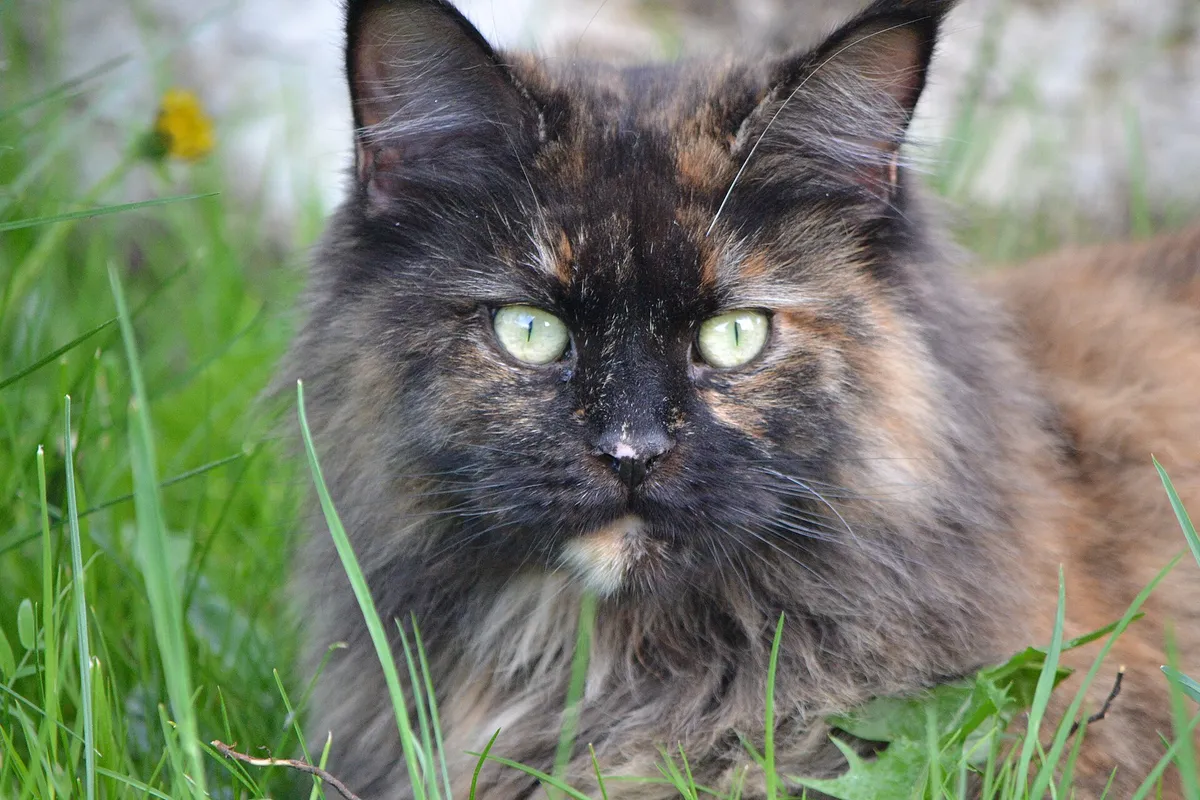
This is the one rule in this article that has no exceptions. Scroll through any Maine Coon video and the comments are full of the same warning: never trim the whiskers.
No. Never trim, cut, or pluck your Maine Coon’s whiskers — not for looks, not because they get in the food bowl, and not because a groomer offers to neaten them. Cutting one removes a sense organ. A cat with trimmed whiskers can become disoriented and stressed, misjudging jumps and gaps it used to take without thinking — like being blindfolded in your own house.
The whisker itself has no feeling in it, but the follicle it grows from is packed with nerves, and plucking one out is painful. And whiskers grow back slowly — weeks to months — during which your cat navigates with a dulled sense. If a groomer ever trims your cat’s whiskers without asking, tell them plainly next time: the whiskers stay. If you accidentally snip one, do not panic — it will grow back.
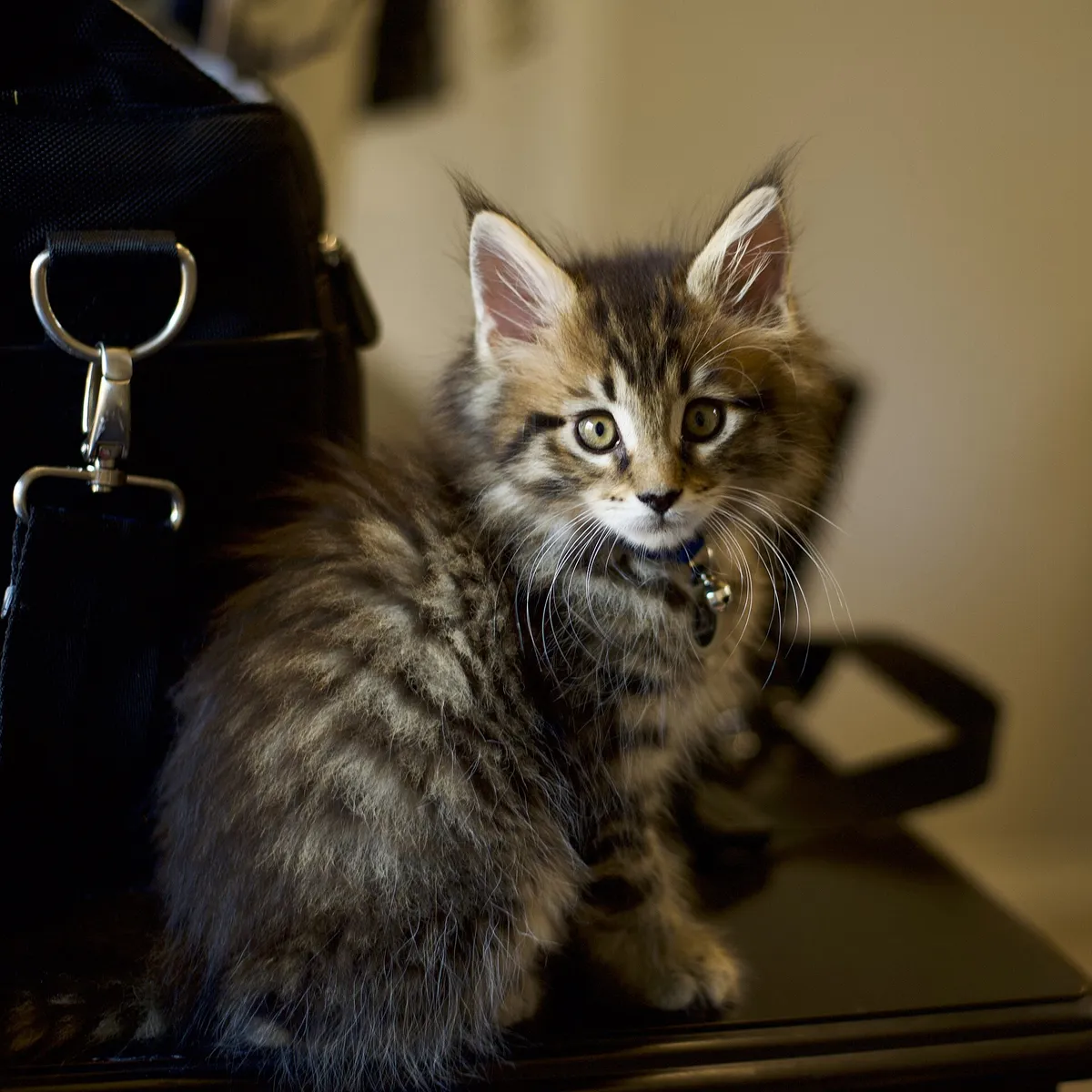
Kittens deserve the same respect. A Maine Coon kitten’s whiskers look oversized and a little comical, and it is tempting to think they are in the way. They are not — the kitten is learning its body and its world through those whiskers. If you are bringing a kitten home soon, my Maine Coon kitten care guide covers the first thirty days.
Everyday Whisker Care
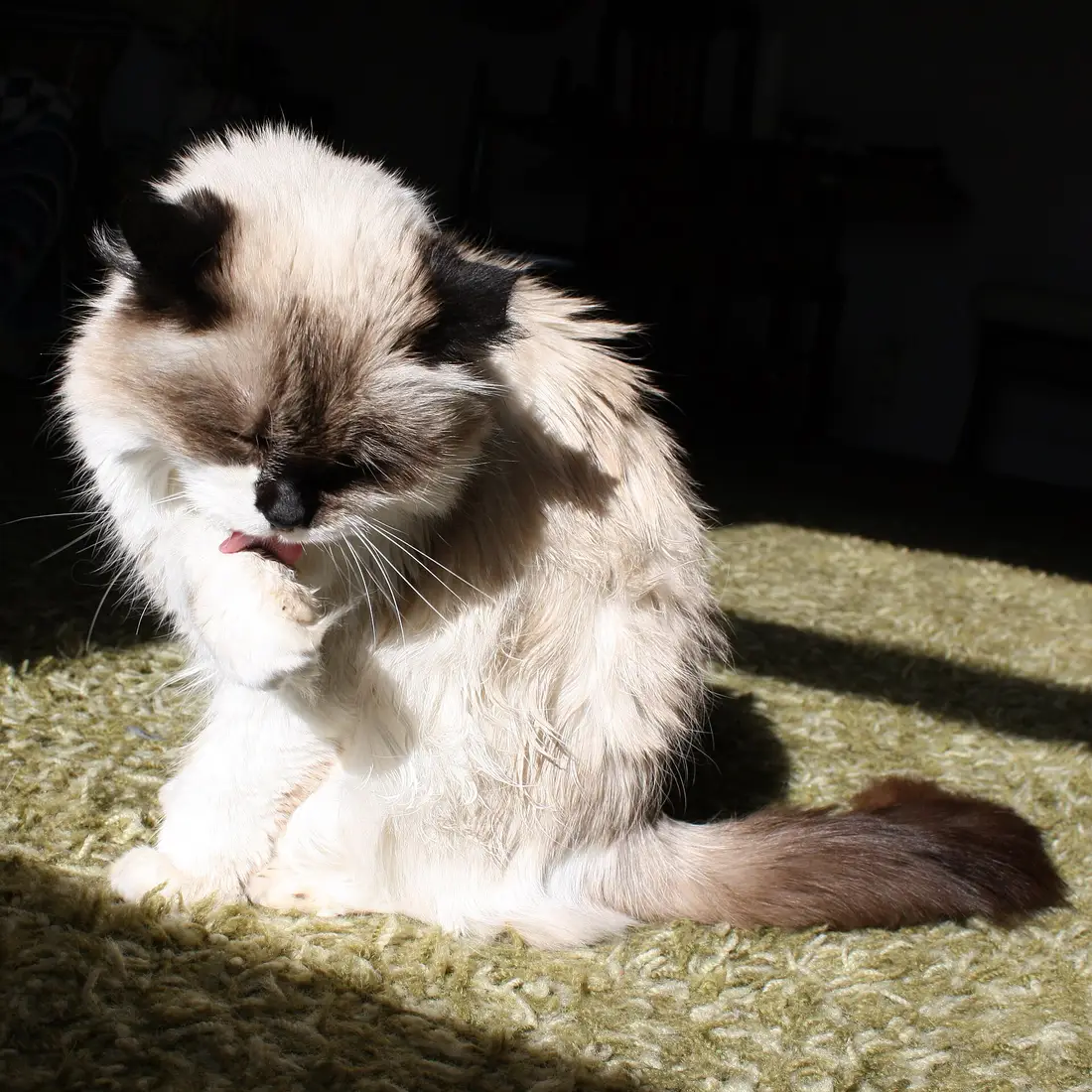
Whiskers need almost no care at all. Do not touch or stroke them on purpose — the follicles are sensitive, and most cats dislike it. Do not brush or comb them, and never try to straighten one that grows at an odd angle. A whisker that curls is just character, as long as it is not poking into the eye.
Just keep an eye on them during grooming: are they all present, is one side suddenly shorter, does your cat flinch when something brushes its face? The Cat Fanciers’ Association breed page explains the breed standard behind that big square muzzle.
My cat’s whiskers still make me smile every day — they tell me when he is curious, when he is worried, when he has found a gap he should not fit through and is going to try anyway. Look after them and let them do their job.
Frequently Asked Questions
Why do Maine Coons have such long whiskers?
Maine Coon whiskers are long because Maine Coons are big — whiskers grow roughly as wide as the cat’s body, acting as a measuring tape for gaps. Most are four to six inches long; the longest ever recorded, 7.5 inches, belonged to a Maine Coon from Finland.
Can I trim my Maine Coon’s whiskers?
No, never trim, cut, or pluck your cat’s whiskers. They are sensory organs with nerve-packed roots, and cutting them can leave your cat disoriented and clumsy for weeks or months while they regrow. There is no grooming reason to trim them.
Do Maine Coon whiskers grow back if they fall out?
Yes. Whiskers shed naturally one or two at a time and regrow on their own, as long as the follicle is not damaged. Full regrowth usually takes six weeks to a few months, so be patient with a cat that has lost several at once.
What is whisker fatigue in Maine Coons?
Whisker fatigue is the idea that whiskers get overstimulated by brushing against the sides of a narrow, deep food bowl. The evidence is thin, but many cats prefer wide, shallow dishes, so a flat bowl is a cheap, harmless thing to try. If your cat stops eating, see a vet first — appetite changes can signal a medical problem.
Why is my Maine Coon losing whiskers?
Losing one or two at a time is normal shedding, and a replacement will grow in. Losing many at once, or whiskers that keep breaking and not regrowing, is worth a vet visit — it can signal skin trouble, allergies, or another underlying health issue.