Why Is My Maine Coon Peeing Outside the Litter Box? Causes and Fixes
I still remember the morning I found a puddle on the bath mat, right next to a perfectly clean litter box. My Maine Coon had used his box faithfully for years, and suddenly he was peeing everywhere except in it. A Maine Coon peeing outside the litter box is not being naughty, and he is not punishing you. Maine Coons are famously fastidious cats, so when one starts missing the box, he is trying to tell you something. There is almost always a reason: something hurts, something stresses him, or something about the box no longer works for a cat his size.
Maine Coon Peeing Outside Litter Box: Why It Happens
A Maine Coon peeing outside litter box is usually signalling pain, stress, or a box problem. Rule out medical causes with a vet first, then check the box, the stress levels, and the other cats.
Rule Out Medical Causes First
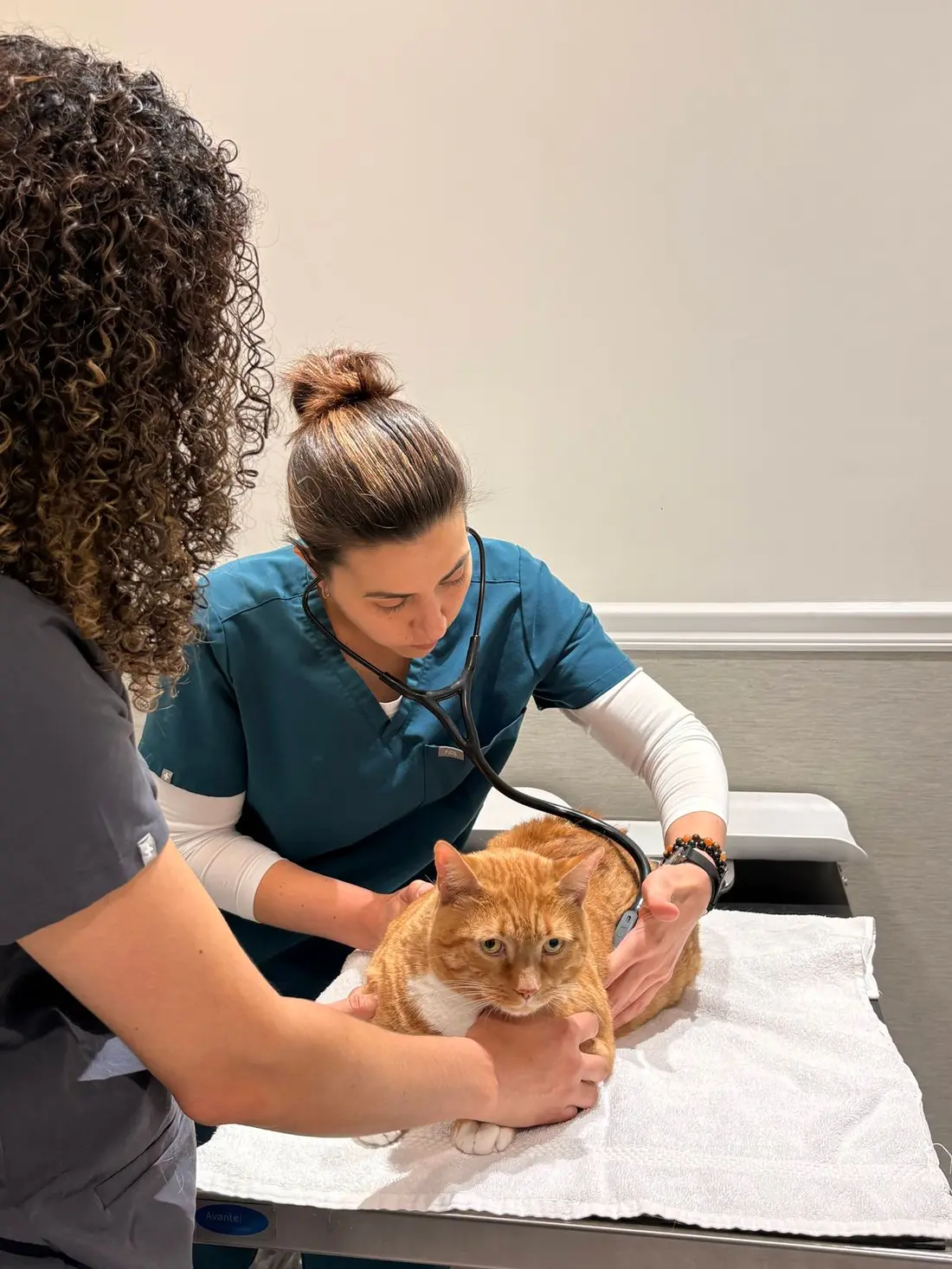
A cat who suddenly changes his toileting habits should see a vet before you change anything else. Cats hide pain well — a Maine Coon who used his box faithfully for years and suddenly stops is far more likely to be hurting than badly behaved.
The usual suspects: a urinary infection (peeing hurts, so the box gets blamed), stones or crystals (urgency — he cannot reach the box in time), feline idiopathic cystitis (stress-linked bladder inflammation, frequent small pees, sometimes bloody), kidney disease or diabetes (much more drinking and peeing), and arthritis in older cats (a high-sided box hurts to climb into).
Most urgent of all is a male cat who strains, visits the box again and again, and produces little or nothing — a possible urinary blockage, a life-threatening emergency. If you see straining with no urine, crying while trying to pee, or repeated trips to the box, get to an emergency vet the same day. Cornell’s veterinary school is blunt: the time from a complete urinary blockage until death may be less than 24 to 48 hours, so immediate treatment is essential. Their full guidance on feline house soiling has the veterinary detail behind what I am describing here.
Tell your vet when it started, where the accidents happen, whether he strains or cries or drinks more than usual, and whether anything changed at home. Your vet will likely start with a physical exam and a urine test — ask what tests make sense rather than guessing at home. My guide to Maine Coon urinary health has a fuller rundown of the conditions Maine Coons are prone to, worth reading if the vet mentions crystals, cystitis, or kidney values. Even after treatment, the habit can linger for weeks — the cat learned the box hurt. That does not mean treatment failed; it means a behaviour problem is now layered on a medical one, and the box fixes below still apply.
Is It Peeing or Spraying?
Before you change anything, work out which one you are dealing with — the fixes differ. Toileting outside the box means squatting and leaving a normal-sized puddle on a horizontal surface: the floor, a rug, the bed. Spraying means standing, tail up and quivering, depositing a small amount on a vertical surface: a wall, a door frame, the side of the sofa.
Spraying is marking, not toileting, usually triggered by territory stress: a new cat, a stray at the window, unfamiliar-smelling furniture. Unneutered males spray most, but neutered cats and females can too. If yours is spraying, the stress and multi-cat sections below matter most — and ask your vet about neutering if he is still intact.
Owners on Reddit and in the big Maine Coon Facebook groups tell the same story: the cat pees a foot or two from the box, night after night — usually the box, not the location, is the problem.
The Box Is Too Small: The Classic Maine Coon Problem
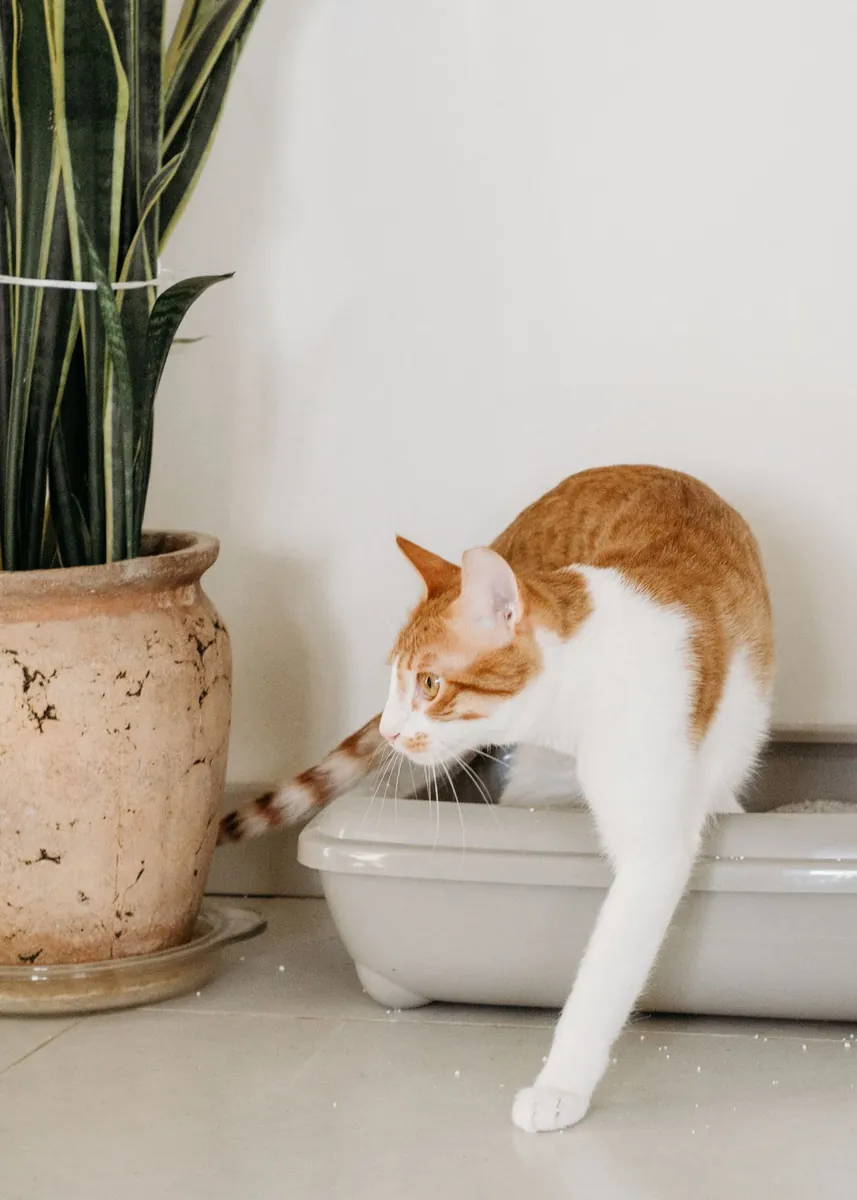
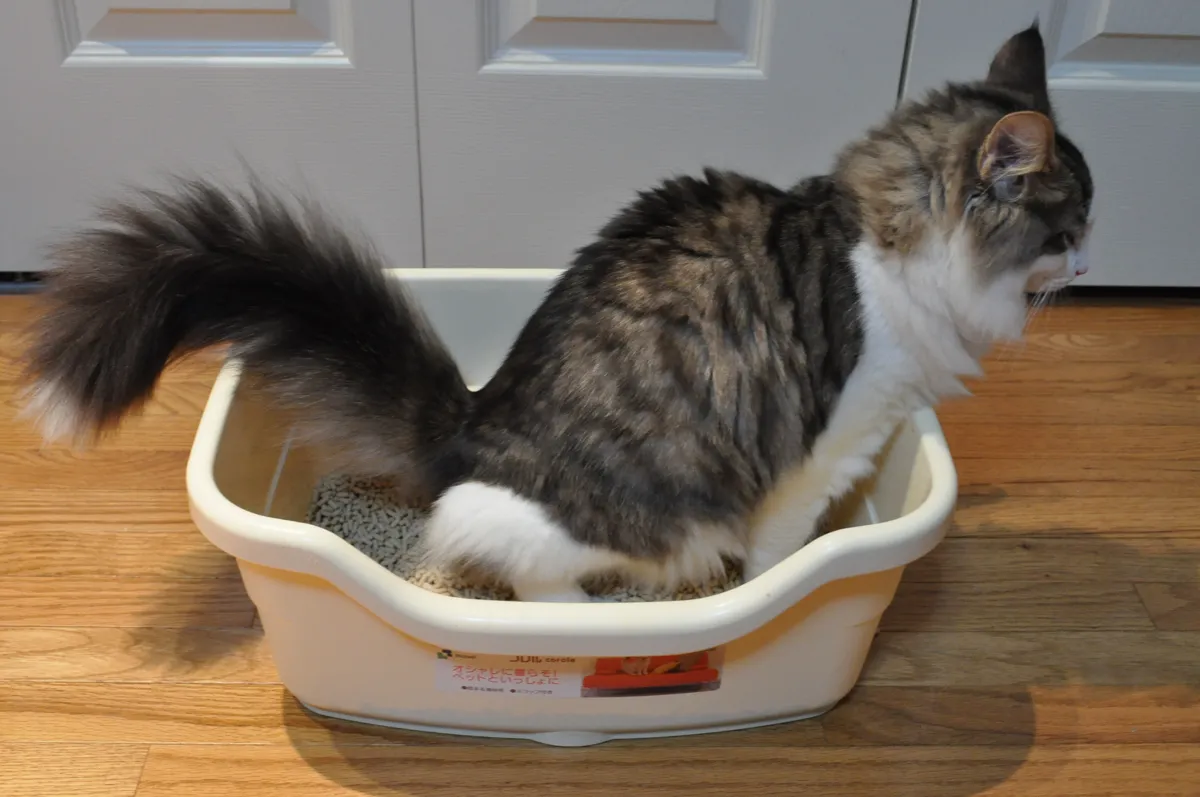
A standard litter box is built for an average cat, and a Maine Coon is not one. A full-grown male can weigh over 20 pounds and stretch longer than the box itself — ask him to turn, dig, and squat in a tray he barely fits into, and sooner or later he will do part of the job outside it.
The rule of thumb is a box at least one and a half times your cat’s body length — for a Maine Coon, usually an extra-large, high-sided, open-top box. Covered boxes trap odour, and many cats hate the smell and the enclosed feeling. If your cat perches on the rim or hangs his back end over the edge, the box is too small or too enclosed.
I went through three boxes before I found one my boy would use happily, and the difference was immediate. My guide to the best litter boxes for Maine Coons has the sizes and styles that work for a giant breed.
The Litter, the Location, and the Cleaning Routine
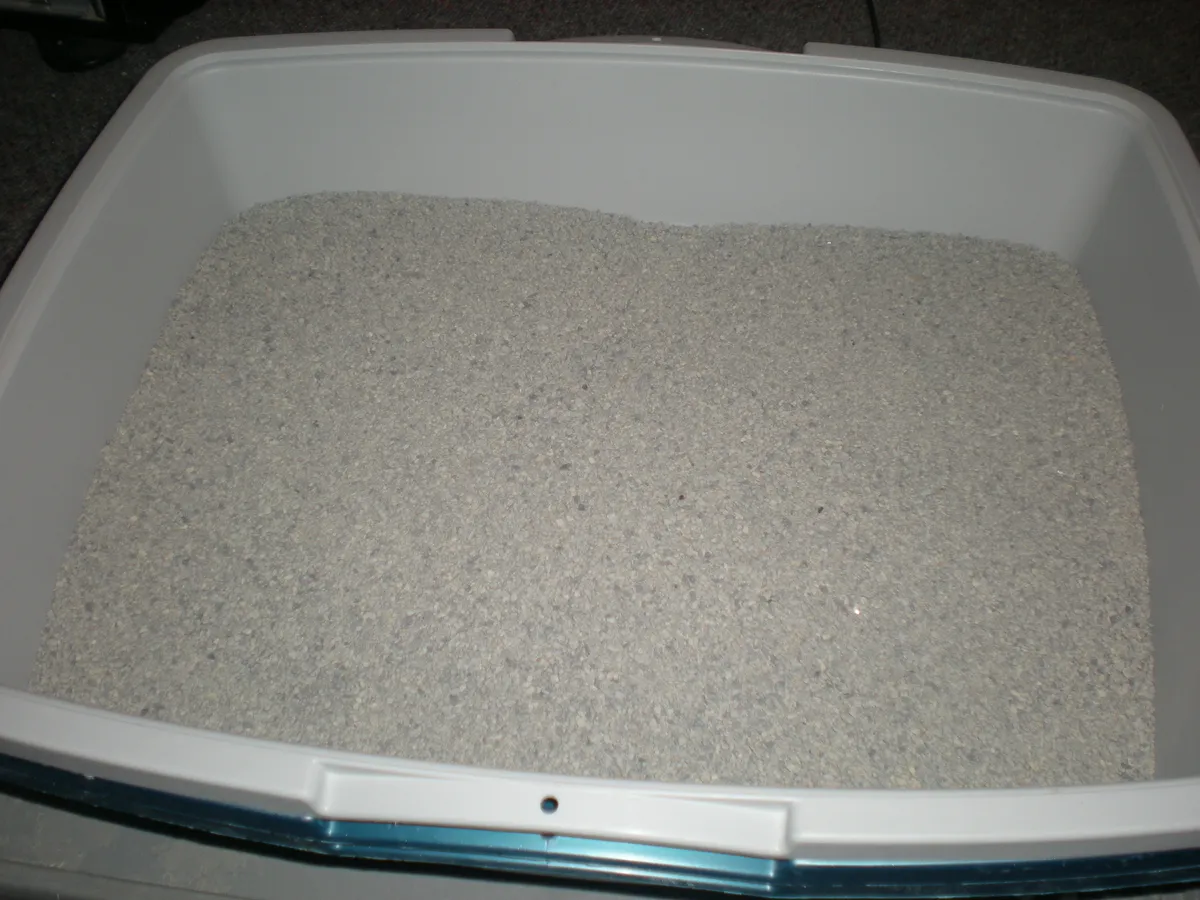
Once the box is big enough, check the details — Maine Coons are clean cats with strong opinions, and small things put them off.
First, cleanliness. Scoop at least once a day, twice if you can — many Maine Coon owners in the Facebook groups say their cat will refuse a box that has anything in it at all. Change the litter fully and wash the box weekly, and skip harsh cleaners: bleach and strong-smelling products leave a scent as off-putting to a cat as a dirty box.
Second, the litter itself. Most cats prefer a fine, unscented, clumping litter — scented litters are made for human noses, not cat noses. If you recently switched brands, that alone may be the trigger: change gradually, mixing the new in with the old over a week. Owners on Reddit say an attractant litter helped stubborn cats return to the box — a cheap experiment before you buy anything bigger.
Third, location. The box should be quiet, easy to reach, and private, but not so tucked away that your cat feels trapped. Avoid laundry rooms, high-traffic hallways, and spots next to food and water bowls. If your cat has picked a favourite spot to pee, try putting a box there — once he uses it reliably, move it a few inches a day toward where you would rather it lived.
Stress: The Invisible Trigger
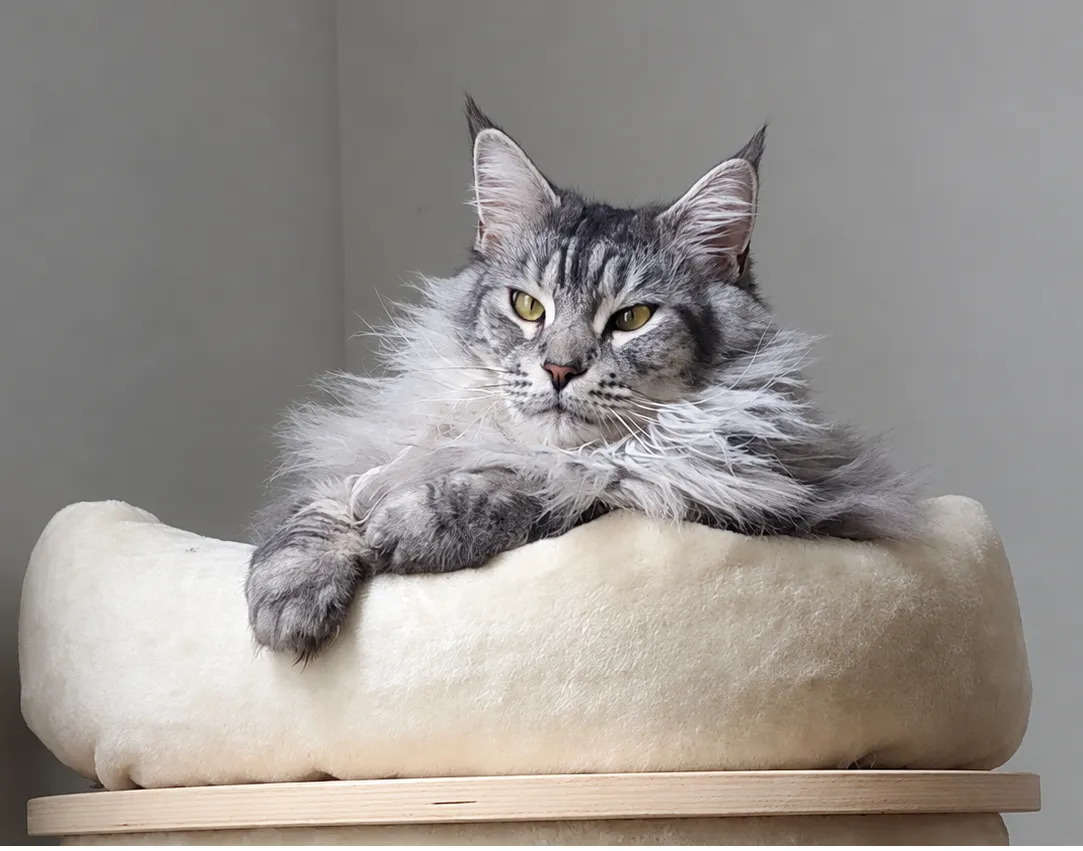
Maine Coons look laid-back, but they are sensitive cats, and stress is one of the most common reasons a previously reliable cat starts peeing outside the box. A house move, a new baby, a new pet, building work, changed working hours, even rearranged furniture can be enough. Owners on Reddit and Quora describe the same pattern: everything was fine until the new sofa arrived, or the neighbours’ cat started sitting on the fence.
Stress peeing often targets soft, absorbent things that smell like you: the bed, a pile of clean laundry, your favourite chair. If the accidents started within a week or two of a change at home, stress is a strong suspect.
What helps is routine and reassurance. Keep feeding times, playtimes, and your comings and goings predictable. Give your cat safe, high resting spots and a quiet room to retreat to, and play with him daily: a bored, under-stimulated Maine Coon is a stressed Maine Coon. A plug-in pheromone diffuser near the litter area is something many owners say helped — worth asking your vet about. And do not punish him: shouting or rubbing his nose in it only adds fear, and Cornell’s vets are clear that punishment is ineffective and can make house soiling worse. If your cat has also started hiding under the bed or in cupboards, read my guide on why Maine Coons hide — the two problems often share a root cause.
Multi-Cat Households: The Box Wars
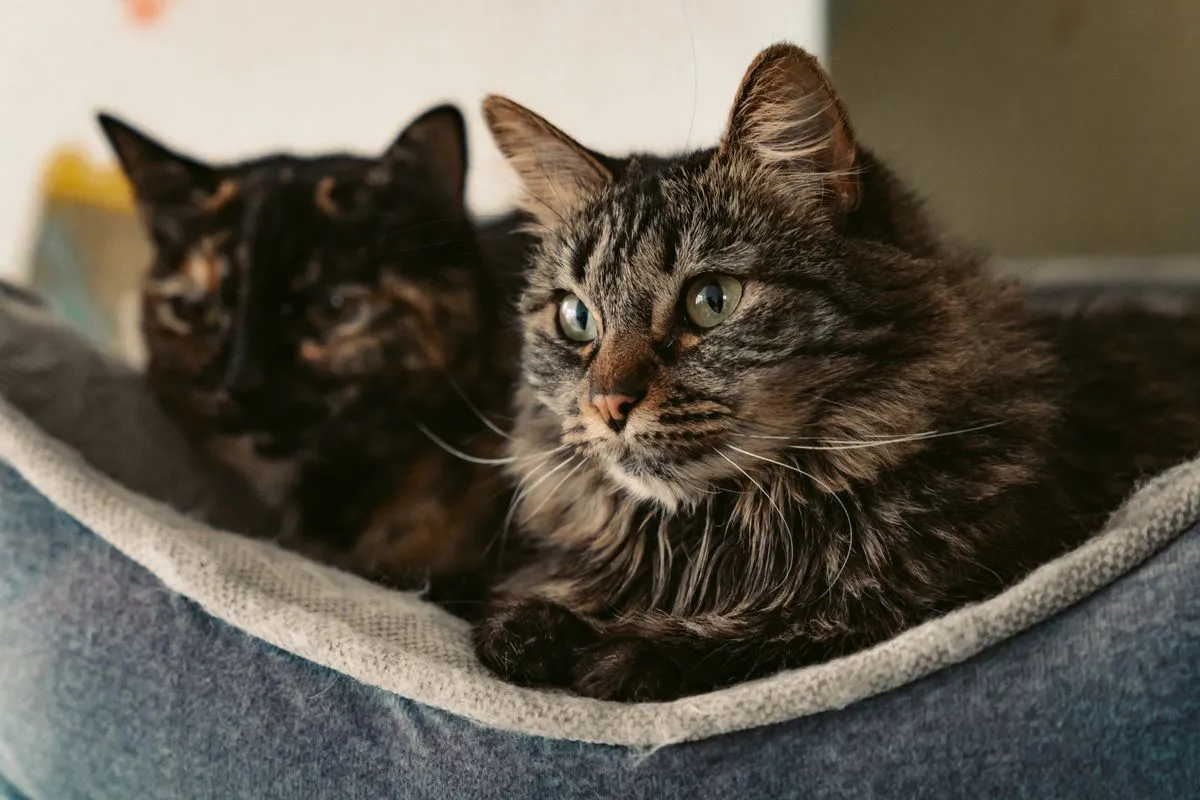
If you have more than one cat, the litter box can become contested territory: a confident cat may guard the box or ambush the other as he comes out, and the victim just quietly stops using it and finds somewhere safer.
The rule is one box per cat, plus one extra, spread across different rooms — two boxes side by side count as one location. Each cat needs an escape route too: a box wedged in a corner with one way out is a trap, and open-top boxes help because the cat inside can see what is coming.
Watch your cats around the box for a few days. If one cat is always nearby when the other needs to go, or the peeing cat only has accidents when the other is in the room, you have your answer. Separate the boxes into different areas, add an extra one, and give the nervous cat a box in a room the other rarely visits.
How to Clean Up So the Cat Does Not Go Back
Cleaning matters as much as any other fix: a cat will return to a spot that still smells like urine to him, even when you can no longer smell it. Use an enzymatic cleaner made for pet urine — ordinary soap, bleach, and vinegar do not break down the urine compounds, and ammonia-based cleaners can smell like urine to a cat. Blot up what you can, soak the area, let it sit for the time the label says, and repeat on soft furnishings if needed. While it dries, block access, or put a food bowl or toy there: cats prefer not to toilet where they eat and play.
When to See the Vet Urgently
Most cases are fixable at home once the cause is found. But do not wait and see if you notice straining with little or no urine (especially in a male), crying while trying to urinate, blood in the urine, very frequent tiny pees, a hard painful belly, vomiting, sudden lethargy, a cat who stops eating or drinking, or any sudden change in an older cat.
PetMD’s guide to common urinary problems in cats lists the same warning signs: a cat who has suddenly stopped using the box should be checked by a vet before you assume it is behavioural. A vet visit that finds nothing is money well spent; a missed blockage is not something you get a second chance at.
A Step-by-Step Plan to Fix It
Work through this in order, giving each step a few days:
- Book the vet first — always. Rule out infection, crystals, kidney trouble, diabetes, and arthritis.
- Work out peeing versus spraying. Squatting puddles mean a toileting problem; standing sprays on vertical surfaces mean marking.
- Upgrade the box. Extra-large, open-top, at least one and a half times your cat’s length.
- Fix the litter and the routine. Unscented clumping litter, scooped daily, full change weekly. Change brands gradually, never overnight.
- Add more boxes. One per cat plus one extra, in different rooms, on every floor your cat uses.
- Remove stress triggers. Keep routines steady, add play and high resting spots, and block the view of outdoor cats.
- Clean every accident with an enzymatic cleaner. No ammonia, no vinegar, and give it time to work.
- Track it. Note where and when each accident happens for two weeks — patterns will show you the cause faster than guessing.
- Be patient. Even when the cause is fixed, the habit can take weeks to fade. Reward box use calmly, and never punish an accident.
Still stuck after the vet’s all-clear and a fixed box setup? Ask your vet about a referral to a veterinary behaviourist.
Frequently Asked Questions
Why is my Maine Coon suddenly peeing outside the litter box?
Usually a medical problem — a urinary infection, bladder inflammation, arthritis pain — a stressful event at home, or a change to the box or litter. Book a vet visit first, then check box size, litter, location, and recent changes at home.
Why does my Maine Coon pee right next to the litter box?
Peeing just outside the box usually means the box itself is the problem: too small, litter the cat dislikes, a dirty box, or a covered box trapping odour. Many owners on Reddit and in Maine Coon Facebook groups report exactly this, and an extra-large open box often fixes it within days.
Do Maine Coons need a bigger litter box than other cats?
Yes. A Maine Coon is one of the largest domestic breeds, and a standard box is often too short for him to turn and dig comfortably — vets generally recommend a box at least one and a half times the cat’s body length.
Can stress make a Maine Coon pee outside the litter box?
Yes. Stress is one of the most common behavioural causes, and Maine Coons are sensitive to change: a house move, a new pet or baby, building work, a new outdoor cat, or a changed routine can all trigger it. Steady routines, daily play, and safe retreats usually help.
How many litter boxes does a Maine Coon need?
One box per cat plus one extra: a single Maine Coon needs two boxes, a two-cat home needs three. Spread them across different rooms and floors, never side by side, so each cat always has a clean, unguarded option.
Should I punish my Maine Coon for peeing outside the box?
No. Punishment does not teach a cat to use the box, and it usually makes things worse by adding fear and stress. Your cat is not doing it to spite you: find the cause, fix it, clean the spot properly, and reward him calmly when he uses the box.
The Bottom Line
A Maine Coon peeing outside the litter box is a message, not misbehaviour. Start with the vet, because medical causes are common and some are emergencies. Then look at the box with your cat’s eyes: big enough for a giant breed, clean enough for a fastidious cat, safe enough for a sensitive one? Fix the setup, cut the stress, clean every accident properly, and give it time. Most cats come back to the box once the reason they left it is gone. My guide to Maine Coon behaviour problems and how to stop them covers the other habits that often show up alongside litter box trouble.