Why Is My Maine Coon Coughing? Causes and When to Worry
The first time I heard my Maine Coon cough, I froze. He crouched low on the rug, stretched his neck out, and hacked — a dry, rattling sound that lasted a few seconds, then stopped. Nothing came up. My first thought was a hairball — and I had no idea whether that was right. If you are reading this because of maine coon coughing in your own home, I know that feeling.
What I have learned since then: a cough is not a hairball, a sneeze, or a reverse sneeze — and a cough that keeps coming back is always worth understanding.
Is it really maine coon coughing? Cough vs hairball vs sneezing vs reverse sneezing
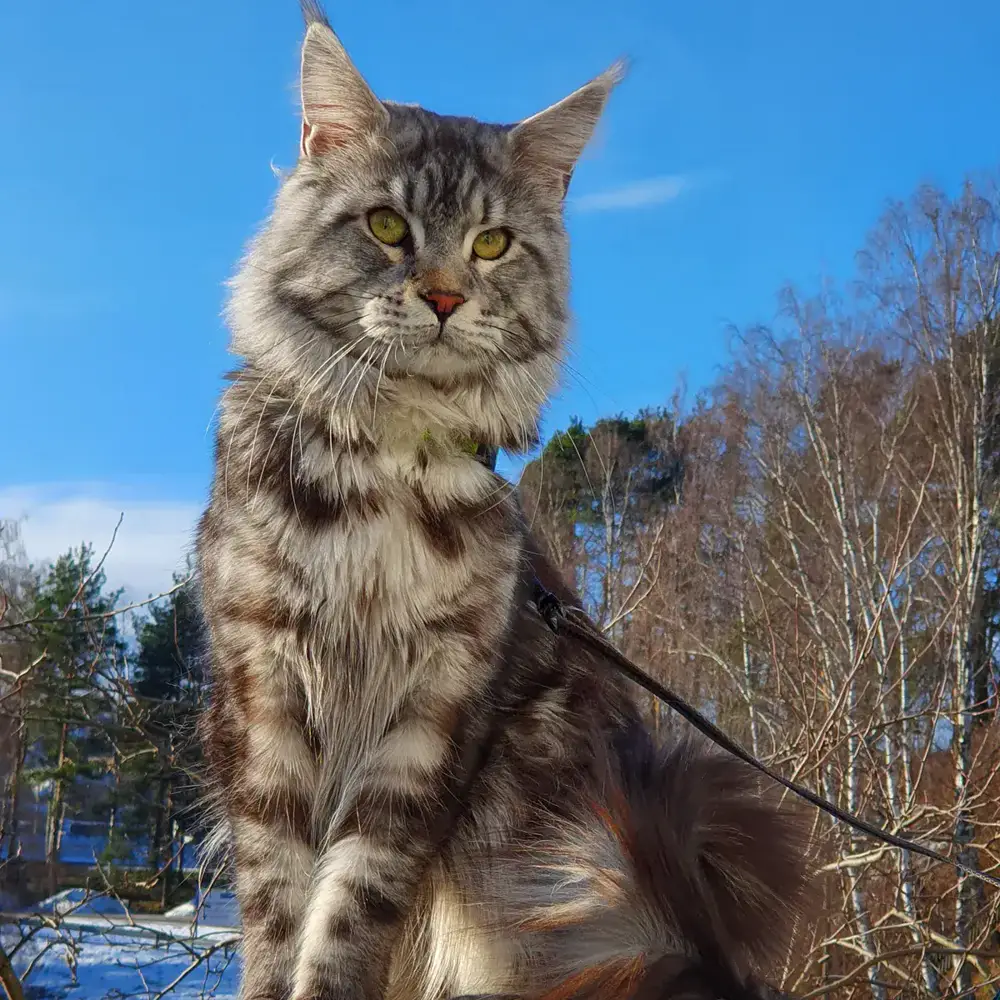
Owners on Reddit and in Maine Coon Facebook groups say the same thing again and again: they spent weeks assuming their cat was working on a hairball, only to learn later that it was a real cough. The confusion is understandable — a heavy-grooming, huge-coated breed produces plenty of hairballs, and the retching that brings one up looks and sounds a lot like coughing.
A true cough comes from the airways, not the stomach. The cat usually crouches low, stretches the neck forward, and gives short, jerky bursts — a dry hack, hack, hack — that produce nothing. VCA Animal Hospitals describes exactly this picture: a cat crouching down and extending its neck while it coughs, often confused with bringing up a hairball, but with no hairball produced.
A hairball episode is different once you know what to look for: the movement is rhythmic and wave-like — the whole belly contracts in smooth heaves, the back humps, and the episode ends with a wet tube of fur on the floor. Then the cat walks off and acts completely normal. If something comes up, it was a hairball. If nothing ever comes up, that is a cough pattern — my guide to Maine Coon hairballs covers when to stop assuming and start investigating.
A sneeze is easier to separate: a sharp, sudden burst of air outward through the nose, usually with a runny nose or watery eyes. If sneezing is the main event, the causes are usually different — see my guide to why Maine Coons sneeze.
Reverse sneezing frightens owners most and matters least: a rapid series of honking snorts, like the cat is inhaling sneezes, with the neck extended and the mouth closed. It lasts ten to thirty seconds, stops on its own, and the cat is fine straight after. If it happens often, mention it to your vet.
One tip owners in the Maine Coon groups swear by, and I do too: film the episode. A short phone video with sound is the most useful thing you can show your vet.
What usually causes a Maine Coon to cough
A cough is a symptom, not a diagnosis — something is irritating or inflaming the airways.
Hairballs, but not the way you think. A hairball itself is vomited from the stomach, not coughed from the lungs — but constant retching over fur can irritate the throat, and a long-coated breed like ours swallows a lot of fur. If the hacking ends with fur, that is your answer. If it never ends with fur, stop blaming hairballs: owners in Maine Coon groups describe kittens hacking for weeks while everyone says hairballs, and nothing ever coming up.
Dust and household irritants. This is the cause I check first at home, because it is the one I can actually fix. Maine Coons live close to the floor, nose-deep in litter dust, cigarette smoke, scented candles, air fresheners, plug-in diffusers, and cleaning sprays. In one Maine Coon Facebook group, an owner posted about a five-month-old kitten coughing in twenty-second bursts that sounded like a hairball but produced nothing — and the thread turned into owners troubleshooting litter, candles, and cleaners, one product at a time. I use unscented litter, I never spray anything near my cat, and candles and diffusers stay out of the rooms he sleeps in.
Allergies. A Maine Coon can be allergic to things it breathes in, as well as things it eats or touches. An allergy cough tends to come with company: itchy skin, watery eyes, sneezing, or over-grooming. If the cough flares in a particular room, after cleaning, or in a particular season, an allergy is high on the list — I cover the full picture in my guide to Maine Coon allergies.
Asthma. This is the cause owners most often miss, and the one I take most seriously. Feline asthma is inflammation of the lower airways, and coughing is its hallmark sign. Cornell University’s College of Veterinary Medicine notes that asthma affects between 1 and 5 percent of cats, and that during an attack many cats hunch close to the ground and extend their necks forward — the same crouch owners mistake for a hairball effort. Asthma coughs are dry, repeated, and unproductive, often with wheezing — sometimes after play, sometimes for no reason you can see.
Breeders on Facebook talk about this openly — one shared a young Maine Coon coughing since he was only a few weeks old, later given a working diagnosis of probable feline asthma, with wheezing after exertion about once a week. Stories like his are why I never dismiss a young cat’s cough as “just a hairball” — asthma can start early, and only a vet can identify it, since no single test proves it.
Respiratory infection. A cat cold can cause coughing, usually with sneezing, a runny nose, watery eyes, or a hoarse voice. A cough with a snotty nose points upward, toward the nose and throat; a cough on its own, with clear eyes and a dry nose, points lower, toward the chest. Either way, a cough plus a cat off its food or hiding away is a vet visit, not a wait-and-see.
Heart disease — a mention, not a headline. Maine Coons are the breed every owner associates with heart disease. The reassuring fact is that coughing in cats is not commonly linked to heart disease the way it is in dogs — VCA Animal Hospitals says so plainly in its coughing in cats guide. Fluid around the lungs from advanced heart disease can cause coughing, so a persistent cough in an older Maine Coon deserves a vet’s ears on the chest — but a cough is not, on its own, a sign of heart trouble. If screening is on your mind, my guide to HCM screening in Maine Coons covers what it involves. For the cough itself, the heart is a footnote — the airways are the story.
What to watch while you decide
How often, and how long. A single fit that never repeats is a different matter from coughing every day. Note the date of the first episode, how many fits happen in a day, and whether they are getting closer together. Owners in the groups who could quote numbers got the fastest help.
Breathing between episodes. This matters more than the cough itself. Watch your cat resting or asleep: quiet and even, or fast and shallow? Chest heaving? Mouth open? Open-mouth breathing in a cat is never normal and always urgent. Counting breaths while your cat sleeps gives your vet a number to work with.
Appetite and energy. A cat that coughs but eats well, plays, and uses the litter tray normally is in a different category from one that goes off food, hides, or sleeps far more than usual. Owners in the groups describe this split again and again. Lethargy plus coughing moves the visit from “soon” to “now.”
What the cough sounds like, and what changed at home. Dry and hacking, or wet and rattly? A wet cough that ends with swallowing can mean mucus or fluid in the chest, and any cough that produces blood, even a speck, is an emergency. Write down what changed at home — new litter, food, or cleaning products. Vets ask, and owners forget.
What helps at home while you wait for the vet
There is no home cure for a cough. But there are sensible things you can do while you wait for an appointment. Keep the air clean: ventilate the room, skip scented products, and use unscented, low-dust litter. If you smoke, smoke outside — cigarette smoke is a known asthma trigger. Keep the cat calm and warm, with fresh water nearby, and do not pick him up mid-fit.
Film the next episode, note the time and what happened just before it, and bring it to the appointment.
Do not give your cat human medicine, cough syrup, or anything left over from another pet. The only safe medicine is the one your own vet prescribes for your own cat, after seeing him. If you are unsure whether the situation can wait, call the clinic — that phone call is free.
When maine coon coughing is an emergency
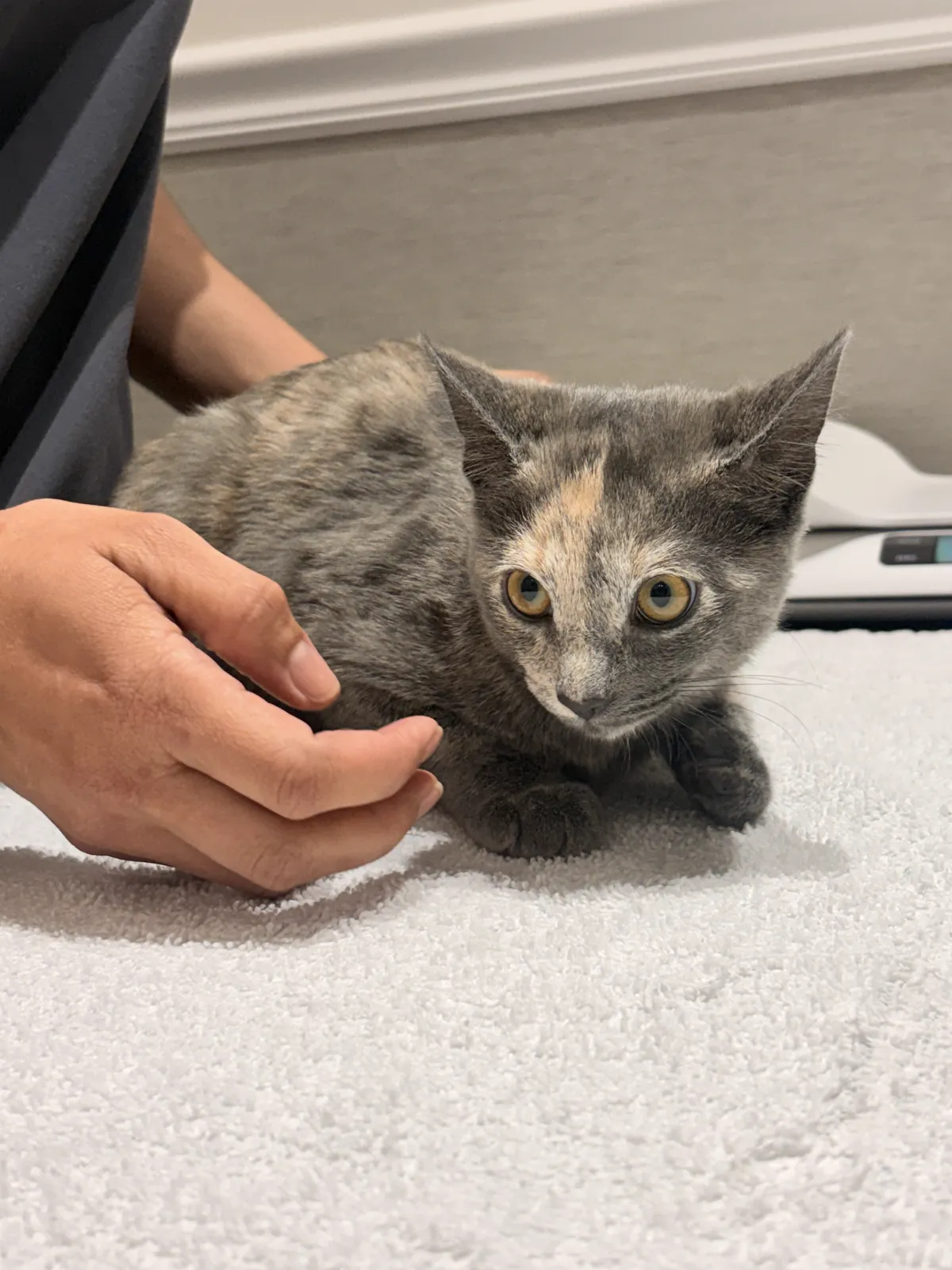
Most coughs are not emergencies. These signs are — if you see any of them, skip the watching and go.
- Breathing with the mouth open, panting, or gasping
- Blue or grey gums or tongue
- Visible struggle to breathe, belly heaving
- Collapse, weakness, or a cat that cannot get up
- A fit that does not stop, or fits one after another
- Coughing up blood, or a cough with thick discharge
- Coughing with not eating, extreme lethargy, or hiding
VCA Animal Hospitals puts it simply: seek veterinary care right away if your cat has difficulty breathing or is breathing with an open mouth. Cornell’s asthma guidance says the same about an asthma attack — it can be life threatening. Do not wait to see whether it passes.
Even without emergency signs, book a routine visit if a cough persists for more than a few days, keeps returning, produces mucus, or comes with weight loss or a cat that seems unwell.
Frequently asked questions
Why is my Maine Coon coughing but no hairball comes up?
Because it may not be a hairball at all. A real cough produces nothing — that is normal. Hairballs end with fur on the floor; coughs end with hard swallowing and an empty floor. If your cat hacks again and again without ever producing fur, think irritation, allergy, asthma, or infection — and tell your vet.
How do I tell a cough from a hairball?
Watch the body, not just the sound. A cough is a low crouch with the neck stretched forward and short, jerky, dry bursts from the chest. A hairball is rhythmic, wave-like stomach contractions that end with fur. Film it and show your vet — a video settles the question faster than any description.
Can Maine Coons get asthma?
Yes. Cats of any breed can develop feline asthma, and Maine Coons are no exception — Cornell notes it affects between 1 and 5 percent of cats. The classic sign is a repeated dry cough in a low crouch, often with wheezing, sometimes after play. It is a long-term condition managed with ongoing vet care — a diagnosis is also the start of a plan.
When should I take a coughing Maine Coon to the vet?
Right away for breathing difficulty, open-mouth breathing, blue gums, collapse, blood, or a fit that will not stop. Within a few days if the cough persists, keeps returning, produces mucus, or comes with appetite loss, lethargy, or weight loss. A cough going on for weeks deserves an appointment either way.
A cough makes an owner feel helpless — you cannot reach inside your cat’s chest and fix it. What you can do is watch carefully, clear the air, write down what you see, and let a vet decide what it means. Most of the time the answer is simple. When it is not, catching it early is what makes the difference.