HCM in Maine Coons: Screening & Prevention
The first time a breeder friend mentioned the HCM screening Maine Coon breeders swear by, my girl was four months old and I assumed heart disease was an old-cat problem. I nodded along, then Googled it in the parking lot — and I’m glad I did. HCM, hypertrophic cardiomyopathy, is the most common heart disease in cats, and Cornell’s veterinary college lists the Maine Coon among the breeds predisposed to it. The part that changed how I care for my cats: an echocardiogram — a heart ultrasound — can catch HCM long before a cat ever looks or acts sick. This is the plain-English walkthrough I wish someone had handed me back then: what the appointment is actually like, when to book it, how to find the right specialist, what the results mean, and what to do between screenings.
A Quick Primer: Why Maine Coons Get Their Hearts Checked
In HCM, the muscular wall of the heart — usually the left ventricle, the chamber that pumps blood to the body — thickens. A thicker wall means the chamber can’t fill or pump as efficiently, and over time that can lead to congestive heart failure, dangerous blood clots, or sudden death. Cornell’s veterinary college explains the mechanics clearly if you want the full medical picture.
The cruel part is how quiet it starts. Early HCM often causes zero symptoms — no coughing, no slowing down, nothing you’d notice at home. That’s exactly why screening exists: the echo sees the thickening years before your cat feels it. If you want the broader health landscape for the breed, my Maine Coon lifespan and health issues overview covers the other conditions worth knowing about. This article stays on the cardiac-screening pathway.
What an Echocardiogram Actually Involves
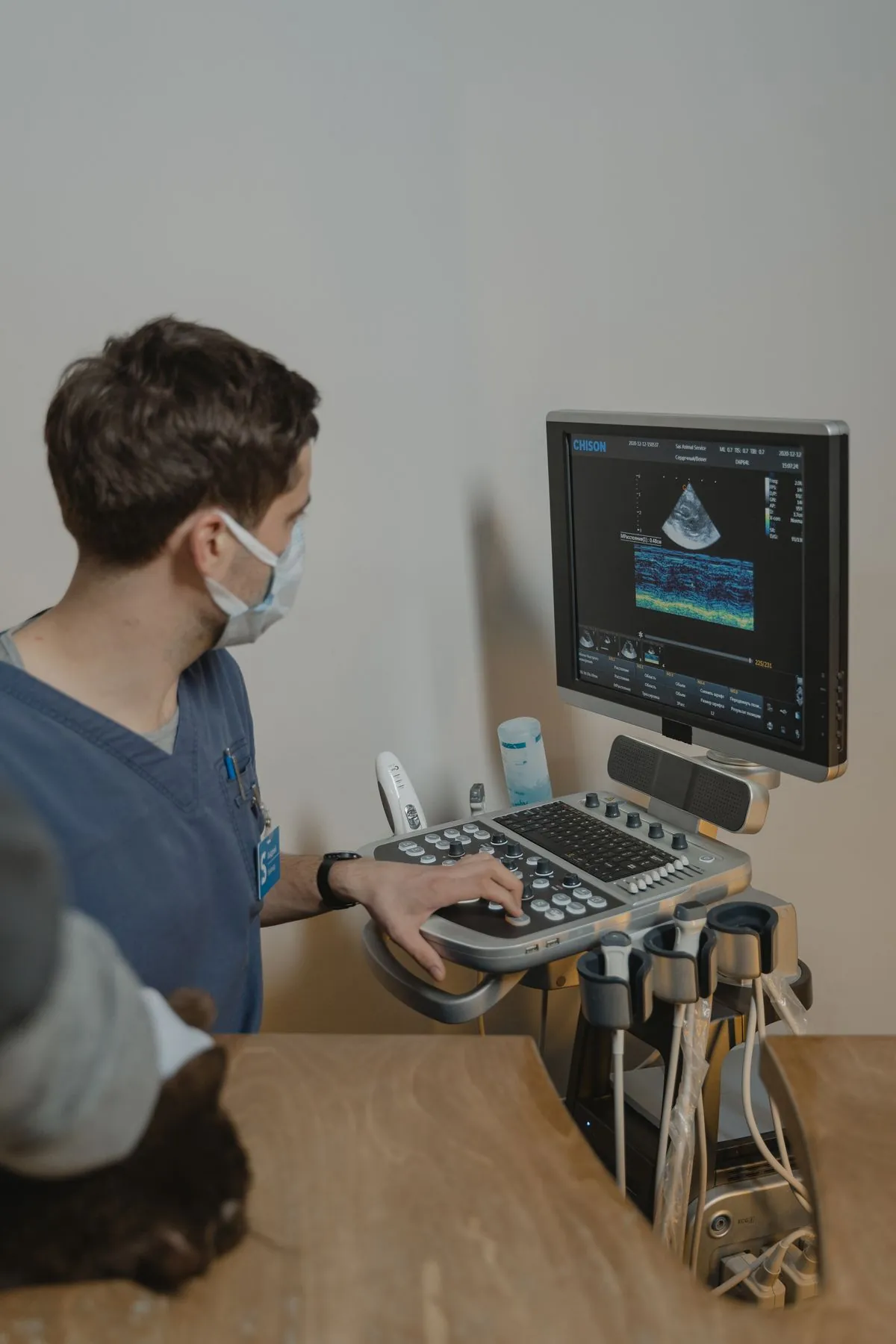
If you’ve never watched a cat get an echo, here’s the appointment step by step, so nothing surprises you.
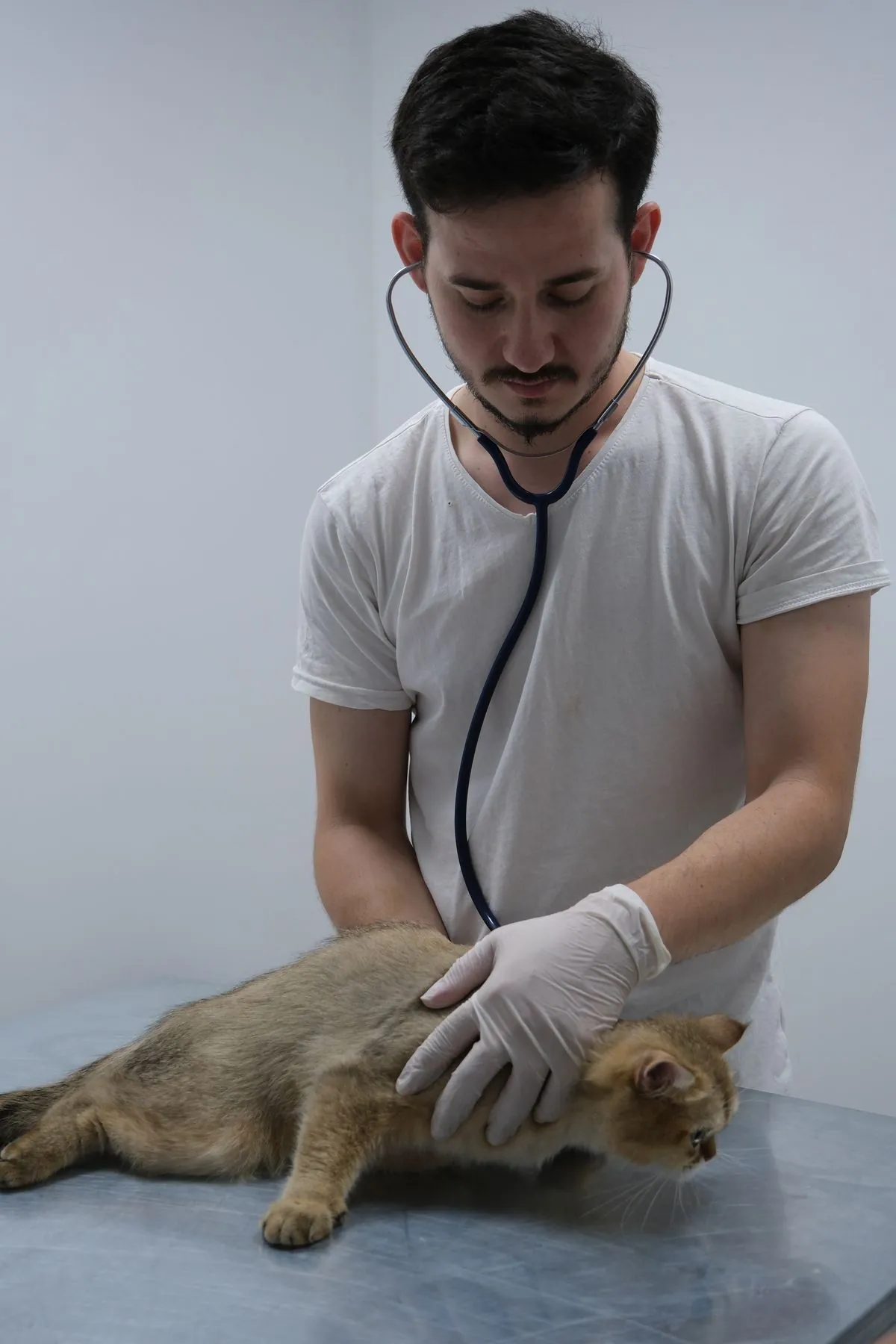
It starts like any vet visit: the cardiologist listens to your cat’s heart with a stethoscope, checking for murmurs or rhythm changes. Then comes the part owners ask about most — a small patch of fur may be shaved on the tummy just behind the front legs, where the probe sits. Some cardiologists prefer to scan through the fur with extra gel instead, so it’s worth asking when you book. (If you show your cat, mention it beforehand.)
Your cat lies on their side while the cardiologist moves the probe over the chest with warm gel. The reassuring part: you’re usually in the room, often helping hold your cat. Cardiologists prefer scanning cats awake with gentle restraint in a quiet room — no fasting, no anesthesia. It typically takes 30 to 45 minutes.
On the monitor you’ll see your cat’s actual heart beating in real time, and the cardiologist takes measurements: wall thickness, chamber sizes, how well the heart fills and squeezes. Color Doppler overlays show blood flow direction and speed. Afterwards you get a written report with the findings — keep it; you’ll want it for your records, your breeder, and your pet insurer.
Owners who’ve been through it describe it as far calmer than they feared — breeders on Facebook post screening-day photos of cats dozing on the table mid-scan. One breeder who is also a veterinarian put it in a way that stuck with me: the echo shows the heart “here and now.” Another well-known Maine Coon on social media had a routine scan come back with only very mild thickening of one wall — not scary, just a baseline on file and a recheck in 12 months. That is what screening is for: boring results you can file away with relief.
It isn’t always boring, either. A vet show on Facebook followed a Maine Coon named Minnie, brought in over a heart murmur after her half-brother died suddenly of HCM at two. Her echo showed thickened heart walls — caught because her owner pushed for the scan instead of waiting for symptoms.
HCM Screening Maine Coon Timeline: When to Start and How Often
Breeding cats follow the strictest rhythm, and it’s worth knowing what responsible breeders do even if your cat is “just” a pet — it tells you what good looks like. Many breeders echocardiogram their breeding cats every year until age five, then every other year. Others repeat every one to two years through the cat’s breeding career. Some breeders also use DNA screening for known mutations — a separate piece of the health puzzle — but this article is about the ultrasound pathway.
For pet Maine Coons there’s no single universal rule — this is a conversation with your vet, not a schedule to memorize. A common approach: a baseline echo as a young adult, then a vet-guided recheck rhythm. Any murmur or rhythm change at a routine checkup should move the echo up the calendar.
If you’re bringing home a kitten, add two things to your first vet visit checklist: ask your vet when they’d recommend a first cardiac screening, and ask your breeder for the parents’ recent echo reports. You’re looking for the words “normal” or “no evidence of HCM” on a report from a board-certified cardiologist. Reputable breeders expect the question and usually have a folder of reports ready.
One honest caveat: an echo is a snapshot of the heart on that day. A breeder I follow shared how her stud — yearly clear echoes, posted proudly — died suddenly of HCM anyway. She closed her cattery. Screening lowers risk and catches disease at its most treatable, but no test can promise what a heart will do years from now.
Finding a Board-Certified Cardiologist
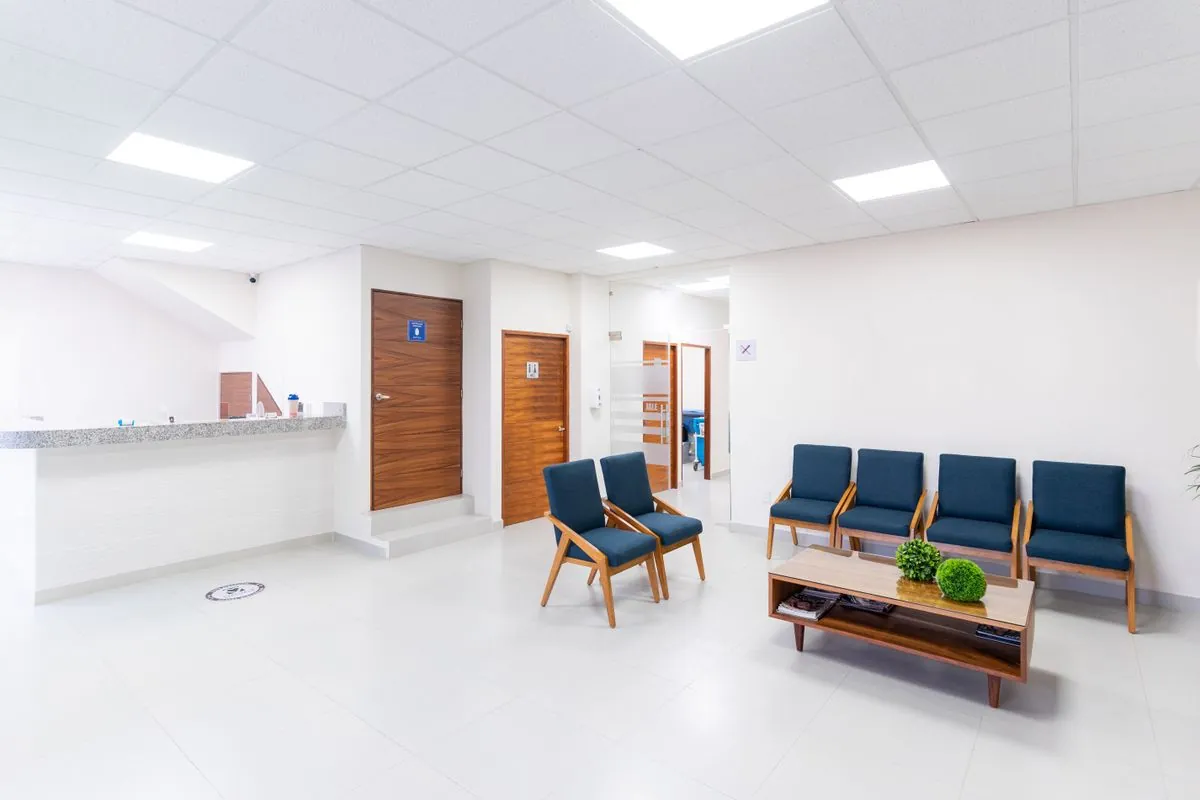
Start with your regular vet and ask for a referral to a board-certified veterinary cardiologist — look for the DACVIM (Cardiology) credential. Feline hearts are small, fast, and subtle, and reading them well takes years of practice. When booking, ask: who performs and interprets the echo, will you get a written report, and can you stay in the room.
Breeders sometimes organize screening clinic days, where a cardiologist scans dozens of cats back to back — one breeder described over forty animals screened in a single day. Ask breeders or local breed clubs whether any are planned near you; the per-cat cost is often friendlier than a solo referral.
Keep a copy of every echo report in a folder — physical or digital. You’ll hand it to your vet at future visits, your breeder may want updates for their records, and your insurer will want documentation if anything ever needs claiming.
Reading Your Echo Results Without Panicking
Results day is nerve-wracking no matter how prepared you are, so here’s a translation guide.
Normal / “no evidence of HCM.” This is the result you’re hoping for. Some cardiologists issue a certificate stating the cat is clear of evidence of HCM at present — note those last two words. File it, celebrate quietly, and keep your recheck rhythm.
Equivocal or mild changes. This is the gray zone, and it is not a tragedy. Mild thickening of one wall, a borderline measurement — your cardiologist will usually recommend monitoring and a recheck on a set timeline, like the 12-month recheck in the story above. They may also want to rule out look-alikes: high blood pressure and hyperthyroidism can thicken heart walls too, and those get checked with straightforward tests.
Changes consistent with HCM. Remember why you screened: early detection is the entire game. PetMD’s veterinary-reviewed guide notes that catching HCM early offers the best opportunity to intervene and protect quality of life. Ask: what stage, when do we recheck, what signs do I watch for, and does this change anesthesia or medication plans? Many cats with early, mild HCM live full lives with monitoring.
And keep the conversation going as your cat ages. Heart screening doesn’t retire when the kitten years end — my senior Maine Coon care guide covers how health monitoring shifts once your giant hits their golden years.
Between Screenings: The At-Home Habit That Matters
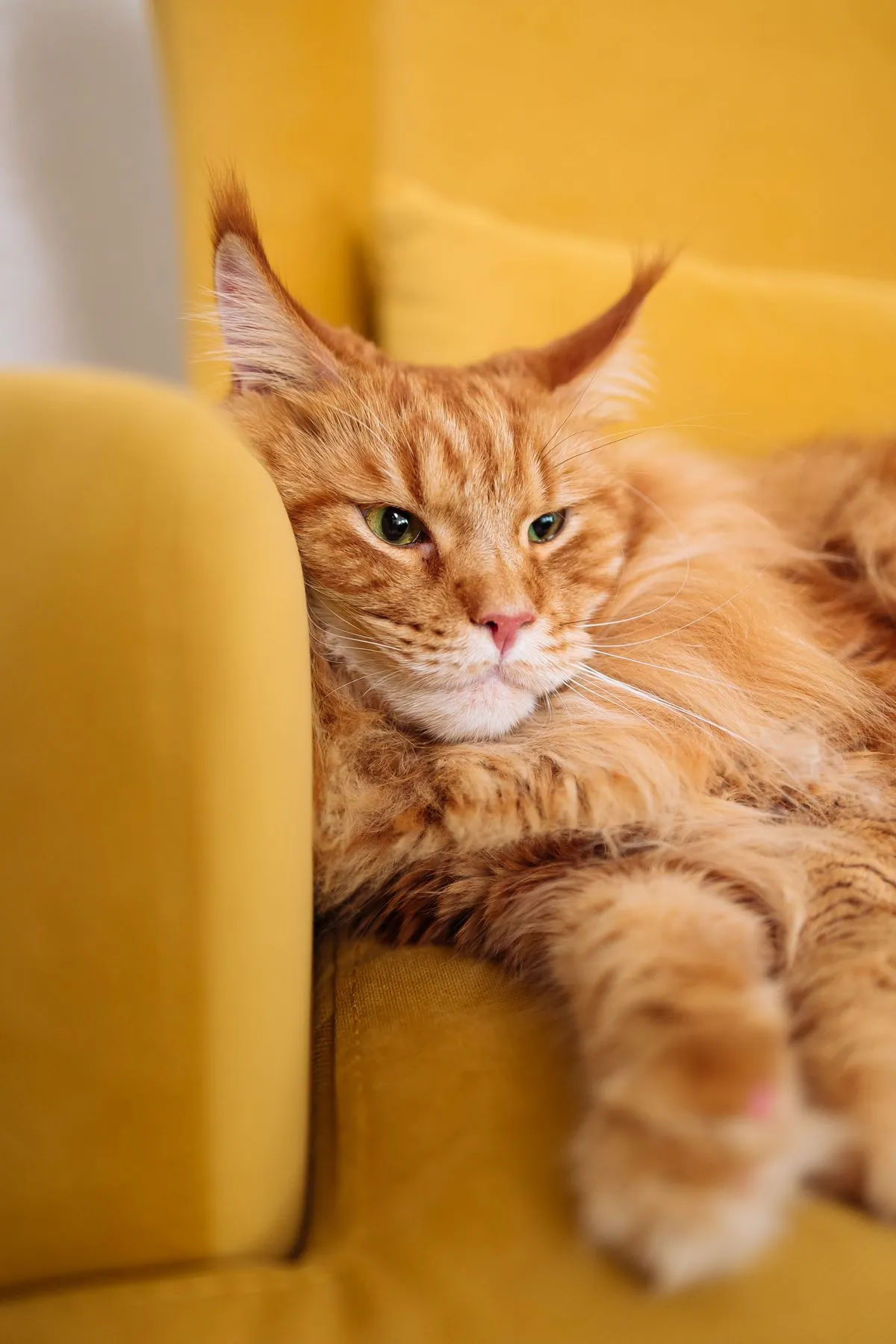
Between echos, the single most useful thing you can do at home is also the simplest: count your cat’s resting breathing rate. Cornell says a normal resting respiratory rate for cats is 15 to 30 breaths per minute, and a rate consistently above 35 while relaxed or sleeping should prompt a call to your vet.
Do it while your cat is deeply asleep. Watch the chest rise and fall — one rise-and-fall is one breath. Count for 15 seconds and multiply by four, and jot it down now and then so you know your cat’s normal.
Beyond the numbers, notice the cat: playing less, tiring faster, breathing harder at rest, hiding more. None of these diagnose anything alone — but all are worth a vet visit in a breed with HCM on its radar.
What HCM Screening Costs and How Owners Budget for It
Let’s talk money plainly. Owners commonly report paying somewhere in the $300–$600 range for a cardiologist-performed echo in the U.S., though it varies a lot by region and clinic — breeder-published 2026 cost breakdowns land in the same band. Always ask for the price when you book so there’s no surprise at checkout, and ask whether screening clinic days are available near you.
Two notes from owners who’ve been there: treat screening as a predictable annual cost, like good food and insurance — not an emergency expense. And get pet insurance sorted before any cardiac finding exists, since it can count as pre-existing afterward. My breakdown of pet insurance for Maine Coons covers what’s worth insuring in this breed.
Frequently Asked Questions
My vet didn’t hear a murmur. Does my Maine Coon still need an echo?
Quite possibly — talk it over with your vet. A large proportion of cats with HCM have no murmur or abnormal heart sounds, so the stethoscope can’t rule it out. It cuts the other way too: Cornell notes around 20% of cats with murmurs have no heart disease. The echo is the tiebreaker.
Will my cat be sedated for the echocardiogram?
Usually not. Cardiologists prefer to scan cats awake with gentle, minimal restraint in a quiet room, because sedation can change the measurements. If a cat is too stressed to get clear images, the cardiologist may suggest light sedation — but that’s the exception, and they’ll discuss it with you first.
Will they shave my cat’s fur?
Maybe a small patch on the tummy behind the front legs, where the probe makes contact — some cardiologists skip shaving entirely and use extra gel. The fur grows back quickly. If you show your cat, mention it when booking so the cardiologist can plan accordingly.
Can I stay with my cat during the appointment?
In most cases, yes — and owners are often asked to help hold their cat on the table. Confirm when you book, but being present is the norm for screening echoes, not the exception.
My breeder did health testing on the parents. Does my kitten still need screening?
The parents’ clear echoes are genuinely good news — they lower your kitten’s risk. But HCM can develop later in life, which is why breeders re-screen every year or two instead of testing once. Treat the parents’ results as a strong start, not a lifetime pass.
Heart screening sounds intimidating until you’ve done it once. Then it becomes what it should be: a calm appointment, a napping cat, a report in a folder, and the quiet confidence that you’re watching the one thing in a Maine Coon most worth watching. Book the baseline, learn your cat’s resting breathing rate, and keep the rechecks on the calendar. Your giant is counting on you — and this is one of the kindest things you can do for them.