Maine Coon Eye Colors: What They Mean, From Green to Gold to Odd-Eyed
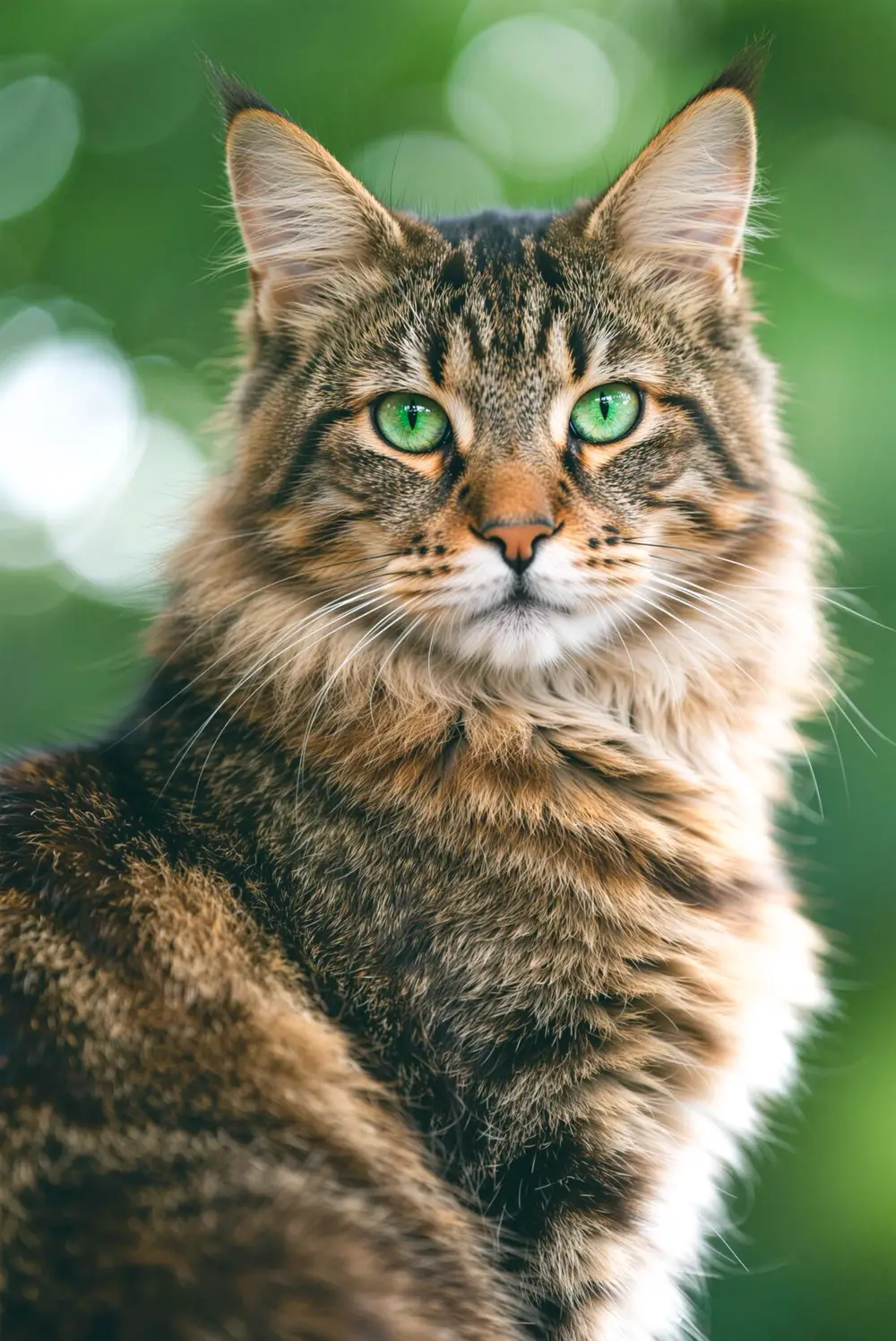
There is a moment every Maine Coon owner remembers: the first time you catch your cat’s gaze in the right light and realize those eyes are not just green, they are something closer to bottle glass, or polished copper, or warm honey. Maine Coon eye colors are one of the breed’s most talked-about features. Why are some green and some gold? Why do kittens’ eyes change? And what does it mean when the two eyes do not match?
I have spent years staring into those big, slightly oval eyes (my coons stare right back, usually while asking for dinner). Here is what the colors mean, what drives them genetically, and the health notes worth knowing.
Maine Coon Eye Colors at a Glance
Under the breed standard, adult Maine Coon eyes come in a fairly tight palette: green, gold, green-gold, and copper. Blue eyes and odd eyes (one blue, one pigmented) are also allowed, but only in white or bi-color patterned cats. That is the official picture. In real life, you will see a lot of in-between shades, and that is completely normal.
Here is the quick map:
- Green runs from soft mint to deep emerald, common across nearly all coat colors and especially prized in silvers.
- Gold runs from pale yellow-gold to rich amber, the classic warm Maine Coon look, frequent in tabbies.
- Copper is deep, warm bronze or reddish gold, and it is traditional in solid black cats.
- Green-gold (hazel) sits between green and gold, often with a luminous blended quality.
- Blue appears in solid white Maine Coons and cats with white spotting. It is not a pigment; it is the absence of pigment, the same way the sky looks blue.
- Odd-eyed means one blue eye and one pigmented eye.
What Actually Decides Your Cat’s Eye Color
Eye color in Maine Coons comes down to melanin, the pigment that also colors fur and skin. How much melanin reaches the iris decides the shade: lots of pigment gives copper or deep gold, a medium amount gives gold or amber, very little gives green, and none at all gives blue.
Two quirks of Maine Coon development make this interesting:
Kittens are born with almost no melanin in their eyes. That is why every kitten starts life blue-eyed. As the kitten grows, melanin production kicks in and the color builds toward its final shade.
The white coat gene can block melanin from reaching one or both eyes. This is behind blue eyes and odd eyes in white and white-spotted cats: the gene interferes with pigment cells during development, and if melanin never reaches an eye, that eye stays blue.
Green Eyes
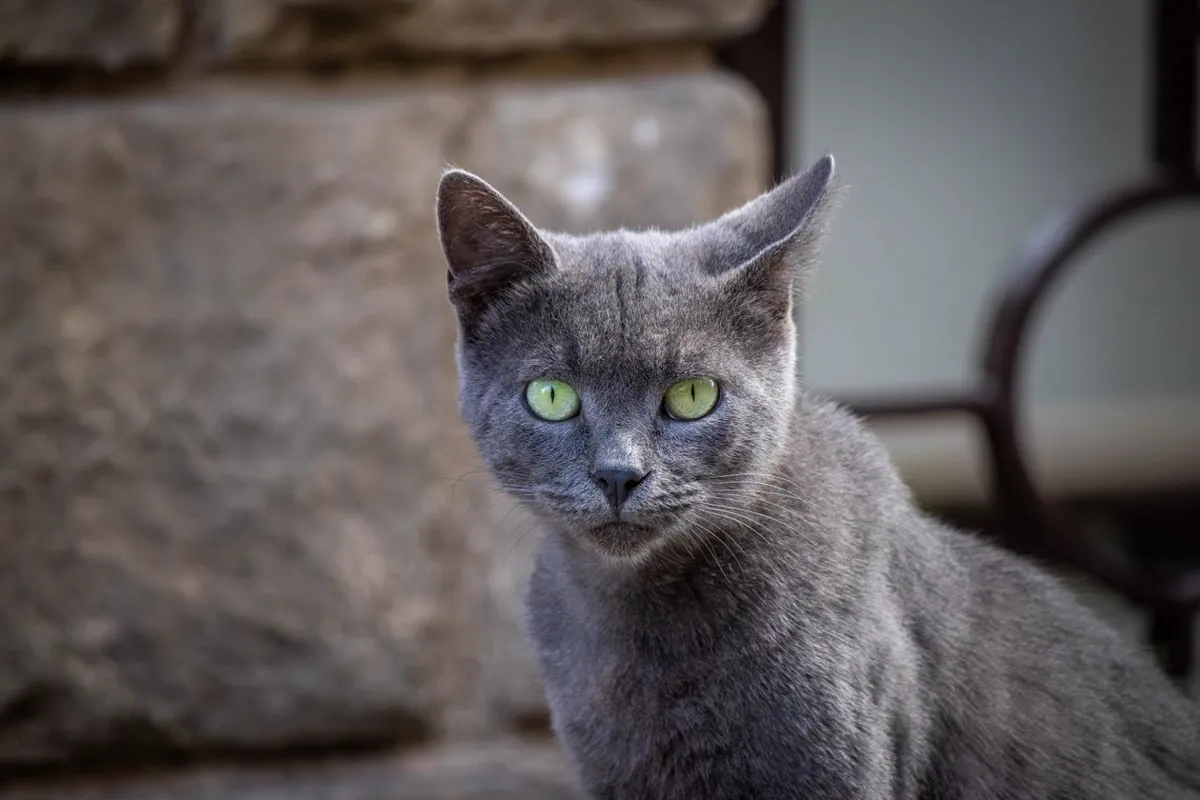
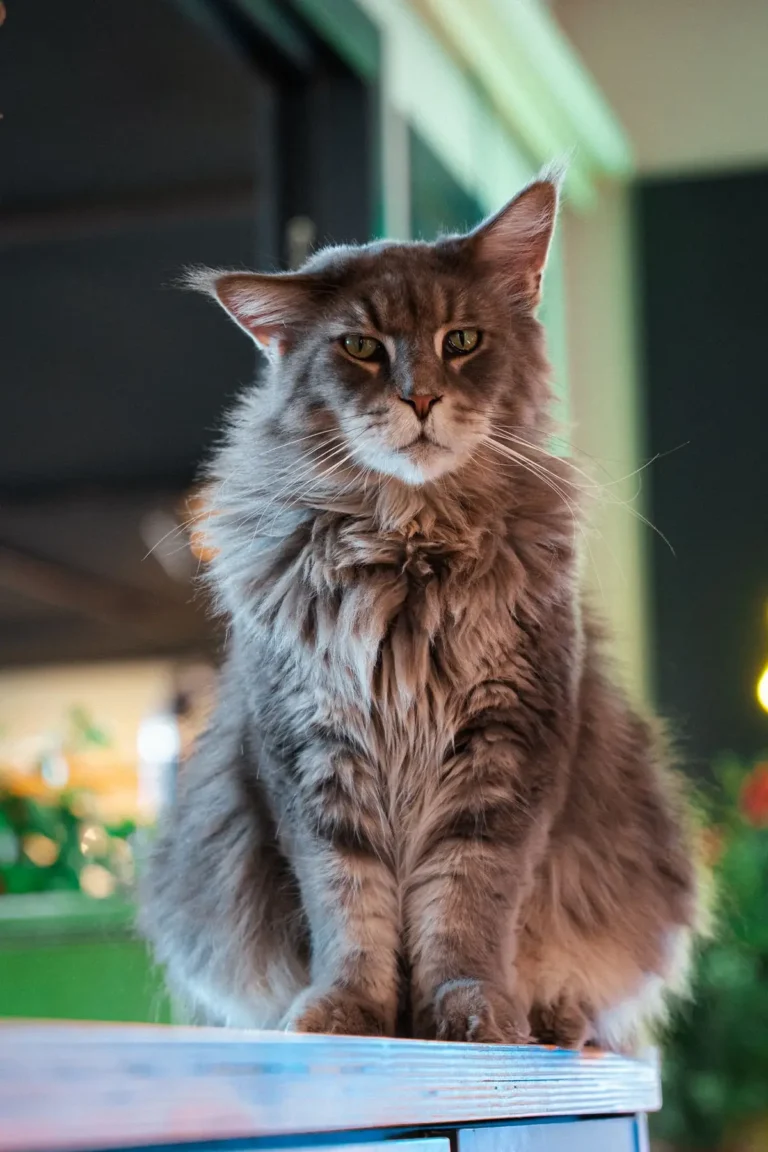
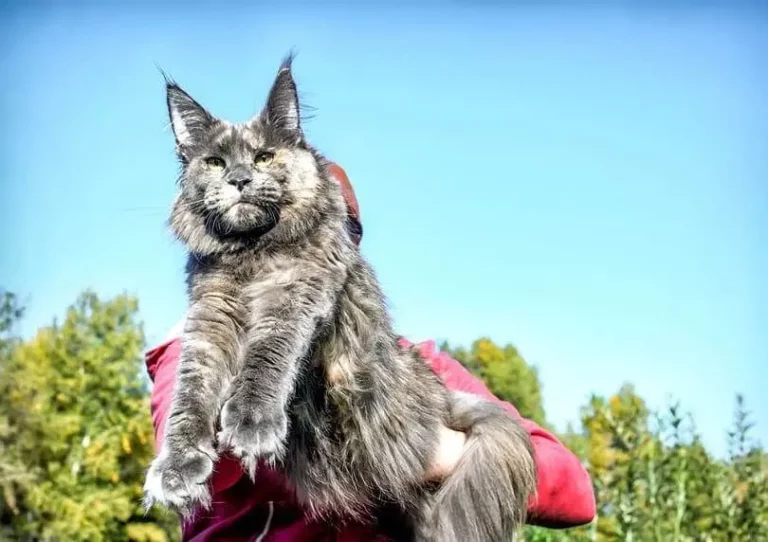
Green is probably the eye color people picture first with a Maine Coon, and it is common across the breed. A clear, even green is especially associated with shaded and chinchilla silver cats, where the standard favors pure green with a dark outline.
Lighting plays tricks: owners on Instagram and Threads constantly post photos where the same cat looks mossy green in one room and almost golden in another.
If you have a silver Maine Coon, read how coat and eye color pair up in our guide to silver Maine Coons.
Gold Eyes
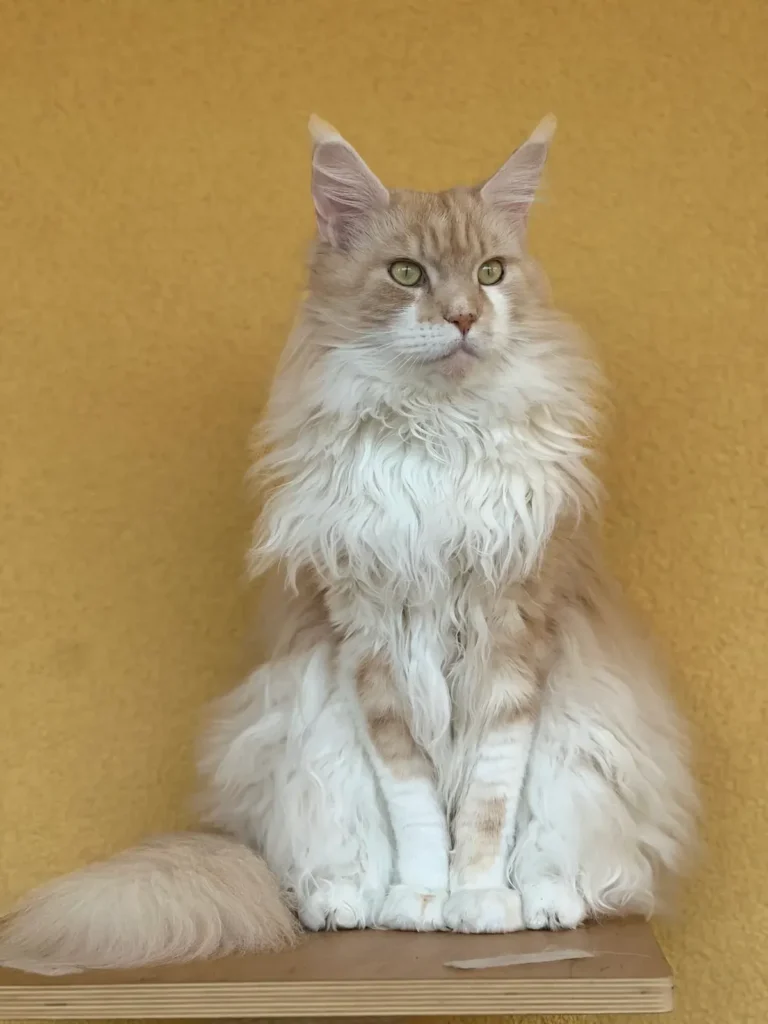
Gold is the warm, sunny shade that runs from pale straw to deep amber, and it is extremely common in brown tabbies, the most numerous Maine Coons at shows and in homes.
Gold sits in the middle of the melanin scale. It is the quintessential Maine Coon look to many people, but no single eye color is correct for the breed as a whole.
Copper Eyes
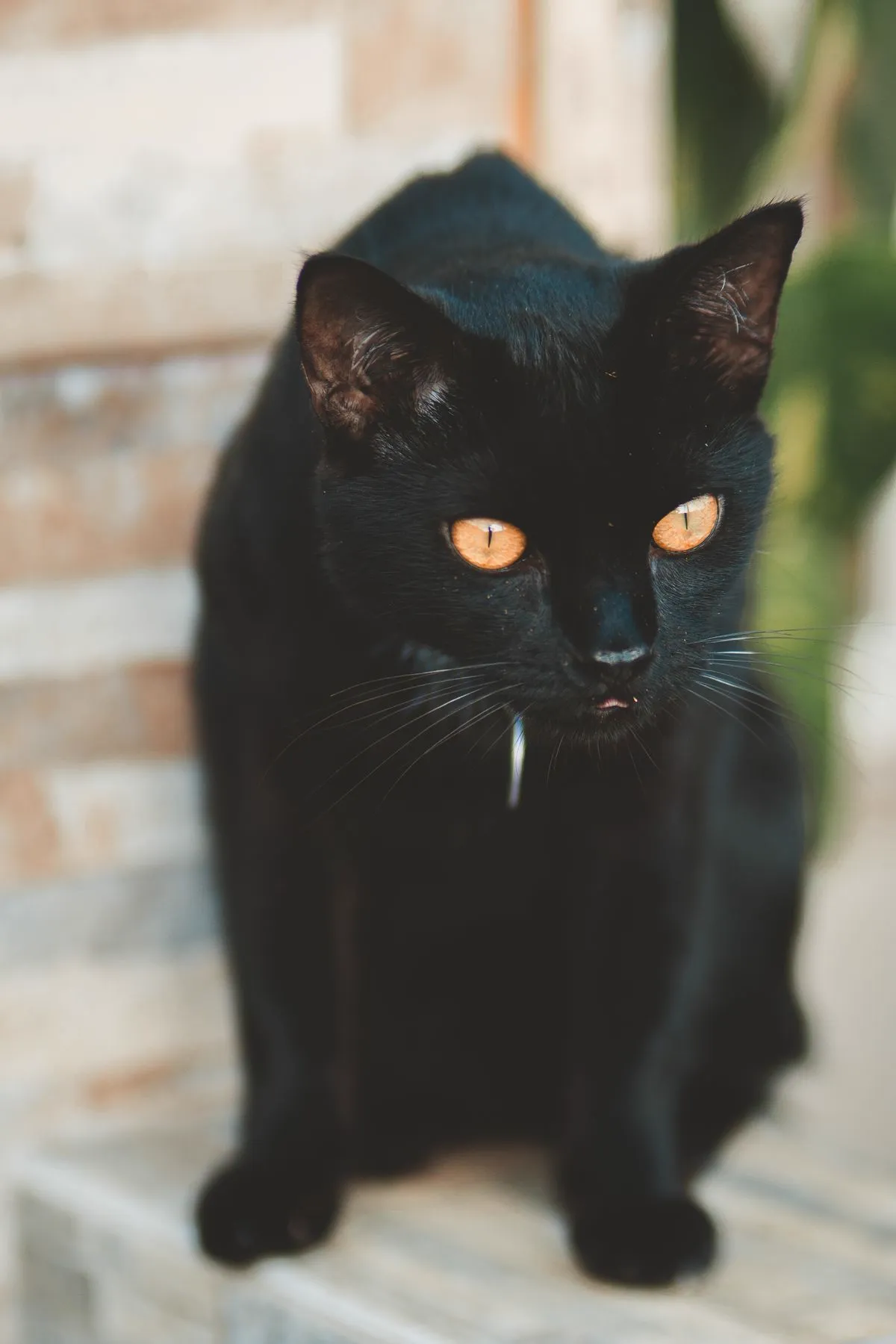
Copper is gold turned up a notch: deep, warm, bronze-reddish, the color of a new penny. Solid black Maine Coons traditionally carry deep copper eyes, and red (orange) tabbies show copper often too, something we cover in our orange Maine Coon guide.
One thing owners in cat forums talk about a lot: copper can be slow to finish. Where green and gold usually settle by a few months old, a truly deep copper can take the better part of a year. If your young cat’s copper still looks unfinished, patience is usually the answer. The full breakdown of how coat and eye color connect lives in our Maine Coon colors guide.
Hazel and Green-Gold Eyes
Hazel is the in-between zone: green and amber blended, sometimes with gold flecks scattered through green. It is fully standard and more common than people think. It also causes the most confusion in photos. A cat whose eyes photograph blue in one shot and gold in another is usually hazel, not odd-eyed.
Blue Eyes
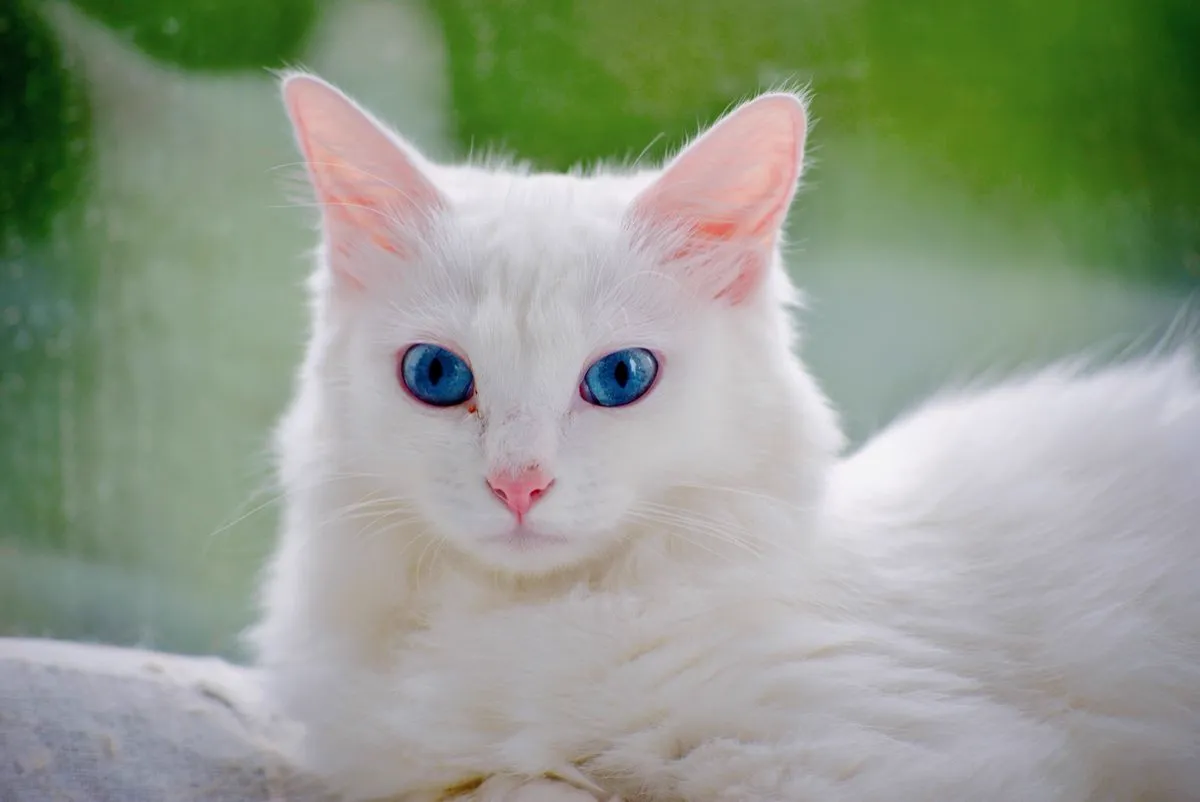
In Maine Coons, blue eyes belong to white cats. Blue eyes are only accepted by the breed standard in solid white Maine Coons or in bi-color cats with substantial white markings. There is a genetic reason: blue in a cat’s eye means no melanin in the iris, and in this breed that happens when the dominant white gene or the white spotting gene blocks pigment from reaching the eye.
This also means something practical for buyers. If a listing advertises a blue-eyed black Maine Coon, treat it as a red flag. Under the CFA and TICA breed standards, blue eyes do not occur in genetically solid black or smoke Maine Coons; such listings are mislabeled colors, mixed-breed cats, or misleading marketing. A solid blue (gray) coat with green or gold eyes is the real thing, and you can see true blue-coated cats in our blue Maine Coon guide.
Odd-Eyed (Heterochromia) Maine Coons
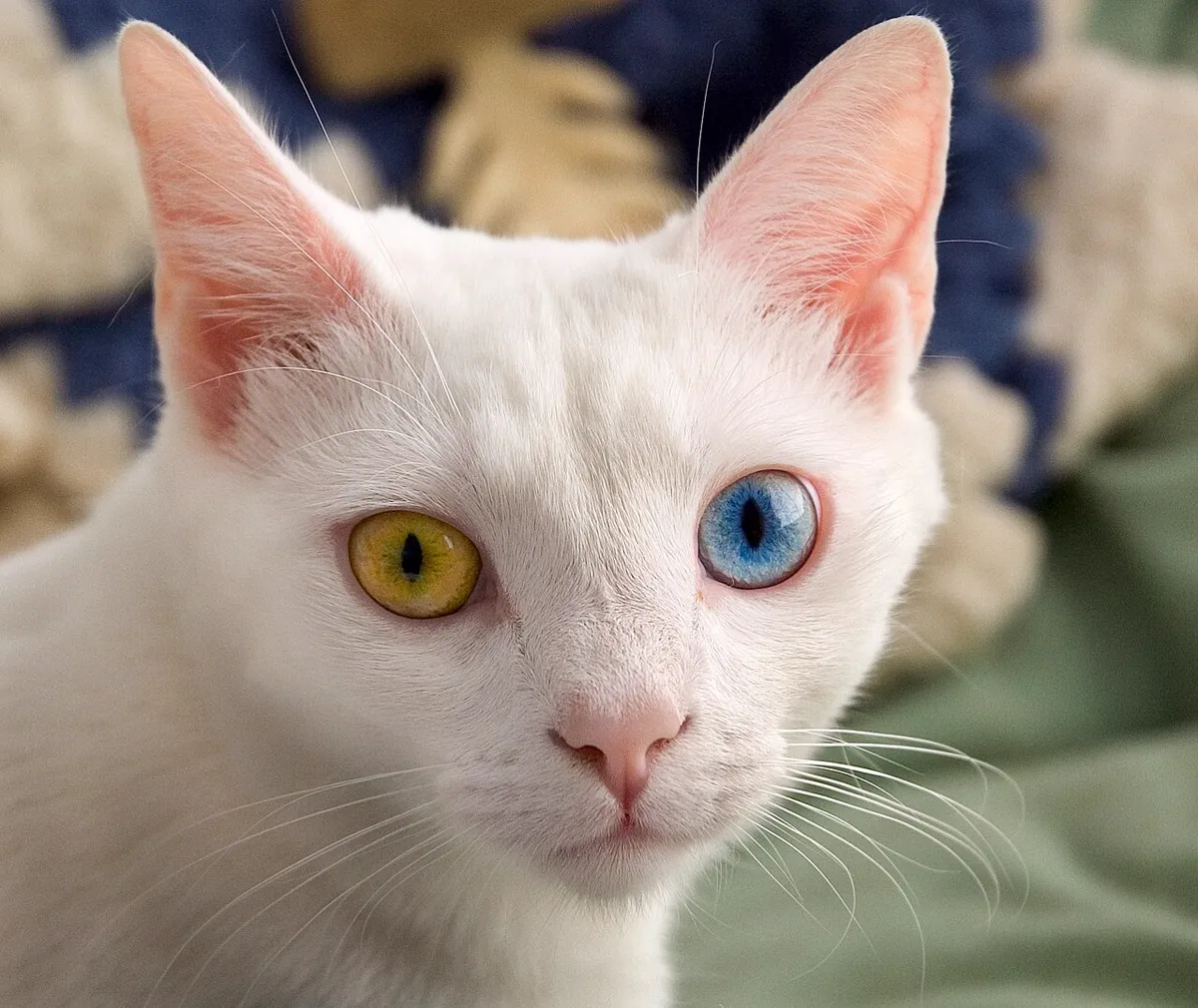
The condition is called heterochromia, and in Maine Coons it comes from the same mechanism as blue eyes: the white gene blocks melanin from reaching one eye but not the other. It is most common in solid white or high-white cats.
A Facebook cattery recently posted a young kitten with one vivid ocean-blue eye and one olive-green eye, and the comments filled with people asking about her. Odd-eyed kittens get this kind of attention everywhere.
Most odd-eyed cats see perfectly well out of both eyes. The one health note attached to odd eyes is hearing, covered below. Otherwise it is cosmetic, with no bearing on temperament.
The Kitten Years: When Eye Color Changes
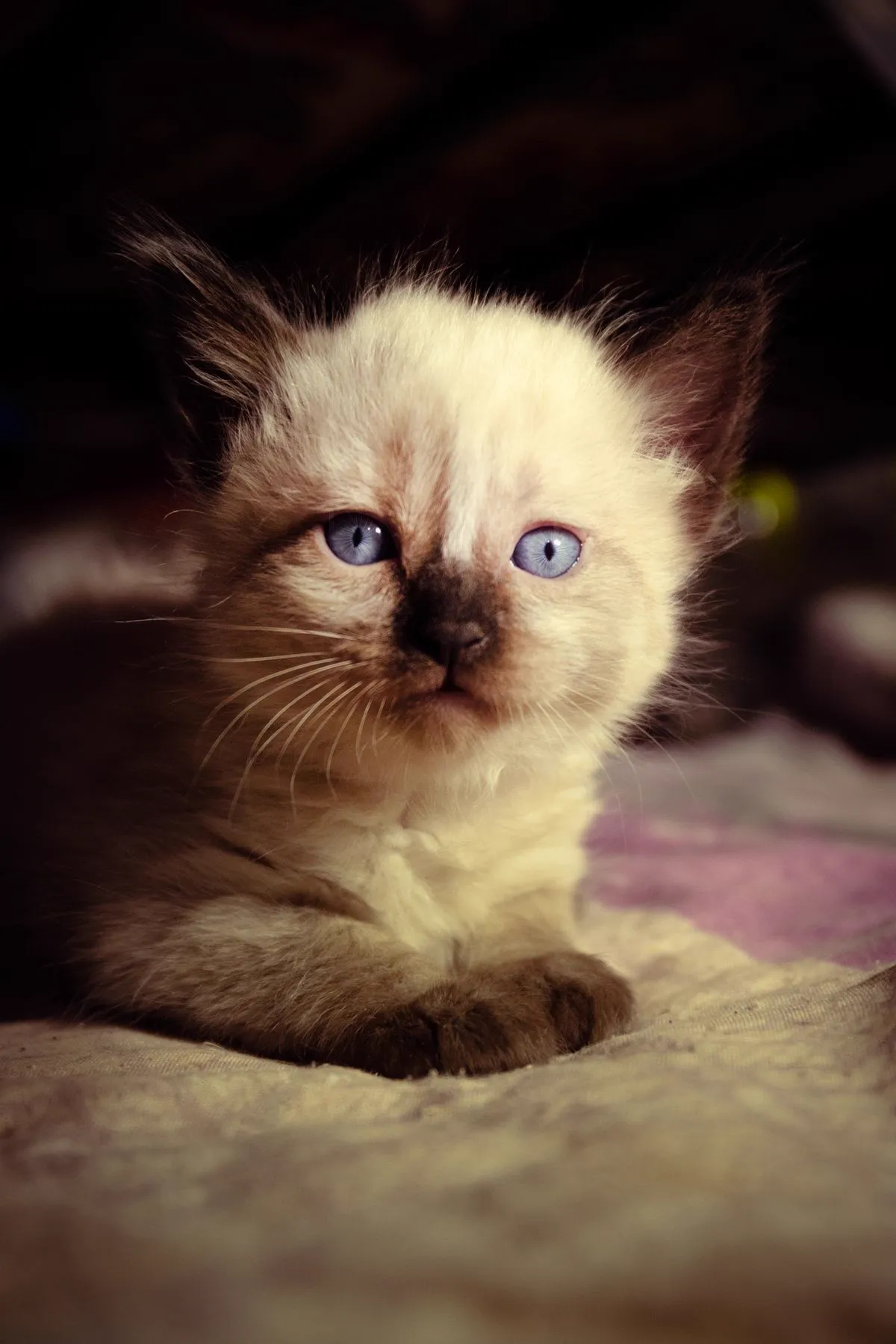
Every Maine Coon kitten is born blue-eyed because melanin production in the iris has not started yet. Around six to eight weeks, the color begins to shift. By three to four months, the adult color is usually starting to settle in, though deep copper can take up to a year before the final shade locks in.
An educational video posted on Instagram this year walked through this with a black Maine Coon: blue eyes at three weeks, shifting toward gold, vivid golden-yellow by six months. Owners in the comments shared the same story about their own black coons.
So if you are choosing a kitten, do not pick based on eye color before about four months; that dreamy blue may become gold.
Health Notes Worth Knowing
For the most part, Maine Coon eye colors are purely cosmetic, and the breed is not considered predisposed to genetic eye problems any more than other cats. But two things are worth knowing.
White, blue-eyed, and odd-eyed cats and hearing. There is a real, studied link between the white coat gene, blue eyes, and congenital deafness: the same embryonic pigment cells that color the iris also build parts of the inner ear. Studies have found that a majority of blue-eyed white cats are deaf in one or both ears, while white cats with pigmented eyes are much less likely to be affected. In odd-eyed cats, the affected ear is usually the one on the blue-eyed side. Many blue-eyed and odd-eyed white cats hear perfectly well, so it is a risk, not a certainty. Check whether your kitten responds to sound from each side, and mention it to your vet. Deaf cats live full, happy lives; they just need to stay indoors.
A change in an adult cat’s eye color is different. Kitten color changes are normal. But if a grown cat’s eye color shifts or one eye starts looking different from the other, that is worth a vet visit. Veterinary sources note that adult eye color changes can signal inflammation of the eye (uveitis) or other underlying conditions, including infection or high blood pressure. Do not panic, but do not ignore it either.
As always, your veterinarian is the right person for any specific concern about your own cat. The Cat Fanciers’ Association (cfa.org) and The International Cat Association (tica.org) publish the breed standards, and Cornell University’s College of Veterinary Medicine (vet.cornell.edu) is a solid source for feline health information.
Frequently Asked Questions
What is the most common Maine Coon eye color?
Green and gold are the two most common, with copper and green-gold close behind. All of these are ordinary for the breed.
Do Maine Coon kittens’ eyes change color?
Yes. All kittens are born with blue eyes because the iris has not produced melanin yet. The color starts shifting around six to eight weeks and usually settles by three to four months, though deep copper can take up to a year. Never choose a kitten for its eye color before four months.
What does it mean if my Maine Coon has two different colored eyes?
That is heterochromia, usually one blue eye and one green, gold, or copper eye. In Maine Coons the white coat gene blocks pigment from reaching one eye, and it is most common in white or high-white cats. It is cosmetic, but because the same gene family is linked to deafness, check that the cat hears well, especially on the blue-eyed side.
Can a black Maine Coon have blue eyes?
No. Blue eyes are tied to the white coat gene, and a true solid black Maine Coon does not carry it. Solid black and black smoke Maine Coons have green, gold, or copper eyes. A blue-eyed black Maine Coon in an ad is a red flag for mislabeling.
Are odd-eyed Maine Coons deaf?
Not necessarily. There is a studied link between the white gene, blue eyes, and congenital deafness, and blue-eyed white cats are at higher risk. Many odd-eyed cats hear normally. Test your kitten’s response to sound on each side and keep it indoors.
Does eye color say anything about a Maine Coon’s personality?
Nothing. Eye color reflects melanin levels in the iris, full stop. The sweet, chirping personality people love shows up with green eyes, gold eyes, copper eyes, and odd eyes alike.
I will never get tired of the look a Maine Coon gives you when the light hits those eyes just right. Whether yours are green as bottle glass or one blue and one gold, the color is just the wrapping. Underneath is the same big, gentle cat.