7 Grooming Mistakes Maine Coon Owners Make
When I got my first Maine Coon, I thought grooming was just… brushing. How hard could it be? Six months later I was sitting on the floor with a growling cat, a half-eaten mat behind his ear, and a pair of scissors in my hand that I was seconds away from using on him. That moment taught me more than any book ever did. Most of the grooming mistakes Maine Coon owners make come from good intentions — we just do the wrong thing with the wrong tool at the wrong time.
I have made nearly every mistake on this list myself, and I hear the same stories from other owners. Owners on Reddit say they brush every single day and still wake up to fresh mats overnight. Usually nothing is wrong with the cat — something is wrong with the routine. Here are the seven mistakes I see most, and what to do instead.
The 7 Grooming Mistakes Maine Coon Owners Make Most
Mistake 1: Cutting mats out with scissors
This is the most dangerous mistake on the list, and the one I almost made myself. It feels like the quickest fix: a tight mat under the arm, kitchen scissors nearby, just snip it out. Please don’t.
A cat’s skin is paper-thin, and it gets pulled right up into the mat. You think you are cutting fur, but you may be cutting into skin without knowing it. VCA’s grooming guidance says it plainly: never use scissors on mats — it is far too easy to nick your cat’s delicate skin. Big clumps come out with clippers, or with a professional groomer.
What actually works: hold the base of the mat between your fingers so you’re not pulling skin, and gently tease the edges apart with a wide-tooth steel comb, working from the outside in. If the mat is tight against the skin, bigger than a dime, or your cat flinches, stop — that’s a job for clippers or a groomer.
If you’re dealing with mats regularly, my post on Maine Coon matted fur walks through the safe removal steps in detail.
Mistake 2: Using the wrong brush — or only a brush
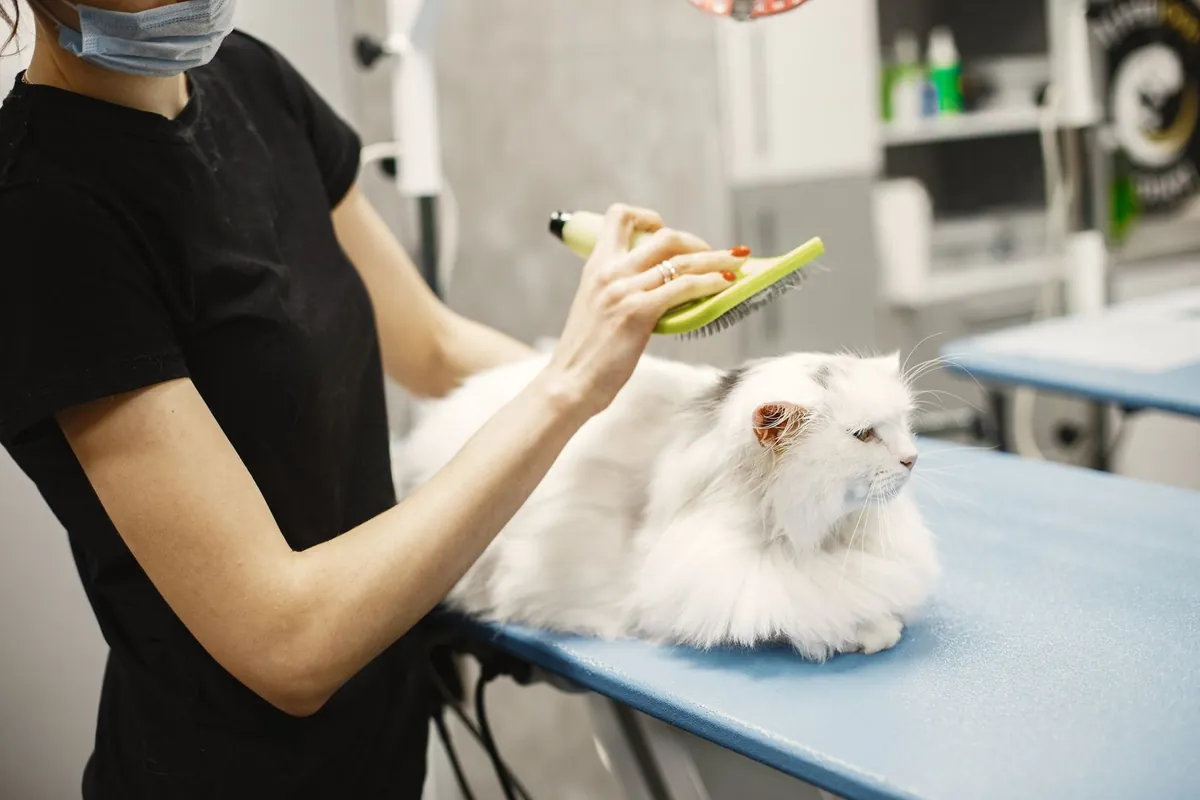
A lot of owners buy a slicker brush, use it on the back and sides, and call it a day. The problem: a brush alone often skims over the surface while the undercoat underneath keeps compacting — that’s why people brush daily and still get mats. And some popular deshedding tools cut and strip the topcoat instead of just removing loose hair.
Breeders on YouTube and in show circles put it bluntly: combs, not rakes, not deshedding tools. One grooming infographic from a cattery advises a gentle pin tool over the harsh cutting-type deshedders that change coat texture.
I learned this the expensive way with a well-reviewed deshedding gadget that left my boy’s sides looking moth-eaten. The Maine Coon coat is supposed to be heavy, shaggy, and silky — the actual breed description from the CFA’s Maine Coon article — and stripping it with the wrong tool works against what the coat is meant to be.
I put together everything I know about which tools actually work in the best brush for Maine Coon cats: what owners actually use.
Mistake 3: Only brushing the easy spots
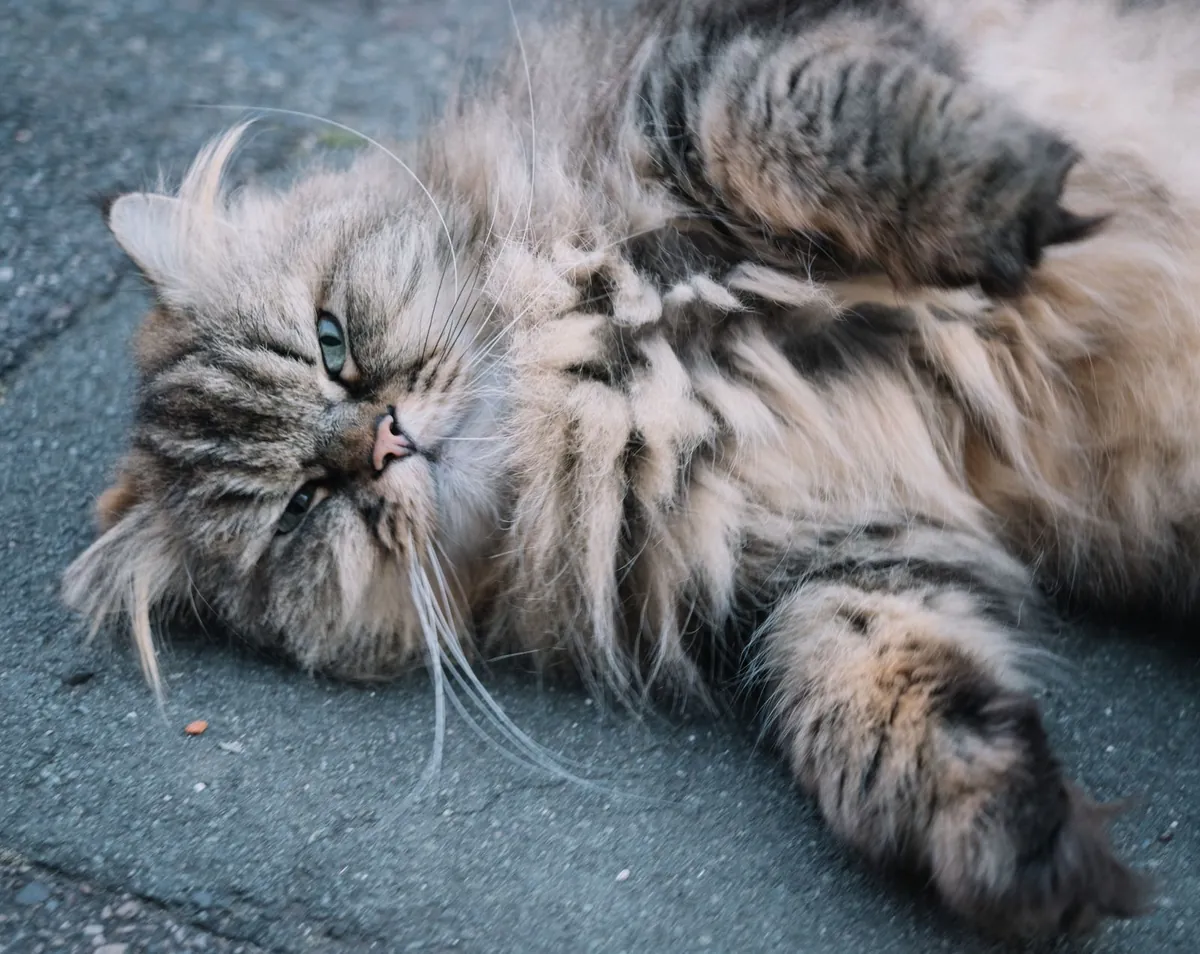
Show me a Maine Coon owner, and I’ll show you someone who brushes the back beautifully and ignores the armpits. Mats don’t form on the back. They form in the armpits, the belly, behind the ears, along the britches and rear legs, and the groin — the friction zones where the cat bends, rubs, and curls.
PetMD’s brushing guide names the same trouble zones: under the armpits, belly, rear legs, and especially the tail. And here’s the catch — your cat will happily let you brush his back and then turn into a crocodile the second you reach under his arm. So owners stop trying, and the hidden spots go weeks without attention.
What I do now: every session ends with a “mat patrol” — a quick finger check under both front legs, the belly, behind the ears, and the backs of the thighs. You feel a tangle starting before you can see it. Treats throughout. Catch a tangle at the soft stage and it takes ten seconds; find it at the rock stage and it takes an hour.
Mistake 4: Bathing a matted cat — or bathing wrong
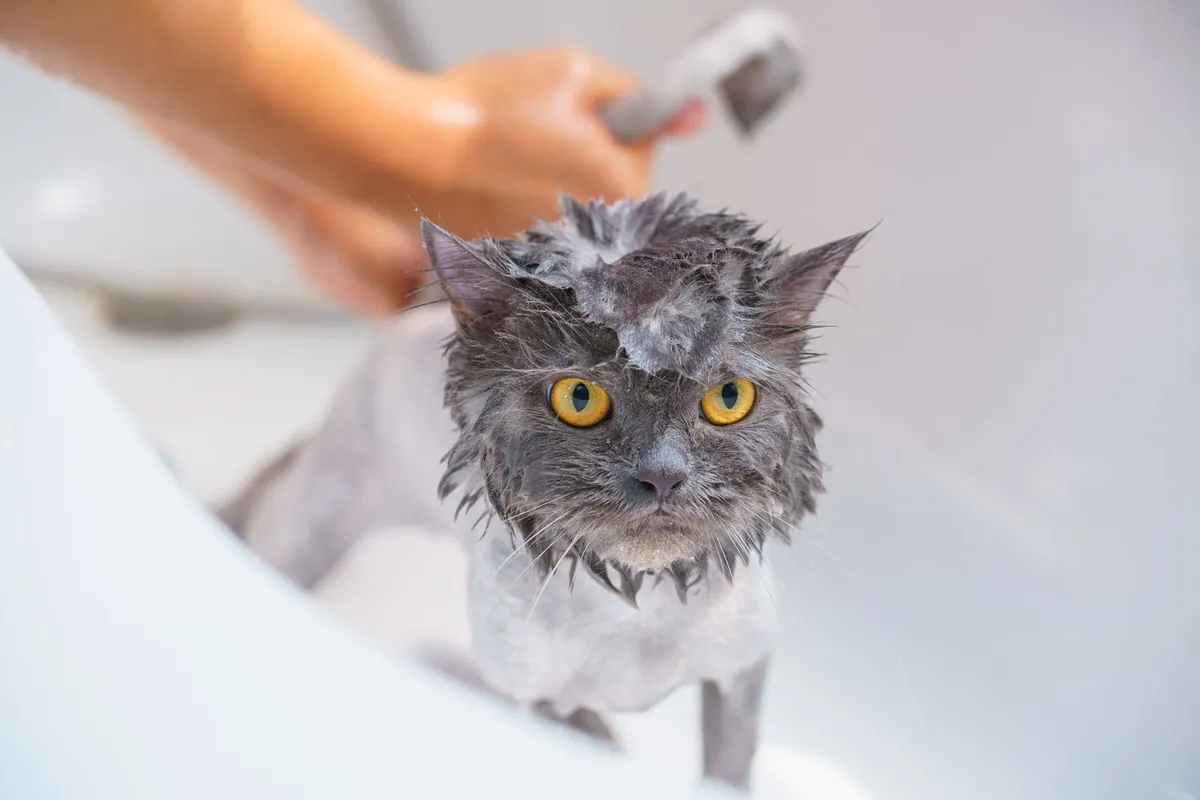
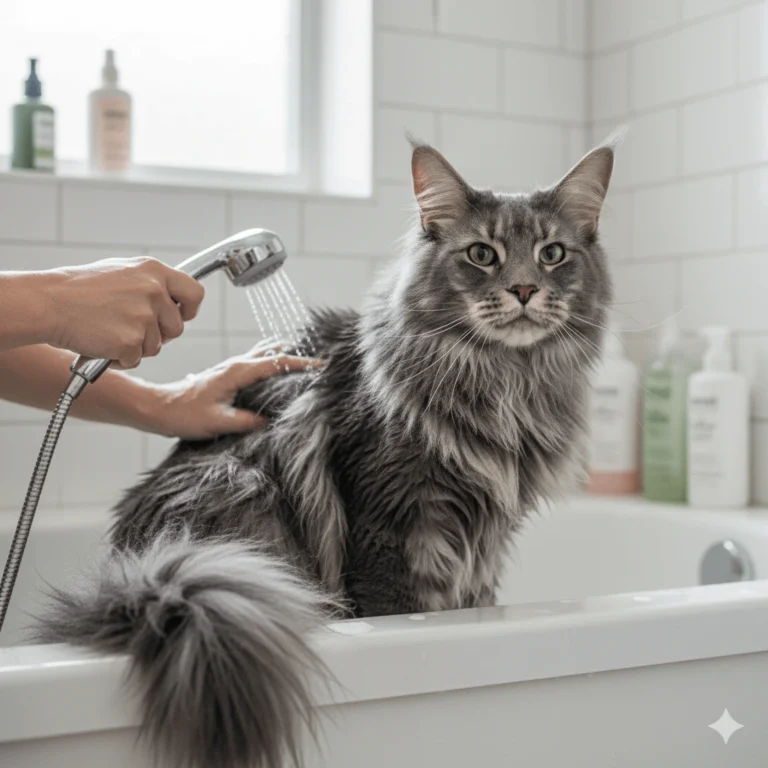
Baths and mats are enemies. Water tightens mats and turns a workable tangle into a permanent felted clump, which is why every dematting guide insists on the same order: comb out every single mat before the cat ever touches water (my bathing guide walks through the safe order step by step). I have seen owners bathe first “to loosen things up” and it does the exact opposite.
Then there’s the product mistake. Never use human shampoo, baby shampoo, or dry shampoo powders on the coat. VCA points out that baby shampoo is too harsh for feline skin — use a cat-specific shampoo without heavy perfume. One breeder educator I follow opposes dry shampoos and cornstarch-type powders entirely, noting residue left in a long coat causes its own problems.
The bath itself is easier than most people fear — plenty of Maine Coons tolerate water far better than the internet jokes suggest. Use lukewarm water, a cat-specific shampoo, rinse twice, towel-dry by blotting (never rubbing), and dry fully — a damp undercoat mats faster than a dirty one.
Mistake 5: Going quiet during shedding season
This one is sneaky because it feels like you’re not doing anything wrong. Then coat-blow arrives and your cat is dropping enough undercoat to stuff a pillow — and the loose dead hair doesn’t fall out on its own. It lodges in the surrounding fur, and if you’re still grooming at your normal pace, you’re falling behind.
Owners describe it the same way everywhere: fine Monday, matted by Friday. Step UP the routine during coat-blow — more sessions, shorter each, focused on the undercoat with the steel comb. Daily quick comb-throughs during the worst of it are what experienced owners recommend.
Watch the calendar: late spring and early fall are the big ones, though indoor cats can shed steadily year-round since house lighting messes with their natural cycle.
Mistake 6: Shaving for a “fresh start”
When the matting gets ahead of you — and after Mistakes 1 through 5, it will — the temptation is to shave it all off and start over (the full pros-and-cons decision here). Lion cuts are all over social media, and professional groomers do give them to severely matted cats. But there’s a huge difference between a groomer shaving off a painful pelt as a medical necessity and an owner ordering a routine lion cut because brushing feels like too much work.
The Maine Coon’s coat does real work — VCA notes that even in summer, a cat’s hair protects against sunburn and insulates against heat. Routinely shaved coats can grow back coarser and more tangle-prone, which puts you on a shaving treadmill: the coat mats faster, so you shave more often, so the texture gets worse. Breeders add that over-handling the coat with too many products and too much intervention ruins the very texture the breed is known for.
Shaving has its place — a vet or groomer removing a painful pelt is mercy, not a mistake. But as a routine strategy, it’s the coat’s worst enemy.
Mistake 7: Turning grooming into a wrestling match
The last mistake isn’t about tools or technique — it’s about the relationship. So many owners groom when it’s convenient for them, not the cat: dragging a sleepy cat out from under the bed, pinning him down, and powering through a 20-minute session. The cat learns that the comb means battle, and the next session is harder than the last.
Maine Coons are smart and they remember. Owners in Facebook groups whose cats “refuse brushing” almost always describe sessions that started as ambushes. The fix that keeps coming up from experienced owners and breeders: start young if you can, keep sessions short (five minutes beats thirty), and pay in treats constantly — lickable treats smeared on a plate while you comb are practically magic. Let the cat walk away and come back. And quit while you’re ahead: ending on a good note is worth more than finishing the whole cat.
My most grooming-resistant boy now trots to his spot when he hears the treat bag — years of short, paid sessions taught him the comb means snacks. Cornell’s feline health center makes the same point: gentle, frequent hands-on care keeps the coat healthy, and patience is the whole method.
Frequently Asked Questions
How often should I groom my Maine Coon?
Most adults do well with combing two to four times a week, plus a quick mat-patrol of the hidden spots in between. During shedding season, step it up to daily. Kittens need less coat work but more training time — short sessions now build a cat who tolerates grooming as an adult.
Can I cut a mat out of my Maine Coon’s fur with scissors?
No — this is the single most dangerous thing owners attempt. Cat skin is extremely thin and gets pulled up inside the mat, so it’s very easy to cut skin you can’t see. Use your fingers and a wide-tooth comb for loose tangles, clippers for mats tight to the skin, and see a groomer or vet for anything large, painful, or close to the skin.
Is it okay to shave my Maine Coon in summer?
Usually not necessary, and often counterproductive. The coat insulates against heat as well as cold and protects against sunburn. Shaving is appropriate when mats have formed a painful pelt that can’t be combed out — that’s a medical decision, usually made by a groomer or vet — not a routine summer haircut.
My Maine Coon hates being brushed. What should I do?
Rebuild from scratch: very short sessions (two to five minutes), high-value treats throughout, and let the cat leave and return. Work the easy spots first and build up to the sensitive ones. If the cat is already matted, the hatred may be about pain, not the brush — get the mats professionally removed first.
Are dry shampoos safe for Maine Coons?
Breeders I follow advise against them. Powder and foam products leave residue in a long double coat, and that residue can cause tangles and skin irritation of its own. A real bath with a cat-specific shampoo, done properly and infrequently, is safer than dry products used often. Waterless options are fine for a true emergency spot-clean, but they shouldn’t replace bathing.
The Bottom Line
Nearly every grooming disaster I’ve seen — including my own — comes back to one of these seven: scissors near mats, the wrong tools, skipped spots, bathing out of order, coasting through shedding season, routine shaving, or turning grooming into a fight. None are hard to fix. Pick one this week, change it, and watch how fast your Maine Coon’s coat — and his attitude toward the comb — transforms.