Catio Ideas for Maine Coons: Safe Outdoor Spaces That Work
When my Maine Coon started pressing his nose against the sliding door every evening, chirping at sparrows like they owed him money, I knew a plain windowsill was never going to be enough. If you’re reading this, yours probably does the same, and you’re looking for catio ideas for Maine Coons that actually suit a cat this big and this determined.
A catio — a screened outdoor enclosure for cats — is the middle path between indoor-only life and a free-roaming cat. I’ve covered the should-they-go-outside question separately (my full breakdown on outdoor access for Maine Coons), so here I’m staying practical: what kinds of catios work, what to build or buy, and how to make it safe for a cat that can outweigh a small dog.
Catio ideas for Maine Coons that actually suit big cats
Here is what most generic catio guides skip: a Maine Coon is not an average cat. A full-grown male can weigh up to around 18 pounds and hit a shelf with real force. Everything below keeps that in mind — sturdier framing, wider shelves, stronger mesh, and doors that actually latch.
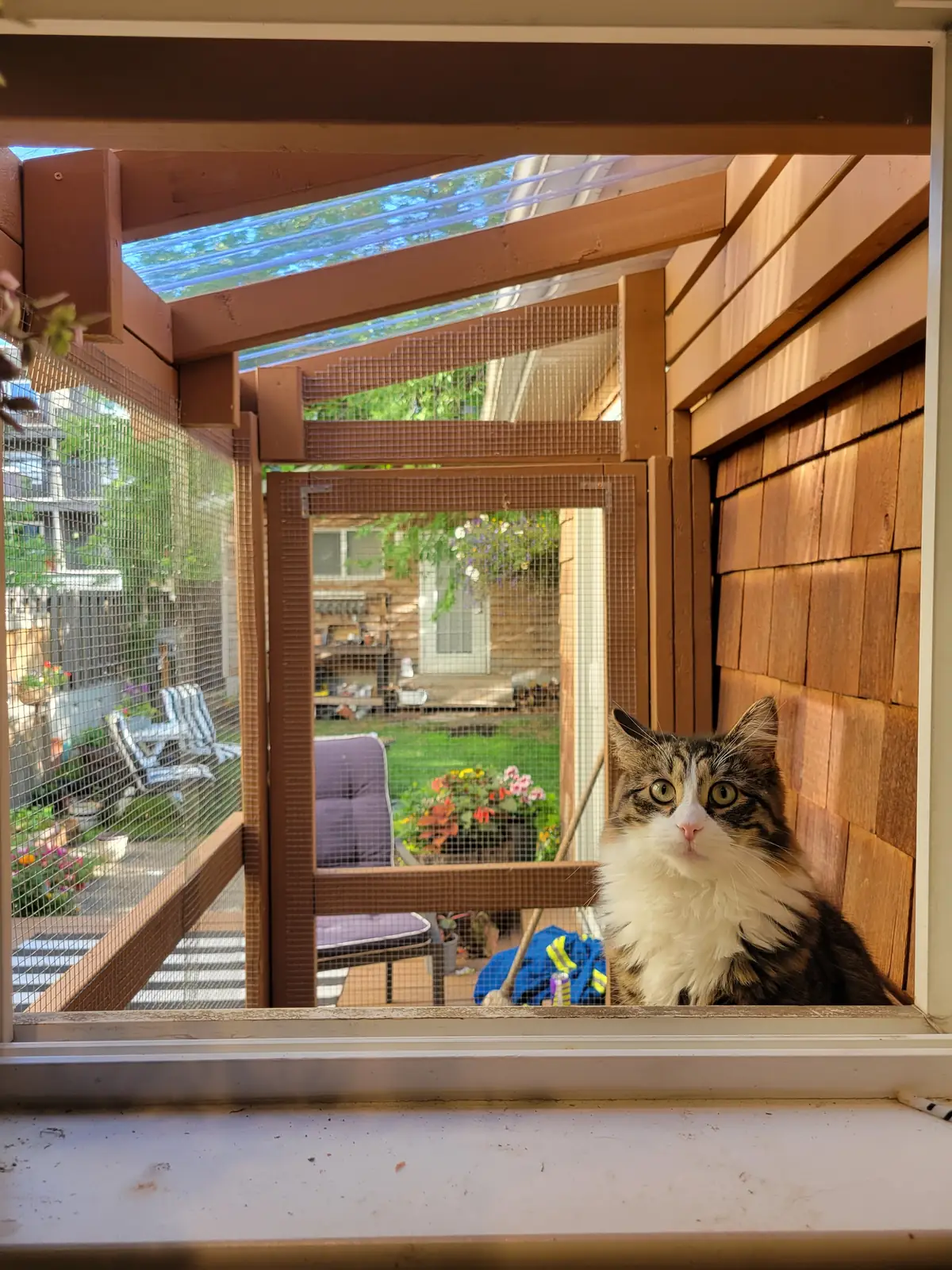
1. The window-box catio (best for apartments and renters)
This is the simplest style, and the one I’d suggest first if you’ve never built anything: a screened box outside a window, accessed through the open window or a cat-flap insert. The cat gets fresh air, sunbathing, and bird-watching; you lose nothing but a windowsill.
Owners on Reddit’s Maine Coon communities build these from cedar framing with galvanized hardware cloth, entering through a pet door in the window sash — one write-up for two Maine Coons took roughly a weekend. Key lesson: shelves need to be deep enough for a long body to sprawl (12+ inches), not narrow average-cat perches.
Best for: apartments, renters, anyone testing whether their cat even likes the outdoors before committing to a big build.
2. The balcony enclosure (my favorite for small spaces)
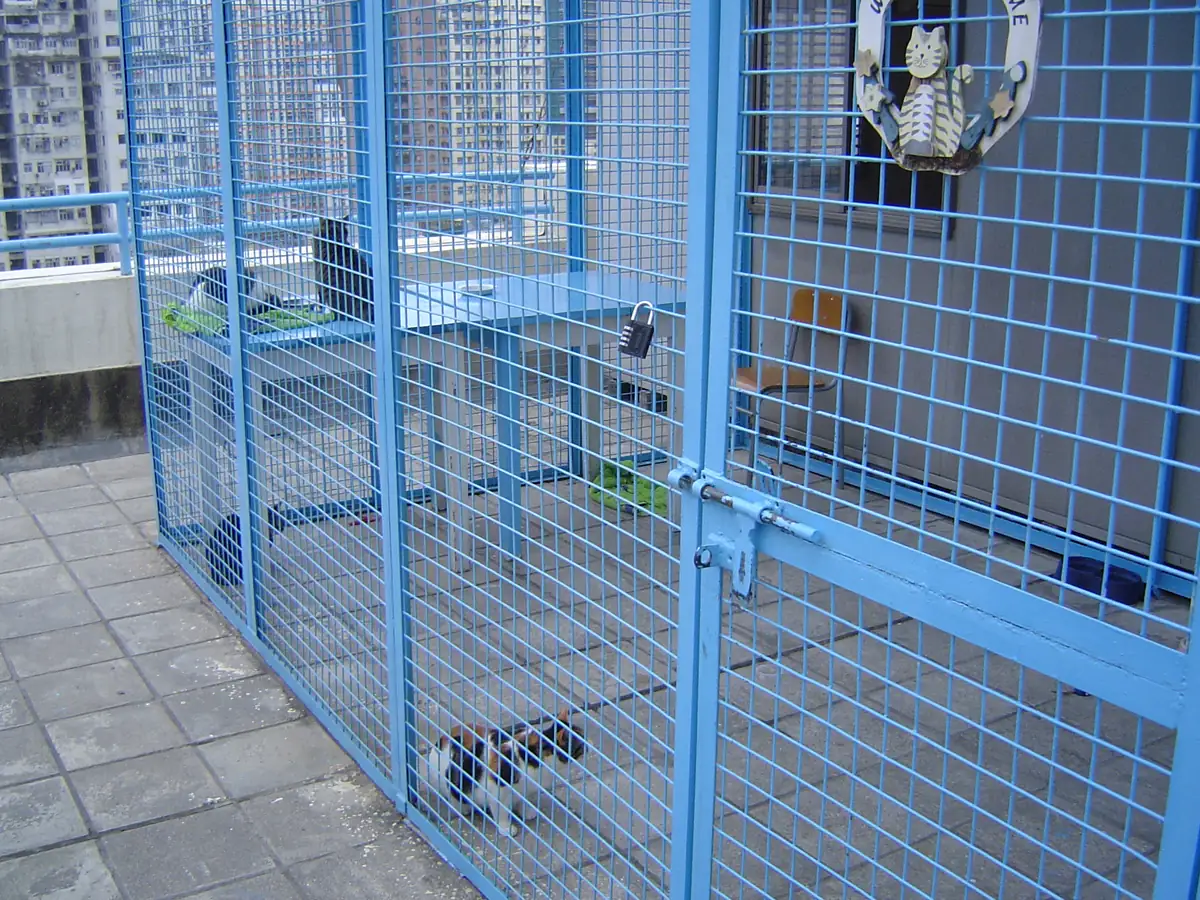
If you have a balcony, you don’t need a separate structure — you need screening. Owners on Instagram have screwed wooden frames covered in sturdy black mesh onto balcony railings, turning the whole balcony into a screened patio.
The warnings come straight from other owners: fully enclose the top (Maine Coons jump higher than you’d expect), and use proper fasteners, not zip ties, for anything load-bearing. A 15-pound cat bouncing against a zip-tied panel will eventually win that fight. Also check your lease — some buildings ban permanent fixtures, in which case look for modular panels that press-fit without drilling.
3. The cat tunnel (connecting house to catio)
Tunnels are the unsung hero of catio design. A mesh tunnel running from a window or cat door to a freestanding enclosure lets the cat move between indoors and outdoors on its own schedule — no hole in the wall needed if you use a window insert.
Keep runs short enough to reach any point for cleaning, and nothing should snag inside. For Maine Coons, use a tunnel diameter of at least 16 inches — anything tighter is a claustrophobic culvert for a big cat.
4. The walk-in patio catio (the gold standard)
This is the dream: a human-sized enclosure, usually off the back of the house, with a door you can walk through. Professional builders use 2×2-inch 16-gauge galvanized wire mesh on redwood or cedar framing — and the one rule every designer repeats is: don’t skimp on materials, or you’ll pay someone to fix your shortcuts later.
The walk-in style is where Maine Coons shine: room for a climbing structure, lounging platforms, a cat tree, even a sturdy rope bridge made for large cats. The practical rule from experienced builders: go vertical — to cats, vertical space works like horizontal space does for us.
Best for: homeowners with yard or patio space; the only style where you can comfortably add a litter box shelf with a trapdoor for easy cleaning.
5. The freestanding yard catio (for renters with grass)
A standalone screened box in the yard or on the lawn, accessed when you carry the cat out (or via a tunnel from a door left open while you supervise). Kits exist for this — multi-level wooden enclosures with weatherproof roofs, some on caster wheels so you can move them around the garden.
Fair warning from owners who bought the cheap kits: check the weight rating and latch quality first. Several listings note limited capacity for “very large or multiple cats” — exactly our category. If a kit looks built for a 9-pound tabby, it is.
6. The lean-to / against-the-house catio
This one uses your house wall as one side of the enclosure, which saves material and adds sturdiness. It pairs beautifully with a cat door — the cat exits the house directly into the enclosure and comes back whenever it wants — and it’s the easiest layout to expand later: start small, add a tunnel to a second section when the budget recovers.
7. The enclosed porch conversion (lowest effort, high reward)
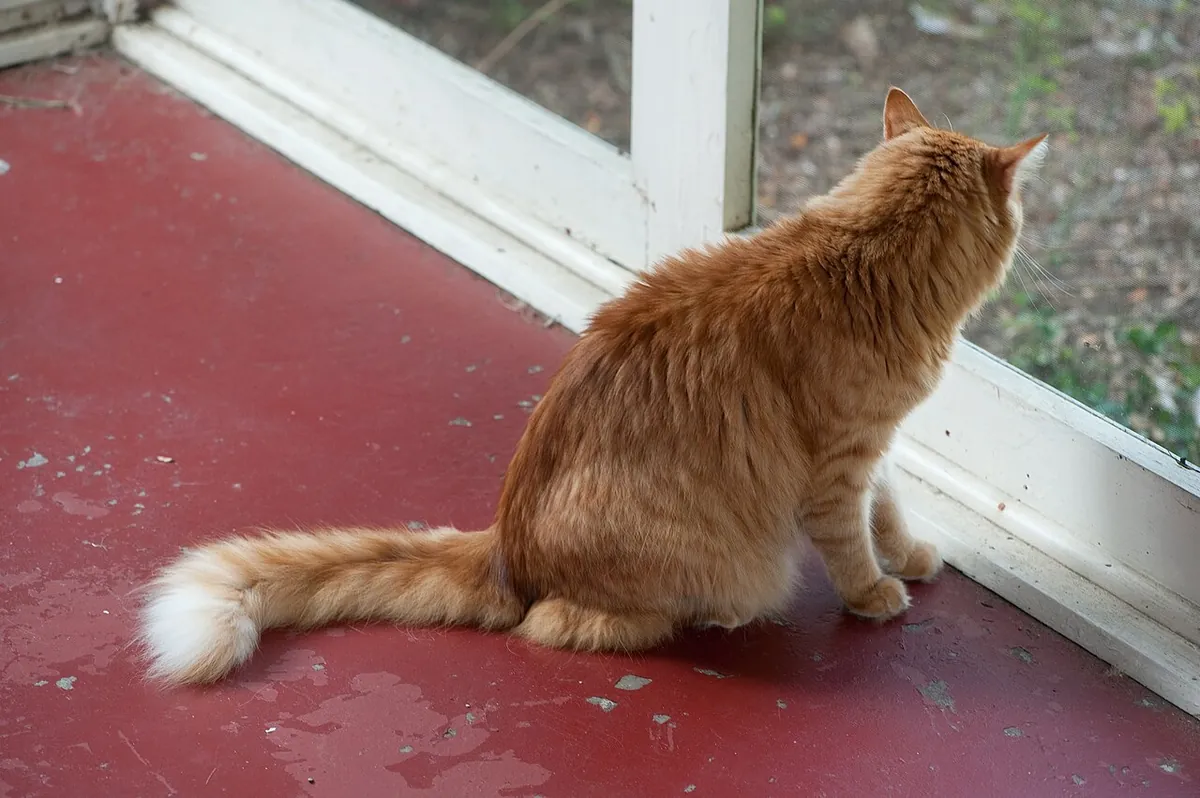
If you have a screened or glassed-in porch, you’re most of the way there — just cat-proof it (gaps at the base, weak panels) and swap standard window screen for pet-resistant mesh where the cat will lean, since a Maine Coon’s claws go through flyscreen like paper. One owner turned an RV’s screened porch into a summer catio while traveling; their big grey Maine Coon claimed the top platform immediately, of course.
8. The supervised cat-tent / portable pen (try before you commit)
Pop-up mesh tents aren’t real catios, but they’re the cheapest way to answer “will my cat even use this?” — set one up on the patio for a weekend and watch. They also pair well with harness training for travel or supervised-only outdoor time. Just never leave a cat unattended in a fabric tent.
9. The two-level deck catio (steal this if you’re handy)
Several owner builds use two levels: a lower floor with scratchers and a litter area, and an upper level reachable by ramp. The lower level gives privacy and shade; the upper gives the surveillance views Maine Coons live for. Carpet the platforms so big paws don’t slip.
What makes a Maine Coon catio different from a regular one
After reading dozens of owner builds, the big-cat differences come down to four things:
- Sturdier everything. A Maine Coon’s mass multiplies the force on shelves, hinges, and latches. Use screws, not staples, on load-bearing joints; lag bolts where shelves meet posts.
- Wider shelves and ramps. Space shelves 18–20 inches apart (the spacing pro builders use for safe, exciting jumping) and make platforms at least 12–14 inches deep so a long body can lie flat.
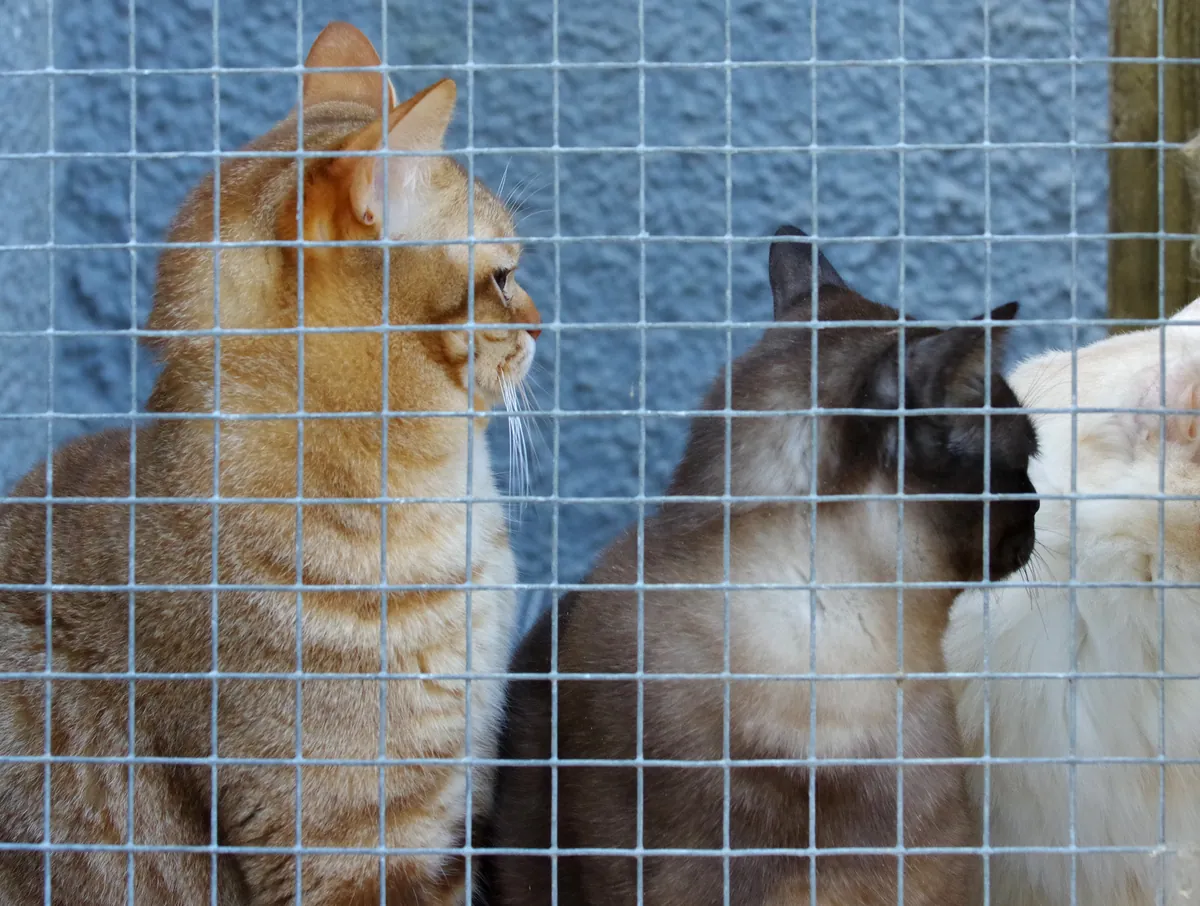
- Stronger mesh. Skip chicken wire — a determined raccoon or coyote can tear through it. Owners recommend 16-gauge galvanized welded wire or hardware cloth instead, with openings around 2×2 inches to keep paws in and wildlife out.
- Secure latches. Maine Coons are smart and strong — a simple hook latch is an invitation. Use two-stage latches or carabiner clips. For bigger enclosures, owners recommend a “double door” entry: a tiny vestibule where you close one door before opening the next, so no cat slips past your ankles.
DIY or kit: which route should you take?
DIY costs less and lets you size everything for your cat and space, but it needs tools and time. The hardest part is setting the vertical posts — one forum veteran’s advice: pay someone to sink the posts, then do the rest yourself.
Kits get you building in an afternoon, and several modular systems can be expanded or connected into L-shapes. But many are designed for average-size cats — for a Maine Coon, look for solid wood, metal-reinforced corners, and real latches, and expect to reinforce the platforms yourself.
Either way, never use pressure-treated lumber for framing — cats claw wood and ingest the shavings, and the chemicals in treated lumber aren’t something you want your cat eating. Cedar or redwood is the standard choice.
Safety checklist before your cat steps in
- Roof it. A solid or mesh roof keeps your cat in and birds of prey, climbing predators, and falling branches out. Owners consistently say the roof is non-negotiable.
- Predator-proof the perimeter. In coyote or fox country, extend the mesh into the ground or add an L-shaped wire footer along the base so nothing digs under.
- Shade and water. Part of the catio should always be shaded — sunbathing spots get dangerously hot — and keep fresh water out there. In very hot weather, bring the cat inside during peak heat.
- Cat-safe planting. If you add plants, make sure nothing is toxic to cats. When in doubt, keep it to cat grass.
- Check the latches monthly. Wood shifts, screws loosen, mesh sags. A five-minute monthly once-over prevents the slow failure that leads to an escape.
- Supervise at first. You’ll spot the shelf your cat launches from, the corner it tests, and the latch it eyes with too much interest.
And remember that even the best catio is enrichment, not a replacement for interaction — Maine Coons are famously people-oriented cats, and yours will still want you out there with him. Vets consistently rank elevated resting spots and hiding places among the top ways to keep an indoor cat content, so load your catio with both (PetMD’s enrichment guide has a good walkthrough). The good news: a catio is a genuinely pleasant place to drink your morning coffee.
Frequently asked questions
Quick answers to the questions I hear most about catio ideas for Maine Coons:
How big should a catio be for a Maine Coon?
Bigger than you think. A single Maine Coon needs room to climb at least two levels and stretch out fully on a platform. Per Maine Coon size guidelines, males can reach 18 pounds and over three feet long nose to tail — build for that body, not an average 10-pound cat.
Will my Maine Coon actually use a catio?
Most do, often within days — curious, confident cats love the new territory, especially the high perches. Timid or senior cats may need a slow introduction: start with the window open so they can sniff it, prop the access door open in calm weather, and put treats on the first platform. If a cat seems overwhelmed, don’t force it — try again another day.
Can I leave my Maine Coon in the catio unsupervised?
For a properly built, predator-proofed enclosure: yes, during the day, with water and shade available. Many owners lock cats in at night because nocturnal predators are bolder. Never leave a cat in a fabric pop-up tent unsupervised, and always bring them in during severe weather.
Is a catio cheaper than a cat-proofed fence?
Usually, yes, by a lot. A window box or balcony enclosure can be a weekend build; even a walk-in patio catio comes in well under whole-yard fencing for most homes.
Do catios need permits or HOA approval?
Sometimes. Attached structures can trigger building or HOA rules, especially in condos. Renters should favor freestanding or non-drilling designs and check the lease first — a quick call before buying materials saves an expensive argument later.
My take
If your Maine Coon is doing the nose-pressed-to-glass routine every evening, a catio is one of the best quality-of-life upgrades you can give him — mine went from door-dashing to sunbathing within a week. Start with the simplest version that fits your home (a window box costs a weekend), build it sturdier than you think you need to, and expand later. And when you’re weighing how much outdoor time is right in the first place, my outdoor-access guide covers the full picture — PetMD also notes that some cats benefit from supervised outdoor activities like exploring enclosed spaces, while flagging the real risks of unsupervised roaming.