Why Is My Maine Coon Losing Hair? Causes and What to Do
I still remember running my hand along my Maine Coon’s belly and feeling skin where thick fur should have been. No wound, no scab. Just a smooth pink patch on a cat who had always been a walking rug.
If you have a Maine Coon losing hair, you have probably felt the same jolt. A Maine Coon’s coat is half of who they are, and when it thins or bald patches appear, it is hard not to worry. Most causes are common and treatable. Read this, then book the vet.
Maine Coon Losing Hair vs Normal Shedding: How to Tell the Difference
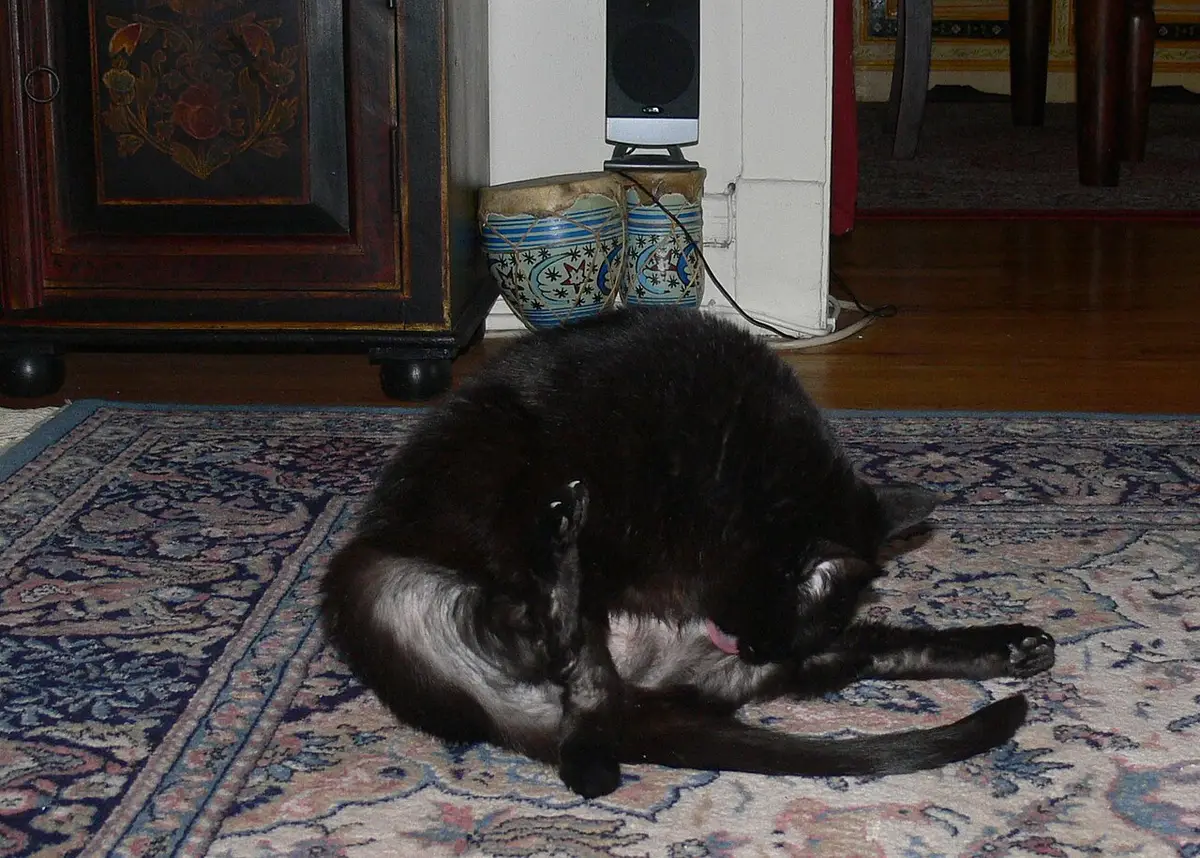
Maine Coons shed. They shed a lot, and they shed more in spring and autumn when they blow their coats. Shedding is hair falling out evenly across the whole coat, and the coat underneath still looks full.
Hair loss is different. Vets call it alopecia, the medical word for hair missing from places where it should be. Instead of an even thinning, you see distinct bald patches, or one area clearly thinner than the rest.
Try the parting test. Part the fur around the thin spot. If the surrounding coat is full but one patch is short, stubbly, or bare, that is hair loss, not shedding. I cover normal shedding separately in my guide to how much Maine Coons shed and when it peaks. The short version: shedding is seasonal and even, hair loss is patchy and specific.
What Hair Loss Looks Like on a Maine Coon
Because that coat is so thick, hair loss often hides until it is well along. Watch for bald patches on the belly, the inside of the back legs, the flanks, the base of the tail, or behind the ears; short, stubbly fur in one area; thinning along both sides of the body; and red, flaky, or crusty skin.
Cats are private groomers. Many owners on Reddit say they never once saw their cat overgroom, yet the belly was bare. A bald belly with no witnesses is still a bald belly, and it still deserves a vet visit.
1. Stress and Overgrooming
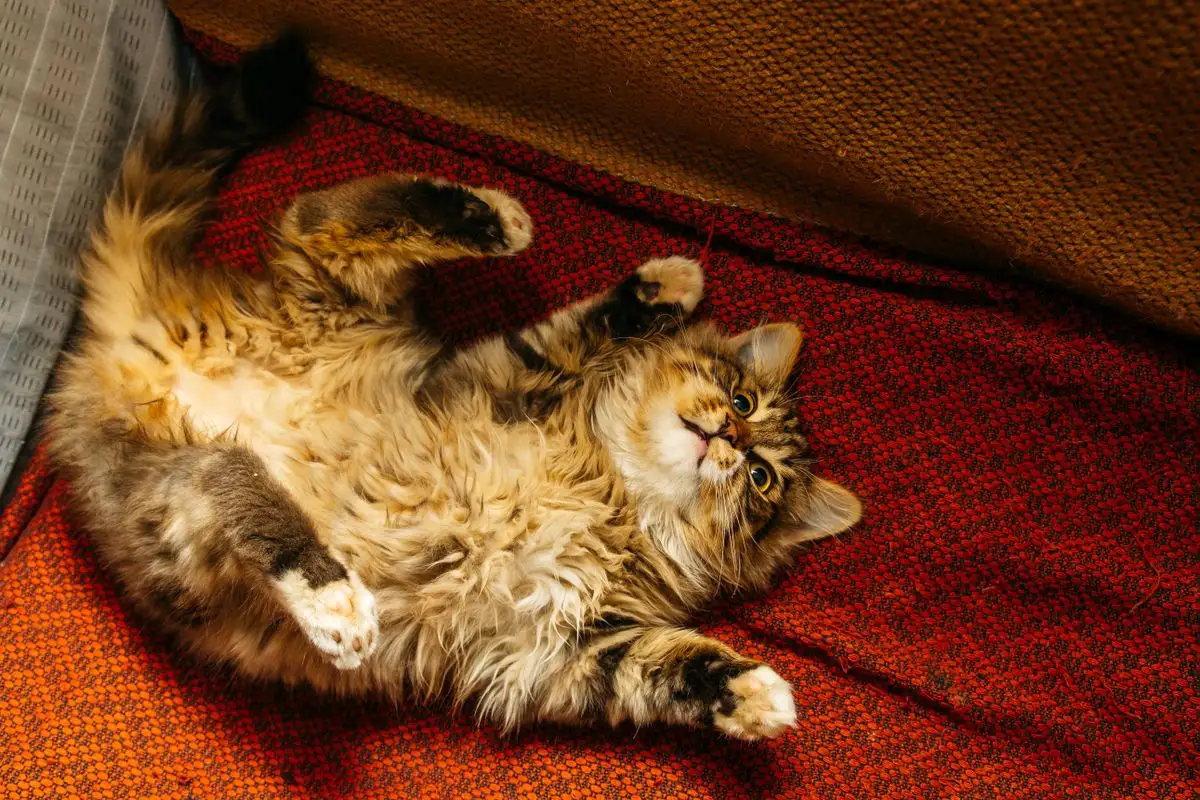
This is the cause owners reach for first, and vets reach for last. That order matters.
Cats groom to calm themselves, and when stress becomes constant, some cats lick the same spot until the fur is gone. The usual suspects are a house move, a new baby, a new pet, a pet that has passed away, or building work.
Cornell’s guide to cats that lick too much explains how vets tell itch-driven licking apart from stress-driven licking. If stress is the cause, the fix is a calmer routine, a safe hiding spot, daily play, and sometimes medication from your vet.
2. Allergies
Allergies are one of the most common reasons for a Maine Coon losing hair, and they are sneaky, because the allergy itself does not remove the fur. The itch does. Your cat scratches, licks, and chews at the itch, and the fur is the casualty.
There are three main types. Food allergies, usually to a protein such as chicken or beef, often show up around the head and neck. Environmental allergies, to pollen, dust mites, or mould, tend to come and go with the seasons. And flea allergy: a single bite can set off intense itching.
I cover food versus environmental allergies in more depth in my guide to allergies in Maine Coons. Do not try an elimination diet alone, and never use human anti-itch creams on a cat.
3. Ringworm
Ringworm is not a worm. It is a fungal infection, and it is one of the first things a vet checks when a cat has round, patchy bald spots. The classic picture is a roughly circular patch of hair loss with scaly or crusty skin and broken stubbly hairs around the edge, often on the head, ears, or legs first.
A rescue group on Instagram recently shared a young Maine Coon mix whose severe ringworm was only found under a UV light. He recovered after weeks of treatment, but a circular bald patch is a book-an-appointment-today sign.
VCA Animal Hospitals has a clear guide to ringworm in cats that explains how it is diagnosed and why the whole household needs to be part of the plan.
4. Fleas, Mites, and Other Parasites
Even if you never see a flea, parasites belong on the list. Flea allergy is one of the most common causes of hair loss in cats full stop. Mites can do the same, especially around the ears.
Check the base of the tail, the back, and the belly, which are the classic flea zones. Part the fur and look for tiny dark specks, flea dirt, or red bites. Keep every pet in the house on the flea prevention your vet recommends, not just the cat with the bald patch. Flea and tick prevention matters for the whole household, not just the cat with the bald patch.
5. Diet and Nutrition
A Maine Coon’s coat is built from what they eat. A diet short on good-quality protein, essential fatty acids, or certain vitamins can leave the coat dull, brittle, and prone to shedding more than it should.
Diet-related hair loss usually comes with other clues: a coat that has lost its shine, dry or flaky skin, and sometimes a cat who is not holding weight well. A good food will not cure ringworm or allergies, but a poor diet makes every other cause harder to fight.
6. Matted Fur Pulling Its Own Hair Out
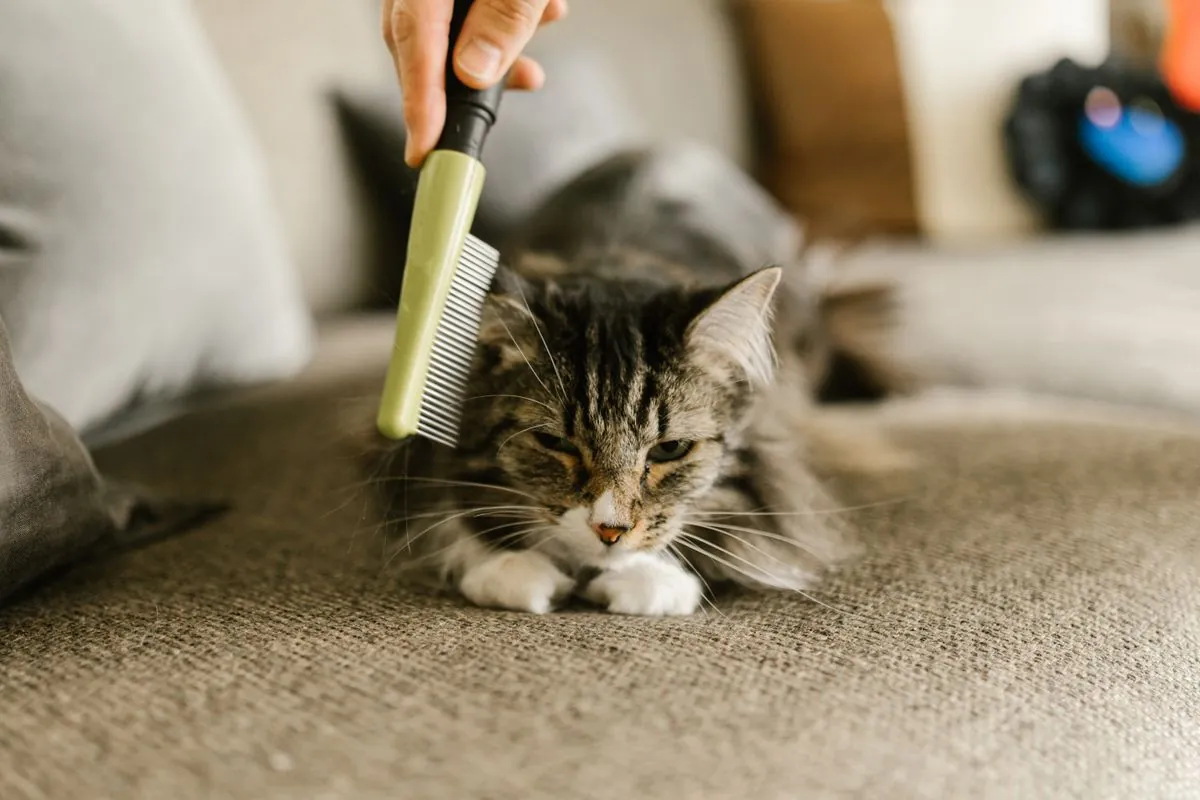
This one is specific to long-coated breeds, and it is the cause I see owners miss most often. A tight mat pulls constantly on the skin underneath, and it hurts. A cat will chew and tug at a mat trying to free themselves, and in doing so they pull out the healthy fur around it.
A groomer on Instagram recently shared a Maine Coon mix who arrived with a badly matted belly and chunks of missing coat, and owners in the comments said the same had happened to their cats.
The lesson is that mats need catching early, in the places owners forget: behind the ears, under the collar, in the armpits, and along the belly. I wrote about matted fur in Maine Coons and the grooming mistakes that cause it.
7. Hormones, Pain, and Illness
This is the least common group of causes, but it is the reason a vet visit matters even when the hair loss looks harmless. Hormonal conditions such as an overactive thyroid can cause thinning fur, often alongside weight loss and a bigger appetite. A cat in pain will also lick the sore area over and over, so a cat with sore joints, a sore back, or bladder discomfort may lick their belly, inner thighs, or the painful spot until the fur is gone. The hair loss is real, but the problem is underneath it.
None of these are things you can diagnose from a photo. The pattern gives your vet clues, but bloodwork and a physical exam give them answers.
What to Do at Home While You Wait for the Vet
Take clear photos of every bald or thin patch, and note when you first saw each one.
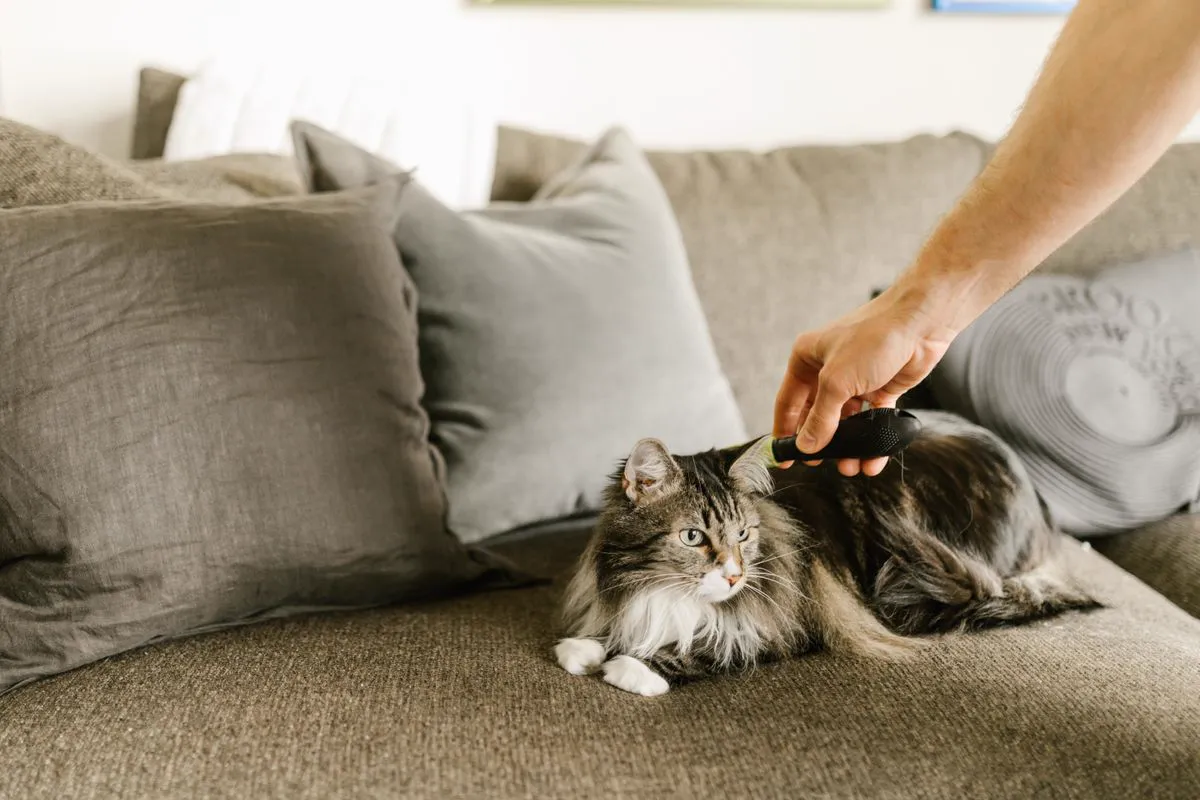
Keep brushing gently, but stop if the skin is sore or broken. Do not cut mats out with scissors, because Maine Coon skin is loose and folds easily under a mat. Do not bathe the cat to fix the problem, and do not put any creams, oils, or essential oils on the skin. Many are toxic to cats.
At the appointment, expect your vet to look at the pattern of hair loss first, then check for fleas and parasites, look at skin scrapings or hairs under a microscope, and possibly run bloodwork. Treatment depends on the cause, and it may take weeks for the fur to grow back.
When to See the Vet Right Away
Most hair loss can wait a few days for a routine appointment. Some of it cannot. Ask for an urgent slot if you see bald patches spreading quickly, red, swollen, oozing, or smelly skin, open sores, or circular, scaly bald patches, which may be ringworm. The same goes for hair loss plus not eating, drinking more than usual, weight loss, vomiting, or lethargy, and for intense itching or a cat who cannot settle.
If your cat is otherwise bright, eating, and playing, and the patch is small and the skin looks calm, a routine appointment within a few days is reasonable. Photograph it, book the visit, and let your vet rule out the medical causes first.
Frequently Asked Questions
Is it normal for a Maine Coon to lose hair in patches?
No. Even shedding is normal, but distinct bald patches or thinning in one area are not normal shedding. Patchy hair loss usually means something is irritating the skin, making your cat overgroom, or affecting the hair follicles. It deserves a vet visit.
Can stress really make a Maine Coon lose hair?
Yes, but stress is usually the diagnosis your vet reaches after ruling out medical causes such as fleas, allergies, ringworm, and pain. A move, a new pet, or a changed routine can trigger anxious licking, and the licking can become a habit.
Will my Maine Coon’s hair grow back?
In most cases, yes, once the underlying cause is treated. Fur grows slowly, so it can take weeks or even a couple of months before a bald patch looks full again. If the skin was scarred, regrowth can be slower.
Is hair loss from ringworm contagious?
Yes. Ringworm is a fungal infection that can spread to other pets and to people. If your cat has circular, scaly bald patches, keep them away from other pets where possible, wash bedding, and wash your hands after handling them.
Should I change my Maine Coon’s food if they are losing hair?
Not without talking to your vet first. A poor diet can contribute to a dull coat and hair loss, but food is rarely the only cause, and switching food on your own can muddy the results of an allergy food trial. If a food allergy is suspected, your vet will usually recommend an elimination trial.
The Coat Will Tell You What the Cat Cannot
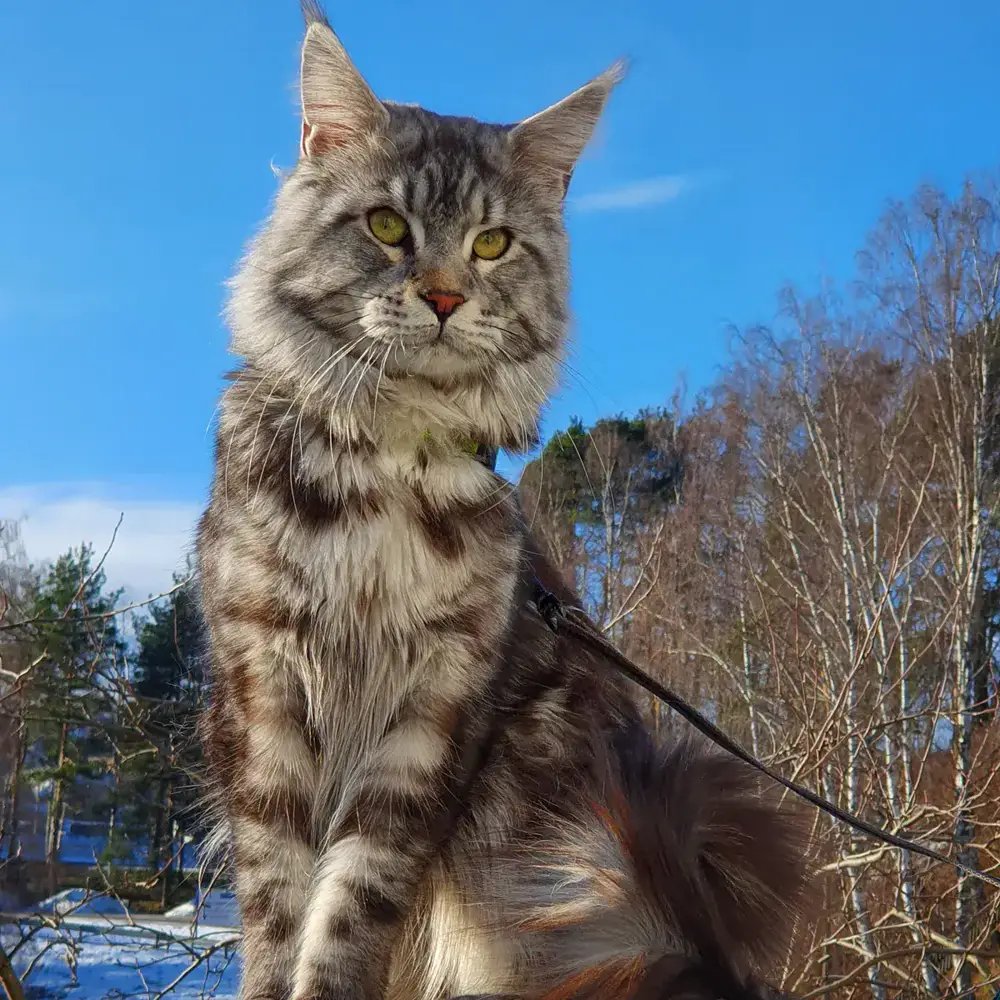
A Maine Coon’s coat is a record of how they are doing. When it thins in one place, or a bald patch appears on a belly that was fluffy last month, your cat is telling you something the only way they can.
So look at the patch properly, take the photo, and book the vet. Most of the time the answer is something straightforward and fixable: a flea treatment that lapsed, an allergy that needs managing, a mat that needed catching sooner, a stressor that needs softening. That thick, glorious coat usually comes back, if you notice it going and act on it.