Why Does My Maine Coon Lick Me? Affection, Grooming and When to Worry
If you have ever sat down for a quiet evening only to be slowly licked by a very large cat, you have probably wondered why does my Maine Coon lick me. I have wondered it too, usually while a rough little tongue worked its way across my hand.
The short answer is that most of the time, it is a compliment. But not every lick means the same thing: sometimes affection, sometimes grooming, sometimes curiosity about how you taste, and sometimes a request for attention. And sometimes, when the pattern changes, it is worth paying closer attention.
Why Does My Maine Coon Lick Me? The Short Answer
In most cases, your Maine Coon licks you because they see you as family. Cats groom the cats they trust, and they extend that behaviour to the humans they love. It can also mean they like the taste of your skin, they want attention, or they are soothing themselves. A few licks during a cuddle, with a relaxed body and a slow blink, are almost always affection.
1. Affection: You Are Part of the Family
This is the reason I reach for first, and the one that fits most of the licking I see at home. Maine Coons are famously people-oriented cats: they follow you from room to room, and licking is one of the ways they say they want to be near you.
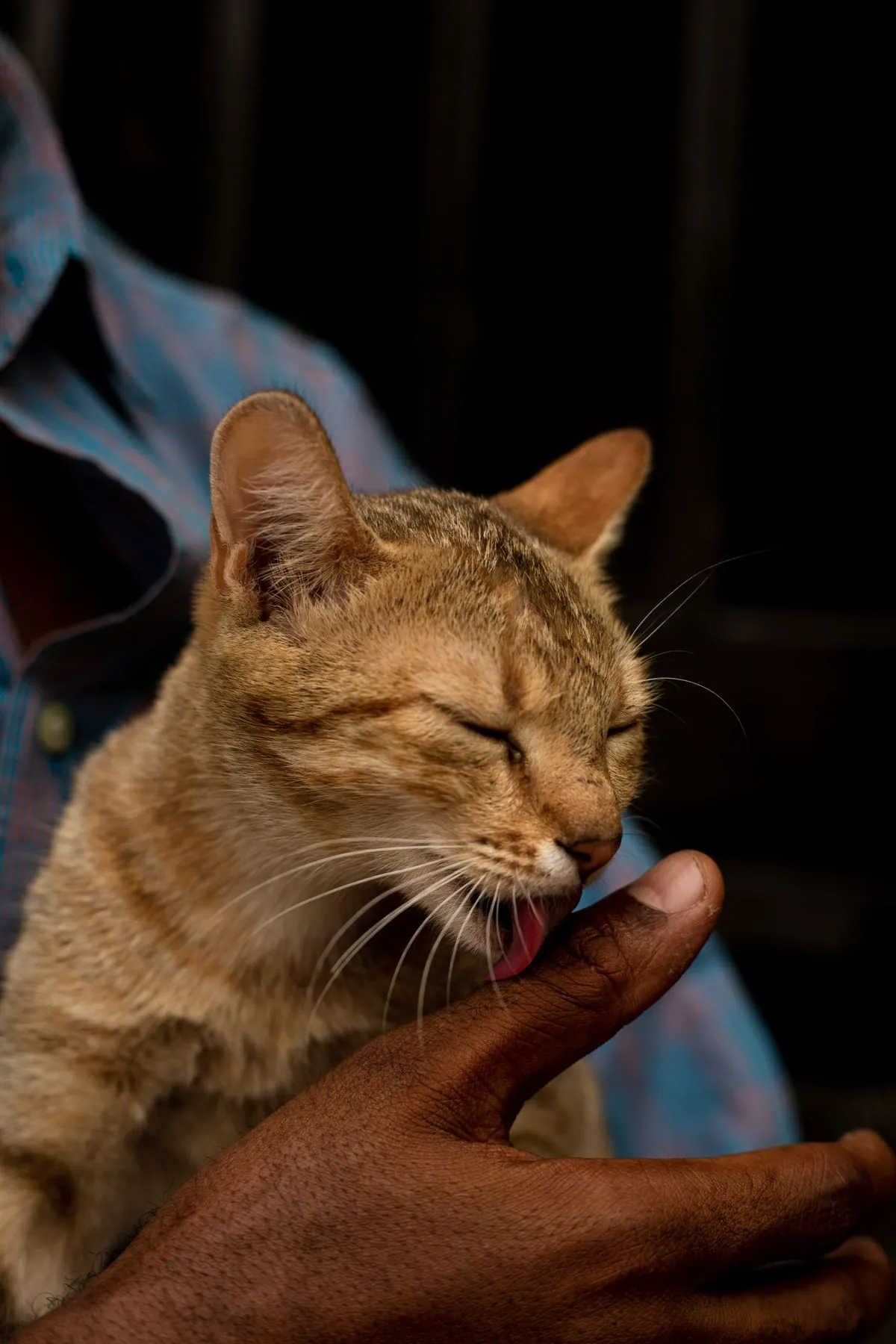
Mother cats lick their kittens from birth, and bonded adult cats groom each other in return. Behaviourists call this mutual grooming allogrooming, one of the clearest signs of trust between cats. When your Maine Coon turns that behaviour on you, they are treating you as a trusted member of their own social group. It is the same family of gestures as headbutting: a bump of the forehead, then a lick or two. My guide to Maine Coon headbutting explains what those bumps mean.
Owners on Reddit describe much the same thing: their Maine Coons lick hands, arms, faces and even hair while settling in for a cuddle, relaxed all the while — purring, kneading, or slow blinking. I have watched the same in Facebook and Instagram reels, where owners film their Maine Coons giving them what looks like a full grooming session. One owner described it simply as his cat giving him a bath.
There is a practical side to it too. When cats groom each other, they share scent, which helps the group recognise who belongs. Your cat may be doing the same to you, leaving a little of their scent behind so you smell like family.
2. They Are Grooming You, the Way They Would Groom Another Cat
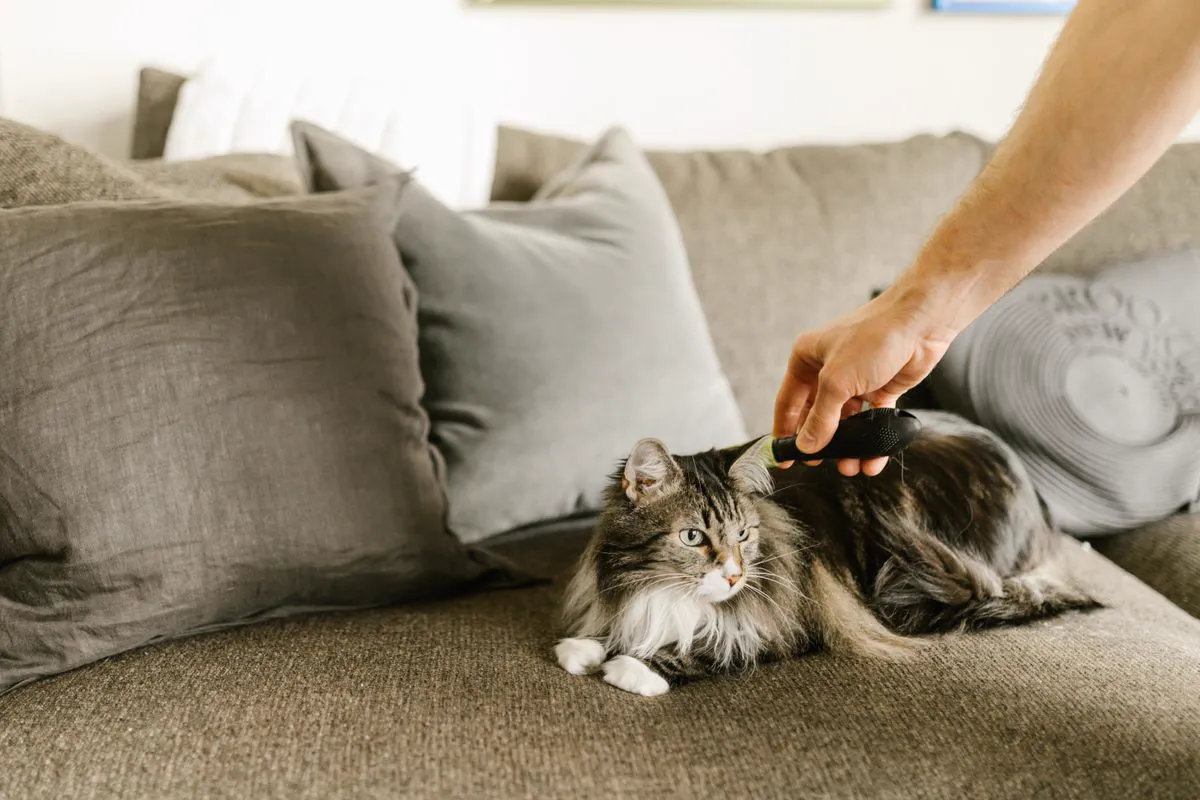
Sometimes the licking is less about emotion and more about the job itself. A cat’s tongue is covered in tiny, backward-facing barbs called papillae, made of keratin, which is why a lick feels like sandpaper. They work like a comb, catching loose hair and working saliva through fur.
This is especially true of licking aimed at your hands, your hair, and your face. Hair feels a little like fur, and hands carry the strongest version of your scent. Owners on Instagram say their cats go straight for the hair, and mine has done the same, climbing onto the back of the sofa and setting to work on my head.
Kittens learn this from their mothers, and some cats carry the habit further than others. If a cat was weaned early, some behaviourists suggest they may be more inclined to lick and suckle for comfort as adults, often kneading at the same time. Licking plus kneading plus purring usually means your cat feels safe. If the kneading side interests you, I have written about why Maine Coons knead. Maine Coons are long-haired cats with considerable grooming needs of their own, and I have written up the Maine Coon grooming mistakes I made myself.
3. You Taste Interesting
Sometimes the reason is much simpler: you taste good. Human skin carries salt from sweat, and cats seem to like it. Owners on Reddit say their cats make a beeline for their arms after a workout, or lick their hands after cooking. Lotion, sunscreen, shampoo and soap can have the same effect.
This is also the one reason that needs a little caution. Some skin products contain ingredients that are not safe for cats to swallow, and PetMD warns owners not to let a cat lick skin that has lotion, ointment or other topical products on it. My rule is simple: if I have just put something on my skin, the cat does not get to lick that spot. If you think your cat may have swallowed a product, call your vet.
4. They Are Asking for Something
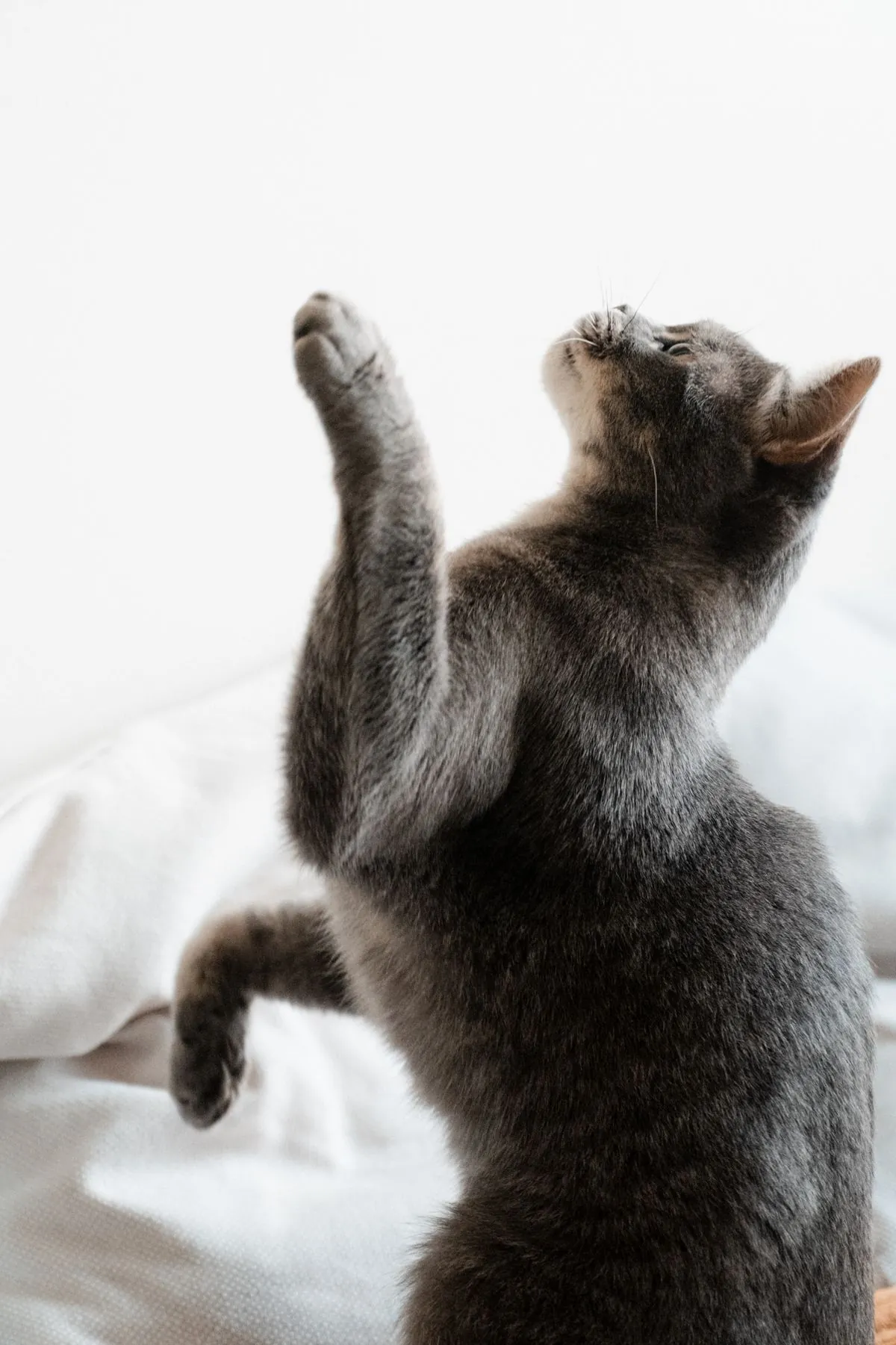
Cats are quick learners, and licking is a very effective way to get a reaction. If a lick earns a stroke, a word, or even a gentle push away, your cat has learned that licking starts an interaction. Owners on Reddit say they notice this most at night or while working: the cat licks a hand, the owner responds, and the cat has got what it wanted.
The request is usually simple: playtime, food, or just company. A Maine Coon that licks you and then walks towards the kitchen, or towards a toy, is making a suggestion. Look at the whole cat rather than the lick alone — ears, tail, posture and eyes tell you far more than the tongue does, and my guide to Maine Coon body language walks through those signals.
The lick-and-bite deserves a mention, because it confuses a lot of owners. A cat that licks your hand a few times and then gives a small nip is not usually being aggressive — often it means they have had enough stroking, or are overstimulated and want a pause. Stop, give them space, and let them come back to you. If the bite ever breaks the skin, or the pattern changes suddenly, mention it to your vet.
5. Licking to Soothe Themselves When They Are Stressed
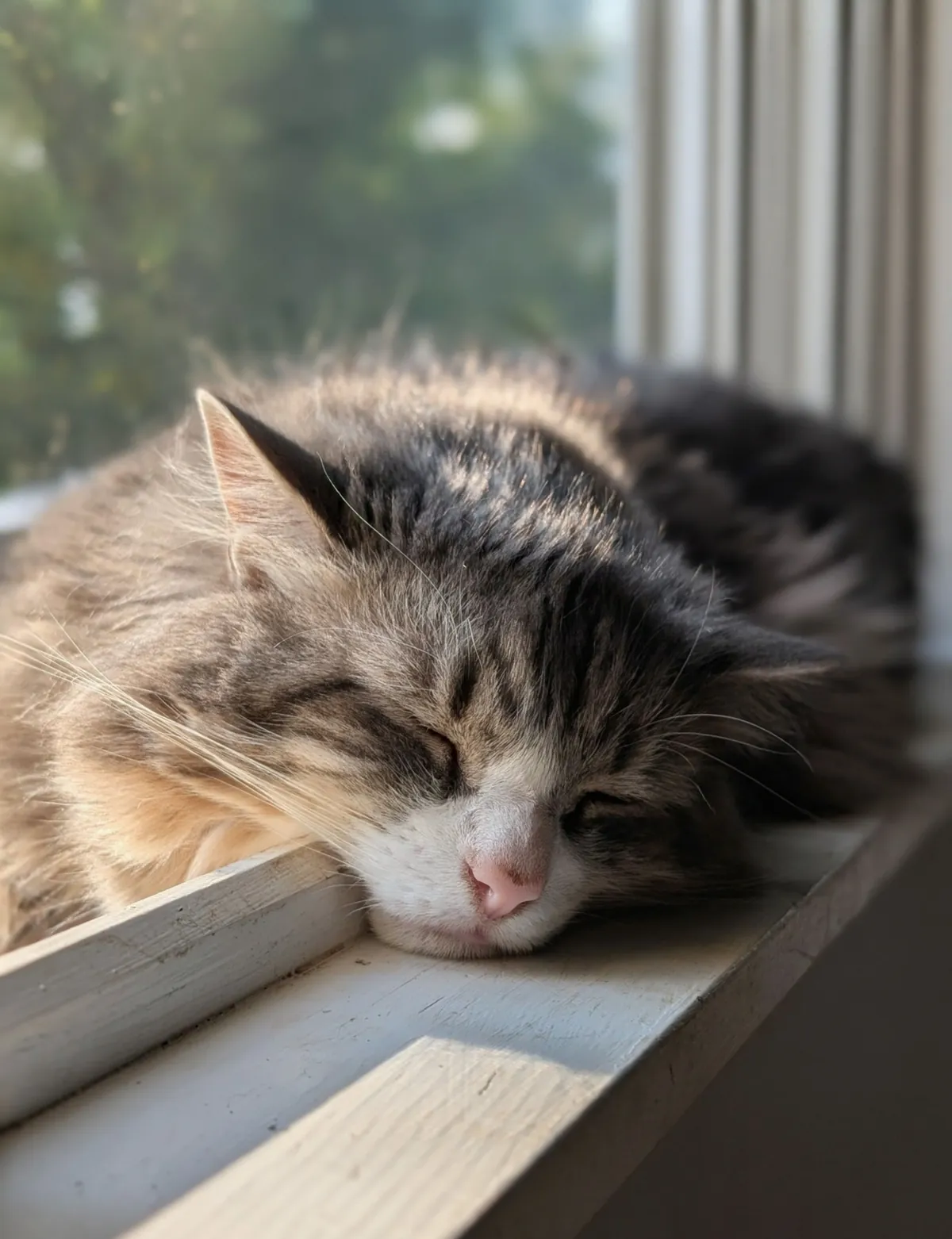
Licking can also be a comfort behaviour, something a cat does to calm itself down. Most of the time, stress shows up as extra self-grooming, but some cats direct the licking at their people instead. A cat that licks you more after a change at home — a move, a new pet, or a change in routine — may be soothing itself with a familiar action.
I have seen this in my own house after small upheavals: the cat follows me more closely, licks more, and settles only when I sit down with them. It is a cat leaning on the person they trust most, and the kindest response is a calm routine, a quiet place to retreat to, and regular play. If it does not settle once life goes back to normal, I stop guessing and ask my vet.
6. When Licking Is a Warning Sign
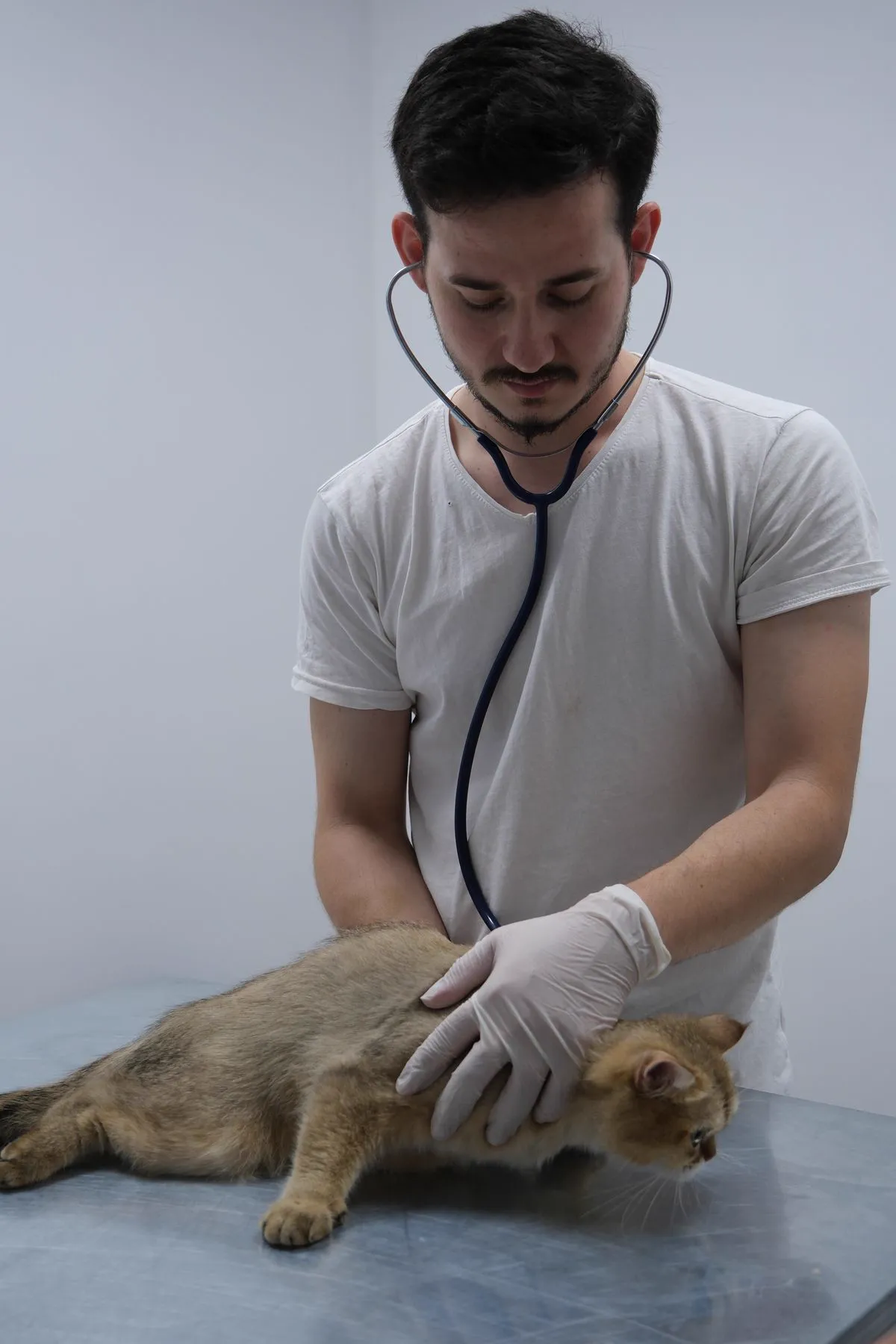
Most licking is normal, but a change in licking can be a sign that something is wrong.
The Cornell Feline Health Center explains that cats typically spend between 30 and 50 percent of their day grooming themselves, so a cat that grooms a lot is not automatically a cat in trouble. The warning signs are about change and damage: licking that is new, constant, or hard to interrupt; bald patches or sore skin; more hairballs than usual; or licking one spot, over and over.
Cornell also notes that cats tend to lick the area that hurts or itches. Licking at the base of the tail can point towards fleas, while licking the belly or back can be connected with allergies or pain elsewhere. I am not a vet, and I would never try to diagnose your cat from a pattern like that. But knowing where the licking is focused is useful information to take to your vet.
There are a few situations where I would not wait. If your cat is licking itself raw, has open sores, or seems in pain when you touch a spot they keep licking, book a vet visit soon. If your cat is straining in the litter box, passing little or no urine, or crying while trying to go, that needs urgent veterinary care the same day — it can be an emergency, especially in male cats.
I want to be plain about my limits: I can describe what I have seen and what veterinary sources say to watch for, but I cannot tell you what is wrong with your cat. If something about the licking worries you, your vet is the right person to ask.
What to Do When the Licking Gets Too Much
If the licking is affectionate and you enjoy it, there is nothing to fix. But a rough tongue on the same patch of skin, several times a day, can get sore. Redirect rather than scold: when the licking starts, gently move your hand away and offer a toy instead. A calm, boring response works best — the lick earns nothing exciting, and the cat gradually tries it less often.
Also look at the routine. A bored or underplayed cat may lick more, simply because it is something to do. A proper play session often quiets the licking on its own, as does a predictable routine of meals, play and rest at roughly the same times each day.
Frequently Asked Questions
Is it normal for a Maine Coon to lick me?
Yes, in most cases it is completely normal. Licking is a social grooming behaviour, and Maine Coons are an affectionate, people-oriented breed. It is most likely affection when the cat is relaxed and purring. If it is new, constant, or comes with hair loss or skin sores, ask your vet.
Why does my Maine Coon lick me and then bite me?
A small nip after licking usually means your cat has had enough stroking or is overstimulated, and is asking for a pause. Stop petting and give them space. If the biting is hard, frequent, or new, mention it to your vet.
Why does my Maine Coon lick my hair and face?
Hair feels a little like fur, and the face and head are where cats groom each other, so those are natural targets. Your hair also carries the scent of your shampoo. Keep your cat away from freshly treated hair and skin with lotion or ointment on it.
Why does my Maine Coon lick me all the time?
Look for a pattern. It may be attention-seeking that has been rewarded without you realising, or a soothing habit from a stressful time. It can also be a sign of discomfort, especially if the licking is aimed at one spot on their own body. Try more play, a steadier routine, and calm redirection first — and if it does not settle, or there is hair loss or sore skin, ask your vet.
Should I let my Maine Coon lick me?
That is your call, and most owners are happy to allow a few licks. I would avoid letting a cat lick open cuts, your face if you are unwell, or skin with lotion or ointment on it, and I always wash my hands afterwards. If the licking feels sore or goes on too long, gently redirect your cat to a toy instead.
The Short Version
So, why does my Maine Coon lick me? Most of the time, because they love you, because they are grooming you the way they would groom another cat, because you taste interesting, or because they would like your attention.
The licks that matter are the ones that change: a new pattern, a frantic pattern, a pattern that leaves bare skin or sore patches. Note what you see, keep the routine calm, and ask your vet.