White Maine Coon: Facts, Care and Genetics
The first time I saw a white Maine Coon in person, I actually stopped mid-step. There is something almost unreal about that much cat, that much fur, in pure glistening white. If you are here, you probably felt it too. This guide covers what I have learned about white Maine Coons: how the white coat happens, what blue eyes mean, the honest truth about the deafness link, and keeping that stunning coat clean.
What Makes a White Maine Coon White
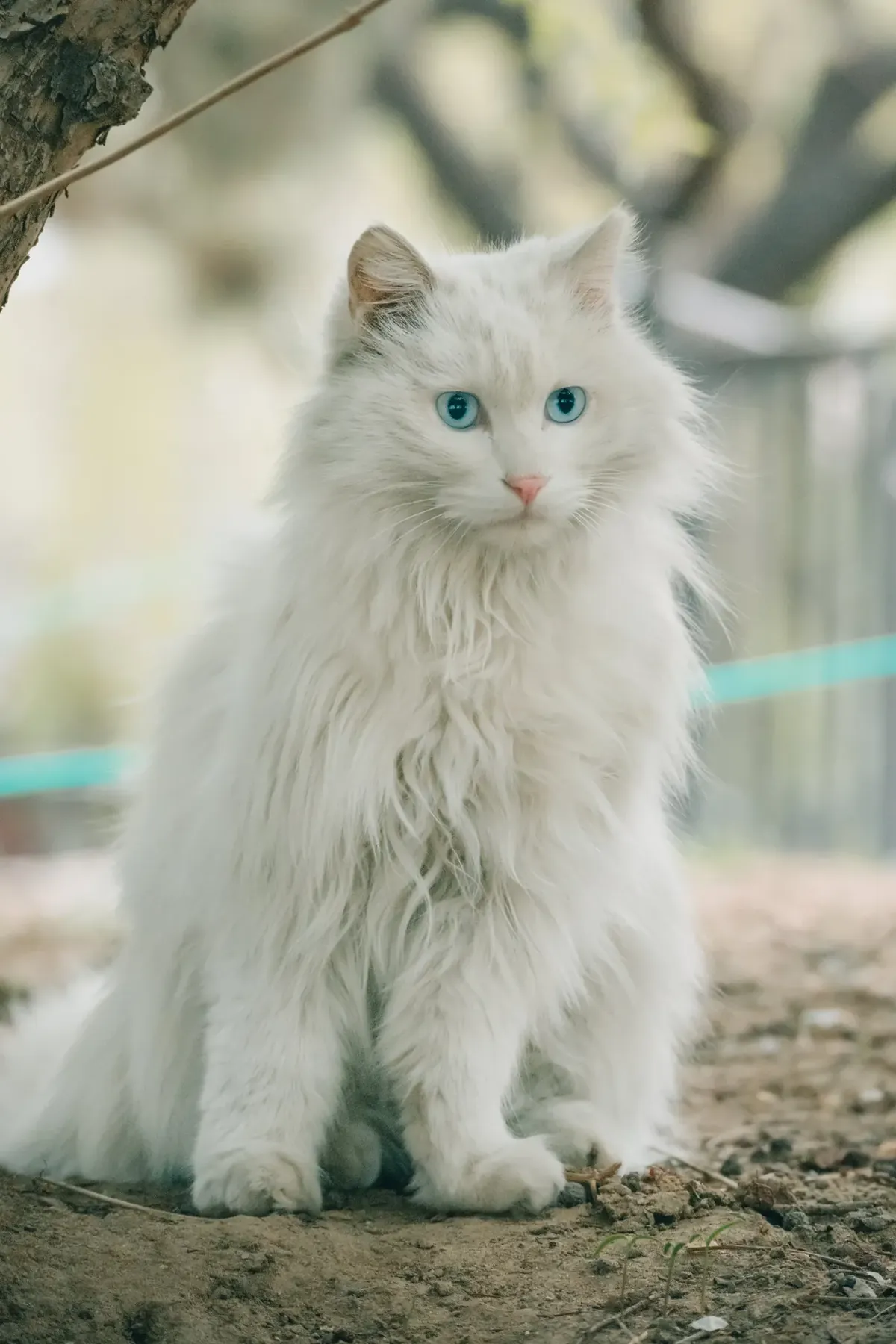
A white Maine Coon is not albino. People mix the two together all the time, but a true albino cat has no pigment anywhere, including pink eyes. A white Maine Coon carries the dominant white gene, W, which suppresses the melanocytes, the pigment cells that would otherwise color the coat. Researchers identified this mutation at the KIT gene in 2014. The coat is white because the color was switched off, not because it was never there.
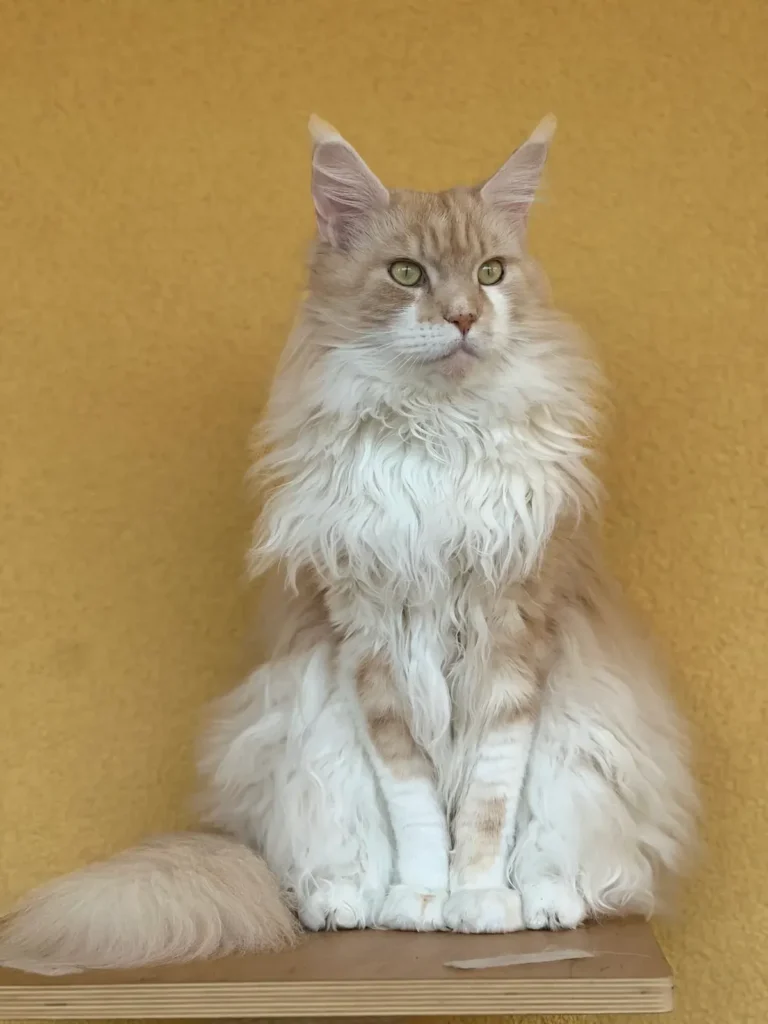
White is a fully recognized Maine Coon color. The Cat Fanciers’ Association describes the ideal coat as pure, glistening white with pink nose leather and pink paw pads. So a white Maine Coon with a pink nose and rose-pink paw pads is exactly what the breed standard calls for.
White kittens often arrive with a faint gray smudge on the head that fades as they grow. That smudge surprises new owners every time. It is normal and it goes away on its own.
White Maine Coon Eyes: Blue, Green, Gold and Odd-Eyed
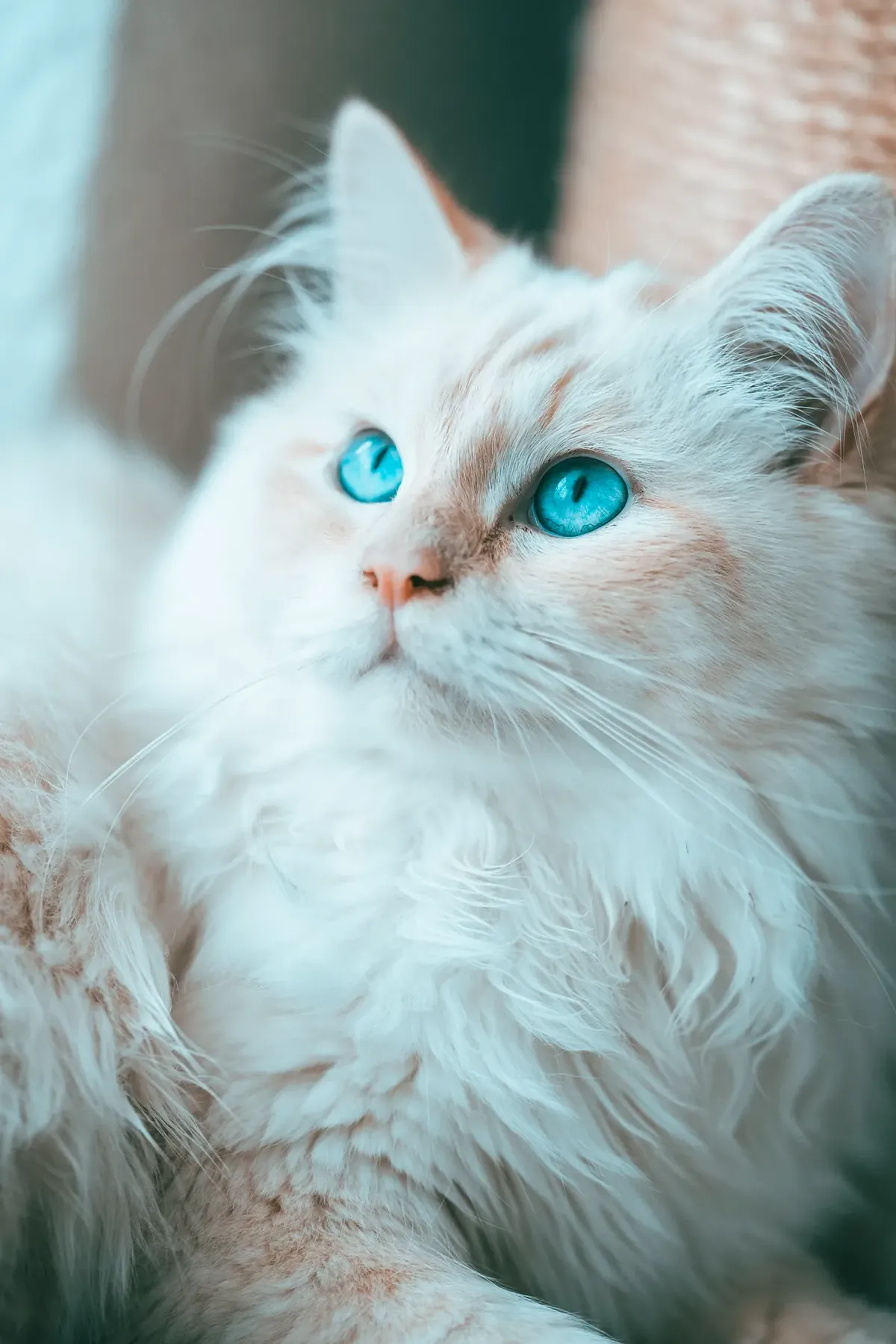
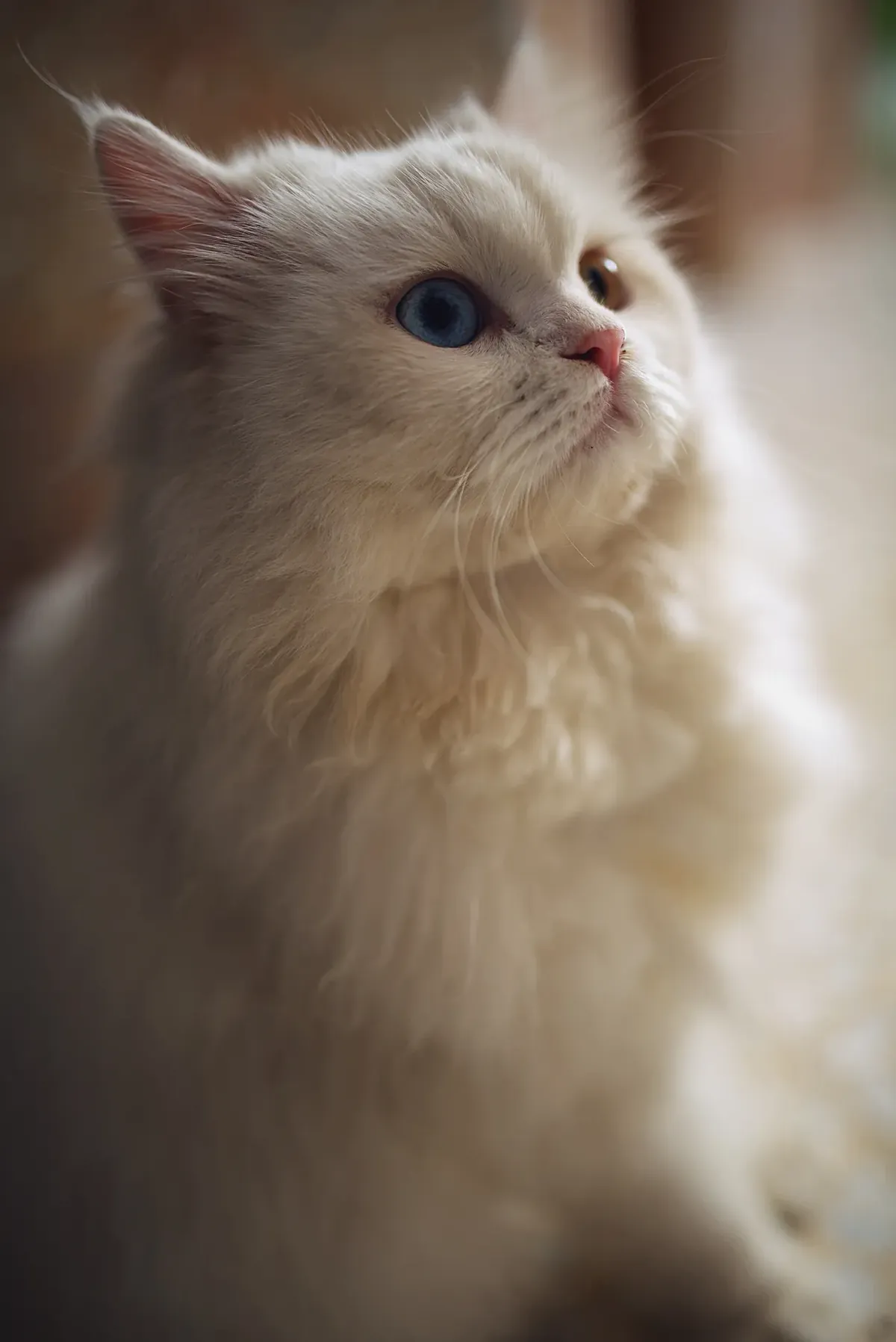
Here is where white Maine Coons get their drama. Most Maine Coon eyes are shades of green, gold, green-gold or copper, but whites and cats with a lot of white are allowed blue and odd eyes under the CFA standard. An odd-eyed, or heterochromatic, cat has one blue eye and one eye in another color, usually green or gold.
The same pigment suppression that whitens the coat can affect the iris. Less pigment means a blue eye: the blue is light scattering through a pigment-free iris, the same reason newborn babies have blue eyes. One eye affected and the other not, and you get the famous odd-eyed look. I have met one odd-eyed white Maine Coon, and strangers stopped to stare.
The blue eyes are real showstoppers, but they come with a question every white cat owner hears: is the cat deaf? (This is about eye color, not coat. The solid gray-blue coat is covered in my guide to blue Maine Coons.) Let us talk about the deafness question properly, because it is the one health topic that matters most for white cats.
The Deafness Connection: What the Research Actually Says
Congenital deafness, meaning deafness present from birth, is seen almost exclusively in white-coated cats. The Cornell University College of Veterinary Medicine has some of the clearest research on this, and I think every white cat owner should know these numbers:
- About 17 to 22 percent of white cats with no blue eyes are born deaf.
- About 40 percent of white cats with one blue eye are born deaf.
- About 65 to 85 percent of all-white cats with two blue eyes are deaf.
Read those numbers carefully: a white Maine Coon with blue eyes is at higher risk, not guaranteed to be deaf. A white Maine Coon with green or gold eyes is at much lower risk. And some white cats hear in one ear and not the other.
Why does it happen? Melanocytes are not only involved in coat and eye color. The inner ear contains them too, where they help maintain the fluid balance around the sensory hair cells that make hearing possible. In some white cats those cells do not develop properly, the hearing structures degenerate shortly after birth, and the deafness is permanent. Blue eyes and deafness travel together because both come from the same pigment-suppression story.
Vets use a test called BAER, brainstem auditory evoked response, which measures the brain’s electrical response to sound through small electrodes under the skin. It is how you find out definitively whether a kitten hears in both ears, one ear, or neither. If you are buying a white Maine Coon kitten, ask for a hearing test and the result. A good breeder will not blink at that question. Responsible breeders often avoid breeding two white cats together, since that can dramatically raise the odds of deaf kittens in the litter.
Living With a Deaf White Maine Coon
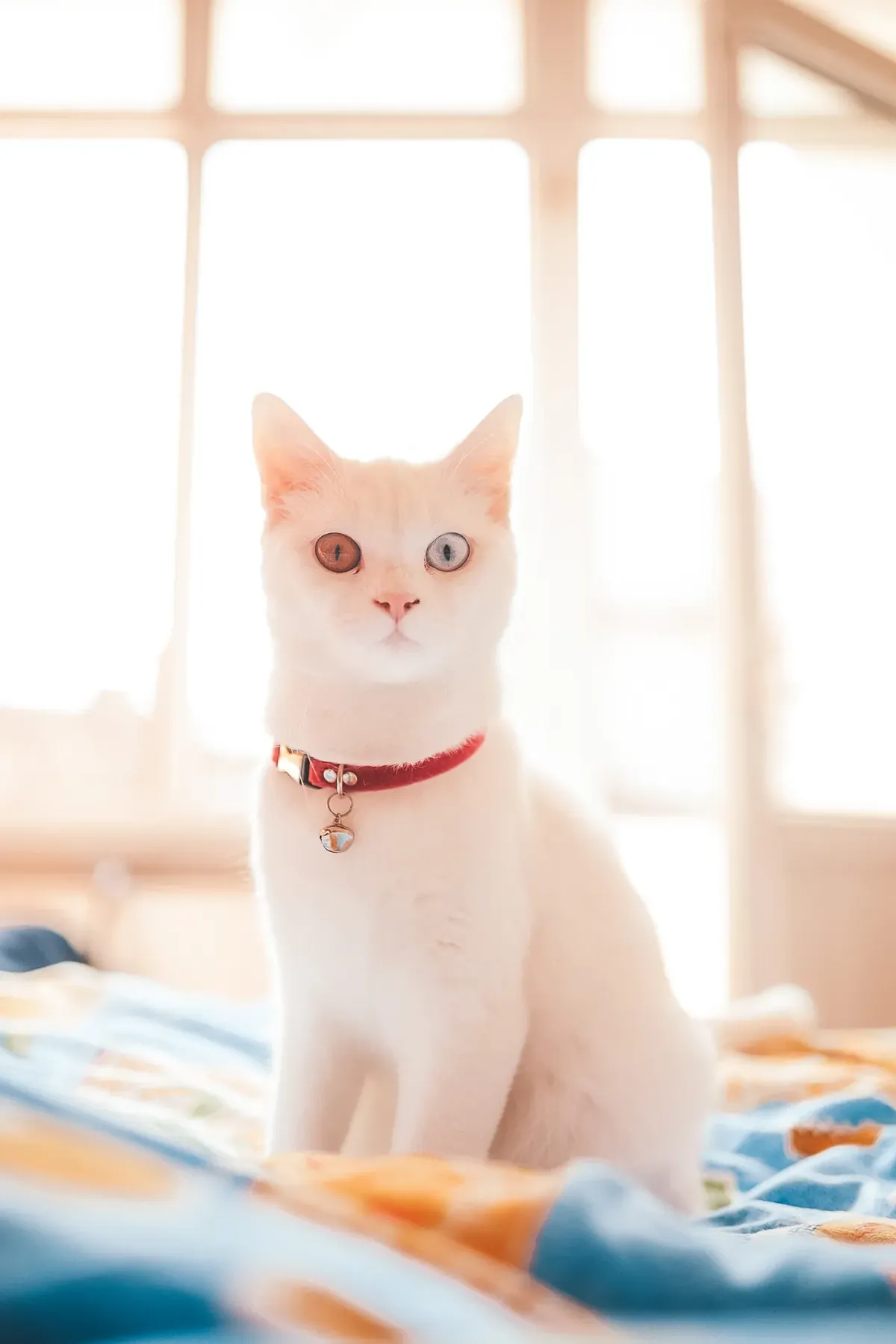
Deaf cats live full, happy lives. I say that plainly because the stigma is undeserved. Owners in the white-cat community say their deaf cats are some of the most affectionate, attentive cats they have ever had. One owner described her deaf white long-haired girl as absolutely thriving, a little bit crazy, living her best life, and her comment section filled with other deaf-cat owners saying the same.
A deaf cat needs a few adjustments. The tips that come up again and again from owners of deaf cats:
- Get attention with vibrations. Stomping your foot creates vibrations she feels through her paws; some owners condition their cat to come at three firm stamps.
- Use light. Flicking a room light on and off, or tapping a surface, gets her attention without startling her.
- Approach from the front. Always let her see you first, and wake her with a gentle touch rather than a sudden one.
- Teach hand signals. Maine Coons are observant learners, and owners say they pick up hand signals easily.
- Keep a bell on the collar. A bell means you can hear where she is, even if she cannot hear you.
- Indoors only, always. A deaf cat cannot hear a car, a dog, or a stranger. Every deaf-cat owner agrees on this rule.
One story from the owner community stuck with me: a white Maine Coon was returned to her seller because she turned out to be deaf, and she later found a wonderful forever home. A hearing test before the sale would have prevented the whole thing. Deafness is not a defect in personality. It is a hearing difference, and it is manageable.
Keeping a White Coat White: The Real Work

A white coat is a commitment. A tabby can roll in dust and walk away looking fine. A white Maine Coon shows you everything: tear staining around the eyes, a smear of wet food on the chin, litter dust on the belly. It is all visible, and it is all on you.
The good news: a white Maine Coon needs the same grooming any Maine Coon needs; it just has to happen more often. Brush two to three times a week, daily during the spring and autumn coat blows, paying special attention to the armpits, chest, belly, behind the ears and tail base, where mats form. If you are unsure about bathing technique, my full guide to bathing a Maine Coon walks through the whole process step by step.
For the cosmetic side, here is what works:
- Eyes: Wipe daily with a damp cotton pad or pet-safe wipe. Plain warm boiled water is safest for white fur, since herbal teas and some remedies can stain.
- Chin: Check for greasy buildup or feline acne. A gentle daily wipe keeps the chin white and the skin healthy.
- Hindquarters: Long fur back there picks up litter and moisture. Keep it trimmed short, and check it regularly.
- Baths: Most Maine Coons do not need frequent baths, but white coats benefit from one every few months or whenever the coat looks dingy. Use a gentle cat-specific shampoo, ideally one formulated for white coats. Never use bleach, peroxide, or human whitening products on a cat. That is not a shortcut; it is a poisoning risk.
If staining suddenly gets worse, do not just scrub harder. Persistent facial staining can come with eye discharge, chin staining can accompany feline acne, and a dirty hind end can signal diarrhea, arthritis, or difficulty grooming. The coat is a dashboard; when the readings change, look at the engine and call your vet.
White cats’ pink ears and noses sunburn easily, so keep her out of long midday sun. Indoors is always safest.
Personality: The Same Wonderful Maine Coon
Coat color does not change personality, and anyone who has lived with Maine Coons will tell you that. A white Maine Coon is the same dog-like, chirping, water-obsessed, follows-you-to-the-bathroom companion as any other Maine Coon. Owners describe the same traits: long conversations in trills and chirps, a giant presence on every piece of furniture, the water fascination, gentleness with kids and other pets. If you want the full breakdown of what living with one of these gentle giants actually feels like day to day, read my guide to Maine Coon personality traits.
Finding a White Maine Coon: Rarity and Breeder Questions
White Maine Coons are not rare the way some sellers claim, but they are harder to find than brown tabbies or silvers. One owner described searching for years before finding his, and said owning three white Maine Coons with full hearing was a dream come true. My run-down of Maine Coon colors covers the full list: white sits among the accepted solids, alongside black, blue, red and cream, but fewer kittens are born white than tabby in most programs.
Because the deafness risk is real, I would approach white kittens with more care than average:
- Ask for a hearing test. BAER or OAE results for the individual kitten, not just “she seems to hear fine.”
- Ask about eye color. Blue eyes raise the odds; green or gold eyes lower them. Odd eyes sit in the middle.
- Ask about the parents. Two hearing parents reduce the odds; two white parents increase them.
- Meet the kitten. Watch how she responds to sound she cannot see. It is not a substitute for a BAER test, but it tells you something.
If you learn the kitten is deaf, do not treat that as a dealbreaker unless you genuinely cannot keep an indoor-only cat. Deaf Maine Coons bond fiercely; they watch your face the way hearing cats watch the world.
Frequently Asked Questions
Are white Maine Coons albino?
No. A white Maine Coon has the dominant white gene, which suppresses pigment cells. True albinism is a different genetic condition and is extremely rare in cats. White Maine Coons have normally colored eyes, green, gold, copper, blue or odd-eyed, and pink noses and paw pads.
Are all white Maine Coons deaf?
Not at all. Cornell University veterinary research found that about 17 to 22 percent of white cats with non-blue eyes are born deaf, rising to about 65 to 85 percent in white cats with two blue eyes. That means even among blue-eyed white cats, a significant number hear normally. A BAER hearing test is the only way to know for sure.
Can white Maine Coons have blue eyes?
Yes. Blue eyes and odd eyes are allowed under the CFA breed standard, but only in white cats and cats with white. White Maine Coons may have blue, green, gold, green-gold, copper, or odd-colored eyes. In all other Maine Coon colors, blue eyes do not occur.
Do white Maine Coons need special grooming?
The routine is the same as for any Maine Coon: regular brushing, mat checks, and the occasional bath. The difference is frequency, because every speck of dirt shows. Daily eye-area wipes, chin checks, and brushing two to three times a week, daily in shedding season, keep the coat glowing.
Are white Maine Coons more expensive?
Price is set by the breeder, not the coat color, and no registry gives white a premium over other colors. Some sellers market white as “rare” to justify higher prices. Judge the breeder on health testing, contracts, and how the cats are raised, not on the color of the kitten.