Do Maine Coons Like Water? The Breed That Breaks the Cat Rule
Most cats treat water like a personal insult. A stray drop on the paw? Shake it off. A puddle? Jump it. But if you ask a room full of Maine Coon owners do Maine Coons like water, half of them will laugh and point at the faucet — the one their cat is currently sitting under. This breed genuinely breaks the cat rule — with a commitment that leaves your bathroom floor soaked and your heart melted.
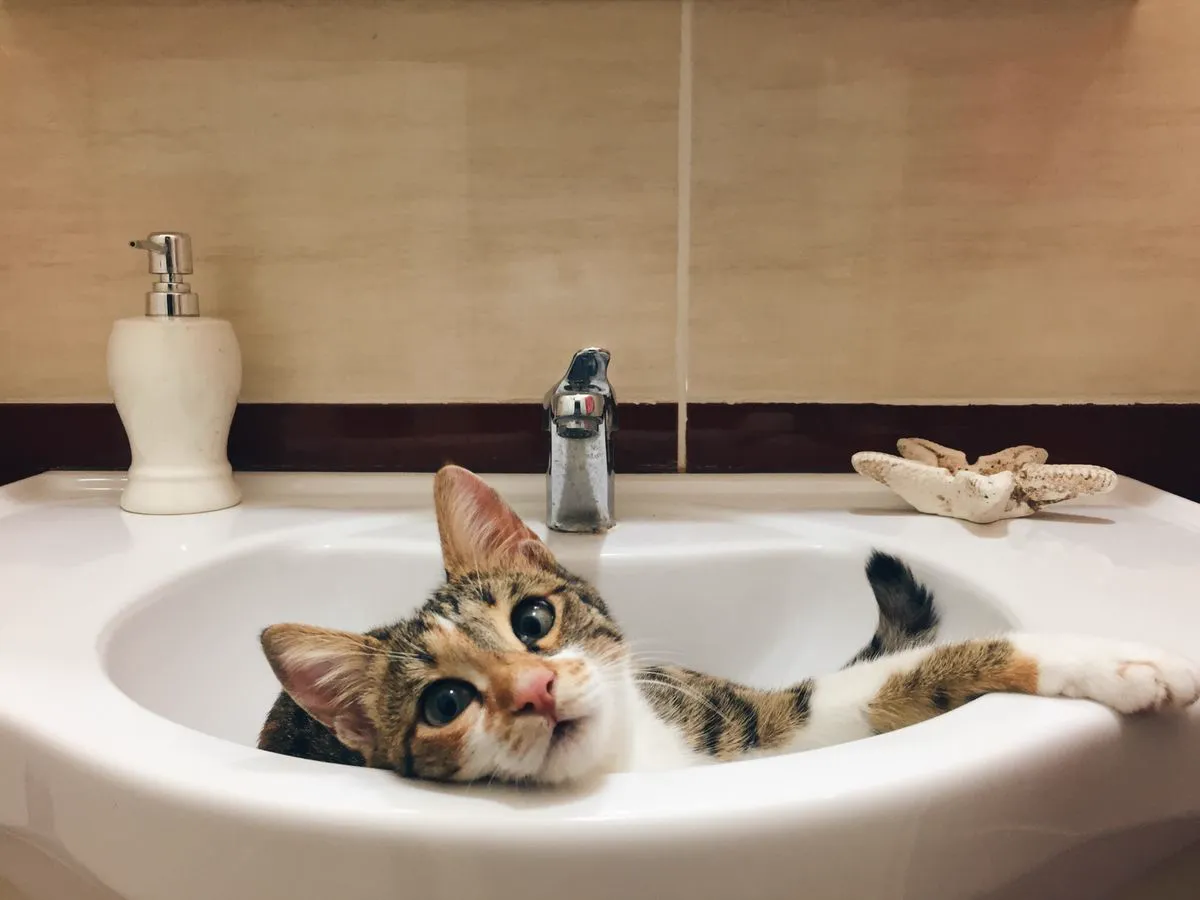
Mine taught me this on week one. I placed a beautiful ceramic water bowl in the kitchen and stood back to admire my responsible pet ownership. He ignored it completely and trotted straight to the bathroom sink, where he stared at the faucet like he had read my plumbing plans. Four years later, he still drinks from the tap, and I have learned that I own a perfectly normal Maine Coon.
Do Maine Coons Like Water? The Short Answer
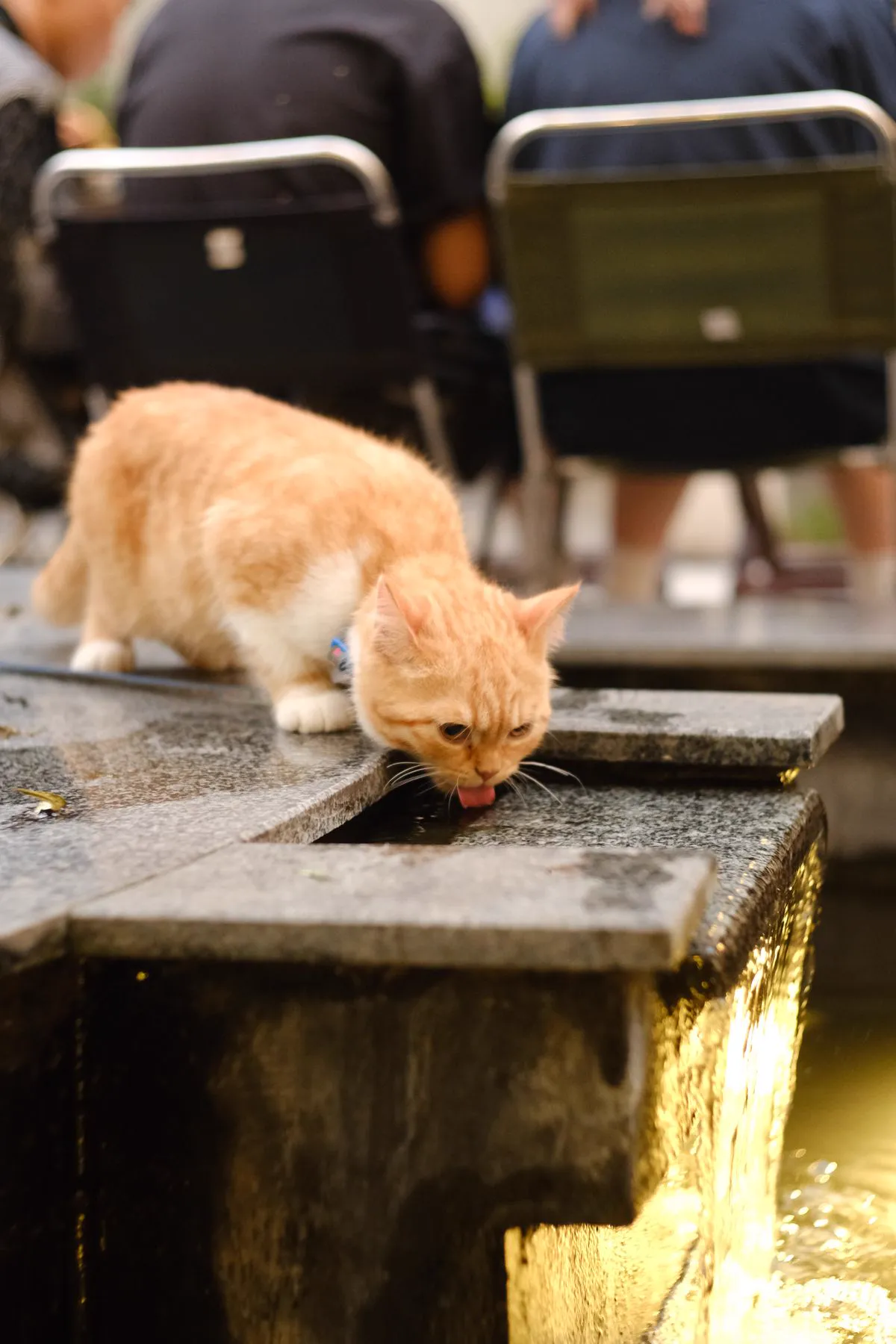
Yes — more than almost any other breed. Faucets, dripping taps, puddles, bathtubs, fountains, and sometimes full swimming pools: this is the one cat breed where “he fell in the bath” is a story told with fondness instead of horror.
But the honest caveat every breeder will give you: water interest and water enjoyment are different things. One breeder who writes about the breed puts it well: many Maine Coons are fascinated by water in a measured, controlled way — reaching out a paw, testing droplets, watching the stream — without ever wanting to be fully wet. A cat can adore faucets and still hate baths. Tolerance is not enjoyment, and enjoyment of running water does not mean your cat wants to swim. Some could not care less about the tap, and they are just as normal.
So the real answer: the breed has a well-earned reputation for liking water, most of them live up to it in some form, and yours gets to define what “liking water” means in your house.
What It Looks Like in a Real House
If you have never lived with one, the daily water routine of a Maine Coon is hard to imagine. Nearly every owner report I have read mentions at least one of these:
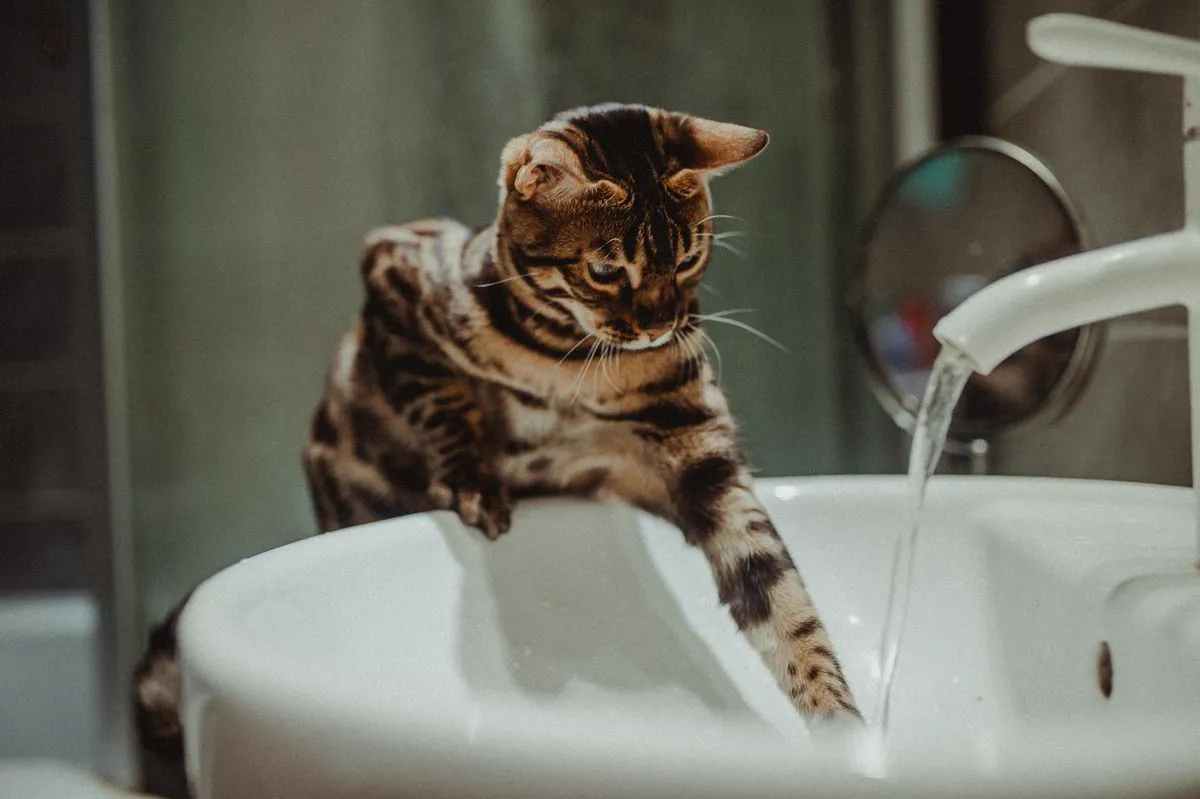
The faucet vigil. The single most reported behavior in the breed, by a mile. Maine Coons park themselves by a running faucet — kitchen, bathroom, utility sink, they are not picky — and drink from the stream, paw at the flow, or just watch it like television. Owners on Instagram trade stories of cats using a paw as a spoon for drips, and one person’s old cat would sit in the bathtub for hours just watching the tap. I have caught mine in the dry tub at 2 a.m., waiting for a drip that is not coming.
The paw dip. Before drinking, many Maine Coons dip a paw in the bowl, swirl it around, then drink or lick the water off the paw. Some scoop water clean out of the bowl onto the floor — part testing, part playing, part old instinct about checking still water. My floors have the water rings to prove it.
The fountain obsession. Automatic fountains and Maine Coons go together like chaos and regret. One hugely popular reel shows a silver Maine Coon draped over his fountain like it is round 47 of a wrestling match, and the comments are a support group of owners whose cats splash, dig, and knock fountains over. If your Maine Coon treats a still water bowl as optional equipment, you are not alone — and I have a whole separate piece on whether Maine Coons really need a water fountain and which setups survive them.
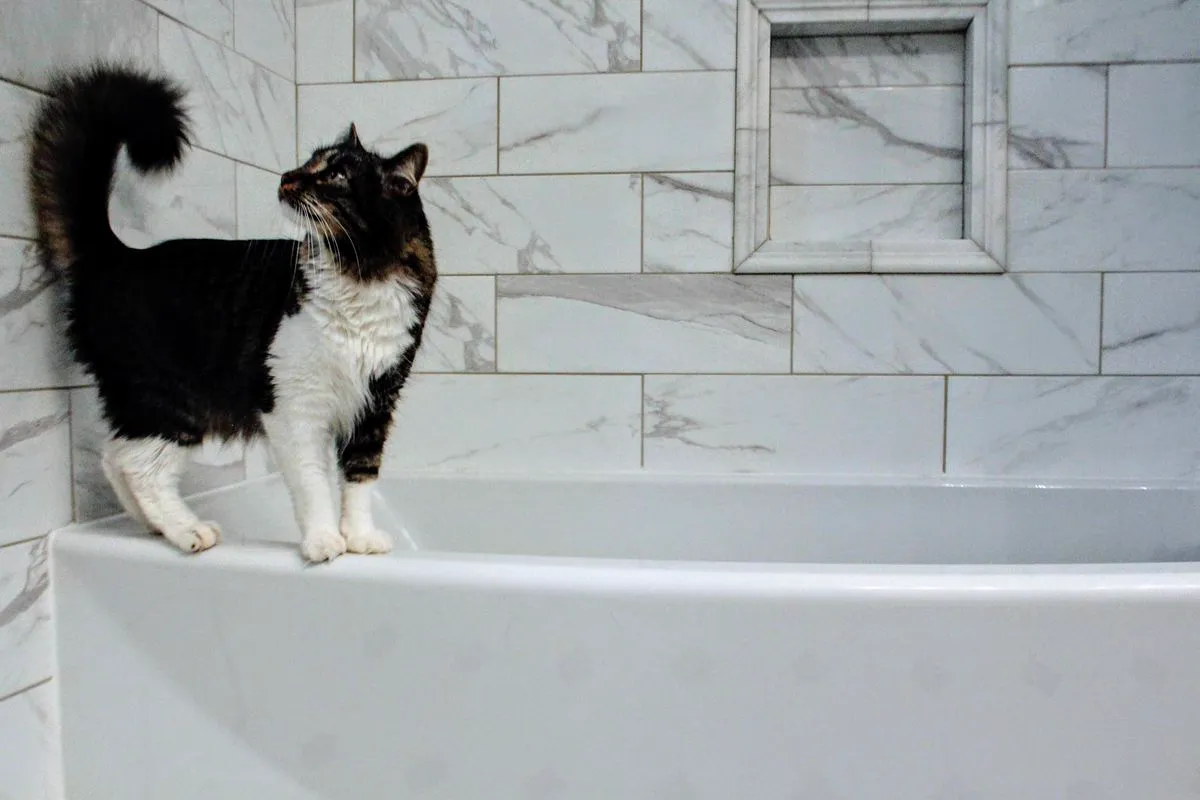
The bathroom takeover. Toilets, sinks, showers, tubs — if it holds water, a Maine Coon will claim it. One longtime owner blogger describes hers perching on the toilet lid every morning to reach the faucet, and warns you must leave the toilet lid down at all times. Another describes her cat inspecting a dripping drain like a mechanic under a car on a lift.
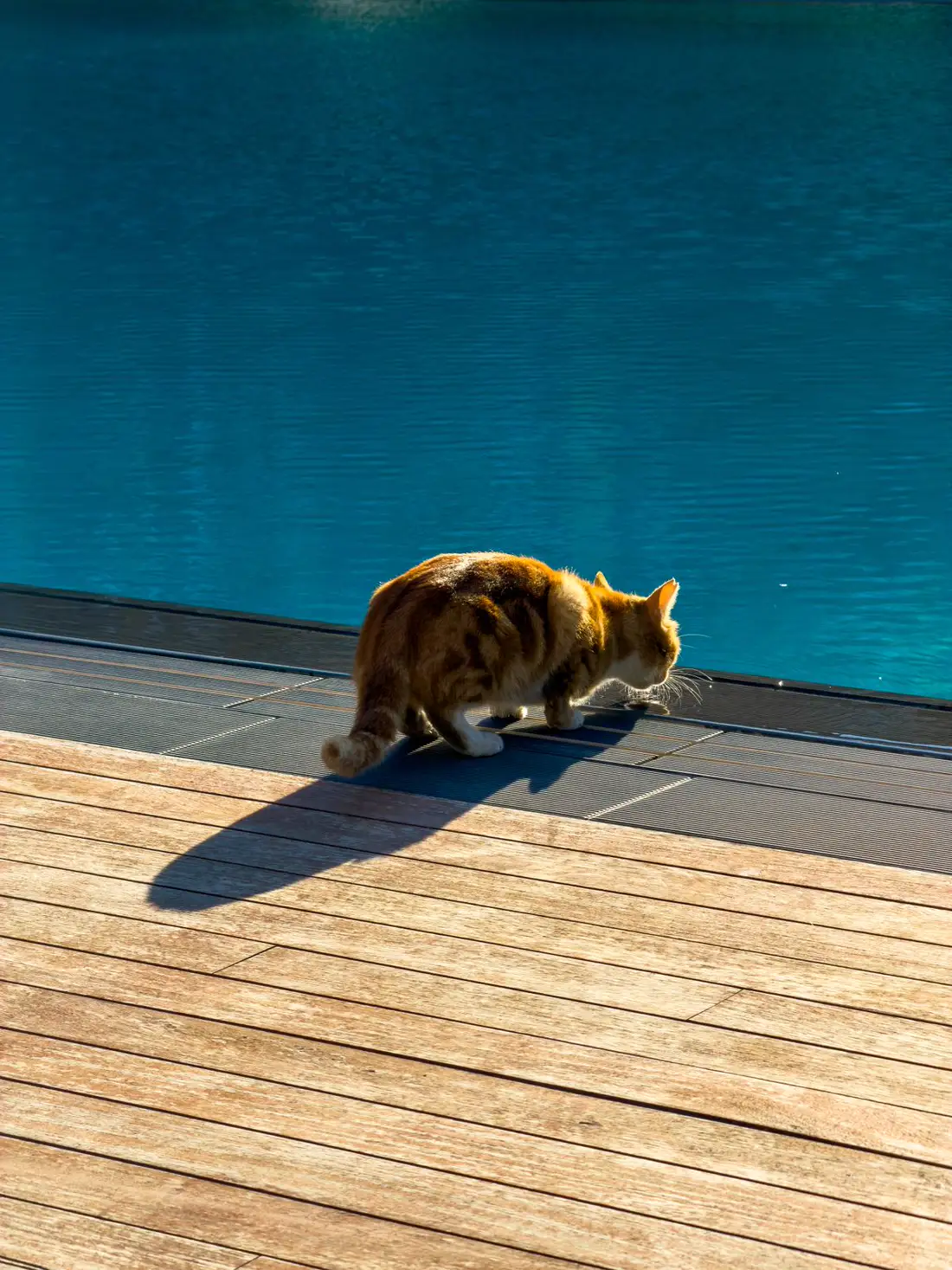
The big water. Some go further. A ginger Maine Coon filmed at a backyard pool kept leaning over the edge to drink the pool water while his owner pleaded with him to stop. And one owner in South Africa tells of her Maine Coon, Molly, who walked across the pool safety net to sit on the floater in the middle. No fear at all.
Why They Do It: Coat, Legends, and Moving Water
The honest answer to “why” has three parts: one you can verify, one that is legend, and one that is just cats being cats.
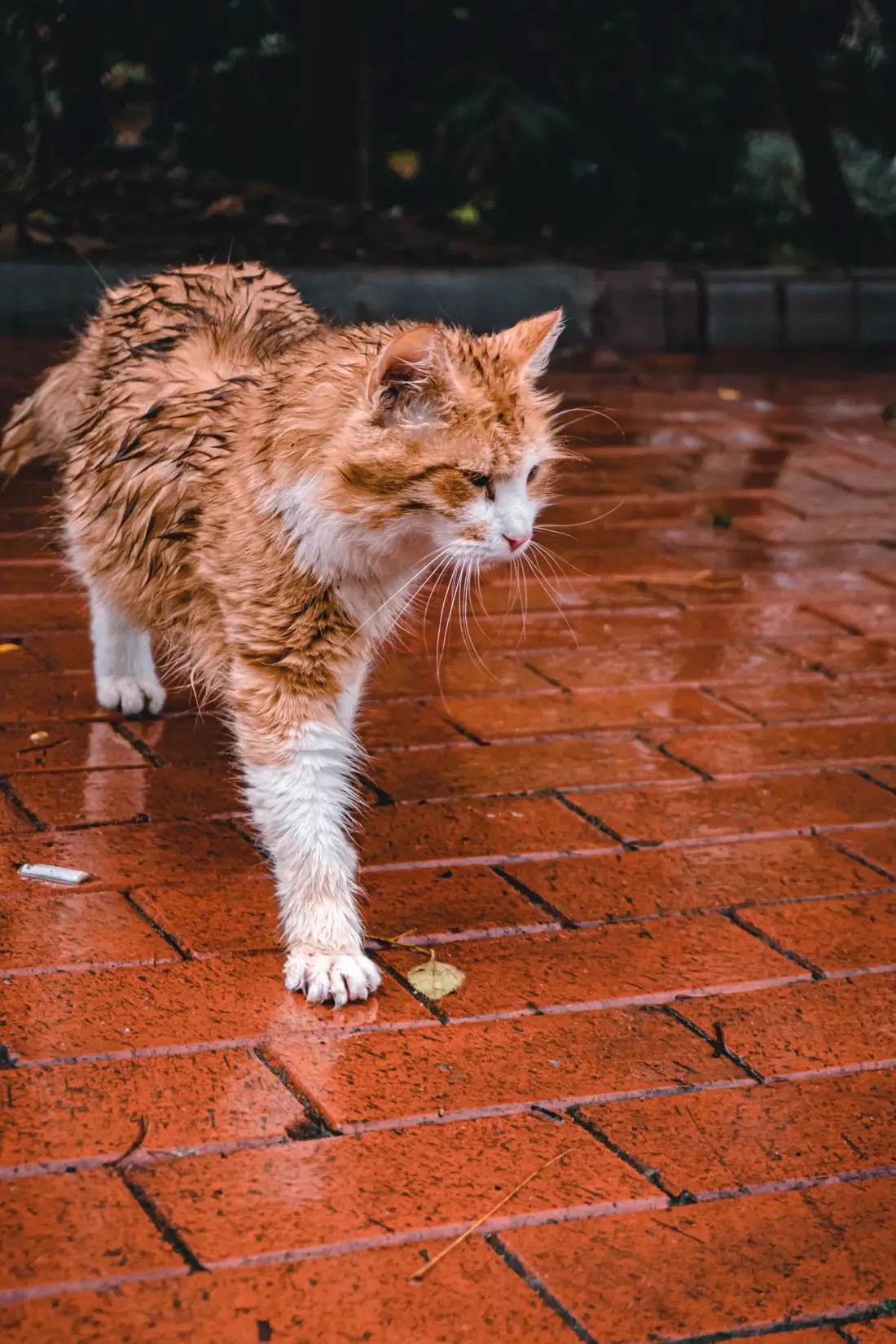
The coat. This one is documented. TICA’s Maine Coon breed introduction describes the “semi-longhair glossy coat” as “heavy and water-resistant,” longer on the ruff, stomach, and britches (TICA’s Maine Coon breed introduction). The CFA’s breed standard describes a heavy, shaggy coat built for a working cat in harsh country. Water-resistant is not waterproof — a truly soaked Maine Coon still gets heavy and cold — but the coat sheds light splashing the way a rain jacket sheds drizzle. A cat whose fur shrugs off water has less reason to fear it. The breed developed in the harsh New England winters, which is also why I wrote about winter care for Maine Coons as its own topic.
The legends. Every Maine Coon origin story involves ships — trading vessels, a sea captain named Coon, even the Vikings. TICA’s breed history says most breeders today believe the breed came from matings between local shorthairs and overseas longhairs, possibly brought by New England seamen. Owners love to explain the water thing as ship-cat heritage — “water feels like home.” Lovely story; folklore, not proven fact. Take it for what it is.
Moving water. The most convincing everyday explanation is the simplest: cats generally prefer running water to still water, and Maine Coons take that preference further than most. In nature, moving water is safer than stagnant water, and most cats will pick a dripping tap over a bowl that has sat out all day. The Maine Coon’s intelligence and curiosity — the same traits that make them open doors and learn faucet handles — turn that instinct into a full hobby. The cat controls the distance and intensity. It is play, enrichment, and drinking all at once.
Is It Safe? Pools, Puddles, and Bathtubs
Enjoying water and being safe around it are different questions — worth taking seriously with a cat the size of a small dog who has zero fear of your pool.
Supervise everything deeper than a bowl. Even a strong swimmer can panic, tire, or be unable to climb out. Never leave your Maine Coon unattended near an open pool, a full bathtub, a pond, or a hot tub. If you have a backyard pool your cat can reach, a safety cover and a clear exit route are worth their weight.
Watch what they drink. Puddle water after rain is one thing; chlorinated pool water is another. Chlorine can irritate a cat’s skin and upset their stomach, so discourage pool drinking, rinse them off after pool play, and keep fresh drinking water nearby.
Never force it. A cat that loves faucets can still panic if dunked, and forcing a cat into water is a fast way to create fear and earn scratches. Voluntary is everything. If you ever do need to bathe yours — and VCA Hospitals notes that most healthy cats rarely need a bath at all (VCA’s grooming guide) — the introduction should be gradual, shallow, and your cat’s choice. I cover the full process in my guide to bathing a Maine Coon, and I will not repeat it here.
Dry them properly after a real soaking. Water-resistant is not waterproof. If your Maine Coon comes in drenched, towel them dry gently and comb through the coat — a wet Maine Coon left to air-dry is a matting risk. If yours wanders in the rain, my notes on whether Maine Coons can go outside cover the outdoor side of this.
One medical footnote. A sudden, big change in drinking — far more than usual, or almost none — is not a quirk; it is worth a vet visit.
Living With a Water-Obsessed Giant
You cannot train the water love out of a Maine Coon. You manage it — here is what actually works:
Toilet lids stay down. Always. A Maine Coon will drink from, splash in, and drop toys into an open toilet.
Give them a sanctioned faucet. A pet fountain placed where splashing is survivable scratches the same itch. One genius trick from owner comments: put the fountain in the bathtub or on a tiled floor with a big absorbent mat. Contain the mess instead of fighting it.
Protect your floors. Waterproof mats under bowls, and heavy, tip-proof bowls or fountains. A 20-pound cat doing the paw-scoop will relocate any lightweight dish in seconds. And do not leave taps dripping “for the cat” — it trains the behavior into every faucet in the house and wastes water.
Enrich the instinct. Ice cubes in a shallow dish, a dripping tap during supervised play, floating toys — water play is legitimate enrichment for a smart, high-energy breed. The paw-dipping is not misbehavior; it is a bored genius entertaining itself.
And accept the wet paw prints on your bed. The price of admission for a Maine Coon is a permanently damp bathroom floor, and it is worth every drop.
FAQ
Do all Maine Coons like water?
No — most do, but not every individual. Plenty are indifferent to water, and a few actively dislike being wet. A cat that loves faucets but hates baths is completely normal; tolerance and enjoyment are different things.
Can Maine Coons swim?
Many can, but ability varies by individual and they tire faster than you would expect from such a big, athletic cat. Never assume yours can swim, never throw a cat into water, and always supervise. Short, voluntary, supervised sessions only — with an easy exit every time.
Can my Maine Coon drink pool water?
Do not let it become a habit. Chlorinated pool water can irritate their skin and upset their stomach, and pool chemicals are not meant to be drunk. Offer fresh water nearby, redirect them, and rinse them off after pool time.
Why does my Maine Coon dip his paw in the water before drinking?
Almost certainly instinct layered with play — testing depth and movement, an old wild-cat habit with still water, plus simple curiosity. Breeders and owners alike call it one of the breed’s signature behaviors. It is normal, and it is one of the reasons so many owners switch to fountains.
Will my Maine Coon like baths?
Maybe, maybe not — and it does not correlate neatly with faucet love. Their water-resistant coat and bold temperament do make bath time easier with this breed than with most cats. If you ever need to bathe yours, gradual introductions and the right setup matter far more than the breed’s reputation.