Maine Coon Summer Care: Keeping My Gentle Giant Cool
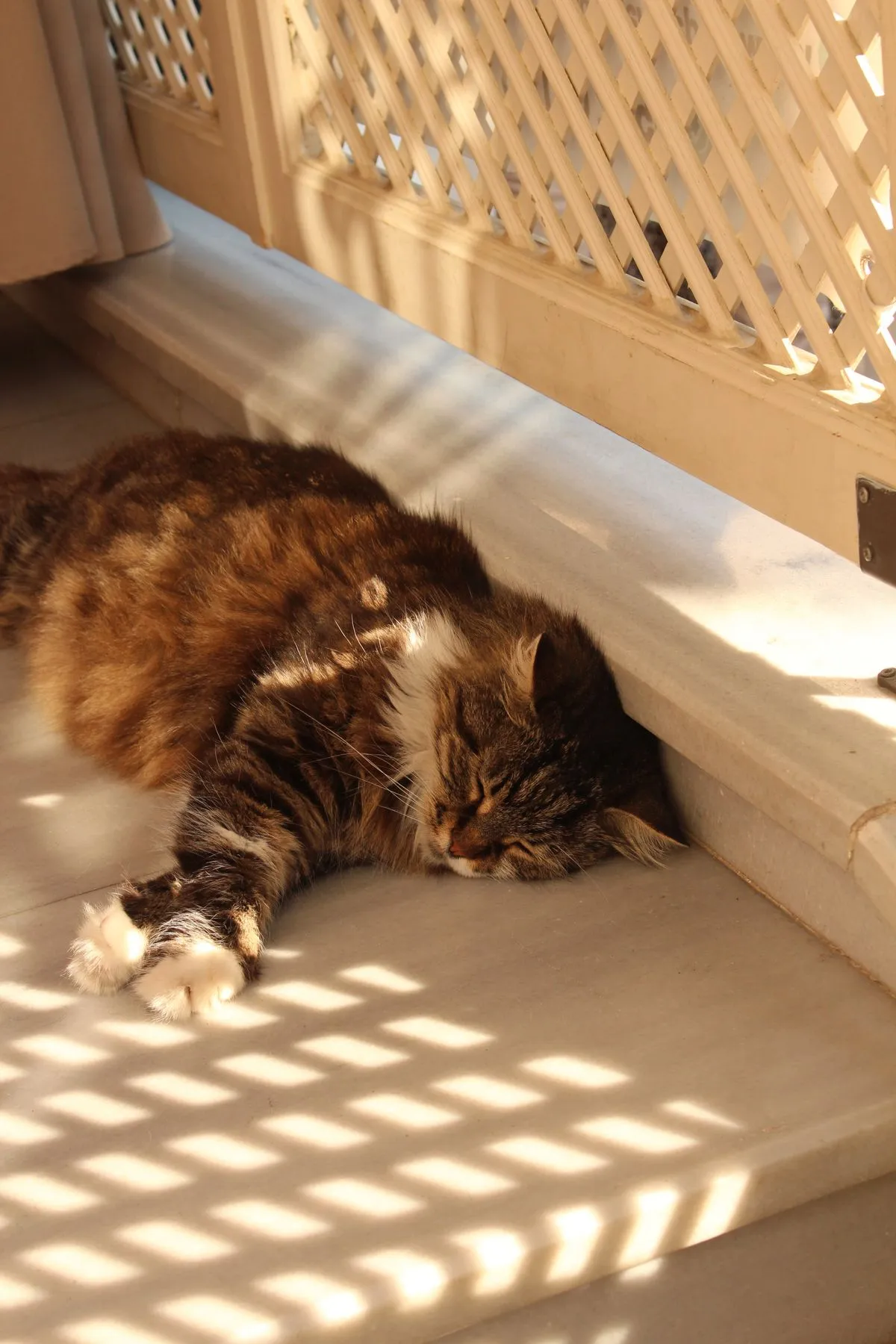
My first summer with a Maine Coon caught me off guard. I had survived the winter with him — I wrote my whole maine coon winter care guide during that first cold season — and assumed summer would be the easy half of the year. Then July arrived and my twenty-pound boy went flat: belly on the bathroom tile, legs stretched behind him like a rug, completely still. It was not laziness. It was thermoregulation, and it was the moment I realized maine coon summer care is a discipline of its own.
This breed wears a permanent winter coat in a warming world. They were built for Maine winters, not heatwaves. The good news is that they are honest about their discomfort once you know what to look for — and a handful of changes to water, surfaces, and routine can carry a giant cat through the hottest months.
Maine Coon Summer Care Basics: How This Breed Handles Heat
Cats cool themselves far less efficiently than people do. Most of a cat’s sweat glands sit in the paw pads — not much cooling surface on any cat, let alone one carrying a full double coat. A Maine Coon cools itself mostly by behavior: sprawling on cold surfaces, sleeping through the hot hours, licking its fur so evaporation takes heat away, and relocating to the coolest room it can find. When those strategies stop being enough, trouble arrives fast.
The signs of a cat getting too hot are worth memorizing before the season starts, because by the time heatstroke sets in, minutes matter. PetMD’s heatstroke in cats guide puts heatstroke at a body temperature over 104°F, with heat exhaustion as the earlier stage around 103–104°F — the window where fast action can still prevent damage. VCA Hospitals, in their cat emergencies guide, describes the classic picture: excessive panting, lethargy, and distress that can slide into unconsciousness fast.
PetMD also notes that obese cats, kittens, older cats, and sick cats are more prone to heatstroke — worth knowing for a breed that runs large by design.
The Early Signs Your Maine Coon Is Overheating
Heat exhaustion usually shows up as behavior changes before anything dramatic. What I watch for from June onward:
- Restlessness and seeking cool surfaces. The classic pre-heat move is relocation: abandoning the couch for the tile, the bathtub, the basement floor. The flatter the sprawl, the harder the cat is working to dump heat — owners on Facebook say the same thing about their own long-haired cats.
- Heavy or open-mouth panting. Cats rarely pant the way dogs do. Panting in a cat is always a signal, and in heat it is an early warning, not a wait-and-see situation.
- Drooling or excessive salivation, and sweaty paw pads. PetMD lists sweaty paws as an early heat-exhaustion sign. Damp paw prints on tile without any water nearby mean pay attention.
- Excessive grooming or frantic self-licking. One of the most commonly missed signs. A cat depositing saliva on its fur is running evaporative cooling, and a cat suddenly doing it a lot is telling you it is hot.
- Lethargy, rapid heartbeat, dark pink or red gums. These mean heat exhaustion is progressing toward heatstroke. VCA Hospitals is blunt about this stage: excessive panting, lethargy, and distress, with unconsciousness possible soon after.
If you ever see vomiting, stumbling, glazed eyes, or collapse, skip the home remedies. Get the cat cool and get to a vet — heatstroke damages organs even after the temperature comes down, so it is not the kind of thing you monitor overnight.
Hydration: My Summer Water Setup
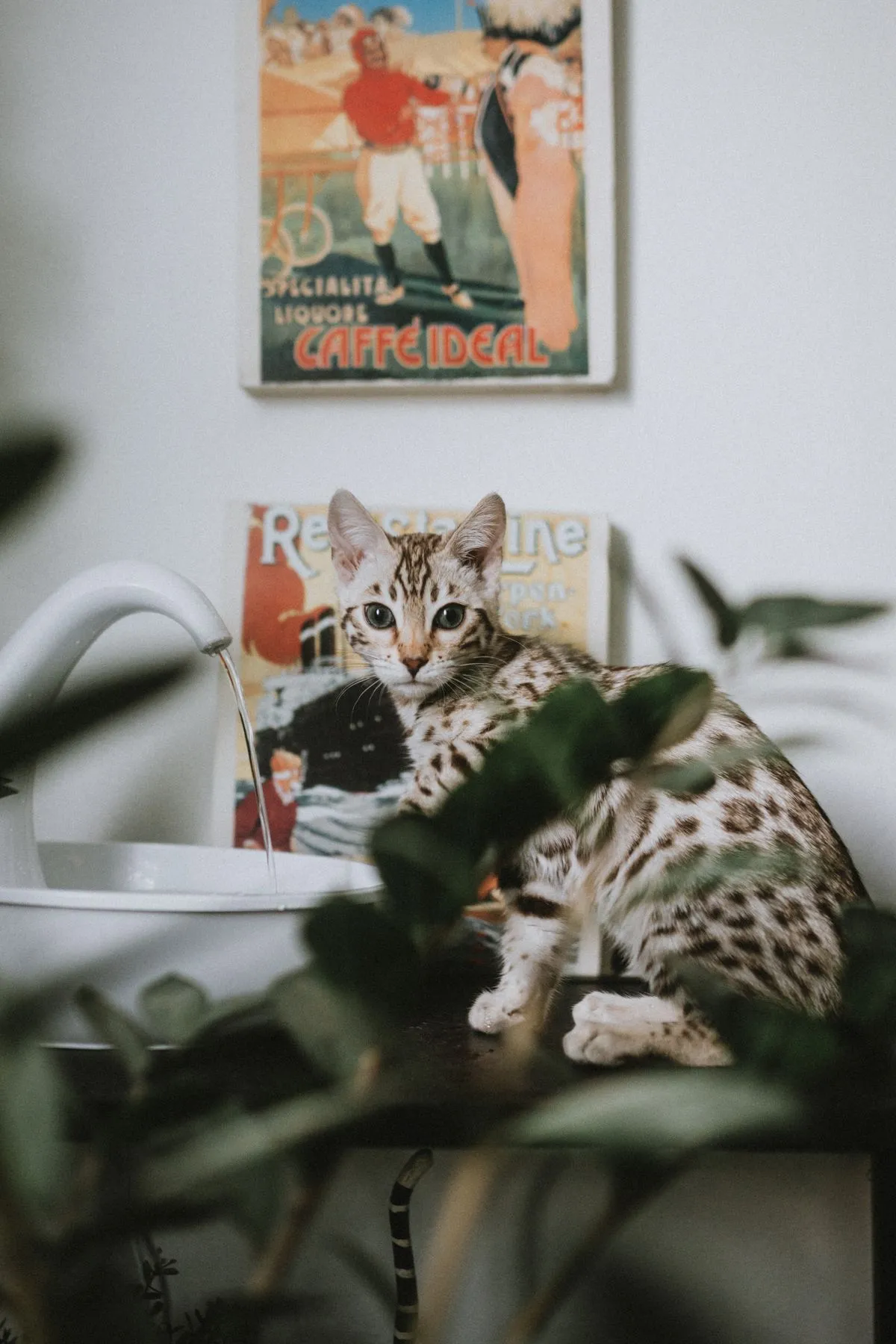
A Maine Coon is a big cat with a big water requirement, and summer multiplies it. A bowl that was full in the morning can be warm, half-empty, and full of fur by late afternoon. Hydration is the backbone of maine coon summer care:
The fountain is the centerpiece. Maine Coons are famously drawn to running water, and a fountain turns drinking from a chore into a habit. I keep a large stainless steel fountain running all summer, and in the heat I clean it more often — slime builds up faster in warm water, so the weekly deep-clean becomes twice weekly. My guide to a water fountain for Maine Coons walks through the types that suit big cats.
Add water stations, not just more water. Cats drink more when water is available in several places, away from their food. I run the fountain plus two wide bowls in different rooms — one on the tile floor of the coolest room, so the cat finds water where it goes to cool down.
Ice cubes earn their keep. A few ice cubes in the bowl keep the water cooler through the afternoon and give the cat something interesting to fish at. On the hottest days I freeze a small bowl of water with a bit of tuna water mixed in as a slushy.
Wet food counts as water. Summer is the time to lean into it a little more — the lowest-effort hydration upgrade there is.
Cooling Mats, Tile Zones, and Other Fixes That Actually Work
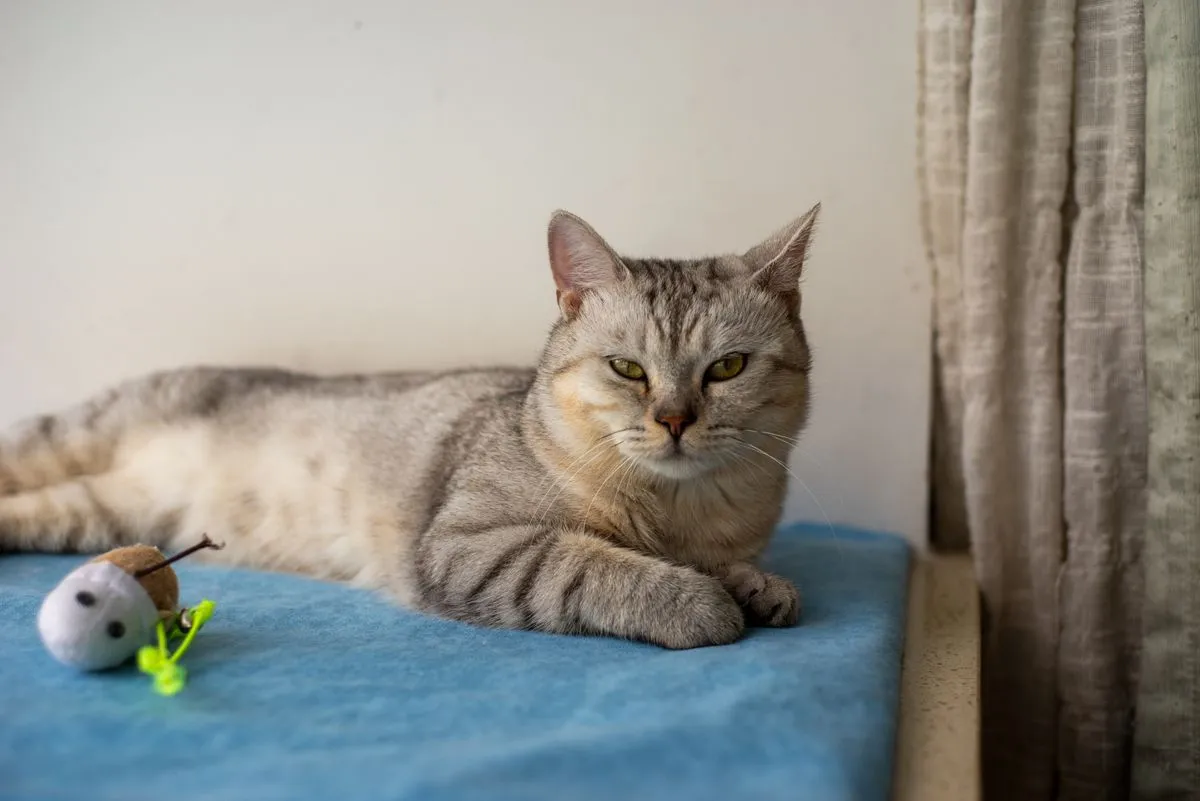
Maine Coons are surface connoisseurs: the bathroom tile, the bottom shelf, the shadiest corner of the lowest floor. The single most useful thing I did was stop fighting that instinct and start building on it.
Cooling mats. These pressure-activated gel mats absorb body heat without electricity or freezing. Owners on social media swear by them for long-haired cats — one Facebook reel from this summer’s heatwave was a Maine Coon owner who forgot to buy one, and the comments were full of people saying it was their cat’s best purchase. Give yours two or three days, and it becomes the default nap spot.
Tile zones. Keep bathroom and kitchen doors open so the cat has access to tile, stone, or concrete — the coldest surfaces in the house. The “flatten and sprawl” pose looks dramatic, but it is exactly what a healthy cat is supposed to do.
Fans and air movement. Cats in owner groups talk constantly about their Maine Coons parking themselves in front of fans — one owner’s 14-pound boy commandeers the household fan every summer. A fan does not need to blow directly on the cat; moving air across the room lowers what the cat actually feels. If you have air conditioning in only one room, that room becomes the cat’s room on heatwave days.
Curtains. Close them on sun-facing windows between late morning and late afternoon. The cheapest cooling upgrade in the house.
Damp cloth wipe-downs. If your cat tolerates handling, wipe the paws, belly, and ear edges with a cool, damp (never ice-cold) cloth. Cats cool primarily through their paws, and this mimics that mechanism directly. Do not soak the cat — a bath is a stress event that generates more heat than it removes.
Travel warning. Never leave your Maine Coon in a parked car, even for a few minutes, even with windows cracked. VCA’s emergency guidance singles out cats left in carriers in unventilated cars as their most common heatstroke scenario.
Summer Brushing Cadence: Clear the Undercoat, Keep the Coat
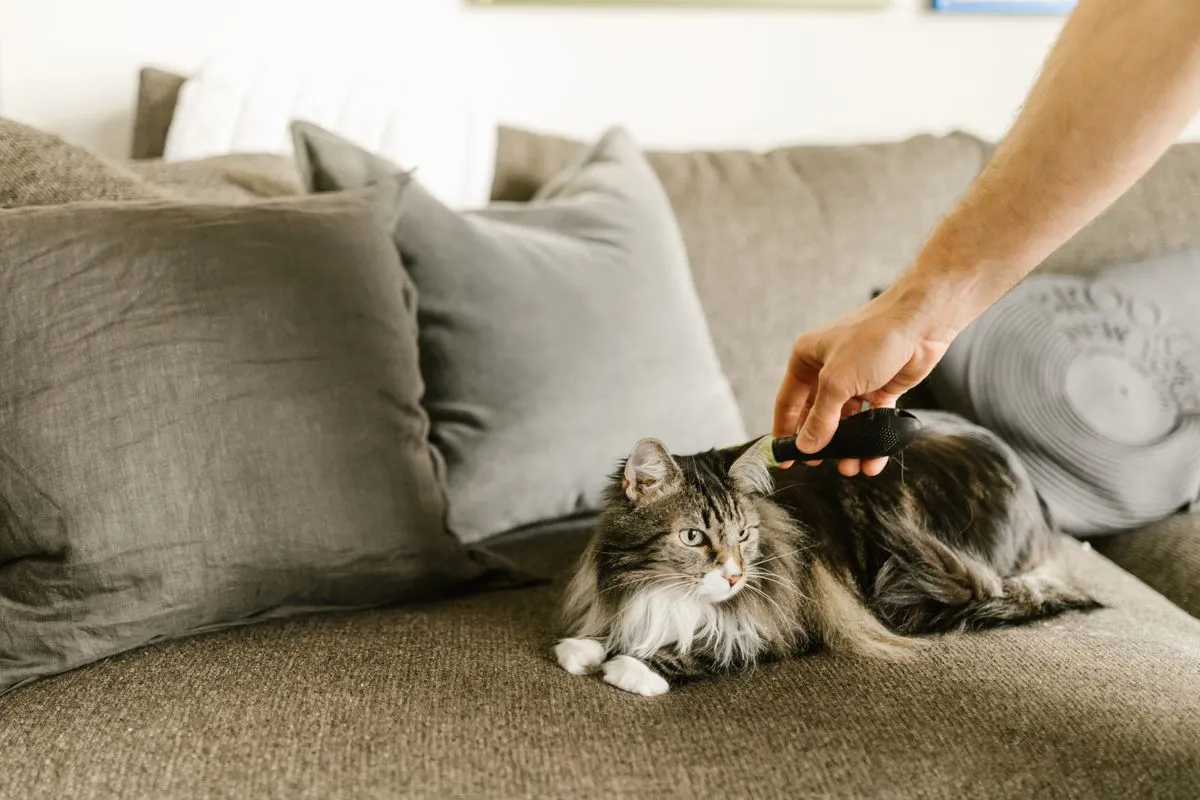
The counterintuitive part: the coat that looks like the problem is part of the solution, as long as it is maintained. A clean, de-matted coat traps a layer of air that insulates against heat just as it insulates against cold. Dead undercoat left in place is a heat trap and a mat waiting to happen.
I brush three to four times a week through summer. The goal is removing loose dead undercoat so air can circulate down to the skin — a steel comb down to the skin tells the truth about what is happening under the guard hairs, especially on the belly, armpits, and britches where mats start and trapped heat collects. My guide to the best brush for Maine Coon cats covers the kit owners actually use.
One thing summer does not call for: shaving. If the clippers tempt you when the thermometer climbs, read my breakdown of shaving a Maine Coon cat: pros, cons and what to know first. The coat regulates temperature in both directions; removing it is a last resort, not a cooling strategy.
When to Call the Vet: Heat Signs That Can’t Wait
Normal summer behavior: sleeping more during the day, relocating to tile, drinking more, playing in the evening. That is the cat managing its own temperature — let it happen.
Call the vet — do not wait and see — for any of these:
- Persistent panting or open-mouth breathing that does not settle once the cat is in a cool room
- Drooling combined with lethargy, weakness, or stumbling
- Vomiting or diarrhea on a hot day
- Gums that look bright red, dark red, very pale, or bluish
- Collapse, disorientation, or any seizure
While you are getting to the vet: move the cat to the coolest spot you have, offer small amounts of cool water without forcing it, and apply cool (never ice water) damp cloths to the paws, ears, and belly. VCA’s emergency guidance is specific — rinse with cool, not cold, water, and you can wrap the cat in a cool, wet towel for the trip.
Keep your vet’s number and the emergency clinic’s number saved somewhere you can find in a panic. On the worst heatwave day of the year is exactly when you will not want to be Googling.
The Summer Routine That Works for Us
Compressed into one day: fresh water in every station with ice cubes in the morning, a quick comb-through, curtains drawn. Midday, the cat naps through the worst of it on the cooling mat or the bathroom tile — sleep is cooling. Evening brings the play session and the wet-food meal once the house cools down. Boring, consistent, and it works.
Frequently Asked Questions
How hot is too hot for a Maine Coon?
Most cats get uncomfortable above about 80°F (27°C), and long-haired breeds feel it sooner. I start actively managing heat once the house pushes past the mid-70s. Watch the cat more than the thermometer: tile-seeking and heavy sprawling mean the cat is already managing heat.
Should I shave my Maine Coon for summer?
No — not for heat. The coat insulates against heat as well as cold, and shaving removes that buffer while exposing pale skin to sunburn. Brushing does more for cooling than clippers ever will. The only honest reasons to shave are severe matting or medical necessity.
Do cooling mats actually work for Maine Coons?
Yes, once the cat accepts them. Owners in Facebook groups report the same pattern: suspicion for a day or two, then it becomes the preferred nap surface.
How often should I brush my Maine Coon in summer?
Three to four times a week is my summer cadence, focused on getting the comb down to the skin to clear loose undercoat. Short, regular sessions beat one long weekly battle. Pay special attention to the armpits, belly, and britches where mats and trapped heat collect.
My Maine Coon sleeps all day in summer. Is that normal?
Usually yes. Sleeping through the hot hours is a cooling strategy — a still cat generates less heat. As long as the cat is alert and drinking in the evening, eats normally, and shows no panting, drooling, or weakness, it is managing its own temperature the way cats are supposed to.
Summer with a Maine Coon is quieter than winter with one — less drama, more napping, more tile. Get the water right, give the cat its cold surfaces, keep the undercoat clear, and learn the early warning signs by heart. That is maine coon summer care done right: a giant flat cat on your bathroom floor is not a crisis. It is a cat who has the summer completely figured out.