Hip Dysplasia in Maine Coons: Signs & Care
You get used to a small panther thundering down the hallway at 2 a.m., so when that thundering starts to sound a little stiffer, it gets your attention. If you typed “hip dysplasia Maine Coon” into a search bar because your big cat hesitates before the couch jump, this is for you.
Hip dysplasia in Maine Coons sounds like a dog problem, but it happens in cats too, and our breed’s size puts it on the watch list. The good news: most cats with hip dysplasia live full, comfortable lives when owners catch it early and manage it well. Here is what I have learned from living with these gentle giants and hundreds of real owners in Maine Coon communities.
What Hip Dysplasia in a Maine Coon Actually Is
The hip is a ball-and-socket joint: the rounded head of the femur (thigh bone) sits in a cup-shaped hollow in the pelvis. In a healthy hip, the ball sits deep and glides smoothly. In hip dysplasia, the joint forms incorrectly: a shallow socket, a loosely seated ball, or both. Loose fit means grinding instead of gliding, and over time cartilage wears down and arthritis sets in.
Cats are born with normal-looking hips. The malformation develops as they grow, the joint becoming increasingly lax as the kitten fills out, which is why hip dysplasia in Maine Coons rarely shows in kittenhood.
It is degenerative, meaning it worsens over time if nothing is done. But the decline can move slowly, and there is a lot you can do to slow it down. It is a management project, not a death sentence.
Why Maine Coons Are Prone to It
Genetics is the headline. Hip dysplasia is hereditary, which is why VCA lists the Maine Coon among the purebred cats increasingly diagnosed with it, and why the Orthopedic Foundation for Animals keeps a dedicated hip-screening database for the breed. Serious breeders X-ray and grade their cats’ hips, so ask about this before taking a kitten home.
Size is the second factor. Maine Coons are one of the largest domestic breeds, maturing slowly until age three to five, and a big, fast-growing frame puts more stress on developing joints. That slow maturity is also why signs can surface later than in other cats.
Weight is the third factor, and it is the one you control. Every extra pound on a big-boned cat is extra load on hip joints.
For the full picture of what our breed is predisposed to, my Maine Coon health and lifespan overview covers the other conditions worth knowing.
The Early Signs Owners Keep Missing
Cats hide pain well, so hip dysplasia in Maine Coons rarely announces itself with dramatic limping. It whispers. Listen for:
- Hesitation before jumping. Pausing before the couch jump, sometimes deciding against it. The most reported early sign in owner communities.
- Bunny-hopping gait. Both hind legs moving together when running or climbing stairs.
- Stiffness after rest. Slow, creaky first steps after a long nap that ease up once the cat is moving.
- Shorter play sessions. Less chasing, more watching from the sidelines.
- Stair trouble. One step at a time, avoiding them, or going up but not down.
- Skipped grooming. Stopping grooming the back end or tail base. Twisting to groom goes first when hips hurt.
- Thinning thighs. Muscle loss in the hindquarters, sometimes bulkier shoulders from shifting weight forward.
- Irritability around the rear. Flinching or grumbling when touched near the hips or picked up under the belly.
The pattern I keep seeing in owner stories is the missed signs. In a large Maine Coon Facebook group, one owner shared that her 10-year-old was diagnosed with severe hip dysplasia described as bone-on-bone, and looking back the clues were all there: hiding more, occasional tremors, gradual weight loss, a limp she had explained away. She sought a second opinion after a discouraging first prognosis and went the conservative route. Her grief at missing the early signs is why posts like this exist.
Another owner shared X-rays on Instagram of her 4-year-old showing one femoral head already surgically removed years earlier, after the cat suddenly could not walk. The cat now lives comfortably on monthly joint injections. Hip dysplasia can go from invisible to undeniable fast.
None of these signs automatically means hip dysplasia; arthritis and injuries can look similar. They mean your cat deserves a vet visit. PetMD’s overview of hip dysplasia in cats is a solid veterinary reference if you want to read more.
How Your Vet Diagnoses It
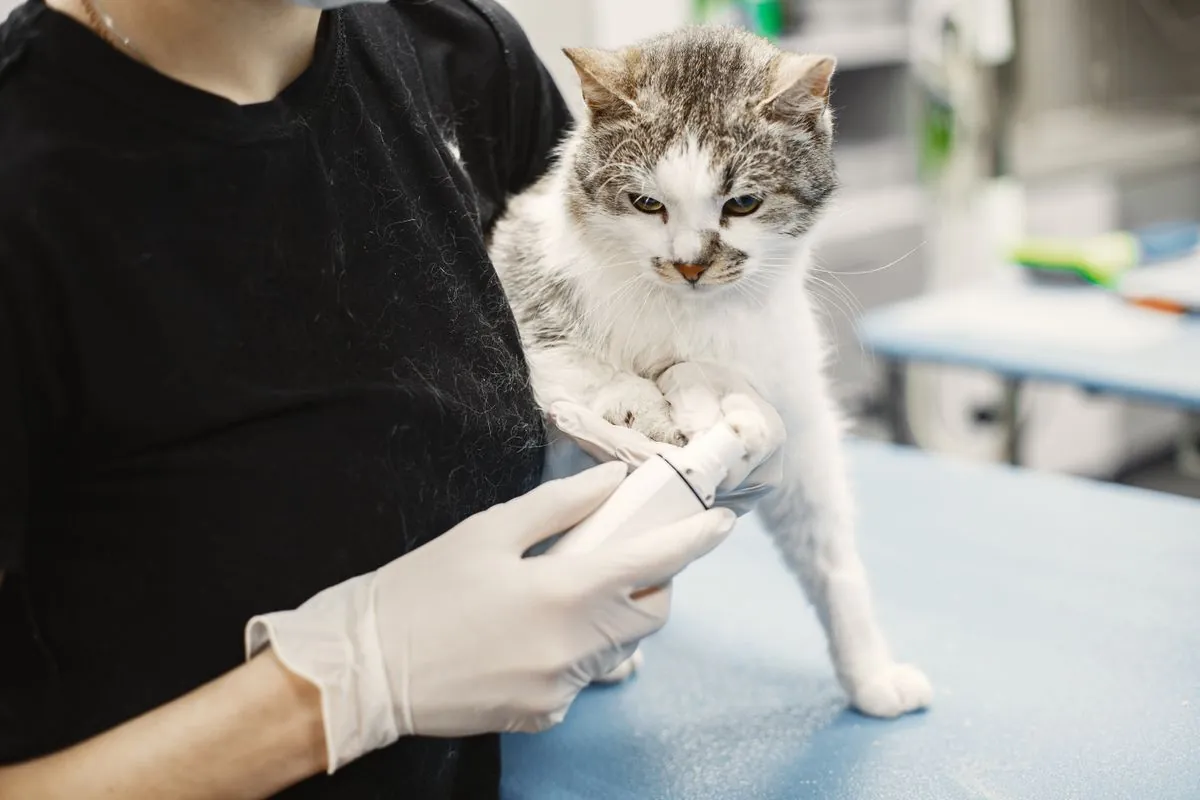
Diagnosis starts with your history and a hands-on exam: the vet feels the hip joints, checks range of motion, and watches the cat move. Do not be surprised if the vet asks for video, because cats famously refuse to perform at the clinic. A short phone clip of your cat walking, jumping, and climbing at home is one of the most useful diagnostic tools you can provide.
Confirmation comes from pelvic X-rays. Mild sedation is often used for correct positioning and comfort, because a poorly positioned hip X-ray is hard to interpret. The vet looks at how deeply the femoral head sits in the socket, the socket’s shape, and whether bony changes show arthritis. Breeders use a formal version through OFA, with films graded by board-certified radiologists. For a pet owner, the X-ray simply confirms what is going on and how far along it is, and that guides the plan.
What Treatment Usually Looks Like
There is no cure, but most cats do well on conservative management, meaning no surgery. What your vet recommends depends on severity, age, weight, and discomfort level.
Weight management comes first. Obese cats experience more pain and more arthritic change than lean cats, and vets flag weight as the most impactful single intervention. My guide to telling whether your Maine Coon is overweight walks through body condition scoring on this breed.
Pain management is second. Your vet may prescribe medication tailored for cats: the monthly anti-nerve-growth-factor injection (frunevetmab) for osteoarthritis pain, gabapentin, or Adequan injections used off-label in cats for joint support. Never reach into your own medicine cabinet for a limping cat: human painkillers like ibuprofen and acetaminophen are toxic to cats.
Joint supplements such as glucosamine, chondroitin, and omega-3 fatty acids come up in nearly every owner conversation. The evidence is thinner than for prescription medication, so ask your vet which products have real data behind them.
Surgery is reserved for severe cases. The most common operation is femoral head ostectomy (FHO): the surgeon removes the femoral head so bone no longer grinds on bone, and surrounding muscles form a new, pain-free false joint. VCA notes that cats generally recover well from FHO, with many regaining normal or near-normal function, and active cats with good muscle mass tend to do best. Total hip replacement is the other option at specialty centers. In one Instagram discussion about an 8-month-old kitten’s diagnosis, owners shared positive outcomes from both procedures.
Costs are real: look into pet insurance for your Maine Coon before a diagnosis is on the record, since orthopedic bills are exactly what insurance is for and pre-existing conditions are typically excluded.
Setting Up a Joint-Friendly Home
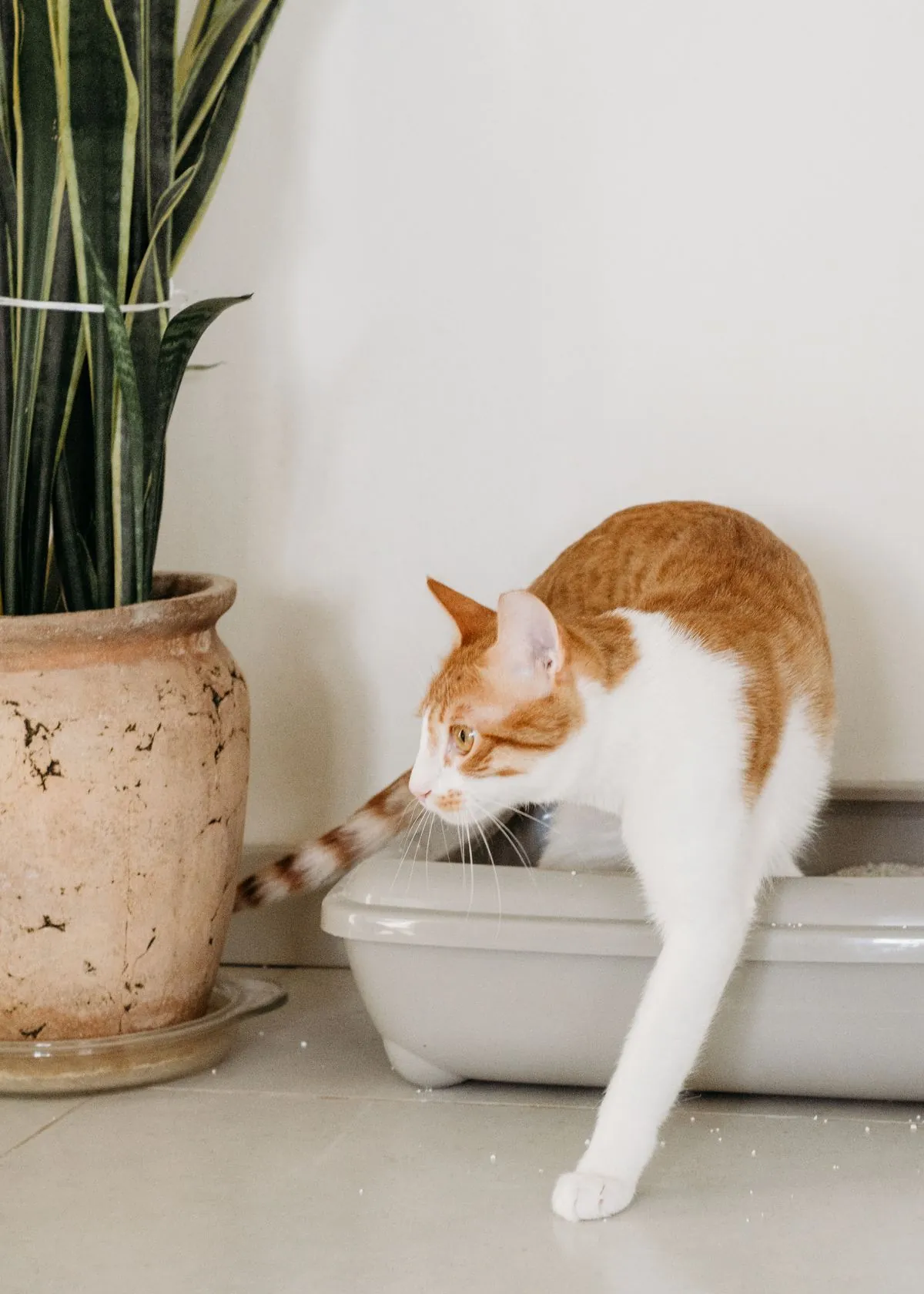
Whatever treatment path you choose, the home setup does daily heavy lifting. The goal: your cat should never have to make a painful leap to reach anything it loves.
- Ramps and steps to favorite spots. The couch, the bed, the window perch, the top of the cat tree. Owners say this is the single most visible improvement in daily comfort. When shopping, choosing the right cat tree for a Maine Coon matters: sturdy, wide-based designs with gradual platforms beat tall single leaps.
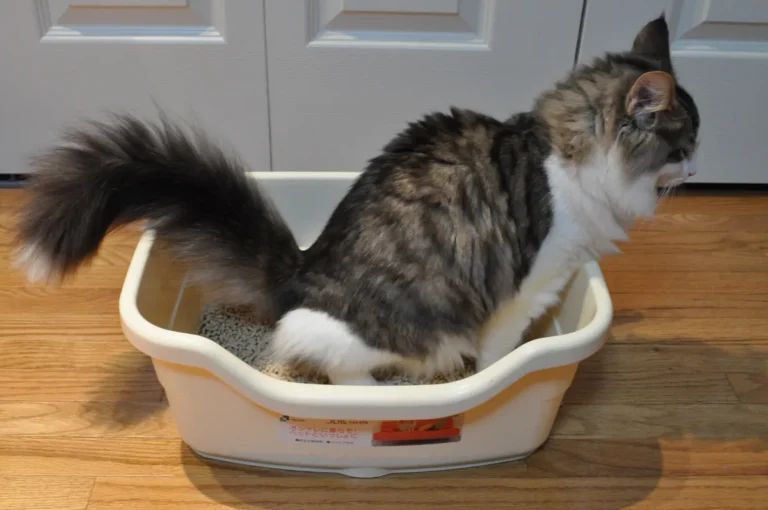
- A low-entry litter box. Squatting over a high wall can be painful, and litter box avoidance is a known downstream symptom of hip pain. Easier to prevent than to retrain.
- Non-skid surfaces. Rugs or runners along the cat’s usual routes give wobbly hind legs something to grip.
- Raised food and water. Bowls at about elbow height. Costs nothing.
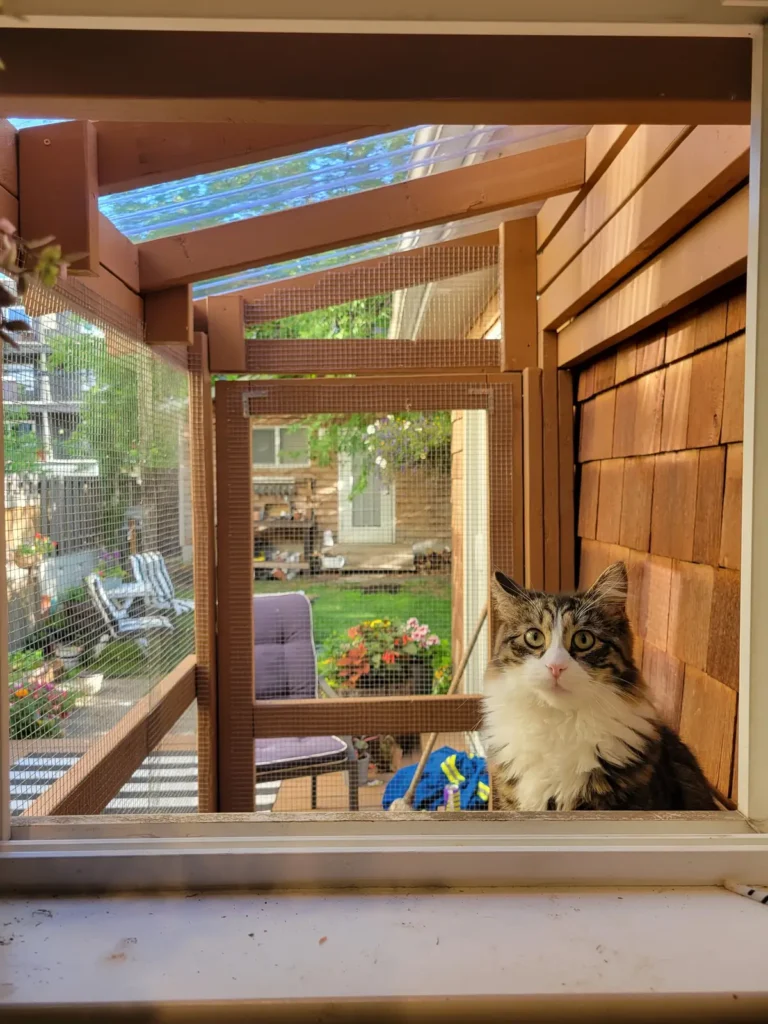
- Soft, warm bedding. Well-padded beds in favorite warm spots. Heat is kind to stiff joints, so a sunny windowsill with a padded perch is prime real estate.
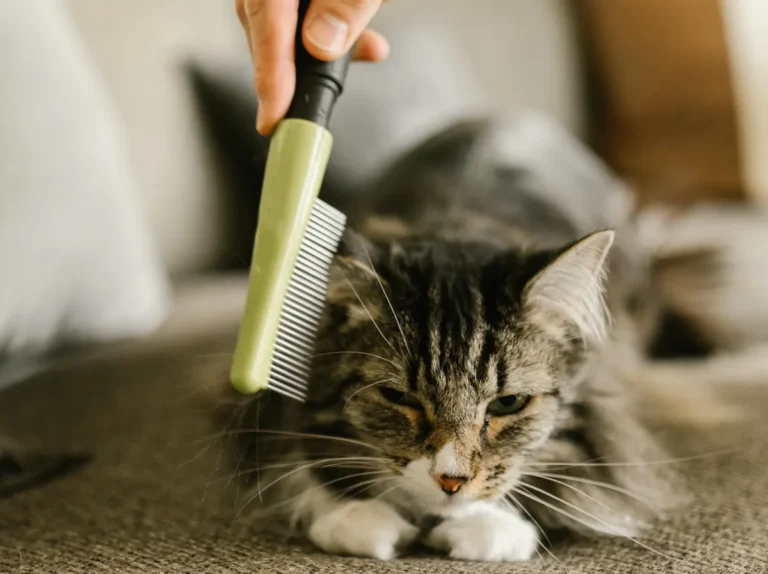
- Gentle grooming help. If your cat has stopped grooming its back end, help with a soft brush and never tug near the hips.
One breeder tip: while kittens are growing, keep cat trees short and discourage dramatic high jumps. Steady growth and lean condition during the growing years is genuine prevention.
Gentle Exercise Beats No Exercise
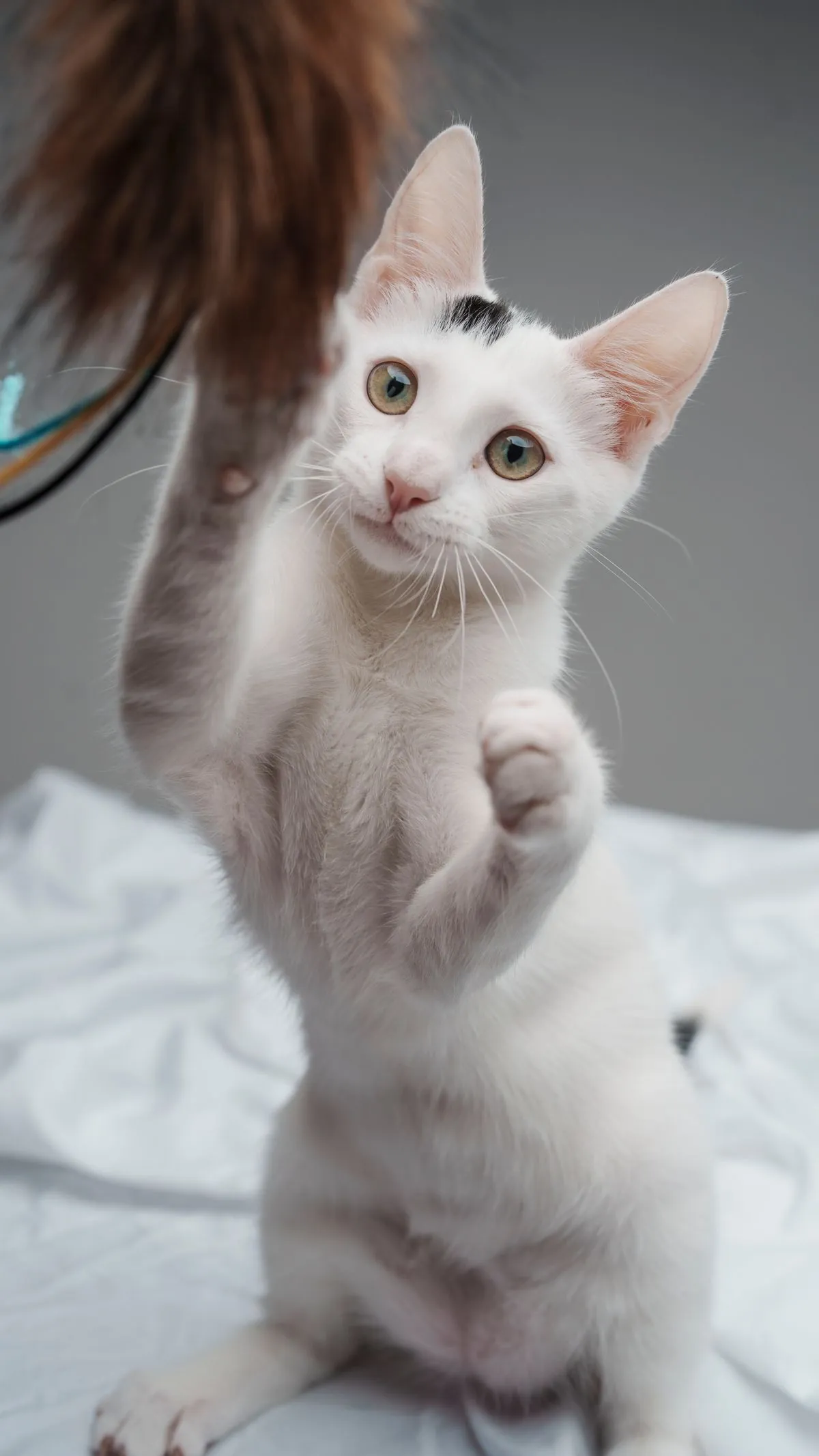
A cat with hip dysplasia should not become a couch ornament: muscle is what stabilizes a loose joint, and fit cats function better than inactive ones. The trick is short, frequent play sessions, a wand toy, gentle chasing on a non-skid surface, no big leaps.
Let your cat set the pace. Five minutes of enthusiastic play beats twenty that ends in a limp. Post-surgery, follow the surgeon’s activity restrictions to the letter.
Vet Follow-Ups: What to Track Between Visits
Hip dysplasia is a long game, and the owners who manage it best are the observant ones.
- Keep a weight log. Weigh monthly. Catching two extra pounds early is easy; catching eight is a project.
- Film the gait every few months. Thirty seconds of your cat walking toward you, away from you, and climbing its usual step gives your vet a timeline memory cannot.
- Note the small changes. Jumping less, skipping the top bunk, grumpiness at being picked up: jot it down with a date.
- Keep regular checkups. Your vet will monitor the joints and adjust pain management as arthritis progresses.
If you ever add another Maine Coon to the family, ask the breeder about hip screening. OFA-graded parents do not guarantee perfect hips in every kitten, but breeders who screen are reducing the condition at its source.
FAQ: Hip Dysplasia in Maine Coons
How common is hip dysplasia in Maine Coons?
More common than most owners expect. Veterinary reviews report prevalence across studies ranging from the single digits in the general cat population up to around a third in some studied groups, with purebred cats running higher. The Maine Coon is consistently named among the most affected breeds.
At what age does it usually show up?
In cats generally, signs often appear between one and two years once the skeleton matures. Maine Coons mature slowly, sometimes until age three to five, so subtle signs can surface later. Kittens under a year rarely show symptoms: kittenhood is the time for prevention, steady growth, lean weight, and age-appropriate activity.
Can hip dysplasia be cured?
No, but it can be managed very successfully. Most cats do well with conservative care: weight management, vet-prescribed pain relief, joint support, and a joint-friendly home. Surgery, usually femoral head ostectomy, is there for severe cases and has good outcomes in cats.
Will my Maine Coon need surgery?
Probably not. Most cats with hip dysplasia never need an operation. Surgery enters the conversation when pain is significant and conservative measures are not working, or when imaging shows severe joint damage. When it is needed, FHO in particular has a strong track record in cats.
Is it safe to let my Maine Coon jump and climb?
Gentle, everyday movement is good and maintains the muscle that stabilizes the joints. Worth minimizing is repeated high-impact leaping, especially in growing kittens and diagnosed cats. Ramps, steps, and sturdy climbing furniture with gradual platforms let your cat enjoy vertical territory without hard landings.
Hip dysplasia sounds frightening at first, but I hope this gives you a calmer picture: recognizable signs, a clear diagnostic path, and a long list of things you can actually do. Your Maine Coon is counting on you to notice the quiet changes. For the breed’s broader health landscape, my Maine Coon health and lifespan guide is the companion piece to this one.