How Fast Do Maine Coons Grow? A Real Owner Age by Age Timeline
The first time someone asks me how fast do Maine Coons grow, I usually smile before I answer. Most cats are basically done growing by their first birthday. A Maine Coon is just getting started at that point, and will keep slowly developing for years after. I have watched it happen more than once, and the timeline still surprises new owners every single time.
Here is the short version up front: Maine Coons grow astonishingly fast as kittens, then keep maturing at a crawl until they are three to five years old. That slow finish is completely normal. It is not something wrong with your cat, and it is not something you can rush.
How Fast Do Maine Coons Grow? The Full Timeline, Stage by Stage
Nobody, not even the big cat registries, publishes one official month by month weight chart for this breed. TICA says Maine Coons do not achieve their full size until three to five years old, and the CFA describes a slow-maturing breed that often does not reach full development until three to four years of age. The kitten weight ranges below come from published breed references and breeder growth records, and they are deliberately broad. Your kitten is an individual, not a spreadsheet row. Steady gain and a healthy body condition matter far more than landing on an exact number.
Birth to 8 weeks: the fastest weeks of their whole life
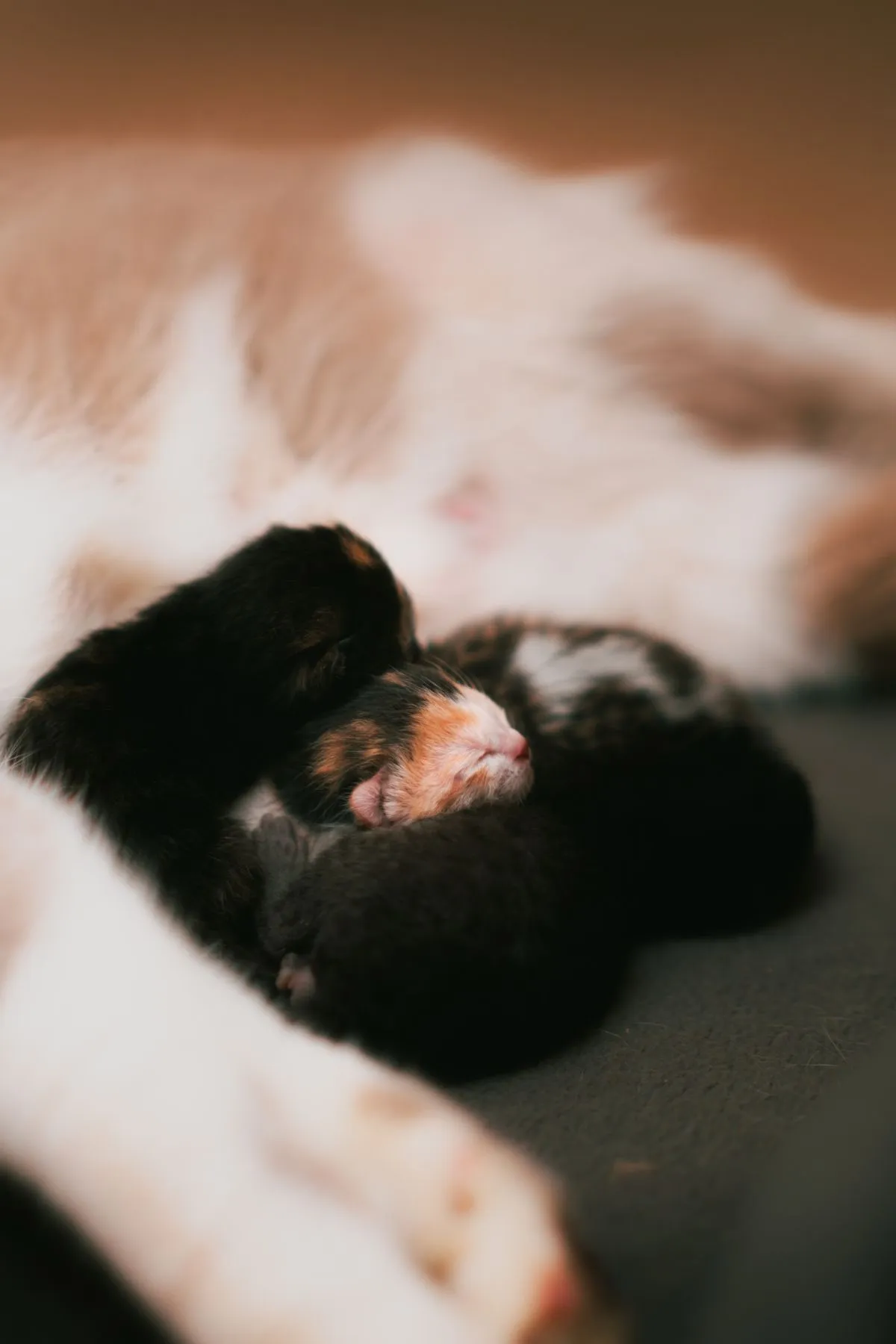
Newborn Maine Coon kittens are already bigger than most kittens, usually landing somewhere around 3 to 6 ounces at birth, with males tending to run a little heavier. In the first two weeks they can nearly double their weight more than once. By the time they are eight weeks old, a male kitten is commonly around 2.5 to 3.5 pounds and a female around 2 to 3 pounds.
This is the stage where growth should be tracked most carefully, and honestly it belongs to the breeder or the vet more than to you. A kitten that is not gaining steadily in these weeks needs attention fast. If you are bottle-raising, a cheap kitchen scale and a notebook become your best friends.
2 to 6 months: the great growth spurt
This is the phase where you start understanding what you signed up for. Between two and six months, a Maine Coon kitten can gain roughly a pound or more per month. The body gets long, the legs stretch, and the paws look comically oversized for a while.
Most sources put males at roughly 6 to 9 pounds by four months and 9 to 13 by six, with females trailing by a couple of pounds. On Instagram, one owner posted a montage of her kitten from newborn to six months, and commenters shared kittens already at 7 pounds by four months. Another owner posted her six-month-old next to her fully grown five-year-old cat, and the kitten had already matched the adult in size. This is just what a healthy Maine Coon does.
6 to 12 months: the lanky teenager
Somewhere around six months, growth in length starts outpacing everything else. The kitten goes through an awkward gangly stage, all limbs and appetite.
By the first birthday, males are commonly between 11 and 16 pounds and females between 9 and 12. Here is what trips up almost every new owner: at one year old, your Maine Coon looks full-grown. It is not. Most sources agree a one-year-old is only about 60 to 75 percent of the way to its final adult size. The filling out has barely begun.
1 to 3 years: filling out, slowly
After the first birthday, the kind of growth changes. The frame is mostly built, and now the cat puts muscle on it: the chest broadens, the ruff fills in, and the tail turns into that famous plume.
Weight gain slows down a lot in this phase, which is exactly right. If your two-year-old is still gaining a pound a month, that is probably food, not growth. At this stage a healthy Maine Coon gains ounces, not pounds. Slow and steady is the whole point of this breed.
3 to 5 years: full maturity at last
This is the finish line, and it is a wide one. Females usually settle around age three. Big-framed males can keep adding muscle into their fourth year, and some keep developing as late as age five.
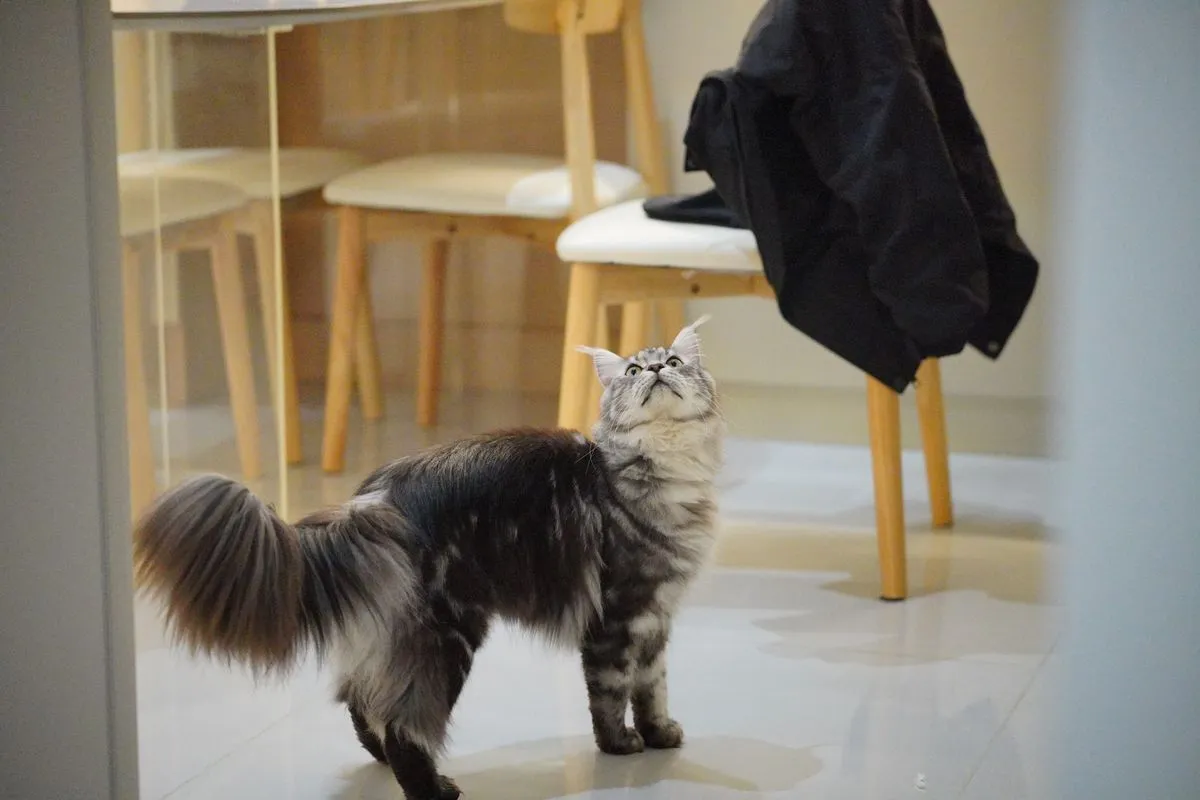
A mature male typically lands in the 13 to 18 pound range, with some large-framed boys going to 20 or more. Females usually settle between 9 and 13. TICA’s breed introduction puts it plainly: males average 13 to 18 pounds at maturity and females 9 to 13, and they do not achieve their full size until three to five years old. The CFA’s article on the breed says the Maine Coon is slow to mature, often not reaching full development until three to four years of age.
One thing worth saying clearly: a 25-pound Maine Coon is an outlier, not a goal. Plenty of magnificent adult males never get anywhere near that number.
Male vs Female Weight Ranges at a Glance
Pulled together from published breed references. Treat these as wide lanes, not targets.
| Age | Males (approx.) | Females (approx.) |
|---|---|---|
| Newborn | 3-6 oz (90-170 g) | 3-5 oz (90-150 g) |
| 8 weeks | 2.5-3.5 lbs | 2-3 lbs |
| 4 months | 6-9 lbs | 5-7 lbs |
| 6 months | 9-13 lbs | 7-10 lbs |
| 1 year | 11-16 lbs | 9-12 lbs |
| 2 years | 13-18 lbs | 10-14 lbs |
| 3-5 years (mature) | 13-18 lbs, large frames to 20+ | 9-13 lbs |
The strongest predictor of your kitten’s adult size is the size of its parents, so ask your breeder how big the sire and dam are.
How to Weigh and Track Your Kitten (So You Stop Guessing)
I weigh my kittens the unglamorous way: a digital kitchen scale for the tiny ones, then the bathroom scale trick once they outgrow it. Step on holding the cat, step on without the cat, subtract. Done the same way every time, it shows you the trend, and the trend is what matters.
During the first few months, weighing once a week is plenty. After six months, once a month is fine. Write it down every time with the date. Weigh at the same time of day and before meals if you can, because a Maine Coon that just inhaled dinner can weigh half a pound more than the same cat an hour earlier, and I have watched owners panic over exactly that.
If you want to keep it organized, I built a proper tool for exactly this: the Maine Coon growth tracker. Log your kitten’s weight over time and watch the curve. When you can see the line rising steadily, month after month, that worry about whether your cat is growing fast enough usually fades on its own.
Does Spaying or Neutering Change How They Grow?
This one comes up constantly, and the honest answer is that Maine Coon-specific research is thin, so here is what breeders and vets generally report. Neutering or spaying does not decide your cat’s final size; genetics does that. What it can change is how the growth plays out. Cats altered early sometimes fill out a little sooner, because energy that would have gone toward reproductive development goes elsewhere.
The one thing vets do flag: appetite often goes up after neutering while calorie needs drop slightly, so this is the age to watch portions. A neutered kitten gaining weight fast at fourteen months is usually gaining fat, not frame. My feeding chart by age walks through how much a Maine Coon actually needs at each stage, because overfeeding a growing kitten does not build a bigger cat, it builds an overweight one.
When Growth Becomes a Concern: Call the Vet
Most of the time, slow growth is just Maine Coon growth. But call your vet if you notice any of these: a kitten that stops gaining or starts losing weight, especially in the first six months. Appetite or energy crashing suddenly. Rapid weight gain with a round belly and no visible waist. Or a kitten that eats plenty but stays skinny, which is a classic sign of worms and one of the most common and fixable growth problems in young cats.
Also, learn the difference between muscle and fat under all that fur, because under a Maine Coon coat, extra weight hides better than on almost any other breed. Run your hands along the ribs; you should feel them with light pressure without pressing hard. Look down from above; there should be a gentle narrowing at the waist behind the ribs. A little loose belly skin, the primordial pouch, is completely normal and is not the same thing as fat. I go through the full hands-on check in my guide on how to tell if your Maine Coon is overweight.
How fast do Maine Coons grow? FAQ
When do Maine Coons stop growing?
Most Maine Coons reach their full size between three and five years old, far later than almost any other domestic cat. Skeletal growth usually finishes around 18 to 24 months, but muscle, chest width, and coat keep developing for years after that. Females often finish around age three; large-framed males may keep filling out into year four or five.
How much should a Maine Coon weigh at 6 months?
Most sources put a six-month-old somewhere around 9 to 13 pounds for males and 7 to 10 for females, though individuals vary widely. At this age many kittens look lanky and all legs, which is normal. Steady gain over time matters more than any single weigh-in.
Why is my Maine Coon still small at 1 year old?
Because it is not done yet. At one year old, most Maine Coons are only about 60 to 75 percent of their final adult size. The second year adds muscle and the third adds even more. If your vet is happy with your cat’s body condition and it is gaining steadily, a smaller-looking one-year-old is completely normal.
Do male Maine Coons grow bigger than females?
Yes, noticeably. Adult males typically weigh 13 to 18 pounds and females 9 to 13, and males also tend to mature later, sometimes continuing to bulk up into their fourth year. The gap shows early: by four months, male kittens are usually already a couple of pounds heavier than their sisters.
Can I make my Maine Coon grow bigger?
No, and you should not try. Final size is set by genetics, mostly by how big the parents are. Overfeeding a growing kitten will not stretch its bones; it will just make it overweight, which is worse for its joints and health. Feed for a healthy body condition and let the genes do their work.
The Bottom Line
A Maine Coon is a long project. The explosive kitten months are thrilling, the lanky teenage phase is funny, and then you get years of watching a cat slowly turn into the magnificent animal it was always going to be. Do not rush it, do not overfeed it, and do not compare your cat to the 25-pound giants on social media. That is the real answer to how fast do Maine Coons grow: blazing fast at first, then slower than you would ever expect.
Track the weight, trust your hands on the ribs, and enjoy the slow reveal. For how these cats compare once they are fully grown, my Maine Coon size comparison puts adult Maine Coons side by side with other breeds, which is usually the moment the scale of this breed really clicks.
Slow growth is not a problem in a Maine Coon. Slow growth is the breed.