How Much to Feed a Maine Coon: Feeding Chart by Age
Nobody warned me that the hardest part of bringing home a Maine Coon kitten wouldn’t be the litter training or the 3 a.m. zoomies. It would be standing in the pet food aisle, holding a bag of kibble, and realizing I had no idea how much to feed a Maine Coon. The feeding guide on the bag topped out at weights my cat would breeze past before his first birthday, and forums disagreed with each other — while my kitten just kept looking at me like the bowl was empty.
Years and two Maine Coons later, I’ve built a system from trial and error, experienced owners in the Maine Coon community, and veterinary nutrition sources. Here’s how much to feed at every age, how to split wet and dry food, and how to tell when you’ve got it right.
Why Maine Coons Eat Differently From Average Cats
Most feeding charts on cat food labels are written for an average 8-to-10-pound cat. A male Maine Coon can end up weighing twice that — and the breed matures at a glacial pace, keeping growing until 3 to 5 years of age.
That long growth runway changes the math. Kittens need far more calories per pound than adults — PetMD’s kitten feeding chart runs from about 150 calories a day at two months to over 500 by eleven months, and PetMD cautions that breed and frame size shift those numbers. Owners in a Maine Coon group on Facebook say it outright: standard cat guidelines don’t apply to the breed, with adult weights from 6 kg to 10 kg-plus and feeding well above label suggestions.
Like all cats they’re obligate carnivores — Cornell’s Feline Health Center notes cats evolved on prey high in protein, moderate in fat, minimal in carbohydrates. For a big, slow-growing breed, prioritize animal-protein-rich food and treat calorie needs as a range to tune, not a number to hit.
How Much to Feed a Maine Coon: The Feeding Chart
The chart I wish someone had handed me on day one — a starting point, not a veterinary prescription. Metabolism, activity, and neuter status differ per cat, and calorie density varies wildly between brands (one kitten kibble can pack 568 calories per cup while another has barely over 400, per PetMD). Cross-check your food’s label and your vet.
| Age stage | Wet food | Dry food | Rough daily calories |
|---|---|---|---|
| Kitten: 8 weeks–6 months | 3–4 small meals a day | Kitten kibble available for grazing | ~250–400 kcal |
| Junior: 6–12 months | 2–3 meals a day | Kitten kibble, start measuring portions | ~350–500 kcal |
| Young adult: 1–2 years | 2 meals a day | Measured portions; kitten or adult food | ~300–400 kcal |
| Adult: 3+ years | 2 meals a day | Measured adult portions | ~250–350 kcal |
A few notes on reading this:
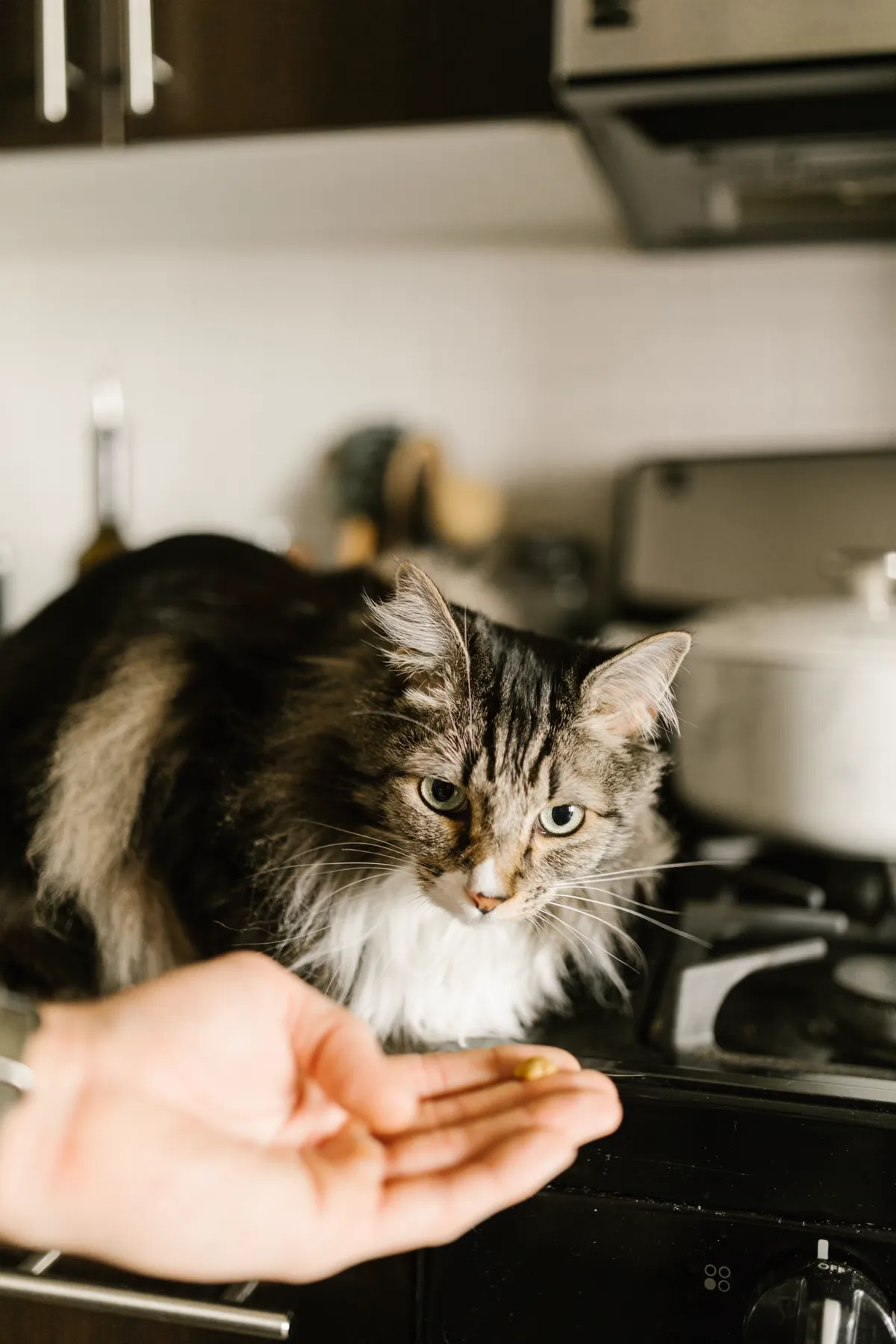
- Kittens eat little and often. The classic pattern, described by owners on TheCatSite: three or four small wet meals a day — around 30–35 g per serving — plus dry food to graze on, with noticeable snacking overnight. An experienced owner in a Facebook group advises the same: at least four feedings a day under six months, tapering to three, then two.
- A 5.5-oz can of wet food holds roughly 150–200 calories; a cup of dry kibble roughly 350–450. Your label is the authority — those are ballpark figures. Two 5.5-oz cans plus a half-cup of kibble lands around 450–500 calories, right where a growing 8-to-12-month-old of this breed tends to sit.
- Adult portions follow weight. About 20 calories per pound per day for an indoor adult — a 15-pound Maine Coon needs roughly 300 calories daily. Spaying/neutering (usually around 5–6 months) typically lowers energy needs, so trim portions a notch after surgery — ask your vet by how much.
Wet Food, Dry Food, or Both?
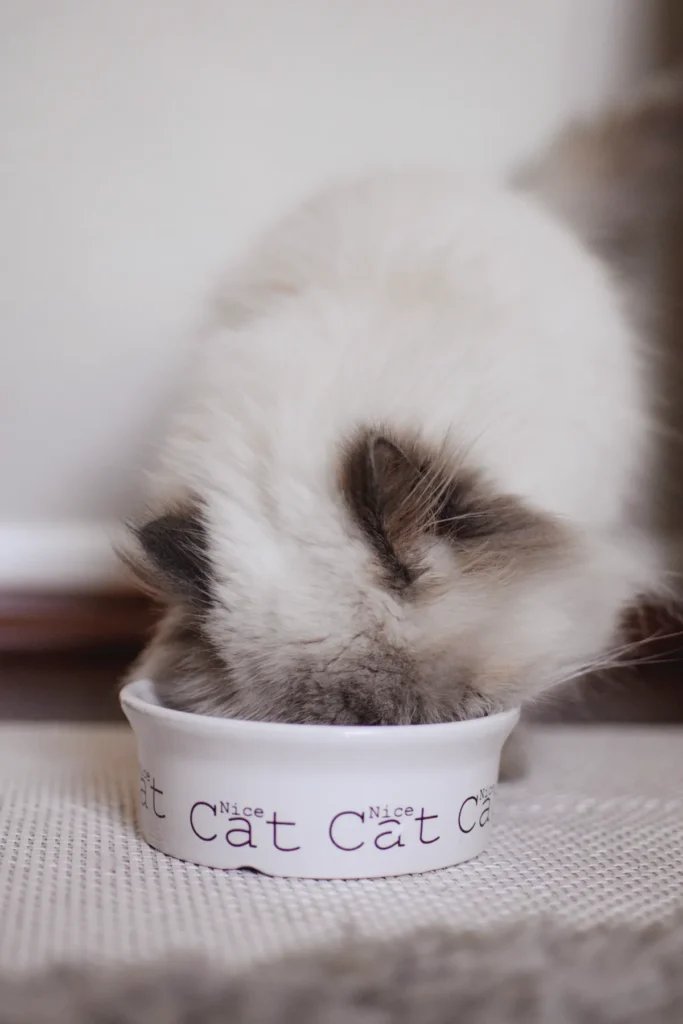
Ask ten Maine Coon owners and you’ll get ten routines — but a pattern dominates: most feed both. Wet food does the heavy lifting for hydration (canned food is at least 75% moisture, per Cornell), and Maine Coons tend to love it. Dry food stays down for grazing, which suits the breed’s snack-all-day rhythm, and it won’t spoil in the bowl.
What that looks like in practice:
- Kittens and juniors: wet food 3–4 times daily plus dry kitten kibble left out. In one Facebook group, owners of growing kittens describe three to six small cans or pouches a day alongside unlimited kibble.
- Adults: wet food morning and evening, with measured dry food. Free-feeding dry works for some adults, but this is the breed that “goes soft around the middle” — if the waistline thickens, switch to measured meals. For matching food to the breed, see my guide on the best cat foods for Maine Coons.
The community agrees on one point: don’t feed dry-only and call it done unless your vet has signed off and water intake is genuinely good.
The Slow-Growth Trap: When to Switch Off Kitten Food
Here’s where Maine Coon feeding diverges most from standard advice. Regular cat guidance says switch to adult food around 12 months. For Maine Coons, that’s too early for many cats: the breed keeps maturing until age 3 to 5, so plenty of breeders and experienced owners keep kitten food — higher in protein and calories — until 12 to 18 months. One breeder advising new owners on Facebook puts it plainly: keep them on kitten food for 18 months, because the growth curve runs four to five years.
My approach: kitten food until at least 12 months, longer if your cat is still lanky and filling out at 14–18 months — confirm with your vet at the annual checkup. When you switch, transition gradually over 7–10 days, mixing increasing amounts of the new food into the old. A sudden swap is the classic recipe for digestive upset, and Maine Coon stomachs aren’t forgiving about it.
If your cat just came home, my Maine Coon kitten care guide covers the feeding transition alongside everything else the first 30 days throw at you.
Water: The Part Everyone Underestimates
Cats are desert animals by ancestry and famously bad at drinking enough — and a big cat eating a lot of dry food needs to compensate. Three things that actually move the needle:
- A water fountain. This breed is obsessed with running water, and owners consistently report their cats drink far more from a fountain than a still bowl.
- Wet food at every life stage. That 75%+ moisture content is doing quiet work for kidneys and urinary tracts.
- Water stations away from food. Cats often prefer drinking away from where they eat — a second bowl in another room costs nothing.
If your cat eats mostly dry food and barely touches water, ask your vet about it.
Treats and Table Scraps: The 10 Percent Rule
Treats are where good portion control goes to die — those freeze-dried minnows and lickable treats add up fast. Cornell’s rule of thumb: treats should not exceed 10 to 15 percent of a cat’s daily caloric intake. For a 300-calorie-a-day adult, that’s 30–45 treat calories — a couple of small treats, not a handful. Cornell also cautions against raw meat as a treat (a potential vehicle for toxoplasmosis), canned fish meant for humans, and milk, since many cats are lactose intolerant. Count treats in the daily total.
The Raw Feeding Debate — Briefly
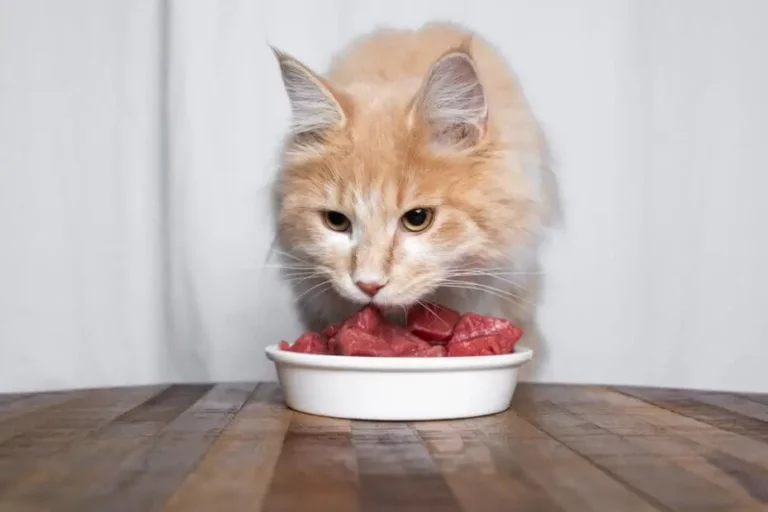
You’ll meet Maine Coon owners and some breeders who swear by raw diets, and the online debate gets heated. The sober version: Cornell does not recommend raw diets for cats, citing bacterial, viral, and parasite risks to cats and owners, plus no solid evidence of benefit over complete commercial foods.
Some breeders feed raw successfully under veterinary supervision. But for a growing Maine Coon with demanding nutritional needs, talk to your vet first, and don’t build a homemade raw diet from internet recipes.
Keeping an Eye on the Waistline
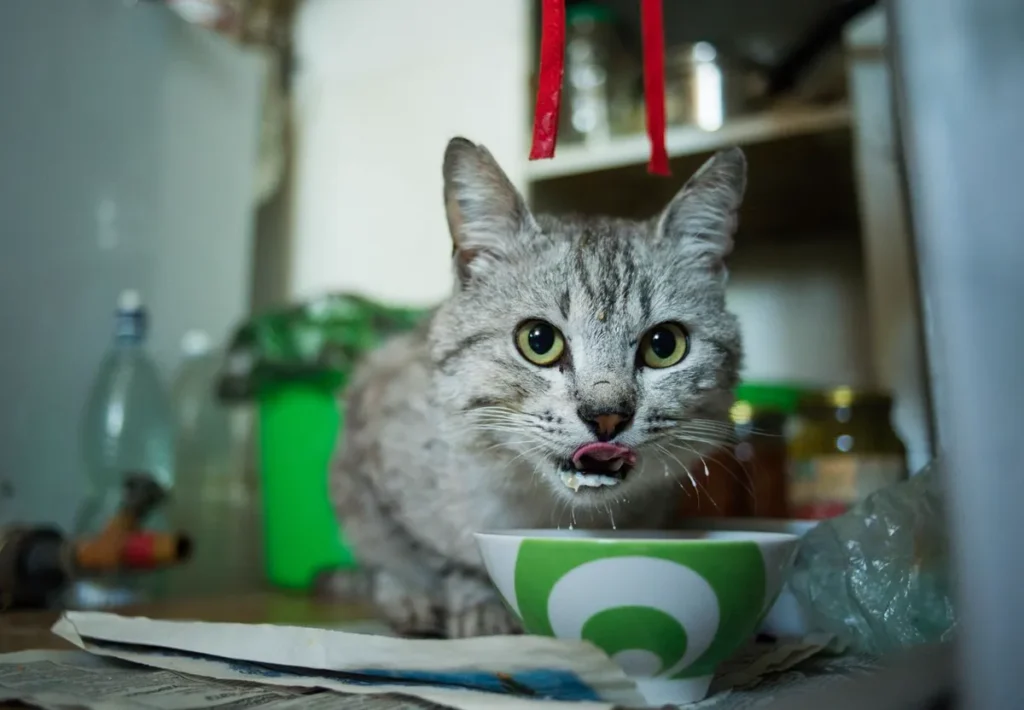
Maine Coons tend to go soft around the middle, and a plush coat hides weight gain. The fix is boring but effective:
- Weigh monthly. A kitchen or baby scale works for kittens; for adults, stand on a bathroom scale holding the cat and subtract your own weight. Trends matter more than single readings.
- Learn the rib check. Feel ribs with light pressure under a thin fat layer; see a waist from above and a tummy tuck from the side. Unsure what you’re feeling? My guide on how to tell if your Maine Coon is overweight walks through it with photos.
- Adjust food before the vet has to. Gaining? Trim 10% off daily portions and reassess in a month. Losing unexpectedly? That’s a vet visit, not a bigger bowl.
- Play daily. A wand toy session burns calories and keeps a big cat’s joints and muscles working.
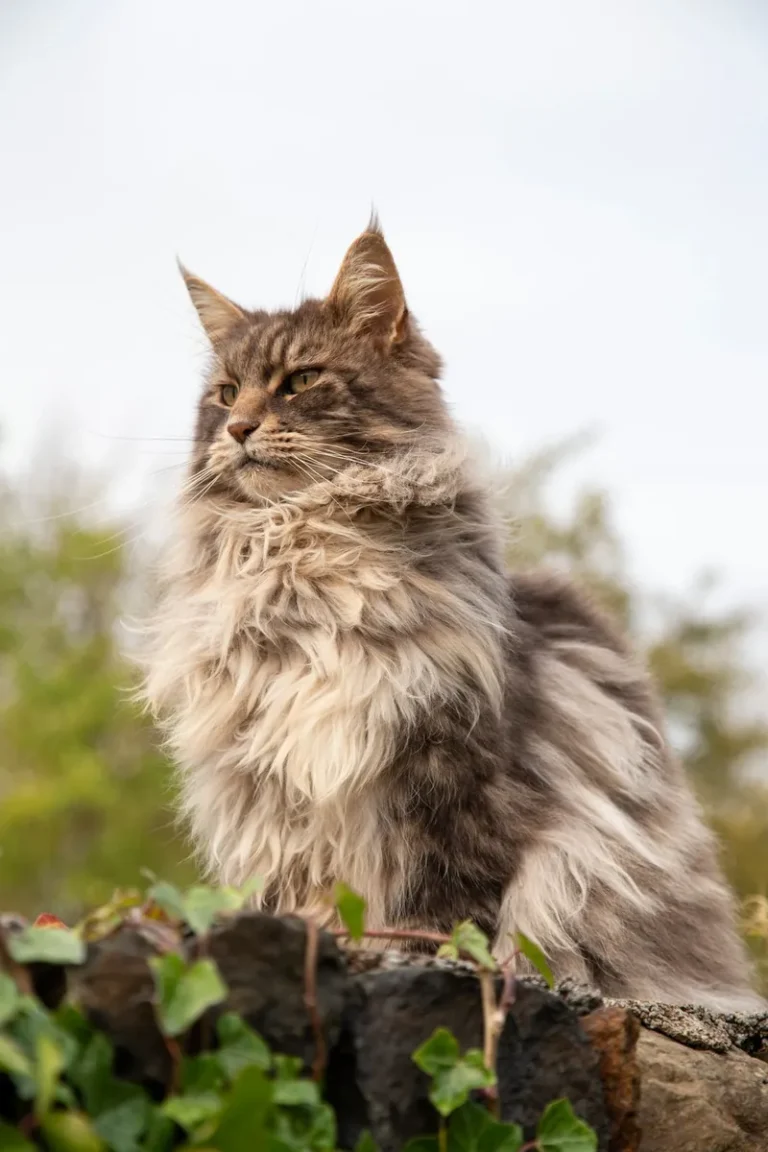
For perspective on what “big but healthy” actually looks like at each age, my Maine Coon size guide covers typical weights from kittenhood to full maturity.
Frequently Asked Questions
Can I free-feed my Maine Coon dry food?
For kittens and juniors, yes — most owners leave kitten kibble out for grazing, and growing Maine Coons generally self-regulate while building frame. For adults, it depends on the cat. If yours holds a healthy weight with food always available, fine. If the waistline is disappearing, switch to measured meals. The breed’s tendency to pad out around the middle makes measured feeding the safer default for most adults.
How many cans of wet food does a Maine Coon need per day?
Rough guide: kittens 3–4 small cans or pouches (3-oz size) daily, juniors 2–3, adults about two 3-oz cans or one 5.5-oz can — plus dry food to make up the day’s calories. In Maine Coon groups, several owners describe feeding three to six small cans daily to growing kittens alongside unlimited kibble. Let body condition, not the can count, be the final judge.
When should I switch my Maine Coon from kitten to adult food?
Later than the bag suggests. Because Maine Coons mature over 3 to 5 years, most breeders and experienced owners recommend staying on kitten food until 12 to 18 months. Transition gradually over 7–10 days when you switch, and confirm timing with your vet.
Why is my Maine Coon kitten always hungry?
Almost certainly, that’s normal. A Maine Coon kitten is building one of the largest domestic cat frames in existence, and owners consistently describe near-constant hunger in the first year. Feed the meals and monitor growth. The exceptions that warrant a vet call: sudden appetite changes, weight loss despite eating, or a bloated belly (rule out worms).
Is raw food better for Maine Coons?
There’s no solid evidence it’s better, and Cornell’s veterinary college advises against raw diets due to bacterial and parasite risks and the difficulty of balancing them. Some breeders feed raw under veterinary guidance, but for most owners a complete, AAFCO-balanced commercial food — wet plus dry — is the safer, simpler choice. Want to try raw? Consult your vet first.
Figuring out how much to feed a Maine Coon mostly means respecting the breed’s scale: a bigger frame, a longer childhood, an appetite to match. Start with the chart, tune by the waistline and the scale, keep the water flowing, and check portions with your vet once a year.