Why Is My Maine Coon Vomiting? Causes, When to Worry, and What to Do
That retching noise from the kitchen floor woke me. My Maine Coon sat beside a pile of barely chewed kibble, looking up as if to say, well, that happened. Maine coon vomiting sends every owner to the same question: is this just a cat being a cat, or is something wrong? I have asked it myself.
Sometimes it is nothing much at all, and sometimes it is the first sign of something that needs a vet. It mostly comes down to how often it happens, what comes up, and how your cat acts afterwards. I am not a vet — just an experienced owner, with vet sources linked for the serious parts.
Maine Coon Vomiting: First, Was It Vomiting at All?
Vets draw a line between vomiting and regurgitation, and owners often mix the two up. Vomiting takes effort — heaving, retching, abdominal contractions, usually with lip licking, drooling, or restlessness first. Regurgitation is quieter: food comes back up with little effort, often minutes after eating, looking much as it went down.
Food that returns whole and undigested within minutes of a meal usually points at eating behaviour, not illness; a cat that heaves up partly digested food or yellow liquid hours later is a different story. If you are unsure which you saw, a short phone video for your vet is worth more than any description.
Eating Too Fast: The Scarf-and-Barf Problem
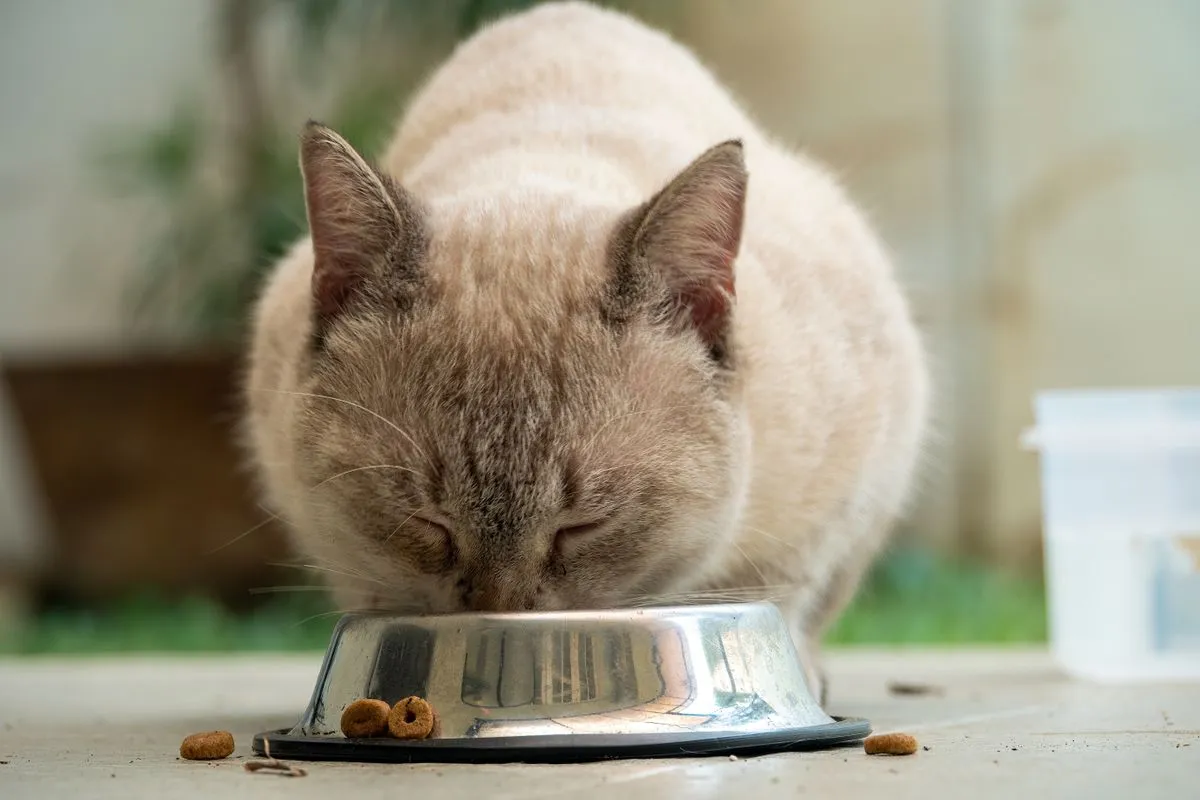
If I had to pick the single most common reason for maine coon vomiting in an otherwise healthy cat, it would be this one. Maine Coons are big, hungry cats, and some attack a bowl like it might disappear, swallowing large mouthfuls barely chewed with a gulp of air — and five minutes later it all comes back up.
Owners on Reddit and cat forums describe the same pattern: the morning meal is the worst — the cat wolfs it down, and a minute or two later it is all on the carpet. One owner on a vet Q&A site described a young Maine Coon who vomited almost instantly after wet food, about one time in ten, and found smaller portions helped.
That matches my house: my boy’s worst episodes always followed a long gap between meals. The fix was boring and it worked — smaller meals, more often, and a slow feeder bowl. Breeders on YouTube say the same, and owners in forums swear by puzzle feeders or spreading kibble on a wide, flat plate.
A slow feeder is not a cure for real illness, but for a healthy cat that brings up undigested food minutes after eating, it is the first thing worth trying.
Food Intolerance and Sudden Food Changes
The second thing I look at is the food itself. Cats can develop an intolerance to something they have eaten happily for years, and a sudden switch to a new brand or flavour can upset a sensitive stomach overnight — vets advise changing food gradually over a week to ten days.
Food intolerance and food allergy are not quite the same — an allergy involves the immune system — but at home they can look very similar: vomiting, sometimes with soft stools or itchy skin. I cover the allergy side in my guide to Maine Coon allergies, including how vets use an elimination diet. If vomiting started within days of a new food or flavour, tell your vet — that timing matters.
Watch for a cat that vomits only after one type of food — that owner found wet food was the trigger, yet sensitive-stomach dry food did not fully solve it either. Which food, how soon, and how often is what a vet will ask, so keep a rough note for a week or two.
Hairballs
If the question on your mind is hairballs specifically, that is covered properly in my guide to Maine Coon hairballs — what is normal, what is not, and the prevention steps that help.
Foreign Objects: The One Maine Coons Are Good At
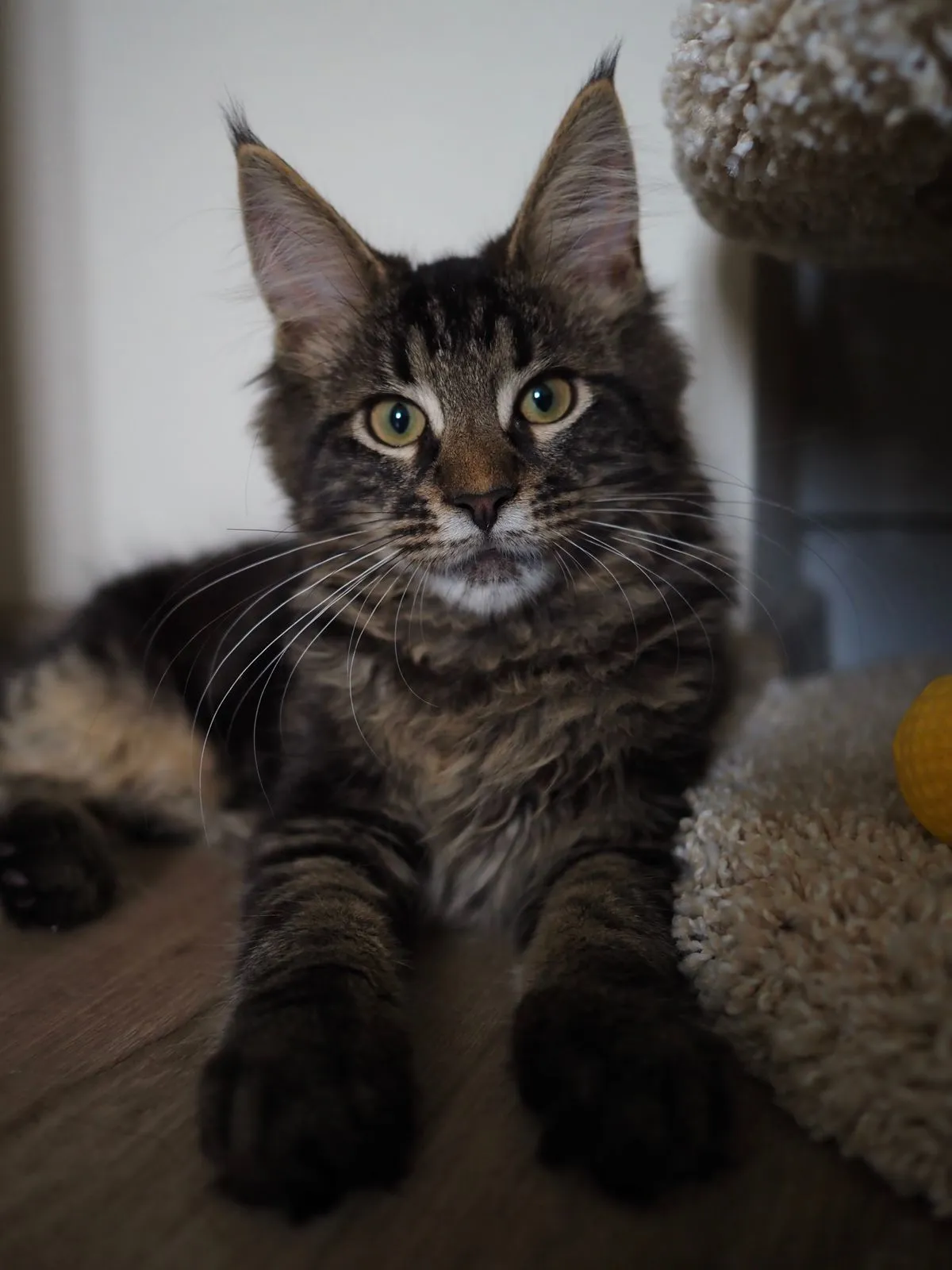
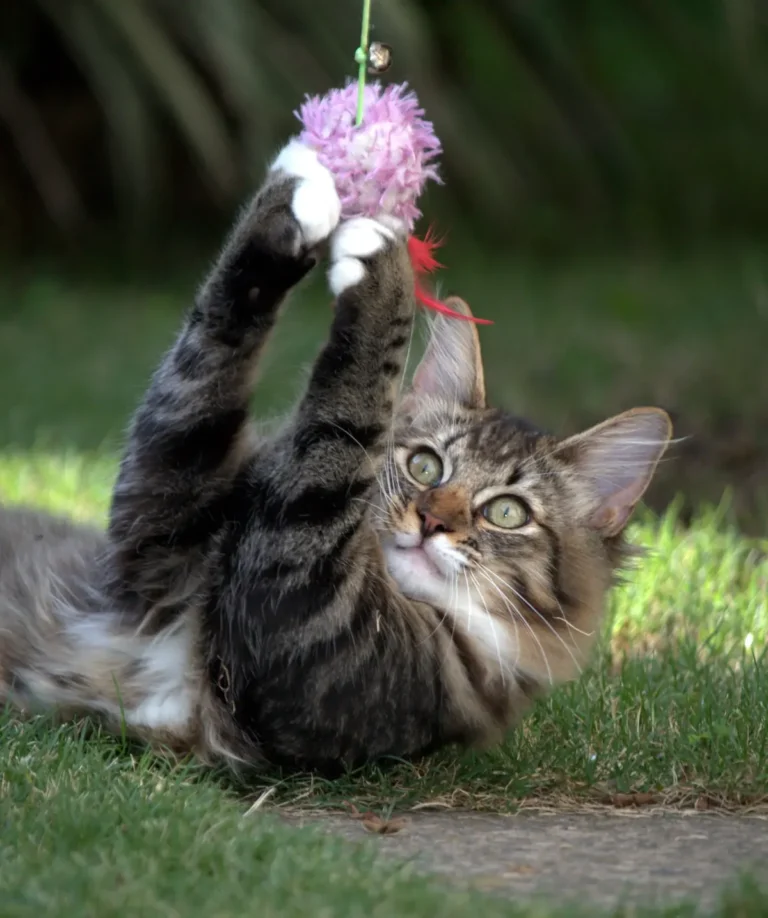
Maine Coons are curious and fond of batting small things around: hair ties, string, ribbon, rubber bands, the plastic seal off a bottle, a piece of a toy — all of it can end up swallowed, and vets say young cats are the most likely to do it. A swallowed object can irritate the stomach or, worse, get stuck and block the gut.
This one worries me most — it can look ordinary at first. A cat that vomits repeatedly, stops passing stools, strains in the litter box, or has a sore, swollen belly needs a vet promptly — a blockage is an emergency, and string is especially dangerous. If you ever see string or ribbon hanging from your cat’s mouth or rear end, never pull it — call your vet instead.
After my cat chewed the end off a wand toy, I swept the house: hair ties in a drawer, string and ribbon out of reach, small toy parts binned.
The Empty-Stomach Vomit
Some owners describe a different pattern: a healthy cat that vomits yellow liquid, usually in the morning, then carries on as normal — often bile from an empty stomach after too long since the last meal. One owner on Instagram described exactly this: her Maine Coon refused food, saw the vet, and was diagnosed with bilious vomiting syndrome, the advice being smaller, more frequent meals. A late-evening snack, or splitting meals into three or four servings, may help an otherwise bright cat; if it keeps happening, talk to your vet.
When Vomiting Means Something More Serious
Vomiting is a symptom, not a disease, and in some cats it points to something deeper — inflammatory bowel disease, kidney or thyroid trouble in an older cat, pancreatitis, parasites, or infection.
Owners of older Maine Coons report the same story in vet Q&A threads: a senior cat vomiting daily, sometimes twice a day, with weight loss or a fading appetite. Vets usually start with blood and urine tests, and talk about kidney disease, inflammatory bowel disease, and thyroid problems. If your senior has gone from rarely vomiting to vomiting regularly, book a check-up — my lifespan and health issues guide covers what to watch for as these cats age.
Cornell puts a useful line in the sand: cats vomiting more often than once a week, or showing lethargy, weakness, reduced appetite, blood, or diarrhoea alongside it, should be evaluated by a vet promptly. PetMD’s vets add: call if your cat vomits more than two or three times in a row or cannot keep food or water down.
When to Worry: Call Your Vet Promptly If…
I keep this list on my fridge — call your vet promptly if your Maine Coon:
- vomits more than two or three times in a day, or keeps vomiting for hours
- brings up blood, or vomit that looks like coffee grounds
- cannot keep water down
- is lethargic, hiding, weak, or collapses
- has a swollen or painful belly, or retches without bringing anything up
- has vomiting together with diarrhoea, weight loss, or refusing food
- may have swallowed string, a toy, medication, a lily, or a household chemical
- is a kitten, a senior, or already has kidney disease, diabetes, or a similar condition, and starts vomiting
Never try to make your cat vomit at home — there is no safe home method, and salt or hydrogen peroxide can seriously harm them. If you think your cat has eaten something toxic, call your vet or a poison helpline straight away. If your cat has not eaten for a day alongside vomiting, call your vet that day too — overweight cats especially can develop liver problems after going without food.
What You Can Do at Home
For a single episode in an otherwise bright cat that is eating and drinking, there is usually no need to panic. Here is what vets generally suggest for mild cases — if anything on the list above applies, the vet comes first.
Give the stomach a short rest. Vets often suggest withholding food for around 12 hours, with fresh water available. Never fast a kitten, a senior, or an unwell cat without asking your vet.
Reintroduce food gently. Once the vomiting has stopped, offer small amounts of a bland food — plain boiled chicken or white fish — in small, frequent meals. It is a short-term bridge, not a long-term diet. If your cat keeps it down for a day, gradually mix the usual food back in.
Slow the eating down. If fast eating is the pattern, try a slow feeder or puzzle feeder, smaller meals, and a calm feeding spot away from other pets.
Keep a simple log — date, food eaten, what came up, how your cat acted. It takes thirty seconds.
For a food that agrees with a sensitive stomach, my guide to the best cat foods for Maine Coon cats is a useful starting point — but a suspected intolerance is a vet conversation.
Preventing the Next Episode
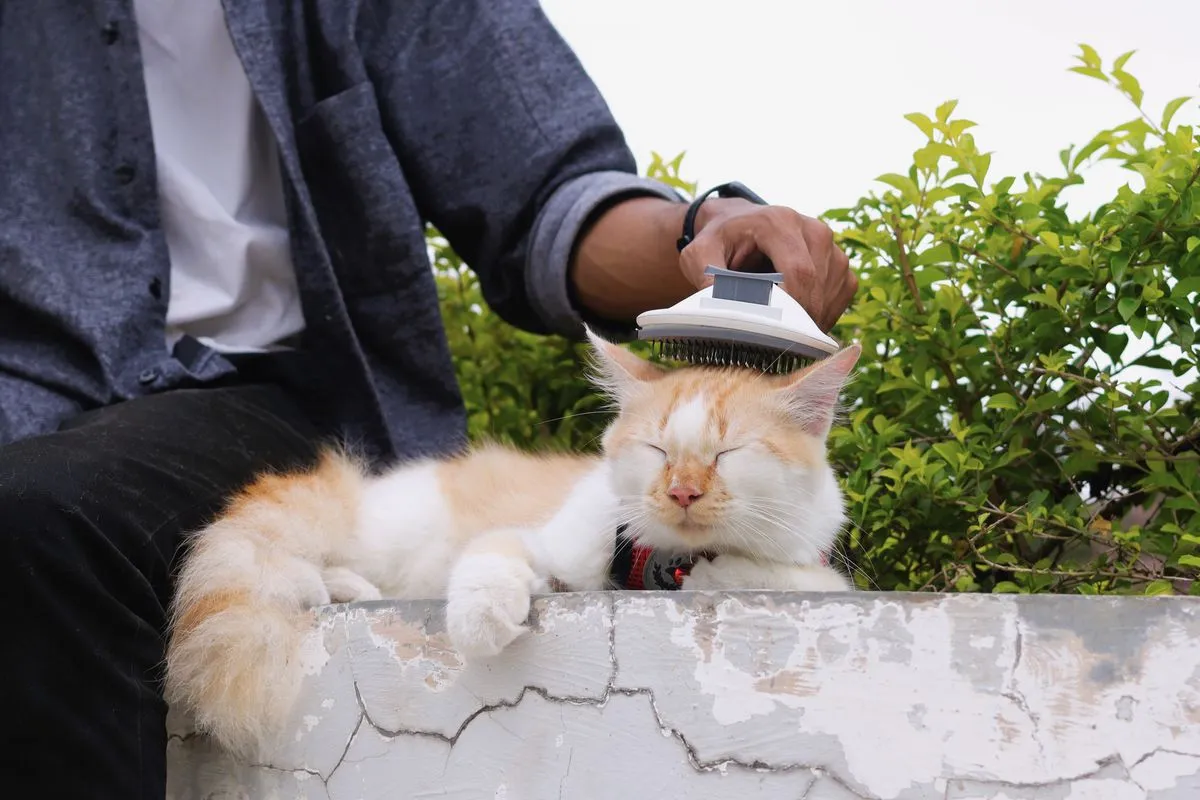
Most prevention is unglamorous routine: feed on a schedule in measured portions, groom regularly, and keep string, hair ties, medications, and toxic plants out of reach. Owners in a Maine Coon Facebook group I follow say much the same, and one owner there reported real improvement after mixing her cat’s food with a little warm water. The fix is often small, boring, and specific to your cat.
Frequently Asked Questions
Why does my Maine Coon vomit after eating?
Usually eating too fast — the classic scarf-and-barf, where undigested food comes back up within minutes. A sudden food change or a food intolerance can do the same.
Is it normal for a Maine Coon to vomit once a week?
Occasional vomiting happens, but regular vomiting should not be waved away — Cornell advises a prompt vet check for cats vomiting more often than once a week, especially with lethargy, appetite loss, blood, or diarrhoea.
What should I feed a Maine Coon that keeps vomiting?
Ask your vet first. In the short term, vets often suggest a bland, easily digested diet — plain boiled chicken, for example — in small, frequent meals once the vomiting has settled. Food changes should be gradual, and an elimination diet planned with your vet.
Why is my Maine Coon vomiting yellow liquid?
Yellow liquid is often bile from an empty stomach, after a long gap since the last meal. Smaller, more frequent meals or a late-evening snack may help. If it keeps happening, or comes with appetite loss or lethargy, call your vet.
When should I take my Maine Coon to the vet for vomiting?
Call promptly if your cat vomits more than two or three times in a day, brings up blood, cannot keep water down, is lethargic or hiding, has a swollen or painful belly, or may have swallowed something dangerous — or if it is a kitten, a senior, or already unwell. When in doubt, call.
The Bottom Line
Maine coon vomiting usually has a simple explanation: a cat that ate too fast, a food that did not agree with him, or a long gap between meals. The fixes are equally simple — slower meals, smaller portions, a gradual food change, a tidy house. But frequency and behaviour matter more than any single episode: one vomit and a cat that bounces back is a clean-up job; repeated vomiting is a vet visit.
I still keep paper towels in every room, but I worry less now: I know what I am looking at, what I can try at home, and when to pick up the phone.
For the vet view, Cornell’s vomiting in cats, PetMD’s cat vomiting causes and types, and VCA’s vomiting in cats cover the red flags and the bland-diet approach in plain language.