The Best Brush for Maine Coon Cats: What Owners Actually Use
If you’re hunting for the best brush for Maine Coon cats, I’ll save you the trial and error that cost me two junk brushes and one very annoyed cat. When my first Maine Coon came home, I bought the prettiest slicker brush I could find, gave her a good once-over, and felt very accomplished. Then I parted her fur with my fingers and found a wall of tight undercoat fluff underneath that the brush had never touched. That was the day I learned the truth about grooming this breed: the tool that matters most isn’t the one that looks good in your hand. It’s the one that reaches all the way down to the skin.
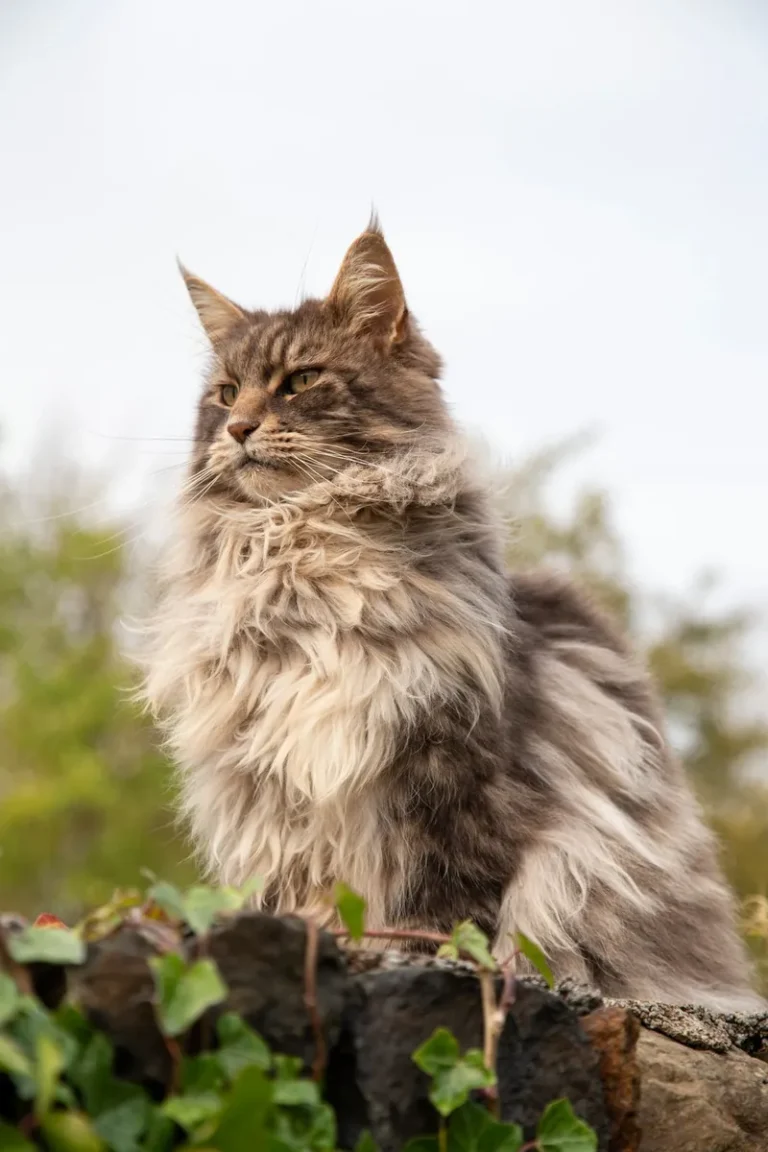
A Maine Coon’s coat isn’t one coat at all. It’s a double coat: long, water-resistant guard hairs on top and a soft, dense undercoat packed in underneath. The guard hairs are the pretty part. The undercoat is where the trouble lives. Dead undercoat clumps together, tangles around the guard hairs, and turns into mats behind the ears, under the armpits, in the britches on the back legs, and along the belly.
Here’s what the owner community taught me, tool by tool, because real experience beat every product description.
So what is the best brush for Maine Coon cats?
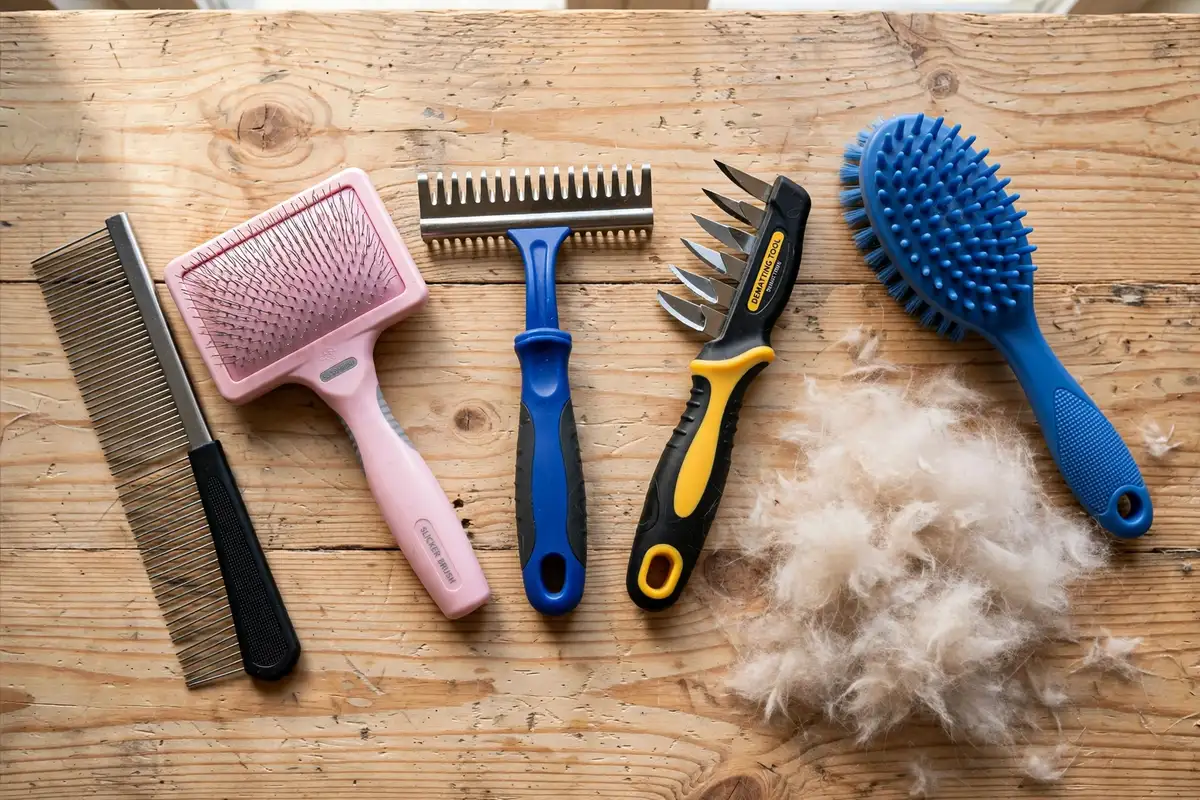
The honest answer: there isn’t one single brush. Owners on Reddit and Facebook groups who’ve kept this breed for years almost always end up with a small kit of tools, each doing a different job. One Maine Coon owner on Instagram walked her followers through a five-tool routine she’d built by trial and error, and the comments lit up with people saying they’d landed on nearly the same lineup. You need a tool that reaches the undercoat, and almost nothing sold as a generic cat brush does that well enough on its own.
So here are the five tools that live in my grooming drawer, and what each one actually does.
1. The steel comb: the real daily workhorse
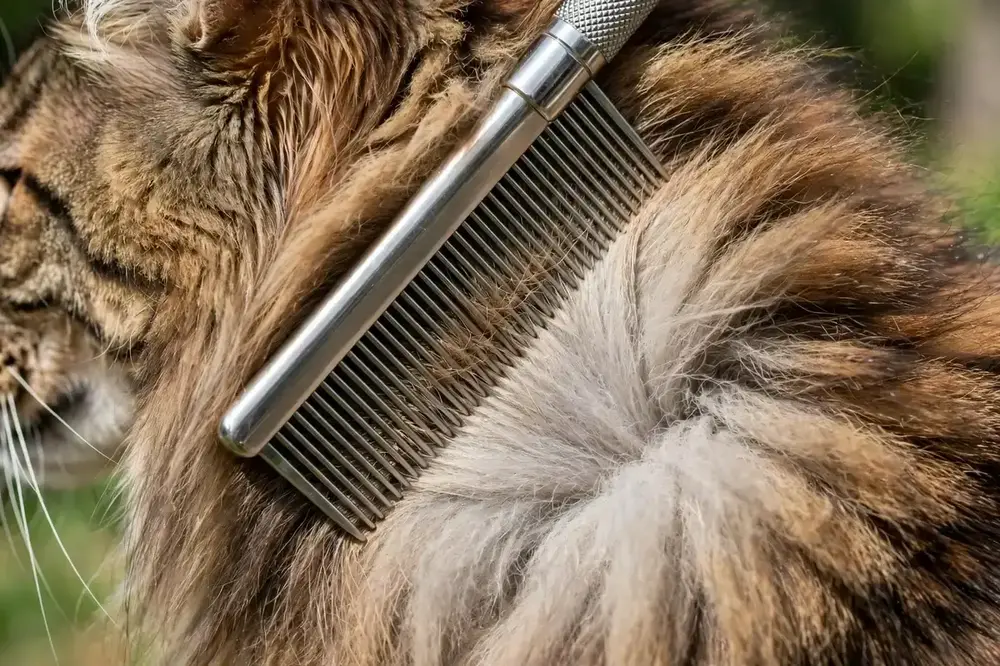
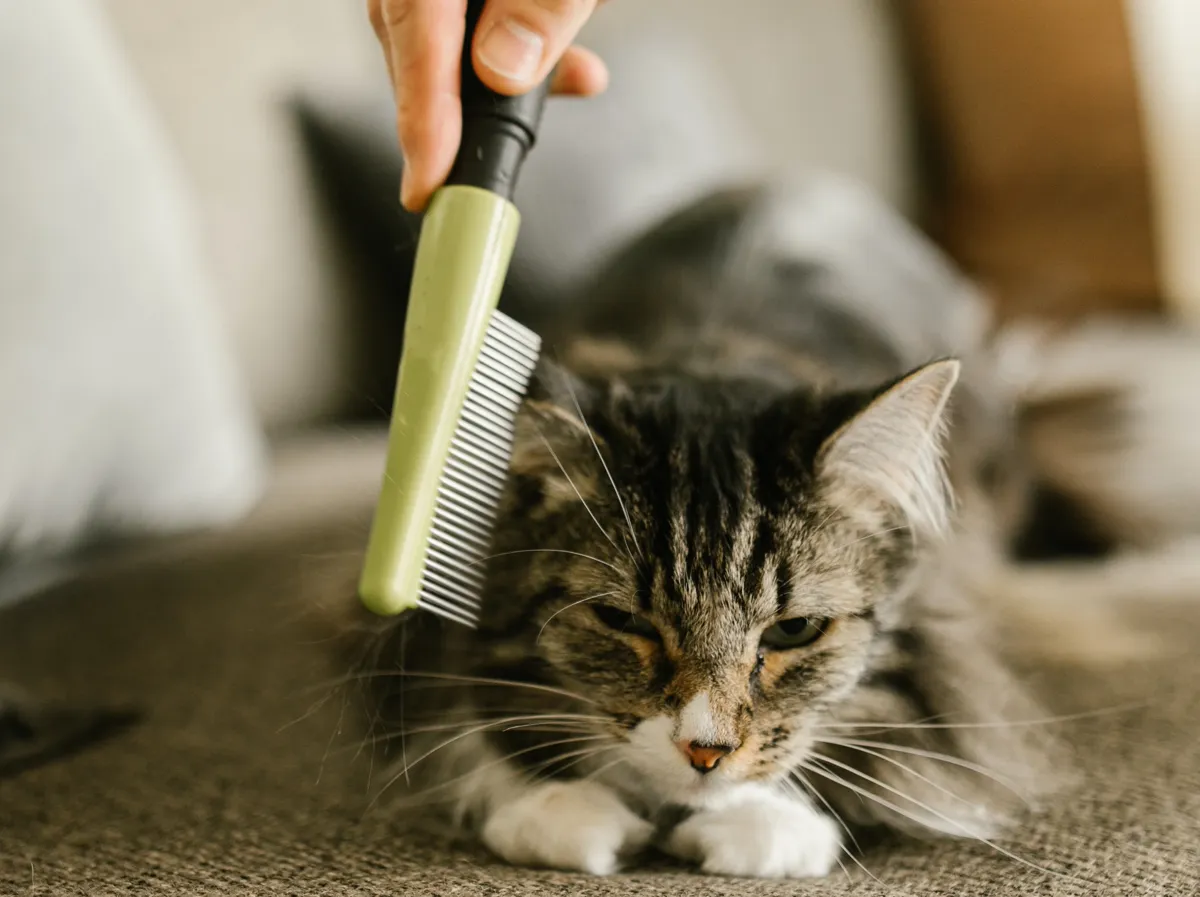
If I had to keep only one tool, it would be a sturdy stainless-steel comb with wide and narrow teeth (groomers call this a greyhound-style comb). Breeders on Instagram and Facebook recommend this type more than any other tool, and after years of using one, I understand why. The wide teeth glide through the top coat and find tangles before they become mats. The narrow teeth work the denser areas. Because the teeth are smooth and rounded, it slides through without the scratchy drag that puts cats off.
This is my daily tool, and the one that tells the truth: if the comb stops moving, you’ve found a tangle. Brushes can glide over the surface and lie to you. A steel comb can’t.
2. The slicker brush: the finisher, not the main event
A slicker brush, the kind with fine bent wire pins on a padded base, is great at grabbing loose hair off the surface of the coat and making it look polished and smooth. I use mine at the end of a grooming session, brushing lightly over the top coat so she looks finished and feels silky.
But here’s the community debate you should know about. Plenty of owners on Reddit and cat forums say slickers are their favorite tool, while just as many warn that the wire pins can be harsh on a cat’s thin, sensitive skin if you press too hard. I fall in the middle: a slicker is a wonderful finishing tool, but as a stand-alone solution for a Maine Coon, it’s not enough. The Dodo even made a video about a long-haired cat whose owner discovered her regular slicker simply couldn’t handle the dense coat, and she switched to a de-matting kit. Use it lightly, and never press down like you’re scrubbing.
3. The undercoat rake: spring and autumn’s best friend
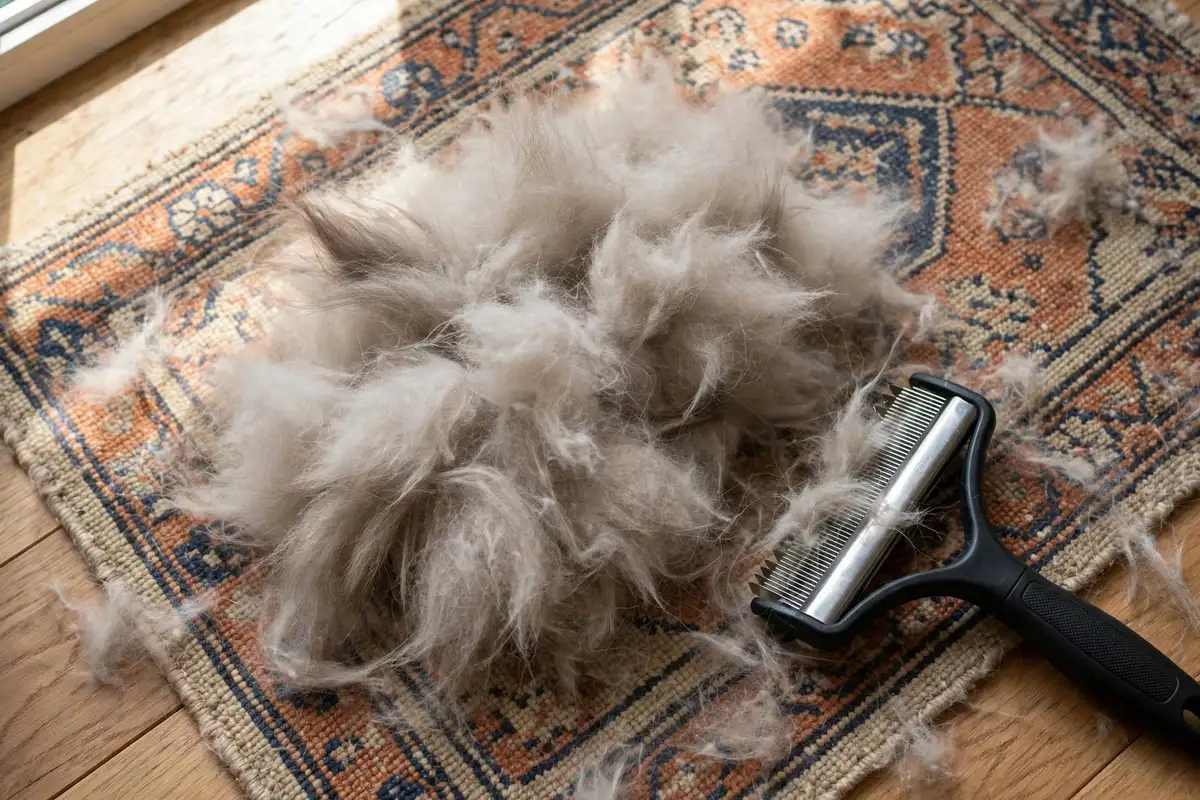
Twice a year, usually spring and again in autumn, the undercoat lets go in a big way and my house looks like it snowed indoors (if you want the honest numbers on how much they drop, see my guide to Maine Coon shedding). This is when the undercoat rake earns its keep. It has widely spaced teeth that pull out loose dead undercoat while leaving the guard hairs alone. The amount of fluff it removes during a blowout is honestly shocking.
One European Maine Coon owner I follow on Facebook posted a photo of the huge mound of fur her rake-and-slicker routine pulled off her boy in a single session, and fellow owners filled the comments with their own seasonal harvests. Their shared warning: use a light hand. An undercoat rake can irritate a cat’s delicate skin if you get aggressive with it, so mine stays a seasonal specialist, never going over one spot more than a few strokes.
4. The dematting tool: for emergencies behind the ears
Even with daily combing, some cats develop small tight knots in the classic trouble spots: behind the ears, under the collar area, the armpits, the britches. A dematting tool (the kind with short, rounded cutting teeth) is designed to saw gently through these knots so they can be combed out. I use mine rarely, maybe a few times a month, and always with extreme gentleness because the teeth can nick skin if the cat squirms.
One thing I never do: cut mats out with scissors. Cat skin is thin and stretchy, and it pulls up right into the mat where you can’t see it. Professional groomers and vets are firm on this one, and the horror stories in owner groups are real. If a mat is tight against the skin or bigger than your fingertip, a groomer or your vet is the safer call. I’ve also learned that a tiny bit of patience with a dematting tool beats rushing every time.
5. The rubber brush or grooming glove: the gentle introduction
Rubber brushes and grooming gloves don’t do much for a full Maine Coon coat, and I’ll be honest about that. But they’re useful for getting a kitten or a nervous rescue used to being handled, since a rubber brush feels more like petting. Many cats that bite a comb will happily lean into one. Once the trust is built, you graduate to the real tools.
My actual grooming routine
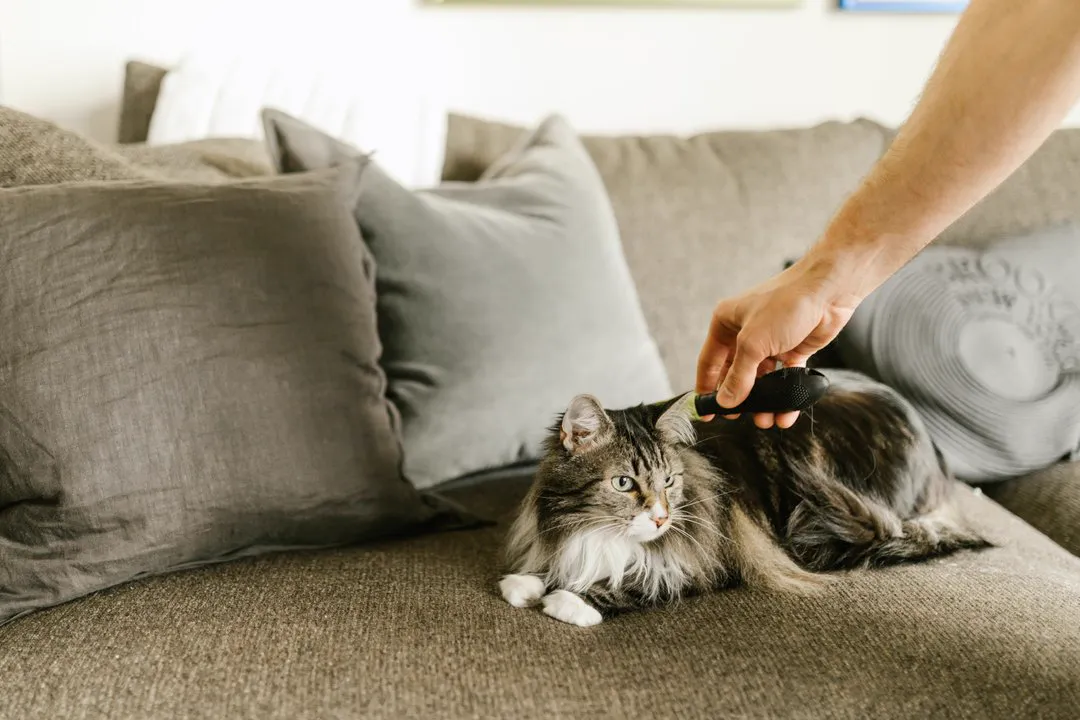
Here’s how I use the kit in real life, about five minutes a day. I start with the steel comb and work in sections: neck ruff, sides, back, then the tricky spots (armpits, belly, britches). The technique that changed everything is line combing: part the fur with one hand so you can see down to the skin, comb just that line, then move on. It’s the only way to know you’ve reached the undercoat instead of skimming the top.
During shed seasons, I do a pass with the undercoat rake first, then comb, then a light slicker finish. Small knots get my fingers or the dematting tool, never a yank. And if a bath is on the schedule, a good detangling session beforehand makes everything easier; I walk through the whole process in my complete guide to bathing a Maine Coon.
When the brush loses: dealing with mats
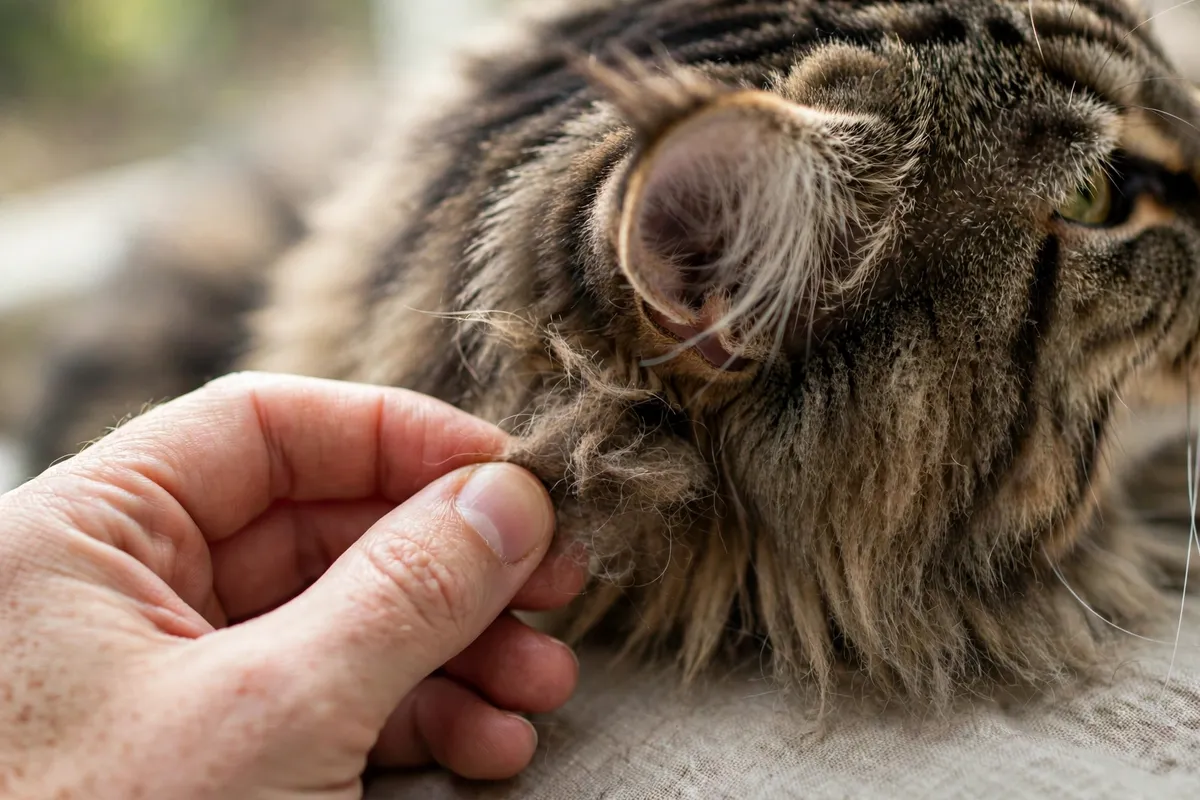
Prevention beats removal every time, but some cats mat despite your best efforts. Cottony undercoats mat more easily, older cats sometimes groom themselves less, and even a good routine can miss the belly. I wrote a full guide to Maine Coon matted fur and how to prevent it because it deserves more room than this section allows.
The short version: catch mats small with your comb and fingers, work tangles apart gently from the outside in, and stop before your cat gets upset. Pulling teaches your cat that grooming hurts, which makes the next session harder. PetMD’s guide to handling matting in dogs and cats makes the same point vets always make: brushing the top of the coat isn’t enough, the tool has to reach down through it, and a metal comb finds the hidden mats a brush sails over.
If your cat hates being brushed
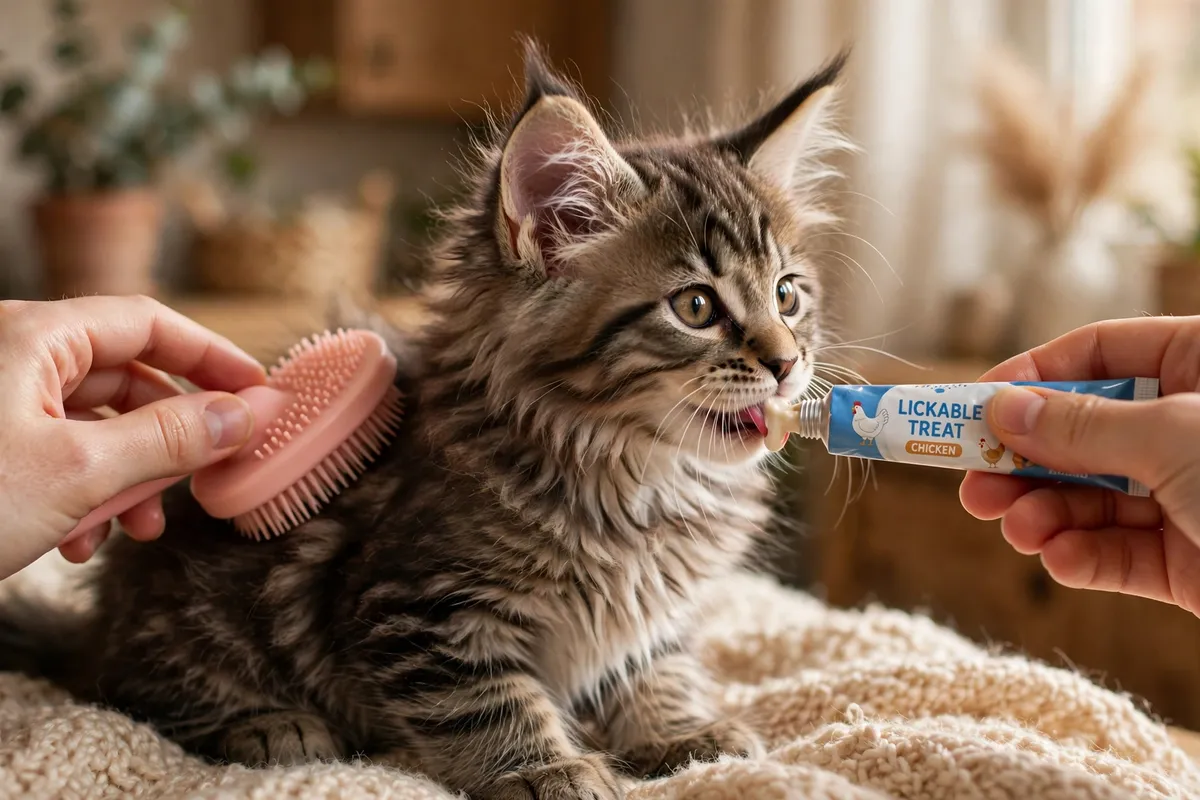
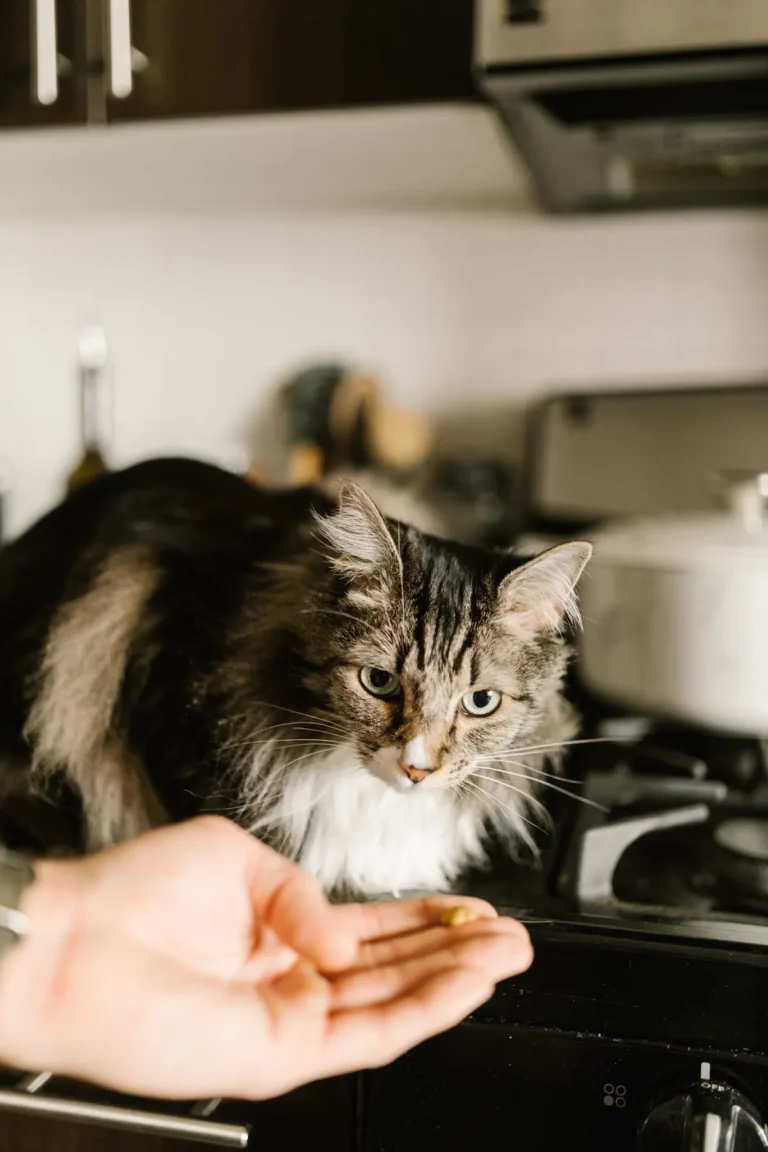
This is more common than anyone admits. Mine fought me for the first few months. What works: keep sessions to two or three minutes and end before the cat gets annoyed. Treats help enormously; one cattery I follow pairs every session with a favorite lickable treat so grooming becomes the thing that happens right before the good stuff. Try different times of day and different tools, because sometimes it’s not grooming they hate, it’s the tool. I’ve seen cats that attack a slicker purr through a steel comb, and vice versa.
If you’re starting with a kitten, you’re in the best position. Touch paws, ears, and belly gently from day one, run a soft rubber brush over them, and make it boring and pleasant. My Maine Coon kitten care guide covers the broader getting-started routine.
Mistakes I made so you don’t have to
First, I brushed only the top coat for months. The slicker slid over everything, the coat looked gorgeous, and the mats were forming underneath the whole time. Check your work by parting the fur down to the skin.
Second, I went overboard with the deshedding tool the first spring. I kept raking the same spot because so much fur was coming out, and she ended up with a thin patch and tender skin. Fur coming out of the tool is not the goal; a comfortable cat with an intact coat is.
Third, I bought tools based on pretty packaging instead of asking owners what they actually used. The owner community, breeders on YouTube and Instagram, the long threads in Facebook groups: that collective experience is worth more than any product page.
FAQ
How often should I brush my Maine Coon?
Aim for a quick comb-through two to three times a week at minimum, daily during the spring and autumn shedding seasons. Short, regular sessions do more good than one long weekly battle, and most cats tolerate five minutes far better than thirty. PetMD’s guide to brushing your cat stresses calm, positive sessions with treats and gentle handling, which matches everything the owner community says.
Is a slicker brush enough for a Maine Coon?
No, not on its own. A slicker is excellent for the surface of the coat, but it doesn’t reliably reach the dense undercoat where mats start. Pair it with a steel comb for the real work and use the slicker as the finisher.
Can I use a deshedding tool on my Maine Coon?
Yes, during heavy shedding periods, but with a light hand and only a few strokes per area. Don’t use one on matted fur, and stop if your cat’s skin looks irritated. It’s a seasonal helper, not an everyday tool.
My Maine Coon won’t let me touch his belly. What do I do?
You’re not alone; the belly, armpits, and tail base are the most sensitive areas for most cats. Work on them last, keep it brief, and use treats. Many owners find the cat will gradually accept more as trust builds. If mats form there anyway, a groomer or vet visit is the safe move rather than forcing it.
Should I shave my Maine Coon if the matting is bad?
Shaving is a last resort, not a routine solution. A cat’s coat regulates temperature, so removing it should only happen for severe matting or medical reasons, and it’s best done by a groomer or vet with clippers. Never use scissors near a mat; cat skin is paper-thin and cuts easily.
The right tools won’t make grooming effortless, but they’ll make it effective, and there’s a big difference. Once I stopped looking for the single best brush for my Maine Coon and built the little kit instead, the daily sessions got shorter, the mats stopped appearing, and my cat started coming to me when she saw the comb. That’s the real review, right there.