Maine Coon Dental Care: A Complete Teeth Cleaning Guide
I’ll be honest with you: for years, I barely thought about my Maine Coons’ teeth. I brushed their coats, trimmed their claws, kept vet visits on schedule, and assumed their mouths were taking care of themselves. Then one of my boys started eating oddly — picking up kibble and dropping it, chewing on one side — and a routine check revealed gingivitis that had quietly been building for months. That was my wake-up call, and proper Maine Coon dental care has been part of our routine ever since.
If you’re new to this, you’re not alone. Most owners I talk to have never looked inside their cat’s mouth, let alone brushed their teeth. This guide covers everything I wish someone had told me: why dental care matters for this breed, how to brush without losing a finger, and what professional cleanings actually involve.
Maine Coon Dental Care: Why These Big Cats Need Extra Attention
Maine Coons aren’t necessarily cursed with worse teeth than other breeds, but they do have a reputation among owners for gum trouble. Spend any time in owner communities and you’ll see the same stories come up: young Maine Coons developing red, puffy gums — juvenile gingivitis — sometimes as early as five or six months old. Some grow out of it with diligent care; others need a professional cleaning and ongoing brushing to keep it from turning into something worse.
There’s also stomatitis, a severe inflammatory condition of the mouth that can hit Maine Coons hard. Owners on Instagram and Facebook share recovery stories about cats who had 14, even 22 teeth removed because of stomatitis — and the encouraging part is that almost all of them bounce back beautifully, eating normally and staying their sweet, cuddly selves. Cats adapt remarkably well after extractions.
The takeaway is simple: dental problems are common in cats, and catching them early in a Maine Coon saves pain, money, and teeth. Dental disease is one of the conditions I watch for as my cats age — if you haven’t read it, my overview of Maine Coon lifespan and common health issues covers the other big ones worth knowing about too.
What Healthy Teeth and Gums Should Look Like
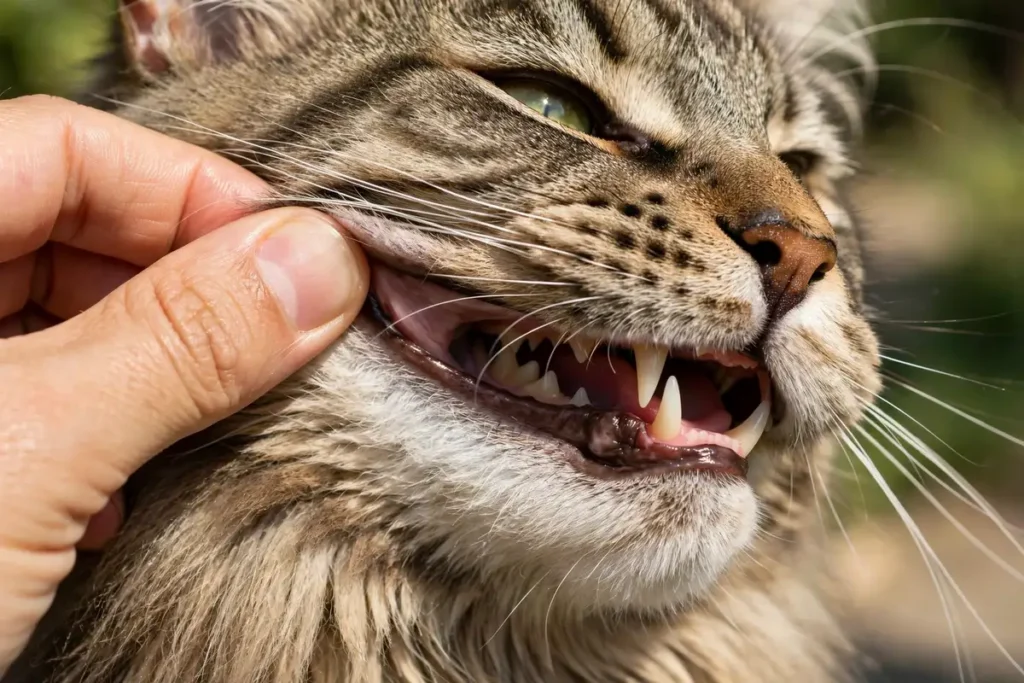
Before you can spot problems, you need to know what normal looks like. Get in the habit of lifting your cat’s lip for a quick peek every week or so — it takes five seconds and teaches them that mouth handling is no big deal, which pays off hugely later.
Here’s your baseline:
- Gums: pale to medium pink (not red, not white, not yellow), with no swelling and no bright red line where the gum meets the tooth.
- Teeth: clean and white to slightly cream-colored, with no brown or yellow crust along the gumline.
- Breath: a healthy cat’s mouth shouldn’t smell offensive — Cornell’s veterinary dentists note that persistent bad breath is often the first clue of periodontal disease. You can read more in their guide to feline dental disease.
- Eating behavior: crunching normally on both sides, no dropping food, no head shaking or pawing at the face.
That bright red line along the gumline is the thing to watch for most — owners on cat forums call it the telltale sign. A thin red border where tooth meets gum means inflammation is already underway, even if your cat is still eating happily.
Warning Signs Your Maine Coon’s Mouth Needs Attention
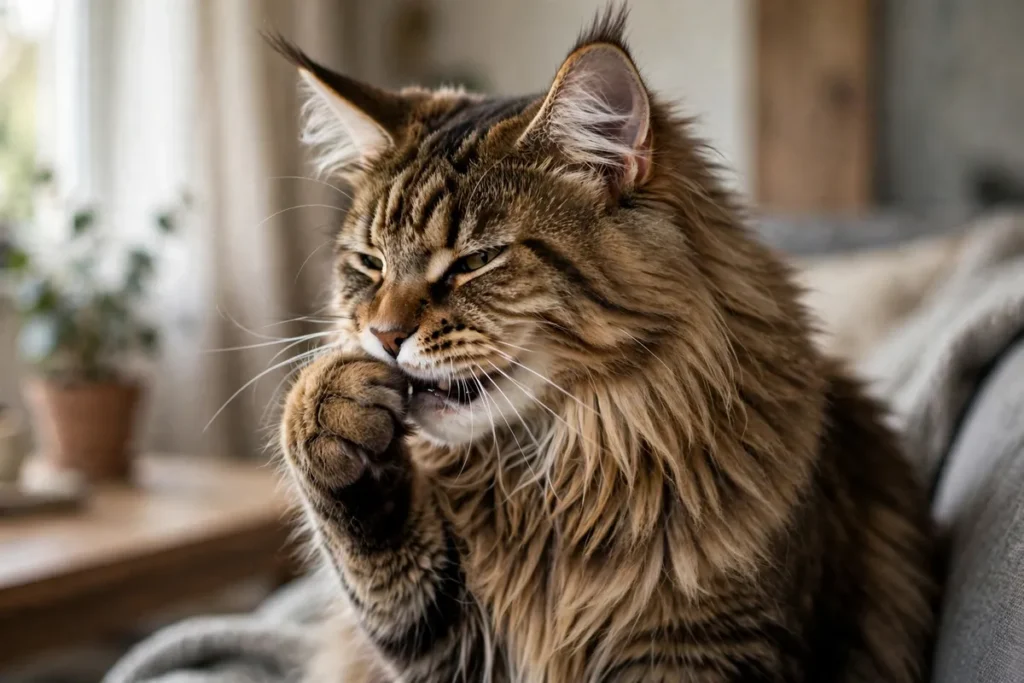
Cats are masters at hiding pain, so by the time a cat obviously shows mouth pain, the problem is usually well established. Watch for:
- Bad breath that wasn’t there before
- Drooling or a wet chin
- Pawing at the mouth or rubbing the face on furniture
- Dropping food, eating more slowly, or suddenly preferring wet food over dry
- Head shaking while eating, red or bleeding gums, visible tartar, gradual weight loss
One pattern I’ve learned the hard way: don’t just ask “is my cat eating?” Ask “has the way my cat eats changed?” A cat that switches from crunching kibble to carefully licking up only the gravy is telling you something.
If you see any of these, book a vet visit rather than trying to fix it with brushing alone. Brushing inflamed gums is painful for the cat and can make things worse. As owners on forums wisely point out: get a professional cleaning first, then start your home brushing routine on a clean mouth. Ask your vet to show you how to check the teeth properly at your kitten’s first vet visit.
How to Brush Your Maine Coon’s Teeth (Without a Wrestling Match)
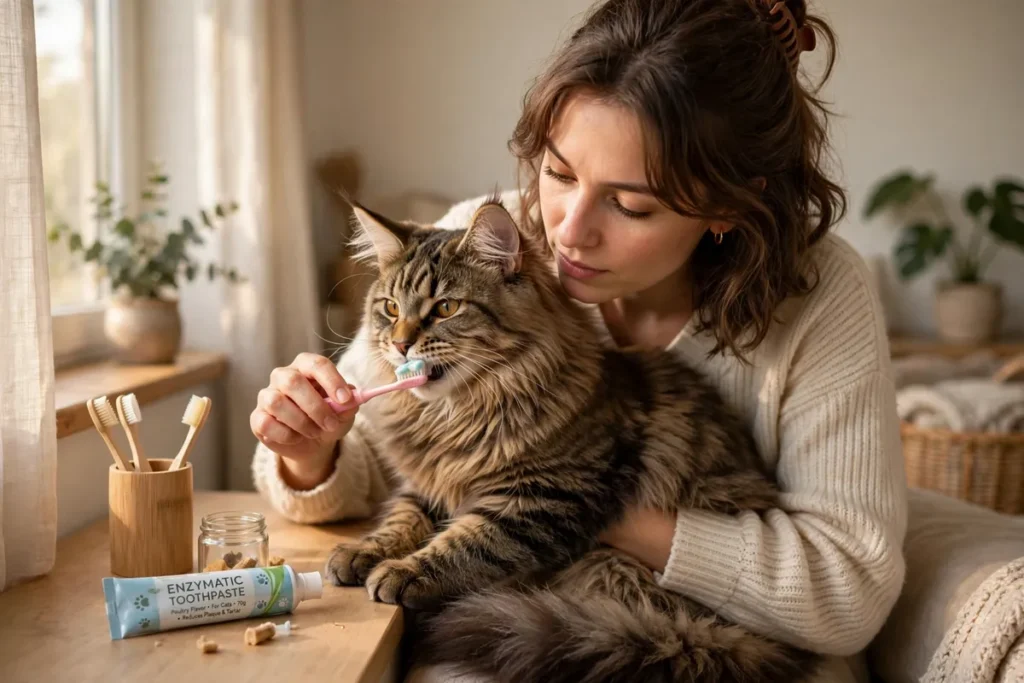
Here’s the part most people dread, but it’s honestly easier than bathing a Maine Coon — and I’ve written a whole guide on how to bathe a Maine Coon, so trust me when I say the teeth are the simpler battle. Daily brushing is the single most effective thing you can do at home: plaque starts hardening into tartar within about a day or two, and once it’s tartar, only a professional cleaning can remove it. VCA’s dental guidance recommends daily brushing as the goal, with three times a week as the minimum. Their full article on dental disease in cats is worth a read for the science behind it.
The secret is to go painfully slowly. Don’t try to brush on day one. Here’s the progression that actually works:
Step 1: Handle the mouth (3–7 days). During cuddle time, gently lift the lip and touch the gums with your fingertip, then give a treat. That’s it. Kittens that accept mouth touches grow into adults that are easy to care for — another reason the Maine Coon kitten care guide emphasizes early handling.
Step 2: Introduce the taste (a few days). Let your cat lick a dab of enzymatic cat toothpaste off your finger. Never use human toothpaste — it foams, contains fluoride, and isn’t meant to be swallowed. Cat toothpaste comes in flavors like poultry and malt, and most cats genuinely like it.
Step 3: Gauze before brush (1–2 weeks). Wrap gauze or a damp cloth around your finger and do one gentle swipe along each side of the teeth — literally two seconds per side. Experienced cat owners on forums swear by this: start with two seconds, and only add time when the cat accepts it calmly. No forcing, no prying the jaws open — you can’t effectively reach the inner surfaces anyway, and fighting destroys trust.
Step 4: The real brush. Move to a small cat toothbrush or a silicone finger brush. Angle it along the gumline on the outer surfaces (that’s where plaque builds up) and use small circular motions, about 30 seconds per side. End with a treat every single time.
I’ll be straight with you: my first attempts were clumsy. One of my cats treated the toothbrush like a chew toy for the first week. But the first couple of weeks are the hard part, and then it becomes routine. Some cats even start reminding you, trotting to the bathroom at brushing time for their treat. If your cat absolutely won’t tolerate a brush, dental wipes and water additives can help as supplements — but they’re supporting players. Nothing replaces the mechanical action of brushing.
What About Dental Treats, Water Additives, and Dental Diets?
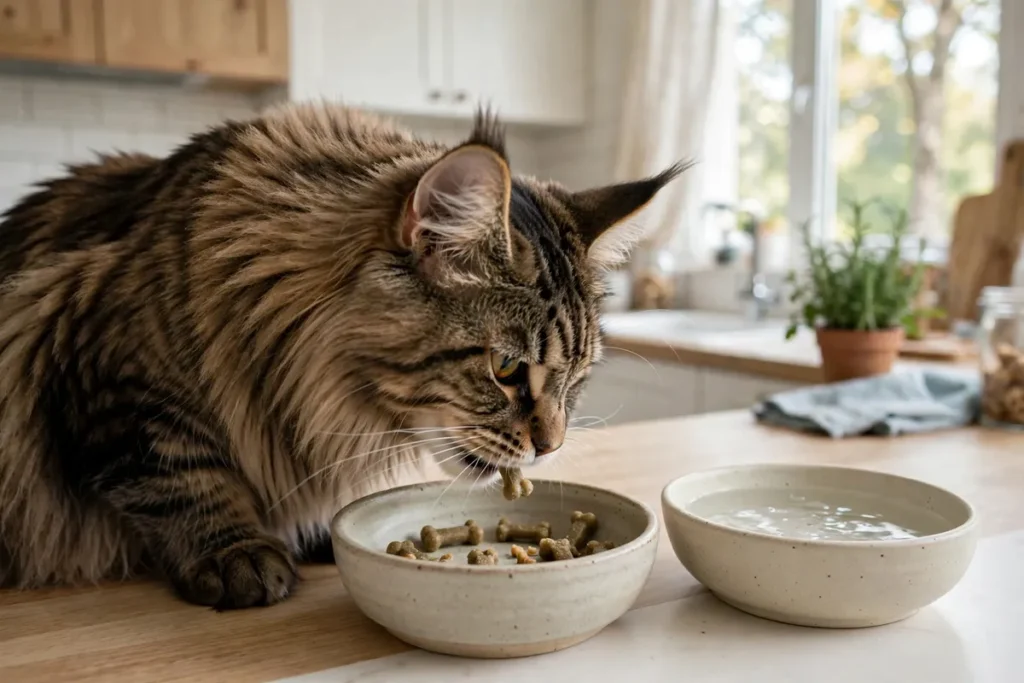
These are the products owners ask me about most, and the honest answer is: they help, but they’re not substitutes for brushing. Dental treats designed to reduce plaque are a useful addition, and most Maine Coons enjoy them. Water additives that reduce oral bacteria are easy — you just add them to the bowl — and some owners use them alongside brushing. Prescription dental diets with larger, specially textured kibble can reduce tartar through the chewing action.
The one thing worth knowing: the Veterinary Oral Health Council (VOHC) evaluates dental products for actual effectiveness and awards a seal of acceptance only to products shown to reduce plaque or tartar. When you’re overwhelmed in the pet aisle, the VOHC seal is the shortcut for separating products with evidence behind them from the ones with just nice packaging. Ask your vet which options fit your cat.
Professional Cleanings, Stomatitis, and Extractions
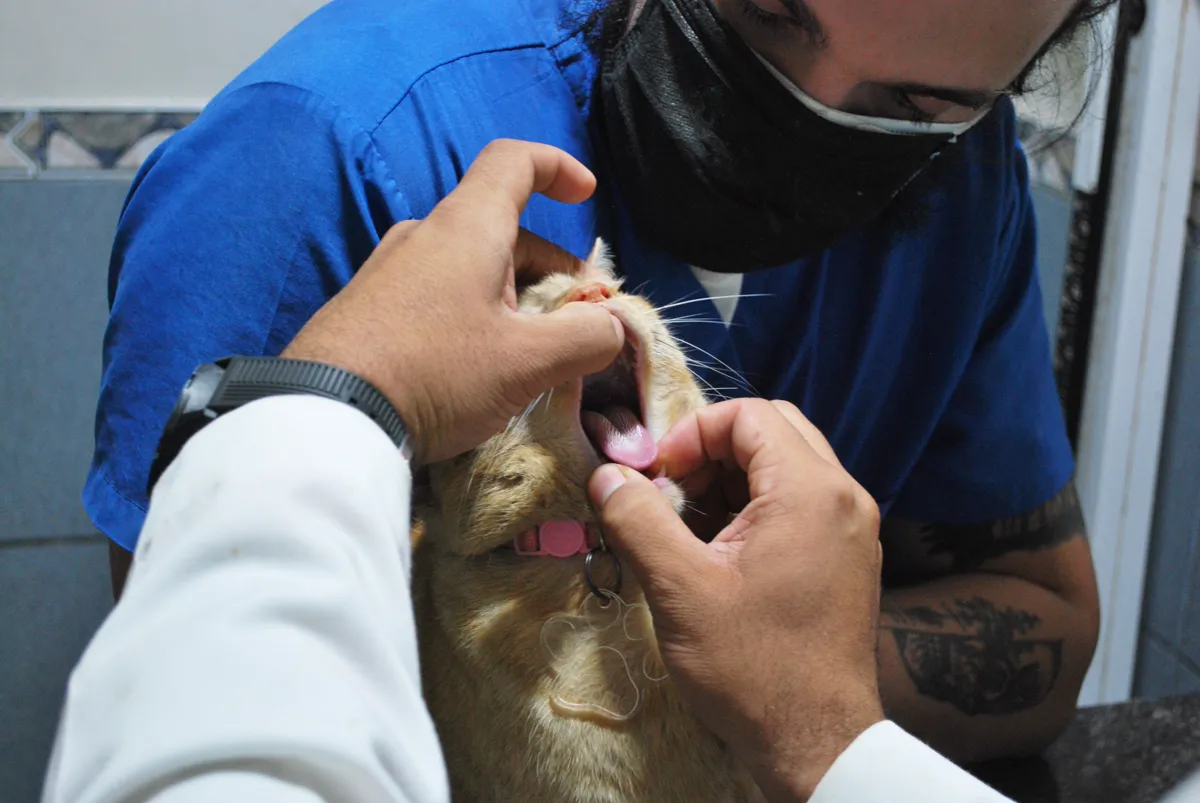
Even with perfect home care, most cats need a professional dental cleaning at some point — vets generally recommend one about once a year. Here’s what to expect, because the process surprises a lot of first-timers:
The cleaning happens under general anesthesia. I know anesthesia sounds scary, but there’s no way to properly clean a cat’s teeth while they’re awake. “Anesthesia-free dentals” are cosmetic only and don’t treat disease. Before the procedure, the vet typically runs bloodwork to make sure your cat is a good candidate.
Under anesthesia, the vet scales plaque and tartar off every tooth — including beneath the gumline, where the real disease hides — polishes the teeth, takes X-rays to check for problems under the surface, and extracts any teeth that can’t be saved. If extractions are needed, the vet will usually have discussed a plan and price range with you in advance.
Then there’s stomatitis, which comes up constantly in Maine Coon communities. It’s a severe, painful inflammation of the mouth — the cat’s own immune system overreacts to the plaque on its teeth — and treatment often involves full or partial tooth extraction. It sounds horrifying until you hear how well cats do afterward: owners consistently report that their cats eat better, play more, and seem visibly happier once the source of constant pain is gone. If your vet raises the possibility of stomatitis, get a clear diagnosis and treatment plan — many cats live full, comfortable, toothless-but-happy lives.
Cost varies enormously by location, the clinic, and how much work is needed — I’m not going to quote numbers that would be wrong for your area, so call your vet for an estimate. What I will say is that every dollar spent on home brushing stretches the time between professional cleanings, which is where the real savings are.
Frequently Asked Questions
How often should I brush my Maine Coon’s teeth? Daily is the ideal — it’s what veterinary dentists recommend. If that isn’t realistic, aim for at least three times a week.
My Maine Coon kitten already has red gums. Is this normal? Not exactly normal, but common — juvenile gingivitis shows up in young Maine Coons fairly often, sometimes around six months of age. Don’t try to brush through significant inflammation; have your vet take a look first. Some kittens need a professional cleaning and then do well with regular home brushing afterward.
Can I use human toothpaste on my cat? No. Human toothpaste foams and contains ingredients like fluoride that shouldn’t be swallowed, and cats won’t spit. Use only toothpaste formulated for cats — it’s non-foaming, safe to swallow, and comes in flavors cats actually accept.
Do dental treats and water additives replace brushing? No. They’re useful additions — treats with the VOHC seal have evidence behind them, and water additives are easy — but they don’t remove plaque the way a brush does. Think of them as support for your brushing routine, not a replacement.
My vet says my cat needs teeth removed. Will she be okay? Almost certainly yes. Cats adapt remarkably well to extractions — owners routinely report that cats with many teeth removed eat normally, play normally, and are visibly more comfortable than before. Follow your vet’s aftercare instructions and feed soft food during recovery.
Dental care was the last thing I added to my Maine Coon routine, and it’s the one I wish I’d started first. A few minutes a couple of times a week once the habit is set spares your cat real pain and spares you the stress of emergency dental work down the line. Start slow, stay consistent, and let your vet be your partner in it.